
Best ice cream and frozen dessert franchises to buy in 2027
 Curated byKory White · Fractional CRO · Maryland
 PULSEKNOWLEDGE LIBRARY
Quality
Certified
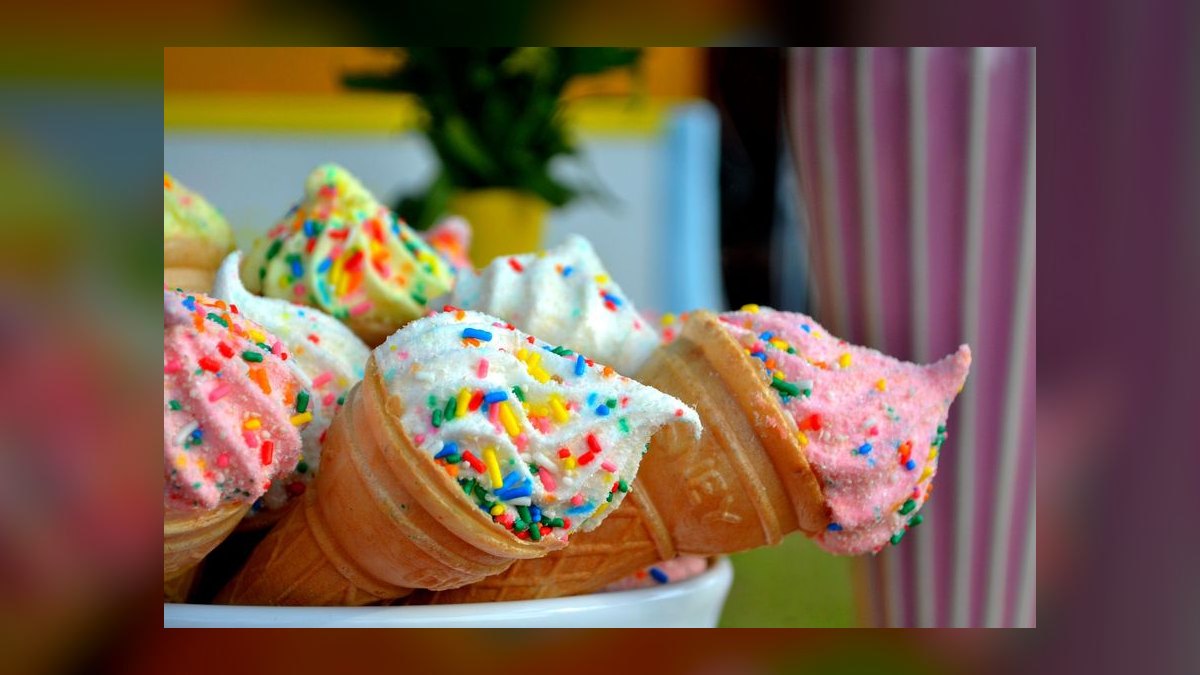
The strongest 2027 buys split by capital: Baskin-Robbins and Carvel for inline scoop shops under roughly $450,000, Cold Stone Creamery and Bahama Buck's for premium experiential formats, and Andy's Frozen Custard or Dairy Queen for freestanding drive-thru builds. Royalties cluster near 5–6%. Verify every figure in the current FDD.
The outcome you should expect
Buying into a frozen dessert franchise in 2027 does not buy you a smooth, predictable revenue line. It buys you a seasonal curve with a steep summer peak and a winter trough, wrapped in unusually good gross margins. Understanding that shape before you sign is the single biggest predictor of whether the first two years feel like a business or a panic.
Expect gross margins in the 55%–65% band for most frozen dessert formats. Soft-serve base runs cheap per serving — often in the 8%–15% food-cost range — while premium hard-packed ice cream loaded with inclusions, mix-ins, and toppings pushes food cost toward 18%–25%. That spread matters more than it looks. A Cold Stone-style concept where every order is hand-mixed on a frozen granite slab carries both a higher food cost and a higher labor cost per ticket than a soft-serve window that pulls a lever and hands over a cone. The premium format earns a higher average ticket to compensate, but the compensation is not automatic; it depends on whether your local market will actually pay the premium price.
Expect the revenue calendar to be brutally uneven. In most of the continental United States outside the Sun Belt, a frozen dessert unit books the majority of its annual revenue in a four-to-five month window. Sixty to seventy percent of yearly sales landing between Memorial Day and Labor Day is a normal, not extreme, distribution for a seasonal market. That means your March rent, your January payroll, and your February utility bill all get paid out of money you earned last August. Operators who treat summer cash as profit rather than as a reserve are the ones who fail in year two, and they usually fail in the first quarter, not the third.

Expect the ramp to take longer than the pro forma suggests. Most frozen dessert franchises reach a stable run rate somewhere between month twelve and month twenty-four, and the timing depends heavily on whether you opened before or after the peak season. Opening in April gives you an immediate revenue surge that funds your first winter. Opening in September means you burn cash for eight months before the market shows you what it can actually do. Franchisors will not always steer you toward the April open, because their development calendar has its own pressures. You should steer yourself there.
Expect to be in the building. Owner-operator involvement is not a philosophical preference in this category — it is a mechanical requirement in the sub-$600,000 AUV range. The economics do not support a general manager's salary until volume clears roughly $700,000, and a competent GM in a 2027 labor market costs $55,000–$75,000 plus incentive. Below that revenue threshold, the GM's compensation is your compensation. Plan on twelve to eighteen months of hands-on operation before any semi-absentee structure becomes financially coherent.
What drives that outcome
The economics of a frozen dessert franchise are driven by four levers, and only two of them are inside your control after you sign.
Format and build-out. This is the largest single driver of Item 7 total initial investment, and it is the decision you make first. An inline scoop shop dropped into an existing second-generation food space with usable plumbing, grease infrastructure, and HVAC can open for a fraction of what a purpose-built freestanding stand costs. A freestanding drive-thru custard building involves land, site work, a drive-thru lane, menu boards, a speaker system, and a structure — the difference is not incremental, it is categorical. Andy's Frozen Custard units are purpose-built, and Item 7 ranges published in recent FDDs have run from roughly $1,000,000 into the $2,300,000-plus territory for that reason. Baskin-Robbins inline units have been disclosed in a far lower band, commonly in the $94,000–$400,000 range. Same category, two entirely different businesses from a capital perspective.
Equipment. Frozen dessert equipment is expensive to buy, expensive to maintain, and catastrophic when it fails mid-July. Soft-serve and custard machines, blast freezers, dipping cabinets, and walk-in refrigeration all carry real acquisition costs and real service contracts. A soft-serve machine that goes down on the Fourth of July weekend is not a maintenance inconvenience, it is a meaningful percentage of your quarter. Budget for a service relationship, not just a warranty, and ask franchisees what they actually spend annually on equipment service — it is one of the most consistently underestimated line items in the category.
Climate and seasonality. A year-round warm market smooths the revenue curve dramatically but charges you for the privilege in rent. Prime Florida, Arizona, and Texas retail locations command higher occupancy costs precisely because everyone knows the seasonality problem is solved there. A seasonal Northern market gives you cheaper rent and a harder cash-flow puzzle. Neither is wrong. What is wrong is buying Northern-market rent economics while running a Sun Belt cash-flow model in your spreadsheet.
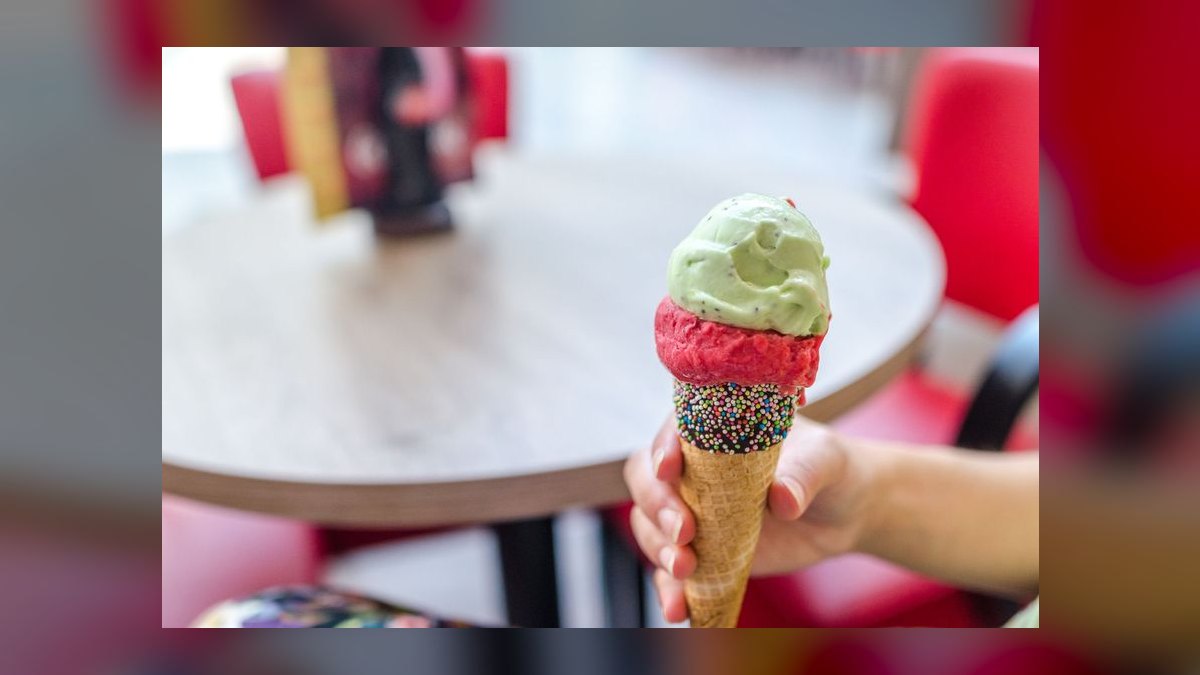
Labor structure. Labor typically consumes 22%–30% of sales in this category, and it is your largest operating expense after cost of goods. High-volume drive-thru concepts with strong throughput can compress toward 18%–22% because the revenue denominator grows faster than the crew does. State minimum wages sitting at $15–$18 in a growing number of jurisdictions have already compressed this line, and 2027 will not reverse that trend.
Benchmarks and realistic ranges
Treat every number below as directional. The only binding figures are the ones in the current Franchise Disclosure Document you are handed, and they change annually.
Scoop-shop classics. Baskin-Robbins — the "31 flavors" brand, frequently co-branded with Dunkin — has disclosed Item 7 total initial investment commonly in the $94,000–$400,000 band for inline formats, with a franchise fee around $25,000 and royalty near 5.9%. It is one of the lowest realistic entry points into a nationally recognized frozen dessert brand. Carvel, the soft-serve and ice-cream-cake specialist, has disclosed roughly $250,000–$450,000 for a full shop, with lower-cost cake-focused and shop-in-shop formats available and royalty around 5%. Carvel's cake business is worth understanding on its own terms: it converts a seasonal impulse category into an occasion-driven, pre-ordered one, which flattens the demand curve in a way pure scoop revenue does not.
Premium and experiential. Cold Stone Creamery has disclosed Item 7 ranges spanning roughly $60,000–$550,000 across its formats, including co-branded and express versions, with royalty around 6%. The wide band reflects genuinely different builds — a mall express counter and a full standalone parlor are not comparable investments. Bahama Buck's, the shaved ice and tropical frozen treat concept, has disclosed roughly $300,000–$900,000 for freestanding stores with royalty around 6%, and it performs disproportionately well in hot-climate markets where its product is a heat-relief purchase rather than a dessert purchase.
Soft-serve and drive-thru. Andy's Frozen Custard runs freestanding stands with walk-up and drive-thru windows, disclosed in recent FDDs at roughly $1,000,000–$2,300,000-plus. Dairy Queen offers both treat-only and full Grill & Chill formats, and the gap between them is enormous because Grill & Chill includes a complete quick-service kitchen. Confirm the specific format's current FDD rather than reasoning from the brand name.
Average unit volumes. Ranges vary widely by brand and market, but the format tiers sort predictably: kiosks and carts occupy the lowest band, standard scoop shops sit in the middle, drive-thru custard concepts run higher, and full Grill & Chill locations with a hot-food menu run highest of all. Do not accept a franchisor's headline AUV without asking a specific question: *what is the median AUV for all franchised units open at least twenty-four months?* Many Item 19 presentations lead with top-quartile performers or company-owned averages, and the gap between a top-quartile figure and a system-wide median can be substantial. Ask for the median. Ask for it in writing.

Fee structures. The traditional 5%–6% royalty remains the category norm, but structures are diversifying. Some newer concepts offer tiered royalties that step up above a revenue threshold, and some use flat weekly fees, which mathematically favor high-volume operators and punish low-volume ones. Almost all charge a brand fund or advertising contribution on top of royalty — treat that as part of your true royalty load, not as a separate line you can ignore.
Footprint and occupancy. Kiosks and food-court carts occupy the smallest footprints and the lowest lease exposure, which is why they function well as low-risk entries and in tourist-destination traffic. Standard scoop shops in suburban strip centers occupy mid-size space at mid-size rent. Freestanding drive-thru stands with walk-up windows are the largest and most expensive, and if the franchisor requires a pad site or end-cap with drive-thru capability, your initial investment climbs substantially over an inline alternative. That premium is often justified by throughput, but it is a real premium and it should appear in your model before you fall in love with a site.
Risks, edge cases, and failure modes
A strong category does not guarantee a strong franchisor, and a strong franchisor does not guarantee a strong unit. These are the failure modes worth slowing down for.
A thin or absent Item 19. If a franchisor makes no financial performance representation at all, you are buying on faith and on the word of whoever is selling you the territory. That is not automatically disqualifying — some legitimate franchisors decline to make earnings claims for legal caution — but it shifts the entire burden of verification onto your franchisee phone calls. Make at least five of them. Ask for revenue, ask for food cost, ask for labor cost, and ask what they wish they had known.
Item 20 closure and transfer patterns. Compare openings to closures, terminations, non-renewals, and ownership transfers over the trailing three years. A system that opens forty units and closes thirty is telling you something the marketing deck is not. Transfers deserve particular scrutiny in a seasonal category, because a transfer often means an owner discovered the winter math too late.
Mid-term royalty escalation and remodel mandates. Read Item 6 and the franchise agreement itself for escalation clauses and refresh obligations. A mandatory remodel in year seven can cost a meaningful fraction of your original build-out, and it typically arrives at the exact moment your equipment is also aging out. Model both events landing in the same eighteen months, because they frequently do.
Weak territory language. If Item 12 does not clearly define your protected territory, and the franchisor reserves broad rights to place units nearby, sell through other channels, or operate online and delivery-only formats in your area, your local market can be diluted without any breach of contract. Delivery-only and ghost-kitchen formats are a genuinely new pressure here: a brand can now occupy your trade area with a commissary space that has no storefront and no obvious footprint.
Pressure to sign quickly. A reputable franchisor encourages you to use the full statutory review period, talk to as many franchisees as you want, and have a franchise attorney read the agreement. Urgency in franchise sales is a warning sign, not an opportunity. There is no frozen dessert territory so scarce that it justifies skipping legal review.
The seasonality trap. This is the failure mode most specific to the category. An operator opens in spring, has a spectacular summer, distributes the cash, and then discovers that fixed costs — rent, insurance, base utilities, minimum staffing, loan service — do not observe the calendar. By March they are borrowing against the next summer. The fix is unglamorous: calculate total off-season fixed costs before opening, and treat that number as untouchable working capital rather than as profit.
The equipment single-point-of-failure. A one-machine operation has no redundancy. If your only soft-serve machine fails during peak week, you close. Franchisors specify equipment for consistency reasons, but you should ask what the realistic mean time between failures looks like and whether a backup or a rapid-swap service arrangement is available in your market.
The labor edge case worth planning for. Seasonal staffing in this category is genuinely hard because peak demand arrives exactly when your student workforce becomes available and departs exactly when they return to school — which is often three weeks before your season ends. Operators who solve this tend to do it with returning-employee incentives that reward consecutive summers, or with a small year-round core crew supplemented seasonally rather than a wholly seasonal roster.
A practical rollout plan
Sequence matters more than speed. Here is a defensible order of operations from first interest to steady-state operation.
Phase one: category and format selection. Before you contact a single franchise development representative, decide your capital ceiling honestly and pick a format tier that fits inside it with room to spare. The most common early mistake is falling for a brand whose build-out sits at the top of your range, leaving nothing for working capital. Your Item 7 number is not your budget — your Item 7 number plus a full off-season of fixed costs is your budget.
Phase two: FDD review. Request the current Franchise Disclosure Document and read Item 6 (recurring fees), Item 7 (total initial investment), Item 12 (territory), Item 19 (financial performance representations), and Item 20 (unit counts, closures, and the franchisee contact list). Have a franchise attorney read the agreement. This is not the place to save money.
Phase three: franchisee validation. Call a minimum of five current franchisees from the Item 20 list, and deliberately include at least one from a market with a climate comparable to yours. Ask about the seasonal swing in specific percentage terms, annual equipment service spend, months to break-even, and how accurate the franchisor's pre-opening estimates turned out to be. Also call at least one former franchisee if the list includes departures — they will tell you things current owners will not.
Phase four: site and lease. Target a second-generation food space if you are building an inline shop, because usable existing infrastructure meaningfully reduces build-out. In lease negotiation, push for percentage-rent structure over fixed annual escalators where the landlord takes a share of gross sales above a breakpoint; in a business with this much seasonal variance, that structure aligns your downside with the landlord's rather than leaving you alone with it.

Phase five: open before the peak. Time your opening to land in early spring so your first season funds your first winter. Everything in the construction and training timeline should be worked backward from that date, and the timeline from signed agreement to open day commonly runs six to twelve months once you account for site selection, lease negotiation, permitting, build-out, and training.
Phase six: first-season operation and reserve funding. Run the business yourself. Track food cost weekly, not monthly — a mix-in-heavy premium concept can drift several points on portioning alone. At the end of the peak season, move the calculated off-season fixed-cost figure into a separate account and leave it there.
Phase seven: evaluate expansion. Only after a full annual cycle do you have real data. If the unit clears the volume threshold where a general manager's salary is affordable, a second unit becomes discussable. Multi-unit operators in adjacent-brand franchise groups sometimes share management across concepts, which is how a semi-absentee structure becomes real rather than aspirational.
Related questions
Is a drive-thru worth the extra investment?
Often, yes — throughput and off-peak convenience can materially raise volume, and a drive-thru lane extends viable hours in cold weather when nobody wants to walk in. But it raises initial investment substantially and requires a pad site, so it only pays if your traffic counts and site geometry actually support it.
Should I buy an existing unit instead of building new?
Resales give you real historical numbers instead of projections, which is a genuine advantage in a seasonal category. Verify why the seller is exiting, review the remaining term on the franchise agreement, and budget for near-term equipment replacement and any pending remodel obligation.
Does a warm climate really solve seasonality?
It flattens the curve considerably but charges you in rent, and it does not eliminate weather risk — an unusually cool or rainy stretch still moves the number. It also raises competitive density, since every operator understands the same advantage you do.
How do delivery and ghost-kitchen models compare?
They cut occupancy and build-out dramatically, but frozen product travels badly and delivery economics carry platform fees. Treat them as a supplemental channel or a low-capital test, not as a replacement for a storefront with walk-up impulse traffic.
FAQ
What is the typical total investment for an ice cream franchise?
Total initial investment spans a very wide band depending on format. Small treat-only kiosks sit at the low end, inline scoop shops in the middle, and purpose-built freestanding drive-thru custard stands at the top — with some disclosed ranges exceeding a million dollars. The figure includes franchise fee, equipment, build-out, initial inventory, and an additional-funds line. Always read the specific format's Item 7.
How much are the ongoing royalty fees?
Royalties in this category commonly run 5%–6% of gross sales, with a brand fund or advertising contribution charged on top. Some newer concepts use tiered royalties or flat weekly fees instead. Read Item 6 and add the advertising contribution to the royalty when you model your true cost of being in the system.
Do I need food service experience to buy one?
Not usually a hard requirement. Most franchisors weight general business and management experience more heavily and cover operations, equipment handling, and service standards in training. That said, prior food service experience meaningfully shortens the learning curve on labor scheduling and waste control, which are the two places new operators lose money fastest.
Which frozen dessert model is most profitable?
There is no single answer, and any franchisor who gives you one confidently is selling. Drive-thru and premium formats generate higher tickets and volume but carry higher capital and labor loads; kiosks generate less revenue on far less overhead. Return on your invested capital, not raw revenue, is the number that decides which model was right for you.
How long does it take to open?
Six to twelve months from signed agreement to opening day is typical, covering site selection, lease negotiation, permitting, build-out, equipment installation, and training. Build in schedule slack and aim to open ahead of peak season rather than into the off-season.
Can I run one seasonally or part-time?
Some brands permit seasonal operation, particularly in tourist markets and at stand-alone summer formats. Most full-scale franchises expect year-round operation to protect brand standards and unit economics. Check the franchise agreement for operating-hours covenants and any seasonal-closure permissions before assuming flexibility exists.
Sources
- U.S. Federal Trade Commission — Franchise Rule and required FDD disclosures: https://www.ftc.gov/business-guidance/industry/franchises
- U.S. Small Business Administration — franchise financing and eligibility guidance: https://www.sba.gov/
- International Franchise Association — franchising industry overview and research: https://www.franchise.org/
- Baskin-Robbins franchising information: https://www.baskinrobbins.com/
- Cold Stone Creamery franchising information: https://www.coldstonecreamery.com/
- Carvel franchising information: https://www.carvel.com/
- Dairy Queen franchising information: https://www.dairyqueen.com/
- Andy's Frozen Custard: https://www.eatandys.com/
- Bahama Buck's: https://www.bahamabucks.com/
Related on PULSE
- Best bakery and dessert franchises to buy in 2027
- Should I open or buy a Sub Zero Nitrogen Ice Cream franchise in 2027?
- Should I open or buy a MaggieMoo's Ice Cream franchise in 2027?
- Should I open or buy a Carvel ice cream franchise in 2027?
- Should I open or buy a Bruster's Real Ice Cream franchise in 2027?
- Should I open or buy an Andy's Frozen Custard franchise in 2027?
This page will be disappearing soon. Save it to your device for $1 — or read it free while it is here.
@Kory-White- · if Venmo asks, the last 4 of my number are 2012
This page is gone.
This one is off the shelf now. $1 keeps it on your phone for good — the whole page, pictures and diagrams included.
 pulse-franchisesHow long does it take to open a franchise and break even in 2027?
 pulse-franchisesBest automotive service franchises to buy in 2027
 pulse-franchisesShould I open or buy a Jan-Pro franchise in 2027?
 pulse-franchisesShould I open or buy a Caliber Collision franchise in 2027?
 pulse-franchisesShould I open or buy a Choice Hotels franchise in 2027?
 pulse-franchisesShould I buy a single-unit or multi-unit franchise in 2027?
 pulse-franchisesShould I open or buy a Milan Laser franchise in 2027?
 pulse-franchisesWhat is the best way to approach Franchises in 2027?
 pulse-franchisesTop 10 Franchises strategies for 2027
 pulse-franchisesShould I open or buy a La Quinta franchise in 2027?