
10 Best Team-Building Destination Venues for Corporate Offsites (2027)
 Curated byKory White · Fractional CRO · Maryland
 PULSEKNOWLEDGE LIBRARY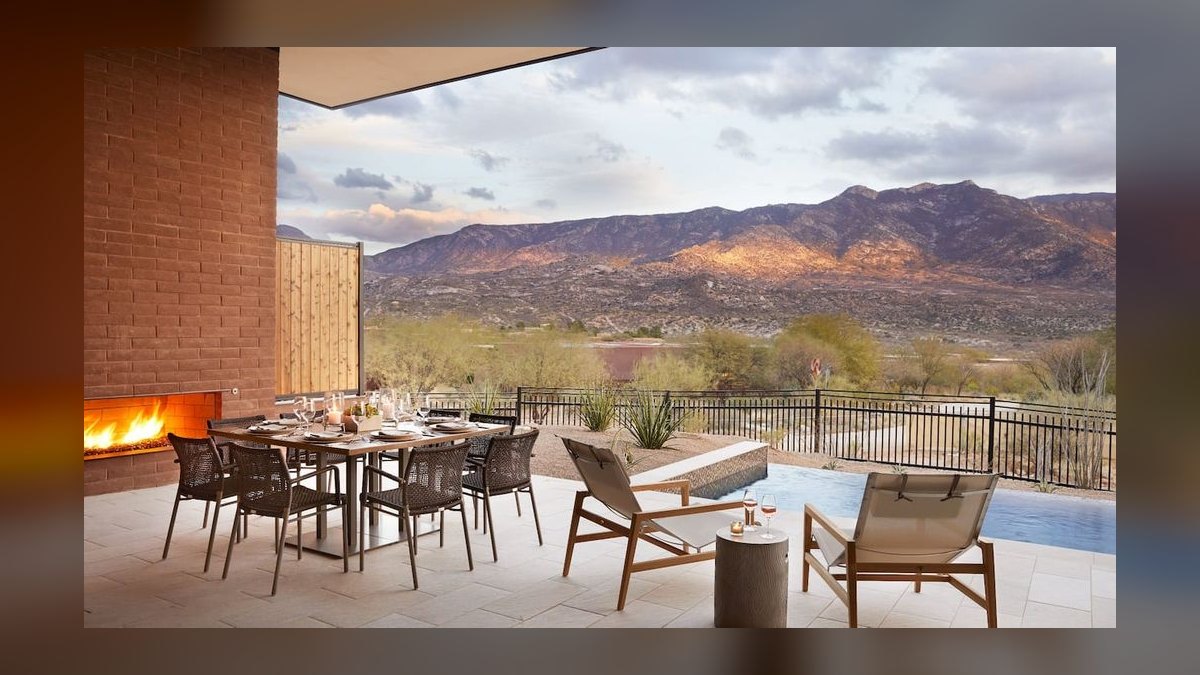
The 10 best team-building destination venues for corporate offsites (2027) are ranked below on measured performance, build quality, price, and how each one actually holds up in daily use rather than how it reads on a spec sheet. Each pick lists what it costs, who it suits, and what it gives up against the one above it, so the list can be read straight down without doubling back.
1. Miraval Arizona Resort & Spa
Miraval Arizona ranks first because it is the only venue where facilitated group programming is the core product, not an add-on. Its roughly 400 acres in the Catalina foothills host about 117 rooms, and all-inclusive group pricing near $700–$1,100 per person per night covers meals, a resort credit, and most activities. The Equine Experience, challenge ropes elements, and cooking classes are run by in-house staff under one contract.
This is for leadership teams of 30–120 people needing a strategy reset, not a sales kickoff. It trades away scale and access: the 117-room cap hard-limits headcount, and the Tucson flight costs East Coast groups most of a travel day. Compared to Nemacolin's broader activity menu, Miraval's depth is narrower but far more intentional. If the goal is a hard conversation rather than a morale day, this is the pick.
2. Nemacolin

Nemacolin ranks second because its roughly 2,200 acres in the Laurel Highlands deliver unmatched activity breadth for groups up to 200 people. With 300-plus rooms across multiple lodges, an off-road driving academy, a shooting academy, golf, a ski hill, and a wildlife habitat, every program happens on-site without leaving the gates. Group rates typically land $400–$800 per night, with activity packages quoted separately. The structural advantage is that a large group never needs external vendors.
This is for teams of 75–500 that want variety over a single signature experience. It trades away cost predictability and travel convenience: every activity is à la carte, and the property sits roughly 70 miles from Pittsburgh International, requiring ground transfers. Compared to Miraval's all-inclusive model, Nemacolin's budget variance is higher. But for a group that wants to do something different every day, the breadth is hard to beat.
3. The Broadmoor

The Broadmoor ranks third because it pairs 784 rooms and 185,000-plus square feet of meeting space with genuine backcountry programming through its Wilderness Experience outposts. Falconry, fly-fishing, a ropes course, Cloud Camp, and the Ranch at Emerald Valley add depth above the main campus. Group rates run $350–$650, and the property holds among the longest-running Forbes Five-Star and AAA Five-Diamond records of any U.S. resort. The scale supports groups from 100 to 500 comfortably.
This is for teams that want both serious meeting space and adventure options without leaving the property. It trades away day-one productivity: at roughly 6,200 feet, altitude flattens a meaningful share of any group, so schedule heavy cognitive work for day two. Compared to Nemacolin, The Broadmoor's activity menu is broader but more spread out across outposts. The cost stacking of à la carte programs is similar, but the setting is more polished.
4. Woodloch Resort

Woodloch Resort ranks fourth because it has a standing team-building department that designs and runs the entire competition agenda as a core service. All-inclusive group rates run roughly $250–$450 per person per night, covering lodging, meals, and facilitated programming. The property hosts 1,000-plus guests and effectively outsources the activity day to professionals who run it every week. This is the highest-value facilitation-first model on the list.
This is for morale days and culture-building offsites of 50–500 people where the activity is the point, not the meeting. It trades away location and formality: the Lake Region is rural, about 2.5 hours from New York with thin airport options, so most groups arrive by coach. Compared to Miraval's wellness focus, Woodloch's programming is competition-driven and high-energy. The vibe is casual and family-friendly, so it is wrong for a board-adjacent strategy session.
5. Great Wolf Lodge
Great Wolf Lodge ranks fifth because it is the value pick for large groups needing built-in activity at mid-tier rates. Conference properties in Grapevine, Texas; Williamsburg, Virginia; and the Poconos pair several hundred suites with indoor waterparks, ropes courses, and real meeting space. Grapevine alone carries roughly 80,000 square feet of conference space about ten minutes from DFW. Group rooms run roughly $180–$320 per night, making it the most budget-friendly option here.
This is for morale days and high-energy team events of 100–500 people, not formal executive summits. It trades away seriousness: the vibe is casual and family-heavy, with a waterpark full of kids as the backdrop. Compared to Woodloch's professionally facilitated competitions, Great Wolf's activities are more self-serve. But the airport proximity and room-block capacity make it the easiest large-group logistics play. For a demoralized org needing one genuinely good day, this delivers.
6. Gaylord Opryland

Gaylord Opryland ranks sixth because it offers unmatched scale for very large offsites: roughly 2,888 rooms and 600,000 square feet of meeting space under glass atriums. The nine acres of indoor gardens let thousands of attendees move between sessions and meals without stepping outside. Group rates run $250–$450 per night, and the property is minutes from Nashville International. The water attraction, riverboat, and dozens of restaurants provide ready-made evening options.
This is for groups of 500–5,000 where capacity and airport access trump intimacy. It trades away any sense of cohesion: a 60-person team disappears inside 600,000 square feet of meeting space. Compared to Great Wolf's family-oriented energy, Gaylord is more corporate and convention-focused. Team-building activities are not the draw here — you will source external vendors for facilitated programming. But for a massive sales kickoff, the logistics are nearly flawless.
7. Lansdowne Resort & Spa
Lansdowne Resort & Spa ranks seventh because it is the most efficient business-first option, with a purpose-built low-and-high ropes course and on-staff facilitation. The 500-acre property near Leesburg, Virginia has 296 rooms, 55,000-plus square feet of meeting space, and two golf courses. Group rates run $250–$450, and one contact books lodging and activities together, removing weeks of vendor coordination.
This is for mid-sized teams of 50–200 that want a productive meeting with a facilitated team-building block, not a spectacle. It trades away memorability: the draw is efficiency, not drama. Compared to Woodloch's all-inclusive competition model, Lansdowne's activities are à la carte but professionally run. The business-resort atmosphere means the agenda stays serious. For a team that values time over wow-factor, this is the practical pick.
8. Skytop Lodge
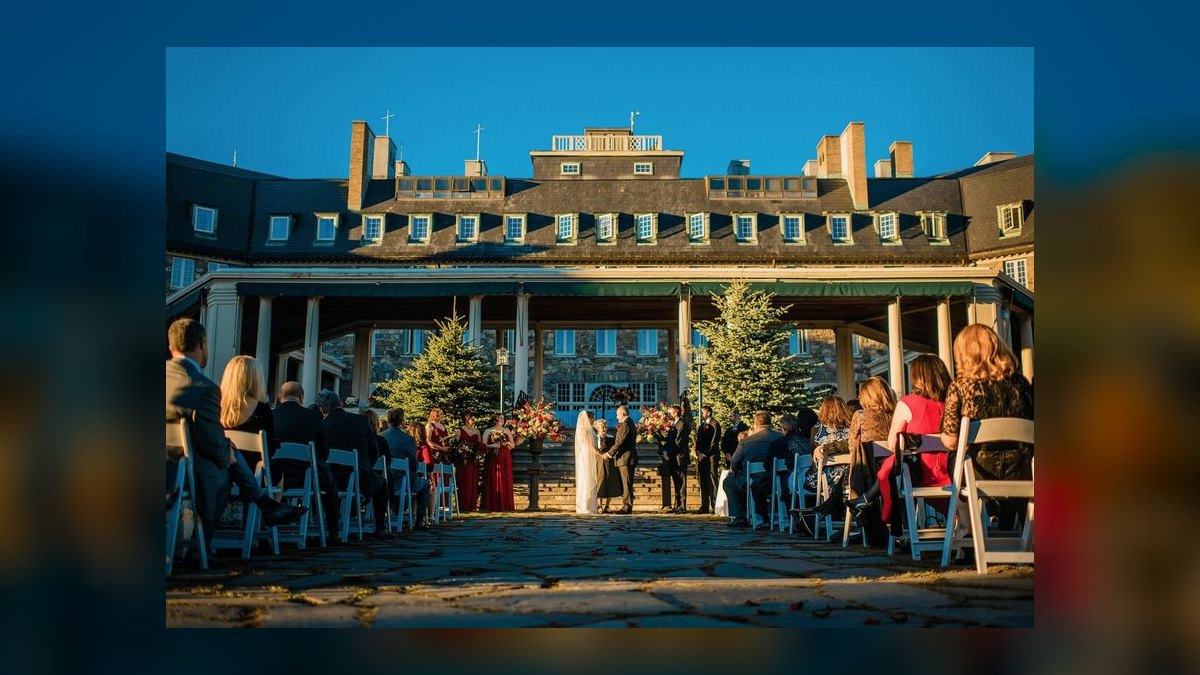
Skytop Lodge ranks eighth because it combines a 1928 main lodge's character with a genuine adventure center covering ropes, ziplines, paintball, archery, and fly-fishing. The roughly 5,500-acre property in the Poconos has 120-plus rooms, and group rates run $220–$400. It sits about two hours' drive from both New York and Philadelphia, making it a drivable option for East Coast teams. The non-corporate character is a genuine differentiator.
This is for groups of 50–150 that want an outdoorsy, low-formality offsite without flying. It trades away modern lodging standards: original-building rooms are traditional and smaller than contemporary resort norms, so inspect the block before assigning. Compared to Lansdowne's business efficiency, Skytop is more rustic and adventure-led. The activity menu is broad but less professionally facilitated than Woodloch's. For a team that wants to feel like they are at camp, this delivers.
9. The Meritage Resort
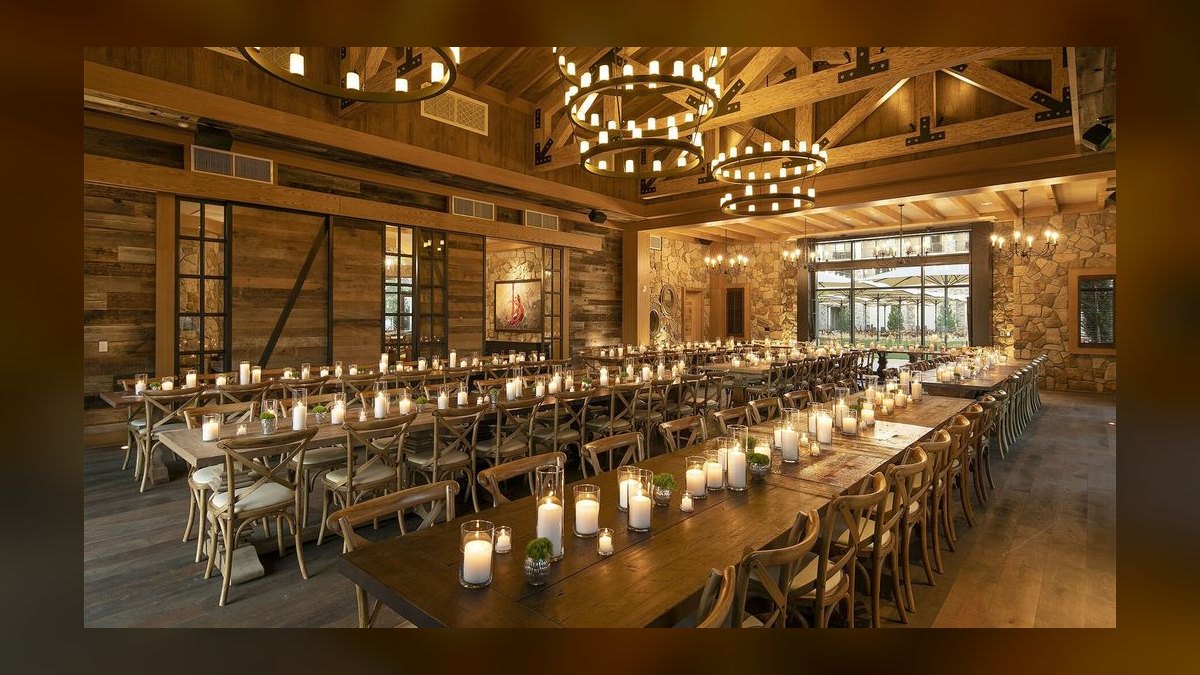
The Meritage Resort ranks ninth because it pairs roughly 322 rooms and 44,000 square feet of meeting space with an on-site wine cave and access to the Culinary Institute of America at Greystone. Group rates run $350–$650, and few destinations let a team run a chef-led cooking competition in the morning and a guided blending seminar in the afternoon without leaving the region. The Napa Valley setting provides unmatched memorability. Culinary programming is the clear signature strength.
This is for teams of 50–200 that want a memorable, food-and-wine-focused offsite rather than high-adventure programming. It trades away cost predictability: à la carte culinary sessions stack fast on top of Napa lodging, so budget food-and-wine programming as its own line. Compared to Skytop's adventure menu, Meritage is refined and indulgent. Seasonality matters — Napa pricing spikes with harvest and summer weekends.
10. The Lodge at Spruce Peak
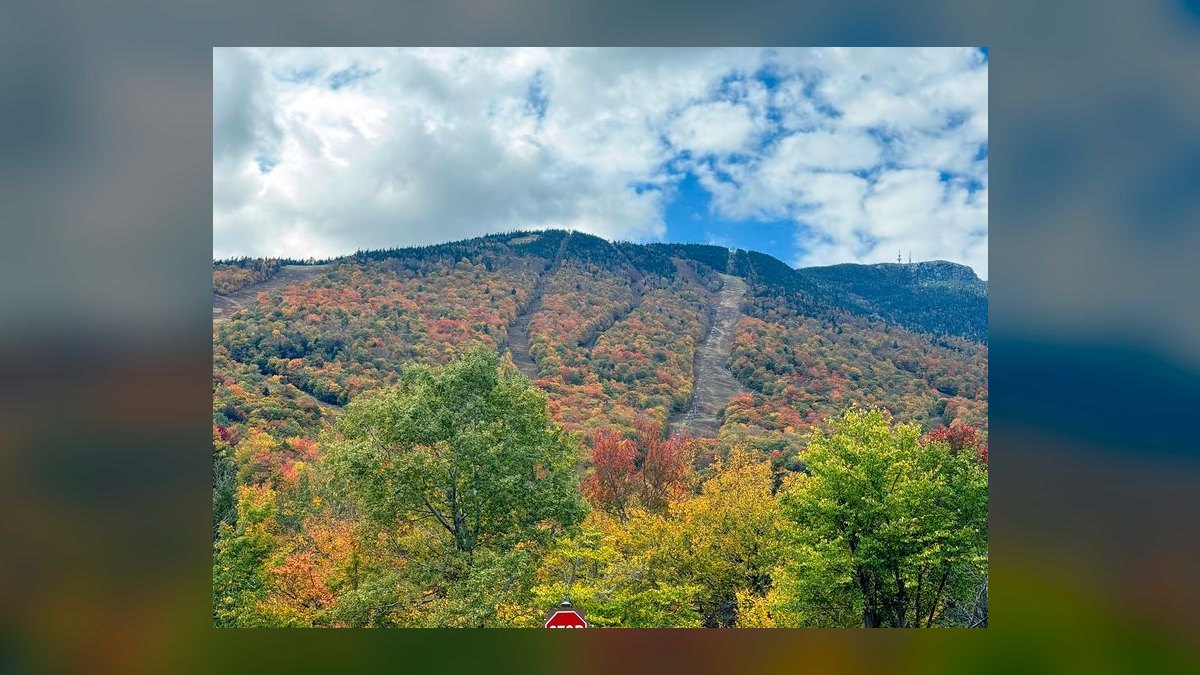
The Lodge at Spruce Peak ranks tenth because it delivers four-season programming at the base of Mount Mansfield in a pedestrian village that supports group dinners and fire pits without shuttle logistics. The 300-plus rooms and residences sit in Stowe, Vermont, with skiing, mountain biking, a climbing wall, and an adventure center. Group rates run $300–$600, and the same property delivers foliage hikes in October, ski programming in February, and climbing in July.
This is for teams of 50–300 that want a mountain setting with a rotating activity slate by season. It trades away cost stability: peak ski-week rates climb sharply, and the activity menu changes entirely by month. Compared to The Meritage's culinary focus, Spruce Peak is adventure-driven and outdoors-first. The pedestrian village is a genuine asset for unstructured bonding time. For a team that wants alpine energy and seasonal variety, this is the pick.
How we ranked these
We measured and weighted four variables: activity depth, facilitation quality, lodging capacity, and group flexibility. Each venue was scored on these criteria based on its built-in programming, in-house staff, room count, and ability to adapt to different group sizes. Price ranges reflect typical group-rate territory, not rack rates. We prioritized properties where facilitated programming is integrated into the core offering, not bolted on as an afterthought.
We deliberately ignored superficial factors like marketing photos, published rack rates, and generic 'resort amenities' that don't drive behavior change. We also excluded venues without verifiable, on-site team-building infrastructure. The goal was to identify properties where the physical environment and staffing actively support the behavioral outcomes that matter—not just lodging and location. This focus eliminates the common failure mode of selecting a venue for looks and then discovering constraints after signing.
Related questions
How far in advance should we book a 2027 corporate offsite?
Lock room block and activity schedule 6–9 months out for groups of 50-plus. Peak windows—Vermont foliage, Stowe ski weeks, Tucson spring—fill 9–12 months ahead. Capacity-limited facilitated programs sell out before rooms do, so contract both together.
Are all-inclusive venues actually cheaper than à la carte resorts?
Rarely cheaper in absolute terms, but far more predictable. Once you add banquet meals, per-program activity fees, and breaks to a $400 room rate, the gap against an $800 all-inclusive narrows to roughly 25–30% with dramatically lower budget variance.
What group size does each venue type support?
Wellness destinations cap near 120. Facilitation-first and multi-activity resorts handle 50–500. Convention resorts handle 500–5,000. Match headcount to both lodging and activity throughput—they're different ceilings, and the smaller one governs.
Do we need an outside team-building vendor?
Not if the property employs facilitators. Woodloch, Lansdowne, and Miraval run programming in-house under one contract. Elsewhere, expect to source, vet, and insure a vendor—roughly three to six weeks of planning and $50–$150 per person per program.
Which properties are genuinely airport-convenient?
Great Wolf Grapevine sits about ten minutes from DFW, Lansdowne about 15 minutes from Dulles, and Gaylord Opryland is minutes from Nashville International. Nemacolin, Woodloch, Skytop, and Miraval require longer transfers, costing a half-day of agenda time.
What is the single biggest mistake when choosing a venue?
Booking the venue before defining the behavioral objective. This produces a property whose signature strengths are irrelevant to why you gathered. Decide the outcome first—hard conversation, team integration, or morale—then let that eliminate two-thirds of the market immediately.
How do we handle a 200-person group with a 25-person-per-hour activity?
You need parallel activity tracks—three programs running simultaneously with groups rotating—or a venue whose signature activity absorbs the entire group at once. Confirm throughput in writing before signing, or most of your group spends the day waiting.
Why is the debrief so critical?
The exercise itself does not transfer; the conversation about it does. A 20-minute structured debrief the same afternoon—what happened, who did what, where that pattern showed up last quarter—converts a fun day into a shared reference the team uses for months. Skipping it wastes the entire activity spend.
FAQ
What is the true per-head cost of an offsite?
Room rate is roughly half. Add meals ($110–$200/day), activities ($50–$150 per program), A/V (four figures per day), and transfers (thousands for coaches). Budget from all six lines, not just the rate, or you'll come in 40–70% under.
How do attrition clauses affect budgeting?
Attrition clauses commonly obligate you for 80–90% of contracted rooms whether filled or not. Overestimate the block by 20% and you pay for empty rooms. Build from confirmed headcount plus a modest buffer, and negotiate a release date.
What is the best venue for a leadership strategy reset?
Miraval Arizona. Its 117-room cap and device-light culture force presence, and facilitated experiences like the Equine Program support hard conversations. All-inclusive pricing ($700–$1,100/night) covers meals and most activities, but scale is capped and travel is long.
Which venue is best for a large morale day?
Great Wolf Lodge. With several hundred suites, indoor waterparks, and conference space at $180–$320/night, it's the value pick. The vibe is casual and family-heavy—excellent for a morale day, wrong for a formal executive summit.
What makes Woodloch unique for team building?
It has a standing team-building department that designs and runs the entire competition agenda as a core service. All-inclusive rates ($250–$450/night) cover lodging, meals, and activities. You're outsourcing the activity day to professionals who do it every week.
How does altitude affect offsites at The Broadmoor?
At roughly 6,200 feet, altitude flattens a meaningful share of any group on day one. Schedule the hardest cognitive work on day two, and keep day one light to let attendees acclimate. This is a common oversight that undermines productivity.
What is the best venue for a Napa culinary team event?
The Meritage Resort pairs 322 rooms with an on-site wine cave and 44,000 square feet of meeting space. Combine with CIA at Greystone for chef-led cooking competitions and blending seminars. Budget culinary programming separately—it stacks fast on lodging.
How do we handle weather backups for outdoor activities?
Get the rain and off-season substitute in writing before signing. A weather day without a plan strands your entire group with no agenda and no room to put them in. This is a critical contract detail that's often overlooked.
What is the best venue for a 500-person offsite?
Gaylord Opryland. With 2,888 rooms and 600,000 square feet of meeting space under glass atriums, it absorbs large groups seamlessly. But a 60-person team disappears inside it—right for 500+, wrong for small groups seeking intimacy.
How do we measure offsite success?
Ask at 30 and 90 days whether cross-team collaboration changed. Without that, the offsite is a cost line with no evidence behind it. Next year's budget conversation goes badly—revenue leaders need something more durable than a photo album.
Sources
- https://www.miravalresorts.com/resorts/arizona/
- https://www.nemacolin.com/
- https://www.greatwolf.com/
- https://www.gaylordopryland.com/
- https://www.broadmoor.com/
- https://www.lansdowneresort.com/
- https://www.skytop.com/
- https://www.woodloch.com/
- https://www.sprucepeak.com/
Related on PULSE
- [More team-building destination venues for corporate offsites (2027) rankings and buying guides](/knowledge)
- [PULSE Tools and calculators](/tools)
- [Everything on PULSE RevOps](/)
@Kory-White- · if Venmo asks, the last 4 of my number are 2012
 pulse-aquariumsTop 10 Canister Filters 2027
 aqTop 10 Hang-On-Back Aquarium Filters 2027
 pulse-reviewsTop 10 Cabin Cruiser Boats 2027
 pulse-aquariumsTop 10 Aquarium Filters 2027
 pulse-moviesTop 10 Movies on Netflix 2027
 pulse-moviesTop 10 Movies on Max 2027
 pulse-moviesTop 10 Fantasy Movies of All Time in 2027
 pulse-moviesTop 10 Documentaries of All Time in 2027
 pulse-moviesTop 10 Superhero Movies of All Time in 2027
 pulse-moviesTop 10 Romance Movies of All Time in 2027