


GTM Playbook for GovTech — The Complete Operator Guide in 2027
Quality
Certified
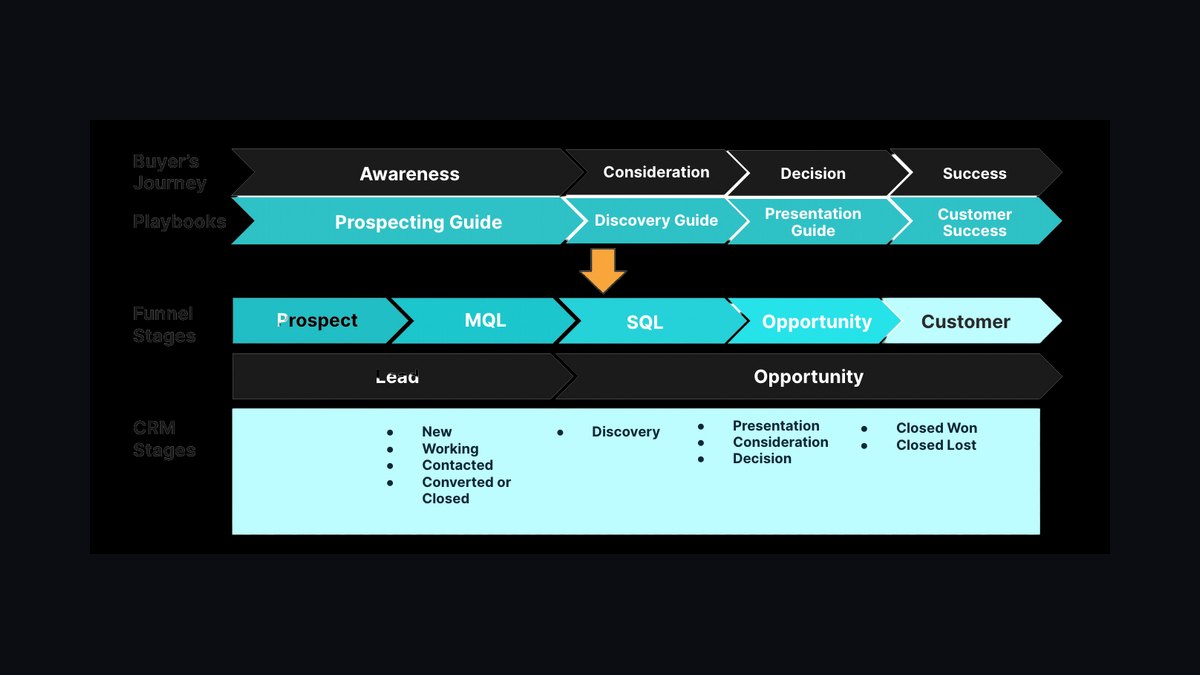
Selling GovTech in 2027 means running an authorization-gated, vehicle-anchored motion across three distinct buyer segments — federal civilian and DoD, state and local, and international public bodies. FedRAMP status gates federal cloud access, capture work precedes RFPs by a year or more, and distributors plus systems integrators carry most of the paper.
Segment first: the three GovTech buyers are not one market
The most expensive mistake in public sector go-to-market is treating "government" as a single addressable segment. It isn't. The buying committee, the money source, the procurement instrument, the compliance floor, and the sales cycle all differ so sharply between federal, state/local, and international public bodies that a single playbook applied to all three produces three mediocre motions instead of one strong one.
Federal civilian and DoD. The committee is typically a CIO or CTO for platform fit, a CISO for authorization risk, a program lead or program executive office who owns the mission outcome and the money, and a contracting officer who owns the instrument. The contracting officer is not a rubber stamp — they can kill a technically won deal on a competition or scope technicality. Trigger events that move this segment: a new political appointee arriving with a modernization mandate, an appropriation or continuing resolution finally landing, a large legacy program hitting a documented failure milestone, or a new Other Transaction Authority (OTA) award opening a pathway that bypasses traditional FAR-based procurement. Deal sizes span a wide band — a niche tool sold into one sub-agency may land in the low six figures, while an enterprise platform sold department-wide runs to eight figures. Cycles run roughly 12–24 months civilian, and longer at DoD, where classification, testing, and program-of-record alignment add time.
State and local. Fifty states, thousands of counties, and tens of thousands of municipalities — a far larger logo count with much smaller individual contracts. The committee compresses: often a state CIO, an agency director who owns the program, and a procurement officer. Deal sizes typically run from the tens of thousands into the low millions. What makes this segment tractable is that state RFPs are public, calendared, and often reused across states; what makes it hard is that budget is frequently a federal pass-through with its own strings attached, and a gubernatorial transition can freeze everything for two quarters. Cycles compress to roughly 9–18 months, and cooperative purchasing vehicles let one state's competed award become dozens of states' shortcut.

International and supranational. UN agencies, EU institutions, multilateral development banks, defense alliances, and national digital-government units. These buyers run their own procurement law, their own data-residency requirements, and in many cases their own certification regimes that do not recognize US FedRAMP at all. A vendor that assumes its FedRAMP package travels internationally will discover it has to rebuild the compliance story per jurisdiction. Treat this as a deliberate third motion or skip it — do not treat it as federal overflow.
The practical implication: pick one segment as the beachhead and staff it properly before opening the second. Vendors that split a single seller's quota across federal and state/local usually get a seller who is expert in neither procurement system, because the artifacts, vehicles, and language genuinely do not transfer.
The motion that fits: capture, vehicle, authorization, award
Commercial B2B sales is a demand-capture motion — find the buyer who has the problem, prove value, close. Federal GovTech is closer to a construction bid: the work that determines who wins happens long before the formal competition opens, and by the time the RFP is public, the outcome is often substantially decided by whose requirements shaped the document.

Capture is the real top of funnel. Capture management is the disciplined pre-RFP work of building agency relationships, understanding the mission problem in the program office's own language, contributing to market research (responding to Requests for Information and Sources Sought notices), and positioning your past performance against the evaluation criteria that will eventually appear. A vendor that first sees an opportunity when the solicitation hits SAM.gov is generally responding to a document written around someone else's differentiators. Serious federal vendors carry a dedicated capture function and treat major opportunities as multi-quarter campaigns with named owners, gate reviews, and explicit bid/no-bid decisions.
Vehicle access is a channel, not paperwork. Contract vehicles — GSA Schedule, NASA SEWP, NIH CIO-SP, GSA OASIS+, Army ITES, the 8(a) STARS family, plus state-level cooperatives — are the roads the money travels on. A contracting officer with an existing vehicle can issue a task order in weeks; without one, the same purchase may require a full open competition costing many additional months. This is why vehicle strategy belongs in the GTM plan, not the legal appendix. Most early-stage vendors reach vehicles through a distributor or a prime rather than holding their own schedule on day one.
Authorization is the gate. For cloud services sold to federal agencies, the operative question is FedRAMP status — whether you're pre-authorization, in process, or authorized at Moderate or High. Agencies grant an Authorization To Operate (ATO) for a specific system in a specific environment, and that ATO leans on the FedRAMP package. DoD layers its own impact levels on top for controlled and classified workloads. The program is measured in quarters and meaningful capital: sponsorship, a third-party assessment organization, continuous monitoring, and the engineering work of running a separate government environment. Defense-adjacent vendors also face CMMC requirements flowing down through the supply chain, and data-type-specific regimes — criminal justice information, federal tax information, protected health information — apply on top depending on what the system touches.
Award and protest. Even a clean win is not final until the protest window closes. Losing bidders can challenge an award, and a sustained protest can reset a competition. Build this into forecasting: a signed award is not the same as recognized revenue timing, and pipeline discipline means modeling the protest tail rather than pretending it doesn't exist.

The adjacent-motion note worth absorbing: regulated commercial sectors — healthcare systems, financial institutions, critical infrastructure operators — run a structurally similar motion. Long security review, third-party attestation gates, procurement office as a distinct veto point. A team that builds real capture and compliance muscle for government can usually port it to those neighboring segments with modest retooling, which materially improves the return on the compliance investment.
Unit economics: what the compliance tax does to your model
The economics of GovTech look wrong if you benchmark them against commercial SaaS, because two large costs sit outside the normal CAC line and one large benefit sits outside the normal retention line.
The fixed compliance investment. Achieving and maintaining a federal authorization is a company-level capital expenditure, not a per-deal cost. It funds a separate government cloud environment, an independent assessment, documentation that runs to hundreds of controls, and an ongoing continuous-monitoring obligation with monthly reporting. It is spent before the first dollar of federal revenue arrives. The correct way to model it is as a market-entry cost amortized across the federal segment's projected contract value — which is precisely why a vendor with a small average deal size should be skeptical about federal entry. If the authorization program costs more than a few years of realistic federal revenue, the segment is not worth entering yet.
The pursuit cost per opportunity. Major federal pursuits carry real, cash cost: capture staffing over multiple quarters, proposal writers, pricing analysts, compliance review, and often teaming negotiations. Bid-and-proposal spend is a recognized line item in this industry precisely because it is large enough to need governing. The practical control is a hard bid/no-bid gate with honest criteria — do we have past performance the evaluators will credit, do we have a vehicle, did we shape any requirement, do we have a customer who wants us specifically. Two "no" answers should usually mean no bid. Undisciplined bidding is how GovTech companies burn a year of runway on a 5% win rate.

Payback and cycle length. Because cycles run one to three years and pursuit costs are front-loaded, CAC payback in federal is measured in years, not months. That is only survivable because of the offsetting benefit.
The retention offset. Government contracts are structurally sticky. A typical federal IDIQ or contract structure includes a base period plus option years, giving a multi-year runway that renews administratively rather than through a competitive re-buy each year. Switching costs are enormous once a system holds an ATO, is integrated into mission workflows, and has trained users across a distributed agency. Net revenue retention in public sector portfolios that expand well — additional agencies, additional mission areas, additional classification environments — sits comfortably above 100%, and the expansion path is legible: a task order under an existing vehicle for an adjacent program office is dramatically cheaper to win than the original award.
Services drag. Budget honestly for a services-to-license ratio well above what commercial deals require. Government deployments involve legacy integration, accreditation support, data migration from decades-old systems, and training at scale. Whether you staff that yourself or route it to an integrator is a strategic choice: doing it yourself protects the customer relationship and margin visibility; routing it to a partner keeps your headcount lean and buys you an advocate inside the account. Most vendors end up doing a bit of both, with a clear line about which work they will never take on.
Pricing structures that survive contracting review. Four models dominate. Per-user enterprise licensing works for productivity, collaboration, and CRM-shaped products, and maps cleanly to an agency's headcount planning. Per-system or consumption pricing fits infrastructure and data platforms, mirroring commercial cloud metering. Per-mission or per-platform pricing fits defense and intelligence work where the unit of value is a deployed capability rather than a seat. Firm-fixed-price plus time-and-materials fits services and custom integration. Whichever you choose, expect the contracting officer to demand price transparency, a defensible basis of estimate, and terms about escalation across option years — government pricing is scrutinized in ways commercial pricing rarely is, and a pricing model you can't explain line by line will slow an award.

A note on forecasting. Standard SaaS forecast hygiene breaks here. Stage-weighted pipeline based on commercial conversion rates will overstate near-term revenue badly. Better practice is to forecast against procurement milestones — RFI released, RFP released, proposal submitted, evaluation complete, award, protest window closed, task order issued — because those events are externally observable and dated, unlike a champion's stated enthusiasm.
Common misfires: where GovTech go-to-market breaks
Treating authorization as a later problem. The most common fatal sequencing error is building a federal pipeline before starting a compliance program. The pipeline generates interest, the interest converts to a solicitation requirement you cannot meet, and the deal disappears to an authorized competitor. Authorization work should start when federal is a real strategic bet, not when the first deal stalls on it.
Hiring a commercial seller and hoping. A strong enterprise SaaS AE dropped into federal will run a discovery-to-close motion into a system that does not reward it. They will chase the program office (correct) and ignore the contracting officer (fatal), misjudge fiscal-year timing, treat a Sources Sought notice as noise rather than the single best shaping opportunity in the cycle, and forecast on champion enthusiasm. Hire people who have carried a federal quota, or pair a commercial seller with a capture lead who has.
Trying to route around distributors and integrators. Founders regularly look at distributor margin and conclude they should go direct. In practice, the distributor holds the vehicle, knows the contracting officers, handles the transaction mechanics, and is already on the agency's approved list. The integrator holds the prime relationship on large programs and controls whether your product gets specified. Bypassing them rarely saves margin — it usually just adds many months to procurement and removes your advocate from the room. Negotiate margin hard; do not try to eliminate the channel.

Ignoring the fiscal calendar. The federal fiscal year ends September 30, and unobligated funds expire. That creates a genuine late-summer buying window and a corresponding first-quarter lull. Vendors that staff and pipeline-plan on a calendar-year commercial rhythm consistently miss the one predictable demand spike the segment offers. States run their own fiscal calendars, most commonly ending June 30 — plan segment-specific calendars, not one company-wide one.
Over-customizing per agency. Government buyers will happily accept bespoke work, and early revenue tempts vendors to say yes. Do it too often and you end up operating dozens of forks, each with its own ATO boundary and upgrade path, which destroys gross margin and makes the product unshippable. The discipline is a configurable core with agency-specific configuration, not agency-specific code.
Under-resourcing past performance. Evaluators weight demonstrated relevant experience heavily. A vendor with no government past performance is structurally disadvantaged no matter how good the product. The standard countermeasure is deliberate: subcontract under a prime on a smaller program specifically to build a citable record, pursue small-business or set-aside pathways where eligible, or take an initial pilot at thin margin because the resulting citation unlocks larger competitions.
Neglecting the security-and-clearance operational reality. Cleared work requires cleared people, facility accreditation, and hiring timelines measured in many months. Companies discover this after winning work they cannot legally staff. If classified work is in the plan, the personnel pipeline starts long before the first award.
Operating model and cadence: governing a motion this slow
A quarterly commercial sales rhythm doesn't fit a segment where deals span years and the gating events are compliance milestones and procurement notices. Public sector operators generally run three overlapping cadences, each with distinct owners and distinct artifacts.

Weekly — capture and pipeline. The core operating meeting. Attendance: the revenue leader, the federal sales lead, the capture lead, and the contracts lead. The agenda is not a deal review in the commercial sense; it is a review of externally dated procurement events. New solicitations and Sources Sought notices posted this week. Bid/no-bid decisions due. Proposal deadlines and who owns each volume. Task order opportunities under vehicles you already hold. Teaming decisions — are we prime or sub on each pursuit, and is the teaming agreement signed. The single most valuable output is a clean bid/no-bid decision, because it protects proposal capacity for the pursuits you can actually win.
Monthly — programs and task orders. Attendance: customer success or program management leadership, delivery leads, and finance. This meeting is about the installed base, which in GovTech is where most durable revenue lives. Track option-year exercise decisions and their dates — an option year that lapses because nobody worked it is pure avoidable churn. Track task order burn against ceiling, because a program approaching its ceiling is either an expansion opportunity or a delivery risk. Track at-risk programs with named recovery owners. Track expansion candidates: adjacent program offices inside accounts where you already hold an ATO, which is the cheapest revenue available to a public sector vendor.
Quarterly — authorization and compliance posture. Attendance: the CISO, compliance lead, and the engineering leader who owns the government environment. Track authorization renewals and continuous monitoring findings. Track ATO expiration dates across every customer agency — an expiring ATO is an existential account risk that surfaces with plenty of warning if anyone is watching, and as a surprise if nobody is. Track certification status for whatever regimes apply to your data types. Track the roadmap dependency: which planned product changes will require a significant change request against your authorization boundary, because that's an engineering constraint the product team needs to see a quarter or two early rather than the week before a release.

Team sequencing. The pattern that works: a founding team that includes genuine government domain credibility, then a first federal seller once there is a repeatable reason for an agency to buy, then a capture or contracts lead — this hire is often delayed too long, and the delay shows up directly as a poor RFP win rate. State and local sellers come next if that segment is in the plan, since the motion is different enough to warrant a separate person. A public sector revenue leader arrives once there are enough sellers and pursuits to need real coordination across agencies and vehicles. Marketing in this segment is heavily earned-media and event-driven: trade press read by government IT leaders, named-agency case studies with documented mission outcomes, and a small number of high-signal conferences where program offices and integrators actually gather.
The one-page operator scorecard. Track: number of active captures by agency, bid/no-bid ratio, win rate on submitted proposals, average days from solicitation to award, vehicle coverage as a percentage of target opportunities, authorization milestone status, ATO expirations inside 180 days, option-year exercise rate, and expansion task orders per existing account. Nine numbers, reviewed on the cadences above. That is the entire management system — this Playbook is Complete in the sense that an Operator can run GovTech revenue off those numbers and those three meetings without inventing anything further.
Related questions
Can a startup sell to the federal government without FedRAMP?
Yes, for non-cloud software, on-premises deployments, hardware, and services. And a vendor can sell while "in process" if an agency sponsors them. But for multi-tenant SaaS sold into most civilian agencies, an authorization is effectively required and should be planned before pipeline-building.
Is state and local a good beachhead before federal?
Often, yes. Shorter cycles, lower compliance floors, public and calendared RFPs, and cooperative vehicles that let one competed win travel across states. It also generates the past performance citations that federal evaluators credit. The trade-off is smaller contract values.
How do OTAs change the picture for defense buyers?

Other Transaction Authority agreements let DoD contract outside standard FAR procedures for prototypes and follow-on production, often through consortia. They can compress timelines meaningfully and are the main reason newer defense vendors reached scale quickly. They still require real capture work and mission alignment.
What does a distributor actually do that a vendor can't?
Holds the contract vehicle, carries the transaction and invoicing mechanics, maintains relationships with contracting officers across many agencies, and sits on approved supplier lists. For a small vendor, that's years of infrastructure available for a margin percentage.
When is international public sector worth pursuing?
Once the domestic motion is repeatable and someone owns the region full-time. Different procurement law, different data residency rules, and certification regimes that don't recognize US authorizations mean it's a separate build, not an extension of the federal motion.
FAQ
Why do federal sales cycles take so long?
Because several sequential processes stack: requirements development and market research, budget appropriation and obligation, formal competition and evaluation, award, a protest window, and then a security authorization before the system can operate. Each has its own owner and timeline, and they mostly cannot be run in parallel. The vendor controls only a fraction of the elapsed time, which is why capture work — influencing the earliest stage — has outsized leverage on the whole cycle.
What is the difference between FedRAMP authorization and an agency ATO?
FedRAMP is a standardized security assessment of a cloud service that produces a reusable package. An ATO is a specific agency official's formal decision to accept the risk of operating that system for their mission. FedRAMP authorization makes the ATO far easier by giving the agency a package it can review and reuse, but the ATO is still granted per agency and per system, and it expires and must be maintained.

How much of GovTech revenue actually flows through partners?
A large majority of commercial software reaching federal agencies moves through distributors and resellers rather than direct vendor paper, and on major programs an integrator typically primes the contract with software vendors underneath. Plan for a partner-led revenue structure and price accordingly, rather than treating channel margin as an unexpected deduction discovered late.
Should the first public sector hire be a seller or a capture lead?
If there is already inbound agency interest and no one who can navigate a solicitation, hire capture or contracts first. If there is no pipeline at all, hire a seller with existing agency relationships. The failure mode to avoid is having several sellers and no one who owns proposals, compliance matrices, and vehicle strategy — that configuration produces a busy team with a poor win rate.
How do you build past performance with no government customers?
Three standard routes: subcontract under an established prime on a smaller task order to earn a citable record; pursue small-business, set-aside, or innovation-program pathways where eligible; or take an initial pilot or limited-scope award at thin margin specifically because the resulting reference unlocks larger competitions. Treat the first government contract as a market-entry investment rather than a profit center.
Does the fiscal year-end buying spike actually matter?
Yes, and it is one of the few genuinely predictable demand patterns in the segment. Federal funds that go unobligated by September 30 generally expire, which produces real late-summer purchasing activity, often through existing vehicles because those transactions can close fastest. States run separate fiscal calendars. Plan proposal and delivery capacity around the relevant calendar rather than a commercial quarter rhythm.
Sources
- https://www.fedramp.gov/
- https://www.gsa.gov/technology/it-contract-vehicles-and-purchasing-programs
- https://sam.gov/
- https://www.gao.gov/information-technology
- https://www.acquisition.gov/far
- https://dodcio.defense.gov/cmmc/
- https://www.nascio.org/
- https://www.sewp.nasa.gov/
- https://www.naspovaluepoint.org/
- https://www.cisa.gov/
Related on PULSE
- GTM Playbook for IoT Hardware in 2027 — The Complete Operator Guide
- GTM Playbook for Aviation and Aerospace in 2027 — The Complete Operator Guide
- GTM Playbook for Automotive and Auto Tech in 2027 — The Complete Operator Guide
- GTM Playbook for Pharma and Life Sciences in 2027 — The Complete Operator Guide
- GTM Playbook for AgTech in 2027 — The Complete Operator Guide
- GTM Playbook for Travel and Hospitality in 2027 — The Complete Operator Guide
This page will be disappearing soon. Save it to your device for $1 — or read it free while it is here.
@Kory-White- · if Venmo asks, the last 4 of my number are 2012
This page is gone.
This one is off the shelf now. $1 keeps it on your phone for good — the whole page, pictures and diagrams included.
 gtm-playbookHow do you build an HR Tech and HRIS go-to-market motion in 2027?
 gtm-playbookHow do you build a distribution and wholesale ERP go-to-market motion in 2027?
 gtm-playbookWhat is the go-to-market playbook for launching an AI product in 2027?
 gtm-playbookGTM Playbook for MarTech and AdTech — The Complete Operator Guide in 2027
 gtm-playbookGTM Playbook for AgTech — The Complete Operator Guide in 2027
 gtm-playbookWhat is the go-to-market playbook for developer-led growth in 2027?
 gtm-playbookHow do you build the GTM playbook for a driving school in 2027?
 gtm-playbookGTM Playbook for General Contractors in 2027
 gtm-playbookHow do you build a renewable energy trading and ETRM software go-to-market motion in 2027?
 gtm-playbookGTM Playbook for Property Management Companies in 2027