


How do you build the GTM playbook for a convenience-store (C-store) operator in 2027?
Quality
Certified
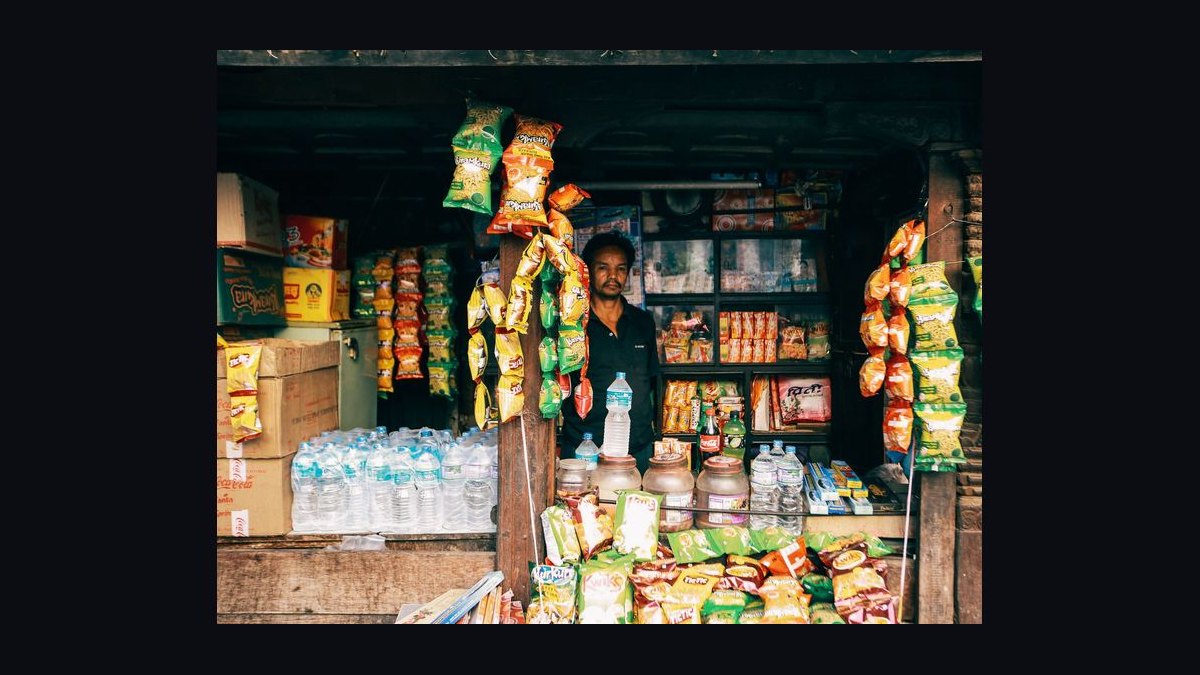
The C-store GTM playbook in 2027 is built on one inversion: fuel drives traffic but the inside store drives profit. Fuel is roughly 60-72% of revenue yet produces only about 25-35% of gross profit; inside-store sales (foodservice, tobacco, beverages, snacks, lottery) are 28-40% of revenue but 65-75% of profit. So the playbook optimizes fuel as a customer-acquisition channel and monetizes the trip inside.
Three forces shape the strategy. First, structure: the U.S. has roughly 150,000+ locations, still majority single-store independents, with the balance held by chains — 7-Eleven (9,300+ U.S. stores), Circle K/Couche-Tard (~7,200), Casey's (~2,650), Wawa (~1,070), Sheetz (~740), QuikTrip (~1,000). Second, foodservice as the wedge: made-to-order food carries 48-58% gross margins versus 26-34% on packaged goods, and foodservice-heavy chains command 9x-13x EBITDA in M&A versus 5x-7x for low-foodservice operators. Third, consolidation: PE-backed rollups (ARKO, Yesway, GPM, Mountain Express, Maverik) buy single-store independents at roughly 4x-6.5x EBITDA and scale them into 8x-11x platforms via supply-purchasing scale, foodservice retrofits, and loyalty.
The operating levers that matter: fuel-to-inside conversion (38-52% at chains), foodservice attach (18-32% of transactions), loyalty-app penetration above 35% of transactions (which lifts basket 18-31% and trip frequency ~2.4x), inside-store sales per square foot ($480-$880), and gallons per store/day (4,200-7,800). Build the playbook around acquiring or developing the right sites, retrofitting foodservice over a 24-36 month ladder, and pushing loyalty penetration — then position for a rollup exit or scale into a chain.
1The C-Store Operator Buyer + Unit Economics

1.1 The Three Operator Profiles
Profile A — The Single-Store Independent: the majority of U.S. C-stores. Owner-operator, often a family business. Investment $400K-$1.4M (real estate + fuel tanks + equipment). AUV $1.4M-$3.2M total revenue, $80K-$220K operator take-home.
Profile B — The 5-50 Store Regional Operator: mid-market chains often built through 1980s-2000s buildouts. Investment $4M-$30M+. Examples: Stinker Stores (Idaho), Sprint Mart (Mississippi), GetGo (Giant Eagle), Stewart's Shops (NY — also a dairy-processor vertical), Kum & Go (Maverik-acquired).
Profile C — The National Chain Operator + Franchisee: 7-Eleven (Seven & i Holdings, 9,300+ U.S. corporate + franchise), Circle K (Couche-Tard, ~7,200), Casey's (publicly traded, ~2,650), Wawa (private, ~1,070, no franchising), Sheetz (private, ~740, no franchising), RaceTrac, QuikTrip. 7-Eleven and Circle K are the only major franchise systems — Wawa, Sheetz, QuikTrip, and Casey's run corporate-only.
1.2 Unit Economics For A Typical 4,500 Sq Ft + 8-Pump C-Store
Revenue mix: Fuel 60-72% / Inside-store 28-40%. Inside-store breakdown: Tobacco 28-35%, Foodservice 18-32%, Packaged Beverages 14-18%, Beer 6-12%, Snacks 6-9%, Lottery + Services 6-10%. Gross profit reverses: fuel produces 25-35% of GP, inside-store 65-75%.
Cost structure: Real estate (owned or NNN lease) $7K-$22K/month. Labor: 4-8 FTE per store, $26K-$48K/year per FTE = $130K-$330K total. Credit-card fees: 1.6-2.4% of total sales (largest non-labor expense). Inventory shrink: 1.4-2.6%. Utilities: $2.8K-$5.4K/month. Store-level EBITDA: 6-14% (single-store independent), 10-18% (regional chain), 14-22% (Casey's-, Wawa-, Sheetz-tier with foodservice scale).
1.3 The Foodservice Profit Wedge
Foodservice at 8-14% of revenue produces 22-38% of inside-store gross profit because margins run 48-58% versus 26-34% on tobacco and packaged goods. Wawa, Sheetz, Casey's, RaceTrac, and QuikTrip built made-to-order programs (touchscreen ordering, hot food prepared on-site, fresh sandwiches, pizza, breakfast) generating an estimated $2.4M-$4.8M per store in foodservice alone. That is the per-store EBITDA premium driving 9x-13x EBITDA M&A multiples for foodservice-heavy chains.
2The Channel Mix For C-Store Revenue
2.1 Fuel — The Traffic Anchor

Fuel produces roughly 4-9¢ retail margin per gallon after 2-3% credit-card fees on a $3.20-$4.20/gallon price. At ~5,200 gallons/day, that is about $260-$580/day, or $95K-$211K in annual fuel gross profit. Fuel's real value is traffic — every fuel transaction is a chance to convert to an inside-store sale. Fuel-to-inside conversion runs 38-52% at chains and 20-30% at independents (weaker signage and foodservice).
2.2 Tobacco — The Inside Anchor

Tobacco is 28-35% of inside-store revenue at 18-26% gross margin. Categories: cigarettes (declining ~4-7%/year), e-vapor (growing, but disrupted by FDA enforcement), modern oral nicotine (Zyn, On!, Velo — the fastest-growing category), and cigars (steady). Age-verification compliance via IDology, AgeChecker.net, or POS-integrated ID scanning is mandatory.
2.3 Foodservice — The Strategic Wedge

Coffee (16-24% of foodservice revenue), breakfast sandwiches and pastries (14-22%), made-to-order lunch/dinner (28-44%), roller-grill and pizza (12-20%), and fountain/frozen beverages such as Slurpee and Slush (12-18%). Touchscreen MTO kiosks (Verifone Commander integrations, Bunn equipment) drive 22-38% higher foodservice attach.
2.4 The Loyalty + App Channel

Leading programs: 7Rewards (90M+ U.S. members, 7-Eleven), Inner Circle (Couche-Tard/Circle K), Casey's Rewards, Wawa Rewards, Sheetz Rewardz, GetGo Advantage. App-channel transactions run 22-31% higher AOV with trip frequency ~2.4x baseline. The 2027 best practice is app penetration above 35% of total transactions.
3The Sales Motion — Multi-Unit Acquisition + Greenfield

3.1 The M&A Rollup Playbook
The category has consolidated heavily since 2018 through PE rollup. Active buyers in 2027 include ARKO Corp (publicly traded, rollup of GPM), Yesway, Mountain Express, Empire Petroleum, Sun Holdings, and Maverik (acquirer of Kum & Go). Acquisition multiples: roughly 4x-5.5x trailing EBITDA for single-store independents, 5.5x-7.5x for 5-50 store regionals, 8x-11x for foodservice-heavy chains, and 11x-14x for publicly-comparable Casey's-tier operators. Deal sourcing runs through advisors such as Matrix Capital Markets, NRC Realty & Capital Advisors, and Houlihan Lokey.
3.2 Greenfield Site Development
A new ground-up C-store with an 8-pump fuel station builds for roughly $3.8M-$7.2M all-in in 2027 (land $800K-$2.4M, building + canopy $1.6M-$2.8M, fuel tanks + equipment $640K-$1.1M, store equipment $420K-$680K). Cap rates on C-store NNN real estate have compressed into the mid-5% to mid-6% range. A trade-area study (Buxton, Engage3) should precede site selection.
3.3 Brand Conversion + Franchise Recruitment
7-Eleven runs the largest C-store franchise program in the U.S. with several thousand franchised units. Conversion path: an independent converts to the 7-Eleven brand under a multi-year franchise agreement with roughly a 50% inside-store gross-profit split plus brand-supplied inventory. Circle K franchises on similar economics. The franchise pitch is foodservice + supply scale + brand recognition + technology.
4The Channel Mix For Vendors Selling Into C-Stores
4.1 The McLane / Core-Mark Wholesale Channel
McLane (Berkshire Hathaway), Core-Mark (Performance Food Group), and Eby-Brown are the dominant U.S. C-store wholesale distributors, collectively servicing the large majority of independent C-store inventory volume. Vendors selling new SKUs must get onto a distributor's order book before chain HQ will list them. Distributor slotting fees typically run $4K-$45K per SKU per region.
4.2 The NACS Show + Industry Channel
The NACS Show (October, Las Vegas) is the industry's must-attend event, drawing roughly 24,000+ attendees and 1,200+ exhibitors. Brand activations and chain-buyer meetings drive most major SKU listings for the following year. Other industry events include the NAG Conference and Convenience U.
4.3 DSD (Direct Store Delivery) Vendors
Coca-Cola, PepsiCo, Frito-Lay, Anheuser-Busch InBev, Molson Coors, Red Bull, and Monster Beverage sell through their own DSD networks directly to store level, bypassing the wholesale distributor for beverages and snacks. DSD relationships matter most to single-store independents: a strong weekly Coke/Pepsi rep cadence can be worth a 12-22% lift in beverage sales.
4.4 Tech-Stack Vendor Sales
POS: NCR Voyix, Verifone Commander, Gilbarco Passport, Bulloch Technologies, PDI Technologies. Foodservice/back-office: PDI Enterprise, Petrosoft, FasTrax. Loyalty: Paytronix, Stuzo, Excentus (Liquid Barcodes), PDI Marketing Cloud. Fuel-pricing optimization: PriceAdvantage, KSS Fuels (Kalibrate), DTN. Per-store SaaS pricing typically runs $199-$549/store/month for a POS + back-office bundle.
5Hiring Sequencing For C-Store Operators
5.1 Single-Store To 5 Stores
Owner-operator manages all sites directly, plus a store manager per location ($45K-$72K). A bookkeeper and owner-led fuel-supply negotiation cover the rest. Per-store labor: 4-7 FTE.
5.2 5-25 Store Phase
A Director of Operations ($95K-$145K) runs district-level performance with 2-3 District Managers (1 DM per 8-10 stores, $72K-$110K). Add a Foodservice Director ($85K-$125K) at 10+ stores once foodservice exceeds 10% of revenue, plus a centralized purchasing role.
5.3 25-100 Store Phase
VP Operations, VP Foodservice, VP Real Estate Development, and a CFO. The real estate role drives 3-7 new builds and 4-8 acquisitions per year. The CFO manages relationships with wholesale distributors, fuel suppliers (BP, Shell, Marathon, Phillips 66, Sunoco, ExxonMobil), and PE/credit facilities.
5.4 100+ Store Phase
An outside CEO typically joins, over centralized supply chain, IT, finance, foodservice, and real estate functions. PE or strategic exit conversations begin in earnest around 75-150 stores.
6The Launch Playbook For A New C-Store Operator
6.1 The First-Year Build
Month 1-3: site acquisition, fuel-brand supply contract (BP, Shell, Marathon, Phillips 66, Sunoco — typically a 10-year contract with a $0.04-$0.12/gal rebate). Month 4-9: construction and permitting (underground-storage-tank permitting is the long pole, 90-180 days). Month 10-11: POS install, vendor onboarding (McLane or Core-Mark wholesale, DSD relationships). Month 12: soft open and grand opening.
6.2 Foodservice Launch Strategy
Year 1: roller grill + coffee bar only ($65K-$140K equipment). Year 2-3: add a made-to-order sandwich/pizza program ($180K-$420K). Year 3+: full foodservice — hot bar, pizza by the slice, fountain expansion ($350K-$900K). Foodservice retrofit ROI runs 24-36 months at most chains.
6.3 First-Year KPI Targets
Daily transactions 700-1,500; fuel gallons/day 4,200-7,800; inside-store transaction $7.20-$14.80; fuel-to-inside conversion 38-52%; foodservice attach 18-32% of inside transactions; loyalty signup 25-38% of customers; inventory turns 14-22/year (excludes fuel).
7Common C-Store Failure Modes
7.1 Foodservice Mistakes
A roller grill without rotation discipline rots inventory and tanks ratings. Coffee without a freshness SOP (brew every ~30 minutes) loses repeat traffic. MTO kiosks deployed without staff training cause 4-8 minute ticket times that drive away the rush-hour customer.
7.2 Tobacco-Compliance Failures
A single underage-tobacco violation can cost $500-$5,000 plus loss of the tobacco license for 30-365 days. With tobacco at 28-35% of inside revenue, losing the license can kill the unit. Mandatory: scan-every-sale age verification via IDology, AgeChecker.net, or POS-integrated ID scanning.
7.3 Fuel-Pricing Mistakes
Pricing too aggressively low erases the only profitable thing about fuel (4-9¢/gal). Pricing too high sends traffic to the competitor half a mile away. Use PriceAdvantage, KSS Fuels (Kalibrate), or DTN for daily competitive pricing intelligence.
7.4 Loyalty Underinvestment
Operators below ~18% app penetration steadily lose transactions to competitor app users who default to the Wawa, Sheetz, Casey's, or 7-Eleven app over an unbranded independent.
8The 2027 Operating Cadence For A C-Store Operator
Daily: fuel-price adjustment (often twice daily), shift-change cash counts, foodservice waste tracking, lottery reconciliation. Weekly: per-store inventory shrink review, McLane/Core-Mark order placement, DSD rep visits, weekly P&L per store. Monthly: district-manager store walks (every store visited monthly), full P&L review, foodservice menu performance, loyalty metrics. Quarterly: vendor scorecards, fuel-supply rebate reconciliation, new-SKU listings, brand-corporate business reviews (for franchisees). Annually: lease renewals, fuel-supply contract renegotiation, foodservice menu reset, real-estate portfolio review, M&A pipeline review.
FAQ
Q: How much money does a single-store C-store operator actually make in 2027? An independent single-store operator with $2.6M-$3.8M total revenue ($1.7M-$2.5M fuel + $900K-$1.3M inside) at 8-14% store EBITDA takes home roughly $208K-$420K before owner draw and depreciation. The range narrows by geography — high-volume Texas or Florida sites at $4M+ run higher; rural Midwest sites at $1.8M-$2.4M run lower. Five-store operators typically add 180-340 basis points of EBITDA through purchasing scale.
Q: Should I franchise into 7-Eleven or run an independent C-store? Franchise if you want brand, foodservice, supply scale, and technology: 7-Eleven provides 7Rewards loyalty (90M+ members), proprietary brands (Slurpee, Big Bite), and McLane supply optimization — in exchange for roughly half of inside-store gross profit. Stay independent if you want full margin control and already have wholesale-distributor relationships: you keep 100% of inside profit but forgo the brand halo and tech investment. The 2027 reality is that independents under five stores are losing share to chains every year, so franchising or selling into a rollup is increasingly the rational path.
Q: Is foodservice worth the investment for a small C-store operator? Yes — but only if the trade area supports it. A made-to-order retrofit costs $180K-$420K and pays back in 24-36 months in urban and suburban areas with 4,500+ daily transactions. In rural sites under ~800 transactions/day the ROI breaks, so stick with coffee and a roller grill (~$65K). Note that Sheetz, Wawa, and Casey's all started rural and ladder-built foodservice over a decade — don't try to be Sheetz on day one.
Q: How are loyalty programs changing C-store economics in 2027? App-channel transactions run 22-31% higher AOV than non-app trips, driven by personalized offers and stored-payment frictionlessness. The 2027 best practice is app penetration above 35% of transactions; below ~20% you systematically lose share to Wawa, Sheetz, Casey's, and 7-Eleven app users. Build on Paytronix, Stuzo, PDI Marketing Cloud, or Excentus — the platforms running most mid-market C-store loyalty programs.
Q: How do private-equity rollups change my exit options? ARKO, Yesway, Mountain Express, GPM, Empire Petroleum, Sun Holdings, and Maverik all actively acquire single-store and small-chain operators. Multiples run roughly 4x-5.5x trailing EBITDA for single-store, 5.5x-7.5x for 5-50 stores, and 8x-11x for foodservice-heavy chains. Building foodservice to 15%+ of revenue before selling can roughly double the multiple. PE buyers generally want a stable 3-year EBITDA history.
Q: What's the biggest tech investment a C-store operator should make first? In order: (1) a modern POS (NCR Voyix, Verifone Commander, Gilbarco Passport, PDI) at $25K-$80K per store — table stakes for inventory and foodservice integration; (2) a loyalty platform (Paytronix, Stuzo, PDI Marketing Cloud, Excentus); and (3) fuel-pricing intelligence at $400-$1,200/month (PriceAdvantage, KSS Fuels, DTN). Together these typically deliver 180-340 basis points of EBITDA expansion within 12-18 months.
Bottom Line
C-store GTM in 2027 is a fuel-anchored, foodservice-monetized, loyalty-driven, multi-unit business: the inside store produces 65-75% of profit on 28-40% of revenue, while fuel produces only 25-35% of profit on 60-72% of revenue. The dominant motion is acquisition and rollup — PE buyers (ARKO, Yesway, Mountain Express, Maverik, Sun Holdings) consolidate single-store independents at roughly 4x-5.5x EBITDA into 8x-11x platforms through foodservice retrofits, loyalty-app scale, and wholesale-purchasing scale. Foodservice is the wedge: Casey's, Wawa, Sheetz, QuikTrip, and RaceTrac generate an estimated $2.4M-$4.8M per store in foodservice at 48-58% margins and trade at two-to-three times the EBITDA multiple of low-foodservice independents. App penetration above 35% drives 22-31% higher AOV and ~2.4x trip frequency. The 2027 winners run modern POS (NCR Voyix or Verifone), Paytronix- or Stuzo-grade loyalty, PriceAdvantage-style fuel pricing, McLane or Core-Mark wholesale, and a roughly 4-store-per-DM cadence, while laddering made-to-order foodservice over 24-36 months. Exits favor foodservice- and loyalty-heavy chains; single-store independents are steadily being absorbed by the rollup wave.
Related on PULSE
- How do you build the GTM playbook for a tours and activities operator in 2027?
- How do you build the GTM playbook for an event venue and wedding venue operator in 2027?
- How do you build the GTM playbook for a bed and breakfast or inn operator in 2027?
- How do you build the GTM playbook for a cruise line operator in 2027?
- How do you build the GTM playbook for a vacation rental property management (VRPM) operator in 2027?
- How do you build the GTM playbook for a commercial snow removal and grounds maintenance operator in 2027?
Sources
- NACS (National Association of Convenience Stores) — *State of the Industry Report* and industry research: convenience.org/Research
- NACS Show — annual industry trade event overview and exhibitor data: nacsshow.com
- Convenience Store News — foodservice, loyalty, and M&A category coverage: csnews.com
- CSP Daily News (Winsight) — C-store chain rankings, fuel margins, and operator news: cspdailynews.com
- Circana (formerly IRI) — convenience-channel sales and category-performance data: circana.com
- Casey's General Stores — investor relations and annual (10-K) filings on store count, foodservice mix, and unit economics: investor.caseys.com
- ARKO Corp — investor filings on C-store rollup strategy and acquisition multiples: arkocorp.com/investors
About the Author
This page will be disappearing soon. Save it to your device for $1 — or read it free while it is here.
@Kory-White- · if Venmo asks, the last 4 of my number are 2012
This page is gone.
This one is off the shelf now. $1 keeps it on your phone for good — the whole page, pictures and diagrams included.
 gtm-playbookWhat is the go-to-market playbook for a land-and-expand motion in 2027?
 gtm-playbookHow do you build a payroll and benefits administration go-to-market motion in 2027?
 pulse-recentGTM Playbook for Specialty Retailers — Niche Assortment, Local SEO, and the Cluster Strategy in 2027
 gtm-playbookFractional CRO Services GTM Playbook 2027 — MEDDPICC + Agentforce + AI-Augmented Sales and the 8M Pavilion Operator Path
 gtm-playbookGTM Playbook for General Contractors in 2027
 gtm-playbookGTM Playbook for Property Management Companies in 2027
 gtm-playbookHow do you build a vertical SaaS for auto dealers (Reynolds / CDK) go-to-market motion in 2027?
 gtm-playbookHow do you build the GTM playbook for a garage door installation and repair operator in 2027?
 gtm-playbookThrift Store Chain GTM Playbook 2027 — Donation Network + ShopGoodwill + AI-Augmented Sortation and the .4B Goodwill Operator Path
 gtm-playbookHow do you sequence the sales motion for a telehealth platform targeting provider groups vs. self-insured employers in 2027?