


How do you build the GTM playbook for a DTC cosmetics brand in 2027?
Quality
Certified

DTC cosmetics brand GTM in 2027 is a content-led, social-commerce-first, omnichannel-eventually business. Emerging brands ladder up the same path: DTC + Amazon + TikTok Shop → Sephora + Ulta + Mecca (AU) → Target + CVS + Walgreens mass aisle. The dominant motion is founder/creator brand-story + TikTok virality + a Sephora/Ulta retail flywheel.
The category is large and still growing: U.S. beauty retail is roughly $55B+ (with prestige around $30B+, per Circana), and global beauty is a $500B+ market (McKinsey). Prestige is expanding faster — call it 8–14%/year at the specialty-retail tier (Sephora, Ulta, Bluemercury, Space NK) — while mass beauty is flat-to-down as the category bifurcates.
Operator KPIs that matter: blended gross margin >65% post-promotion; CAC under 35% of LTV; TikTok view-to-purchase conversion 0.4–1.8%; Sephora velocity (units per door per week) 4–12 for emerging, 20–60 for established; customer LTV $120–$540 over 24 months; month-12 repeat-purchase rate >38%.
Channel mix at the $0–$45M stage (illustrative split that sums to 100%): Sephora + Ulta ~40%, DTC + Shopify ~26%, Amazon ~14%, TikTok Shop ~10% (fastest-growing 2024–2027), International + travel-retail ~8%, mass ~2%.
The exit market is real and active. Strategics — L'Oréal, Estée Lauder Companies, Coty, LVMH (Sephora + Beauty), Shiseido, Unilever Prestige, Procter & Gamble Beauty, Puig, L'Occitane, The Hut Group — acquire emerging cosmetics brands at roughly 3x–8x revenue or 18x–32x EBITDA. Recent, verifiable precedents: Aesop → L'Oréal ($2.5B, 2023), Drunk Elephant → Shiseido ($845M, 2019), Tatcha → Unilever (~$500M, 2019), Charlotte Tilbury → Puig (majority stake, ~$1.2B, 2020), Youth to the People → L'Oréal (2021), Sol de Janeiro → L'Occitane (majority stake, ~$450M, 2021), Tula → Procter & Gamble (2022).
The 2027 winners build a founder-creator narrative, a viral hero product, Sephora-scale shelf presence, and sub-$35 CAC while protecting 65–78% gross margin through tight COGS and supply-chain control.
1The Cosmetics Brand Founder Profile + Unit Economics

1.1 The Three Brand Stages

Stage 1 — Pre-Velocity ($0–$5M revenue): Founder-led, often celebrity- or influencer-founded (Rihanna's Fenty, Selena Gomez's Rare Beauty, Hailey Bieber's Rhode, Drew Barrymore's Flower Beauty as precedents). DTC + Amazon + early specialty retail. Roughly 70% of new launches sit here.
Stage 2 — Sephora/Ulta Velocity ($5M–$80M revenue): Distribution into Sephora (~1,800 doors NA + travel-retail) and Ulta (~1,400 doors). Typical capital in play: $4M–$30M. Roughly 22% of the category.
Stage 3 — National Brand ($80M–$2B+ revenue): Multi-channel + international + travel-retail. Examples: Fenty Beauty, Rare Beauty, Drunk Elephant, Tatcha, Charlotte Tilbury, Glossier (post-Sephora transition), Patrick Ta, Westman Atelier, Saie, Kosas, Hourglass, Ilia, Pat McGrath Labs. Roughly 8% of the category but 50%+ of revenue.
1.2 Unit Economics For An Emerging Cosmetics Brand

- COGS: 12–22% of retail price (cosmetics carries one of the highest margin structures in CPG).
- Wholesale to Sephora/Ulta: ~50–55% of retail (the retailer keeps the other 45–50%).
- DTC price: full retail.
- Blended gross margin: 65–78% across channels.
- Marketing spend: 22–44% of revenue at emerging stage, 18–28% once established.
- Operating margin: −10% to +5% sub-$5M, +12% to +25% at $30M+, +18% to +35% at $200M+.
1.3 The Sephora + Ulta Economics

Sephora and Ulta both take ~45–50% of retail, plus slotting / endcap / co-op marketing fees that can run $80K–$340K per SKU at a major launch. Worked example on a $30 SKU: at Sephora the brand nets ~$14.50 wholesale, and after $4–$6 COGS that's $8–$10 contribution. At DTC the same $30 SKU — $5 COGS, $4–$8 marketing + shipping — yields $14–$20 contribution. DTC contribution per unit is 60–90% higher, but Sephora delivers brand recognition and scale DTC alone can't match. The two channels are complements, not substitutes.
2The Channel Mix For A Cosmetics Brand

2.1 Sephora + Ulta — The ~40% Brand-Building Channel

Sephora runs emerging-brand discovery and incubation tracks, and brands typically graduate from regional pilots to national rollout across 100–1,800 doors over 18–36 months. Sephora's Beauty Insider loyalty program (25M+ members) drives the majority of Sephora sales, and top-tier (VIB/Rouge) members spend multiples of the baseline. Ulta's counterpart programs include its MUSE Accelerator for emerging beauty brands.
2.2 DTC E-Commerce — The ~26% Margin Channel
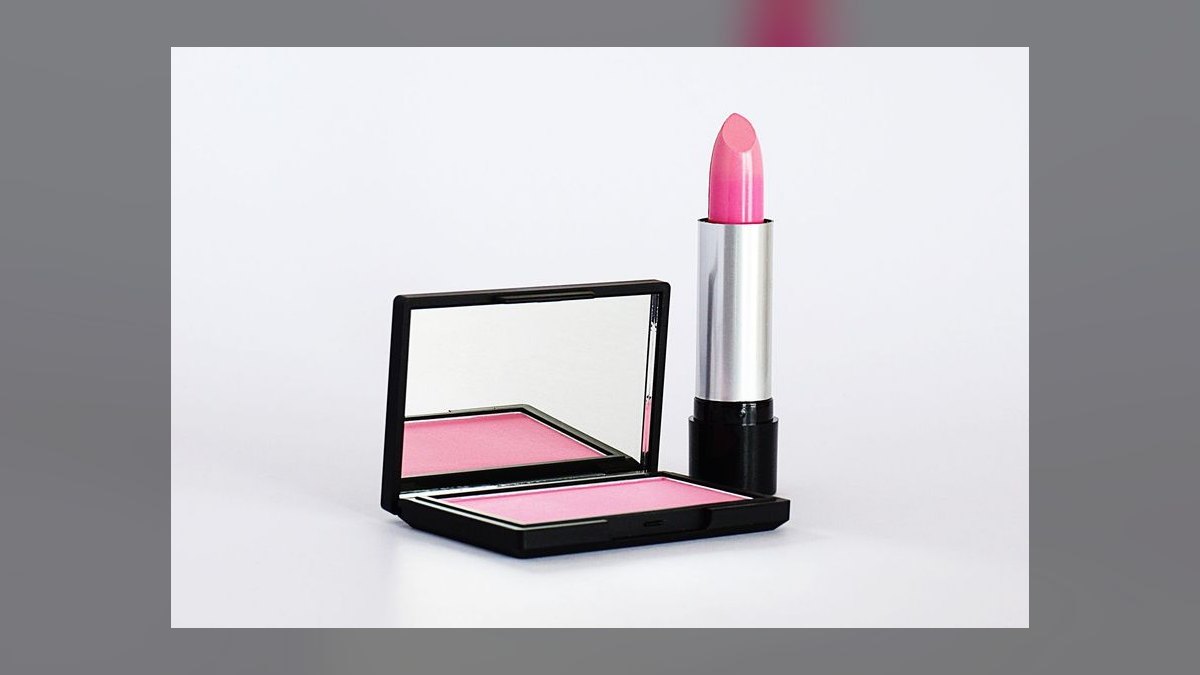
Shopify + Klaviyo + Postscript SMS is the standard DTC stack. CAC runs $24–$58 via Meta + Google + TikTok ads; LTV $120–$540 over a 24-month horizon. Subscription / replenishment (Recharge, Repeat) drives 22–38% of repeat DTC revenue for skincare-adjacent SKUs. AOV is typically $48–$140 for cosmetics DTC.
2.3 Amazon Marketplace — The ~14% Distribution Channel
Amazon's Premium Beauty Store offers invite-only premium placement and curated browsing. Subscribe & Save lifts repeat rate materially. The 3P seller model dominates for emerging cosmetics; 1P (vendor) is used by established $50M+ brands. The "Amazon's Choice" badge drives a measurable search-impression lift.
2.4 TikTok Shop — The ~10% Fastest-Growing Channel
TikTok Shop launched broadly in the U.S. in late 2023 and, by 2027, is a leading social-commerce channel for emerging beauty. Live shopping and creator-led demos drive 0.4–1.8% view-to-purchase conversion. Creator commission runs 8–22% of sales, and brands pay roughly a 2–7% platform fee plus fulfillment. For breakout brands, TikTok Shop revenue can grow several-fold year-over-year in the launch year.
2.5 International + Travel-Retail
Sephora EU/Australia/Middle East/Mexico plus the duty-free airport channel (DFS, Dufry/Avolta, Lagardère Travel Retail) carry international growth. International + travel-retail reaches 22–42% of revenue for global brands like Charlotte Tilbury, Fenty, Tatcha, and Drunk Elephant. Travel-retail is structurally high-margin: no slotting, premium airport demographic.
3The Sales Motion — Building Brand Recognition
3.1 TikTok + Influencer Marketing
TikTok is the #1 customer-acquisition channel for cosmetics brands in 2027. Mega-creators ($8K–$150K per post, 1M+ followers) build reach; mid-tier creators ($800–$8,000, 200K–1M followers) frequently drive the best ROI per dollar; micro-influencers ($150–$3,500, 10K–200K followers) drive niche premium acquisition and loyalty. The winning programs run a portfolio across all three tiers rather than betting on one mega-deal.
3.2 PR + Editorial Press
Beauty press that moves emerging brands: Vogue, Allure, ELLE, Cosmopolitan, Refinery29, Byrdie, Glamour, Harper's Bazaar, Bustle, Into The Gloss, Beauty Independent. PR retainers typically run $4,500–$25,000/month for 12–24 months, weighted toward launch and product-launch flights.
3.3 Affiliate + Cashback Channel
Rakuten, Capital One Shopping, Honey (PayPal), Ibotta, TopCashback, and Klarna affiliate together drive roughly 6–14% of DTC revenue at established brands. Sephora and Ulta operate their own affiliate networks (via partners like Skimlinks and Impact).
3.4 Loyalty + Subscription Layer
Loyalty platforms (Smile.io, Yotpo Loyalty, LoyaltyLion, Stamped) power point-per-dollar and tiered programs, and subscription pricing fits replenishment SKUs (cleansers, moisturizers, mascara). Engaged loyalty members reliably spend more per year than non-members — the program pays for itself by lifting repeat rate.
4Hiring Sequencing For A Cosmetics Brand
4.1 Pre-Velocity ($0–$5M)
Founder + 1–2 marketing/social hires + 1–2 ops hires. Everything else outsourced: contract manufacturer, 3PL, customer service.
4.2 Sephora/Ulta Velocity ($5M–$80M)
VP Sales ($140K–$210K + commission), VP Marketing ($130K–$180K), VP Operations ($120K–$170K, owning supply chain + copacker + 3PL), Director Sephora Accounts ($110K–$155K), Director Ulta Accounts ($95K–$135K), PR/Comms Director ($90K–$130K), plus CFO + Controller.
4.3 National/International Brand ($80M–$2B+)
CEO + COO + CFO + CMO + CRO, plus VP International, VP Travel Retail, VP Innovation/Product Development, and VP Supply Chain. National Account VPs per major channel and Country Managers per international market (UK, EU, Australia, Middle East, China where applicable).
5The Launch Playbook For A New Cosmetics Brand
5.1 Pre-Launch (Months 1–12)
- Months 1–4: Product formulation + contract-manufacturer selection (KDC/One, Cosmetic Group USA, Mana Products are major U.S. cosmetics copackers).
- Months 5–7: FDA registration and ingredient compliance (FDA, plus EU requirements for international), packaging, brand identity, photography.
- Months 8–10: Shopify build, Klaviyo + Postscript setup, hero/lifestyle/UGC photography, TikTok content library.
- Months 11–12: Soft launch on DTC + Amazon + TikTok Shop.
> Compliance note: U.S. cosmetics now fall under MoCRA (the Modernization of Cosmetics Regulation Act), which adds facility registration, product listing, and adverse-event requirements — build this into the timeline rather than treating registration as a formality.
5.2 The First-Year GTM
Months 1–6 post-launch: DTC + Amazon + TikTok Shop — prove sell-through, build the email/SMS list, accumulate UGC. Months 7–12: pitch Sephora's emerging-brand program or Ulta MUSE and begin initial regional rollout.
5.3 First-Year KPI Targets
- Revenue: $400K–$8M (celebrity-founded brands often clear $20M+).
- DTC orders/month: 1,200–12,000.
- TikTok followers: 50K–2M (the single most important social signal for cosmetics).
- Sephora/Ulta doors: 0–450, depending on launch ambition.
- Email list: 12,000–80,000.
6Common Cosmetics Brand Failure Modes
6.1 No Clear Hero Product
Most failed brands launch with 12–24 SKUs and no obvious hero. The 2027 best practice: launch with 1–3 hero products (one clearly viral-worthy SKU) and ladder add-ons over 6–18 months.
6.2 Founder-Story Disconnect
Cosmetics needs a clear founder/creator narrative. Brands without a distinct voice and a real IG/TikTok persona struggle to cut through a crowded U.S. shelf of tens of thousands of competing SKUs.
6.3 Premature Sephora Launch
Brands that enter Sephora before proving DTC traction often miss velocity benchmarks and get cut within 6–12 months. Ami Colé is a cautionary case here: a critically loved, VC-backed brand that scaled into hundreds of Sephora doors but, facing high retail operating costs and a tightening capital market, wound down in 2025. Best practice: prove DTC sell-through at a $2M–$5M annual run-rate before pitching Sephora.
6.4 Underestimating Inventory + Cash
Sephora orders large up front but pays NET-90 to NET-120. Brands need $1M–$8M in inventory + receivables financing for Sephora-scale rollouts — the exact squeeze that has sunk otherwise-promising brands.
6.5 Bad Contract Manufacturer
A weak copacker can kill a brand through formulation inconsistency, delivery delays, or quality failures. Vet copackers rigorously and keep a backup relationship warm.
7The 2027 Operating Cadence
- Daily: DTC + Amazon + TikTok Shop dashboards, customer service, social engagement.
- Weekly: Sephora/Ulta velocity reports, buyer/broker check-ins, TikTok creator management, paid-media optimization.
- Monthly: National-account reviews, financial close, NPD progress, PR/press review.
- Quarterly: Buyer category-reset meetings, paid-media budget reset, supply-chain S&OP, campaign planning.
- Annually: Trade shows (CEW, Cosmoprof Las Vegas and Bologna), copacker contract reviews, brand-strategy reset, international planning.
FAQ
Q: How much money do I need to launch a cosmetics brand in 2027? Plan on $340K–$3.5M for the first 18 months. Rough breakdown: formulation + first production run $80K–$420K; packaging + design + branding $60K–$280K; FDA/MoCRA compliance setup $30K–$120K; photography + brand assets $40K–$140K; Shopify + Klaviyo + tech stack $20K–$80K; paid media + influencer + PR launch budget $80K–$1.2M; working-capital reserve $200K–$1.4M. Celebrity/influencer-founded brands often raise $5M–$30M to fund an accelerated launch.
Q: TikTok Shop vs Amazon vs Shopify — which channel matters most? All three, in sequence. Shopify (own DTC) is the brand-equity and first-party-data channel — own it first. Amazon is the discovery and repeat-purchase channel — add it around $1M+ revenue. TikTok Shop is the viral-acquisition channel — add it once the brand has ~30K+ TikTok followers and a handful of proven viral pieces. In 2027 TikTok Shop is a major and fast-growing slice of emerging-beauty revenue, but it compounds best on top of an established DTC base.
Q: How important is Sephora + Ulta for a cosmetics brand? Strategic, but not always sequence-critical. Brands like Glossier, Drunk Elephant, and Charlotte Tilbury built DTC-first to $10M–$80M before entering Sephora. Others — Rare Beauty, Fenty Beauty — launched Sephora-exclusive on day one because founder-celebrity scale guaranteed velocity. For most emerging brands the best practice is to prove DTC + Amazon + TikTok velocity to $3M–$8M revenue first, then pitch Sephora's emerging-brand program or Ulta MUSE.
Q: Do GLP-1 drugs and "clean beauty" trends affect cosmetics brands? GLP-1 has minimal direct impact on cosmetics (its demand effects show up in food and alcohol, not lipstick). Clean beauty and sustainability do matter — Credo Beauty, Goop, and The Detox Market are clean-specialty channels with real relevance, and clean / cruelty-free / vegan / sustainable-packaging positioning supports premium pricing with the 25–44 prestige consumer. Treat it as table stakes plus a margin lever, not a standalone strategy.
Q: What's the role of an influencer/celebrity founder vs a traditional brand? Celebrity/influencer-founded brands typically launch many times larger in year one thanks to a built-in audience and PR halo (Rare Beauty/Selena Gomez, Rhode/Hailey Bieber, Fenty/Rihanna, Goop/Gwyneth Paltrow, Flower Beauty/Drew Barrymore, Honest Beauty/Jessica Alba). The trade-off: that narrative depends on 5–10+ years of founder engagement, and brands fade fast when the founder disengages. Traditional brands scale more slowly but compound on product quality and community-driven loyalty.
Q: What's the realistic exit path for a successful cosmetics brand? Strategic acquisition by L'Oréal, Estée Lauder Companies, Coty, LVMH, Shiseido, Unilever, Procter & Gamble, Puig, L'Occitane, or The Hut Group. Multiples run roughly 3x–8x revenue or 18x–32x EBITDA for established premium brands. Verifiable recent comps: Aesop → L'Oréal ($2.5B, 2023), Drunk Elephant → Shiseido ($845M, 2019), Tatcha → Unilever (~$500M, 2019), Charlotte Tilbury → Puig (majority stake, ~$1.2B, 2020), Youth to the People → L'Oréal (2021), Sol de Janeiro → L'Occitane (majority stake, ~$450M, 2021), Tula → Procter & Gamble (2022). Brands above ~$80M revenue with 22%+ EBITDA margin typically attract strategic interest — but the exit is not guaranteed, and well-funded brands (e.g., Ami Colé in 2025) still wind down when capital tightens before scale economics arrive.
Q: How does international expansion work for a cosmetics brand? The primary international channels are Sephora, Mecca (AU), Boots, Selfridges, Harrods, and travel-retail (DFS, Dufry/Avolta). A typical country-by-country path: UK + Ireland (Boots, Sephora UK, Cult Beauty) → EU (Sephora EU, Galeries Lafayette) → Middle East (Sephora ME, Faces) → Asia/Pacific (Sephora Asia, Mecca Australia, Watsons, Sasa). International reaches 22–42% of revenue at scale but requires a VP International and country-by-country regulatory compliance.
Bottom Line
DTC cosmetics GTM in 2027 is content-led, social-commerce-first, and omnichannel-eventually — a channel mix that lands near 40% Sephora + Ulta, 26% DTC, 14% Amazon, 10% TikTok Shop, 8% international/travel-retail, 2% mass. Operators win on founder-creator narrative, a viral hero product, dense TikTok-creator coverage, and Sephora-scale shelf presence. The economics are favorable — 65–78% gross margin (among the highest in CPG), 12–22% COGS, 22–44% marketing at emerging stage, 18–35% operating margin once established — but the cash and inventory demands of retail are exactly what break under-capitalized brands. Plan on $340K–$3.5M for an 18-month bootstrap, $5M–$30M for a celebrity/VC-backed launch. The 2027 differentiators: TikTok presence past ~100K followers, a Sephora emerging-brand or Ulta MUSE pilot, CAC under 35% of LTV, and clean / inclusive-shade-range / sustainable-packaging positioning for the 25–44 prestige consumer. A workable stack: Shopify + Klaviyo + Postscript + Recharge + Yotpo Reviews, plus Triple Whale or Northbeam for attribution, TikTok Shop + Amazon Premium Beauty, and copackers like KDC/One, Cosmetic Group USA, and Mana Products. The exit market is real — strategics pay 3x–8x revenue or 18x–32x EBITDA for premium brands with $80M+ revenue, 22%+ EBITDA, a brand-equity moat, and international runway — but it rewards the brands that reach durable velocity before the capital runs out.
Related on PULSE
- How do you build the GTM playbook for a DTC hair care brand in 2027?
- How do you build the GTM playbook for a DTC skincare brand in 2027?
- How do you build the GTM playbook for a specialty or artisan food brand in 2027?
- Pet food DTC GTM playbook 2027 — fresh human-grade wedge, vet credibility, subscription replenishment engine, and the $1B The Farmer's Dog operator path
- Snack Subscription Box DTC GTM Playbook 2027 — Country-Themed + Authentic-Import + Creator-Led Acquisition + AI-Augmented Flavor Profiling and the 148M Bokksu Operator Path
- Jewelry Boutique GTM Playbook 2027 — Lab-Grown Diamond + Custom 3D CAD + DTC and the 85M Brilliant Earth Operator Path
Sources
- Circana (formerly NPD Group / IRI) — 2026 U.S. Prestige Beauty Sales Report
- McKinsey & Company — 2026 The State of Beauty (global market sizing)
- Sephora — 2026 Beauty Insider program disclosure and emerging-brand program overview
- Ulta Beauty — 2025 Form 10-K and MUSE Accelerator program disclosure
- L'Oréal Group — 2025 Annual Report (M&A and acquisition activity)
- Estée Lauder Companies — 2025 Form 10-K
- LVMH — 2025 Annual Report (Sephora segment and Perfumes & Cosmetics division)
- L'Occitane Group — Sol de Janeiro acquisition disclosure (2021)
- TikTok Shop — 2026 Beauty & Wellness category performance report
- Beauty Independent — 2026 Beauty Brand Founder Survey and Ami Colé closure coverage (2025)
- Mintel — U.S. Color Cosmetics 2026 Report
- Statista — Global Cosmetics Market Outlook 2027
This page will be disappearing soon. Save it to your device for $1 — or read it free while it is here.
@Kory-White- · if Venmo asks, the last 4 of my number are 2012
This page is gone.
This one is off the shelf now. $1 keeps it on your phone for good — the whole page, pictures and diagrams included.
 gtm-playbookHow do you build a climate risk analytics (Jupiter Intelligence / Cervest) go-to-market motion in 2027?
 gtm-playbookThrift Store Chain GTM Playbook 2027 — Donation Network + ShopGoodwill + AI-Augmented Sortation and the .4B Goodwill Operator Path
 gtm-playbookHow do you sequence the sales motion for a telehealth platform targeting provider groups vs. self-insured employers in 2027?
 gtm-playbookHow do you build the GTM playbook for a driving school in 2027?
 gtm-playbookHow do you build a vector databases (Pinecone / Weaviate) go-to-market motion in 2027?
 gtm-playbookWhat is the go-to-market playbook for launching a new product line in 2027?
 gtm-playbookHow do you build a renewable energy trading and ETRM software go-to-market motion in 2027?
 gtm-playbookHow do you build a court and case management software go-to-market motion in 2027?
 pulse-recentHow do you build the GTM playbook for a dog walking service in 2027?
 gtm-playbookGTM Playbook for MarTech and AdTech — The Complete Operator Guide in 2027