


How do you build the GTM playbook for a tire shop operator in 2027?
Quality
Certified

Build a tire shop GTM playbook in 2027 around one truth: tires drive traffic, service drives margin. Sell 8-15 brands at 18-28% margin to fill bays, then attach alignment, brakes, and rotation at 55-78% margin. Win local search, partner with online tire DTC, and diversify for EV.
What changes by company stage
The tire shop operator faces a category worth roughly $58B in 2027 U.S. revenue growing at a 4-6% CAGR, split across 42,000+ shops that break down to about 55% single-location independents, 30% multi-location regional chains, and 15% national franchise or corporate operators. That 15% controls 65%+ of category revenue, which tells you the whole game changes as you scale. A playbook that wins for a one-bay independent actively loses money for a 20-location operator, and vice versa.
At the single-shop stage, the entire business is the owner. Total launch capital runs $480K-$1.4M: build-out at $80-$180 per square foot for 4,800-12,000 sq ft (mounting and balancing bays, an alignment rack, lift bays, tire storage) lands at $480K-$2.1M; equipment adds $180K-$540K (an alignment machine alone is $40K-$120K, mounting and balancing gear $80K-$240K); opening inventory is $140K-$480K; and you want $80K-$220K of working capital. AUV sits at $680K-$1.8M. Here the GTM is hyper-local and personal: the owner's face, Google reviews, and word of mouth are the entire acquisition engine.

At the regional-chain stage (4-25 locations, $2.4M-$28M invested), the operator stops selling and starts systematizing. Procurement leverage on tire purchasing becomes the single biggest margin unlock, a district manager layer appears, and marketing shifts from one owner's reputation to a repeatable local-SEO and service-attach playbook cloned per site.
At the national-chain stage, the model is a machine: centralized tire purchasing at Discount Tire (1,200+ family-owned locations) or Mavis Tire Express (2,200+ including NTB, Tire Kingdom, Mr Tire, and Pep Boys) scale, national advertising, and a regional-district-store hierarchy. Firestone Complete Auto Care (1,700+, Bridgestone-owned), Goodyear Auto Service (700+), Big O Tires (450+, TBC franchise), and Les Schwab (510+, Western-U.S.-dominant) round out the tier. Costco Tire Centers (590+) and Sam's Club (380+) attack the same customer with warehouse-attached price leadership.
Stage-by-stage playbook

The revenue mix a well-run tire shop should engineer is remarkably consistent: roughly 52% tire sales, 14% wheel alignment, 12% installation and balancing, 10% brake service, 8% other service, and 4% batteries and miscellaneous. The strategic point of the whole playbook is that the 52% tire slice is a thin-margin traffic driver (18-28% gross) while the service slices carry 55-78% gross margin. Blend them and a disciplined operator moves net margin from a fragile 4-8% to a durable 12-22%.
Tire sales — the 52% volume channel. Carry 8-15 brands across three tiers: premium (Michelin, Bridgestone, Continental, Goodyear, Pirelli, Yokohama), mid-tier (Hankook, Toyo, Falken, Cooper, Kumho), and budget or private-label for price-conscious buyers. Passenger tires run $120-$340 each, light truck $180-$520, SUV/crossover $165-$420, performance $240-$680, and EV-specific tires $240-$580 because heavier battery packs and lower rolling-resistance targets demand purpose-built rubber. EV-tire demand is growing 22-44% per year.

Wheel alignment — the profit lever. Alignment is $80-$140 per axle ($120-$240 for a four-wheel job) at 65-78% gross margin. The single number that separates a thriving shop from a failing one is alignment attach rate: target 38-48% of tire purchases, with top performers hitting 48-58%. Without it, a shop caps at 6-10% net; with it, 16-22% is reachable.
Installation, balancing, and rotation. Mounting and balancing is $20-$40 per tire (usually bundled into a four-tire sale); rotation is $20-$45 every 5,000-7,000 miles. Lifetime balance-and-rotation packages at $45-$95 per tire lock in both recurring service revenue and retention — the customer must return to you to redeem them.
Brake service — the cross-sell. Pads run $185-$340 per axle, rotors $240-$540, complete brake jobs $380-$780. Brakes attach at 22-38% of tire visits because vehicles tend to need both around the same mileage. Diversify further into batteries ($140-$340 installed), fluids, wipers, and suspension to offset the 35-65% decline in brake wear that regenerative-braking EVs create.
Numbers that matter at each stage

The operator has to manage a different scoreboard at every stage, and misreading which number matters is the most common way to stall. Here is what to watch and where.
Throughput and ticket. A healthy shop moves 28-78 tires per day and 18-44 vehicles daily. Average ticket per visit runs $480-$840 once a four-tire purchase, installation, and an alignment stack together — first-year shops start closer to $380-$680 and climb as attach discipline matures. The return-visit cadence is every 4-6 years for tires but every few months if your rotation and service programs are working, so retention is engineered through service, not tires.
Cost structure. Labor is 22-32% of revenue: technicians at $42K-$72K, sales associates and service writers at $48K-$78K, and a manager at $65K-$95K. Rent is 8-14%. That leaves net margin at 8-18%, and the delta inside that band is almost entirely explained by service-attach rate.

Inventory turns. Tire inventory ties up $140K-$480K, and turn speed is a make-or-break ROI number. Below 6x annually the capital drag destroys returns; top operators hit 8-12x through SKU optimization and just-in-time supplier delivery. This is where the regional-chain stage earns its keep — procurement scale buys both better tire cost and faster replenishment.
Attach benchmarks to hold the line on. Alignment attach above 38%, brake attach above 22%, and balance/rotation attach above 28% together pull blended gross margin to 38-48%. Drive attach through a professional, non-pushy visual inspection at every visit — the customer sees the worn part, the writer explains it, and the close follows. Layer in a road-hazard warranty at $45-$95 per tire; the warranty is another retention hook because redemption requires a return visit.
Acquisition channels, quantified. A top-3 Google Business Profile map-pack position with 4.7+ stars on 80+ reviews drives 28-44% of new-customer acquisition. Online tire DTC — Tire Rack (acquired by Discount Tire in 2021), SimpleTire, TireBuyer (Bridgestone-owned), Walmart and Costco online — sends customers who still need local installation at $25-$45 per tire; partnering as their install network drives 18-32% of new traffic. Community and sports sponsorships add another 12-22%.
Decision framework

The core decision for any tire shop operator is not "which tires" but "how do I refuse to compete on tire price alone." Costco, Sam's Club, and Walmart will always undercut the sticker; online DTC will always list cheaper. The only defensible position is the service moat. The framework below routes every strategic choice back to that moat.
Franchise versus independent. Franchising with Big O, Goodyear, or Firestone buys brand recognition, tier-1 tire-supply scale, and national advertising, but costs a 5-7% royalty and restricts operations. Independence keeps brand-selection breadth and full margin control at the price of building demand yourself. At the single-shop stage independence usually wins; at the multi-unit stage the franchise supply chain can pay for itself.
EV readiness. Stock EV-specific tires from Michelin, Pirelli, Continental, Goodyear, and Bridgestone, and build ADAS recalibration capability — shops without EV expertise lose 18-32% of EV-customer traffic. Net EV impact on a shop that adapts is roughly neutral: tire demand up 22-44%, brake demand down 35-65%, so diversification decides the outcome.

Technology stack. Standardize on Hunter Engineering or John Bean alignment equipment and Mitchell 1, Tekmetric, or R.O. Writer for shop management so throughput, attach scoring, and technician productivity are measurable daily.
Operating cadence. Daily: throughput, attach scoring, technician productivity. Weekly: campaigns, supplier orders, inventory-turn analysis. Monthly: P&L, attach by service writer, retention. Quarterly: brand campaigns and supplier-contract reviews. Annually: SEMA and Tire Industry Association events plus capital-equipment review.
Exit. Mavis Tire (PE-backed) is the dominant acquirer, having rolled up Pep Boys, NTB, Tire Kingdom, and Mr Tire. Single shops trade at 3x-5x SDE; multi-location chains at 6x-10x EBITDA. Build the roll-up-ready operator and the consolidator comes to you.
Related questions
How many tire brands should a shop carry?
Carry 8-15 across three tiers — premium (Michelin, Bridgestone, Continental, Goodyear, Pirelli), mid (Hankook, Toyo, Falken, Cooper, Kumho), and budget/private-label. Breadth is a competitive moat against price-only rivals, and EV-specific SKUs from the premium tier grow fastest.
What is the fastest way to lift net margin?

Raise alignment attach. At 65-78% gross margin and a 38-48% attach target, alignment moves net margin from a 6-10% floor to 16-22%. It is the single highest-leverage number in the entire playbook.
How do independents beat Costco and Walmart?
On service, speed, and brand breadth. Warehouse clubs undercut tire price but offer no alignment, brakes, or ADAS work. Partner with online DTC as their installation network and win the margin on service the clubs cannot provide.
Does EV adoption help or hurt tire shops?
Roughly neutral for shops that adapt. EV-tire demand grows 22-44% per year (heavier vehicles, faster wear), while EV brake service falls 35-65% from regenerative braking. Diversification into batteries, fluids, and suspension offsets the brake decline.
What KPIs signal a healthy first year?

18-44 vehicles per day, a $380-$680 average ticket climbing toward $840, alignment attach starting at 28% and reaching 38%+ by year three, and 60+ Google reviews at 4.7+ stars.
FAQ
How much capital does it take to launch a tire shop in 2027? Plan for $480K-$1.4M total: build-out and equipment $480K-$1M, opening inventory $140K-$280K, and working capital $80K-$220K. The alignment machine ($40K-$120K) and mounting/balancing equipment ($80K-$240K) are the heaviest single line items.
How do tire shops compete with online DTC? Tire Rack, SimpleTire, and TireBuyer ship direct but still require local installation at $25-$45 per tire. Smart shops become the install-referral network for those platforms, capturing 18-32% of new traffic and then attaching high-margin service that the online seller cannot deliver.
How important is wheel-alignment attach rate?

It is the strategic profit lever. Alignment carries 65-78% gross margin; a 38-48% attach rate lifts blended margin to 38-48%. Without it, a shop caps around 6-10% net and is forced to compete on tire price, which is a losing position.
Should I franchise or stay independent? Franchising (Big O, Goodyear, Firestone) buys brand and tire-supply scale but costs a 5-7% royalty and restricts operations. Independence preserves brand breadth and margin control. Single shops usually favor independence; multi-unit operators may value the franchise supply chain.
What does the exit market look like? Mavis Tire (PE-backed) is the most active acquirer, having absorbed Pep Boys, NTB, Tire Kingdom, and Mr Tire. Single shops sell at 3x-5x SDE; multi-location chains at 6x-10x EBITDA. Building a clean, roll-up-ready operator maximizes valuation.
How does inventory management affect returns? Tire stock ties up $140K-$480K. Turning it below 6x annually crushes ROI; top operators hit 8-12x through SKU discipline and just-in-time supplier delivery. Procurement scale at the multi-unit stage improves both tire cost and replenishment speed.
Sources
- https://www.ibisworld.com/united-states/industry/tire-dealers/1071/
- https://www.tireindustry.org/
- https://www.moderntiredealer.com/
- https://www.bridgestone.com/corporate/library/annual_report/
- https://investor.goodyear.com/financials/sec-filings
- https://www.autocare.org/research
- https://www.tirebusiness.com/
- https://www.statista.com/markets/419/topic/487/tires-rubber/
- https://www.mckinsey.com/industries/automotive-and-assembly/our-insights
- https://www.hunter.com/
Related on PULSE
- GTM Playbook for Tire Shops in 2027
- Consignment Shop GTM Playbook 2027 — In-Store + Buy-Outright + Poshmark + Mercari and the 85M Winmark Operator Path
- Ceramics and Pottery Shop GTM Playbook 2027 — Wait-List Drop Model, Workshop Revenue, and the $48M Heath Operator Path
- Butcher Shop GTM Playbook 2027 — Dry-Aged + Heritage Breed Moat, Wholesale Layer, and the $3.4M Operator Path
- Taco Shop GTM Playbook 2027 — Regional Authenticity Moat, Margarita Program, and the $2.8M Operator Path
- How do you build the GTM playbook for an auto body shop in 2027?
This page will be disappearing soon. Save it to your device for $1 — or read it free while it is here.
@Kory-White- · if Venmo asks, the last 4 of my number are 2012
This page is gone.
This one is off the shelf now. $1 keeps it on your phone for good — the whole page, pictures and diagrams included.
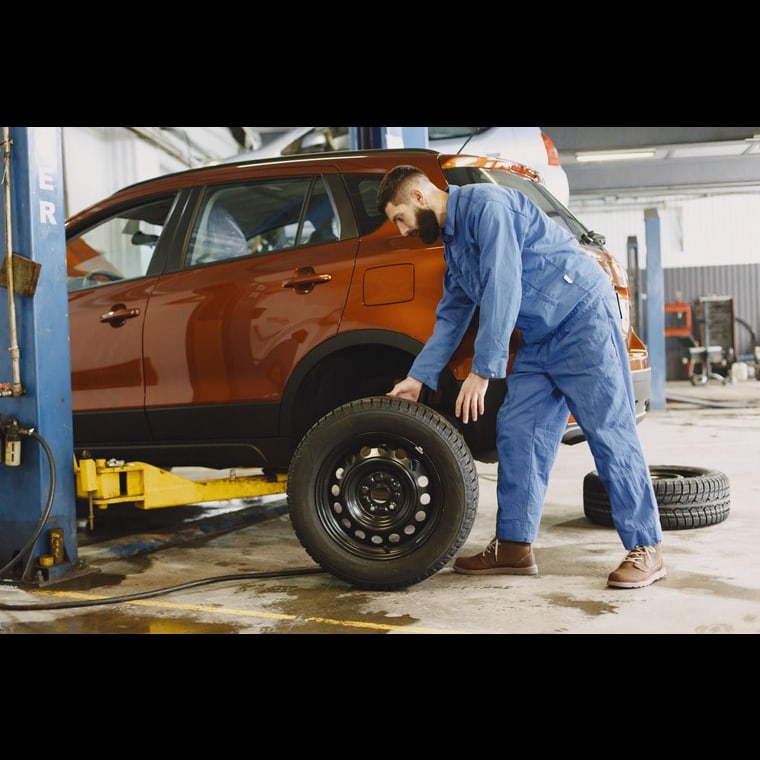 gtm-playbookGTM Playbook for Tire Shops in 2027
 gtm-playbookGTM Playbook for Garden Centers and Nurseries in 2027
 gtm-playbookWhat is the go-to-market playbook for a land-and-expand motion in 2027?
 gtm-playbookHow do you build a livestock management software go-to-market motion in 2027?
 gtm-playbookHow do you build a workforce management go-to-market motion in 2027?
 gtm-playbookHow do you build the GTM playbook for a driving school in 2027?
 gtm-playbookGTM Playbook for AgTech — The Complete Operator Guide in 2027
 gtm-playbookGTM Playbook for Property Management Companies in 2027
 gtm-playbookGTM Playbook for Kitchen and Bath Remodelers in 2027
 gtm-playbookHow do you build a climate risk analytics (Jupiter Intelligence / Cervest) go-to-market motion in 2027?