


How do you build the GTM playbook for a painting contractor in 2027?
Quality
Certified

Build a painting contractor GTM playbook by picking one segment — residential repaint, cabinet refinishing, or commercial — then wiring a diversified lead engine (aggregators, Google Business Profile, referrals, yard signs) to a same-day estimate motion. Price by square foot, hold 38–58% gross margin, and measure lead-to-close conversion weekly.
Who you are actually selling to, and which segment you pick first
The single biggest mistake in painting contractor GTM is treating "people who need paint" as one market. There are at least four distinct buyers, and the sales motion, price point, lead source, and crew skill requirements differ enough that trying to serve all of them at launch produces a shop that is mediocre at each.
The residential interior repaint buyer. This is a homeowner in a 1,800–2,600 square foot house who has decided the walls look tired, or who is prepping to sell, or who just closed on a house and wants it repainted before furniture arrives. Typical job value is $3,400–$8,000 for a full 3-bed/2-bath interior at $3–$6 per square foot of floor area. The decision cycle is short — usually one to three weeks from first search to signed estimate — and the buyer is comparing two or three bids. Demand is stable year-round, which is what makes this the foundation channel: roughly 38% of a diversified shop's revenue. The buyer's actual anxiety is not paint quality, it is mess and disruption. Drop cloths, furniture protection, daily cleanup, and a firm completion date win this segment more often than a lower bid.
The residential exterior repaint buyer. Bigger ticket — $5,000–$14,000 for a 2,000 square foot siding house at $3–$8 per square foot — and a longer decision cycle, often four to eight weeks, because it is a visible capital decision the household discusses. Repaint cadence runs three to seven years depending on climate and substrate. Surface prep (power washing, scraping, caulking, priming) is 30–44% of the labor, which is exactly where underbidding contractors lose their margin. This segment is weather-gated: in northern markets you get a four-to-seven-month season, which forces the operating model discussed later.
The cabinet refinishing buyer. This is the highest-margin residential segment and the fastest-growing line in 2027. The pitch is arithmetic: $3,000–$8,000 to refinish versus $20,000–$40,000 to replace. Pricing runs $80–$180 per door or drawer front, and a typical kitchen has 22–44 of them. Gross margins run 45–65% because material cost is low relative to skilled labor and the perceived alternative is enormous. But it requires real capability: a spray booth or controlled environment, disciplined door and frame disassembly and labeling, and specialty products like Sherwin-Williams Emerald Urethane or Benjamin Moore Advance. A crew that sprays walls well will not automatically produce an acceptable cabinet finish, and a bad cabinet job is a permanent one-star review sitting in a kitchen every single day.
The commercial buyer. Property managers, general contractors, multifamily owners, retail and restaurant chains, and facilities teams. Pricing compresses to $1.50–$4.00 per square foot because you are bidding against three to six other shops and often through a GC middleman who takes a cut. Job values run $14,000–$140,000. The trade is straightforward: much higher revenue per relationship and predictable repeat volume, against thinner margin and NET-30 to NET-90 payment terms that will strangle an undercapitalized shop.
How to pick. If you are launching with one to three crews and under $140,000 of capital, start residential interior plus exterior in a tight geographic radius — twenty to thirty minutes' drive maximum, because windshield time is pure margin loss. Add cabinet refinishing in year two once you have one crew lead who can actually produce that finish, and treat it as a revenue multiplier: contractors who add it typically lift revenue meaningfully without adding proportional headcount. Add commercial only when you have three to six months of operating expenses in reserve, because commercial receivables will consume your working capital before the first invoice clears.
The ICP note that matters for lead buying: within residential, your best customer is a homeowner in a neighborhood with houses of similar age and construction, because one job produces yard-sign visibility and referral density on the same street. Concentrated geography beats broad coverage at every stage under ten crews.
The demand engine that fits a local project business
Painting is a local, project-based, no-recurring-revenue business. That means the demand engine has to refill completely every single month, and it means channel diversification is not optional — it is the only defense against a single platform changing its pricing or algorithm and taking half your pipeline with it.
Lead aggregators are the ignition, not the engine. HomeAdvisor, Angi, Thumbtack, Houzz, and Networx collectively supply 38–58% of new-customer leads for residential painting work. Lead cost runs roughly $22–$58 depending on market and job type, lead-to-close conversion runs 22–38%, and blended customer acquisition cost lands around $80–$220 per closed job. On a $5,500 average interior job at 45% gross margin, a $180 CAC is a rounding error — which is why new shops should absolutely buy leads while their organic surface is still empty. The discipline is that you buy leads to fill the calendar in months one through eighteen, then deliberately shift budget toward channels you own as reviews and referrals compound.
The single highest-leverage operational rule in aggregator buying is response speed. These platforms sell the same lead to multiple contractors, and the first contractor to make contact wins a disproportionate share. Target sub-five-minute response during business hours, which in practice means someone other than the owner-on-a-ladder answers the phone — an office manager, an answering service, or at minimum a phone tree that routes to a mobile. Budget $2,000–$8,000 per month across all four platforms rather than concentrating spend on one, and track cost-per-closed-job by platform monthly so you can shift budget toward whatever is converting in your specific market.
Google Business Profile is the compounding asset. A top-three map pack position drives 28–44% of new-customer inquiries and costs nothing per lead. The inputs are unglamorous and entirely within your control: complete profile, correct service-area definition, 50+ real project photos, weekly posts, and above all reviews. The benchmark that separates shops that win the map pack from shops that do not is 4.7+ stars on 80+ reviews. That number is achievable in eighteen months if you ask for a review at the moment of highest satisfaction — walkthrough day, when the customer is looking at a finished room — rather than by email three weeks later. Before-and-after photos on the listing measurably lift click-through, and they cost one crew member two minutes per job.

Houzz and Pinterest are the premium-work channels. These platforms drive 22–38% of premium residential and cabinet refinishing inquiries. The buyer browsing Houzz is not price-shopping a builder-grade repaint; they are looking for a finish they saw and want replicated. Build a portfolio of 30–50 before/after sets organized by project type, with honest captions naming the product line used. This is the channel that lets you charge at the top of your pricing band.
Referrals are the endgame. At established contractors, referrals and word-of-mouth drive 38–58% of jobs — the highest-converting, zero-CAC channel in the mix. A structured referral incentive of $100–$300 per closed job turns passive goodwill into a measurable channel. Track referral source on every intake so you know which customers are actually generating them, then invest in those relationships specifically: realtors, interior designers, property managers, and general contractors are each worth a dedicated quarterly touch.
Yard signs and truck wraps close the loop. Signs at active job sites drive 12–22% of new leads through pure neighborhood visibility, which is why the geographic concentration strategy pays twice — once in reduced windshield time, once in sign density. Wrapped trucks parked at a job for three days are a billboard in the exact neighborhood you want to saturate.
The estimate is the actual sales motion. Everything above produces an inquiry; the estimate converts it. The winning 2027 process is: same-day contact, on-site or video walkthrough within 48 hours, written line-item estimate delivered on the spot or within 24 hours using estimating software (PaintScout, EstimateRocket, Paintzen, JobNimbus), and a financing option presented for jobs over $6,000. Contractors who deliver the estimate during the visit close meaningfully more often than those who "get back to you next week," because the buyer's intent decays fast.
What good looks like in the numbers

You cannot manage a painting contractor GTM playbook against revenue alone, because revenue hides the two things that actually kill shops: bad estimating and idle crews. Here are the benchmarks worth instrumenting.
Revenue scale by profile. Solo and small-crew operators (one to three crews, roughly 78% of the category) run $180,000–$680,000 in annual revenue on a $20,000–$140,000 startup investment. Medium contractors (four to ten crews, about 17%) run $880,000–$2.8 million. Franchise operators — CertaPro Painters, Five Star Painting, Wow 1 Day Painting, Fresh Coat Painters, 360° Painting, College Pro — represent roughly 5% and typically carry a $40,000–$80,000 franchise fee, 5–7% royalty, 1–3% national ad fund, and $80,000–$220,000 all-in initial investment. Across the category, well-run shops land $480,000–$3.4 million average unit volume.
The margin stack. Gross margin should run 38–58%. Below that band, you are either underbidding or your crews are slow. Labor is 38–52% of revenue — painters at roughly $42,000–$72,000, foremen $58,000–$88,000, estimators and sales staff $55,000–$95,000 plus commission. Materials run 18–28%, purchased per project from Sherwin-Williams, Benjamin Moore, Behr through Home Depot, and PPG. Net margin lands at 12–22% in a disciplined shop.
Throughput is the metric nobody watches. Jobs per crew per week should be one to two in year one, ramping to two to three by year three. A crew doing 1.2 jobs per week at a $5,500 average job value produces roughly $340,000 of annual revenue; the same crew at 2.4 jobs produces $686,000 on the same fixed payroll. That gap is entirely scheduling, prep efficiency, and estimate accuracy — not sales.
Average job value by line. Interior residential $3,400–$8,000. Exterior residential $5,000–$14,000. Cabinet refinishing $3,000–$8,000. Commercial $14,000–$140,000. Blended across a diversified shop, target $3,400–$18,000 depending on mix.

Job-level math worth memorizing. For a typical 3-bed/2-bath interior repaint: paint material runs $400–$1,200 (roughly 8–22 gallons of premium product at $50–$80 per gallon), labor runs $1,200–$3,800 (two to four painters across one to three days), total job cost $1,800–$5,200 against a $3,400–$8,000 sell price. That is $1,400–$4,400 of gross profit per job. If your actual gross profit per job is consistently under $1,400 on interior work, your estimating template is wrong — not your marketing.
Demand-side benchmarks. Lead-to-close conversion 22–38% (22–32% is normal in year one). Cost per lead $22–$58. CAC per closed job $80–$220. Google rating 4.7+ on 80+ reviews. Referral share of jobs 38–58%. Aggregator share of leads 38–58%. Map pack share of inquiries 28–44%.
Equipment and fixed cost. No retail location is needed — a yard, trucks, and customer sites are the footprint. Equipment runs $20,000–$120,000: airless sprayers (Graco is the category standard), ladders, scaffolding, drop cloths, trucks and trailers, pressure washers, and mixing gear. Inventory is effectively zero because paint is bought per project, which is a meaningful working-capital advantage over most trades.
Category context. The U.S. painting services market runs roughly $48 billion in 2027, growing about 5–7% annually, served by 220,000+ contractors — roughly 85% single-location independents, 12% multi-location regional shops, and 3% franchise-system operators. Sherwin-Williams serves the trade directly through its Pro store network. Exit multiples run roughly 2x–4x seller's discretionary earnings for owner-retirement sales and 4x–7x EBITDA for multi-location regional shops, with franchise systems and PE-backed platforms like Neighborly and FirstService Brands actively converting independents.
Where these playbooks break
Five failure modes account for most of the shops that stall or fold, and each has a specific countermeasure.
Estimating drift. Underbidding is the number one profit killer, and it concentrates in exterior and cabinet work where prep and complexity vary enormously between two houses that look similar from the curb. The fix is a standardized estimating template in software (PaintScout, EstimateRocket, Paintzen, or JobNimbus) with fixed rates per surface type, an explicit prep-hours line, and a mandatory contingency percentage on any exterior with visible failure — peeling, chalking, rot, or previous bad prep. Then run a per-project P&L weekly comparing estimated hours to actual hours. Two or three jobs where actuals exceed estimate by 25%+ will tell you exactly which line item in your template is wrong.
Lead spend leaking. Without filtering and fast follow-up, 40–60% of aggregator spend goes to prospects who never had budget or intent. The countermeasures are mechanical: set service-area and job-size filters tightly, respond in under five minutes, qualify budget on the first call rather than driving forty minutes to discover a $900 expectation, and kill any platform that fails to produce a defensible cost-per-closed-job after ninety days of honest tracking.
Seasonality collapse. In northern markets, exterior work has a four-to-seven-month season. Shops that build a crew base sized for July revenue and then carry it through February burn their reserve. The structural fix is mix: interior repaints run year-round, and cabinet refinishing is an indoor, high-margin, winter-friendly line. A shop that is 32% exterior needs its other 68% to be genuinely weather-independent, and the sales calendar should be pushing interior and cabinet work aggressively in the eight weeks before the exterior season closes.
Review damage. Painting is the most visible trade work a homeowner buys — they look at it every day for years — and they review it accordingly. The ratings drivers are not artistic: cleanliness, protection of furniture and floors, on-time daily arrival, on-time completion, and proactive communication when something changes. Drop cloths, plastic, daily cleanup, and a text at end of day are non-negotiable operating standards, not customer-service extras. One structural defense: a written multi-year warranty on workmanship, which both reduces review risk and closes deals against cheaper bids.
Cash flow. Residential deposits partially fund the work, but commercial NET-30 to NET-90 terms do not, and GC payment delays are routine. Carry three to six months of operating expenses in reserve before taking commercial work, require a deposit of 25–50% on residential jobs over $5,000, and invoice progress payments on anything running longer than a week. A profitable shop can absolutely die of receivables.
The quiet sixth. Owner-as-bottleneck. In most sub-$1 million shops the owner estimates, sells, schedules, buys materials, and troubleshoots. The first hire that breaks the ceiling is usually a dedicated estimator or production manager around the $700,000–$900,000 revenue mark — not another painter.
The operating model that keeps it running
The playbook is only as good as the cadence that executes it. Painting is a scheduling business wearing a marketing business's clothes: the demand engine fills the calendar, and the operating model determines whether that calendar converts to margin.
Daily. Crew dispatch and job scheduling, materials ordered and staged the night before (a crew waiting on paint at 7:30am is the most expensive hour in the business), lead follow-up under five minutes, and an end-of-day customer text from each foreman. Fifteen minutes of standup, not an hour.
Weekly. Pipeline review — how many estimates out, how many signed, what is the close rate trending. Per-project P&L on every job that closed out, comparing estimated to actual hours. Channel-level marketing review: cost per lead and cost per closed job by platform, with budget shifted accordingly. Crew utilization: how many crew-days were unbilled and why.
Monthly. Customer satisfaction and review audit — count new reviews, respond to every one, address any below four stars personally. Supplier review with Sherwin-Williams, Benjamin Moore, or PPG on pricing tiers and volume terms; paint is 18–28% of revenue and a 5% supplier improvement is real money. Equipment maintenance on sprayers and vehicles.
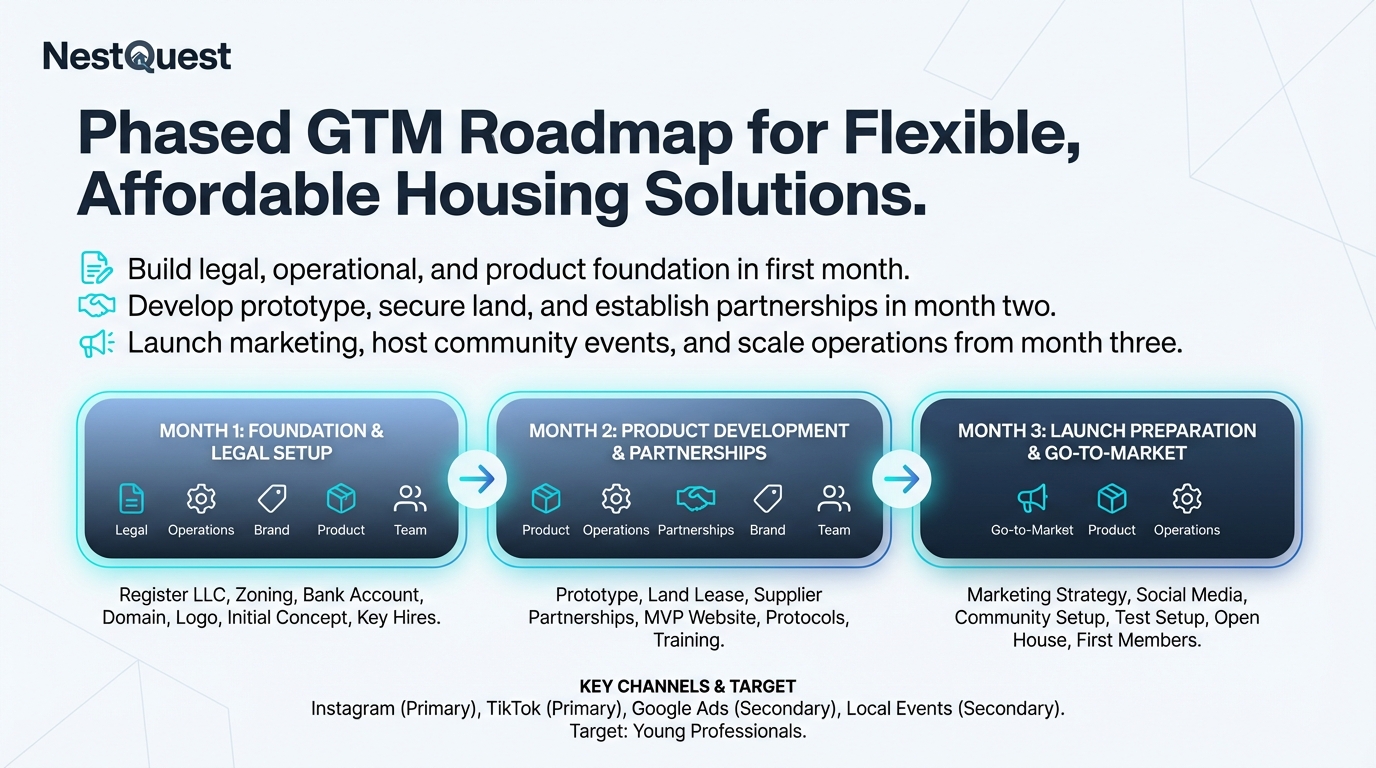
Quarterly. Brand campaign planning against the coming season, capital equipment review, technology stack review, and a deliberate look at mix: is cabinet refinishing growing as a share of revenue, is commercial receivable aging acceptable, is any single lead channel above 40% of pipeline.
Annually. State license, bond, and insurance renewals — requirements are state-specific, and while many states do not mandate a painting-specific license, most require a general contractor license, surety bond, and liability coverage. Industry education through the Painting Contractors Association. And a full pricing reset: labor and material costs move every year, and a template that was accurate eighteen months ago is quietly eroding margin today.
Hiring sequence. Solo and small crew: owner-operator plus two to six painters, owner estimating, bookkeeping outsourced. Medium: add production manager, estimator, sales/BD, office manager, and bookkeeper across three to eight crews of three to five painters — twelve to forty employees. Franchise multi-unit: layer a director of operations, central admin, project managers, and estimators on top of the franchisor-supplied brand, lead flow, and systems.
The first-year launch sequence. Months one and two: licensing, bonding, insurance. Month three: equipment purchase, first crew hire, aggregator accounts live, Google Business Profile and Houzz listings built with photos. Months four through twelve: $2,000–$8,000 monthly on aggregators to seed pipeline, aggressive review collection targeting 60+ reviews at 4.7+ stars, yard signs on every job, and a target of one to two jobs per crew per week at a $4,200–$8,400 average job value with 22–32% lead-to-close conversion.
Related questions
How long before referrals replace paid leads?
Typically eighteen to thirty months. Referral share climbs as review count and job density compound in a concentrated geography. Most shops keep aggregator spend permanently as fill, just at a declining percentage of pipeline — dropping to zero leaves you exposed when a season underperforms.
Should a new painting contractor buy a franchise?
Franchise buys brand, lead flow, systems, warranty backing, and supplier scale for a 5–7% royalty plus 1–3% ad fund and operating restrictions. Independent keeps full margin and niche flexibility — particularly valuable if you intend to specialize in cabinet refinishing.
What is the fastest way to lift revenue without adding crews?
Raise average job value and throughput, not lead volume. Add cabinet refinishing at 45–65% gross margin, present financing on jobs over $6,000, and fix scheduling so crews go from 1.2 to 2+ jobs per week on the same payroll.
How many reviews are actually enough?
Eighty-plus at 4.7 stars is the competitive threshold for map pack position in most markets. Below fifty reviews you are effectively invisible in local search regardless of quality. Ask at walkthrough, when satisfaction peaks.
Is commercial work worth pursuing?
Yes, once you carry three to six months of operating expense reserve. It delivers volume and repeat relationships at $1.50–$4.00 per square foot, but GC-mediated bidding compresses margin and NET-30 to NET-90 terms consume working capital.
FAQ
How much capital does it take to launch a painting business in 2027?
Roughly $20,000–$140,000 for a solo or small-crew startup: $20,000–$80,000 in equipment (sprayers, ladders, trucks, drop cloths), $20,000–$80,000 of working capital covering the first three to six months, and $10,000–$30,000 for insurance, bonding, and licensing. A franchise route runs $80,000–$220,000 all-in plus a $40,000–$80,000 franchise fee and ongoing 5–7% royalty.
Which lead aggregator should a painting contractor prioritize?
Diversify rather than concentrate. HomeAdvisor and Angi carry the most general painting volume, Thumbtack rewards rapid response, and Houzz skews toward premium, decorative, and cabinet refinishing work. Lead cost sits around $22–$58 across platforms. Spread $2,000–$8,000 of monthly spend and reallocate quarterly based on measured cost-per-closed-job in your specific market.
How should painting work be priced?
Interior residential $3–$6 per square foot, exterior residential $3–$8 per square foot, commercial $1.50–$4.00 per square foot. Cabinet refinishing prices per unit at $80–$180 per door or drawer front, with a typical kitchen carrying 22–44. Adjust for region, surface condition, and prep scope — prep is where estimates go wrong, so price it as an explicit line rather than folding it into a square-foot rate.
Why is cabinet refinishing worth building capability around?
The value proposition is unusually strong: $3,000–$8,000 to refinish against $20,000–$40,000 to replace, at 45–65% gross margin. It is also indoor work, which smooths the seasonality that hurts exterior-heavy shops. The prerequisites are real — a spray booth or controlled environment, disciplined disassembly and labeling, and specialty products such as Sherwin-Williams Emerald Urethane or Benjamin Moore Advance.
What KPIs should a painting contractor review weekly?
Estimates delivered, close rate, jobs per crew per week, gross profit per job versus estimate, cost per closed job by channel, unbilled crew-days, and new reviews collected. Weekly cadence matters because a broken estimating template or a dead lead channel is cheap to fix in week two and expensive in month four.
What does a painting contractor sell for at exit?
Owner-retirement sales generally trade around 2x–4x seller's discretionary earnings, while multi-location regional shops with management depth trade closer to 4x–7x EBITDA. Franchise systems and PE-backed platforms actively acquire and convert independents, so a clean book, documented systems, and revenue not dependent on the owner personally are what move the multiple.
Sources
- https://www.bls.gov/ooh/construction-and-extraction/painters-construction-and-maintenance.htm
- https://www.jchs.harvard.edu/research-areas/remodeling
- https://www.census.gov/construction/c30/c30index.html
- https://www.sba.gov/business-guide/plan-your-business/calculate-your-startup-costs
- https://investors.sherwin-williams.com/
- https://www.pcapainted.org/
- https://www.houzz.com/professionals
- https://support.google.com/business/answer/3038177
- https://www.ftc.gov/business-guidance/resources/franchise-rule-compliance-guide
- https://www.irs.gov/businesses/small-businesses-self-employed
Related on PULSE
- How do you build the GTM playbook for a flooring contractor in 2027?
- How do you build the GTM playbook for a concrete and masonry contractor in 2027?
- How do you build the GTM playbook for a roofing contractor in 2027?
- How do you build the GTM playbook for a landscaping contractor in 2027?
- How do you build the GTM playbook for an HVAC contractor in 2027?
This page will be disappearing soon. Save it to your device for $1 — or read it free while it is here.
@Kory-White- · if Venmo asks, the last 4 of my number are 2012
This page is gone.
This one is off the shelf now. $1 keeps it on your phone for good — the whole page, pictures and diagrams included.
 gtm-playbookWhat do top-performing SDR teams do differently in their outreach sequencing in 2027?
 gtm-playbookHow do you choose between a direct sales and a partner-led go-to-market motion in 2027?
 gtm-playbookGTM Playbook for AI Infrastructure — The Complete Operator Guide in 2027
 gtm-playbookHow do you build a procurement and spend management go-to-market motion in 2027?
 gtm-playbookHow do you build a court and case management software go-to-market motion in 2027?
 gtm-playbookHow do you build a renewable energy trading and ETRM software go-to-market motion in 2027?
 gtm-playbookHow do you build a vector databases (Pinecone / Weaviate) go-to-market motion in 2027?
 gtm-playbookHow do you sequence the sales motion for a telehealth platform targeting provider groups vs. self-insured employers in 2027?
 pulse-recentGTM Playbook for Specialty Retailers — Niche Assortment, Local SEO, and the Cluster Strategy in 2027
 gtm-playbookGTM Playbook for Kitchen and Bath Remodelers in 2027