


GTM Playbook for Independent Restaurants in 2027
Quality
Certified
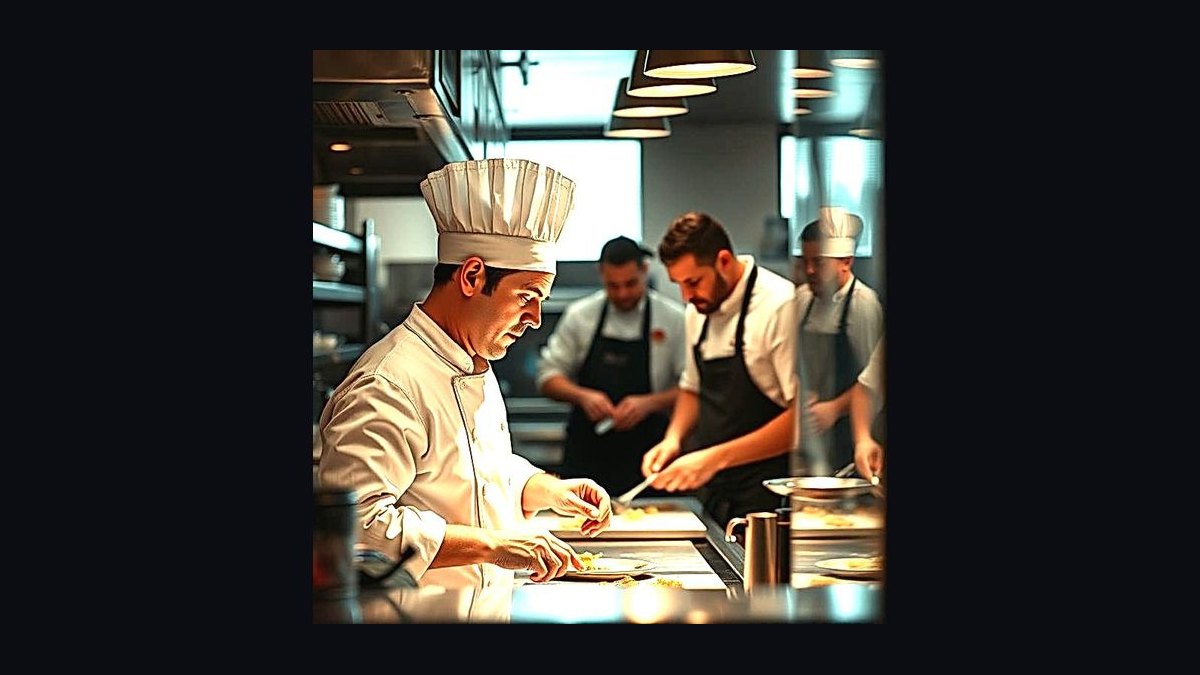
The 2027 GTM Playbook for an Independent restaurant runs a five-channel acquisition funnel — local SEO, reservations, third-party delivery, social, and owned loyalty — feeding strict prime-cost discipline of 55-62%, food cost 28-32%, labor 30-34%. Winning Restaurants own the guest relationship, reprice quarterly, and clear 10-12% net revenue.
The go-to-market motion in one picture
The mistake most Independent Restaurants make in 2027 is treating marketing as one undifferentiated spend. It isn't. A neighborhood full-service concept acquires covers through exactly five channels, and each has a different cost-per-cover you must instrument inside Toast Reports or SpotOn Marketing before you spend another dollar. The whole GTM Playbook is a flywheel: cheap discovery channels bring the first visit, guest-data capture converts that into a re-marketable relationship, and loyalty drives the repeat covers that actually generate profitable revenue.
Channel one is walk-in and local SEO — your Google Business Profile, Yelp, and Apple Maps listings. For a neighborhood concept this should drive 35-45% of covers at roughly $0.40-$1.20 per acquired cover once you count the labor to keep listings fresh. It is by far your cheapest channel. Channel two is reservations through Resy ($249-$399/mo), OpenTable ($149-$499/mo plus $1.00-$1.50 per network cover), Tock, or SevenRooms ($499-$1,500/mo), driving 20-35% of dinner seats. Channel three is third-party delivery (DoorDash, Uber Eats, Grubhub) at 15-25% — treated as paid marketing, never a profit line. Channel four is social organic (Instagram Reels, TikTok) at 10-20% of new-guest covers; owner-voice content beats agency content roughly 3-to-1 on engagement. Channel five is loyalty, email, and SMS — your owned audience and highest-margin repeat driver.

The discipline behind the picture is the cost-per-cover benchmark. In 2027 the targets Independent operators should hit are: walk-in $0.40-$1.20, reservations $2-$4 blended (subscription plus per-cover), social organic $3-$6, email/SMS $0.50-$1.50, paid social $8-$14, and third-party delivery $4-$9 in effective margin foregone per order. Anything above $15 cost-per-cover for an entree under $25 is bleeding money and needs to be cut or repriced immediately. Build a one-line dashboard that divides each channel's monthly spend by covers attributed to it, and review it the first Monday of every month before you approve any new marketing dollar.
Who owns what across the revenue org
An Independent restaurant does not have a "revenue org" in the corporate sense — but the roles still exist, and the 2027 GTM Playbook falls apart when nobody owns each one. Even in a two-manager shop, these responsibilities must be assigned by name, not left to drift onto the owner's already-full plate.

The owner/operator owns prime-cost strategy, the quarterly menu reprice cadence, and the monthly P&L review with the bookkeeper. This is the single non-delegable seat: if prime cost prints above 65% for two consecutive periods, the owner is the one who cuts staff hours or kills a menu item *that week*. The owner also sets the delivery-channel philosophy — deciding which platforms run, at what promotional co-funding, and when to pull a promo that's just discounting platform-loyal users.
The general manager or floor lead owns the Google Business Profile discipline (a post every 5-7 days, fresh photos weekly, a review response within 48 hours), demand-based scheduling, and FOH retention through the fragile first 90 days. Getting a floor lead trained so the owner can step off the line even one shift a week is a day-31-to-60 milestone — skip it and you walk straight into the month-14-to-22 founder-burnout failure mode. The chef or kitchen manager owns food cost to the gram, the menu-engineering matrix, and delivery-menu construction (higher prices, low-margin items dropped). The marketing owner — often the owner or a part-time hire — runs owner-voice Reels 3-5x per week, the loyalty program, and email/SMS automations. On a single-location Independent doing $1.5-$3M in revenue, one person frequently wears two of these hats; the rule is that each responsibility has *a* name against it, even if two share a body.
Guest data is the connective tissue. Your reservations platform is no longer a booking widget — it is your CRM. Every seated cover should leave a name, an email, and a visit history in Resy or SevenRooms, so the re-marketing engine (birthday offers, win-back at 30 days, post-visit thank-yous) has fuel. The org chart exists to make sure that data actually gets captured and acted on, not stranded in a POS nobody queries.
Metrics, targets, and realistic ranges

The 2027 numbers are unforgiving, and every Independent operator running this Playbook should have them memorized. Prime cost — food plus labor as a share of revenue — is the master metric. Hold it between 55% and 62%: food cost 28-32% for full-service (25-30% for fast-casual per National Restaurant Association benchmarks) and labor 30-34%. The Toast Restaurant Trends median labor line runs near 36.5% for full-service, with profitable operators closer to 34% — that gap is the whole margin.
Food cost is held inside the 28-32% window by costing every item to the gram and repricing quarterly against 6-8% year-over-year food inflation (beef, eggs, cooking oils, per USDA ERS data). An operator who skips reprices watches food cost drift from 30% to 34% in a year — on a $2M restaurant that is $40,000-$80,000 of margin gone. The menu-engineering matrix (Kasavana-Smith) governs the fixes: stars (high margin, high popularity) get the best menu real estate and server upsell scripts; plowhorses (high popularity, low margin) get a $1-$3 bump or a recipe redesign cutting food cost 200-400 basis points; puzzles (high margin, low popularity) get a rename, a better photo, or tasting-menu placement; dogs get killed.
On labor, the biggest lever is scheduling to forecast, not habit. Tools like 7shifts ($34.99-$76.99/mo per location), Homebase, Toast Scheduling, and Sling ingest POS sales history and push schedules to phones. Independents who switch from spreadsheet to demand-based scheduling knock 2-4 percentage points off labor within two pay periods — again $40,000-$80,000 annualized on a $2M shop. And the wage floor is real: California's statewide minimum sits at $16.50/hr (fast-food workers at $20/hr), with several coastal cities higher, New York City near $16/hr, and Washington DC phasing out its tipped credit. In those markets model full minimum wage plus tips for FOH — the tipped sub-minimum is disappearing.
On retention, turnover still runs 75-100% annually per BLS food-services series, and the first 90 days is where you lose the majority of the people who quit. Four plays cut turnover 15-30%: tip pooling (now legal for back-of-house inclusion in most states), $200-$400/month health stipends via ICHRA, same-day pay through a POS pay card or an earned-wage app, and a real two-week training arc with a paid trail. Finally, the outcome metric: average Independent full-service net margin is 4-6% in 2027; the top quartile clears 10-12% by owning the guest relationship, pricing quarterly, and holding prime-cost discipline. By day 90 of a launch, target prime cost 58-62%, 400+ loyalty members, 80+ Google reviews at 4.4+ stars, and 15-20% of orders direct-to-restaurant.
Where the motion breaks down
Five repeatable failure modes kill Independent Restaurants in 2027, per trade-press post-mortems, and each one has a specific tripwire you can watch for before it's terminal.

One: prime cost above 67% sustained for two quarters. Once you're there, you cannot price your way out — the menu can't absorb a 12-point overshoot without driving guests away. You must cut. The guardrail is a hard rule: prime cost above 65% for two consecutive periods triggers a staff-hour cut or a menu-item kill *that week*, not next quarter. Two: over-reliance on third-party delivery (>40% of revenue) with no first-party ordering. When DoorDash or Uber Eats changes its commission tier — and they do — you have zero leverage and no owned channel to steer guests toward. The counter is running first-party online ordering through your POS from day one and steering guests there with a 5-10% loyalty discount.
Three: founder burnout at month 14-22 with no GM hired. The owner stops showing up, culture collapses, the Google rating slips half a star, and revenue follows within a quarter. This is why hiring and training a floor lead is a day-31-to-60 milestone, not a "someday" line item. Four: lease creep — percentage-rent clauses plus CAM (common area maintenance) drifting above 10% of revenue. Occupancy cost is the silent third rail alongside prime cost; model it before signing and renegotiate before renewal. Five: skipping menu reprices during a 6-8% food-inflation year — food cost silently drifts 400 basis points and the operator doesn't notice until the year-end P&L lands.

The delivery channel is where the margin math breaks most quietly. Headline 2027 commission rates: DoorDash 15/25/30% tiered plus a smaller pickup rate; Uber Eats 15-30% with a lower-cost web-storefront option; Grubhub Marketplace 15-40% with a flat direct rate for orders placed on your own website. After processing fees, promotional co-funding, and refund chargebacks, the effective take rate is 28-38% of the order on marketplace tiers. Make it margin-positive with three plays: build a delivery-only menu priced 15-20% higher than dine-in (every major platform now allows price differentiation), drop low-margin items (sodas, sub-$4 sides) that wreck blended margin, and use platform promos only when the CAC math works — a "$5 off $25" you fund to acquire a *new*, re-marketable guest can pay off; the same promo for repeat platform-loyal users is just a discount. Watch for the commission-cap patchwork too: New York City caps marketplace commissions at 15% delivery plus 5% other, San Francisco at 15%, with additional cities holding partial caps. The counter-move across all five failure modes is identical: monthly P&L reviews with a bookkeeper or Restaurant365, a rolling 13-week cash-flow forecast, and a prime-cost target with a written guardrail.
How to sequence the build
The 30/60/90 launch plan is the operational spine of the GTM Playbook. Sequence it wrong — turning on delivery before the first-party channel exists, or scaling paid social before the menu is costed — and the funnel leaks from day one.
Days 1-30, Foundation. POS live (Toast or SpotOn), Google Business Profile verified with 20+ photos, Resy or OpenTable live, first-party online ordering live, Instagram and TikTok business accounts posting 3-5x per week, menu costed to the gram, and an opening labor schedule built to a conservative demand forecast. On POS specifically: Toast dominates Independent full-service at roughly $69-$165/mo per terminal plus ~2.49% + $0.15 per swipe; Square for Restaurants runs about $60/mo plus roughly 2.6% + $0.10 for counter-service under $1.5M; SpotOn runs $25-$99/mo plus low-2% processing and is taking share on price. Pick on three criteria — integration with your reservation and delivery stack, payroll inclusion (saves $80-$150/mo vs a standalone payroll app), and lending access (POS-based capital products lend against your receipts at factor rates).
Days 31-60, Channel Activation. Turn on DoorDash and Uber Eats with a delivery-priced menu, launch a loyalty program (a $10 reward at 100 points), run a first paid Meta/TikTok campaign at $500-$1,500 to drive a launch promotion, push to 50+ Google reviews through QR-code-on-receipt asks, and hire and onboard a floor lead so the owner can step off the line one shift a week. Days 61-90, Optimize. Run the first menu-engineering review (kill dogs, reprice plowhorses), tune labor scheduling off real POS history, add email and SMS automations (birthday, win-back, post-visit), and open conversations with a bookkeeper or Restaurant365. Set the quarterly reprice cadence on the calendar.
Related questions
How much should I budget for the restaurant tech stack?
Expect POS at $25-$165/mo per terminal plus 2-2.6% processing, reservations at $149-$1,500/mo, loyalty at $50-$300/mo, and email/SMS at $50-$300/mo. A single-location Independent typically runs $500-$1,200/mo in software before processing fees.
Is Resy or SevenRooms better for a single location?

For a single-location Independent doing $1.5-$3M in revenue, Resy ($249-$399/mo, no per-cover fees, Amex tie-in) is the default. SevenRooms ($499-$1,500/mo) earns its price only for multi-unit groups or concepts running real private-events revenue.
What percentage of orders should be direct versus third-party?
Aim to keep third-party delivery under 40% of revenue and push direct (first-party) orders to 15-20%+ by day 90. First-party ordering through your POS costs 0% commission plus card processing, versus a 28-38% effective take rate on marketplace platforms.
How do I compete with chains on marketing?
You can't outspend chains, so out-engage them locally. Weekly Google Business Profile posts plus daily owner-voice Instagram/TikTok showing your food and team beat agency content roughly 3-to-1 and build a loyal community chains can't replicate at the neighborhood level.
FAQ
What is the most important metric for an Independent restaurant in 2027?
Prime cost — food plus labor as a share of revenue. Holding it between 55-62% (food cost 28-32%, labor 30-34%) is the difference between surviving and thriving under 2027's wage and delivery-commission pressure. Everything else in the Playbook serves that number.
Should I rely on DoorDash and Uber Eats for profit?

No. Treat third-party delivery as a paid marketing channel, not a profit center. The 28-38% effective take rate eats most margin, so use it to acquire new, re-marketable guests and convert them to direct orders through your own POS-based channels.
How often should I update my menu prices?
Quarterly. Small, frequent $0.50-$2.00 adjustments on stars and plowhorses let you keep pace with 6-8% food inflation without shocking regulars. Skipping reprices for a year lets food cost drift 400 basis points — $40,000-$80,000 on a $2M restaurant.
What POS system works best for Independent Restaurants in 2027?
Toast and SpotOn are the common choices among winning Independents. Both bundle online ordering, loyalty, payroll, and lending, letting you own the guest relationship rather than renting it from third-party platforms. Square for Restaurants fits counter-service concepts under $1.5M.
How do I keep labor cost under control?
Schedule to a POS-based demand forecast, not habit. Tools like 7shifts, Homebase, and Toast Scheduling knock 2-4 points off labor within two pay periods. Pair that with retention plays — tip pooling, health stipends, same-day pay — to cut 75-100% industry turnover.
What is a realistic net profit margin for an Independent restaurant?
The average full-service Independent nets 4-6% in 2027. The top quartile clears 10-12% by owning the guest relationship through reservations and loyalty, pricing menus quarterly, holding prime cost at 55-62%, and treating delivery as a channel rather than a revenue line.
Sources
- National Restaurant Association — State of the Restaurant Industry
- Toast — Restaurant Industry Trends and Reports
- USDA Economic Research Service — Food Price Outlook
- U.S. Bureau of Labor Statistics — Job Openings and Labor Turnover Survey (JOLTS)
- SpotOn — Restaurant Resources and Pricing Guides
- TouchBistro — Restaurant Industry Reports and Guides
- OpenTable — Restaurant Reservation and Guest Management Resources
- Nation's Restaurant News — Independent Operator Coverage
- Eater — Restaurant Industry and Tipped-Wage Coverage
Related on PULSE
- How do you build a vertical SaaS for restaurants (Toast / Lightspeed) go-to-market motion in 2027?
- GTM Playbook for Restaurants and Food Service in 2027 — The Complete Operator Guide
- GTM Playbook for Independent Coffee Shops in 2027
- Bakery GTM Playbook 2027 — Wholesale Layer, Custom Cakes, and the $1.8M Independent Operator Path
- Independent Pizza Shop GTM Playbook 2027 — Specialty Regional Style, Delivery Dominance, and the Bar Program Math
- Frozen Yogurt Chain GTM Playbook 2027 — Self-Serve Economics, Birthday Party Pivot, and Franchise vs Independent
This page will be disappearing soon. Save it to your device for $1 — or read it free while it is here.
@Kory-White- · if Venmo asks, the last 4 of my number are 2012
This page is gone.
This one is off the shelf now. $1 keeps it on your phone for good — the whole page, pictures and diagrams included.
 gtm-playbookHow do you build a compliance training platform go-to-market motion in 2027?
 gtm-playbookNotary Services / Mobile Notary GTM Playbook 2027 — RON + Loan Signing Agent and the 85M Notarize Operator Path
 gtm-playbookGTM Playbook for Property Management Companies in 2027
 gtm-playbookHow do you build the GTM playbook for a garage door installation and repair operator in 2027?
 gtm-playbookHow do you build a court and case management software go-to-market motion in 2027?
 gtm-playbookWhat is the go-to-market playbook for category creation in 2027?
 gtm-playbookHow do you build an AI for customer success (Catalyst / ChurnZero) go-to-market motion in 2027?
 gtm-playbookGTM Playbook for Garden Centers and Nurseries in 2027
 gtm-playbookHow do you build a renewable energy trading and ETRM software go-to-market motion in 2027?
 gtm-playbookGTM Playbook for Pharma and Life Sciences — The Complete Operator Guide in 2027