


GTM Playbook for Bars and Pubs in 2027
Quality
Certified
A profitable neighborhood bar or pub in 2027 runs on a tight three-legged stool: draft beer at a 78-82% gross margin, liquor pour cost held at 18-22%, and a programming calendar (live music, sports, trivia) that fills the four slowest nights of the week. The operators who clear $1.2M-$2.4M in annual revenue out of a 2,800-4,500 sq ft footprint are the ones running Toast or SpotOn with inventory-counting and loyalty turned on, paying bartenders $18-$24/hour plus tips, and treating Tuesday trivia and Wednesday live music as customer-acquisition channels, not entertainment expenses. The bars that close in 2027 almost all share the same three failure modes: pour cost drift past 28%, untracked comp tabs, and labor running above 32% of sales because they never built a real schedule against forecasted demand.
1Customer Acquisition — Fill The Slow Nights, Not The Weekend
The weekend takes care of itself. A neighborhood bar with a halfway-decent location will do 55-65% of weekly revenue Thursday through Saturday without trying. The whole acquisition game is converting Monday-Wednesday from $400 nights into $1,800 nights.
1.1 The Trivia Night Math

A weekly pub trivia night, hosted by a paid quizmaster from Trivia Mafia ($125-$175 per night in mid-market cities), Last Call Trivia ($140-$200/night), or King Trivia ($150/night) consistently adds 50-100 patrons to a slow Tuesday and lifts that day's revenue 25-40% versus a no-trivia Tuesday. The unit economics: if 70 people show up with an average ticket of $24, the bar grosses $1,680, pays the host $150, runs 22% beverage cost (~$370), and clears roughly $1,160 in contribution before labor — on what was previously a dead night with two bartenders earning out their shift.
The mistake operators make: they treat trivia as a one-shot promotion instead of a 52-week franchise. The repeat rate after week 3 is the only metric that matters. If the same eight teams aren't coming back by week six, fire the host or change the format — don't blame trivia.
1.2 Live Music — Cover Or No Cover
Live music on a Wednesday or Thursday lifts revenue 30-35% versus a quiet night, but only if you do it weekly so regulars learn the rhythm. Acoustic solo acts cost $150-$300/night, three-piece cover bands $400-$900, regional touring acts $1,200-$3,000 with a guaranteed bar minimum. The vast majority of neighborhood pubs should never charge a cover — the friction kills walk-ins and the math doesn't work below 80 paying heads. Instead, build a $2 surcharge into pints and wells on music nights (most regulars never notice) and you'll out-earn a $5 cover every time.
1.3 Sports — The Underrated Lever

A neighborhood pub with eight to twelve TVs, a DIRECTV Stream Business package ($179-$249/month in 2027 for the sports tier) plus NFL Sunday Ticket for Business ($1,800-$5,500/season by capacity), and a working sound zone setup is selling Sunday brunch and Monday Night Football as a recurring event. Add UFC pay-per-views at $1,200-$2,500 per major card (charge a $10 cover for PPV nights only — fans expect it) and the right college football conference. Real operator benchmark: a 110-seat pub in a college town does $8,500-$14,000 on a home game Saturday, four to six times a normal Saturday.
1.4 The Local Loop
The single highest-ROI marketing channel for a neighborhood bar is still Google Business Profile done right — photos updated monthly, every review answered within 48 hours, posts pushed weekly for that night's specials. Instagram and TikTok generate roughly 8-15% of new walk-ins for bars whose primary clientele is under 35; Facebook events still drive the over-35 crowd for trivia and music. Email and SMS through Toast Marketing or SpotOn Loyalty costs $0.02-$0.04 per send and pulls a 12-22% redemption rate on weeknight specials — the highest-converting channel in the entire stack.
2Pricing — Where The Money Actually Comes From
2.1 Draft Beer Is The Engine
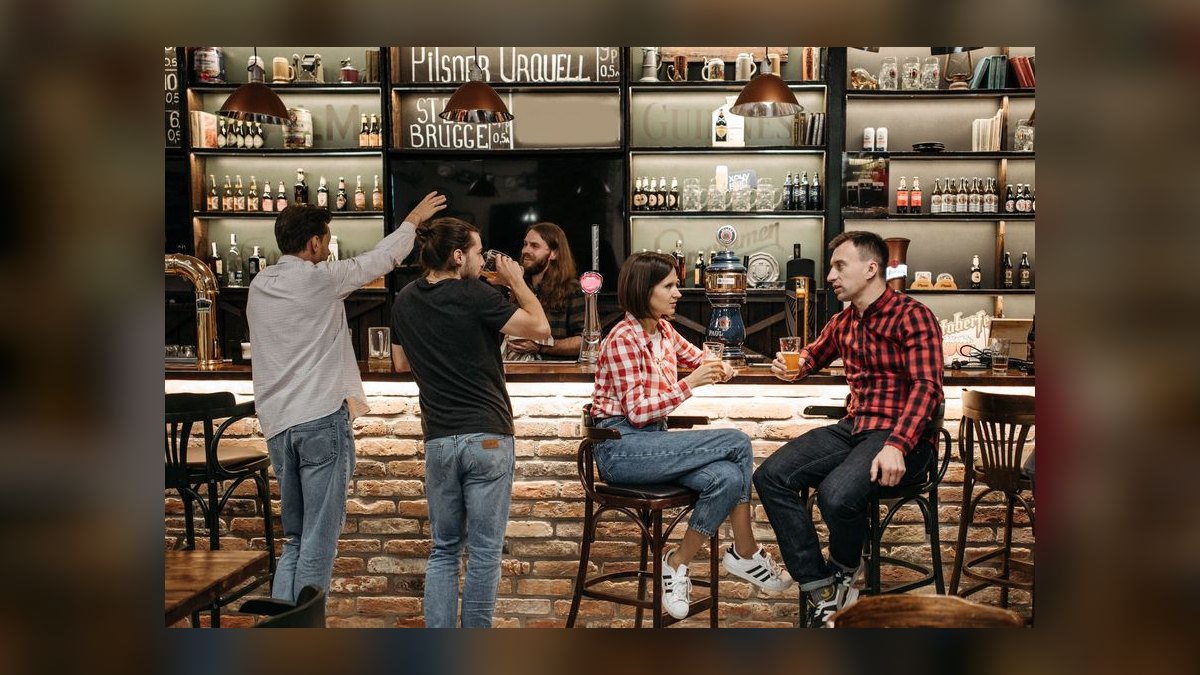
A half-barrel keg of domestic macro lager (Bud Light, Coors Light, Miller Lite) costs $135-$165 in 2027 wholesale depending on state markup. That keg yields about 124 sixteen-ounce pours after foam loss. At $7 a pint the keg generates $868 in revenue — a 19% pour cost, 81% margin. Craft kegs cost $185-$260 wholesale, sell at $8-$10/pint, and run a 22-26% pour cost if you priced them correctly. The whole pricing exercise is making sure your menu math actually delivers a blended 20% beer pour cost — most underwater bars are running 28-34% because they never re-priced when keg costs went up 18% over the last 24 months.
2.2 Liquor — Hold The Line At 20%
The industry rule: a 1.5 oz pour of a $25 bottle of well vodka costs you $1.06. Sell that drink for $7-$9 and you're at 12-15% pour cost. The killer is the $45-$55 premium pour that should sell for $13-$15 but goes out the door for $11 because the bartender free-hands it — that drink hits 28-34% pour cost. Use jiggers, not free pours. Most operators won't enforce this; the ones who do save 3-5 pour-cost points, which on $900K in liquor sales is $27,000-$45,000 in pure margin.
2.3 Wine And Cocktails — Don't Over-Engineer
Neighborhood pubs are not cocktail bars. Stock 4-6 wines by the glass (one sparkling, two whites, two reds, one rosé in season), price them at $8-$12/glass with the bottle in your hand costing $11-$18 wholesale, and accept a 30-35% pour cost — wine moves slow and oxidation kills inventory. A 6-8 item cocktail menu built on inventory you already stock (no $90 specialty liqueurs that turn once a year) at $11-$14/cocktail delivers a healthy 22-26% pour cost without specialty labor.
2.4 Food — Charge For It
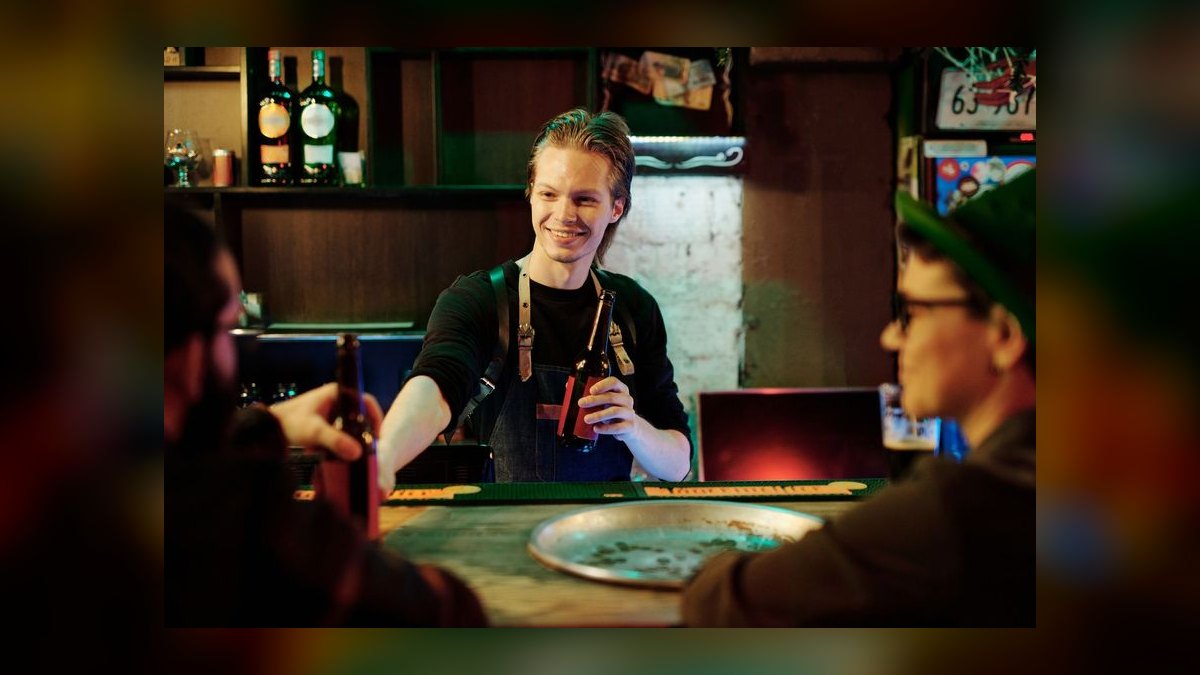
Bar food is a defensive weapon, not a profit center. A 20-30 item menu (wings, burgers, flatbreads, nachos, a fried thing, a salad) at 30% food cost running through a 6-burner line with one cook keeps customers drinking for an extra 45 minutes per visit. Real benchmark: Buffalo Wild Wings runs traditional wings at roughly $1.10-$1.35 cost per wing and sells 6-counts at $10.49-$12.99; BJ's Restaurant + Brewhouse holds blended food cost around 24-26% by leaning on its in-house brewery for beverage margin offset. A neighborhood pub realistically lands at 28-32% food cost with a small kitchen, and that's fine.
3Hiring & Retention — The Hardest Problem In The Business
Bartender turnover in 2027 still runs 75-130% annually at independent bars — meaning a 6-person bar staff is fully turning over every 9-15 months. The BLS projects roughly 129,600 bartender openings per year through 2034, and surveys consistently put staffing as the single biggest operational risk for a majority of restaurant owners.
3.1 Pay The Going Rate, Stop Pretending
Median bartender base in 2027 is $16.50-$22/hour in tipped states, $22-$28/hour in fair-wage states like California, Oregon, and Washington. Tips add $150-$300 per shift at a busy neighborhood pub. The operators losing staff fastest are the ones still paying tipped minimum ($2.13/hour federal, $5-$8 in tipped-credit states) without a service-charge or pooled-tip backstop. Move base to $7-$10/hour above tipped minimum and you'll cut turnover by roughly 35%.
3.2 The Service-Charge Question
By mid-2026, roughly 18-22% of independent bars added an automatic 18-22% service charge to all checks, distributed 70/30 between FOH and BOH. The trade-off: lower walk-in tip variance (good for retention), but 2-4% of customers will complain or stiff you on the extras. This is the single biggest comp-model shift in the industry and you should pick a side by end of Q1 2027.
3.3 Schedule Against Forecasted Demand
Use 7shifts ($34.99-$76.99 per location/month in 2027) or HotSchedules to pull your Toast or SpotOn sales data and forecast labor by 30-minute increments. Target 28-30% labor cost on slow nights and 22-26% on Friday/Saturday. Over-scheduling Sunday brunch is the single most common labor leak in the industry — cut one bar back from the open and you save $120-$180 per Sunday, $6,200-$9,400/year.
3.4 The Retention Levers That Actually Work
Free shift drink (one beer or one well, not premium). A real schedule posted 14 days in advance (not 4 days). Health-stipend reimbursement of $150-$300/month via a QSEHRA — fully deductible, no group plan required. Quarterly profit-share if EBITDA clears 12% — split 1% of revenue across the staff. None of this is expensive; all of it is rare.
4Tech Stack — The Five Tools That Run The Business
4.1 POS — Toast vs SpotOn vs Square vs Clover
Toast dominates new bar openings in 2027 (roughly 38-42% market share among independent bars) with Toast Starter at $0/month + 2.49% + $0.15 per card-present swipe (1-year commitment), Toast Core at $69/month/location, and Toast Growth at $165/month/location. Strong inventory and labor modules; lock-in on processing.
SpotOn has overtaken Toast in several operator satisfaction surveys (including a G2 #1 Restaurant POS placement in Winter 2026) and is the better pick for music-heavy or sports-heavy pubs because of its integrated reservation and event-ticketing. SpotOn pricing: $0 starter at 2.89% + $0.25, POS Essentials at $55/station/month at 1.99% + $0.25.
Square for Restaurants at $60/location/month Plus or $165/location/month Premium, processing at 2.6% + $0.10 card-present. Best for a single-location pub doing under $700K in card volume — the processing math beats Toast below that threshold.
Clover dominates legacy installs but is losing share fast — most independents leaving Clover in 2027 cite the third-party app fees and the $14.95-$94.85/month plan tiers stacking up.
4.2 Inventory — Stop Doing It On Paper
BackBar ($79-$249/month by location size), BevSpot (now WISK; $165-$329/month), or MarginEdge ($330/month/location all-in including invoice processing) are the three real options. A bar running ANY of these against a manual count cuts variance from a typical 5-9% loss to under 2% — on a $1.4M revenue bar that's $42K-$98K returning to the bottom line.
4.3 Reservations & Events
For a music or trivia venue: OpenTable at $249/month + $1-$1.50 per seated cover from OpenTable.com for full-service, or Resy at $249-$899/month (no per-cover fee). Eventbrite for ticketed nights at 3.7% + $1.79 per ticket. Most neighborhood pubs don't need reservations and shouldn't pay for them.
4.4 Marketing & Loyalty
Toast Marketing Suite at $75/month (built-in email and SMS), or SpotOn Loyalty (bundled at higher tiers). Klaviyo ($45-$150/month) if you want best-in-class email but the integration cost rarely pays back at this scale. A simple Google Business Profile, a working Instagram, and a 4,000-name SMS list are the entire stack you actually need.
4.5 Accounting & Back Office
QuickBooks Online Plus at $99/month (2027 pricing) with MarginEdge or Restaurant365 ($459-$679/month all-in) feeding daily sales journals. Restaurant365 is overkill for a single-location pub; QBO + MarginEdge is the sweet spot.
5Retention — Make Them Regulars In Visit Three
The metric that determines whether your bar survives year two is monthly active regulars — people who walk through the door 4+ times a month. A healthy neighborhood pub has 180-340 monthly regulars doing roughly 45-55% of total revenue.
5.1 The Bartender-Knows-Your-Name Effect
The single highest-impact retention move is training every bartender to memorize 30 regulars by name and drink within 60 days of hire. This is unmeasurable but every owner who's run a profitable bar will tell you it's the only moat that matters. The systems version: a notes field on your SpotOn or Toast loyalty profile for every regular — drink, allergy, birthday, partner's name. Bartenders pull it up on the POS when the regular walks in.
5.2 Loyalty Programs That Don't Suck
Skip the "10 punches gets a free drink" card — it trains discount behavior. Instead: birthday month gets a free entrée (4-6% redemption, $14 cost, near-100% margin on the rest of the visit), and a "mug club" at $60-$75/year membership for a personalized mug, 20-oz pours at 16-oz prices, and members-only beer dinners. Real operator benchmark: a well-run mug club at a 120-seat pub clears 240-380 members within 18 months, generating $14K-$32K in pure annual membership revenue plus elevated visit frequency.
5.3 The Calendar Is The Product
A regular doesn't come to your bar — they come to Tuesday trivia, Wednesday live music, Thursday open mic, Sunday brunch with the game. If your weekly calendar is the same six months in a row, your regulars will leave when a competitor opens a more interesting week. Refresh one slot per quarter — new trivia format, new run-club partnership, new monthly comedy showcase.
6Failure Modes — Why Bars Close
Independent bar and tavern closures cluster heavily in the first five years — and the failures repeatedly trace back to the same five fixable mistakes. Fix these and you remove most of the controllable closure risk.
6.1 Pour-Cost Drift
Pour cost creeping from 22% to 30% over six months goes unnoticed until the accountant flags it. On a $900K beverage bar that's $72K of vanished margin. The fix is a monthly variance count (BackBar, WISK, MarginEdge) and firing the one bartender who's always 2x over on variance — every bar has one.
6.2 Untracked Comps And Voids
Comp tabs, owner drinks, voided rounds — they add up. Industry estimates put comp leakage at 4-7% of revenue at independent bars without comp limits, versus 1-2% at bars with a $30/shift/bartender comp cap enforced through Toast or SpotOn. On $1.4M revenue that's $28K-$70K.
6.3 Labor Above 32%
Once labor crosses 32% of sales for three months in a row, the bar is structurally unprofitable and the owner is paying themselves last. The fix is scheduling against forecasted demand, not optimism.
6.4 Rent Above 10%
If occupancy (rent + CAM + utilities) exceeds 10% of revenue the math gets very tight. A bar paying $11,500/month in occupancy needs to be doing $115K/month minimum to survive. Don't sign a lease without running this number against realistic year-one revenue (not year-three).
6.5 Liquor License Mismanagement
ABC compliance violations — serving minors, over-serving, paperwork lapses — can cost a license. Hire a $400-$900 annual ABC compliance consultant and run monthly TIPS or ServSafe Alcohol refreshers for every staff member. A 30-day license suspension during football season can end the business.
730/60/90 Day Operating Cadence
Day 1-30 — Stabilize
Audit the POS menu — every item, every modifier, every price. Re-price draft beer and well spirits to hit a 22% blended beverage cost at current keg and bottle costs. Run the first full inventory count in BackBar or WISK to establish a real baseline. Fix the most-broken position on the schedule — usually a missing Tuesday or Sunday bartender. Cancel one subscription you're not using (every bar has one).
Day 31-60 — Systematize
Launch weekly trivia and one weekly music night with paid hosts. Turn on Toast or SpotOn loyalty with a 4,000-target SMS list goal. Move scheduling to 7shifts with forecasted demand. Implement a $30/shift/bartender comp cap and run the first month of comp data. Run a TIPS or ServSafe Alcohol refresher with every staff member.
Day 61-90 — Scale
Add a second weekly event (open mic, run club partnership, or sports-watch night). Launch the mug club at $60-$75/year. Run the first quarterly P&L review against industry benchmarks: 22% beverage cost, 30% food cost, 28-30% labor, 10% occupancy, 15-22% EBITDA. If any line is more than 3 points off, you have a specific known problem to fix in the next 30 days.
FAQ
What is the ideal draft beer margin for a bar in 2027? Target a draft beer gross margin of 78-82%, which means holding pour cost in the 18-22% range. You get there by re-pricing pints whenever keg costs move, counting inventory monthly to catch over-pouring and foam loss, and making sure your best-selling drafts aren't underpriced relative to their wholesale keg cost.
How much should I pay bartenders to stay competitive in 2027? Plan on $18-$24/hour plus tips in most tipped-wage states, and $22-$28/hour in fair-wage states like California, Oregon, and Washington. Paying $7-$10/hour above tipped minimum is the single most effective turnover lever — it can cut bartender churn by roughly a third while keeping total labor under the 32%-of-sales danger line.
What are the most common reasons bars fail in 2027? Five fixable mistakes drive most controllable closures: pour cost drifting above 28%, untracked comps and voids (4-7% of revenue at bars with no comp cap), labor above 32% of sales for three-plus months, occupancy above 10% of revenue, and liquor-license compliance lapses. Each has a concrete fix — monthly variance counts, comp caps in the POS, demand-based scheduling, disciplined lease math, and regular TIPS/ServSafe training.
How can I fill slow weeknights without discounting? Build a weekly programming calendar instead of running price promotions. A paid trivia host ($125-$200/night) can lift a dead Tuesday's revenue 25-40%, weekly live music lifts a quiet Wednesday or Thursday 30-35%, and a real sports setup turns Sundays and Mondays into recurring events. Treat these as customer-acquisition spend and measure them by repeat-team and repeat-visit rates, not one-night sales.
What revenue and take-home should I expect from a single neighborhood bar? A well-run neighborhood bar in a 2,800-4,500 sq ft footprint typically generates $1.2M-$2.4M in annual revenue, with owner take-home of roughly $220K-$480K when beverage cost, labor, and occupancy are all held to benchmark. Actual numbers swing hard on location, concept, and how disciplined the operator is about inventory and scheduling.
Which POS system is best for inventory and loyalty in 2027? Toast and SpotOn are the two leading picks because both bundle inventory counting and loyalty natively. Toast holds the largest share of new bar openings and has strong inventory/labor modules; SpotOn rates higher in several operator satisfaction surveys and is the better fit for music- or sports-heavy pubs thanks to integrated reservations and event-ticketing. Pair either with a dedicated inventory tool (BackBar, WISK, or MarginEdge) for the tightest pour-cost control.
Bottom Line
A neighborhood bar or pub is a great business in 2027 if — and only if — the owner runs it like a business: 20-22% blended beverage cost held monthly, labor under 30%, occupancy under 10%, and a weekly programming calendar that turns slow nights into busy ones. The tech stack is Toast or SpotOn + BackBar or WISK + 7shifts + QuickBooks — under $650/month total and a 4-6x ROI within 90 days. The operators who fail are the ones who skip the inventory count, free-pour their well, over-staff Sunday, and never refresh the calendar. The operators who clear $220K-$480K in owner take-home on a single location are the ones who treat it like an operations job, not a hospitality hobby.
Related on PULSE
- Inbound demand-capture GTM playbook in 2027
- Reseller and VAR channel GTM playbook in 2027
- International and geo-expansion GTM playbook in 2027
Sources
- National Restaurant Association — 2026 State of the Restaurant Industry Report (closure trends, labor benchmarks, beverage cost data)
- U.S. Bureau of Labor Statistics, Occupational Outlook Handbook — Bartenders (wages, turnover, projected openings 2024-2034)
- Bar & Restaurant Magazine — Salary Outlook & On-Premise Industry Reports, 2026
- Toast — Restaurant Industry Report 2026 (POS market share and processing-fee benchmarks for independent bars)
- SpotOn & G2 — Restaurant POS operator satisfaction rankings, Winter 2026
- BackBar Academy — 2026 Pour Cost Targets For Bar Profitability
This page will be disappearing soon. Save it to your device for $1 — or read it free while it is here.
@Kory-White- · if Venmo asks, the last 4 of my number are 2012
This page is gone.
This one is off the shelf now. $1 keeps it on your phone for good — the whole page, pictures and diagrams included.
 pulse-recentGTM Playbook for Specialty Retailers — Niche Assortment, Local SEO, and the Cluster Strategy in 2027
 gtm-playbookNotary Services / Mobile Notary GTM Playbook 2027 — RON + Loan Signing Agent and the 85M Notarize Operator Path
 gtm-playbookWhat do top-performing SDR teams do differently in their outreach sequencing in 2027?
 gtm-playbookHow do you build a distribution and wholesale ERP go-to-market motion in 2027?
 gtm-playbookHow do you build a court and case management software go-to-market motion in 2027?
 gtm-playbookBranding and Design Agency GTM Playbook 2027 — AI-Augmented Production, Cannes Lions Awards, and the $148M Pentagram Operator Path
 gtm-playbookGTM Playbook for Title Insurance Companies in 2027
 gtm-playbookHow do you build a vector databases (Pinecone / Weaviate) go-to-market motion in 2027?
 gtm-playbookGTM Playbook for Tax Attorneys in 2027
 gtm-playbookWhat is the go-to-market playbook for launching an AI product in 2027?