


GTM Playbook for Garden Centers and Nurseries in 2027
Quality
Certified

A profitable independent garden center in 2027 wins by building a spring-season operating system that captures the March-through-June revenue spike — which delivers 55-70% of annual sales for most operators — without burning crews out by July. The largest independents that pull $200-plus per square foot — Bachman's (Minnesota), Armstrong Garden Centers (California), and Calloway's Nursery (Texas) — all run the same core stack: a horticulture-aware POS like NurseryPro, Rapid Garden POS, NCR Counterpoint, or Lightspeed Retail, an event-driven foot-traffic calendar, a paid loyalty plan with email + SMS via Klaviyo, and a year-round labor pipeline that treats H-2B and returning seasonal staff as the spine. Below is the 2027 playbook for an owner-operator running one to four garden centers and doing $2M to $25M in annual revenue.
1Customer Acquisition — Filling The Spring Aisles
1.1 The 2027 customer acquisition mix
Independent garden centers in 2027 should run a four-channel acquisition mix: paid local search, organic social (Instagram and TikTok), event-driven foot traffic, and partnerships with yard-and-design contractors. Most underperforming centers over-index on a single channel — usually a stale newspaper insert or a Facebook page nobody updates between June and the following March.
The acquisition target for a healthy independent garden center is 8% to 12% new-customer share of transactions during the March-June spike, with 65% to 75% repeat-customer share in the same window. Below that repeat threshold and you are leaking your loyalty base; above 80% and you are not investing enough in acquisition.
1.2 Paid acquisition that actually pays
Run Google Local Services Ads plus Performance Max scoped to a 15-mile radius with a March-1 ramp and a June-15 throttle. Tight geo and creative typically pull a blended paid-search CPA of $9 to $18 per new-customer file, with a first-visit ticket of $65 to $95 versus the industry $50 to $70 average transaction. New-customer payback typically lands inside 18 months for centers with a working loyalty plan.

Pair that with Meta and TikTok organic reels filmed on a phone in the greenhouse — staff identifying common pest issues, walking customers through tomato variety selection, demoing a drip-irrigation install. Wallace's Garden Center in Iowa and Hicks Nurseries on Long Island (a longtime Top 100 operator) both publish two to four short-form videos per week during peak season and credit social with a double-digit share of new-customer attribution.
1.3 Events as the cheapest acquisition channel
Weekend events are still the highest-ROI acquisition lever in 2027. The math is simple: a Saturday tomato-tasting that pulls 400 attendees at an event cost of $1,200 lands new-customer CPA below $10 because 30-40% of attendees transact the same day. Anchor events to the planting calendar — early-March pruning clinics, April vegetable transplant weekends, May container-garden workshops, fall mum festivals, November live-tree previews. Calloway's Nursery and Armstrong both publish 12-plus annual signature events per location and treat them as a P&L line, not a marketing afterthought.
2Pricing — The Margin Architecture That Survives Big Box
2.1 The category margin map
Independent garden centers cannot win a posted-price war with Home Depot or Lowe's on bagged soil, fertilizer, or commodity annuals, so do not try. Build margin where the big box cannot follow: specialty perennials, B&B trees, premium pottery, gift, and houseplants. Realistic 2027 gross margin targets by category:

- Annuals and vegetable starts: 45-52% gross margin, 8-12% of revenue.
- Perennials: 52-58% gross margin, 15-20% of revenue.
- Trees and shrubs (B&B and container): 45-55% gross margin, 20-30% of revenue, the largest single category by dollars.
- Houseplants and tropicals: 55-65% gross margin, 10-18% of revenue and growing fast post-2024.
- Pottery, garden gift, and hard goods: 50-60% gross margin, 15-22% of revenue.
- Bagged goods, mulch, fertilizer, chemicals: 28-38% gross margin, 8-15% of revenue — traffic drivers, not profit centers.
Blended store gross margin should land between 48% and 54%. Anything under 45% signals an over-reliance on commodity bagged goods or a wholesale-cost problem with your nursery supplier.
2.2 Ticket size and the $40-$180 reality
Your average ticket will sit between $40 and $180 depending on category mix and how aggressively staff cross-sell. The lever that moves it most: trained add-on selling at the perennials bench. A staffer who asks "what are you planting this with?" lifts average ticket by $18 to $35 per transaction over an unstaffed self-serve aisle, per multiple Independent Garden Center Show operator panels.

2.3 Markdown discipline and live-goods shrink
Live-goods shrink — plants that die before they sell — is the silent killer. Healthy operators hold shrink under 4% of plant cost-of-goods; poor operators run 8-12%. The discipline: weekly bench walk with a printed POS report of plants in-stock more than 21 days, 25% markdown at day 21, 50% at day 28, donate or compost at day 35. Bake a 3.5% shrink reserve into pricing from the start so markdowns do not destroy category margin.
3Hiring & Retention — The Labor Pipeline That Survives Spring
3.1 The 2027 wage reality
Grounds and retail-horticulture wages have climbed hard. The Bureau of Labor Statistics median for grounds-maintenance workers is roughly $38,470 annually in 2026, with hourly ranges of $16 to $25 per hour for general labor and $24 to $34 for nursery-skilled staff. Most green-industry employers planned wage increases heading into 2026 — many at 4% or more — and 2027 budgets should pencil in another 5-8% above the 2026 baseline.
For an owner-operator that means starting cashier wages of $17-$20, experienced perennial-bench staff at $22-$28, certified nursery professionals at $26-$34, and assistant manager pay at $58K-$75K depending on metro. Below these bands you will not staff your spring.

3.2 The H-2B and returning-staff spine
Centers that do not crater in May rely on H-2B seasonal labor combined with a returning-staff loyalty program. The H-2B statutory cap is 66,000 annually with supplemental allocations, and demand consistently runs 3x to 4x supply, so you must file with the DOL Office of Foreign Labor Certification at the earliest filing window for your start date. Budget $2,500-$4,000 per H-2B worker in legal, recruiting, and travel costs amortized over a six-month season.
For returning seasonal staff, pay a return bonus of $500-$1,500 in March for staff who came back the prior year. This single line item is the most cost-effective retention spend in the industry — payback typically inside 45 days because trained staff sell 20-35% more per hour than first-year hires.
3.3 The off-season retention play
The retention problem in this industry is November-February. Top operators keep their core team employed year-round by leaning into Christmas tree and wreath season (November-December), houseplant and holiday gift (December), winter pruning and yard-design consults (January-February), and inventory and capital projects during the slowest weeks. Wallace's, Bachman's, and Armstrong all run multi-revenue-line operations specifically so core staff stay employed and on payroll year-round.

4Tech Stack — The 2027 Garden Center Operating System
4.1 The horticulture-aware POS layer
A general-purpose POS will fail you on plant SKU complexity. Use a horticulture-built system. Representative 2027 pricing (confirm a live quote before you budget):
- NurseryPro (RTP, built on Counterpoint): custom-quoted, commonly $200-$450 per terminal per month all-in with hardware, plus a $5K-$15K implementation. Strong on B&B tag printing, contractor accounts, and delivery routing.
- Rapid Garden POS (garden-center vertical): mid-tier, roughly $130-$260 per terminal per month, with solid plant-tag barcode and seasonal inventory flow.
- NCR Counterpoint: cloud licenses commonly start near $149/month/terminal; perpetual licensing plus annual support is also offered. Enterprise-grade and a de-facto stack at many larger centers. Implementation runs $10K-$40K depending on terminals and modules.
- Lightspeed Retail: Basic $89/mo, Core $149/mo, Plus $289/mo billed annually. Easiest to stand up, weakest on plant-specific features — best fit for centers under $3M annual revenue.
4.2 The marketing and loyalty layer
- Klaviyo for email and SMS — pricing scales with list size. Home-and-garden benchmarks show loyalty programs are widely used by shoppers yet under-offered by brands, and SMS flows generate a disproportionate share of SMS revenue relative to send volume — so automated flows beat one-off blasts.
- AppCard or Punchh for paid loyalty if you want a punchcard-style program with cashier-driven enrollment. Typical cost $300-$900/month for one to three locations.
- Birdeye or Podium for Google review velocity — roughly $300-$500/month. Operators who push to a 4.6-plus average star rating with 400-plus reviews report meaningful organic-search lift in their geo.

4.3 The wholesale and supply layer
- SBI Software (or a comparable nursery ERP) for plant procurement, wholesale relationships, and inventory forecasting at multi-store scale. $400-$1,500/month depending on volume.
- Square or Stripe for offsite event payment if your primary POS does not support a mobile terminal. 2.6-2.9% per transaction.
- QuickBooks Online Advanced or Sage Intacct for accounting. $200-$1,000/month. Tie POS to GL nightly — no exceptions.
All-in tech stack cost for a 3-terminal, single-location garden center in 2027 typically lands between $1,800 and $4,500 per month, or roughly 0.5-1.2% of revenue.
5Retention & Recurring Revenue
5.1 Loyalty design that drives the 65% repeat rate
Build a paid loyalty plan — $39/year or $79/year — that bundles 10% off everything, early event access, free delivery on orders over $250, and two free in-store classes per year. Operators running paid programs commonly report 3x-plus annual visit frequency and $280-$520 incremental annual spend per member, which can build to $200K-$1.5M in annual program revenue at meaningful penetration.

5.2 Service-line annuities
The highest-margin recurring revenue in this business is service: yard-design consults at $150-$450, install crews at $4K-$45K project size, monthly maintenance contracts at $180-$650/month, and seasonal color-rotation contracts for commercial clients at $3K-$12K per property per year. Bachman's and Armstrong both run substantial install and maintenance divisions that smooth out the seasonal revenue curve.
5.3 The houseplant and event-rental adjacencies
Houseplants are among the fastest-growing categories in the 2024-2027 window, with 55-65% gross margin and a customer base that skews 20-40 years old versus the 45-70 outdoor-plant base. Stock 150-400 SKUs depending on store size. Event rentals (potted trees, mums, holiday displays for weddings, corporate, and seasonal photo ops) is a $30K-$200K annual revenue line for centers that staff it.
6Failure Modes — How Garden Centers Actually Die
6.1 The cash crunch in January
The number-one killer of independent garden centers is January-February cash starvation. Spring inventory orders ship February and March, payroll runs every two weeks, and revenue is bottoming. Operators who survive carry 90-120 days of operating cash entering January or have a $250K-$1M seasonal line of credit drawn against summer receivables. Operators who do not, close.

6.2 Over-investing in the wrong square footage
Expanding greenhouse square footage without expanding destination categories — gift, houseplant, pottery, hardgoods — is a classic mistake. Live-goods square footage carries shrink risk and labor intensity that hardgoods square footage does not. Strong operators run roughly 40-55% live-goods square footage and the rest in higher-margin, lower-shrink categories.
6.3 Ignoring yard-and-design contractor accounts
Yard-and-design contractors will quietly become 20-35% of your revenue if you let them — at net-30 terms with a 10-15% contractor discount. Centers that refuse contractor accounts leave six- and seven-figure revenue on the table. Centers that grant terms without credit applications, personal guarantees, and 30-day stop-sell discipline end up funding the contractor's business with their own working capital.
6.4 Owner burnout in July
The owner who does every job from March-June with no second-in-command is the owner who quits the business in July. By 2027 you need a trained assistant manager, a buyer who is not you, a marketing lead who is not you, and a service-lines manager. Total mid-management cost lands around $250K-$420K annually for a single-store operation — and is the difference between a sellable, scalable asset and a job you cannot leave.

7The 30-60-90 Playbook
7.1 Days 1-30: Diagnose
Pull trailing-12-month sales by category from your POS. Compute gross margin by category, shrink by category, average ticket, transaction count by month, and repeat-customer share. Compare against the 48-54% blended margin and $40-$180 ticket benchmarks above. Identify the two categories that are bleeding and the two categories with the most upside.
Walk every aisle with your store manager. Count out-of-stocks. Note pricing-sign quality. Audit your Google Business Profile review velocity, response rate, and photo freshness. Schedule a wholesale-supplier review with your top three nurseries.
7.2 Days 31-60: Rebuild The Spring Engine
Lock spring orders with wholesale source nurseries (Monrovia, Bailey Nurseries, Star Roses & Plants, regional growers) for March-May delivery. File H-2B paperwork if you have not — the window closes fast. Publish your March-June event calendar, 12-plus events anchored on planting milestones. Stand up Klaviyo email and SMS flows — welcome, post-purchase, win-back, event reminder. Implement Birdeye or Podium for review velocity. Train staff on add-on selling at the perennial bench.
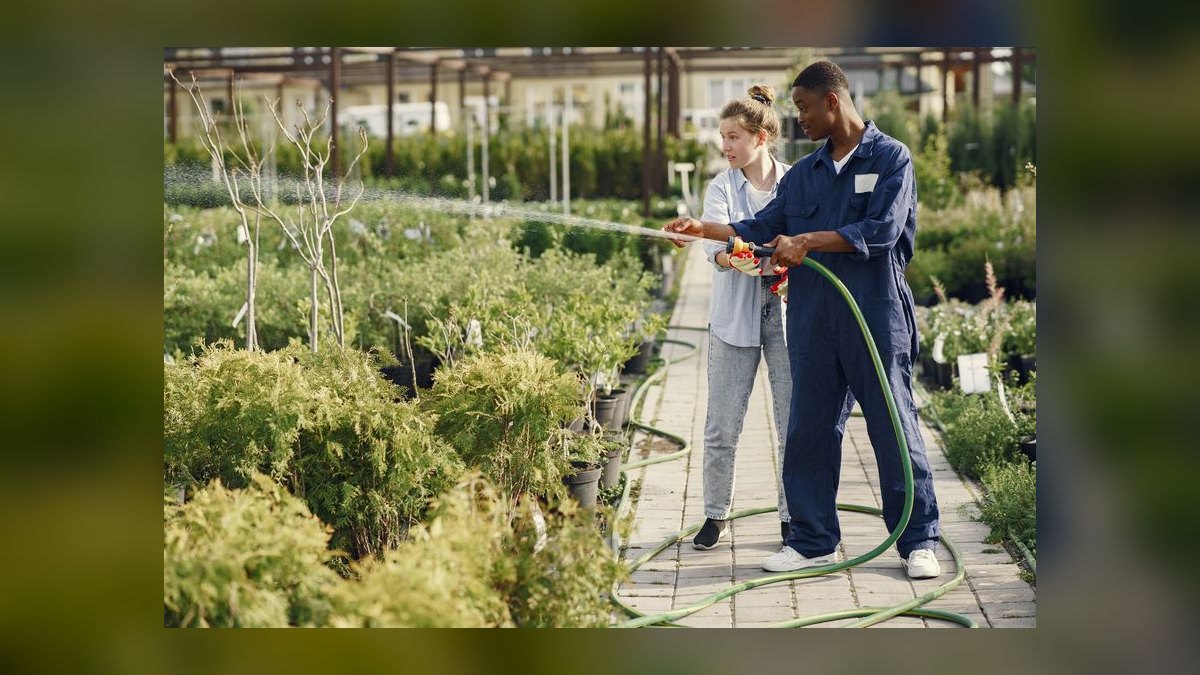
Reprice underperforming categories — pull the bottom 20% of SKUs by velocity and either delete or markdown. Add 40-80 houseplant SKUs if you are under-indexed there.
7.3 Days 61-90: Operate The Spike
Open seven days a week in March. Run the March-June paid acquisition campaign: $3K-$12K/month in Google Local Services Ads and Performance Max, geo-fenced 15 miles, with a June-15 throttle. Push two to four short-form social videos per week from the greenhouse. Host one weekend event per weekend through Memorial Day. Hit your 8-12% new-customer share and 65-75% repeat-customer share weekly KPI.
Track labor as a percent of revenue weekly — target 18-24%. If you cross 27%, you are either over-staffed for traffic or under-pricing categories. Hold a 30-minute Monday operating call with your assistant manager, buyer, and marketing lead. Walk the bench every Friday and run the 21/28/35-day markdown discipline. By day 90 your repeat-customer share should be trending up and your shrink should be trending down.
FAQ
What is the most important revenue period for garden centers in 2027? The March-through-June window typically delivers 55-70% of annual sales for most independent garden centers. This spring spike is the core financial engine, and the entire operating system — inventory, hiring, marketing, and cash planning — should be built backward from it, then run hard enough to capture it without exhausting staff by July.
Do I need a specific POS system to succeed? You don't need one specific brand, but you do need a horticulture-aware POS. Options like NurseryPro, Rapid Garden POS, NCR Counterpoint, or Lightspeed Retail are common among top performers. What matters is that it tracks inventory by plant type and seasonality, prints B&B and bench tags, handles contractor accounts, and feeds purchase history into your loyalty program — things a generic retail POS handles poorly.
How can I compete with big-box stores on pricing? You don't compete on posted price — you compete on expertise, plant health guarantees, curated selection, and experience. Concede the commodity bagged goods and use them as traffic drivers, then build margin in specialty perennials, B&B trees, houseplants, pottery, and gift where Home Depot and Lowe's can't follow. A paid loyalty plan with email and SMS via Klaviyo retains the customers who value advice over a dollar off a flat of annuals.
What labor strategy works best for seasonal surges? A year-round pipeline that treats H-2B and returning seasonal staff as the spine is the most reliable approach. File H-2B at the earliest window for your start date, pay a March return bonus ($500-$1,500) to bring trained staff back, cross-train for multiple roles, and keep your core team employed off-season through Christmas trees, houseplants, and winter consults. Returning staff sell 20-35% more per hour than first-year hires, so retention is cheaper than re-hiring.
How do I drive foot traffic outside of spring? An event-driven calendar is essential — pruning clinics, container workshops, plant swaps, mum festivals, and live-tree previews give customers a reason to visit beyond the spring rush. Pair each event with targeted email and SMS, and lean into off-season revenue lines (holiday gift, houseplants, design and maintenance services) to smooth out the November-February trough.
What revenue per square foot should I aim for? Top operators like Bachman's and Armstrong Garden Centers are known to hit $200-plus per square foot, but that's a high bar built on years of mix optimization. A realistic target for a $2M to $25M independent is roughly $100 to $150 per square foot, depending on location, product mix, and labor efficiency — with the path to higher numbers running through more destination (non-live-goods) square footage and disciplined shrink control.
Bottom Line
The independent garden center model in 2027 is profitable but unforgiving — a 48-54% blended margin business with 55-70% of revenue compressed into four months, a labor pipeline under genuine stress, and a cash trough in January that quietly closes operators every year. The owner-operators who win — Bachman's, Armstrong, Calloway's, Wallace's, Hicks, and the broader Garden Center Top 100 — all run the same playbook: a horticulture-built POS like NurseryPro or NCR Counterpoint, an event-driven foot-traffic calendar, a paid loyalty program with Klaviyo email and SMS, a service-lines annuity in design and maintenance, H-2B and returning-staff as the labor spine, and 90-120 days of working capital entering January. Run that operating system and a single store can hold $200-plus per square foot and clear a 15-22% EBITDA margin in a good year. Skip any one piece and you will be one bad spring from a wind-down sale.
Related on PULSE
- GTM Playbook for Tutoring Centers in 2027
- Inbound demand-capture GTM playbook in 2027
- Reseller and VAR channel GTM playbook in 2027
Sources
- Garden Center Magazine — "2025 Top 100 Independent Garden Centers" — gardencentermag.com
- AnythingResearch — "Nursery, Garden Center & Farm Supply Retailers: Industry Statistics" — anythingresearch.com
- Lawn & Garden Retailer — "Evaluating Garden Center Profitability" — lgrmag.com
- BizBuySell — "Nursery & Garden Center Valuation Multiples & Financial Benchmarks" — bizbuysell.com/learning-center/valuation-benchmarks
- U.S. Bureau of Labor Statistics — "Grounds Maintenance Workers" Occupational Outlook and OES wage data — bls.gov/oes
- U.S. Department of Labor, Office of Foreign Labor Certification — H-2B program filing windows and cap data — dol.gov/agencies/eta/foreign-labor
- AMS Retail Solutions — "NCR Counterpoint for Garden Centers: Features, Benefits & Pricing" — amsretail.com
- Lightspeed Commerce — Retail POS pricing page (Basic $89, Core $149, Plus $289, billed annually) — lightspeedhq.com/pos/retail/pricing
- Klaviyo — "SMS Marketing Benchmarks by Industry" and "Home & Garden Marketing Best Practices" — klaviyo.com
- AmericanHort — green-industry workforce, wage-trend, and operations research — americanhort.org
- Independent Garden Center (IGC) Show — operator panel benchmarks on pricing, add-on selling, and retention — igcshow.com
This page will be disappearing soon. Save it to your device for $1 — or read it free while it is here.
@Kory-White- · if Venmo asks, the last 4 of my number are 2012
This page is gone.
This one is off the shelf now. $1 keeps it on your phone for good — the whole page, pictures and diagrams included.
 gtm-playbookWhat is the go-to-market playbook for developer-led growth in 2027?
 pulse-recentWhat go-to-market playbook works best for Cleaning & Facilities in 2027?
 gtm-playbookWhat is the go-to-market playbook for launching an AI product in 2027?
 gtm-playbookSales-as-a-Service GTM Playbook 2027 — Outsourced SDR + AI-Augmented Prospecting + Clay and the 48M memoryBlue Operator Path
 gtm-playbookGTM Playbook for Optometry Practices in 2027
 gtm-playbookHow do you build a robotic process automation (UiPath / Automation Anywhere) go-to-market motion in 2027?
 gtm-playbookWhat is the go-to-market playbook for a partner-led (channel) motion in 2027?
 gtm-playbookGTM Playbook for Tax Attorneys in 2027
 gtm-playbookNotary Services / Mobile Notary GTM Playbook 2027 — RON + Loan Signing Agent and the 85M Notarize Operator Path
 gtm-playbookHow do you build the GTM playbook for a garage door installation and repair operator in 2027?