


GTM Playbook for Window Cleaning Services in 2027
Quality
Certified
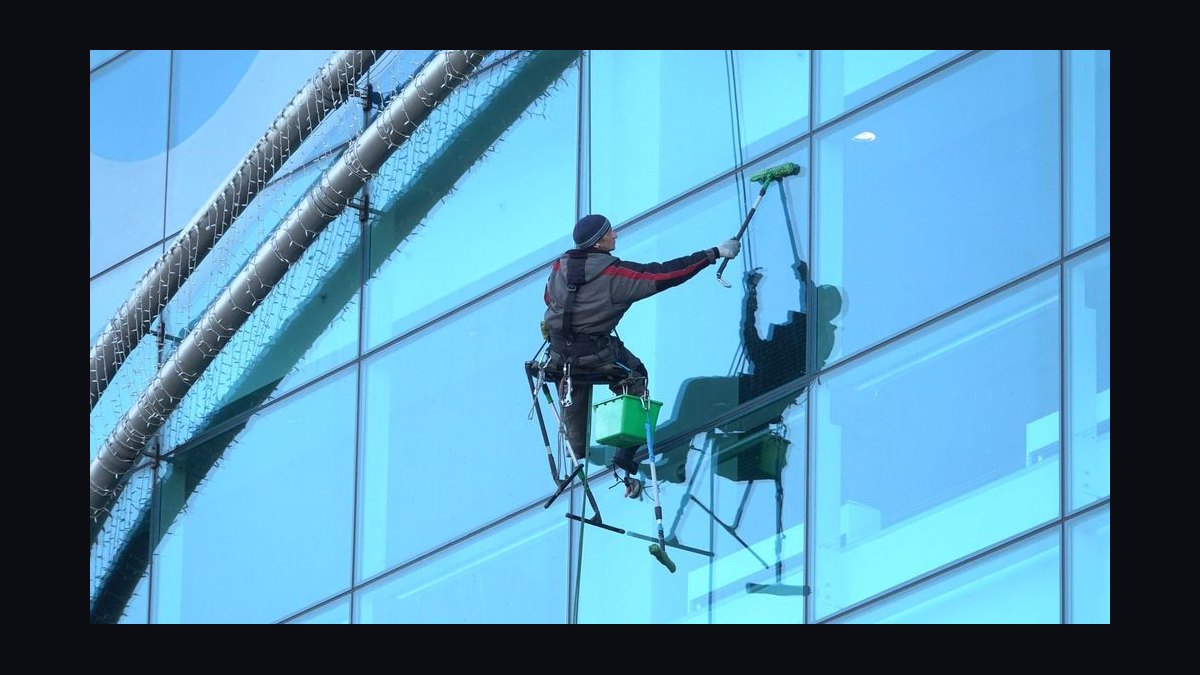
Window cleaning is a route-density and recurring-revenue game, not a one-off services business. The owner-operators who scale past $500K-$900K in 2027 do three things differently than the crowd stuck at $250K:
- They price per pane plus an access multiplier — not hourly, not flat-rate — landing a blended ~$240 average residential ticket that protects margin on multi-story and heavy-buildup jobs.
- They default new customers into opt-out quarterly plans and convert 40%+ of one-time jobs to recurring (opt-out enrollment roughly doubles the opt-in rate).
- They treat windshield time, not labor, as the #1 cost line — enforcing a 6+ stops per crew per day rule inside a 15-mile radius.
The 2027 minimum operating stack is a real field-service platform — Jobber (mid-tier ~$149/mo) or Housecall Pro (top-tier ~$299/mo) — plus call tracking, automated review collection, and route optimization. Everything below is the playbook to execute that.
1Customer Acquisition: Build a Local-SEO + Referral Flywheel
1.1 The 2027 Acquisition Math

Residential CAC for window cleaning sits at roughly $55-$95 per first-time customer in 2027, up from the $40-$70 range a few years earlier as Google Local Service Ads (LSA) auction prices climbed. The cheapest channels remain Google Business Profile (GBP) organic (near-zero direct cost), referrals (a $25 referral credit yields ~$10-$25 effective CAC), and door-hangers dropped on adjacent streets after every completed job (~$18-$30 CAC). The most expensive: cold Facebook lead-gen forms ($85-$140 CAC) and HomeAdvisor/Angi shared leads ($45-$90 per *lead*, not per customer, with conversion around 18-25%).
1.2 The GBP-First Playbook
Google Business Profile is the single highest-leverage acquisition asset, because the large majority of residential window-cleaning calls originate from a Google map-pack result. Owner-operators should push toward 150+ reviews at a 4.8+ average within year one, post before/after photo pairs ~2x per week (they consistently outperform text posts), and run GBP Messaging with a tight response SLA — Google weighs responsiveness in local ranking.
1.3 The Door-Hanger Loop

The door-hanger loop is the cleanest route-density play in the trade. Drop hangers on the 20 closest homes to a just-completed job, *while the crew is still on-site*. Print-plus-labor cost runs under $10 per neighborhood drop, and at a single-digit response rate you typically book 1-2 jobs per drop at a ~$220 average ticket — an ROAS that clears 20x when the drop costs no extra windshield time. Several franchise operators (e.g., Fish Window Cleaning franchisees) cite mid-single-digit response rates on this exact tactic.
1.4 LSA and Paid Search

Google LSA cost per booked lead for window cleaning runs roughly $22-$48 in 2027 (US average), trending higher in fast-growing Sun Belt metros (Tampa, Phoenix, Denver) and lower in slower-growth markets (Pittsburgh, Buffalo, Indianapolis). The Google Guaranteed badge materially lifts LSA conversion, so the certification cost (a background check, around $50 per owner) typically pays back in the first week of bookings.
2Pricing: Per-Pane Plus Access, Never Hourly to the Customer
2.1 The 2027 Residential Price Anchor

Quote per pane to the customer, never per hour. Typical 2027 residential pricing: $6-$9 per pane interior+exterior, $3-$5 per pane exterior-only, with a $165 minimum trip charge. A standard 30-pane single-story home prices at roughly $210-$270 in-out or $120-$165 out-only. Add $45-$75 per story above ground level, $25-$45 per screen set cleaned, and $8-$15 per track. Blended across a typical book, the average residential ticket lands near $240.
2.2 The Add-On Stack

Screens, tracks, and sills carry roughly 75-85% gross margin, because the labor is already on-site. Operators who attach screen cleaning to 60%+ of jobs lift their average ticket from about $215 to $295 with zero additional acquisition cost. Gutter cleaning at $185-$385 per house carries lower margin (~45% after equipment) but doubles annual touch-points, lifting customer LTV meaningfully over a multi-year horizon.
2.3 The Recurring Discount Math

Offer ~15% off for quarterly plans and ~20% off for monthly. Crews finish a recurring quarterly home in roughly a third less time than a first-time job (less buildup, known layout), so a 15% discount still preserves gross margin in the low-50s percent versus high-40s on one-time jobs. Franchise systems built on recurring routes (e.g., Shine Window Care) report margins compounding as route density improves.
2.4 Commercial Storefront Pricing

A weekly storefront route (gas stations, salons, restaurants) prices at $15-$45 per stop for 5-25 panes. The math only works at 8+ stops within a ~3-mile loop — a tight downtown route of ~12 stops per morning generates $240-$420 in roughly 3 hours (~$95/hour gross), with strong retention because the per-account dollar amounts are too small for customers to bother shopping.
3Hiring and Retention: The 2027 Labor Reality
3.1 Wage Benchmarks
US window cleaner median pay sits near $19-$20/hour in 2027. High-cost coastal states (New York, California, Massachusetts) push $24-$27/hour for experienced techs; lower-cost states (Texas, Florida, Tennessee) run $17-$20/hour. Layer on 7.65% FICA, state unemployment, and workers' comp (NCCI class 9170 is one of the higher-rated cleaning classes because of fall risk, at roughly $1.20-$2.80/hour). Fully burdened, plan for $24-$34/hour per tech.
3.2 The Retention Problem
Broad cleaning-sector turnover runs very high (well over 100% annually). Window cleaning specifically tends to run lower than house cleaning — the work is outdoors, route-based, and per-house dollar volume is higher. Owner-operators who get turnover under control consistently do four things:
- Pay weekly, not bi-weekly (a meaningful retention lift in trades data)
- Run 2-person truck crews, not solo techs (isolation is a top quit reason after pay)
- Profit-share or per-job bonus at roughly 6-10% of ticket above target
- Default Saturdays off, with overtime opt-in at 1.5x
3.3 Sourcing Channels
Indeed sponsored posts remain the workhorse, at roughly $8-$15 per applicant. Facebook local groups and Spanish-language listings often outperform Indeed in Texas, California, Arizona, and Florida. Run a ~3-week paid trial at $18-$20/hour before moving qualified techs to $22-$25/hour plus per-job bonus.
3.4 Training and Safety
Fall protection is the trade's defining risk. OSHA serious-violation penalties run on the order of $16,000 per citation in 2027. Every tech doing above-ground work should hold OSHA 10-hour General Industry certification (~$65/person online) within their first 30 days. Ladder training plus water-fed-pole certification (Tucker, Unger systems) typically takes roughly 18-22 hours of paid training before a tech goes solo on a $250+ ticket.
4Tech Stack: The 2027 Operating Software Layer
4.1 Field Service Management (Pick One)
Jobber (mid/upper tier, ~$149/month) is the right answer for 2-8 crews: online booking, GPS tracking, automated quoting, QuickBooks sync, and integrated card processing. Housecall Pro (top tier, ~$299/month) wins on homeowner-facing app polish and tight Google integration — the better pick if most of your jobs come through GBP. WorkWave is overkill under ~10 crews but becomes a common choice once an operator crosses roughly $1.5M in revenue. (Treat all list prices as a 2027 starting point; vendor tiers and pricing shift, so confirm current plans before committing.)
4.2 Getting "Specialist" Workflows Without a Specialist Platform
There is no single dominant window-cleaning-*only* SaaS that operators must run — and you don't need one. The two workflows people reach for a vertical tool to get — per-pane quoting and automated quarterly rebook — are both achievable inside Jobber or Housecall Pro:
- Build a per-pane quote template (line items for panes, stories, screens, tracks) so any tech can produce a consistent quote in the field.
- Use the FSM's recurring-visit scheduling and automated reminders to auto-rebook quarterly accounts without manual follow-up.
- For route-density visibility, layer a lightweight automation (e.g., a Zapier/Make flow or your routing tool's reports) to flag low-stop days before they happen.
If you do evaluate a vertical add-on, demand a documented price and a verifiable outcome before you believe any "revenue lift" claim — most are vendor marketing, not measured results.
4.3 Quoting and Sales
The highest-leverage sales mechanic is quote-from-photo: let homeowners submit a phone photo so you can quote without a truck roll. Fast photo quotes close materially better than "we'll come measure" delays — roughly 60%+ versus high-30s% in operator-reported close rates — because speed beats friction. Many FSM platforms now include photo intake on their request-a-quote forms; pair it with card-on-file (Stripe or your FSM's native processor) and auto-charge on recurring visits, which is effectively table stakes by 2027.
4.4 Marketing and Reviews
NiceJob (~$75/month) or Podium (~$289/month) for automated review requests after every job — both drive far higher collection rates than manual asks. CallRail (~$45/month) for call tracking by channel; without it, owner-operators genuinely cannot tell whether LSA, GBP, or door-hangers are paying back.
4.5 Routing
Route4Me (~$199/month) or OptimoRoute (~$26/user/month) is often the difference between 5 jobs/day and 8 jobs/day per crew. Operators who optimize routing routinely report four-figure annual fuel savings per crew plus a double-digit-percent gain in billable hours — the single clearest software ROI in the trade.
5Retention and Recurring: The 2027 LTV Engine
5.1 The Quarterly Plan Default
The biggest 2027 leverage point: default every new customer into a quarterly plan at quote time, with opt-out rather than opt-in. Franchise operators that run opt-out quarterly enrollment (e.g., Window Genie/Neighborly) report converting roughly 40-45% of one-time customers to recurring, versus under 20% for opt-in — a difference that flows almost entirely to the bottom line.
5.2 LTV Math
A one-time customer at a ~$220 ticket with low repurchase has a 24-month LTV near $300. A quarterly recurring customer at a ~$185 ticket (loyalty discount) with high annual retention has a 24-month LTV near $1,150 — roughly a 3.5-4x lift. Against a ~$75 CAC, recurring conversion collapses payback from several first-time jobs to a fraction of one.
5.3 The Reactivation Drip
Customers who don't convert to recurring on the first job should hit a 90-day reactivation drip: a text around day 75 ("your windows are due"), an email around day 88, and a door-hanger if a crew is within ~3 miles around day 95. Second-job conversion typically lands in the high-20s to low-30s percent, and a large share of *those* convert to recurring on the second visit.
5.4 Annual Service Agreements
For high-end residential (large homes, repeat customers, 80+ panes), an annual service agreement prepaid early in the year at a ~10% prepay discount can drive $1,400-$2,800 per customer per year with zero recurring-billing friction. Established recurring-route franchises report a single-digit-percent slice of their book running on prepaid annuals by year three — small in count, outsized in cash-flow value.
6Failure Modes: How Window Cleaning Owners Blow Up
6.1 Underpricing the Trip Charge
The most common failure: no minimum trip charge, or one set below $150. A tech drives 22 minutes to clean 8 panes for $65 — fully loaded cost is near $48 in labor and truck, leaving ~$17 gross. The owner *thinks* they made money; they paid themselves about $11/hour. 2027 floor: a $165 minimum in standard metros, ~$185 in high-cost coastal markets.
6.2 Ignoring Route Density
A crew running 5 jobs spread across 35 miles burns roughly 2.4 hours of windshield time. The same 5 jobs inside a 6-mile radius drives that to under an hour, freeing time for a 6th and 7th job — pure incremental revenue at very high margin. Owner-operators who don't enforce a 15-mile-radius routing rule tend to cap themselves around $380K-$450K in revenue.
6.3 Hiring Solo Techs
Solo techs quit far faster than 2-person crews. The economics: a 2-person crew at ~$43/hour loaded completes a 30-pane home in ~45 minutes versus ~95 minutes solo. Per-job labor cost ends up nearly identical — but the crew completes far more jobs per day *and* retains much longer. Solo looks cheaper on a spreadsheet and is more expensive in reality.
6.4 Skipping Workers' Comp
The trade's most expensive shortcut. A single uninsured fall claim can run $48,000-$140,000 in medical plus lost-wages liability. Workers' comp at $1.20-$2.80/hour is roughly $2,500-$5,800/year per tech — cheap insurance against a business-ending event.
6.5 No Software, No Future
Owner-operators still running on paper or spreadsheets in 2027 tend to cap out around $220K-$320K. The minimum stack — FSM ($149-$299/mo), routing ($26-$199/mo), reviews (~$75/mo), call tracking (~$45/mo) — totals roughly $295-$618/month, or under ~1.5% of a $500K-revenue business. The cost of *not* having it is the ceiling it imposes.
7The 30-60-90 Operating Plan
7.1 Days 1-30
Stand up Jobber or Housecall Pro, claim and verify Google Business Profile, get Google Guaranteed badged, file for workers' comp (NCCI 9170), set a $165 minimum trip + per-pane pricing, hire one tech to make a 2-person crew, and launch door-hanger drops on each job's 20 closest homes.
7.2 Days 31-60
Enforce the 15-mile-radius routing rule, install CallRail to attribute calls by channel, push toward 75 GBP reviews at 4.8+, attach screen cleaning to 60%+ of jobs to lift the average ticket toward $275, and turn on automated review collection (NiceJob or Podium).
7.3 Days 61-90
Default every new customer to quarterly opt-out, launch the 90-day reactivation drip, offer annual prepay to your top 20% of customers, hit a 30%+ recurring book, audit route density weekly (target 6+ jobs/crew/day), and promote one tech to crew lead to free the owner from running a truck full-time.
FAQ
How much can a window cleaning business realistically make in 2027? Established owner-operators who run the route-density-plus-recurring model typically reach $500K-$900K annually. A disciplined first year more commonly lands in the $420K-$680K range at roughly 38-44% gross margin. Operators who skip software or route discipline tend to cap far lower — often $220K-$450K — which is why the range is so wide.
What's the best pricing model for window cleaning? Quote per pane plus an access multiplier (extra charges per story above ground, plus screens and tracks), never hourly to the customer. Standard 2027 pricing is about $6-$9 per pane in-and-out or $3-$5 exterior-only, with a $165 minimum trip charge, blending to a ~$240 average residential ticket. Per-pane pricing protects margin on multi-story and heavy-buildup jobs that flat rates underprice.
How do I convert one-time customers to recurring? The single biggest lever is opt-out quarterly enrollment — default new customers into a quarterly plan at quote time, with a 15% loyalty discount. Operators running opt-out report 40-45% conversion versus under 20% for opt-in. Back it with automated reminders in your FSM and a 90-day reactivation drip for the customers who decline at first.
What software should I use for scheduling and routing? A real field-service platform — Jobber (~$149/mo) or Housecall Pro (~$299/mo) — plus a routing tool (OptimoRoute ~$26/user/mo or Route4Me ~$199/mo), automated reviews (NiceJob ~$75/mo), and CallRail (~$45/mo) for channel attribution. Routing matters most, because windshield time — not labor — is your largest controllable cost. Confirm current pricing before you buy; vendor tiers move.
How many stops per crew per day should I aim for? Target a minimum of 6 stops per crew per day inside a 15-mile radius. Tight routing converts wasted drive time into billable jobs: cutting a 5-job route from 35 miles to 6 miles can free enough time for a 6th and 7th job at very high incremental margin. Audit route density weekly.
Is window cleaning still a viable business in 2027? Yes — but only as a recurring-revenue, route-density business, not a one-off service. The market rewards operators who default customers to recurring plans, enforce tight routing, and run a real software stack. Owners who chase random single jobs without those systems stay stuck near six figures; owners who build the flywheel scale comfortably past it.
Bottom Line
Window cleaning in 2027 is won on route density and recurring revenue, not on hourly rate. Pick Jobber or Housecall Pro, enforce a $165 minimum with per-pane pricing plus access multipliers, attach screens to 60%+ of jobs, default new customers to quarterly opt-out, and protect a 15-mile-radius routing rule religiously. Owner-operators who execute the 30-60-90 plan above realistically reach $420K-$680K in year-one revenue at 38-44% gross margin and break even on a single-crew operation in 9-13 months — then scale toward the $500K-$900K band as the recurring book compounds.
Related on PULSE
- How do you build the GTM playbook for a window cleaning service operator in 2027?
- GTM Playbook for Carpet Cleaning Services in 2027
- GTM Playbook for Pool Cleaning Services in 2027
- GTM Playbook for House Cleaning Services in 2027
- GTM Playbook for Residential Cleaning Services in 2027
- How do you build the GTM playbook for a pool cleaning and pool maintenance operator in 2027?
Sources
- Housecall Pro — Window Cleaning Pricing Guide — residential ticket benchmarks and per-pane pricing approach
- Jobber Academy — How to Price Window Cleaning Jobs — formula-based pricing and route-density guidance
- Fish Window Cleaning — Franchise Disclosure Document (Item 19) — reported average gross revenue per franchise location (~$480K-$500K range)
- Shine Window Care — Franchise Disclosure Document (Item 19) — reported average gross sales per location and recurring-revenue benchmarks
- Window Genie / Neighborly — Franchise Brand Materials — opt-out recurring enrollment and cleaning-industry market sizing
- U.S. Bureau of Labor Statistics — Building Cleaning Workers (OES) — median wage data and state-level pay ranges
- OSHA — General Industry Walking-Working Surfaces & Fall Protection (29 CFR 1910) — citation/penalty levels and required certifications
- GorillaDesk — Window Cleaning Pricing Guide — per-pane benchmarks and screen/track add-on margin guidance
- OptimoRoute / Route4Me — Route Optimization Resources — windshield-time analysis and per-crew fuel/billable-hour savings
- Google — Local Services Ads (Google Guaranteed) Help Center — LSA cost-per-lead model, badge requirements, and verification cost
This page will be disappearing soon. Save it to your device for $1 — or read it free while it is here.
@Kory-White- · if Venmo asks, the last 4 of my number are 2012
This page is gone.
This one is off the shelf now. $1 keeps it on your phone for good — the whole page, pictures and diagrams included.
 gtm-playbookHow do you build the GTM playbook for a window cleaning service operator in 2027?
 gtm-playbookWhat is the go-to-market playbook for a land-and-expand motion in 2027?
 gtm-playbookGTM Playbook for DJ Services in 2027
 gtm-playbookHow do you build the GTM playbook for a garage door installation and repair operator in 2027?
 gtm-playbookWhat is the go-to-market playbook for launching an AI product in 2027?
 gtm-playbookGTM Playbook for Optometry Practices in 2027
 gtm-playbookGTM Playbook for Tax Prep Services in 2027
 gtm-playbookHow do you build a vertical SaaS for auto dealers (Reynolds / CDK) go-to-market motion in 2027?
 gtm-playbookHow do you build an AI for customer success (Catalyst / ChurnZero) go-to-market motion in 2027?
 gtm-playbookGTM Playbook for Mobile Notary Services in 2027