


GTM Playbook for Residential Painters in 2027
Quality
Certified
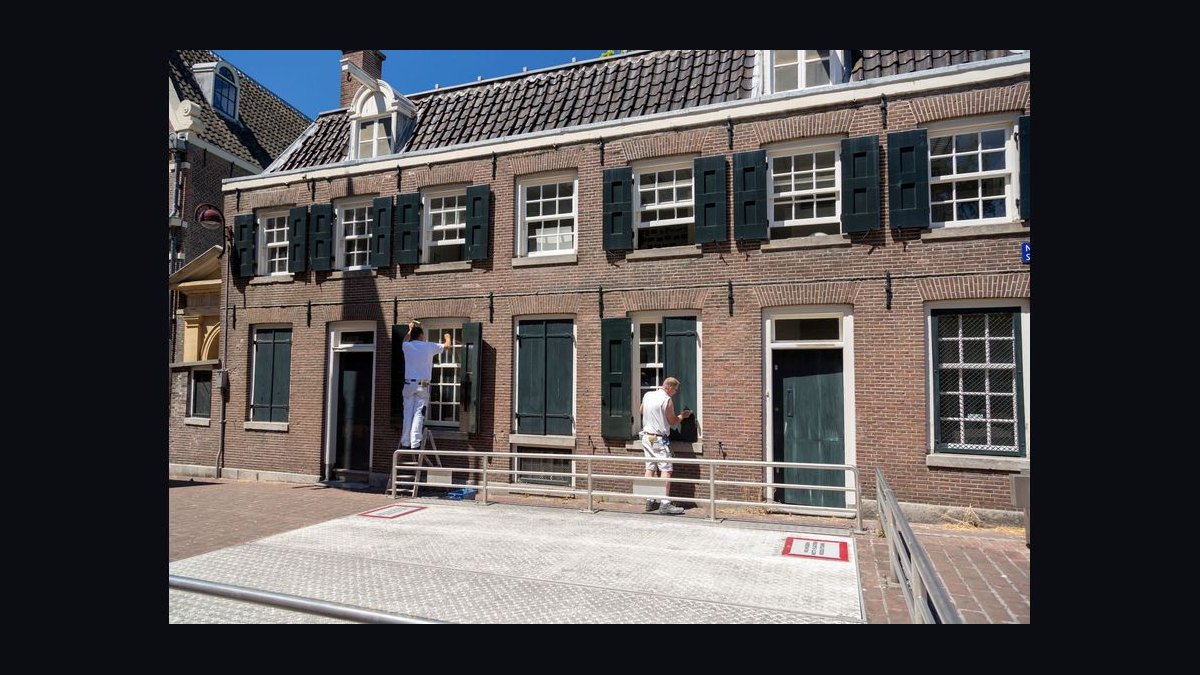
A 2027 GTM Playbook for Residential Painters holds blended acquisition cost under $250 per booked job, prices every estimate from measured square-foot production rates to protect 45–55% gross margin, and runs a small W-2 anchor crew backed by a subcontractor bench so revenue-producing hours never idle. Exclusive paid calls plus referrals must carry most bookings.
The revenue problem being solved
Most Residential painting companies do not have a demand problem. They have a unit-economics problem hidden behind a full calendar. The owner books work, the trucks roll every day, and revenue looks healthy on the deposit report — yet the year closes at 3–5% net margin with no cash cushion. That gap is where a Playbook earns its keep, because every leak is measurable and fixable inside a quarter.
There are four leaks, and they compound in a specific order.
The first is lead-mix drift. Shared-lead marketplaces are frictionless to buy and brutal to close. A lead sold to four or five Painters closes in the low-to-mid twenties percent, so an $80 lead becomes a $300+ effective acquisition cost once you divide by close rate — before counting the estimator's windshield time. Exclusive channels close two to three times better on the same spend. When shared leads creep past roughly a third of bookings, blended acquisition cost roughly doubles and net margin goes flat.

The second is estimating on gut feel instead of production rates. A painter who assumes 200 square feet per hour on interior walls but actually produces 140 with prep, masking, and cut-in is underpricing labor by more than 40%. That job is a loser before the ladders come off the rack, and no amount of jobsite hustle recovers it. Worse, the error is invisible: the crew worked hard, the customer was happy, and the P&L quietly ate the difference.
The third is crew-structure whiplash. All-1099 shops look cheap on paper — you pay roughly what you promised, no burden — but you inherit scheduling fights, inconsistent finish quality, brand chaos on the jobsite, and real misclassification exposure. All-W-2 shops carry burden through a slow February and bleed. Neither extreme survives a full seasonal cycle.
The fourth is one-and-done revenue. A painting job is a five-to-ten-year purchase cycle. Without a deliberate re-touch mechanism, every January starts from zero pipeline, which is exactly what forces owners back onto expensive shared leads in the first place — the loop closes on itself.
The practical target for a two-crew Residential shop is roughly $1.4M–$2.9M in annual revenue, mid-teens-to-18% net margin, gross margin in the 45–55% band, and blended acquisition cost under $250. Those four numbers are the scoreboard for everything below. If a tactic does not move one of them, it does not belong in the Playbook.
Root-cause map: where painting margin actually leaks
Before spending a dollar on marketing, trace the causal chain. Almost every low-margin painting shop can be diagnosed from six inputs: lead source mix, speed-to-answer, estimate accuracy, labor burden, prep-severity assumptions, and repeat-revenue attach rate. Fix upstream nodes first, because fixing downstream ones while the upstream leak runs just makes you busier at the same margin.

Read that loop at the bottom carefully: thin net margin forces more paid-lead buying, which thins margin further, which starves pay rates, which raises turnover, which raises rework. That is the actual death spiral in this trade — not a lack of demand. Breaking it requires attacking two nodes at once: shift the lead mix toward exclusive and referred demand, and rebuild estimating on measured rates. Do only one and the loop reforms within a season.
The single fastest diagnostic: pull the last 50 closed invoices, tag each with its lead source, and compute actual gross margin per job from real labor hours rather than estimated ones. You will usually find a clear pattern — one channel producing jobs at 50%+ margin and another producing near-breakeven work that felt just as busy. That pattern is the whole diagnosis, and it takes an afternoon.
Benchmarks and ranges worth pricing against
Numbers below are working ranges, not guarantees. They vary widely by metro, prep severity, and crew skill, so treat them as a starting rate card you calibrate against your own job actuals within 90 days.
Cost per lead by channel. Exclusive pay-per-lead search channels — where one call goes to one contractor — typically land in the low-to-mid double digits per qualified call in suburban markets and climb sharply in dense competitive metros. Shared marketplace leads look cheaper per unit but arrive with three to eight other bidders and often carry a monthly subscription on top. In hot metro ZIPs during spring exterior season, shared lead prices can reach several hundred dollars for a single shared lead. Door-hanger canvassing around active jobsites is the cheapest measurable channel most Painters have access to: printing runs pennies per piece, distribution is similar, and personalized drops near a visible active job convert far better than cold saturation — often on the order of one lead per 50 homes versus one per 1,000 cold.

Close rates by source. Referrals and past-client repeat work close in the 75–85% range. Exclusive inbound calls answered fast close in the mid-to-high thirties. Shared marketplace leads close in the low-to-mid twenties. Speed-to-answer is the highest-leverage variable in the whole funnel: answering inside a minute converts several times better than answering after five, so a dedicated CSR or an answering service is usually cheaper than the leads you are wasting.
Target lead mix. A durable 2027 mix looks roughly like: 40% exclusive paid search calls, 25% referrals, 15% past-client repeat, 10% neighborhood canvassing around active jobs, 10% marketplace leads as fill-in only. The marketplace slice is a shock absorber for slow weeks, not a foundation.
Pricing rate cards. Interior Residential walls, two coats with patch and minor caulk, commonly price in the low-to-mid single dollars per wall square foot in Tier-2 markets and meaningfully higher in high-cost metros. Exterior lap siding prices above stucco because prep and cut-in are heavier. Unit-priced items should stay unit-priced: doors two-sided, window trim per window, cabinet refinishing as its own line item — cabinets are a different craft with a different rate and should never be folded into a wall square-foot number.
Labor burden. A W-2 painter's true cost lands roughly 30–40% above base wage once you add payroll taxes, workers' compensation (a notably expensive class code for Painters, varying substantially by state), unemployment, any health stipend, and paid time off. Estimate against the burdened rate, never the wage. A shop that quotes off wage instead of burdened cost systematically underprices by roughly the burden percentage — which is exactly enough to erase the target margin.
A concrete job. Take a single bedroom around 300 square feet of wall area, two coats on walls plus ceiling, light prep. A two-painter crew is realistically in and out in a handful of labor hours combined, consuming a couple gallons of mid-grade product. Add burdened labor, paint at contractor pricing, an overhead allocation around 20% of revenue, and target margin — and you get a retail number several times the raw material cost. Run that arithmetic on every room type you sell and you have a production-rate library. That library, not intuition, is what protects the 45–55% band.

Software cost. A four-truck Residential shop can run a complete stack — estimating, CRM/scheduling/invoicing, accounting, email and docs — for well under 1% of revenue at the $2M level. Software is never the thing to cut; underpriced estimates cost multiples of the entire annual software bill in a single quarter.
Retention benchmarks. Painter turnover at small shops runs punishingly high — well over half the crew annually is common. Shops that pay near the top quartile of local market wage, publish a rung-by-rung career ladder, and add a per-job efficiency bonus see turnover fall by roughly half. That matters financially because a trained painter produces more square feet per hour at higher quality, which shows up directly in gross margin and in rework avoided.
Trade-offs and alternatives an owner has to choose between
Every lever in this Playbook has a real cost. Pretending otherwise is how owners adopt five tactics and finish none.
Exclusive paid calls versus shared marketplace leads. Exclusive costs more per lead and requires you to actually answer the phone during business hours, pass a verification/licensing/insurance screen, and maintain a strong review profile — the ranking is rating-sensitive. Shared leads require nothing but a credit card, which is precisely the problem: your competition is equally frictionless, so the fight is speed and price, not craft. The honest trade: exclusive channels demand operational discipline (answer fast, keep reviews high) in exchange for margin. If you cannot commit to sub-minute answering, exclusive leads will underperform for you and the shared marketplace will feel better — which is a diagnosis of your intake, not of the channel.

W-2 anchor crew versus all-subcontractor. Direct employees give you consistent finish quality, on-brand jobsite presence, faster onboarding of your standards, and customer trust — at 30–40% burden and the obligation to keep them busy through slow months. Subcontractor crews flex perfectly with seasonality at roughly the paid rate, but you trade away quality control, scheduling priority (you are one of their several customers), brand consistency, and you take on classification risk that must be managed with certificates of insurance, written agreements with genuine right-to-control language, and periodic broker review. The hybrid that works below roughly $5M: one W-2 anchor crew of two to three Painters running flagship and customer-facing interior work, plus one or two subcontractor crews on a bench for exterior overflow and peak season. That structure keeps your best work in-house and pushes volatility onto the flexible layer.
Single-option quotes versus tiered proposals. Presenting three options — a stripped scope, a mid scope, and a premium scope with better product and a longer warranty — reliably increases average ticket because it converts a yes/no decision into a which-one decision, and most customers land in the middle. The cost is walkthrough time and estimator discipline: three scopes means three takeoffs, and a sloppy tier structure invites customers to anchor on the cheapest number. Build tiers so the cheap option is genuinely narrower in scope (fewer surfaces, one coat over existing color, contractor-grade product) rather than the same job at a discount. Never discount your way into a tier — differentiate by scope and product.
Premium estimating software versus budget tools. The budget tier does the math correctly but produces a proposal that looks like a spreadsheet. The premium tier adds photo capture, room-by-room takeoff, voice notes, e-signature, and a proposal that presents like a brochure. At 40+ estimates a month, a few points of close-rate improvement at a higher average ticket pays the difference back inside a couple of jobs. Below roughly 15 estimates a month, the cheaper tool is the right call and the money belongs in lead generation instead.
Enterprise field-service platforms versus painter-friendly ones. Heavy enterprise dispatch platforms are priced per user per month at a level that only makes sense with multiple crews, a dispatcher, and real call volume. Below four crews the extra capability is overhead you pay for and do not use. Stay on the lighter tier until crew count, not ambition, forces the upgrade.

Supplier consolidation versus best-price shopping. Standardizing roughly 80% of purchasing with one supplier unlocks volume-tier discounting, delivery, and a rep who solves problems on a Friday afternoon. Discount tiers scale meaningfully with annual spend, so splitting volume across three suppliers to chase per-gallon prices usually nets worse pricing than consolidating. Handle brand-preference customers with a documented per-square-foot upgrade surcharge rather than by fragmenting your buying.
Cash-flow structure. Painting is labor-heavy, paid in arrears, with weekly payroll. A large job on net-30 terms while you cover labor every Friday creates a multi-week cash gap that has killed otherwise profitable shops. The mitigations trade convenience for safety: progress draws on jobs above a few thousand dollars (a deposit, a midpoint draw, a balance at walkthrough), card or ACH collection at final walkthrough rather than mailed invoices, and a modest working-capital line of credit sized to one payroll cycle plus material float. Card processing costs a few percent; ACH is cheaper. Paying 3% to get paid on the day of walkthrough is almost always better than financing the customer for free.
Commercial sidecar versus Residential focus. Small-commercial repeat accounts — property management firms, investor portfolios, short-term-rental operators, churches, daycares — produce larger tickets, multiple jobs per relationship per year, and near-zero acquisition cost once the relationship exists. The trade-offs are net-30 terms, lower per-square-foot pricing, insurance and compliance paperwork, and scheduling around tenants. Layer it only after Residential production is predictable; a shop that cannot hit its interior dates should not add a property manager's turn schedule.
Rollout plan: 90 days to a working Playbook
Sequence matters more than ambition. Fix measurement first, then pricing, then structure, then the compounding layer. Attempting the compounding layer while estimates are still wrong just scales a losing unit economic.
Days 1–30 — stop the bleeding. Pull 90 days of closed jobs from your accounting system and tag lead source on every one, then compute true cost per booked job by channel including subscription fees and estimator time. Kill any channel running above roughly $300 blended. Stand up exclusive paid search presence and complete the verification screen — license, general liability, background checks — which typically clears in under a week once documents are in. Set a hard sub-minute answer standard during business hours and back it with a CSR or answering service if the owner is on a ladder. Dispute obviously bad billed leads weekly; exclusive-lead platforms credit a meaningful share of spam, wrong-trade, and out-of-area charges when you actually file. Simultaneously, move 100% of new estimates onto one estimating platform by week three and recompute actual gross margin on the last 50 invoices to identify the bottom quintile of jobs running under 35%.
Days 31–60 — fix pricing and structure. Roll tiered proposals onto every estimate with genuinely differentiated scopes. Update production rates from the prior month's actual hours per job type — this is the step everyone skips and it is the one that permanently changes margin. If running all subcontractors, convert your best two-painter crew to W-2 at market-competitive wage plus benefits plus a per-job efficiency bonus paid weekly. Enroll in a supplier contractor program and consolidate the bulk of purchasing to one store for tier leverage. Turn on automated review requests roughly 48 hours after final payment; review volume is what protects your ranking in exclusive-lead channels, so it is a demand-gen activity, not a vanity one.
Days 61–90 — build the compounding layer. Launch the referral engine on three mechanics: a meaningful thank-you payment to referrers mailed promptly after the referred job closes, a branded yard sign left on every completed job for a week or so with the homeowner's consent, and a 30/60/365-day email cadence with seasonally appropriate offers. Pilot a paid annual maintenance membership — annual exterior wash, trim and door touch-up, caulk inspection, and a discount on the next full job — with your five happiest past clients before selling it broadly; attach rates on exterior repaints can be meaningful and the recurring line is the most predictable cash in the business. Then build a prospect list of roughly 30 local property managers, real-estate investors, and short-term-rental operators and run a multi-touch outreach cadence to close a few commercial pilots.
Hiring runs in parallel throughout. Sponsored job postings plus local trade groups plus a referral bonus to current Painters paid after the new hire clears 90 days is the fastest pipeline. Screen with a half-day paid working interview on a real jobsite — a candidate who cannot cut a straight line at the ceiling under supervision will not learn it on your customer's wall. Use a 30-day probation with weekly one-on-one feedback before extending full benefits.
Ongoing guardrails. Run an actual-versus-estimated-hours report weekly on every closed job and refresh production rates quarterly on rolling 90-day actuals. Keep certificates of insurance on file for every subcontractor before they touch a brush, with written agreements and a periodic review with your workers' comp broker — a reclassification finding at audit can produce a back-premium bill large enough to end a small shop. And treat reputation as an operating metric: a single one-star review at low total review count can move your average enough to cut call volume materially, so pair a written make-it-right promise on every proposal with a same-day callback policy on any complaint.
Related questions
What blended CAC should a Residential painter target in 2027?
Under $250 per booked job for a shop targeting mid-teens net margin. Include subscription fees, ad spend, referral payouts, print, and estimator windshield time — not just per-lead cost. Above roughly $400 blended, net margin typically collapses into single digits regardless of revenue.
How many crews does a $2M painting shop need?
Two production crews is typical at the $1.4M–$2.9M band, sized around a mix of interior and exterior work. Job size, pricing discipline, and production efficiency matter more than headcount — a well-priced two-crew shop out-earns an underpriced three-crew shop.
Should exteriors be subcontracted or run in-house?

Exteriors are the natural subcontractor slot: heavily seasonal, weather-dependent, and less customer-facing than interior work. Keep interior and flagship jobs on the W-2 anchor crew where finish quality and homeowner interaction directly drive referrals and repeat bookings.
What is the fastest single fix for a low-margin painting shop?
Rebuild production rates from measured actual hours, then reprice. Underquoted labor is the most common cause of sub-40% gross margin, and unlike lead generation it costs nothing to fix — it only requires running an actual-versus-estimated hours report and updating the estimating library.
Does a maintenance membership actually work for Painters?
It works as a retention and cash-predictability tool, not a primary revenue engine. An annual wash, touch-up, and inspection package attached to exterior repaints creates a recurring line, keeps you in the home, and generates the repeat and referral volume that lowers blended acquisition cost.
FAQ
Which lead sources should dominate a Residential painter's mix in 2027?
Exclusive paid search calls plus referrals should together carry the majority of bookings — roughly 60% or more. Exclusive calls are one-lead-one-contractor, so they close far better than shared marketplace leads, and referrals close at the highest rate of any source. Keep shared marketplace leads as fill-in capacity for slow weeks rather than a foundation, because their shared distribution structurally caps close rate and inflates effective acquisition cost.
What gross and net margins are realistic?
Gross margin of 45–55% after burdened labor and paint is the working band for well-priced Residential work; net margin in the mid-teens to 18% is achievable at the two-crew scale with disciplined overhead. Shops running below 40% gross almost always have a production-rate problem in estimating rather than a pricing-courage problem — the number they need is a measured hours figure, not a bigger markup.
How do I know if my estimates are underpriced?
Compare estimated labor hours to actual clocked hours on every closed job, weekly. If actuals routinely exceed estimates on the same job type, your production rates are optimistic and every quote of that type is losing the difference. Refresh rates quarterly using rolling 90-day actuals, and score prep severity explicitly at walkthrough — heavy prep is the variable that most often breaks an otherwise accurate takeoff.
Is a W-2 crew or subcontractor crew better?
Neither extreme survives a full season. Run a small W-2 anchor crew for interior and flagship customer-facing work where quality and homeowner interaction drive referrals, plus one or two subcontractor crews on a bench for exterior and peak overflow. That hybrid keeps burden manageable through slow months while protecting the finish quality your referral engine depends on.
What software does a $1M–$3M painting shop actually need?
Four things: a painter-specific estimating tool with production-rate libraries and takeoff, a field-service CRM for scheduling, invoicing, and client communication, cloud accounting that syncs to it, and business email/docs. That whole stack should stay well under 1% of revenue. Skip enterprise dispatch platforms until you cross roughly four crews — the per-user pricing only pays back with a dispatcher and real call volume.
How do I avoid a cash crunch on larger jobs?
Structure progress draws on anything above a few thousand dollars — deposit, midpoint, balance — and collect the final payment by card or ACH at the walkthrough instead of mailing an invoice. Keep a working-capital line of credit sized to at least one payroll cycle plus material float. The multi-week gap between net-30 collection and weekly payroll is the specific mechanism that sinks profitable painting shops.
Sources
- https://www.bls.gov/oes/current/oes472141.htm — BLS Occupational Employment and Wage Statistics for painters, construction and maintenance
- https://support.google.com/localservices/answer/6224841 — Google Local Services Ads Help Center: eligibility, screening, and lead credits
- https://www.pcapainted.org/ — Painting Contractors Association: industry standards, wage and business resources
- https://www.sba.gov/business-guide/manage-your-business/manage-your-finances — U.S. Small Business Administration guidance on cash flow and business finances
- https://www.dol.gov/agencies/whd/flsa/misclassification — U.S. Department of Labor: employee vs. independent contractor classification under the FLSA
- https://www.irs.gov/businesses/small-businesses-self-employed/independent-contractor-self-employed-or-employee — IRS guidance on worker classification tests
- https://www.osha.gov/etools/construction — OSHA construction eTool: jobsite safety requirements relevant to painting crews
- https://www.ncci.com/ — National Council on Compensation Insurance: workers' compensation class codes and loss-cost basics
- https://www.census.gov/construction/nrc/index.html — U.S. Census Bureau New Residential Construction data for market sizing
- https://www.consumer.ftc.gov/articles/home-improvement-contracts — FTC guidance on home improvement contracts and consumer disclosures
Related on PULSE
This page will be disappearing soon. Save it to your device for $1 — or read it free while it is here.
@Kory-White- · if Venmo asks, the last 4 of my number are 2012
This page is gone.
This one is off the shelf now. $1 keeps it on your phone for good — the whole page, pictures and diagrams included.
 gtm-playbookHow do you choose between a direct sales and a partner-led go-to-market motion in 2027?
 gtm-playbookHow do you build a renewable energy trading and ETRM software go-to-market motion in 2027?
 pulse-recentHow do you build the GTM playbook for a dog walking service in 2027?
 gtm-playbookHow do you build a last-mile delivery software go-to-market motion in 2027?
 gtm-playbookGTM Playbook for FinTech — The Complete Operator Guide in 2027
 gtm-playbookBranding and Design Agency GTM Playbook 2027 — AI-Augmented Production, Cannes Lions Awards, and the $148M Pentagram Operator Path
 pulse-recentWhat go-to-market playbook works best for Cleaning & Facilities in 2027?
 gtm-playbookGTM Playbook for Optometry Practices in 2027
 gtm-playbookHow do you build a workforce management go-to-market motion in 2027?
 gtm-playbookMarket Research Firm GTM Playbook 2027 — Custom Quantitative + AI-Augmented Insight and the 85M Numerator Operator Path