
The Product-Led Sales Playbook: Converting Freemium Users to Paid Accounts
 Curated byKory White · Fractional CRO · Maryland
 PULSEKNOWLEDGE LIBRARY
Quality
Certified

Product-led sales converts freemium users to paid accounts by scoring in-product behavior, not demographics. Define a product-qualified lead threshold, route only users who cross it to a human, and lead with observed usage instead of a generic pitch. Median B2B freemium conversion sits in the low single digits; disciplined teams land in the low double digits.
The go-to-market motion in one picture
The mistake most teams make when Converting freemium users is treating the funnel like a marketing funnel with a product bolted onto the front. It isn't. In a product-led sales motion, the product does the discovery, the qualification, and most of the demo. Sales enters late, and only where a human demonstrably changes the outcome — multi-seat rollouts, security review, procurement, custom terms, migration risk.
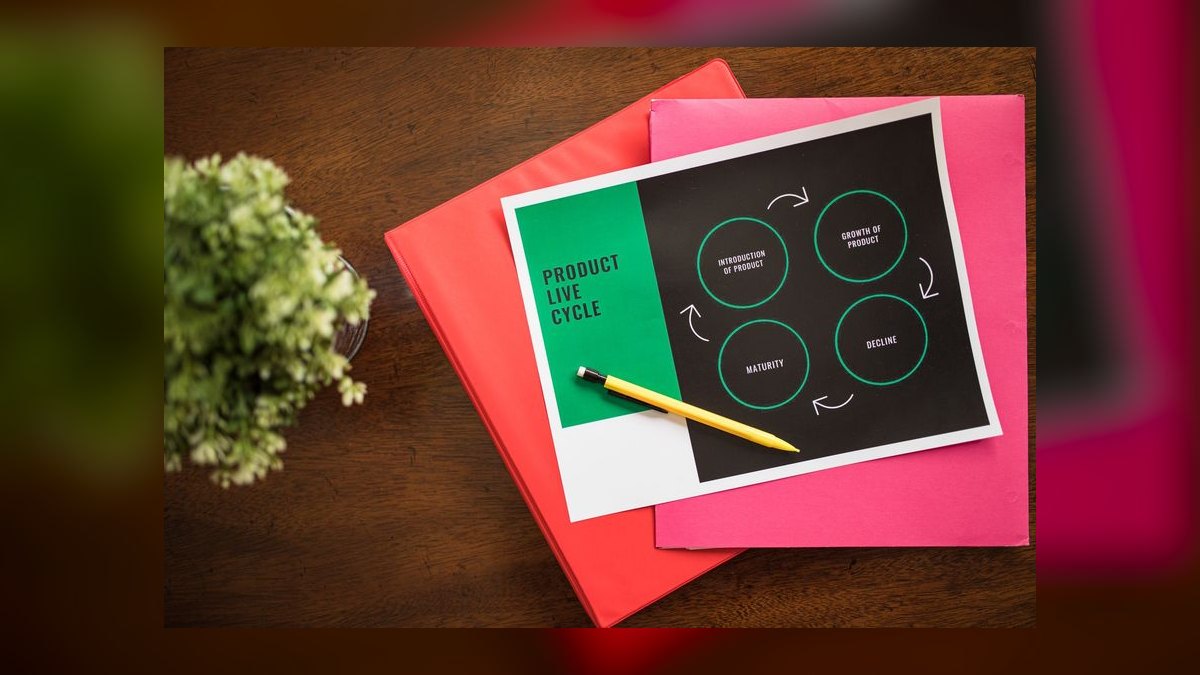
The practical shape has three zones, and the boundaries between them are behavioral, not calendar-based.
Zone one — pure self-serve. Everyone who signs up lands here. The only job is time-to-first-value: get the user to the moment the product visibly works for them. If your activation event is "created a first project and invited one collaborator," instrument that precisely and measure days-to-activation. Users who never activate are not leads and should never be touched by a rep; they are an onboarding problem. Realistically, a large majority of any freemium base never activates at all, and that's normal — the free tier is a top-of-funnel asset, not a pipeline.

Zone two — sales-assist. A user crosses a usage threshold that historically correlates with willingness to pay. Typical thresholds: a second or third teammate invited, sustained weekly active usage over three or four weeks, hitting a plan limit, connecting an integration, or repeated visits to the pricing or billing page. This is where a low-touch rep sends an in-app message or a short email referencing what the account actually did.
Zone three — enterprise. Seat count, admin activity, SSO inquiries, or a security questionnaire push the account into a full sales cycle with a named account executive and a qualification framework like MEDDPICC or MEDDIC. These deals need a champion, an economic buyer, and a documented decision process, and they close on a quarter-length clock rather than a two-week one.
The diagram hides one subtlety worth stating outright: the self-serve path never closes. A user who ignores the rep and upgrades on their own card is a win, not a lost lead. Comp plans that punish reps for self-serve conversions inside their book create the incentive to interrupt users who were already going to buy — the single most expensive own-goal in this motion.
Who owns what across the revenue org
Product-led sales fails more often on org design than on tooling. The playbook only works when four functions agree on one definition of a qualified user and one definition of who touches them.

Product and growth engineering own the signal. They instrument the events, maintain the event taxonomy, and guarantee that "invited a teammate" means the same thing in the warehouse as it does in the CRM. If the event schema drifts — someone renames project_created to workspace_created in a refactor — every downstream score silently breaks. Version your event contract and treat a change to it like a schema migration, with a deprecation window and a backfill.
Revenue operations owns the routing. RevOps decides how a product event becomes a CRM object, which account it rolls up to, and who gets the alert. The identity-resolution problem is the hard part: freemium signups arrive as individual users with personal email domains, and you need to stitch them into company accounts. Domain matching handles the obvious cases, but gmail-and-outlook signups from real buyers need enrichment or a workspace-level join key. Expect to resolve well under full coverage on domain alone and design the routing so unresolved users still get a self-serve path rather than falling into a void.
Marketing owns the free base as an audience. Lifecycle email, in-app education, feature announcements, and reactivation campaigns run against the whole free population continuously. This is the highest-leverage and most under-resourced surface in the entire model, because the free base is usually an order of magnitude larger than the paid base and costs almost nothing to reach.

Sales owns the conversation, not the discovery. The rep's opening move should be a specific observation: which teams inside the account are active, which limit they hit, what they tried to do and couldn't. A rep who opens a product-led sales conversation with "tell me about your business" has wasted the entire information advantage the model exists to create.
Two structural decisions deserve explicit debate rather than default answers. First, does the low-touch rep carry a quota or a conversion-rate target? Quota pushes them toward the largest accounts and away from the volume work the motion depends on. Second, who owns expansion inside an existing paid account — the closing rep, a dedicated account manager, or the product itself through in-app upgrade prompts? Most mature teams end up letting the product own seat-level expansion and reserving humans for tier changes and renewals, because in-product expansion has effectively zero marginal cost.
Compensation follows ownership. A low-touch role tends toward a base-weighted split with variable tied to converted accounts and net revenue retention rather than to logo count. Enterprise roles keep a conventional commission structure. What you must avoid is a plan that pays a rep for an upgrade they had no hand in — it corrupts the data and, worse, teaches the team that touching everything is the winning strategy.

Metrics, targets, and realistic ranges
The scoreboard for this Playbook is short. Six numbers, reviewed weekly, tell you whether the motion is healthy.
Free-to-paid conversion rate. Measured as paying accounts divided by activated free accounts over a fixed cohort window — usually 90 days. Measure against *activated* users, not raw signups, or your denominator fills with bot traffic and abandoned trials and the number becomes meaningless. Across B2B SaaS this typically lands in the low single digits for broad consumer-adjacent products and reaches the low double digits for products with a sharp team-collaboration wedge. Track it by cohort month, never as a lifetime aggregate, because a lifetime figure conceals whether you are improving.
Time to first value. Days from signup to the activation event. Sub-one-day is achievable for single-player tools; team products with setup requirements run longer. This is the metric with the highest leverage per engineering hour, because everything downstream compounds off it.

PQL volume and PQL-to-paid rate. Volume tells you whether the free base is generating enough qualified motion to keep a rep busy. The conversion rate on PQLs tells you whether your threshold is calibrated. If PQL-to-paid is very high, your threshold is too strict and you're leaving pipeline in self-serve. If it's near your baseline self-serve rate, your threshold isn't selecting for anything and reps are wasting cycles.
Sales-assist lift. The honest version of this metric requires a holdout: withhold outreach from a randomized slice of PQLs and compare conversion. Without the holdout you are measuring selection, not causation — the users reps contact were the likeliest to convert anyway. Run the holdout continuously at a small percentage of PQL volume. Many teams discover their lift is real but smaller than the uncontrolled number suggested, which changes the headcount math substantially.
Net revenue retention. In a product-led motion, NRR is where the model actually pays off. Land small, expand by seat as the team grows. A healthy NRR above one hundred percent means the installed base grows revenue without new logos.
Cost to serve the free tier. Infrastructure, support tickets, and abuse handling for non-paying accounts. This is a real line item and it grows with signups. If free-tier cost per user times your free population starts approaching a meaningful fraction of gross margin, your free tier is too generous or your limits are in the wrong place.
Two anti-metrics to watch: meetings booked (rewards interruption) and raw signup volume (rewards low-quality acquisition). Both look great on a dashboard while the business degrades underneath.
Where the motion breaks down
The threshold is set by intuition and never revisited. Teams pick "five teammates invited" in a planning meeting and it calcifies. The correct method is retrospective: take your last several hundred conversions, look at what those accounts did in the two weeks before upgrading, and find the behavior that separates them from non-converters. Rebuild the threshold quarterly, because the product changes and the signal moves with it.
Outreach arrives before the value does. Contacting a user on day one because they hit a signup form is the fastest way to poison a free tier. Buyers in a self-serve context expect to evaluate on their own terms; a premature call reads as surveillance. The fix is mechanical — gate every outbound touch behind the activation event, no exceptions, and audit the sequence for anyone who slipped through.
Free-tier limits punish the wrong thing. If your limit hits the individual user's core loop, you cap adoption and lose the viral spread that makes freemium worth running. Limits should bite where value is provably realized and where an organization, not an individual, feels the pinch: seat count past a small team, retention window on history, administrative controls, API throughput, integrations. A limit on *collaboration* usually converts better than a limit on *core creation*, because collaboration is where the buying committee forms.
Data plumbing rots quietly. Product events stop syncing to the CRM after a deploy, and nobody notices for a month because the alerts simply go quiet — an absence of noise looks identical to a slow week. Build a canary: an automated daily check that asserts event volume falls inside an expected band and pages RevOps when it doesn't.
The free tier cannibalizes rather than seeds. This is the strategic failure mode. If your free tier fully solves the problem for a real segment, that segment never pays. The diagnostic is to look at long-tenured free accounts with heavy usage: if a meaningful population has used the product intensively for a year without upgrading, your packaging boundary is drawn in the wrong place. Moving the boundary is painful and requires grandfathering, but it's cheaper than running an expensive charity indefinitely.

Adjacent motions get ignored. Two neighboring plays share most of this infrastructure and are frequently left on the table. The first is *win-back on downgrade* — users who churn from paid back to free are still in the product, still emitting signal, and are far warmer than a cold prospect. The second is *land-and-expand across business units* inside accounts you already sell to; a paying customer in one department often has free users in three others, and that internal spread is visible in your own data before any rep hears about it. Both run off the same event pipeline you've already built.
Support and sales send conflicting messages. A user hits a limit, files a support ticket, gets a workaround from support, and never converts — while a rep is separately emailing about upgrading. Route limit-related tickets through the same qualification logic so the two functions aren't working against each other.
How to sequence the build
Do not attempt all of this at once. The sequence below front-loads the cheap, high-certainty work and defers headcount until the data justifies it.
Phase one — instrument and define. Pick one activation event and one usage threshold. Instrument both properly and verify the numbers against the warehouse by hand. Nothing else happens until you trust the events. Two to four weeks.
Phase two — measure the baseline. Run the free base untouched for a full conversion cycle and record the natural conversion rate by cohort. Without this baseline you can never prove any subsequent intervention worked. Resist the urge to skip it; teams that skip it argue about attribution forever.
Phase three — manual outreach by one person. One rep, or a founder, works PQLs by hand and writes down every conversation. This is deliberately unscalable. The output isn't revenue, it's the message that works and the real objections. Four to six weeks.
Phase four — automate the top of the sequence. In-app messaging and lifecycle email handle the first touches. Humans get the replies. This is where efficiency arrives.

Phase five — route and staff. Build the CRM routing, define the enterprise handoff criteria, and hire against the volume the pipeline actually produces. Only now does headcount make sense, because only now do you know PQL volume and true assist lift.
Phase six — repackage on evidence. With cohort data in hand, revisit pricing tiers and free-tier limits. Changes here move revenue faster than any sequence optimization, and they are the changes most teams make first and least well.
The loop at the end matters more than the linear path. Threshold recalibration and the holdout test are recurring obligations, not one-time setup. A product-led sales system that isn't re-tuned quarterly drifts back toward interrupting everyone, because that is the local optimum every individual incentive points toward.
Related questions
How large does a free base need to be before hiring a dedicated rep?
Work backwards from PQL volume. If a low-touch rep can handle roughly a few dozen meaningful conversations monthly and your PQL rate is a small fraction of activated users, you need thousands of activated free accounts monthly before one full-time rep stays busy.
Should free trials or freemium be used?
Time-boxed trials create urgency and cleaner qualification but end the relationship if unconverted. Freemium keeps the account alive indefinitely, generating signal and word-of-mouth. Many teams run both — freemium for the base, a premium trial as the upgrade offer.
Does product-led sales work for products without a natural team component?
It's harder. Single-player tools lack the seat-expansion vector that makes the math work, so conversion depends entirely on usage limits and feature gates. Products with collaboration built in convert substantially better because the buying committee forms inside the product.
How do you keep reps from contacting everyone?
Make the threshold a hard gate in the routing system rather than a guideline, remove list-building access to the raw free base, and measure reps on conversion rate rather than activity volume. Guidelines lose to quota pressure every time.
FAQ
What exactly is a product-qualified lead?
A user or account that has demonstrated buying intent through in-product behavior rather than through a form fill or firmographic match. The definition is specific to your product and should be derived from what your actual converters did before they paid, then recalibrated as the product evolves.
How soon after signup should sales reach out?
Never on a fixed timer. Reach out only after the account has crossed the activation event and then the usage threshold. For some accounts that's four days, for others four months. Timer-based outreach is the most common cause of free-tier resentment.
What tooling is genuinely required to start?
A product analytics tool, a CRM, and a way to move events between them. That's it. In-app messaging and sales engagement platforms help once volume justifies them, but teams routinely over-buy tooling before they have a validated threshold, which just automates the wrong behavior faster.
How do you price the paid tiers relative to free?
Gate on dimensions that scale with organizational value — seats, administrative control, data retention, integrations, throughput — rather than on the core action that creates value. Per-seat pricing pairs naturally with freemium because seat growth tracks adoption, though usage-based pricing fits infrastructure and API products better.
What's a realistic timeline to see results?
Instrumentation and baseline measurement take roughly a quarter before you have trustworthy numbers. Meaningful movement in the conversion rate typically appears one to two quarters after the first packaging and threshold changes land, since conversion cohorts take time to mature.
How do you handle free users at companies that already pay you?
Route them to the account owner immediately — this is the highest-yield signal in the entire dataset. Free usage inside a paying account is documented internal demand for expansion, and it converts at a far better rate than any net-new freemium cohort.
Sources
- OpenView Partners — Product-Led Growth research
- Amplitude — Product-Led Growth guide
- Reforge — Growth and product strategy programs
- Stripe — SaaS billing and pricing model documentation
- Mixpanel — Product analytics documentation
- Gartner — B2B buying and sales research
- Harvard Business Review — Sales and go-to-market research
- a16z — Enterprise and SaaS go-to-market writing
Related on PULSE
- [Top 10 GTM Plays for Launching a B2B Enterprise Freemium Tier](/knowledge/gp0435)
- [Top 10 Product-Led Sales GTM Launch Playbooks](/knowledge/gp0489)
- [Top 10 product-led growth activation plays for SaaS startups](/knowledge/gp0396)
- [What is the go-to-market playbook for product-led growth (PLG) in 2027?](/knowledge/gp383)
- [Founder-led sales GTM motion in 2027](/knowledge/gp0502)
- [Developer-First Launch Playbook: API-First Product Adoption Without a Sales Team](/knowledge/gp0487)
This page will be disappearing soon. Save it to your device for $1 — or read it free while it is here.
@Kory-White- · if Venmo asks, the last 4 of my number are 2012
 pulse-gtmFounder-led sales GTM motion in 2027
 pulse-gtmTop 10 metrics to track in the first 30 days of a new outbound motion in 2027
 pulse-gtmEnterprise RFP and procurement-led GTM playbook in 2027
 pulse-gtmWhat are the common mistakes in setting pricing tier thresholds for a property management software in 2027?
 gpTop 10 GTM Playbooks strategies for 2027
 pulse-gtmReseller and VAR channel GTM playbook in 2027
 pulse-gtmWhat is the go-to-market playbook for marketing-led demand-gen growth in 2027?
 pulse-gtmWhat's the ideal SDR-to-AE ratio for a $2M ARR startup in 2027?
 pulse-gtmTop 10 product-led growth activation plays for SaaS startups in 2027
 pulse-gtmThe Education-First GTM Playbook: Using Webinars and Certifications to Generate Demand