 Pulse Reviews and Analysis
Event-led and field-marketing GTM playbook in 2027
 Curated by Kory White · Fractional CRO, CRO Syndicate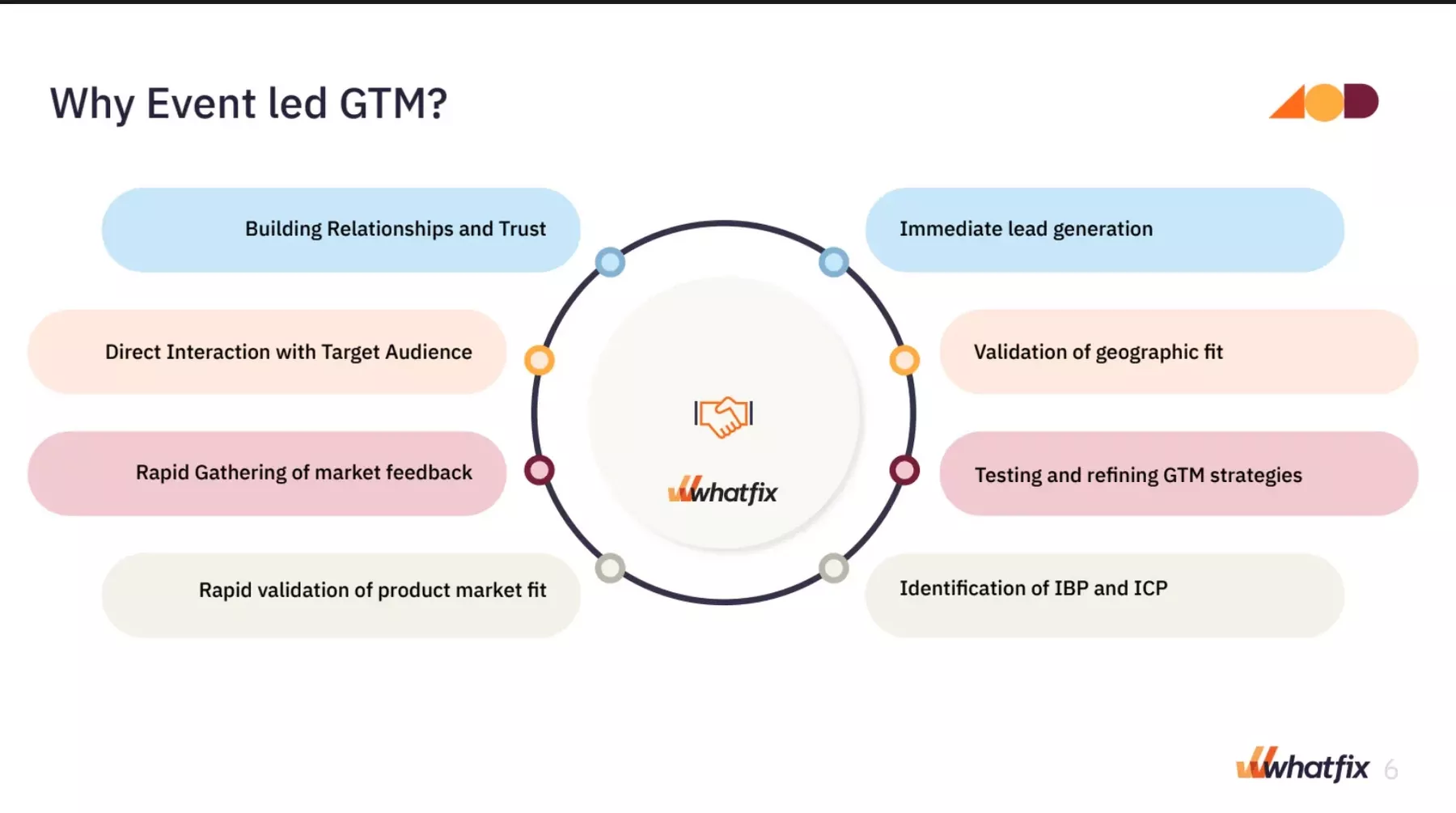
Direct Answer
An event-led and field-marketing GTM playbook uses in-person and hybrid events — conferences, trade shows, executive dinners, roadshows, user conferences, and field activations — as a primary channel to source and accelerate pipeline. The motion works because high-consideration B2B purchases are still driven by trust and relationships, and nothing builds those faster than face-to-face time with the right buyers.
Field marketing aligns these events to specific territories, accounts, and sales reps, so an event is not brand theater but a measurable pipeline play. In 2027 it is operationalized with event platforms like Cvent and Goldcast, CRM and marketing automation in Salesforce/Marketo/HubSpot, and tight marketing-to-sales follow-up workflows.
Success is measured by event-sourced and event-influenced pipeline, cost per opportunity, and the pipeline-to-spend ratio — not by badge scans or attendee counts.
Why Events Still Drive B2B Pipeline
For complex, expensive purchases, buyers want to meet the people behind the product, see proof, and talk to peers. Events compress months of relationship-building into a few high-bandwidth hours. A well-run executive dinner with eight target accounts can outproduce thousands of impressions of paid media.
Field marketing turns that intuition into a system by tying every event to named accounts, territories, and quotas so reps and marketers share the same pipeline goal.
The risk is treating events as awareness spend with no accountability. The discipline that separates effective programs is pre-event targeting, on-site qualification, and relentless post-event follow-up.
Choose the Right Event Types
Match the format to the goal and funnel stage:
- Industry conferences and trade shows — top-of-funnel reach and awareness; sponsor or exhibit where your buyers gather.
- Executive dinners and small roundtables — mid-funnel relationship-building with a curated set of target accounts.
- Roadshows and field events — territory-specific demand in priority geographies.
- Owned user conferences — retention, expansion, and advocacy among existing customers, plus prospect attendance.
- Webinars and hybrid sessions — scalable demand capture that complements in-person events.
A balanced program spans the funnel rather than over-indexing on one large trade show per year.
Engineer the Pre-Event Motion
Most event ROI is decided before the event starts. Build a pre-event motion:
- Target list — choose the accounts you want to meet, drawn from the ICP and rep territories.
- Outbound invitations — email and SDR outreach to book meetings on-site, not hope-for walk-ups.
- Pre-booked meetings — a calendar of confirmed conversations is the single biggest predictor of event ROI.
- Logistics and assets — booth, demo stations, and a clear, qualified-lead capture process using badge scanning or a tool like Cvent or Goldcast.
Capture and Qualify On-Site
On the day, the priority is qualified conversations, not lead volume. Equip staff to:
- Ask a few qualifying questions and tag leads by fit and intent.
- Capture context (what they care about, next step) — not just a scanned badge.
- Book the follow-up meeting on the spot whenever possible.
Feed every interaction into the CRM the same day so nothing decays. A scanned badge with no notes and no follow-up is wasted spend.
Win the Follow-Up — Where Pipeline Is Lost
The biggest leak in event marketing is slow, generic follow-up. Standardize it:
- Speed — reach out within 24–48 hours while the conversation is fresh.
- Segmentation — different follow-up for hot, qualified leads vs. General attendees.
- Sales handoff — route qualified leads to the right rep with full context via Salesforce or HubSpot.
- Nurture — place non-ready leads into a relevant nurture track in Marketo or HubSpot.
Disciplined follow-up routinely doubles the pipeline yield of the same event budget.
Metrics for the Motion
Grade event-led and field marketing on:
- Event-sourced pipeline — net-new opportunities originating at the event.
- Event-influenced pipeline — open deals that an event touched and advanced.
- Cost per opportunity — total event cost divided by opportunities created.
- Pipeline-to-spend ratio — pipeline generated per dollar invested.
- Meetings booked and meeting-to-opportunity conversion — quality of pre-event targeting.
FAQ
What is field marketing? Field marketing is regionally and account-aligned marketing — including events, dinners, and roadshows — designed to generate and accelerate pipeline for specific territories and sales reps, tying activity directly to revenue goals.
Why do events still work for B2B? Complex, expensive purchases hinge on trust and relationships, and face-to-face time builds both faster than any digital channel, compressing months of relationship-building into a few high-value hours.
What is the most important part of event ROI? The pre-event motion and the follow-up. Pre-booked meetings with target accounts predict ROI more than attendance, and fast, segmented follow-up captures the pipeline that slow generic outreach loses.
How do you measure event success? By event-sourced and event-influenced pipeline, cost per opportunity, and pipeline-to-spend ratio, not by badge scans or attendee counts, which do not prove revenue impact.
What tools support an event-led motion? Event platforms like Cvent and Goldcast for logistics and capture, plus Salesforce, Marketo, or HubSpot to route leads, run nurture, and attribute pipeline back to each event.
Related on PULSE
- What is the go-to-market playbook for marketing-led demand-gen growth in 2027?
- The Education-First GTM Playbook: Using Webinars and Certifications to Generate Demand
- Account-based marketing (ABM) GTM playbook for enterprise in 2027