
gp0561
 Curated byKory White · Fractional CRO · Maryland
 PULSEKNOWLEDGE LIBRARY
The go-to-market playbook for wine and spirits brands in 2027 is a hybrid model: build a direct-to-consumer (DTC) channel where the law allows it, keep three-tier distribution where it is required for reach, and let first-party data decide where each dollar goes. The brands that win treat compliance as a design constraint rather than an afterthought, anchor growth in a community built around a specific and true brand story, and back claims — sustainability, origin, provenance — with documentation they can actually produce on request. There is no single channel that works in every state or every category; the durable strategy is a portfolio of channels tuned to the legal map and the demand signals in front of you.
The DTC Channel: Owning the Customer Relationship
For premium and craft wineries and distilleries, direct-to-consumer is the channel that lets you actually know your buyer. Subscription clubs, allocation lists, and website-only releases give you the purchase history, tasting preferences, and contact permission that the three-tier system otherwise hides from producers. The tactical core is unglamorous: a clean first-party data store, email flows that prompt reorders and re-up subscriptions, tiered loyalty perks that reward your heaviest buyers, and virtual tastings that turn a curious browser into a member. DTC generally carries higher fulfillment and compliance overhead than wholesale, so the case for it is not that it is cheap — it is that it compounds. A customer you can reach directly is one you can re-sell without paying a distributor or a retailer to reach them again.
Retail and On-Premise: Evolving the Physical Experience
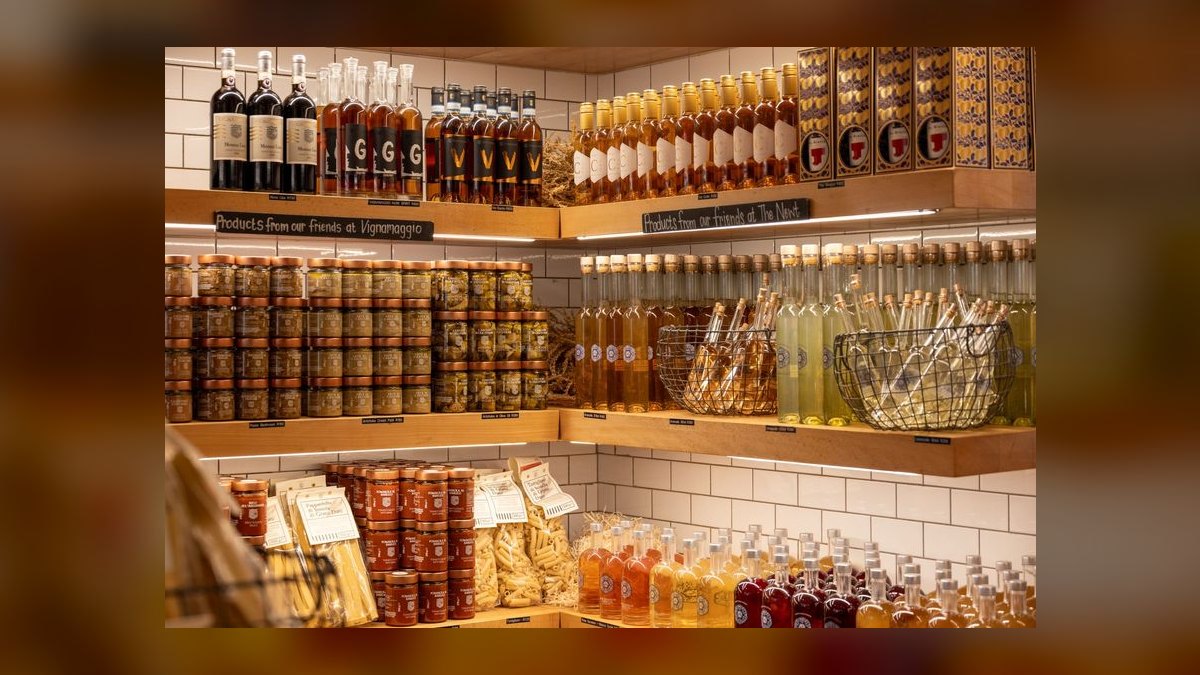
Retail and on-premise accounts (bars, restaurants) still move enormous volume, but shelf and back-bar space is finite and contested. The lever that works for a challenger brand is depth, not breadth: win a smaller set of specialty shops and on-premise accounts where a curated list and an engaged buyer give your story room to breathe, rather than chasing thin distribution across mass-market chains where you will be discontinued the moment velocity dips. On-premise, your bartenders and sommeliers are the sales force — brand education, staff tastings, and cocktail features earn the recommendation that actually sells the pour. Where retailers or distributors share scan or depletion data, use it to see which accounts reorder and which stall, and concentrate support where the product is already moving.

Digital Marketing and Social Commerce
Discovery increasingly happens on social platforms, and for wine and spirits the format that travels is short-form video — mixology, vineyard and distillery footage, and the human story behind the bottle. Reach favors micro-influencers with genuinely engaged cocktail or wine audiences over broad celebrity buys, because a credible recommendation to the right room converts better than impressions to the wrong one. User-generated content — pairing photos, signature-cocktail posts, unboxings — is both cheap and persuasive, and featuring it turns a customer into an advocate. Where social commerce checkout is legally available, shorten the path from inspiration to purchase; where alcohol sales are restricted on-platform, use social to drive traffic to compliant retail and on-premise accounts instead. Underneath the content, search still matters: intent-heavy queries like "natural wine delivery near me" or "best gin for a martini" capture buyers already looking.
Compliance, Licensing, and the Three-Tier Reality
No go-to-market plan for wine and spirits survives contact with regulation, and 2027 will not simplify the picture. In the United States, the three-tier system still separates producers, distributors, and retailers in most states, and the patchwork of direct-shipping laws means a strategy that is legal in one state can be prohibited in the next — with spirits shipping permitted in far fewer places than wine. Smart brands treat compliance as a core GTM design constraint: the map of where you can legally ship, sell, and market shapes every downstream decision about channel mix and paid-media targeting.

Practically, that means building a licensing and permits matrix before scaling any DTC push — knowing which states allow direct wine shipping, which allow spirits, and which require a licensed fulfillment partner or retailer of record to complete the sale. Age verification is non-negotiable: checkout and delivery must include age-gating at purchase and adult-signature-required delivery, and ad accounts must respect platform rules that restrict alcohol promotion by geography and audience. Getting flagged or shut down by a platform mid-campaign is a self-inflicted wound.
The teams that win operationalize compliance instead of fearing it. That looks like a single source of truth for tax rates, volume limits, and label-approval status across jurisdictions, wired into your commerce platform so an out-of-bounds order is blocked before it is ever charged. It looks like keeping federal label approval (COLA) and state registrations current so a new SKU is not delayed by paperwork. And it looks like maintaining strong distributor relationships even as DTC grows, because in most markets the distributor is still your legal path onto retail shelves and into on-premise accounts. The most durable brands run a hybrid legal posture — DTC where the law allows the margin, three-tier where it is required for reach — rather than betting the whole plan on a channel that regulation may close.
Treat marketing claims with the same rigor as licensing. Health, origin, and sustainability statements on alcohol are scrutinized, and an unsubstantiated claim is both a legal and a trust risk. Keep documentation for every traceability and sustainability assertion, so that when a consumer, regulator, or retail buyer asks you to prove it, you can.
Sustainability and Ethical Storytelling
By 2027, environmental claims need to be verifiable and woven into the product story rather than bolted on. Recognized third-party certifications, lighter and recyclable packaging, and documented regenerative or lower-input farming are increasingly expected by retail buyers and eco-conscious drinkers. The credible move is to substantiate before you advertise: hold the audit paperwork, the certification, and the sourcing records that back a claim about water use, energy, or fair-trade ingredients like agave. Ethical sourcing and fair labor practices resonate most when they are specific to your operation — a particular grower relationship, a named practice — rather than category boilerplate. Publish what you can prove; stay quiet about what you cannot.
Data, Measurement, and the Distributor Blind Spot
The hardest GTM problem in wine and spirits is not creativity — it is visibility. Because the three-tier system inserts a distributor and a retailer between the brand and the drinker, most producers historically flew blind on who actually bought the bottle. Closing that gap is the difference between a brand that guesses and one that compounds. The winning move is a unified data layer that stitches together DTC first-party data, distributor depletion reports, retail scan data where available, and on-premise placement information into one view of demand.
Start with the metrics you own outright. On the DTC side, track customer acquisition cost, repeat purchase rate, average order value, and subscription retention — your cleanest signals and fastest feedback loop — and use them to decide which SKUs, price points, and stories deserve more investment. On the wholesale side, depletion (how fast distributors sell *through* to retail, not how much they buy *in*) is the truest measure of demand; a big opening order that never depletes is a warning, not a win. Reconciling sell-in versus sell-through belongs in every GTM review, because inventory sitting in a warehouse is not a customer.
Be honest about what you cannot yet measure and design around it. In markets with no direct line to the end buyer, use proxy signals — label QR-code scans, tasting-room signups, event attendance, loyalty enrollments, and regional social engagement — to infer where demand is building. These are qualitative and imperfect, but a directional read beats none. The goal is not perfect attribution; it is enough signal to reallocate spend toward the channels, regions, and accounts that are working. Then translate that into distribution discipline: enter new markets where your signals suggest latent demand, support the accounts that reorder, prune placements that never move, and arm distributors with the story *and* the evidence — showing that your brand depletes quickly in comparable markets is far more persuasive than a pitch deck.
Building Brand Community That Outlasts the Trend Cycle
Products in wine and spirits are easy to copy; community is not. The most defensible 2027 playbooks treat community-building as the core growth engine rather than a marketing garnish, because a base of people who feel ownership over your brand buys repeatedly, forgives a slow release, and recruits their friends for free. It is the antidote to the discount spiral — when your differentiation is belonging, you compete on meaning instead of price.
Anchor the community in a genuine brand story that is specific and true: the family behind the distillery, the vineyard's relationship to its land, the obsession behind a particular style. Specificity is what makes a story shareable — a real origin and a real point of view give people something to repeat, where "handcrafted, small-batch" washes out. Extend that story across every touchpoint so the brand feels coherent whether someone meets it on a shelf or a phone.
Then give the community things to *do*. Virtual and in-person tastings, member-only releases, early access for loyalty tiers, and behind-the-scenes content turn passive followers into participants. Feature user-generated content, because a customer whose post you spotlight becomes an advocate. Sustain it with rhythm and reciprocity: a predictable cadence of releases and gatherings, plus experiential rewards — invitations, recognition, access — that often deepen loyalty better than discounts. Treat your best customers as insiders and let them feel like co-authors of the brand's next chapter. Community built this way is both a moat and a flywheel — it lowers acquisition cost, raises lifetime value, and gives a wine or spirits brand the one asset no competitor can knock off the shelf.
FAQ
How do I start a DTC wine brand in 2027 without a physical winery? Partner with contract winemakers or co-packing facilities to produce private-label wine, then sell through e-commerce and social channels in states where DTC wine shipping is permitted. Lead with a specific, honest story about your sourcing and blending to build identity, and confirm your fulfillment path is licensed in each state you ship to.
What are the biggest regulatory hurdles for shipping spirits across state lines? Rules vary by state and many still prohibit DTC spirits entirely, so spirits face far more restriction than wine. Use a compliance platform to automate permits and tax calculations, and consult an alcohol-beverage attorney before any multi-state expansion — the map, not the ambition, sets the pace.
How can small brands compete with major conglomerates on marketing budgets? Trade reach for depth: micro-influencers, user-generated content, and community in niche forums and groups, plus grassroots pop-up tastings and partnerships with a few committed local bars. Concentrated attention in the right room beats thin spend across a broad one.
Is sustainability certification worth the cost for a mid-sized distillery? It can be, if a recognized certification unlocks retail buyers with ESG requirements or supports a genuine premium — but only substantiate what you can document. Start with lower-cost, verifiable changes like lighter bottles and recycled labels before pursuing formal certification.
What role does data play in pricing and allocation? Demand signals — DTC sell-through, depletion rates, and repeat-buyer behavior — help you decide release timing and how to split scarce inventory between DTC and wholesale. Use them to allocate limited releases where they will build the most word-of-mouth rather than guessing.
How do I handle age verification for online alcohol sales? Use a reputable age-verification service at checkout, require adult-signature-on-delivery, and use geolocation to block orders from jurisdictions where you are not licensed to ship. Bake these controls into the order flow so a non-compliant order is stopped before it is charged.
Sources
- Alcohol and Tobacco Tax and Trade Bureau (TTB) — labeling, permits, and taxation — https://www.ttb.gov
- Wine Institute, State Shipping Laws map for direct-to-consumer wine — https://wineinstitute.org/our-industry/state-shipping-laws/
- Free the Grapes! — direct wine shipping status by state — https://www.freethegrapes.org
- Distilled Spirits Council of the United States (DISCUS) — https://www.distilledspirits.org
- Wine & Spirits Wholesalers of America (WSWA) — https://www.wswa.org
- ShipCompliant by Sovos — beverage-alcohol compliance platform — https://sovos.com/shipcompliant/
- B Lab (B Corp certification) — https://www.bcorporation.net
Related on PULSE
- [Inbound demand-capture GTM playbook in 2027](/knowledge/gp0511)
- [Sales-assisted PLG for mid-market in 2027](/knowledge/gp0510)
- [Reseller and VAR channel GTM playbook in 2027](/knowledge/gp0509)
- [International and geo-expansion GTM playbook in 2027](/knowledge/gp0508)
- [Vertical SaaS go-to-market playbook for healthcare in 2027](/knowledge/gp0507)
@Kory-White- · if Venmo asks, the last 4 of my number are 2012
 editorialMy Thoughts: Top 10 Product-Led Sales GTM Launch Playbooks in 2027
 gpWhat is the go-to-market playbook for nonprofit organizations in 2027?
 gpWhat is the go-to-market playbook for defense contractors in 2027?
 gpWhat is the go-to-market playbook for industrial equipment manufacturers in 2027?
 gpWhat is the go-to-market playbook for specialty chemical makers in 2027?
 gpWhat is the go-to-market playbook for online grocery services in 2027?
 gpWhat is the go-to-market playbook for beauty and cosmetics brands in 2027?
 gpWhat is the go-to-market playbook for furniture retailers in 2027?
 gpWhat is the go-to-market playbook for commercial cleaning services in 2027?
 gpWhat is the go-to-market playbook for oil and gas services in 2027?