


What go-to-market playbook works best for Medical Devices & Supplies in 2027?
Quality
Certified
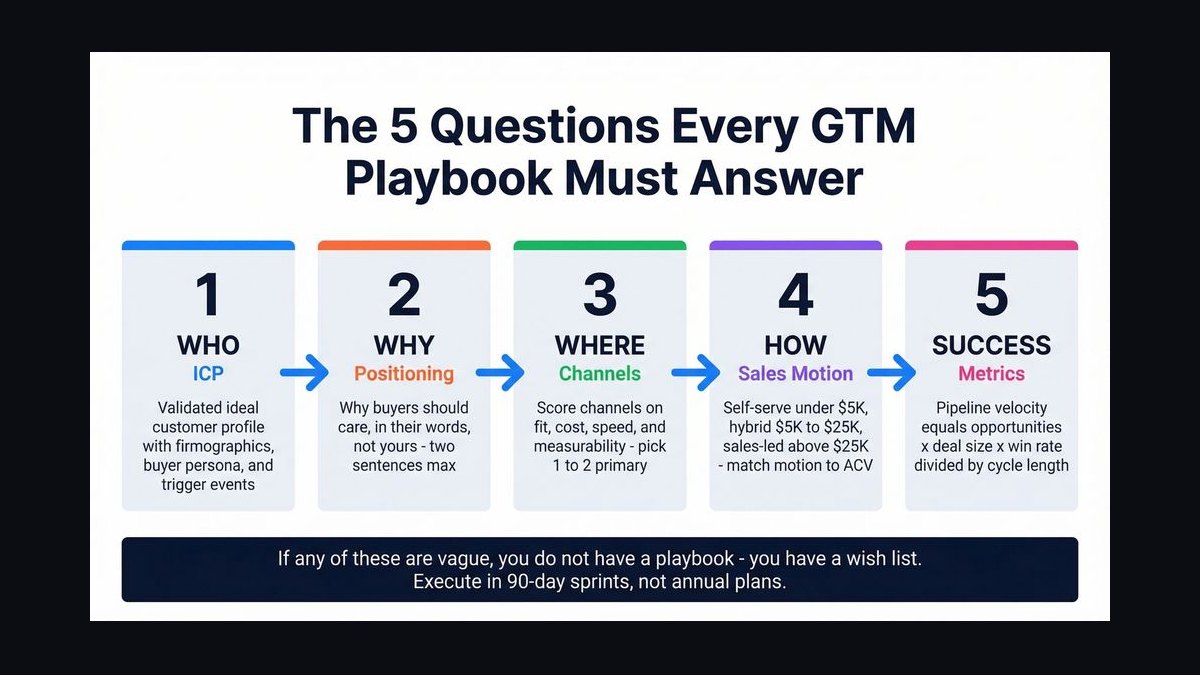
The best 2027 go-to-market playbook for Medical Devices & Supplies is a staged hybrid: land pilot accounts through clinical champions and value-analysis committees, then scale via group purchasing organization contracts and distributor leverage. Anchor every stage to documented clinical and economic outcomes, because in 2027 hospital buyers demand evidence of reduced length of stay, infection rates, or cost-per-procedure before they will expand a Medical Devices agreement.
What changes by company stage
The go-to-market playbook for Medical Devices & Supplies is not one motion. A twelve-person startup selling a single-use surgical supply faces completely different constraints than a $400M-revenue device manufacturer with a direct rep force and a mature distributor network. What shifts by stage is not the underlying logic — prove clinical value, prove economic value, remove adoption friction, then scale through contracts — but the mechanism, the buyer, the sales cycle length, and the proof required at each gate.
At the earliest stage, a Medical Devices company typically has one or two flagship products, no installed base, and no reference accounts. The buying committee is small: a single surgeon or department chief who agrees to evaluate. The sales cycle runs 60 to 120 days for a pilot, and the proof required is often a small clinical evaluation or a single-site trial. Revenue is measured in thousands, not millions. The playbook here is concentrated and personal — founder-led selling, conference presence at specialty society meetings, and a handful of design-partner accounts that co-develop the value story.

At the growth stage, roughly $5M to $50M in revenue, the company has early reference accounts but no systematic coverage model. The buyer expands to include materials management, infection prevention, and sometimes a value analysis committee (VAC). Sales cycles stretch to 6 to 12 months for a contract, and the proof required shifts from "does it work clinically" to "does it work economically at our volume." The playbook adds a small direct sales team, a clinical specialist function, and the beginnings of a distributor relationship for accounts the direct team cannot reach.
At the scale stage, above $100M in revenue, the Medical Devices manufacturer competes for formulary position and GPO contracts. The buyer is a committee plus a contracting office. The sales cycle for a GPO award can run 12 to 24 months, and the proof required is a full economic dossier: budget impact models, outcomes data, and often a risk-sharing or outcomes-based contract. The playbook becomes a portfolio motion — direct reps for high-value accounts, distributors for breadth, and a contracts team that manages GPO and IDN relationships.
The critical mistake at every stage is skipping the proof gate. A startup that tries to sell on price alone gets commoditized. A scale company that tries to sell on clinical differentiation without an economic story gets blocked at the VAC. The stage determines which proof leads, but both clinical and economic evidence are always required.
Stage-by-stage playbook (mermaid)

The playbook below maps the three stages to their primary motions, the buyer they target, and the proof they lead with. Notice that the motions stack rather than replace each other — a scale-stage Medical Devices company still runs clinical evaluations, just at a larger volume and with more standardized tools.
The startup stage is about earning the first ten reference accounts. The growth stage is about converting those references into a repeatable VAC package. The scale stage is about winning contracts that make the product the default choice across a health system. Each stage feeds the next: a design-partner account becomes a VAC reference, which becomes a GPO bid citation, which becomes a renewal argument.

One nuance for 2027: the growth stage is where most Medical Devices companies stall. They have clinical proof but cannot build the economic model that a VAC requires. The fix is to hire or contract a health economics and outcomes research (HEOR) resource earlier than feels comfortable — often at $3M to $5M in revenue, not $20M. That person builds the budget impact model that unlocks the next stage.
For Supplies specifically, the stage logic compresses. Commodity supplies with low clinical differentiation move to a distributor-first motion much earlier, sometimes at the startup stage, because the buyer is materials management and the decision is price and availability. Devices with clinical differentiation follow the longer staged path. The playbook must match the product's differentiation, not just the company's revenue.
Numbers that matter at each stage
Concrete numbers separate a working playbook from a slide deck. Below are the ranges that practitioners in Medical Devices & Supplies should use to sanity-check their motion at each stage. These are planning benchmarks, not guarantees — actual figures vary by specialty, geography, and product category.

At the startup stage, expect a pilot conversion rate of 20% to 40% from clinical evaluation to first paid order. A single design-partner account might generate $25,000 to $150,000 in first-year revenue. Conference presence at one or two specialty society meetings costs $15,000 to $60,000 per meeting including booth, travel, and materials. The founder should personally own the top 20 accounts. Sales cycle for a pilot: 60 to 120 days. Gross margin on a differentiated device: 60% to 75%; on a commodity supply: 30% to 45%.
At the growth stage, a direct rep carrying a quota of $1.5M to $3M in annual revenue is typical for differentiated devices. A clinical specialist supporting two to three reps costs $120,000 to $180,000 fully loaded. VAC approval cycles run 3 to 9 months, and a single IDN contract can represent $500,000 to $5M in annual revenue. The economic model must show a payback period under 24 months for the hospital, ideally under 12. Distributor margins run 15% to 30%, which compresses your net but buys reach you cannot afford to build.

At the scale stage, a GPO contract can cover 60% to 80% of a health system's purchasing volume, but the pricing concession to win it is often 10% to 25% off list. An outcomes-based contract might tie 5% to 15% of payment to a measured clinical endpoint. A direct rep at this stage carries $3M to $6M, and the sales organization includes contracts, HEOR, and customer success functions. Revenue per rep should exceed $1M fully loaded to justify direct coverage; below that, distributor or inside-sales coverage is more efficient.
The numbers that matter most for a 2027 playbook are the ones tied to the buyer's economics, not yours. A hospital evaluating a Medical Devices purchase in 2027 is under margin pressure and staffing shortages. If your product reduces nursing time by even 10 minutes per procedure across 5,000 procedures, that is roughly 833 hours of nursing capacity — a number that resonates far more than a clinical claim alone. Build the model around the buyer's cost per procedure, length of stay, readmission rate, or staffing hours. Those are the numbers that move a VAC.
For Supplies, the numbers shift to total cost of ownership. A cheaper glove that tears more often costs more in waste and staff time. A supply that reduces OR turnover time by 5 minutes per case across 10,000 cases recovers 833 hours of OR capacity. The playbook for Supplies in 2027 leads with total cost of ownership math, not unit price, because materials management has learned that unit price is a trap.
Decision framework (mermaid)
The framework below helps a Medical Devices & Supplies leader choose the primary motion for a given product and account. It routes on two questions: how differentiated is the clinical evidence, and how concentrated is the buying decision? The answers determine whether you lead with direct clinical selling, distributor breadth, or a contracts-led motion.
The framework's value is that it prevents the most common mismatch: selling a commodity supply with a direct clinical motion, or selling a differentiated device through a distributor that cannot articulate the clinical story. For Supplies with no differentiation, the distributor-first path is correct and cheaper. For Devices with strong evidence, direct clinical selling is the only motion that captures the value.
A second nuance: the framework is per product and per account, not per company. A Medical Devices manufacturer with a portfolio may run all four motions simultaneously for different product lines. The playbook is a portfolio of motions, governed by a single revenue operations system that tracks which motion applies where.

In 2027, the decision framework should also account for the rise of IDN-level standardization. Health systems are consolidating purchasing decisions, which means the "concentrated buying decision" branch is increasingly the default. That favors contracts-led and direct motions over pure distributor breadth, and it raises the value of a dedicated contracts and HEOR function. Companies that build that function early will win the accounts that distributors cannot close alone.
Finally, the framework should be revisited quarterly. A product that was differentiated two years ago may be commoditized today as competitors launch. A distributor that covered a territory well may be underperforming after a merger. The decision framework is a living tool, not a one-time exercise.
Related questions
How long does a Medical Devices GPO contract take to win?
A GPO award typically takes 12 to 24 months from initial engagement to signed contract. The process includes a value analysis review, a pricing negotiation, and a committee vote. Start the clinical and economic evidence build 6 to 12 months before you submit.
What is the biggest go-to-market mistake in Medical Supplies?
Leading with unit price. Materials management buyers in 2027 evaluate total cost of ownership — waste, staff time, and reliability. A supply that wins on price but fails on reliability loses the account at renewal. Lead with total cost of ownership math.
Do distributors replace direct reps for Medical Devices?

No. Distributors provide breadth and logistics, but they rarely articulate complex clinical value. Use distributors for commodity Supplies and for accounts below your direct coverage threshold. Keep direct reps and clinical specialists for differentiated Devices and strategic IDN accounts.
How much clinical evidence is enough to start selling?
Enough to support a single-site evaluation. You do not need a randomized trial to start, but you need a clear clinical rationale and at least one reference site willing to share outcomes. Economic evidence becomes mandatory at the VAC stage, not the pilot stage.
What revenue per rep justifies direct coverage?
Roughly $1M fully loaded per rep is the floor; $1.5M to $3M is healthy for differentiated Devices. Below $1M, distributor or inside-sales coverage is more efficient. Revisit this threshold annually as your product mix and account concentration change.
FAQ

What go-to-market playbook works best for Medical Devices & Supplies in 2027? A staged hybrid playbook: land pilot accounts through clinical champions, prove economic value at the value analysis committee, then scale through GPO and IDN contracts with distributor leverage for breadth. The proof gate — clinical first, economic second — is non-negotiable in 2027 because hospital buyers face margin and staffing pressure and require documented outcomes before expansion.
Why is the playbook different from 2024? Hospital consolidation has accelerated, so more buying decisions are concentrated at the IDN level. That favors contracts-led and direct motions over pure distributor breadth. At the same time, staffing shortages have made labor-saving and length-of-stay arguments more powerful than pure clinical claims, shifting the economic proof earlier in the sales cycle.
How do we build the economic model hospitals want? Start with the buyer's cost per procedure, length of stay, readmission rate, or nursing hours. Quantify the delta your product creates, multiply by the account's annual volume, and show a payback period under 24 months, ideally under 12. Have a health economics resource build and validate the model before the VAC meeting, not after.

What role do GPOs play in the 2027 playbook? GPOs control a large share of purchasing volume and can make your product the default choice across many health systems. Winning a GPO contract requires a full economic dossier and a pricing concession, often 10% to 25% off list. Treat the GPO bid as a 12-to-24-month project with dedicated contracts and HEOR support.
When should a startup hire a health economics resource? Earlier than feels comfortable — often at $3M to $5M in revenue. The economic model is the gate to the growth stage, and building it late delays VAC approvals and GPO bids. A contracted HEOR resource can bridge the gap until a full-time hire is justified.
How do we measure whether the playbook is working? Track pilot-to-paid conversion, VAC approval cycle time, contract win rate, revenue per rep, and net revenue retention by account. For Supplies, track total cost of ownership wins and renewal rates. If pilot conversion is below 20% or VAC cycles exceed 9 months, the proof package needs work, not more sales headcount.
Sources
- FDA — Medical Devices
- Centers for Medicare & Medicaid Services
- Healthcare Supply Chain Association
- AdvaMed — Advanced Medical Technology Association
- American Hospital Association
- McKinsey — Healthcare Systems & Services
- Deloitte — Life Sciences and Health Care
- HHS — Hospital Price Transparency
Related on PULSE
- How to build a value analysis committee package for Medical Devices
- Territory design for direct and distributor hybrid coverage
- Health economics and outcomes research: when to hire and what to build
- GPO contracting strategy for Medical Supplies manufacturers
- Revenue operations metrics for Medical Devices sales teams
- Total cost of ownership selling for commodity Supplies
This page will be disappearing soon. Save it to your device for $1 — or read it free while it is here.
@Kory-White- · if Venmo asks, the last 4 of my number are 2012
This page is gone.
This one is off the shelf now. $1 keeps it on your phone for good — the whole page, pictures and diagrams included.
 gtm-playbookGTM Playbook for Concrete Contractors in 2027
 gtm-playbookFractional CRO Services GTM Playbook 2027 — MEDDPICC + Agentforce + AI-Augmented Sales and the 8M Pavilion Operator Path
 gtm-playbookWhat is the go-to-market playbook for developer-led growth in 2027?
 gtm-playbookWhat is the go-to-market playbook for launching a new product line in 2027?
 gtm-playbookGTM Playbook for Plumbing Services in 2027
 gtm-playbookGTM Playbook for Property Management Companies in 2027
 gtm-playbookHow do you build a payroll and benefits administration go-to-market motion in 2027?
 gtm-playbookHow do you build the GTM playbook for a garage door installation and repair operator in 2027?
 gtm-playbookHow do you build an AI for customer success (Catalyst / ChurnZero) go-to-market motion in 2027?
 gtm-playbookBranding and Design Agency GTM Playbook 2027 — AI-Augmented Production, Cannes Lions Awards, and the $148M Pentagram Operator Path