


BANT is Dead — Banner

BANT (Budget, Authority, Need, Timeline) is no longer considered a reliable qualification framework for modern sales, as it often disqualifies prospects too early or ignores their buying journey. While some sales teams still use a modified version, many now prefer more dynamic models like MEDDIC or GPCT that focus on pain, process, and champion building. The "BANT is dead" argument is common in sales thought leadership, but its relevance depends on your industry and deal complexity.
BANT is Dead — Banner
Quote banner declaring BANT obsolete and pointing toward the modern qualification frameworks revenue teams actually run — recolor and download.
Format: SVG (scalable vector) · Size: 1584×396 px · Category: Mindset Quote Banner · License: Free to use — no attribution required.

Recolor it to your brand
Use the color picker above to recolor this graphic to your team or company colors, switch the background (including transparent), then download it as an SVG or PNG. No sign-up, no watermark.
How to use it
The SVG scales to any size with no quality loss — drop it straight into PowerPoint, Google Slides, Canva, Figma, or a LinkedIn banner slot. The PNG export is ready to upload anywhere that wants a raster image.
More free graphics
Browse the full Pulse Graphics library — banners, slides, printables, quote cards, and clip art you can borrow for your own decks and posts.
Related on PULSE
Why BANT Fails in Modern B2B Buying Cycles
The traditional BANT framework (Budget, Authority, Need, Timeline) was designed for a different era—one where sales reps held the information advantage and buyers relied on them to understand options. Today, the average B2B buyer is 60-70% through their decision journey before ever engaging a salesperson. They’ve already researched alternatives, read peer reviews, and formed strong opinions about what they need. This shift alone undermines BANT’s core assumptions.
The Budget trap. BANT treats budget as a static, binary gate: either they have it or they don’t. In reality, budget is fluid. A team might have no allocated line item for your solution but can reallocate funds from a stalled project or secure emergency approval if the business case is compelling enough. Conversely, a prospect with “approved budget” may simply be price-checking against an incumbent they have no intention of replacing. Pushing on budget too early often kills deals that would have closed with a more nuanced approach.
Authority is rarely singular. BANT assumes one person holds the keys to the kingdom. Modern enterprise buying involves 6-10 decision-makers, each with veto power over different aspects: technical fit, security compliance, budget approval, strategic alignment. The “authority” figure may be a committee or an executive who delegates evaluation to a team. Focusing on a single “champion” with supposed authority can leave you blindsided when the VP of Engineering blocks the deal over integration concerns no one raised earlier.
Need is not enough. BANT’s “Need” question—“Do you need our product?”—is almost always answered “yes” by anyone who takes a meeting. The real question is whether the need is urgent enough to displace the status quo. Many prospects have genuine needs but no burning platform to act. BANT doesn’t differentiate between a “nice-to-have” and a “must-fix-now” scenario, leading sales teams to waste cycles on deals that stall indefinitely.
Timeline is a mirage. Prospects often give optimistic timelines (“next quarter”) to get you off the phone or because they genuinely hope to move fast. But timelines shift with budget cycles, leadership changes, or competing priorities. BANT treats timeline as a fixed data point rather than a negotiated commitment. A deal with a “Q2 timeline” can slip to Q4 if the champion leaves or the economic buyer gets distracted.
The deeper issue is that BANT is a screening tool, not a qualification framework. It helps you decide whether to invest five more minutes, but it doesn’t tell you how to advance a deal or what risks to mitigate. Modern revenue teams need frameworks that account for the complexity of group buying, the fluidity of budget, and the emotional dynamics of change management.
What to Use Instead: Modern Qualification Frameworks That Actually Work
If BANT is dead, what replaces it? Several frameworks have emerged that better reflect how B2B purchases actually happen. None are perfect, but they address the gaps BANT leaves open.
MEDDIC (Metrics, Economic Buyer, Decision Criteria, Decision Process, Identify Pain, Champion). Originally popularized by enterprise sales organizations like Salesforce, MEDDIC goes beyond BANT by forcing reps to understand the decision process (who signs off, in what order) and the specific metrics the buyer will use to measure success. It also explicitly requires a champion—someone internally who will sell on your behalf. This framework is especially strong for complex, high-ACV deals where process clarity is critical. The downside: it can be heavy for smaller transactions and may encourage over-engineering simple conversations.
CHAMP (Challenges, Authority, Money, Prioritization). A direct evolution of BANT that flips the order to prioritize challenges first. CHAMP recognizes that if you don’t understand the prospect’s core challenge deeply, budget and authority are irrelevant. It also adds “Prioritization” to replace BANT’s simplistic timeline—asking not just *when* but *why now* and *what else is competing for their attention*. CHAMP works well for mid-market and enterprise teams that want a conversational framework rather than a checklist. It’s less structured than MEDDIC, which can be a strength or weakness depending on your team’s discipline.
GPCTBA/C&I (Goals, Plans, Challenges, Timeline, Budget, Authority, Consequences & Implications). This mouthful of an acronym from HubSpot’s sales methodology is actually one of the most thorough. It adds “Goals” and “Plans” upfront to understand the buyer’s positive vision, not just their pain. “Consequences” and “Implications” force the rep to explore what happens if the problem isn’t solved—creating urgency naturally rather than relying on a fabricated timeline. GPCTBA/C&I is ideal for consultative sellers who want to guide buyers through a structured discovery without sounding robotic. The main drawback is its complexity; teams need training to use it fluidly.
The Sandler Sales Methodology’s “Up-Front Contracts.” Sandler doesn’t use an acronym but instead teaches reps to establish mutual expectations at every stage. Before diving into qualification, the rep and prospect agree on what will happen in the conversation, what information will be shared, and what the next step will be. This prevents the “let me think about it” stall and surfaces objections early. Sandler is less about a qualification checklist and more about a conversational rhythm that naturally uncovers BANT-like information without the interrogative feel.
The B2B Buying Journey Framework (from Gartner). Gartner’s research shows that B2B buyers spend most of their time in six distinct “jobs”: problem identification, solution exploration, requirements building, supplier selection, validation, and consensus creation. Rather than asking about budget and authority, modern qualification should map to where the buyer is in this journey. A prospect in “problem identification” needs education, not a demo. A prospect in “consensus creation” needs help arming their internal champions with data. This framework shifts the rep’s role from gatekeeper to guide, which aligns with how buyers actually want to engage.
Practical recommendation. Don’t pick one framework and force it on every deal. Instead, build a hybrid that works for your specific sales motion. For example, use MEDDIC for your enterprise segment, CHAMP for mid-market, and GPCTBA/C&I for your highest-touch strategic accounts. Train your team to ask questions that surface the core elements of each framework without reading from a script. The goal is not to check boxes but to understand the buyer’s reality well enough to predict whether a deal will close—and what it will take to get there.
How to Retire BANT Without Losing Your Team’s Momentum
Transitioning away from BANT can feel risky, especially if your team has been trained on it for years. Sales reps often resist new frameworks because they’re comfortable with the old one, even if it’s broken. Here’s a practical approach to making the switch without disrupting your pipeline.
Start with a diagnostic. Before replacing BANT, audit your current deals. Pull 10 recent won deals and 10 lost deals. For each, ask: Did BANT accurately predict the outcome? In the lost deals, where did BANT fail—was it the budget assumption, the authority misread, the timeline that slipped? In the won deals, did BANT give you false confidence or was it actually helpful? This exercise will reveal the specific gaps in your team’s qualification process and give you a clear rationale for change.
Introduce one new element at a time. Don’t throw out BANT overnight. Instead, add one new dimension to your existing qualification process each quarter. Start with “Decision Process”—simply ask prospects: “Who else will be involved in this decision, and what’s the typical process you follow for evaluating solutions like ours?” This single question surfaces more authority dynamics than BANT’s “Are you the decision-maker?” ever will. Once the team is comfortable, add “Consequences” or “Metrics.” Over three to four quarters, you’ll have evolved your framework without causing whiplash.
Create a simple scorecard, not a script. The biggest mistake teams make when adopting new frameworks is turning them into rigid scripts. Instead, create a one-page scorecard with 5-7 key qualification criteria that your team can reference during discovery calls. For example: (1) Clear, quantified business problem, (2) Identified economic buyer or decision committee, (3) Documented budget source (not just “we have money”), (4) Compelling reason to act within 90 days, (5) Internal champion with access to stakeholders, (6) Known decision process and timeline, (7) Potential roadblocks (technical, legal, competitive). Score each deal 1-5 on each criterion. This gives you a visual heat map of deal health without overcomplicating the conversation.
Train on objection handling, not qualification. One reason BANT persists is that it gives reps a sense of control. They ask qualifying questions to feel like they’re managing the deal. A better approach is to train reps on handling the objections that naturally surface when they don’t force BANT. For example, if a prospect says “we don’t have budget,” instead of disqualifying them, teach your team to respond: “I understand. Can you help me understand how you typically fund new initiatives when they’re critical? Is there a process for reallocating budget mid-year?” This keeps the conversation open and often reveals that the budget objection is actually a priority objection in disguise.
Measure what matters. Replace BANT-centric metrics (e.g., “number of qualified leads”) with outcome-based metrics like “time to first meaningful conversation,” “deal velocity by framework stage,” or “conversion rate from discovery to proposal.” If your new framework is working, you should see shorter sales cycles, fewer stalled deals, and higher win rates. Track these metrics monthly and share them with the team to build buy-in.
Celebrate the wins that BANT would have missed. When a deal closes that initially failed BANT—perhaps the budget wasn’t approved yet, or the authority figure was unclear—share that story in your team meeting. “Remember the Acme Corp deal? We almost disqualified them because they didn’t have a clear budget. But we dug into their decision process, found the real economic buyer, and closed a $200K deal six months later.” These stories are more powerful than
Sources
- Harvard Business Review — articles on B2B sales methodologies and their evolution
- Gartner — research on modern buying behaviors and sales qualification frameworks
- Forrester — reports on BANT alternatives and buyer-centric sales approaches
- Sales Hacker — blog posts and case studies on contemporary sales qualification techniques
- LinkedIn Sales Solutions — insights on shifting from BANT to MEDDIC or other frameworks
- HubSpot Sales Blog — guides on aligning sales processes with current buyer expectations
FAQ
What does "BANT is Dead" actually mean? It means the old BANT framework (Budget, Authority, Need, Timeline) no longer works for modern B2B sales because buying decisions are rarely linear or controlled by a single person. Today’s buyers research independently, involve multiple stakeholders, and often lack clear budgets upfront — so rigid BANT criteria can kill deals before they start.
How is the Banner approach different from BANT? Banner replaces the rigid BANT checklist with a more flexible, buyer-centric framework that focuses on pain, urgency, and decision-making dynamics. Instead of disqualifying prospects who can’t check every BANT box, Banner helps salespeople engage earlier, build value, and guide the buying process.
Do I still need to know the prospect’s budget? You should understand budget ranges, but not as a hard gate. Many buyers don’t have a fixed budget until they see value — so asking for a number too early can kill momentum. Instead, explore what they’re willing to invest for a solution and revisit budget later in the conversation.
What about authority — isn’t that still important? Authority matters, but it’s rarely a single person. In complex deals, you need to map the decision-making group and understand each person’s influence. Banner focuses on identifying the “economic buyer” and the “champion” without assuming the first contact has the power to say yes.
Is this just for enterprise sales, or does it work for SMBs too? It works across deal sizes, but it’s most valuable when deals involve multiple stakeholders or longer sales cycles. For very small transactions, a simplified version can help — but the core idea of understanding buyer dynamics over rigid criteria applies to any B2B sale.
How do I start using Banner instead of BANT today? Begin by replacing your qualification checklist with open-ended discovery questions about pain, impact, and decision process. Listen for signals like “we’ve tried before” or “this is a priority now” rather than asking for budget and timeline upfront. Practice with one deal this week and note the difference in conversation quality.
This page will be disappearing soon. Save it to your device for $1 — or read it free while it is here.
@Kory-White- · if Venmo asks, the last 4 of my number are 2012
This page is gone.
This one is off the shelf now. $1 keeps it on your phone for good — the whole page, pictures and diagrams included.
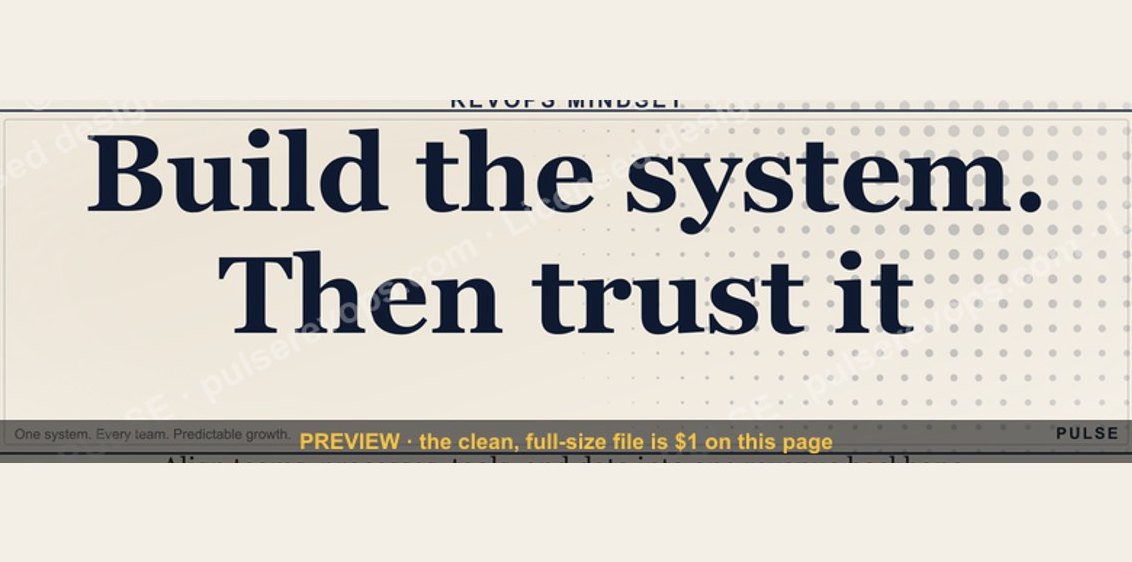 graphicBuild the system — RevOps Mindset Banner
 graphicRenewal is the New Sale — Banner
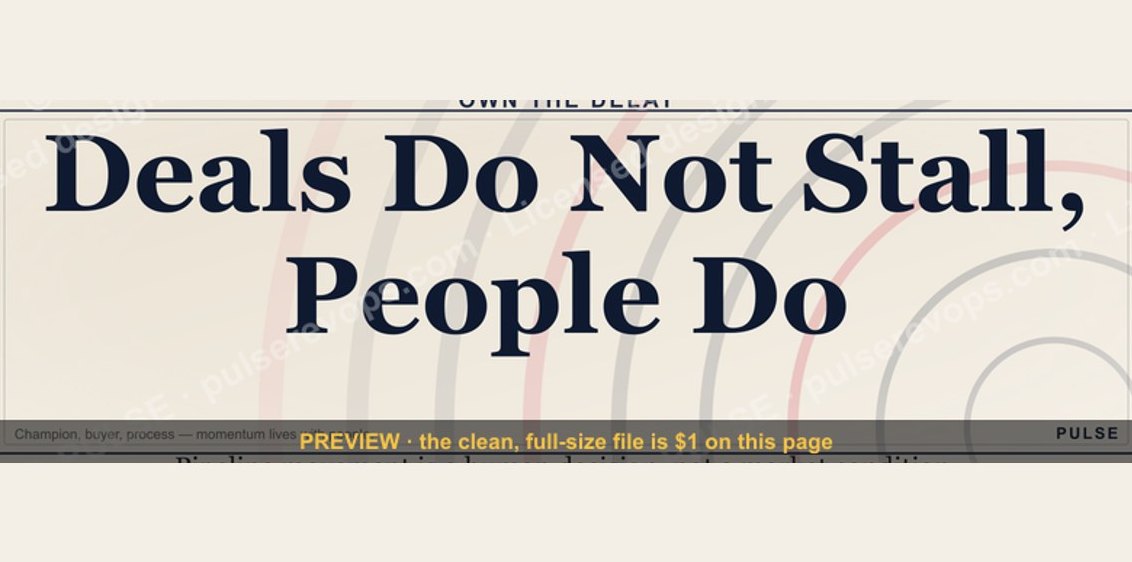 graphicDeals Do Not Stall, People Do — Banner
 graphicPipeline is oxygen — RevOps Mindset Banner
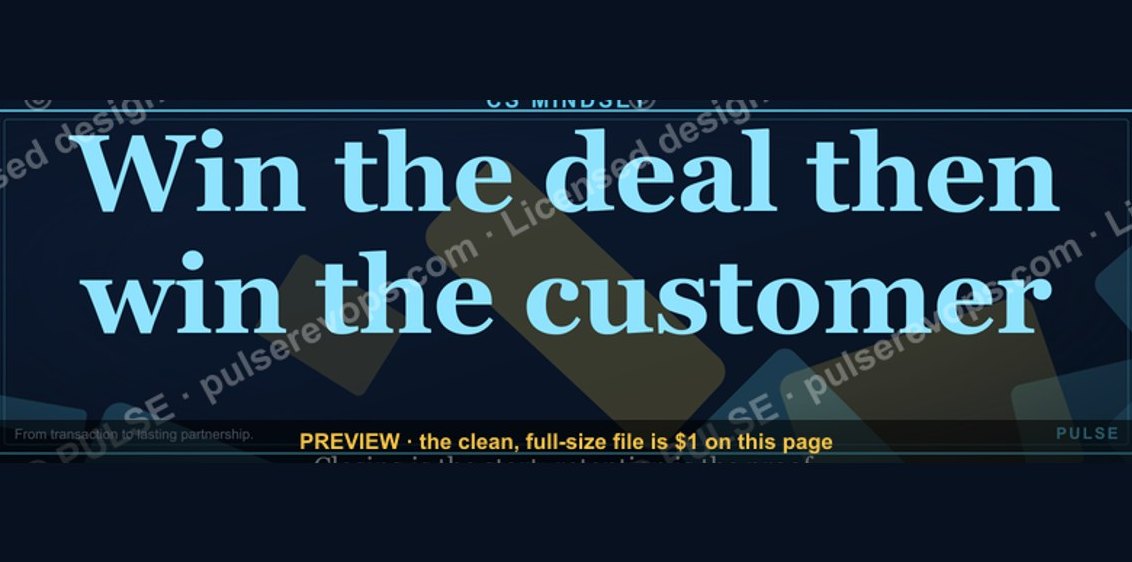 graphicWin the deal then win the customer — CS Mindset Banner
 graphicMEDDPICC Qualification Framework — Banner
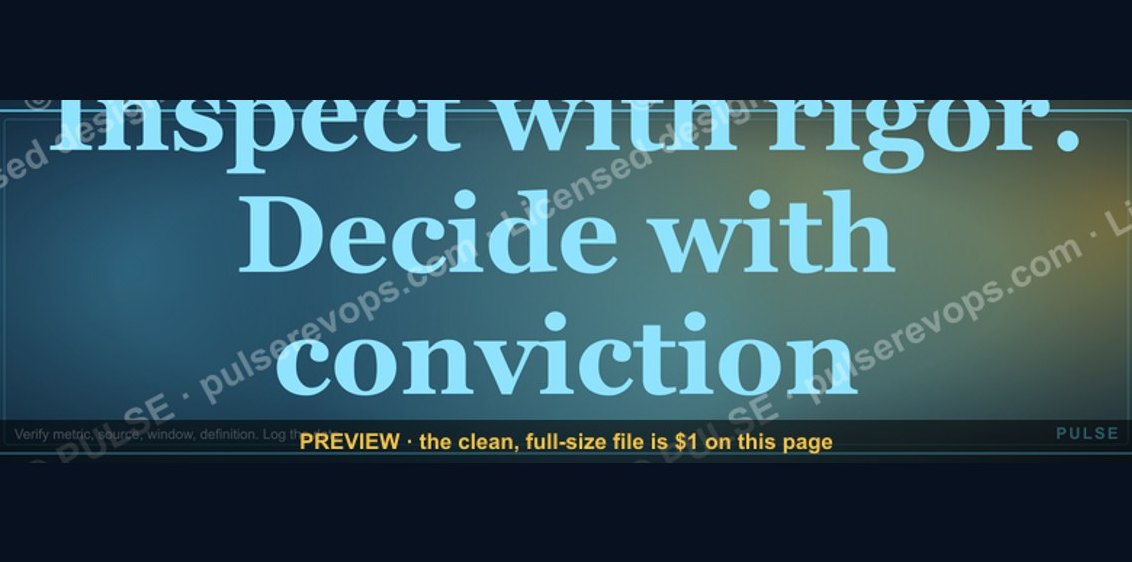 graphicInspect with rigor — Sales Management Banner
 graphicChampions Close Deals — Banner
 graphicForecast First, Pipeline Second — Banner
 graphicSales Cycles Shrink With Trust — Banner