


Marketing Funnel — TOFU MOFU BOFU
Quality
Certified
This process flowchart maps the Marketing Funnel across three stages — TOFU, MOFU, and BOFU — showing what content, channels, metrics, and ownership look like at each stage and how leads hand off between them. Use it as a shared reference so sales and marketing agree on definitions, stage exits, and the numbers that move a prospect forward.
The outcome you should expect
A funnel model done right produces one thing above all: a shared language between teams that historically argued past each other. Marketing says "we generated 4,000 leads." Sales says "none of them were real." The TOFU/MOFU/BOFU framework resolves that argument by attaching a definition, an owner, a content type, and a success metric to each stage — so a lead's position in the funnel is a fact, not an opinion.
Concretely, teams that adopt a stage-based funnel model typically see three outcomes. First, cleaner handoffs: a Marketing Qualified Lead (MQL) converts to a Sales Qualified Lead (SQL) at a defined threshold rather than whenever a rep feels like calling. Second, better budget allocation: you can see which stage is starving. If TOFU produces 10,000 visitors but MOFU only captures 200 emails, the leak is obvious and fixable. Third, forecast accuracy: pipeline coverage ratios become meaningful when every stage has an exit criterion.
The outcome you should *not* expect is instant revenue lift. Funnel modeling is a diagnostic and coordination tool, not a growth hack. Most teams need one full quarter — often two — before stage definitions stabilize and the data is trustworthy enough to act on. Expect the first 30 days to be messy: historical leads get re-scored, definitions get argued over, and your dashboards will disagree with each other. That friction is normal and it is the work.

A realistic first-year outcome for a B2B SaaS team running this properly: MQL-to-SQL conversion improves from a typical 10–15% to 20–30% simply because qualification criteria are explicit; sales cycle length drops 10–20% because leads enter sales conversations better educated; and marketing can defend its budget with stage-level attribution instead of last-touch credit. None of those numbers are guaranteed — they depend on execution — but they are the direction of travel.
What drives that outcome
The funnel outcome is driven by four forces, and the flowchart below shows how they connect. Content supply at each stage determines whether prospects can self-educate. Scoring and qualification rules determine when a lead moves. Handoff SLAs determine whether momentum survives the marketing-to-sales boundary. And feedback loops — closed-lost reasons, win/loss analysis, recycling rules — determine whether the system improves or calcifies.

The first driver is content-to-stage fit. TOFU content must be broad and non-gated — it answers questions a stranger is asking. MOFU content can be gated because the prospect has already shown interest. BOFU content is almost always high-touch and often co-created with sales. The most common failure is putting BOFU content (pricing pages, demo requests) in front of TOFU audiences, which kills conversion because the ask is premature.
The second driver is scoring discipline. A lead score is a hypothesis about buying intent. Behavioral signals (pricing page visits, multiple sessions, content downloads) usually carry more weight than demographic fit alone. A workable starting model: fit score out of 50 (industry, company size, role) plus engagement score out of 50 (page depth, recency, gated asset downloads). Recalibrate monthly against actual closed-won data — a score that never changes is a score nobody trusts.
The third driver is handoff SLA. The single highest-leverage rule in most funnels is a response-time commitment. If a lead hits MQL threshold and sales does not touch it within a defined window (many teams use 5 minutes to 1 hour for inbound), conversion drops sharply. Speed-to-lead is one of the most consistently replicated findings in sales research. Write the SLA down, measure it, and review it weekly.
The fourth driver is the feedback loop. Closed-lost reasons must flow back to marketing. If 40% of lost deals cite "no budget," that is a targeting problem, not a sales problem. If 40% cite "chose a competitor with better onboarding," that is a MOFU content gap. Without this loop, the funnel becomes a one-way pipe that leaks in the same place forever.
Benchmarks and realistic ranges

Benchmarks vary wildly by industry, deal size, and motion (self-serve vs. sales-led), so treat any number as a starting hypothesis rather than a target. That said, a few ranges show up repeatedly in B2B and B2C contexts and are useful for sanity-checking your own funnel.
TOFU metrics. Website visitor-to-lead conversion for B2B typically lands between 1% and 3% for cold traffic and 5% to 10% for warm or returning traffic. Organic search conversion is usually higher than paid social because intent is higher. Email list growth from TOFU content runs 0.5% to 2% of monthly visitors for a healthy blog. If your TOFU-to-MOFU conversion is under 0.5%, either your content is attracting the wrong audience or your MOFU offer is weak.
MOFU metrics. MQL-to-SQL conversion is the number most teams watch. A common range is 10% to 30%, with mature teams at the higher end. Email engagement during MOFU — open rates of 20% to 30% and click rates of 2% to 5% — is a reasonable health check. Webinar attendance rates (registrations who actually show) hover around 35% to 45%; on-demand views add another 20% to 30% over the following week.
BOFU metrics. SQL-to-opportunity conversion typically runs 40% to 60%. Opportunity-to-closed-won runs 20% to 35% for competitive markets and higher for sole-source or niche categories. Sales cycle length ranges from 14 days for small self-serve deals to 6–12 months for enterprise. Win rates below 15% usually indicate a qualification problem upstream, not a closing problem.

Pipeline coverage. A healthy rule of thumb is 3x to 4x pipeline coverage against quota for the quarter. If you need $1M and have $2M in pipeline, you are under-covered and should expect a miss. Coverage below 2x is a red flag that TOFU or MOFU is starving BOFU.
Cost ratios. A rough guide: customer acquisition cost (CAC) should be recoverable within 12 months for SaaS, and the ratio of lifetime value to CAC should exceed 3:1. If TOFU spend is 70% of budget but produces 20% of closed-won, the mix is off — usually MOFU is underfunded because it is less glamorous than brand campaigns.
These ranges are diagnostic, not prescriptive. The value is in comparing your stages to each other: if TOFU is healthy and MOFU is anemic, you have a mid-funnel content problem. If MOFU is healthy and BOFU stalls, you have a sales enablement or pricing problem. The funnel tells you *where* to look.
Risks, edge cases, and failure modes
The TOFU/MOFU/BOFU model is useful precisely because it is simple — and that simplicity is also its biggest risk. Here are the failure modes that bite teams most often.

Stage definitions drift. Six months in, marketing's definition of MQL has quietly expanded to hit a lead-volume target, and sales has quietly narrowed its definition of SQL to protect its time. The two teams are now measuring different funnels. Fix: freeze definitions in a written document, review quarterly, and require both teams to sign off on changes.
The model breaks for non-linear buying. Real B2B buying involves 6–10 stakeholders, committee decisions, and prospects who jump backward (a CTO reads a TOFU blog post *after* a demo). A strict linear funnel misrepresents this. Fix: treat stages as states a contact can re-enter, not a one-way escalator, and track account-level movement, not just contact-level.
Attribution fights. When a deal closes, TOFU, MOFU, and BOFU all claim credit. Last-touch attribution overweights BOFU; first-touch overweights TOFU. Fix: use multi-touch or position-based attribution, and accept that no model is perfect. The goal is directional truth, not precision.
Gated content kills TOFU. The temptation to gate everything to capture emails backfires. Gating a top-of-funnel explainer that a competitor offers free is a conversion killer. Fix: gate MOFU and BOFU assets, keep TOFU ungated, and use soft conversion offers (newsletter, retargeting) instead.
Sales ignores MQLs. If reps believe marketing leads are low quality, they will cherry-pick and the SLA will quietly die. Fix: co-build the scoring model with sales, start with a small pilot, and share closed-won data from marketing-sourced leads so the argument becomes evidence-based.

Recycling is missing. Leads that are not ready now are not dead. Without a nurture track that re-engages cold leads on a 30/60/90-day cadence, you pay to acquire the same lead twice. Fix: build a lifecycle stage called "recycled" or "nurture" and route disqualified leads there with a re-entry trigger.
Metrics become vanity. Traffic, impressions, and social followers are TOFU vanity metrics if they never convert. Fix: tie every stage metric to a downstream business outcome and report the full chain, not just the top.
The model ossifies. Funnels that worked for inbound content marketing may not fit a product-led growth motion where users self-serve. Fix: adapt the model to the motion — for PLG, the stages might be visitor → signup → activated → paid, which maps loosely to TOFU/MOFU/BOFU but with different owners and metrics.
A practical rollout plan
Rolling out a stage-based funnel is a 90-day project, not a weekend configuration. The flowchart below shows the sequence and the owners.
Weeks 1–2: Define stages. Get marketing and sales leads in one room and write down, in plain language, what TOFU, MOFU, and BOFU mean for your business. Include the exit criteria — the specific action or threshold that moves a contact from one stage to the next. Do not skip this. Every downstream argument traces back to a vague definition here.

Weeks 3–4: Map the current funnel. Pull historical data and calculate your actual conversion rates stage by stage. Most teams discover their funnel leaks in a place they did not expect. This baseline is what you will measure improvement against.
Weeks 5–6: Build the scoring model. Start simple: a fit score and an engagement score, each out of 50. Set the MQL threshold conservatively at first — it is easier to loosen than to tighten after sales has lost trust. Document every rule so it can be explained to a skeptical rep.
Weeks 7–8: Set the handoff SLA and routing. Decide the response-time commitment, who owns the lead at each stage, and what happens when the SLA is missed. Build the routing in your CRM so it is automatic, not manual.
Weeks 9–10: Pilot. Run the new model on one segment — one region, one product line, or one lead source. Review weekly. Expect to find bugs in the scoring and gaps in the content.
Weeks 11–12: Review and iterate. Recalibrate thresholds against pilot data. Document the feedback loop: how closed-lost reasons get back to marketing, and how often the scoring model gets reviewed.
Ongoing. Monthly funnel review with both teams. A single dashboard showing stage-by-stage conversion, SLA compliance, and pipeline coverage. If the dashboard is not reviewed, the model decays within a quarter.
Related questions
What is the difference between TOFU, MOFU, and BOFU?

TOFU (top of funnel) is awareness — attracting strangers through broad content. MOFU (middle of funnel) is consideration — nurturing interest with deeper resources. BOFU (bottom of funnel) is decision — converting qualified prospects with demos, trials, and proposals. Each stage has distinct content, channels, metrics, and owners.
How do you measure funnel conversion rates?
Divide the number of contacts who reach a stage by the number who entered the prior stage, over the same period. Track each stage separately and compare against your own historical baseline rather than industry averages. The most useful metric is the stage where conversion drops most sharply — that is where to invest first.
What content belongs at each funnel stage?
TOFU: blog posts, social content, podcasts, infographics — ungated and educational. MOFU: guides, webinars, case studies, comparison content — often gated. BOFU: demos, free trials, pricing pages, proposals, references — high-touch and sales-supported. Mismatching content to stage is the most common funnel error.
How long should a funnel take from TOFU to BOFU?
It depends entirely on deal size and complexity. Self-serve B2C can move a prospect through all three stages in a single session. Small B2B deals often take 2–8 weeks. Enterprise deals routinely take 6–12 months, with multiple stakeholders entering at different stages. Measure your own cycle length rather than benchmarking against unrelated businesses.
Can you skip a funnel stage?

You can compress stages but rarely skip them. A prospect who arrives via a strong referral may move from TOFU to BOFU quickly because trust is pre-established. But the awareness and consideration work still happens — it just happens through the referrer instead of your content. Skipping MOFU entirely usually means longer sales cycles and more objections.
FAQ
What does TOFU stand for in marketing? TOFU stands for "top of funnel." It is the awareness stage where prospects first encounter your brand, usually through broad educational content, search, social media, or advertising. The goal at TOFU is reach and attention, not conversion. Success is measured by traffic, new visitors, and audience growth rather than leads or revenue.
What is the difference between MQL and SQL? A Marketing Qualified Lead (MQL) is a contact whose fit and engagement scores suggest they may be ready for a sales conversation. A Sales Qualified Lead (SQL) is an MQL that sales has accepted and validated as worth pursuing. The MQL-to-SQL handoff is where most funnels leak, which is why explicit criteria and a response-time SLA matter so much.
How many stages should a marketing funnel have?

Three — TOFU, MOFU, BOFU — is the standard and works for most teams. Some organizations add a retention or advocacy stage after BOFU, and product-led motions sometimes substitute signup/activation/paid stages. More stages add precision but also add maintenance overhead; start with three and split only when the data justifies it.
Why do leads stall in the middle of the funnel? Usually because MOFU is underfunded and under-built. Teams invest heavily in TOFU content and BOFU sales tools but leave the middle empty, so prospects who are interested but not ready have nothing to consume. The fix is a deliberate MOFU content program — guides, webinars, case studies — with its own owner and budget.
How often should funnel metrics be reviewed? Operationally, weekly — especially SLA compliance and MQL volume. Strategically, monthly — stage conversion rates, pipeline coverage, and content performance. Quarterly, review the stage definitions and scoring model themselves. A funnel model that is never reviewed drifts until it no longer reflects reality.
Does the funnel model work for B2C? Yes, with adjustments. B2C funnels are usually shorter and more automated: TOFU is social and search, MOFU is email and retargeting, BOFU is the checkout or signup flow. The same principle applies — each stage needs the right content and a clear trigger to move forward — but the timescales are hours or days rather than weeks or months.
Sources
- HubSpot — What Is a Marketing Funnel?
- Mailchimp — Marketing Funnel Definition
- Salesforce — What Is a Sales Funnel?
- Gartner — Marketing Funnel and Demand Generation
- Forrester — B2B Buyer Journey Research
- Harvard Business Review — The New Sales Funnel
- McKinsey — The B2B Digital Inflection Point
- Google Analytics — Conversion Funnel Reports
Related on PULSE
- Lead Scoring Models That Sales Actually Trust
- MQL vs SQL: Defining the Handoff
- Pipeline Coverage Ratios and Forecast Accuracy
- Content Mapping Across the Buyer Journey
- Speed-to-Lead: Why Response Time Wins Deals
- Closed-Lost Analysis as a Marketing Feedback Loop
This page will be disappearing soon. Save it to your device for $1 — or read it free while it is here.
@Kory-White- · if Venmo asks, the last 4 of my number are 2012
This page is gone.
This one is off the shelf now. $1 keeps it on your phone for good — the whole page, pictures and diagrams included.
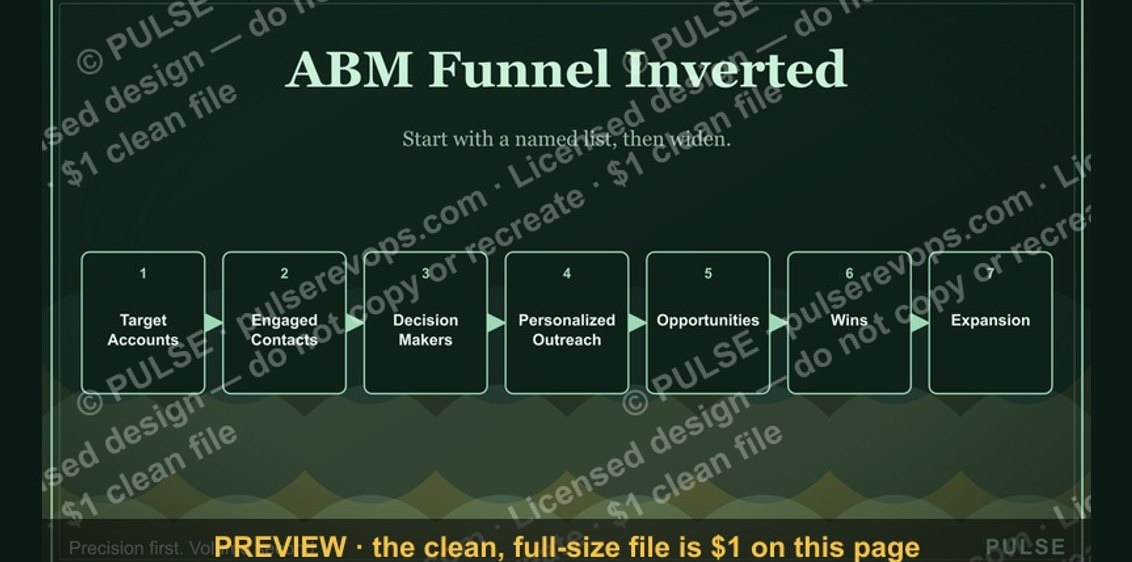 graphicABM Funnel Inverted
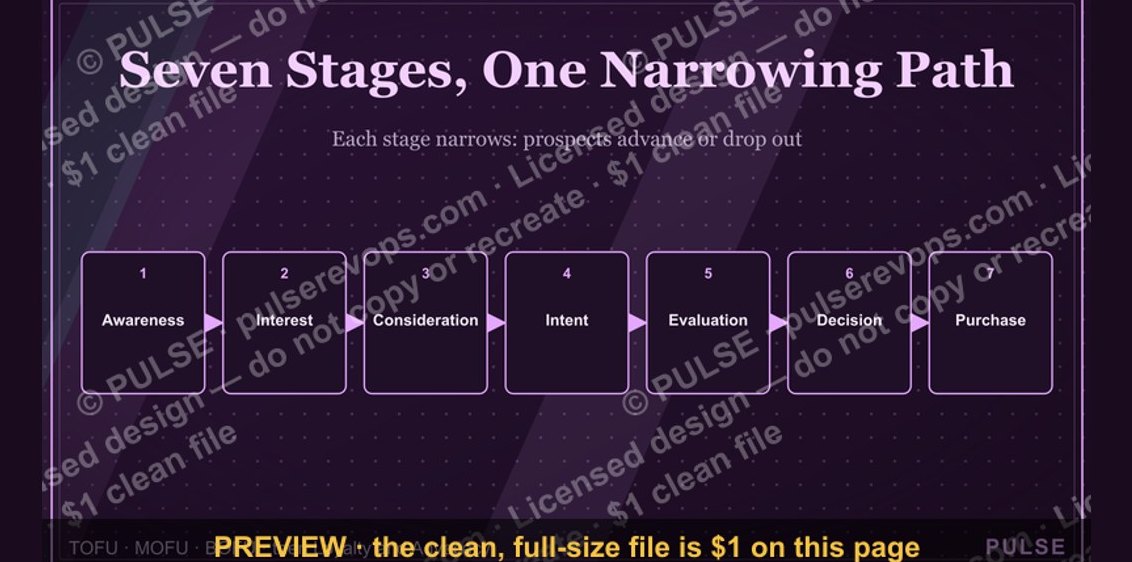 graphicSales Funnel — 7 Stages
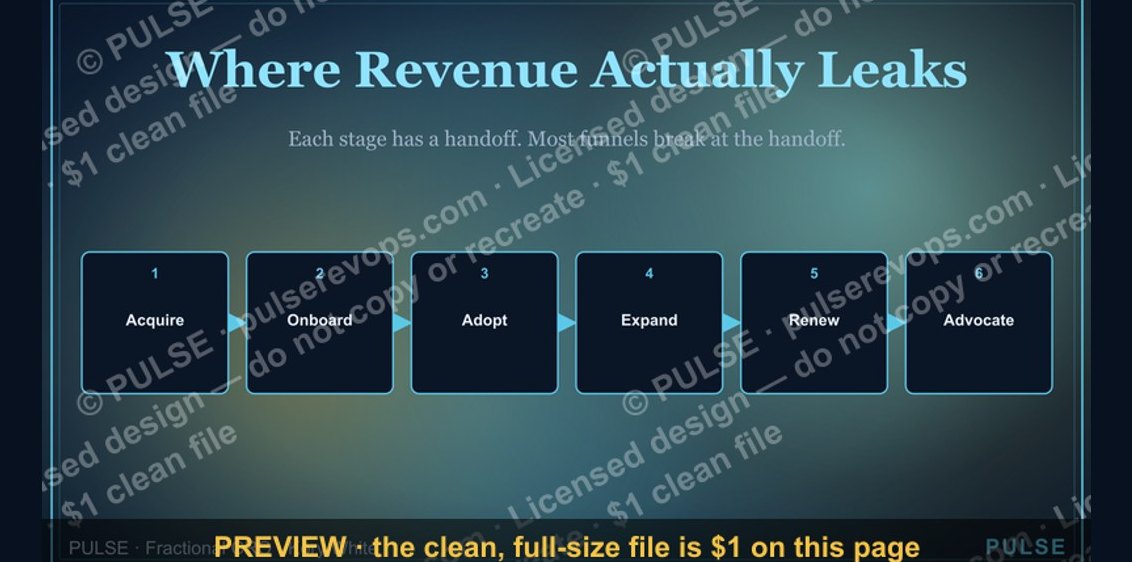 graphicCustomer Lifecycle Funnel
 graphicPLG Conversion Funnel
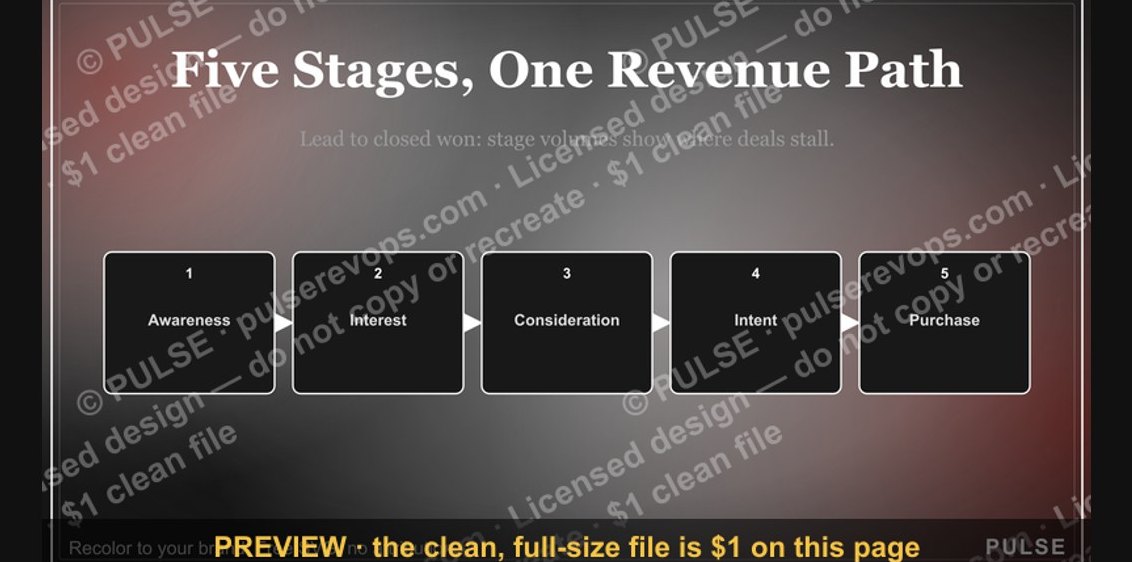 graphicSales Funnel — 5 Stages
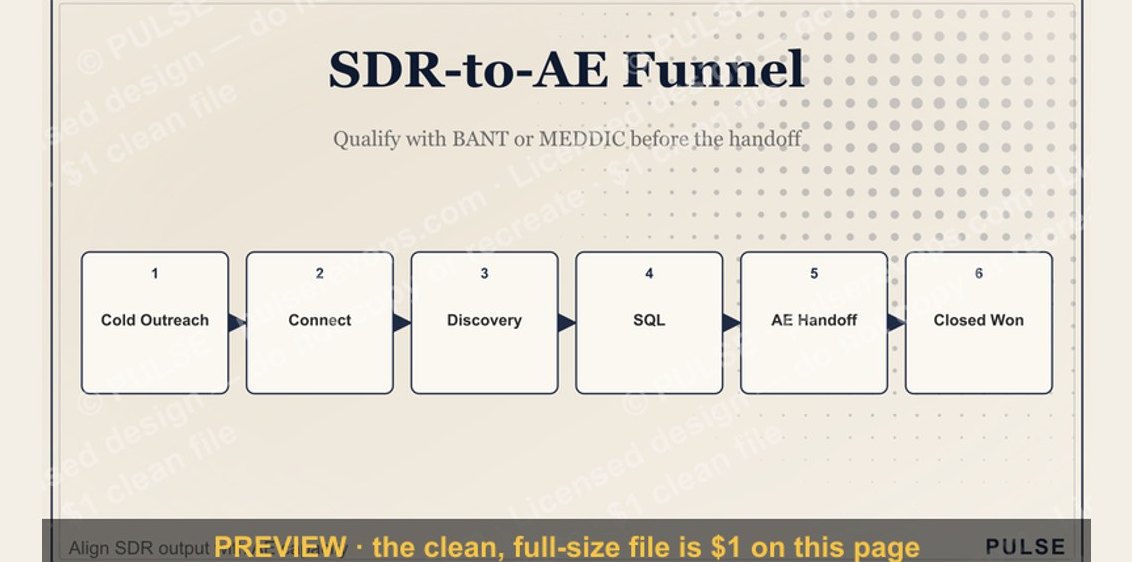 graphicSDR-to-AE Funnel
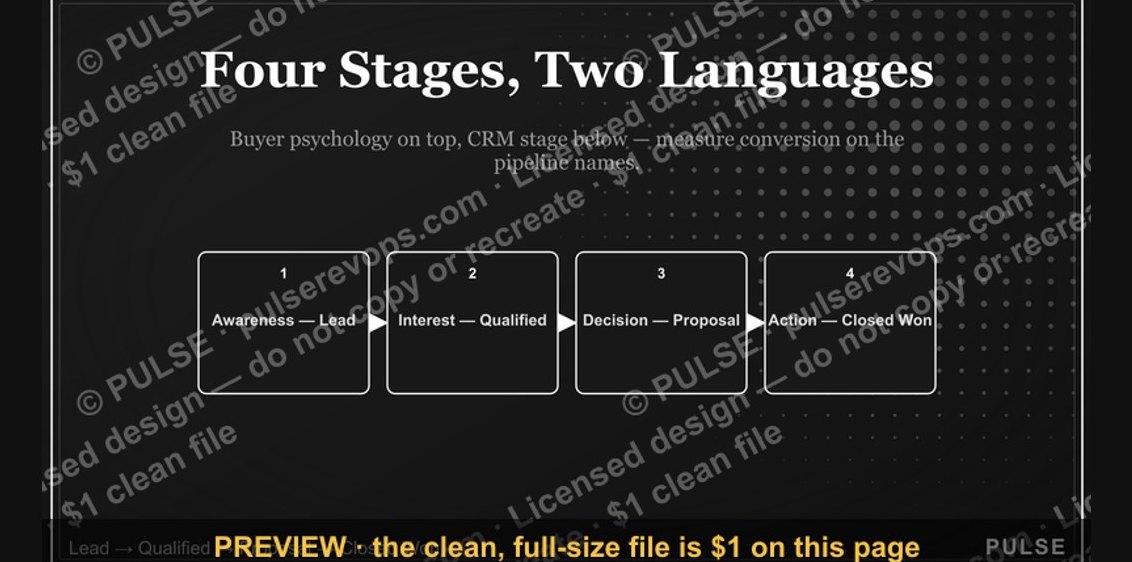 graphicSales Funnel — 4 Stages
 graphic“SHOULD DO IT” — Sales Meme
 graphicThe Sales Cycle: Lead to Closed-Won — Infographic
 graphic4 Forecast Categories — Infographic