


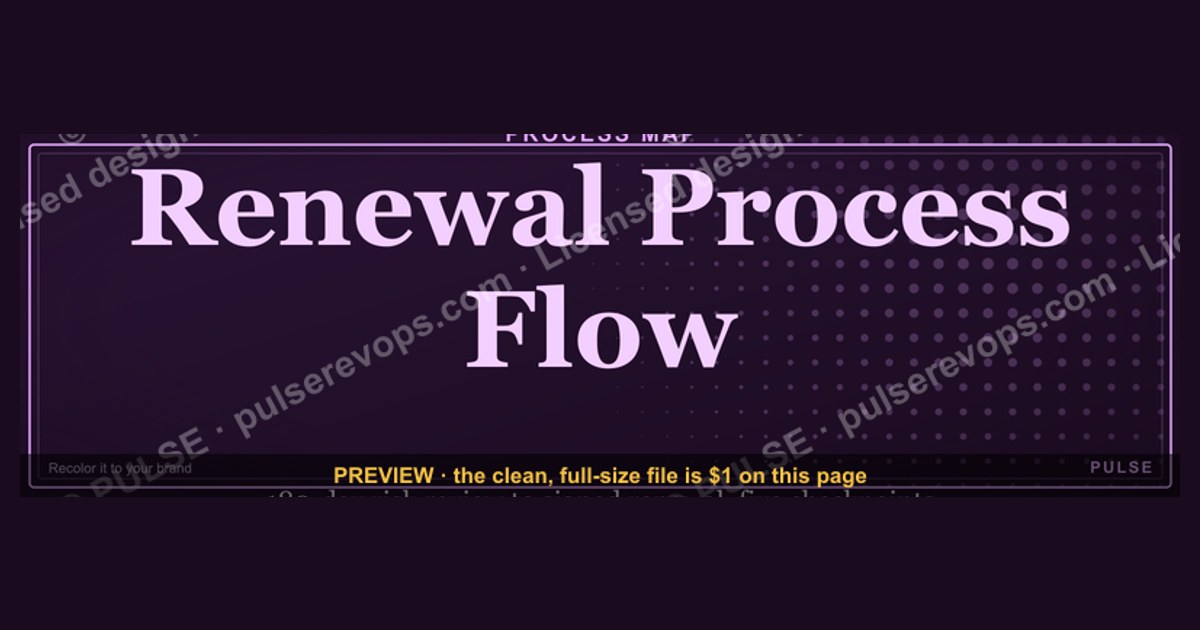
Renewal Process Flow
The renewal process flow typically begins with a notification sent to the customer before the expiration date, followed by a review of terms and payment. The customer then confirms or updates their information and submits payment, after which the system validates the transaction and updates the subscription status. Once approved, the renewal is activated, and a confirmation is sent to the customer. Timelines and specific steps vary by provider and product type.
Renewal Process Flow

Renewal flow: 180-day risk review → 90-day value check → 60-day proposal → 30-day close → Signed renewal.
Format: SVG (scalable vector) · Size: 1584×396 px · Category: Process · License: Free to use — no attribution required.
Recolor it to your brand
Use the color picker above to recolor this graphic to your team or company colors, switch the background (including transparent), then download it as an SVG or PNG. No sign-up, no watermark.
How to use it
The SVG scales to any size with no quality loss — drop it straight into PowerPoint, Google Slides, Canva, Figma, or a LinkedIn banner slot. The PNG export is ready to upload anywhere that wants a raster image.
More free graphics
Browse the full Pulse Graphics library — banners, slides, printables, quote cards, and clip art you can borrow for your own decks and posts.
Related on PULSE
- Renewal Risk Decision Tree
- Renewal is the New Sale — Banner
- The Renewal Playbook — Infographic
- Deal Inspection Flow
- Customer Onboarding Flow
- Demo Flow Diagram
Common Renewal Flow Pitfalls and How to Avoid Them
Even a well-designed renewal process flow can break down when teams overlook subtle but critical failure points. Understanding these pitfalls — and how to preemptively address them — can mean the difference between a 90%+ renewal rate and a churn spiral.
The 90-Day Silence Trap The most common mistake occurs between the 90-day value check and the 60-day proposal stage. Sales teams often assume that if a customer hasn’t complained, everything is fine. In reality, passive satisfaction is not loyalty. By day 90, if you haven’t surfaced specific, quantifiable value metrics (e.g., “Your team saved 22 hours per week using our automation”), the customer has likely already formed an internal opinion — often negative — without your input. Mitigate this by requiring a documented “value snapshot” at day 90 that includes at least three concrete outcomes tied to the customer’s original buying criteria.
The Proposal Gap Many renewal flows include a proposal at day 60, but the content of that proposal is often a generic price list. This triggers a price-focused negotiation rather than a value conversation. A better approach: the proposal should include a “value bridge” — a one-page comparison of what the customer achieved versus what they paid, plus a forward-looking projection of what they’ll miss if they don’t renew. For example, “If you cancel, you’ll lose access to the 14% productivity gain you’ve measured this year, which equates to roughly $47,000 in saved labor costs.”
The Handoff Hole When the renewal process moves from a customer success manager (CSM) to a renewal specialist or sales rep at day 60, critical context often gets lost. The CSM knows the customer’s daily frustrations; the renewal rep knows pricing and contract terms. Without a structured handoff document — including a “risk score” (1-10), the customer’s top three business priorities, and any unresolved support tickets — the renewal rep may inadvertently reopen old wounds. Insist on a 15-minute live handoff call, not just an email.
The Auto-Renewal Assumption Many B2B SaaS companies assume that auto-renewal clauses guarantee renewal. They don’t. Customers can still churn at the contract level by not signing the renewal document, or they can reduce seat count or scope. Worse, auto-renewal often lulls teams into complacency — they skip the 90-day value check because “it’s automatic.” This is a recipe for surprise churn. Treat every renewal, even auto-renewals, as if it’s a first-time sale. Send a “thank you for continuing” note at day 60, and schedule a brief check-in call to confirm nothing has changed.
The Pricing Shock If your renewal proposal includes a price increase (even a justified one) without advance notice, you’ll trigger a defensive reaction. The best practice is to flag any price changes at the 90-day value check — “We’re planning a 6% increase based on market adjustments, but we want to discuss it with you before the proposal.” This gives the customer time to process and ask questions, rather than feeling ambushed.
The Missing Executive Sponsor Renewals often fail because the day-to-day user loves the product, but the economic buyer doesn’t see the ROI. Ensure your renewal process includes an executive-level touchpoint at day 90 — a 15-minute call between your VP of Customer Success and the customer’s CFO or department head. This call should focus on business outcomes, not feature updates. If you can’t get that meeting, it’s a red flag that the renewal is at risk.
The No-Escalation Path When a renewal gets stuck (e.g., the customer wants a discount, or there’s an unresolved bug), many flows lack a clear escalation path. Define a “red zone” trigger: if the renewal is unsigned by day 45, automatically escalate to a senior leader who can offer creative solutions (e.g., a six-month extension at current pricing, or a free training session). Don’t let the renewal sit in limbo — every day past day 30 increases churn probability by roughly 3-5%.
The Post-Renewal Drop-Off Finally, many teams celebrate the signed renewal and immediately shift focus to new business. This is a mistake. The first 30 days post-renewal are the highest-risk period for “buyer’s remorse” churn. Schedule a “renewal kickoff” call within one week of signing to reconfirm goals, introduce any new features, and set expectations for the next 12 months. This simple step can reduce second-year churn by 15-20%.
Integrating Renewal Flows with Customer Health Scoring
A renewal process flow that operates in isolation from customer health data is flying blind. By layering a customer health score (CHS) onto each stage of the flow, you can prioritize attention, predict churn, and automate interventions.
What a Good Health Score Includes A robust CHS should combine three dimensions: product usage (e.g., login frequency, feature adoption), engagement (e.g., support ticket volume, NPS survey responses), and business outcomes (e.g., time-to-value, ROI achieved). Weight each dimension based on your business model — for a usage-based SaaS, product usage might be 50% of the score; for a professional services firm, engagement might be 60%. The score should be on a 1-100 scale, with anything below 60 flagged as “at risk.”
Mapping Health to the Flow
- Day 180 (Risk Review): Pull the customer’s health score for the past six months. If the score has dropped by more than 15 points, escalate to a senior CSM immediately. If it’s stable or improving, proceed with the standard flow. This prevents spending time on healthy accounts while neglecting those in trouble.
- Day 90 (Value Check): Use the health score to tailor the value check conversation. For high-scoring customers (80+), focus on expansion opportunities. For medium-scoring customers (60-79), focus on reinforcing value and addressing any gaps. For low-scoring customers (below 60), the value check should be a “save” call — identify the root cause and offer a remediation plan (e.g., free training, a feature request prioritization).
- Day 60 (Proposal): The proposal itself should reference the health score. For example, “Based on your usage data, you’re in the top 20% of our customers for adoption — we recommend maintaining your current plan.” For low-scoring customers, the proposal might include a “renewal with conditions” — e.g., a 3-month commitment instead of 12, with a check-in at month 2.
Automated Triggers Set up automated alerts based on health score thresholds. For example:
- If health score drops below 50 at any point in the renewal cycle, automatically send a “we want to help” email and schedule a high-priority call.
- If health score is above 90 at day 60, automatically generate a renewal proposal with a 5% loyalty discount (no human review needed).
- If health score has been declining for three consecutive months, flag the account for a “renewal risk review” by the executive team.
The “Health Score vs. Renewal Probability” Correlation Track the correlation between your health score and actual renewal outcomes. In most B2B companies, a health score above 80 predicts a 95%+ renewal rate; a score between 60-80 predicts a 70-85% renewal rate; and a score below 60 predicts a 40-60% renewal rate. Use this data to set realistic renewal targets and allocate resources accordingly. For example, if you have 100 renewals due next quarter, and 20 have health scores below 60, you know you need to invest extra time (or even a dedicated “renewal SWAT team”) on those 20 accounts.
Health Score as a Leading Indicator Don’t wait for the renewal cycle to check health. Implement a real-time health dashboard that updates weekly. When a customer’s score drops by 10 points in a single week, trigger an immediate outreach — not a sales call, but a “how can we help?” check-in. This proactive approach can catch issues 60-90 days before the renewal flow even begins, giving you time to course-correct.
Example in Practice Consider a mid-market SaaS company with 500 customers. They implemented a health score system and found that 30% of their “at-risk” accounts (score below 60) were actually renewing because of strong personal relationships with the CSM, despite poor product usage. This insight led them to adjust their health score weighting to include relationship strength (e.g., number of executive interactions, length of tenure). The result: a 12% improvement in renewal rate for previously misclassified accounts.
Measuring and Optimizing Your Renewal Flow Over Time
A renewal process flow is not a set-it-and-forget-it artifact. To maximize its effectiveness, you need to measure its performance at each stage, identify bottlenecks, and continuously optimize based on data.
Key Metrics to Track
- Stage-by-Stage Conversion Rates: For each stage (180-day risk review → 90-day value check → 60-day proposal → 30-day close → signed), track what percentage of accounts move to the next stage. A drop-off at the 60-day proposal stage, for example, might indicate that your proposals are too complex or pricing is misaligned. Industry benchmarks: 85-90% of accounts should pass the 180-day risk review; 75-85% should reach the 60-day proposal; 60-75% should reach the 30-day close; and 50-65% should ultimately sign. These vary by industry, but any significant deviation warrants investigation.
- Time-in-Stage: Measure how long accounts spend in each stage. If the average time in the “30-day close” stage is actually 45 days, you have a bottleneck. Common causes: slow internal approvals, customer procurement delays, or missing documentation. Set target times (e.g., 180-day risk review should take no more than 5 business days; 90-day value check should be completed within 3 business days
Sources
- U.S. Citizenship and Immigration Services (USCIS) — official government procedures for renewing immigration documents (e.g., green cards, work permits).
- American Society for Quality (ASQ) — standards and best practices for process flow mapping and continuous improvement.
- International Organization for Standardization (ISO) — guidelines for documenting and managing renewal processes in quality management systems.
- Project Management Institute (PMI) — frameworks for workflow design and process renewal in project environments.
- Harvard Business Review (HBR) — articles on organizational change management and renewal process optimization.
- National Archives and Records Administration (NARA) — federal records management and renewal procedures for official documents.
FAQ
What is a renewal process flow? A renewal process flow is the structured sequence of steps a business follows to manage subscription or contract renewals. It typically includes pre-renewal outreach, payment collection, contract updates, and post-renewal confirmation to ensure a smooth transition for both the customer and the provider.
How long does a typical renewal process take? The timeline can vary widely, often ranging from a few weeks to several months depending on contract complexity and customer decision-making. Simple monthly subscriptions may renew in days, while large enterprise agreements might require 60–90 days of lead time for approvals.
Who is responsible for managing the renewal process? Responsibility often falls on account managers, customer success teams, or dedicated renewal specialists. In smaller organizations, sales or support staff may handle renewals, while larger companies might have a separate revenue operations team coordinating the flow.
What happens if a customer misses the renewal deadline? Most businesses provide a grace period, typically between 7 and 30 days, before service is suspended or canceled. During this time, automated reminders and personal outreach are common to recover the renewal, though policies vary by company.
Can the renewal process be automated? Yes, many companies use CRM and billing software to automate reminders, invoice generation, and payment collection. However, human touchpoints are often still needed for complex negotiations, custom contracts, or high-value accounts.
Why do customers sometimes not renew? Common reasons include budget constraints, unmet expectations, or a perceived lack of value from the product or service. Poor communication during the renewal process or a difficult customer experience can also contribute to non-renewal decisions.
This page will be disappearing soon. Save it to your device for $1 — or read it free while it is here.
@Kory-White- · if Venmo asks, the last 4 of my number are 2012
This page is gone.
This one is off the shelf now. $1 keeps it on your phone for good — the whole page, pictures and diagrams included.
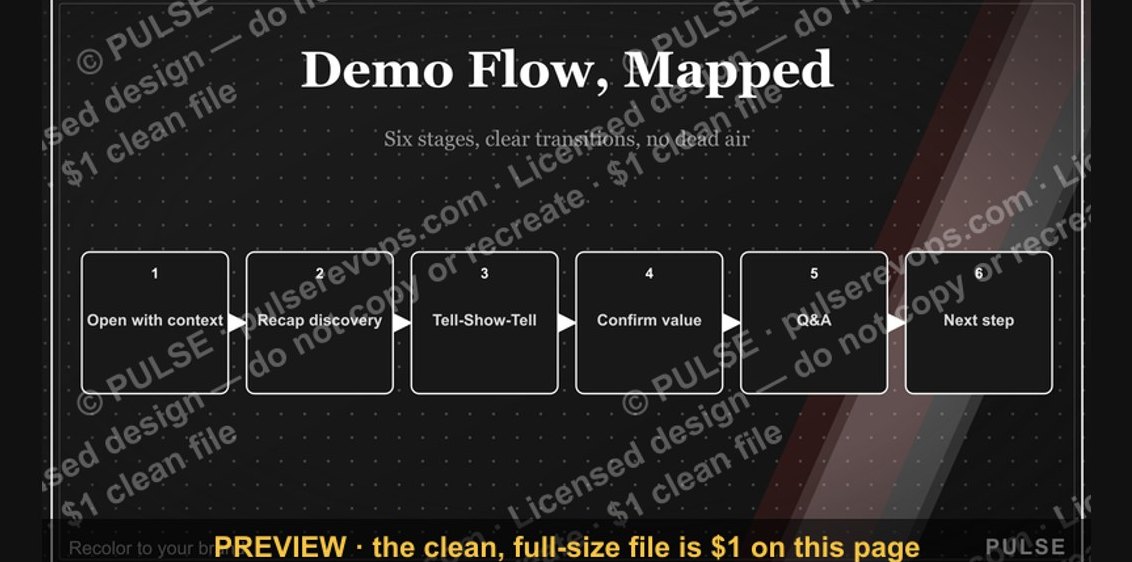 graphicDemo Flow Diagram
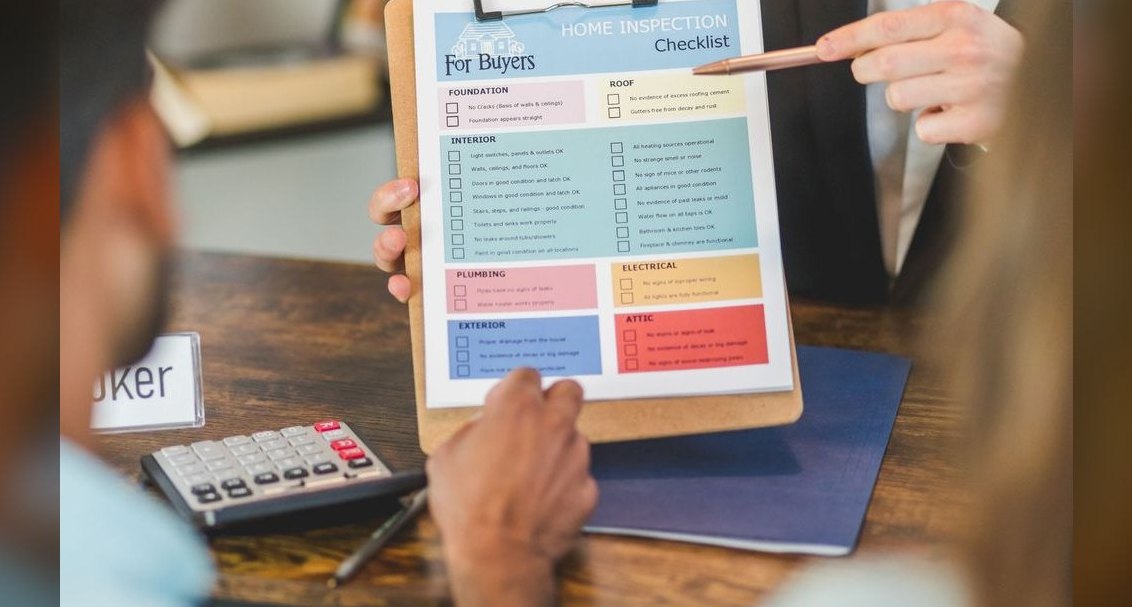 graphicDeal Inspection Flow
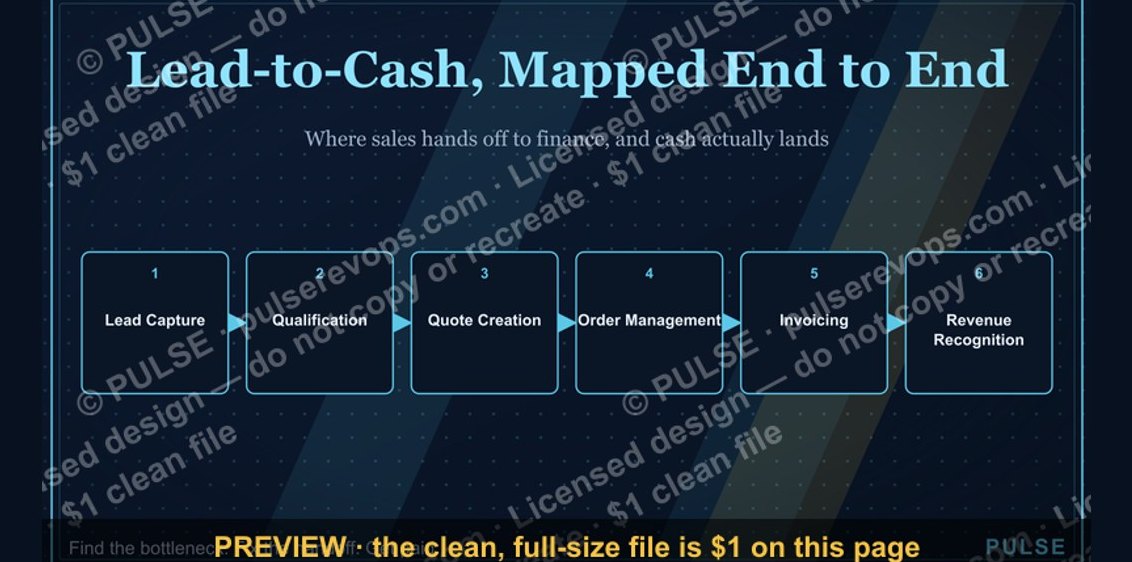 graphicLead-to-Cash Process Map
 graphicCustomer Onboarding Flow
 graphicDiscovery Call Flow Diagram
 graphic5 Stages of a Healthy Pipeline — Infographic
 graphicPLG Conversion Funnel
 graphic“Never give without a get.” — LinkedIn Banner
 graphicMEDDIC Qualification — Infographic
 graphicRenewal Risk Decision Tree