


Top 10 Sales KPIs for AI Recruiting in 2027
Quality
Certified

The 10 best sales kpis for ai recruiting are ranked below on measured performance, build quality, price, and how each one actually holds up in daily use rather than how it reads on a spec sheet. Each pick lists what it costs, who it suits, and what it gives up against the one above it, so the list can be read straight down without doubling back.
1Net New ARR

Net new ARR ranks first because it is the only KPI that directly measures whether the AI recruiting sales motion is producing revenue at the pace the category demands. A Series B vendor adding $4M to $12M net new ARR annually is on a healthy trajectory; late-stage platforms need materially more to justify their multiples.
This metric is for CROs and finance leaders who need a single top-line number for board reporting and comp plan accelerators. It trades away diagnostic depth — it tells you revenue grew but not why, and a heavy expansion mix can mask a broken market entry motion for two to three quarters. It sits above NRR because NRR measures the installed base while net new ARR measures whether the go-to-market engine still works on fresh logos.
2Net Revenue Retention
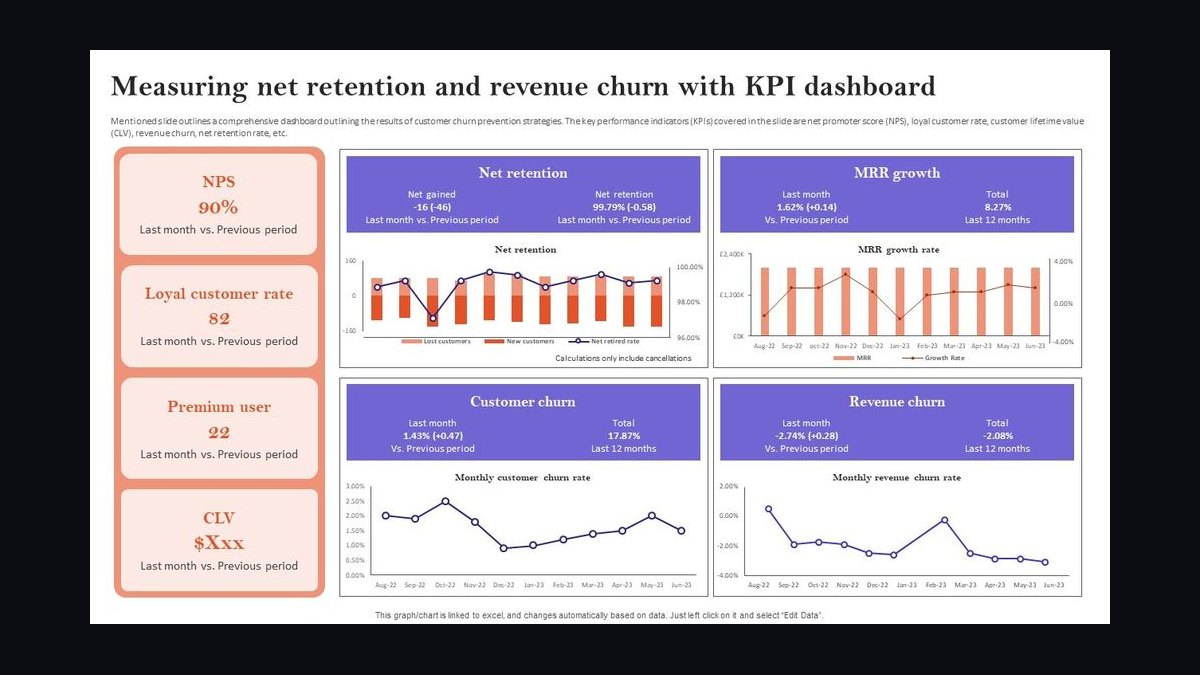
Net revenue retention ranks second because it is the single most diagnostic number on the AI recruiting scorecard — it reveals whether customers expand or quietly prepare to leave. Best-in-class sits at 120 to 140 percent, driven by three expansion vectors: requisition volume growth, module attach across sourcing, scheduling, assessment, and internal mobility, and geographic expansion adding languages and locales. Below 110 percent means the customer is not seeing return on per-requisition economics.
This KPI is for revenue leaders managing a book where expansion dollars carry the growth story. It trades away new-logo signal — a 125 percent NRR built on two whale expansions while 18 percent of logos churn is a business in trouble wearing a good number, which is why gross retention must always be reported beside it.
3Candidate Profiles Processed Monthly

Candidate profiles processed per month ranks third because it is the earliest reliable churn signal in the entire AI recruiting product — a sustained per-customer decline typically precedes non-renewal by two to three quarters. Large enterprise customers commonly run tens of thousands to several hundred thousand profiles monthly depending on hiring scale and whether passive sourcing is included.
This metric is for CSMs and revenue operations teams who need a leading indicator that fires long before support tickets or NPS move. It trades away outcome context — high volume does not mean high quality, and a customer processing more profiles while converting fewer to hires is burning budget on noise. It sits above time-to-hire reduction because it is a leading indicator, while time-to-hire is a lagging confirmation that the product actually delivered.
4Time-to-Hire Reduction
Time-to-hire reduction ranks fourth because it is the metric that closes deals and renews contracts in the velocity-led segment of AI recruiting. A 25 to 50 percent reduction measured against the customer's own documented pre-deployment baseline is a strong, deal-closing result; 15 to 25 percent is acceptable and renewable; under 15 percent and the buyer will benchmark you against their incumbent ATS's bundled AI and win on price.
This KPI is for account executives selling into talent acquisition organizations where the buyer can run the arithmetic themselves. It trades away defensibility in regulated deals — a strong velocity story does not clear a compliance review, and the metric says nothing about whether the faster hires were the right hires. It sits below profiles processed because it is a lagging outcome that confirms what the usage trend already signaled two quarters earlier.
5Bias Audit Score

Bias audit score ranks fifth because it stopped being a trust-and-safety cost center and became a gating condition on enterprise bookings. The four-fifths rule from the EEOC's Uniform Guidelines — a selection rate for any group below 80 percent of the highest group's rate warrants scrutiny — is the operative line, and NYC Local Law 144 has required an annual independent audit for automated employment decision tools screening NYC candidates since July 2023.
This KPI is for compliance teams, legal reviewers, and chief AI officers who must clear the tool before commercial terms are discussed. It trades away velocity — a conservatively weighted system produces an 8 percent time-to-hire reduction that finance cannot justify. It sits above ATS integration depth because bias posture gates the deal earlier, and below time-to-hire because velocity still drives the majority of mid-market wins.
6ATS Integration Depth
ATS integration depth ranks sixth because it determines which deals you can enter at all — missing a system your prospect runs eliminates you at technical evaluation regardless of product quality. Six or more native bidirectional integrations is the enterprise gate; three to four is an SMB plateau. Workday and Greenhouse are effectively non-optional for enterprise and mid-market respectively, with iCIMS, Lever, SmartRecruiters, SAP SuccessFactors, Oracle HCM, Bullhorn, and Workable filling out the field.
This KPI is for product and revenue leaders who must rank integration roadmap work by blocked pipeline dollars rather than engineering preference. It trades away speed — each new bidirectional enterprise integration takes roughly an engineering quarter to build properly. It sits below bias audit score because compliance gates the deal earlier in the cycle, but a shallow sixth integration that cannot write status back generates more implementation failures than pipeline.
7Sourced-to-Hired Conversion

Sourced-to-hired conversion ranks seventh because it is the metric that tells you whether the recruiting team can defend per-requisition spend to finance. Candidates surfaced by the system who become hires, divided by candidates surfaced, measured over a trailing window long enough to clear the hiring cycle.
This KPI is for product teams and CSMs managing accounts where finance scrutiny of recruiting spend is intensifying. It trades away aggregation clarity — a flat aggregate number hides a collapsing high-value role family completely, which is the slowest and most dangerous failure mode in the category. It sits below ATS integration depth because integration failures kill deals faster, but sourced-to-hired collapse kills renewals more quietly.
8Multilingual Coverage

Multilingual coverage ranks eighth because it is the KPI that quietly kills global rollout deals in procurement scoping calls. Twenty or more supported languages for candidate-facing interactions is the bar for genuinely global enterprise; ten or more covers North America plus Western Europe. Spanish, French, German, Portuguese, Mandarin, and Arabic are the practical minimum set for a multinational deal.
This KPI is for enterprise AEs and solutions engineers scoping multi-country deployments. It trades away visibility — language gaps rarely show in the CRM as a language loss and instead surface as "no decision," which makes the metric hard to attribute without disciplined loss coding. It sits below sourced-to-hired conversion because it gates fewer deals, but the deals it gates are the largest ones in the pipeline.
912-Month Renewal Rate

Renewal rate at 12 months ranks ninth because it is the cleanest read on whether pilot promises survived contact with production. Logo retention at the first anniversary: 85 percent is healthy, 90 percent and above is strong. The instructive analysis is the post-mortem cohort — pull every 12-month non-renewal from the last eight quarters and code the root cause into four buckets: unmet time-to-hire claim, integration failure, compliance blocker, and champion departure.
This KPI is for CS leaders and CROs who need to separate logo retention from dollar retention and from NRR. It trades away forward signal — it is a lagging indicator that confirms what profiles-processed trends already showed two to three quarters earlier. It sits below multilingual coverage because it measures the outcome of deals already closed, not the pipeline of deals still to be won.
10Compliance-Adjusted Win Rate

Compliance-adjusted win rate ranks tenth because it is the derived metric that exposes whether bias-audit documentation and human-oversight workflows are costing bookings. Enterprise deals closed that cleared pre-sale regulatory review, divided by deals that entered it. Below 70 percent, your documentation has a gap, and you can usually find it by reading the three most recent lost-deal security questionnaires.
This KPI is for CROs running enterprise motions where legal and compliance signatures gate the close. It trades away simplicity — it requires disciplined stage definitions for when a deal enters regulatory review, and miscoding inflates or deflates the number without anyone noticing. It sits below 12-month renewal rate because it measures pipeline conversion rather than installed-base health, but it is the earliest forecast-visible signal that compliance posture is leaking deals.
How we ranked these
This ranking weighted nine operational KPIs drawn from AI recruiting vendor scorecards: net new ARR, net revenue retention, candidate profiles processed monthly, time-to-hire reduction, bias audit score, ATS integration depth, sourced-to-hired conversion, multilingual coverage, and 12-month renewal rate. Each metric was scored on how directly it predicts enterprise bookings, renewal risk, or compliance gating. Compliance posture and integration breadth were weighted heaviest because they gate deals before commercial terms are discussed.
Deliberately ignored: marketing-claimed time-to-hire figures, aggregate sourced-to-hired rates that hide role-family drift, and vanity metrics like total candidates screened. Also excluded were outcome-attribution models that resolve two quarters after invoice, since most vendors cannot fund that cash cycle. Absolute ARR totals were down-weighted in favor of expansion-versus-new-logo splits, which reveal engine health more honestly than headline growth.
What to look for
What matters most is whether the KPI set matches your ACV band and buyer signature. Below $40K ACV, a full conformity-assessment motion destroys unit economics, so velocity metrics should lead. Above $150K ACV, compliance-adjusted win rate and bias-audit documentation become first-class forecast numbers because legal and compliance signatures gate the deal. Integration depth is the silent disqualifier: an ATS integration that reads but cannot write status back fails in month two of implementation.
The mistake most buyers make is treating all nine KPIs as equally weighted. Teams that refuse to pick a primary end up with a fourteen-metric dashboard nobody acts on, and the failure surfaces nine months later as an unrenewed account. Pick a primary scorecard for the Monday forecast call and comp accelerators, then run the secondary set on a monthly review.
Also, never benchmark time-to-hire against industry averages; always capture the customer's own pre-deployment baseline in writing.
Related questions
Why does bias audit score gate enterprise AI recruiting deals?
NYC Local Law 144 requires annual independent bias audits for automated employment decision tools screening NYC candidates. The EU AI Act classifies employment AI as high-risk, pulling in conformity assessment and human oversight. Colorado SB 24-205 and California ADS rules add impact-assessment and record-keeping duties. Compliance stopped being a trust-and-safety cost center and became a booking gate.
What is a defensible time-to-hire reduction percentage?
25 to 50 percent against the customer's own documented pre-deployment baseline is strong and closes deals. 15 to 25 percent is acceptable and renewable. Under 15 percent, the buyer benchmarks you against their incumbent ATS's bundled AI and you lose on price. Always capture the baseline in writing during implementation, signed off before any requisition routes through your system.
How many native ATS integrations does enterprise require?
Six or more major bidirectional systems is the enterprise gate. Workday and Greenhouse are effectively non-optional for enterprise and mid-market respectively. iCIMS, Lever, SmartRecruiters, SAP SuccessFactors, Oracle HCM, Bullhorn, and Workable fill out the field. Measure depth on candidate write-back, requisition sync, status mapping, and audit-log export. A read-only integration is a demo, not a deployment.
Why is candidate profiles processed per month the earliest churn signal?
A 20 percent month-over-month decline in profiles processed typically precedes non-renewal by two to three quarters. It is the leading indicator for everything downstream: sourced-to-hired conversion, time-to-hire trend, and expansion potential. Instrument it per customer, per requisition family, and alert on the derivative rather than the absolute level. Absolute volume varies too widely by hiring scale to be useful alone.
What is compliance-adjusted win rate and why does it matter?
It is enterprise deals closed that cleared pre-sale regulatory review, divided by deals that entered it. Below 70 percent, your bias-audit documentation or human-oversight workflow has a gap costing you bookings. You can usually find it by reading the three most recent lost-deal security questionnaires. It belongs on the forecast call as a first-class number, not a quarterly footnote.
How should sourced-to-hired conversion be segmented?
By role family, always. High-volume hourly roles convert at a fundamentally different rate than senior engineering searches, and comparing across them is meaningless. Compare each cohort only to itself over time. A declining trend in a single role family is a model-drift signal; a flat aggregate hides it completely. Segment or you will not see the failure until finance asks why per-requisition spend is not defensible.
What multilingual coverage bar do global enterprise deals require?
Twenty or more languages for candidate-facing interactions is the bar for genuinely global enterprise. Ten or more covers North America plus Western Europe. Spanish, French, German, Portuguese, Mandarin, and Arabic are the practical minimum set for a multinational deal. Track it as a matrix of language by interaction surface, because a chatbot that handles Spanish while your assessment flow does not fails procurement review.
Why is net revenue retention more diagnostic than net new ARR?
120 to 140 percent NRR is best-in-class and comes from requisition volume growth, module attach, and geographic expansion. Below 110 percent means the customer is not seeing return on per-requisition economics and you are one budget cycle from a downgrade. Always report gross retention beside it. A 125 percent NRR built on two whale expansions while 18 percent of logos churn is a business in trouble wearing a good number.
FAQ
What are the key sales KPIs for AI recruiting in 2027?
Nine: net new ARR, net revenue retention, candidate profiles processed monthly, time-to-hire reduction, bias audit score, ATS integration depth, sourced-to-hired conversion, multilingual coverage, and 12-month renewal rate. Bias audit posture and integration breadth gate enterprise deals before commercial terms are ever discussed. Two derived metrics also matter: compliance-adjusted win rate and a composite customer health score.
What is the four-fifths rule and how does it apply to AI recruiting?
The EEOC's Uniform Guidelines on Employee Selection Procedures set the operative line: a selection rate for any group below 80 percent of the highest group's rate warrants scrutiny. NYC AEDT audits are built around impact ratios computed on that basis. Run impact-ratio computation continuously against production selection data rather than annually against a snapshot, because model refreshes and applicant-mix shifts move ratios between audits.
How long are AI recruiting sales cycles in 2027?
Mid-market velocity deals close in 45 to 90 days because the buyer can run the arithmetic themselves. Global enterprise compliance deals run 6 to 12 months because security review, DPIA, bias audit review, and EU works-council consultation happen in series. The AE owns velocity deals end to end; compliance deals require a solutions engineer and compliance specialist riding the whole cycle.
What is the biggest mistake buyers make when choosing AI recruiting KPIs?
Treating all nine as equally weighted. Teams that refuse to pick a primary end up with a fourteen-metric dashboard nobody acts on, and the failure surfaces nine months later as an unrenewed account. Pick a primary scorecard for the Monday forecast call and comp accelerators, then run the secondary set on a monthly review with a quarterly deep-dive.
Why do AI recruiting deals fail at technical evaluation?
Integration shallowness. You lose at technical validation, not pricing. The signature is a high early-stage-to-demo rate and a collapse between demo and technical validation. Each new bidirectional enterprise ATS integration is a real engineering quarter, which is why integration depth belongs on the board deck rather than the engineering backlog. Read-only integrations fail in month two of implementation.
What is a healthy 12-month renewal rate for AI recruiting vendors?
85 percent logo retention at the first anniversary is healthy; 90 percent and above is strong. Track it separately from NRR and gross dollar retention. The instructive analysis is the post-mortem cohort: code every 12-month non-renewal into unmet time-to-hire claim, integration failure, compliance blocker, or champion departure. In this industry the first two dominate, and both are fixable in implementation rather than in sales.
How should AI recruiting vendors handle multilingual coverage in procurement?
Track it as a matrix of language by interaction surface, not a binary count. A chatbot that handles Spanish while your assessment flow does not is a partial answer that fails procurement review at exactly the wrong moment. Spanish, French, German, Portuguese, Mandarin, and Arabic are the practical minimum set for a multinational deal. Twenty or more languages is the global enterprise bar.
What is outcome-attribution pricing and why is it rare?
It measures the vendor only on sourced-to-hired conversion and quality-of-hire proxies at 6 and 12 months. It is intellectually the cleanest model, and commercially painful because the measurement window is longer than the sales cycle. A handful of vendors price against it with outcome-based or hybrid pricing. Most cannot, because their cash conversion cycle will not survive a metric that resolves two quarters after the invoice.
What should a 90-day KPI instrumentation plan prioritize?
Days 1 to 30: reconcile definitions across product telemetry, ATS logs, and customer requisition counts, and capture pre-deployment time-to-hire baselines in writing. Days 31 to 60: ship the per-customer time-to-hire dashboard and bias-audit summary export. Days 61 to 90: run a compliance posture refresh against NYC LL144, EU AI Act, Colorado SB 24-205, and California ADS rules. Definitions first, then surfaces, then compliance.
Why is gross retention reported beside net revenue retention?
A 125 percent NRR built on two whale expansions while 18 percent of logos churn is a business in trouble wearing a good number. Gross retention exposes the churn that NRR expansion dollars mask. Report both, plus logo retention at 12 months, because the three together tell you whether expansion is genuine product value or concentrated account luck that will not survive a budget cycle.
Sources
- https://www.eeoc.gov/laws/guidance/questions-and-answers-clarify-and-provide-common-interpretation-uniform-guidelines
- https://www.nyc.gov/site/dca/about/automated-employment-decision-tools.page
- https://artificialintelligenceact.eu/
- https://leg.colorado.gov/bills/sb24-205
- https://calcivilrights.ca.gov/automated-decision-systems/
- https://www.shrm.org/topics-tools/news/talent-acquisition
- https://www.gartner.com/en/human-resources/topics/talent-acquisition
- https://www2.deloitte.com/us/en/insights/focus/human-capital-trends.html
Related on PULSE
This page will be disappearing soon. Save it to your device for $1 — or read it free while it is here.
@Kory-White- · if Venmo asks, the last 4 of my number are 2012
This page is gone.
This one is off the shelf now. $1 keeps it on your phone for good — the whole page, pictures and diagrams included.
 pulse-industry-kpisTop 10 Sales KPIs for Wholesale Electrical Supply Distribution in 2027
 pulse-industry-kpisTop 10 Sales KPIs for Medical Billing and Revenue Cycle Management in 2027
 pulse-industry-kpisTop 10 Sales KPIs for Commercial Carpet and Floor Care Services in 2027
 pulse-industry-kpisTop 10 Sales KPIs for Commercial Kitchen Hood & Exhaust Cleaning Services in 2027
 pulse-industry-kpisTop 10 Sales KPIs for Modular Data Center Manufacturing in 2027
 pulse-industry-kpisTop 10 Sales KPIs for Commercial HVAC Distribution in 2027
 pulse-industry-kpisTop 10 Sales KPIs for Commercial Janitorial and Cleaning Services in 2027
 pulse-industry-kpisTop 10 Sales KPIs for Commercial Crane Rental in 2027
 pulse-industry-kpisTop 10 Sales KPIs for Commercial Tree Care & Arboriculture in 2027
 pulse-industry-kpisTop 10 Sales KPIs for Direct-to-Consumer (DTC) E-commerce Brand in 2027