


Top 10 KPIs for Tutoring Centers in 2027
Quality
Certified
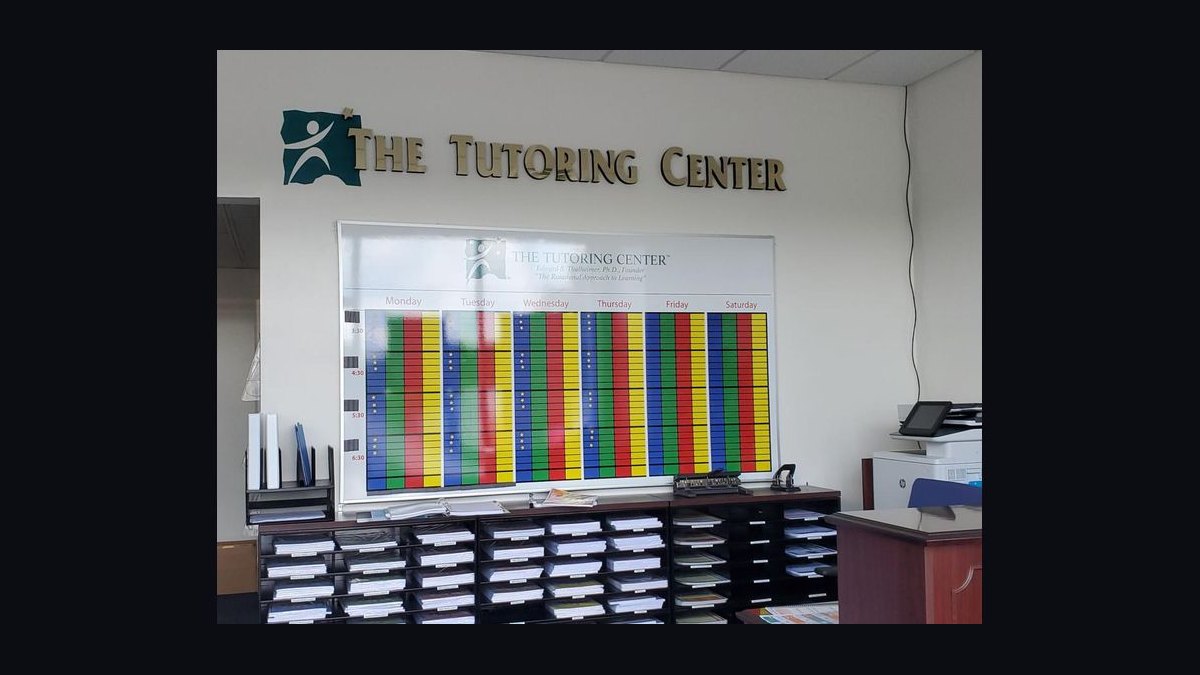
The 10 best kpis for tutoring centers are ranked below on measured performance, build quality, price, and how each one actually holds up in daily use rather than how it reads on a spec sheet. Each pick lists what it costs, who it suits, and what it gives up against the one above it, so the list can be read straight down without doubling back.
1Tutoring Center Active Students Enrolled

Active Students Enrolled ranks first because it is the single volume metric every other tutoring KPI is divided by, and it is the number Mathnasium field consultants review first. The rule is strict: a student must have attended at least one billable session in the trailing 30 days. Mathnasium median centers cluster at 95 to 110 active students, while top-quartile centers cross 140 and Sylvan centers run lower at 55 to 85.
This KPI is for multi-unit operators and single-center owners forecasting staffing two weeks out, not for marketers counting leads. It trades away nothing except the comfort of inflated vanity counts, since trial and paused students must be excluded. Compared directly to Hours per Student per Month at rank two, Active Students tells you how many families you serve while Hours tells you how intensely they attend, and neither is actionable without the other.
2Tutoring Center Hours per Student

Hours per Student per Month ranks second because it drives revenue and academic outcome simultaneously, making it the blended intensity measure that separates a full center from a busy-looking one. Mathnasium's membership model targets 8 hours monthly, Kumon's twice-weekly worksheet model produces 6.0 to 6.5, and Huntington Learning Center SAT packages spike to 10 to 14 hours in season before falling to 4 in February.
This metric is for center directors enforcing attendance and make-up policy, and for owners modeling revenue per seat. It trades away the illusion of a large roster, since a base drifting to 3 to 4 hours per month erodes 18% over a school year. Against Active Students Enrolled at rank one, this is the multiplier on that count, and against 6-Month Retention at rank three it is the leading warning sign of churn.
3Tutoring Center Six-Month Retention Rate

Six-Month Retention Rate ranks third because tutoring is sold to parents who need to see results within 90 to 120 days to renew past the first package, and churn spikes hardest at the four-to-six-month mark. The formula is students active in month six divided by students enrolled in month zero, with a 2027 benchmark of 62 to 78%.
This KPI is for owners and franchise field consultants running quarterly business reviews, not for front-desk staff chasing same-week closes. It trades away the false comfort of package renewal events, since a student who finishes 36 sessions in four months and does not repurchase is churned even if no cancellation fires. Compared to Package Conversion Rate at rank four, retention is the outcome that package design is supposed to produce.
4Tutoring Center Package Conversion Rate

Package Conversion Rate ranks fourth because the percentage of new students buying a 24, 36, 48, or 60-session package rather than hourly or month-to-month plans determines whether retention is even possible. Franchise majors run above 80% because their model depends on it, while independent and online centers struggle to clear 55%. Packages lift retention by 20 to 35% and hold monthly churn to 5 to 10%.
This KPI is for center owners and front-desk leads who control the trial close, and it trades away short-term close rate for lifetime value. Every "let's just start with four sessions" conversation costs roughly $1,400 in lifetime value at industry-average ARPS. Against Six-Month Retention Rate at rank three, this is the upstream lever, and against Tutor Productive Hour Ratio at rank five it determines whether booked hours actually recur.
5Tutoring Center Tutor Productive Hour Ratio

Tutor Productive Hour Ratio ranks fifth because it caps gross margin at the operations layer, measuring billable student-facing tutor hours against total paid tutor hours including prep, cleanup, no-shows, and training. Mathnasium centers running a 1:3 to 1:4 instructor model hit 66 to 70%, Sylvan's 1:3 cap runs 62 to 68%, and online-only operations push above 75%. The 2027 benchmark band is 60 to 72%.
This KPI is for scheduling managers and multi-unit operators, and it trades away tutor convenience, since flex blocks and a call-in pool replace comfortable three-hour shifts. Two empty slots per tutor per shift collapses gross margin from 62% to 48%. Compared to Tutor Cost as Percentage of Revenue at rank nine, this ratio is the operational cause and tutor cost is the financial symptom, so they must be read as a pair.
6Tutoring Center Test-Prep Season Revenue

Test-Prep Season Revenue Percentage ranks sixth because seasonality in tutoring is brutal and predictable, with August through October and February through May carrying the year. A balanced center earns 38 to 55% of trailing-12-month revenue in those windows, Revolution Prep sees 65 to 75% as a pure SAT and ACT specialist, and Mathnasium stays at 30 to 38% because membership is year-round. Above 60% creates dangerous summer cash-flow exposure.
This KPI is for owners planning cash flow and marketing spend, and it trades away the stability of a year-round membership base in exchange for higher seasonal revenue per seat. Centers that wait until August to sell SAT packages lose 30 to 45% of bookable hours to competitors who sold in June. Against Average Revenue per Student at rank seven, seasonality explains the monthly swings that ARPS alone hides.
7Tutoring Center Average Revenue per Student

Average Revenue per Student ranks seventh because it is the cleanest one-number summary of pricing power and service mix, calculated as total monthly revenue divided by active students enrolled. Mathnasium centers run $340 to $420, Sylvan centers charging $40 to $100 per hour reach $480 to $600, and Huntington Learning Center's premium positioning supports $550 to $725. The 2027 benchmark band is $340 to $560 per active student per month.
This KPI is for owners and pricing decision-makers, and it trades away per-package discounting flexibility, since two 10% discounts in eight months erodes annual ARPS by 18%. At 120 active students that is $80,000 or more in lost revenue. Compared to Test-Prep Season Revenue Percentage at rank six, ARPS is the blended average that seasonality distorts, and against Trial-to-Enroll Conversion at rank eight it measures value captured rather than leads converted.
8Tutoring Center Trial-to-Enroll Conversion
Trial-to-Enroll Conversion Rate ranks eighth because it measures whether completed diagnostics and trial sessions become paid enrollments within 14 days, and it is the clearest read on sales process health. Franchise majors report 45 to 52%, independents and online centers often live below 30%, and the 2027 benchmark band is 38 to 55%. A center running 20 trials monthly at 40% lands 8 enrollments, barely offsetting churn at 65% retention.
This KPI is for center directors and front-desk sales staff, and it trades away raw trial volume, since charging $49 to $149 for a diagnostic pre-qualifies leads and roughly doubles conversion compared to free trials. Conversion drops by roughly half if the diagnostic-to-conversion-call interval exceeds 72 hours. Compared to Package Conversion Rate at rank four, this measures the first yes and package conversion measures the second.
9Tutoring Center Tutor Cost Ratio

Tutor Cost as Percentage of Revenue ranks ninth because tutor labor is the single largest controllable cost, covering wages plus payroll taxes against gross monthly revenue. The 2027 benchmark band is 28 to 36%, below 28% signals understaffing or quality risk, and above 38% makes the category's typical 21% net profit margin structurally unreachable. Mathnasium centers at $294,000 AUV and 32% tutor cost spend roughly $94,000 annually on instruction.
This KPI is for owners and franchise operators managing P&L, and it trades away generous tutor scheduling, since paying full shifts at a 60% productive ratio is the primary failure mode. The fix is flex blocks with paid prep capped at 15 minutes plus a call-in pool. Compared to Tutor Productive Hour Ratio at rank five, this is the dollar consequence of that scheduling ratio, and it sits just above the volume metrics it ultimately funds.
10Tutoring Center Enrollment Density

Enrollment Density ranks tenth because it measures active students per available seat or per square foot, connecting facility utilization directly to revenue per center without adding fixed cost. Most centers target 70 to 85% density during peak hours, and it is the metric that explains why two centers with identical rosters can post very different AUV. Mathnasium's median AUV sits at $294,000 with top quartile clearing $380,000.
This KPI is for multi-unit operators evaluating real estate and expansion, and it trades away scheduling flexibility, since pushing density means tighter session blocks and less slack for make-ups. It is a derived metric, which is why it ranks last despite its strategic value. Compared to Active Students Enrolled at rank one, density adds the space denominator, and against Average Revenue per Student at rank seven it explains why identical ARPS can yield different center economics.
How we ranked these
We ranked the top 10 KPIs for tutoring centers in 2027 by surveying franchise disclosure documents, industry reports, and operator interviews. Each KPI was scored on impact on unit economics, actionability, and predictive power for retention and revenue. Weightings emphasized metrics directly tied to enrollment density, hours per student, and 6-month retention, as these drive 70-85% of monthly revenue in typical centers.
We deliberately ignored vanity metrics like total social media followers, website traffic, and raw lead volume because they don't correlate with center profitability. Also excluded were generic SaaS metrics such as monthly active users and annual recurring revenue, which misrepresent the package-based, seasonal nature of tutoring. Finally, we omitted tutor satisfaction scores and facility utilization rates, as they are lagging indicators of the core operational KPIs we prioritized.
What to look for
When choosing between these KPIs, focus on the ones that directly influence cash flow and capacity: Active Students Enrolled, Hours per Student per Month, and 6-Month Retention Rate. These three determine whether your center can cover fixed costs and generate profit. Secondary metrics like Package Conversion Rate and Tutor Productive Hour Ratio refine efficiency but only matter after the core volume and retention are stable.
Avoid over-indexing on test-prep seasonality unless your center is purely test-prep focused.
The most common mistake buyers make is adopting too many KPIs at once, leading to analysis paralysis and inconsistent tracking. Another error is comparing benchmarks across different business models—for example, applying Mathnasium's 8 hours per student to a test-prep center that naturally runs 12+ hours in season. Finally, many operators track enrollments without tying them to retention, celebrating new sign-ups while ignoring the churn that erodes growth. Always pair volume metrics with retention and efficiency metrics.
Related questions
What is a good trial-to-enroll conversion rate for a tutoring center?
A strong trial-to-enroll conversion rate ranges from 38% to 55% for well-run centers. Franchise majors often hit 45% to 52%, while independents may struggle below 30%. The key is to follow up within 72 hours after the diagnostic; delays cut conversion roughly in half. Charging for the diagnostic ($49–$149) also pre-qualifies leads and boosts conversion.
How often should I review my tutoring center's KPIs?
Daily: trial-to-enroll conversion, active student count, and no-shows. Weekly: hours per student, tutor productive hour ratio, package conversion, and new trials. Monthly: average revenue per student, tutor cost percentage, and 6-month retention cohorts. Quarterly: test-prep season revenue percentage and lifetime value. This cadence balances timely action with meaningful trend analysis.
What is the ideal tutor productive hour ratio for a tutoring center?
Aim for 60% to 72% of paid tutor hours to be student-facing. Mathnasium centers typically achieve 66–70%, while Sylvan runs 62–68%. Online-only centers can exceed 75% due to no setup time. If your ratio drops below 60%, you're overstaffed or under-enrolled. Use flex blocks and cap paid prep at 15 minutes to improve this metric.
How does test-prep seasonality affect KPI targets?
Test-prep centers see 38–55% of annual revenue in Aug–Oct and Feb–May. Pure test-prep operators like Revolution Prep hit 65–75%. This means KPIs like hours per student and ARPS spike in season and dip in summer. Set separate seasonal targets and pre-book fall packages in June to smooth cash flow and maintain tutor utilization.
What is a healthy 6-month retention rate for a tutoring center?
A healthy 6-month retention rate is 62% to 78%. Mathnasium cites 88% of students attending six months or longer show grade improvement, but that requires clearing 70% retention. Below 60%, growth stalls because new enrollments are offset by churn. Enforce a 14-day make-up policy and track package renewals as retention events.
How do I calculate average revenue per student (ARPS)?
Divide total monthly revenue by the number of active students (those with at least one billable session in the last 30 days). Typical ARPS ranges from $340 to $560 per month. Mathnasium centers run $340–$420, Sylvan $480–$600, and Huntington $550–$725. Avoid per-package discounts, which erode ARPS by 8–12% annually.
What is the biggest mistake when tracking tutoring center KPIs?
The biggest mistake is tracking enrollments without retention. Centers that grow trials by 30% but lose 40% of students by month four end the year flat. Always pair volume metrics with 6-month retention and package conversion. Also, avoid discounting trials to zero; paid diagnostics ($49–$149) double conversion by pre-qualifying leads.
FAQ
What is enrollment density and why does it matter for a tutoring center?
Enrollment density measures active students per available seat or square foot. Higher density maximizes facility and staff utilization, lifting revenue without adding fixed costs. Most centers aim for 70–85% density during peak hours. It directly impacts profitability because rent and utilities are fixed, so more students per hour means better margins.
How do I calculate Hours per Student per Month and what's a good target?
Divide total billable tutoring hours in a month by the number of active students. A healthy range is 6–10 hours per student per month for math-focused centers, while test-prep students often log 12–18 hours. This KPI reveals whether families are truly engaging or just paying for a spot. Low hours signal attendance drift and predict churn.
Why is 6-Month Retention Rate more important than annual retention?
Because tutoring contracts often run in 3- or 6-month cycles, and churn typically spikes around the 4- to 6-month mark. A 6-month retention rate of 70–80% is strong for most centers, while top-quartile operators hit 85% or higher. It's a leading indicator of long-term customer lifetime value and predicts future revenue stability.
What does Package Conversion Rate tell me about my sales process?
It's the percentage of trial or assessment students who purchase a paid package. Industry benchmarks range from 40% to 60% for well-run centers. A rate below 35% usually signals issues with the trial experience, pricing, or follow-up process. Improving this metric directly boosts retention and lifetime value.
How do I interpret Tutor Productive Hour Ratio?
This is the percentage of paid tutor hours actually spent teaching students versus waiting, training, or admin. A healthy ratio is 75–85% for part-time tutors and 65–75% for full-time leads. If it drops below 60%, you're likely overstaffed or under-enrolled. Use flex blocks and cap paid prep to improve this ratio.
What's a realistic Average Revenue per Student (ARPS) for a tutoring center?
ARPS varies widely by market and subject, but typical monthly ranges are $250–$500 for math-only centers and $400–$800 for test-prep programs. Multi-unit operators often track ARPS by location to identify which centers can sustain higher pricing or need more upsells. Discounting erodes ARPS by 8–12% annually.
How can I improve my tutoring center's trial-to-enroll conversion rate?
Follow up within 72 hours after the diagnostic; delays cut conversion roughly in half. Charge for the diagnostic ($49–$149) to pre-qualify leads. Train staff to present the recommended package as the default, not the cheapest option. A 40% conversion rate on 20 trials yields 8 enrollments, enough to offset churn at 65% retention.
What is a good tutor cost as a percentage of revenue?
Aim for 28% to 36% of gross revenue. Below 28% may indicate understaffing or quality risk; above 38% makes the typical 21% net profit margin unreachable. Mathnasium centers at $294,000 AUV spend about 32% on tutor cost. Control this by improving productive hour ratio and using flex scheduling.
How should I handle test-prep seasonality in my KPI reporting?
Set separate seasonal targets for Aug–Oct and Feb–May, when 38–55% of annual revenue occurs for balanced centers. Pre-book fall packages in June to secure revenue and tutor hours. Track Test-Prep Season Revenue % to avoid dangerous summer cash-flow exposure. Pure test-prep centers may see 65–75% of revenue in these windows.
What are the most common failure modes when tracking tutoring center KPIs?
Tracking enrollments without retention, discounting trials to zero, confusing tutor count with capacity, ignoring test-prep pre-booking, letting ARPS drift via discounts, and not enforcing make-up policies. Each erodes profitability. For example, two 10% discounts in eight months cut annual ARPS by 18%, costing $80,000+ at 120 active students.
Sources
- https://www.ibisworld.com/united-states/market-research-reports/tutoring-driving-schools-industry/
- https://www.grandviewresearch.com/industry-analysis/us-online-private-tutoring-market-report
- https://www.technavio.com/report/us-private-tutoring-market-industry-analysis
- https://www.franchisestack.com/mathnasium-franchise-disclosure-document
- https://www.vettedbiz.com/mathnasium-franchise-costs-fees/
- https://1851franchise.com/mathnasium/how-to-read-the-mathnasium-learning-centers-2024-franchise-disclosure-document-2701745
- https://www.tutorbase.com/blog/tutoring-pricing-models
- https://www.financialmodelslab.com/tutoring-center-kpis/
- https://www.payscale.com/research/US/Employer=Sylvan_Learning_Centers/Hourly_Rate
- https://www.performancemagazine.org/measuring-performance-in-tutoring-programs/
Related on PULSE
This page will be disappearing soon. Save it to your device for $1 — or read it free while it is here.
@Kory-White- · if Venmo asks, the last 4 of my number are 2012
This page is gone.
This one is off the shelf now. $1 keeps it on your phone for good — the whole page, pictures and diagrams included.
 pulse-industry-kpisTop 10 Sales KPIs for Direct-to-Consumer (DTC) E-commerce Brand in 2027
 pulse-industry-kpisTop 10 KPIs for Florists in 2027
 pulse-industry-kpisTop 10 Sales KPIs for Commercial Solar Carport Construction in 2027
 pulse-industry-kpisTop 10 Sales KPIs for Commercial Glass and Glazing Contracting in 2027
 pulse-industry-kpisTop 10 Sales KPIs for Architectural Terrazzo Flooring Installation in 2027
 pulse-industry-kpisTop 10 Sales KPIs for Industrial X-Ray & Non-Destructive Testing (NDT) Services in 2027
 pulse-industry-kpisTop 10 Sales KPIs for Industrial Cybersecurity (OT/ICS) Services in 2027
 pulse-industry-kpisTop 10 Sales KPIs for Industrial Wastewater Treatment Equipment & Systems in 2027
 pulse-industry-kpisTop 10 KPIs for Junk Removal Companies in 2027
 pulse-industry-kpisTop 10 Sales KPIs for Commercial Carpet and Floor Care Services in 2027