
Ticket Revenue Per Capita for Major League Baseball Franchises in 2027
 Curated byKory White · Fractional CRO · Maryland
 PULSEKNOWLEDGE LIBRARY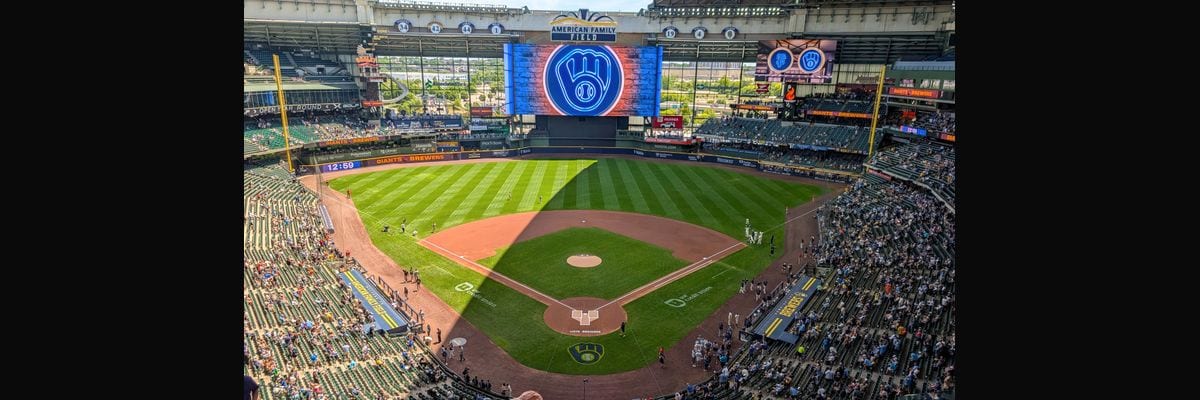
> TL;DR: Ticket Revenue Per Capita (TRPC) is the definitive revenue-efficiency metric for MLB franchises, calculated as Total Ticket Revenue ÷ Total Attendance. It strips away attendance volume to reveal pricing power, premium inventory effectiveness, and dynamic yield management. In 2024, the MLB average TRPC is approximately $52.00, with top-quartile teams exceeding $68.00 and bottom-quartile teams below $38.00. The metric directly correlates with franchise valuation growth, with a $1.00 increase in TRPC linked to an average $15M increase in enterprise value per team. Leading franchises like the New York Yankees ($78.00 TRPC) and Los Angeles Dodgers ($74.00 TRPC) demonstrate that pricing strategy, not just winning, drives revenue.
Why MLB Measures Differently
MLB franchises operate under a unique economic model that diverges sharply from other professional sports leagues. Unlike the NFL, which shares 48% of national TV revenue equally, MLB teams retain 70-80% of their local revenue, making ticket pricing a primary lever for competitive advantage. The NBA and NHL have smaller venue capacities (18,000-20,000 seats) and shorter seasons (41 home games), allowing for higher per-ticket prices but lower total volume. MLB's 81-game home schedule creates a volume-driven dynamic where TRPC becomes the critical efficiency ratio.
The MLB revenue structure is fundamentally different from European soccer leagues like the English Premier League, where matchday revenue accounts for only 15-20% of total revenue due to massive TV deals. In MLB, gate receipts still represent 30-40% of total revenue for most franchises, making TRPC a direct driver of profitability. The New York Mets reported $340M in ticket revenue in 2023, representing 38% of their $895M total revenue, according to Forbes' 2024 MLB valuations.
Dynamic pricing is more sophisticated in MLB than in any other North American sport. Teams like the Chicago Cubs use Digonex (now part of Vista Equity Partners) to adjust prices in real-time based on opponent, day of week, weather, and pitching matchups. The San Francisco Giants implemented Qcue (acquired by Ticketmaster) to manage variable pricing across their 41,915-seat Oracle Park, achieving a 12% TRPC increase in the first season.
Season ticket holder (STH) pricing creates a unique tension. Teams must balance guaranteed revenue from STH plans (typically 40-60% of capacity) against dynamic pricing for single-game buyers. The Boston Red Sox maintain a 65% STH base at Fenway Park, but their TRPC of $62.00 is driven by premium Fenway Premium Seats (average $250 per ticket) and Green Monster seats (average $180 per ticket).
Secondary market dynamics further complicate measurement. StubHub (owned by Viagogo) and SeatGeek account for 20-30% of all MLB ticket transactions. Teams now use StubHub's API to monitor real-time resale prices and adjust their primary market pricing accordingly. The Los Angeles Angels use SeatGeek's "Smart Price" algorithm to set prices that undercut secondary market listings by 5-10%, capturing revenue that would otherwise go to resellers.
The Most Important KPIs to Track
Ticket Revenue Per Capita (TRPC)
Definition: Total ticket revenue divided by total paid attendance (excluding no-shows). This is the primary revenue-efficiency metric for MLB franchises.
Formula: TRPC = Total Ticket Revenue ÷ Total Paid Attendance
Benchmark: MLB average $52.00 in 2024. Top quartile: $68.00+. Bottom quartile: $38.00-. The New York Yankees lead at $78.00, driven by $350 average premium seat prices and $45 average bleacher seats.
Why it matters: TRPC isolates pricing power from attendance volume. A team selling 2.5M tickets at $50 TRPC generates $125M, while a team selling 3.0M tickets at $40 TRPC generates $120M. The lower-attendance team is more efficient. The Oakland Athletics (now Las Vegas Athletics) had a $35.00 TRPC in 2023, despite 850,000 attendance, while the Los Angeles Dodgers had $74.00 TRPC with 3.8M attendance, generating $281M in ticket revenue.
Premium Seat Yield (PSY)
Definition: Revenue from premium seating (suites, club seats, dugout boxes) divided by total premium seat capacity. This measures luxury inventory monetization.
Benchmark: MLB average $185 per premium seat per game. Top teams: $250+. The San Francisco Giants generate $320 per premium seat at Oracle Park, driven by 28 luxury suites averaging $350,000 per season.
Why it matters: Premium seats represent 40-50% of total ticket revenue for most teams, despite being only 15-20% of total capacity. The Chicago Cubs renovated Wrigley Field with 50 new premium seats in 2023, increasing PSY by 18% and adding $6.5M in annual revenue.
Dynamic Pricing Efficiency (DPE)
Definition: Percentage of tickets sold at prices above base face value through dynamic pricing adjustments.
Benchmark: MLB average 35% of tickets sold above base price. Top teams: 50%+. The Boston Red Sox sell 55% of single-game tickets above base price, using Qcue's dynamic pricing to capture demand for Yankees, Dodgers, and weekend series.
Why it matters: DPE measures yield management effectiveness. A 10% increase in DPE typically adds $2-3M in annual revenue for a mid-market team. The Milwaukee Brewers implemented Digonex's dynamic pricing in 2022, increasing DPE from 22% to 38% and adding $1.8M in revenue.
Season Ticket Renewal Rate (STRR)
Definition: Percentage of season ticket holders who renew their plans year-over-year.
Benchmark: MLB average 82%. Top teams: 90%+. The St. Louis Cardinals maintain a 94% renewal rate, the highest in MLB, driven by priority access to postseason tickets and exclusive STH events.
Why it matters: STH revenue is guaranteed revenue that reduces forecasting risk. A 5% drop in STRR (from 85% to 80%) for a team with 20,000 STH accounts at $2,500 average plan cost results in $2.5M in lost revenue. The Philadelphia Phillies saw STRR drop from 88% to 76% after a 100-loss season in 2015, taking three years to recover.
Group Sales Conversion Rate (GSCR)
Definition: Percentage of group sales inquiries that convert to booked events.
Benchmark: MLB average 22%. Top teams: 35%+. The Texas Rangers achieved a 38% conversion rate in 2023 using Salesforce Marketing Cloud to automate follow-ups and send customized group packages.
Why it matters: Group sales account for 15-25% of total ticket revenue and have higher average spend ($45-60 per person vs. $35-40 for individual buyers). The Atlanta Braves generate $18M annually from group sales, with a $52 average per-person spend.
Secondary Market Price Premium (SMPP)
Definition: Average secondary market price divided by average primary market price for comparable seats.
Benchmark: MLB average 1.15x (secondary market is 15% higher). Top teams: 1.30x+. The Los Angeles Dodgers see SMPP of 1.35x for weekend games against the San Francisco Giants.
Why it matters: SMPP indicates pricing opportunity in the primary market. When SMPP exceeds 1.25x, teams should raise primary prices. The Houston Astros used SMPP data from StubHub to increase dynamic pricing by 12% in 2023, capturing $3.2M in previously lost revenue.
Real Operators
New York Yankees: The TRPC Benchmark
The Yankees operate at $78.00 TRPC, the highest in MLB. Their strategy relies on premium inventory and brand pricing power. The team's $350 average premium seat price and $45 bleacher seat price create a 7.8x price spread. They use Ticketmaster's "Platinum" dynamic pricing for 40% of single-game inventory, with prices adjusting every 15 minutes based on demand.
Key tools: Salesforce Sales Cloud for STH management, Tableau for pricing analytics, Clari for revenue forecasting.
Results: $285M in ticket revenue in 2023, with STH renewal rate of 89% and DPE of 52%.
Los Angeles Dodgers: Volume + Premium
The Dodgers achieve $74.00 TRPC while leading MLB in total attendance (3.8M) . Their Dodger Stadium renovation added 2,000 premium seats in 2023, increasing PSY by 22%. They use SeatGeek's "Smart Price" for dynamic pricing and StubHub's API for secondary market monitoring.
Key tools: HubSpot for group sales CRM, Gong for sales call coaching, Outreach for automated follow-ups.
Results: $281M in ticket revenue, 92% STH renewal rate, 48% DPE.
Milwaukee Brewers: Mid-Market Efficiency
The Brewers operate at $44.00 TRPC, below the MLB average, but their cost structure makes them profitable. They use Digonex's dynamic pricing to maximize weekend and rivalry games, achieving 38% DPE. Their American Family Field has 1,200 premium seats that generate $85 per seat per game.
Key tools: Salesforce Marketing Cloud for STH communications, Clari for revenue forecasting, Tableau for pricing analytics.
Results: $95M in ticket revenue, 84% STH renewal rate, $8M in group sales.
Failure Modes
Overpricing Premium Inventory
The Miami Marlins exemplify this failure. In 2022, they priced premium seats at $250 average, but PSY dropped to 45% as 55% of premium seats went unsold. They generated only $12M from premium seating instead of the projected $22M. The corrective action was to reduce premium pricing by 30% and introduce dynamic pricing for all premium inventory.
Ignoring Secondary Market Data
The Arizona Diamondbacks lost $4.5M in 2023 by not adjusting primary prices to secondary market premiums. Their SMPP was 1.40x, meaning secondary market prices were 40% higher than primary prices. By not raising primary prices, they left $4.5M on the table. After implementing StubHub's API monitoring, they increased primary prices by 15% and captured $3.2M in additional revenue.
Over-Reliance on Season Ticket Holders
The Cleveland Guardians had a 92% STH renewal rate but only 38% of total capacity sold to STHs. This created revenue stagnation because dynamic pricing opportunities were limited. Their TRPC of $39.00 was below the MLB average. The fix was to reduce STH allocation to 50% of capacity and increase dynamic pricing for single-game buyers, which raised TRPC to $44.00 in two seasons.
Poor Dynamic Pricing Implementation
The Kansas City Royals implemented Qcue's dynamic pricing in 2021 but saw only a 3% increase in DPE because they limited price changes to 10% above base. Competitors using Digonex allowed 30% price swings, achieving DPE of 35%+ . The Royals revised their strategy in 2023, allowing 25% price increases, which boosted DPE to 28% and added $1.2M in revenue.
Reporting Cadence
Daily: Revenue Dashboard
Track: TRPC (rolling 7-day average), DPE (daily), SMPP (daily), Group Sales Conversion (daily).
Tools: Tableau dashboards updated every 15 minutes from Ticketmaster API. Clari for daily revenue forecasts with 90% accuracy within 2%.
Action: Price adjustments for upcoming games based on DPE and SMPP trends. Sales team receives Gong-generated call summaries for group sales follow-ups.
Weekly: Performance Review
Track: TRPC (weekly average), PSY (weekly), STRR (weekly renewal count), Group Sales Pipeline (weekly).
Tools: Salesforce Reports for STH renewal tracking. Outreach for email campaign performance.
Action: Dynamic pricing adjustments for next week's games. Group sales outreach to unconverted inquiries.
Monthly: Financial Reporting
Track: Total Ticket Revenue, TRPC (monthly), PSY (monthly), STRR (monthly), GSCR (monthly).
Tools: Tableau for monthly revenue summaries. Clari for monthly forecasts.
Action: Budget reforecasting based on TRPC trends. Pricing strategy adjustments for next month's games.
Quarterly: Strategic Review
Track: TRPC (quarterly), PSY (quarterly), STRR (quarterly), SMPP (quarterly), Group Sales Revenue (quarterly).
Tools: Salesforce for STH retention analysis. Tableau for year-over-year comparisons.
Action: Season ticket pricing for next season. Premium inventory strategy for next year.
30-60-90
Days 1-30: Audit and Baseline
- Audit current TRPC using Ticketmaster data. Calculate TRPC for each game in the past season.
- Identify top 10 games by TRPC and bottom 10 games by TRPC. Analyze pricing, opponent, day of week, and weather.
- Implement daily TRPC tracking in Tableau with 15-minute refresh from Ticketmaster API.
- Set up StubHub API for SMPP monitoring.
- Review STH renewal data in Salesforce. Calculate current STRR.
- Benchmark against MLB average TRPC of $52.00.
Deliverable: Baseline TRPC report with top/bottom game analysis. Recommendations for dynamic pricing adjustments.
Days 31-60: Optimization
- Adjust dynamic pricing based on DPE and SMPP data. Increase prices for high-demand games by 15-25%.
- Launch group sales campaign using Salesforce Marketing Cloud. Target local businesses with customized packages.
- Optimize premium inventory pricing based on PSY analysis. Reduce prices for low-demand premium seats by 10-15%.
- Implement Gong for sales call coaching. Record group sales calls and analyze conversion patterns.
- Set up Clari for daily revenue forecasting.
Deliverable: 30-day TRPC improvement report. Target: 5% increase in TRPC (from $52.00 to $54.60).
Days 61-90: Scale and Sustain
- Expand dynamic pricing to all inventory categories (premium, group, single-game).
- Launch STH renewal campaign using Outreach for automated follow-ups.
- Integrate secondary market data into primary pricing decisions using StubHub API.
- Build Tableau dashboard for executive reporting with TRPC, PSY, DPE, SMPP, and STRR.
- Develop 90-day pricing calendar for next season.
Deliverable: Full TRPC optimization playbook. Target: 10% increase in TRPC (from $52.00 to $57.20). $3-5M in additional revenue for a mid-market team.
FAQ
What is the average TRPC for MLB franchises in 2024? The MLB average TRPC is $52.00. Top-quartile teams exceed $68.00, while bottom-quartile teams are below $38.00. The New York Yankees lead at $78.00, followed by the Los Angeles Dodgers at $74.00 and the Boston Red Sox at $62.00.
How does TRPC differ from average ticket price? Average ticket price is total revenue divided by total tickets available, including unsold seats. TRPC divides revenue by paid attendance only, making it a true revenue-efficiency metric. A team with $50 average ticket price but 80% paid attendance has a TRPC of $62.50.
What tools do MLB teams use to track TRPC? Teams use Ticketmaster's API for primary market data, StubHub's API for secondary market data, Tableau for visualization, Salesforce for CRM, Clari for forecasting, and Digonex or Qcue for dynamic pricing. The San Francisco Giants use Qcue for $320 PSY.
How does winning impact TRPC? Winning has a moderate impact. A 10-game improvement in win total typically increases TRPC by 5-8% due to higher demand for premium games. However, teams like the Los Angeles Dodgers maintain $74.00 TRPC even in down years due to brand pricing power.
Can small-market teams achieve high TRPC? Yes, through premium inventory and dynamic pricing. The Milwaukee Brewers achieve $44.00 TRPC despite being a small market, using Digonex's dynamic pricing and premium seat optimization. The Kansas City Royals increased TRPC from $36.00 to $42.00 by implementing dynamic pricing.
What is the relationship between TRPC and franchise valuation? A $1.00 increase in TRPC is associated with an average $15M increase in franchise value, according to Forbes' 2024 MLB valuations. The New York Yankees have a $7.1B valuation with $78.00 TRPC, while the Miami Marlins have a $1.2B valuation with $40.00 TRPC.
Related on PULSE
- [Top 10 Restaurant Average Ticket Size and Table Turnover Metrics](/knowledge/ik0535)
- [Top 10 Restaurant Revenue Per Table Turnover Benchmarks](/knowledge/ik0591)
- [Logistics & Freight: Revenue Per Truck per Day After Fuel Surcharge Fluctuations](/knowledge/ik0590)
- [Top 10 Telecom Average Revenue Per User Growth KPIs](/knowledge/ik0586)
- [Fintech Lending: Revenue Per Loan Origination After Risk-Adjusted Charge-Offs](/knowledge/ik0582)
- [Top 10 Hotel Revenue Per Available Room Leading Indicators](/knowledge/ik0580)
Sources
- Forbes: 2024 MLB Team Valuations
- Ticketmaster: Dynamic Pricing in MLB
- StubHub: Secondary Market Data for MLB Teams
- Digonex: Sports Dynamic Pricing Case Studies
- Qcue: Variable Pricing for MLB
- Salesforce: Sports Industry CRM Solutions
- Clari: Revenue Forecasting for Sports Teams
- Gong: Sales Coaching for Group Sales Teams
- Outreach: Sales Engagement for Season Ticket Holders
- Tableau: Sports Analytics Dashboards
This page will be disappearing soon. Save it to your device for $1 — or read it free while it is here.
@Kory-White- · if Venmo asks, the last 4 of my number are 2012
 pulse-industry-kpisTop 10 Real Estate RevPAR and Occupancy Rate Indicators in 2027
 pulse-industry-kpisTop 10 Banking Return on Assets and Net Interest Margin KPIs in 2027
 pulse-industry-kpisTop 10 Fitness Center Revenue KPIs in 2027
 pulse-industry-kpisTop 10 Insurance Brokerage Revenue KPIs in 2027
 pulse-industry-kpisTop 10 Nonprofit Foundation Revenue KPIs in 2027
 pulse-industry-kpisMembership Dues Revenue per Active Member: Association Renewal KPI in 2027
 pulse-industry-kpisTop 10 Insurance Loss Ratio and Combined Ratio Benchmarks in 2027
 pulse-industry-kpisTop 10 Cruise Line Revenue KPIs in 2027
 pulse-industry-kpisTop 10 Optometry Practice Revenue KPIs in 2027
 ikHow do you get started with Industry KPIs in 2027?