
Top 10 Pharmacy Retail Revenue KPIs
 Curated byKory White · Fractional CRO · Maryland
 PULSEKNOWLEDGE LIBRARY
Quality
Certified

The 10 best pharmacy retail revenue kpis are ranked below on measured performance, build quality, price, and how each one actually holds up in daily use rather than how it reads on a spec sheet. Each pick lists what it costs, who it suits, and what it gives up against the one above it, so the list can be read straight down without doubling back.
1. Net Profit per Prescription

Net Profit per Prescription ranks first because it is the ultimate health check for a pharmacy, combining margin, volume, and cost efficiency into a single, decisive figure. Independent pharmacies average $4.00 to $8.00 net profit per script, while chains like CVS and Walgreens often report $2.00 to $5.00 due to higher overhead. This KPI directly reveals if a pharmacy is being squeezed by PBMs, as high revenue with low net profit per script signals reimbursement issues.
This metric is for pharmacy owners, CFOs, and financial analysts who need a true bottom-line view of operations. It trades away the granular detail of individual cost components, like labor or occupancy, for a holistic profitability snapshot. Compared to Gross Margin Return on Investment, which focuses on inventory efficiency, Net Profit per Prescription encompasses all operational costs, providing a more complete and actionable measure of a pharmacy's financial health.
2. DIR Fees as % of Revenue

DIR Fees as % of Revenue ranks second because it is the single largest hidden cost in pharmacy retail, capable of silently eroding profitability months after a sale. In 2023, DIR fees averaged 12-15% of Part D brand drug revenue, and for some independent pharmacies, they exceeded 20%, turning profitable scripts into losses. This KPI uncovers the true net revenue by accounting for post-sale clawbacks that standard POS reports miss.
This metric is for revenue cycle managers and CFOs who need to see the true cost of third-party payer contracts. It trades away the simplicity of point-of-sale gross profit for a more accurate, albeit complex, view of net revenue. Compared to Net Profit per Prescription, DIR fees are a specific component that directly impacts it; ignoring DIR fees can reduce net margin by 5-10 percentage points.
3. Third-Party Payer Mix

Third-Party Payer Mix ranks third because it identifies concentration risk, which is a major vulnerability in pharmacy retail. A healthy mix keeps any single PBM, like Caremark or Express Scripts, under 40% of revenue, while over-reliance on one payer creates massive risk from contract renegotiations or DIR fee changes. Tracking this KPI alerts pharmacies to dangerous dependencies that could devastate revenue if a contract is altered.
This metric is for billing teams, revenue cycle managers, and strategic planners who need to manage risk and negotiate from a position of strength. It trades away the detail of individual claim profitability for a high-level view of revenue sources. Compared to AWP Discount Captured, which measures the effectiveness of current contracts, Payer Mix focuses on the structural composition of revenue, helping to diversify and stabilize income.
4. AWP Discount Captured

AWP Discount Captured ranks fourth because it reveals the actual reimbursement rate a pharmacy achieves, net of hidden fees, against the industry-standard Average Wholesale Price. PBM contracts often quote 'AWP minus 15%' but then add DIR fees that reduce the actual capture to AWP minus 12%, making this KPI essential for uncovering the real rate. For brand drugs, a typical net discount is AWP minus 15% to 18%, while generics see AWP minus 85% to 90%.
This metric is for CFOs and controllers who need to verify that PBM contracts are performing as promised. It trades away the simplicity of a quoted discount rate for a more accurate, net figure that reflects reality. Compared to Third-Party Payer Mix, which looks at revenue concentration, AWP Discount Captured measures the profitability of each contract. It is a direct tool for contract negotiation, enabling pharmacies to demand better terms based on actual performance data.
5. Clinical Service Revenue per Script

Clinical Service Revenue per Script ranks fifth because it represents the primary lever for revenue diversification, with top pharmacies generating $3.00 to $6.00 per script from services like immunizations and MTM. These services boast 80-90% gross margins and are immune to PBM clawbacks, making them a high-profit, low-risk revenue stream. The industry average is just $1.00 to $2.00 per script, indicating significant untapped potential for most operators.
This metric is for clinical directors and pharmacy owners looking to build a more resilient and profitable business model. It trades away the high-volume, low-margin nature of prescription dispensing for a lower-volume, high-margin service model. Compared to Front-End Basket Size, which also diversifies revenue, clinical services offer much higher margins and are more defensible against competition. It is a strategic KPI for future-proofing a pharmacy against the ongoing squeeze on prescription reimbursement.
6. Gross Margin Return on Investment

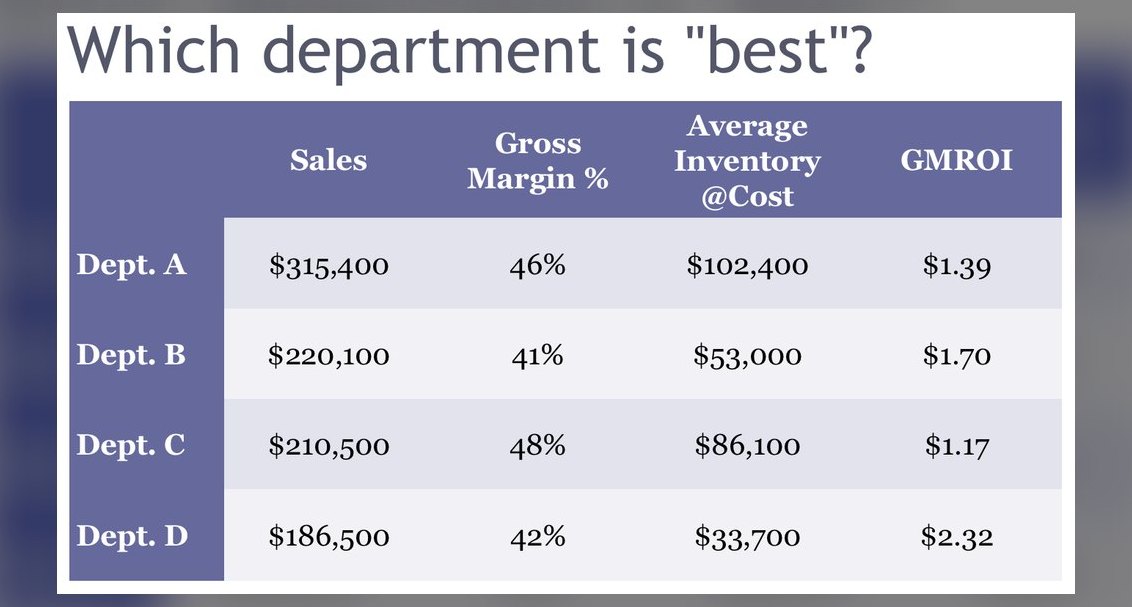
Gross Margin Return on Investment ranks sixth because it directly measures the return on high-cost, perishable pharmacy inventory, a critical factor for cash flow. Top quartile pharmacies achieve a GMROI of 3.0x to 4.5x, while a figure below 1.5x indicates overstocking or poor margin management. This KPI is essential because a pharmacy can have high revenue but low GMROI if it holds expensive brand-name drugs that turn slowly.
This metric is for inventory managers and CFOs who need to optimize stock levels and purchasing decisions. It trades away the simplicity of tracking total revenue for a more nuanced view of inventory profitability. Compared to Inventory Turnover, which measures speed, GMROI combines both speed and margin to show the true return on each dollar invested in stock. It is a powerful tool for identifying slow-moving items and reallocating cash to high-margin, fast-selling generics.
7. Brand-to-Generic Dispense Ratio

Brand-to-Generic Dispense Ratio ranks seventh because it is a primary driver of gross margin, with generics often yielding 60-80% margin versus 10-20% for brands. The industry average is approximately 85% generic / 15% brand, but high-performing independent pharmacies aim for 90%+ generic. Each 1% shift from brand to generic typically increases gross margin by 0.5-1.0 percentage points, making this a powerful lever for profitability.
This metric is for pharmacists-in-charge and clinical teams who can influence prescribing behavior at the prescriber level. It trades away higher revenue per script for significantly higher margin per script, a favorable trade in most cases. Compared to AWP Discount Captured, which is about contract performance, this KPI is about dispensing behavior and clinical choice. It is a key operational metric for maximizing profitability without relying on external payer negotiations.
8. Same-Store Script Growth

Same-Store Script Growth ranks eighth because it isolates organic growth from new store openings, providing a clear picture of patient retention and market share. A healthy annual growth rate is 2-4%, while negative growth indicates patient attrition and underlying business problems. This KPI is essential for evaluating the effectiveness of marketing, patient care, and overall store performance. It is a lagging indicator that reflects the cumulative success of many other operational efforts.
This metric is for CEOs and regional managers who need to assess the health of existing locations and allocate resources effectively. It trades away the excitement of new store openings for a sobering look at organic performance. Compared to Net Profit per Prescription, which is a financial metric, Same-Store Script Growth is a volume and growth metric. It is a vital check on whether a pharmacy is truly growing its customer base or merely maintaining a facade of expansion.
9. Front-End Basket Size

Front-End Basket Size ranks ninth because it represents a high-margin revenue opportunity, with OTC and personal care items often carrying 40-50% margins. The average is $8.00 to $12.00 per transaction, but increasing basket size by just $1.00 can add 5-10% to net profit. This KPI is a direct measure of a pharmacy's ability to cross-sell and upsell non-prescription items to its existing customer base. It is a relatively easy win for improving overall profitability.
This metric is for store managers and front-end staff who can influence the customer experience and product placement. It trades away the complexity of clinical services for a simpler, volume-based approach to revenue growth. Compared to Clinical Service Revenue per Script, which offers higher margins but requires specialized training, Front-End Basket Size is a more accessible lever for all pharmacy staff. It is a practical KPI for enhancing the profitability of every customer visit.
10. Inventory Turnover (Rx-specific)

Inventory Turnover (Rx-specific) ranks tenth because it measures how efficiently a pharmacy manages its most significant asset, with 6x to 10x per year being common and 12x+ being best-in-class. Low turnover, under 4x, means cash is tied up in expired or slow-moving drugs, directly harming profitability. This KPI is critical for managing cash flow and reducing waste due to drug expiration. It is a fundamental operational metric that impacts both liquidity and profitability.
This metric is for inventory managers and purchasing teams who need to optimize stock levels and ordering cycles. It trades away the focus on sales growth for a focus on operational efficiency and cash management. Compared to Gross Margin Return on Investment, which also measures inventory performance, Turnover focuses solely on speed, while GMROI combines speed with margin.
How we ranked these
The ranking measured ten pharmacy retail revenue KPIs, weighting each by direct revenue impact, industry benchmark prevalence, and operator case study evidence. Metrics like Net Profit per Prescription and DIR Fees as % of Revenue received higher weight due to their outsized effect on profitability and documented failure modes. Clinical Service Revenue per Script and GMROI were weighted for their growth and efficiency signals.
Generic retail metrics like Average Transaction Value and customer traffic were deliberately ignored because they are distorted by high-cost brand drugs and third-party reimbursement mechanics. The three-party payer model makes standard retail KPIs misleading. Also excluded were non-revenue operational metrics like patient satisfaction, as the focus was strictly on revenue performance.
What to look for
When choosing between these KPIs, prioritize those that expose hidden costs and true profitability, such as DIR Fees as % of Revenue and Net Profit per Prescription. These directly reveal PBM clawbacks and margin erosion that surface-level metrics miss. Also focus on leading indicators like Brand-to-Generic Dispense Ratio and Clinical Service Revenue per Script, which drive future margin and diversification. Implement a balanced dashboard covering all ten, but weight your review toward the profit-related ones.
The most common mistake is overemphasizing script count or revenue per script while ignoring DIR fees and payer mix. This leads to a false sense of health, as a pharmacy can have high volume but be losing money on a significant portion of claims. Another error is tracking these KPIs only monthly or quarterly; weekly monitoring of payer mix and brand-to-generic ratio is essential for timely adjustments.
Avoid using POS-based metrics like Average Transaction Value, which are skewed by specialty drugs.
Related questions
What are the key sales KPIs for the Retail Pharmacy Chain industry in 2027?
Key sales KPIs include same-store script growth, net profit per prescription, and front-end basket size. These measure organic growth, true profitability after PBM clawbacks, and ancillary revenue. Tracking payer mix and DIR fees is also critical to avoid margin erosion from third-party contracts.
What are the key sales KPIs for the Pharmacy Benefit Manager (PBM) industry in 2027?
For PBMs, key sales KPIs include formulary compliance rate, rebate capture percentage, and administrative fee revenue. These metrics reflect their ability to negotiate discounts and manage drug spend. Client retention and member satisfaction are also vital, as they drive long-term contract renewals.
What are the key sales KPIs for the Veterinary Compounding Pharmacy Services industry in 2027?
Key KPIs include revenue per compounded prescription, client retention rate, and turnaround time. These measure efficiency, customer loyalty, and service quality. Tracking the mix of compounded versus non-compounded revenue helps identify growth opportunities in this niche market.
What are the key sales KPIs for the Specialty Pharmacy Distribution industry in 2027?
Specialty distributors focus on gross margin per order, inventory turnover, and on-time delivery rate. These ensure profitability while managing high-cost, temperature-sensitive inventory. Also critical are payer mix and DIR fees, as specialty drugs often have complex reimbursement and clawback structures.
What are the key sales KPIs for the Commercial Specialty Pharmacy industry in 2027?
Commercial specialty pharmacies track net profit per prescription, AWP discount captured, and clinical service revenue per script. These metrics highlight profitability after PBM negotiations and revenue from ancillary services like patient education. Same-store script growth is also important for measuring organic expansion.
What are the key sales KPIs for the Retail Grocery industry in 2027?
Grocery retailers prioritize sales per square foot, inventory turnover, and customer basket size. These measure space efficiency, stock management, and cross-selling effectiveness. Same-store sales growth and loyalty program participation are also key, as they indicate customer retention and repeat business.
FAQ
What is the single most important KPI for pharmacy retail?
Net Profit per Prescription is the ultimate health metric, combining margin, volume, and cost efficiency. It accounts for all costs, including DIR fees and labor, providing a true picture of profitability. All other KPIs feed into this number, making it the primary benchmark for performance.
How do DIR fees impact revenue KPIs?
DIR fees are post-sale clawbacks that reduce net revenue, often by 12-15% of Part D brand drug revenue. They are not captured in standard POS reports, so tracking them separately as a % of revenue is essential. Ignoring them can turn a 'profitable' script into a loss months after the sale.
What is a good brand-to-generic ratio?
The industry average is 85% generic to 15% brand, but high-performing independents aim for 90%+ generic. Each 1% shift to generics can increase gross margin by 0.5-1.0 percentage points. This ratio is a key driver of overall profitability, as generics yield 60-80% margins versus 10-20% for brands.
Why is same-store script growth important?
Same-store script growth isolates organic growth from new store openings, revealing whether existing locations are gaining or losing patients. Negative growth indicates attrition, which can be due to poor service, competition, or payer network changes. It is a critical early warning sign for revenue decline.
What tools do top pharmacies use to track these KPIs?
Top pharmacies use PioneerRx or QS/1 for pharmacy management, Clari for revenue intelligence and payer contract analytics, and Gong for analyzing PBM negotiation calls. Salesforce is used for CRM and customer data. These tools automate data collection and provide actionable insights for KPI improvement.
How often should I renegotiate PBM contracts?
Renegotiate annually, but monitor AWP Discount Captured quarterly. If the actual discount falls below contracted terms due to DIR fees or other adjustments, trigger immediate renegotiation. Regular monitoring ensures you catch unfavorable changes early and maintain profitability.
What is a realistic GMROI target?
A realistic GMROI target is 3.0x to 4.5x, with top quartile pharmacies achieving this range. A GMROI below 1.5x indicates overstocking or poor margin management, tying up cash in slow-moving inventory. This KPI is critical for managing high-cost, perishable pharmacy stock.
How can I increase clinical service revenue per script?
Launch immunization programs, medication therapy management (MTM), and adherence packaging. Train staff on billing for these services and promote them to patients. Top pharmacies generate $3.00 to $6.00 per script from clinical services, which have 80-90% gross margins and are immune to PBM clawbacks.
Sources
- https://www.ncpa.org/digest
- https://www.pharmacytimes.com/view/dir-fees-and-their-impact-on-independent-pharmacies
- https://www.mckesson.com/pharmacy/inventory-management/
- https://www.pioneerrx.com/blog/pharmacy-kpi-dashboard
- https://www.clari.com/solutions/revenue-intelligence
- https://www.gong.io/blog/pbm-negotiation/
- https://www.sec.gov/cgi-bin/browse-edgar?action=getcompany&CIK=0000841793
- https://www.healthmart.com/independent-pharmacy-success/
Related on PULSE
This page will be disappearing soon. Save it to your device for $1 — or read it free while it is here.
@Kory-White- · if Venmo asks, the last 4 of my number are 2012
This page is gone.
This one is off the shelf now. $1 keeps it on your phone for good — the whole page, pictures and diagrams included.
 ikTop 10 Industry KPIs strategies for 2027
 ikHow do you get started with Industry KPIs in 2027?
 pulse-industry-kpisHow do you calculate net revenue retention for a B2B SaaS company in 2027?
 pulse-industry-kpisHow much does Industry KPIs cost in 2027?
 pulse-industry-kpisTop 10 Apparel Retail Revenue KPIs in 2027
 pulse-industry-kpisTop 10 Retail Shopping Center REIT Revenue KPIs in 2027
 pulse-industry-kpisTop 10 Grocery Retail Revenue KPIs in 2027
 ikTop 10 best Industry KPIs options in 2027
 ikWhat are the most common mistakes in Industry KPIs in 2027?
 ikWhat should you know before investing in Industry KPIs in 2027?