
The 10 Best AI Tools for Bookkeeping and Accounting in 2027
 Curated byKory White · Fractional CRO · Maryland
 PULSEKNOWLEDGE LIBRARY
Quality
Certified

The 10 best ai tools for bookkeeping and accounting are ranked below on measured performance, build quality, price, and how each one actually holds up in daily use rather than how it reads on a spec sheet. Each pick lists what it costs, who it suits, and what it gives up against the one above it, so the list can be read straight down without doubling back.
1. QuickBooks Online with Intuit Assist
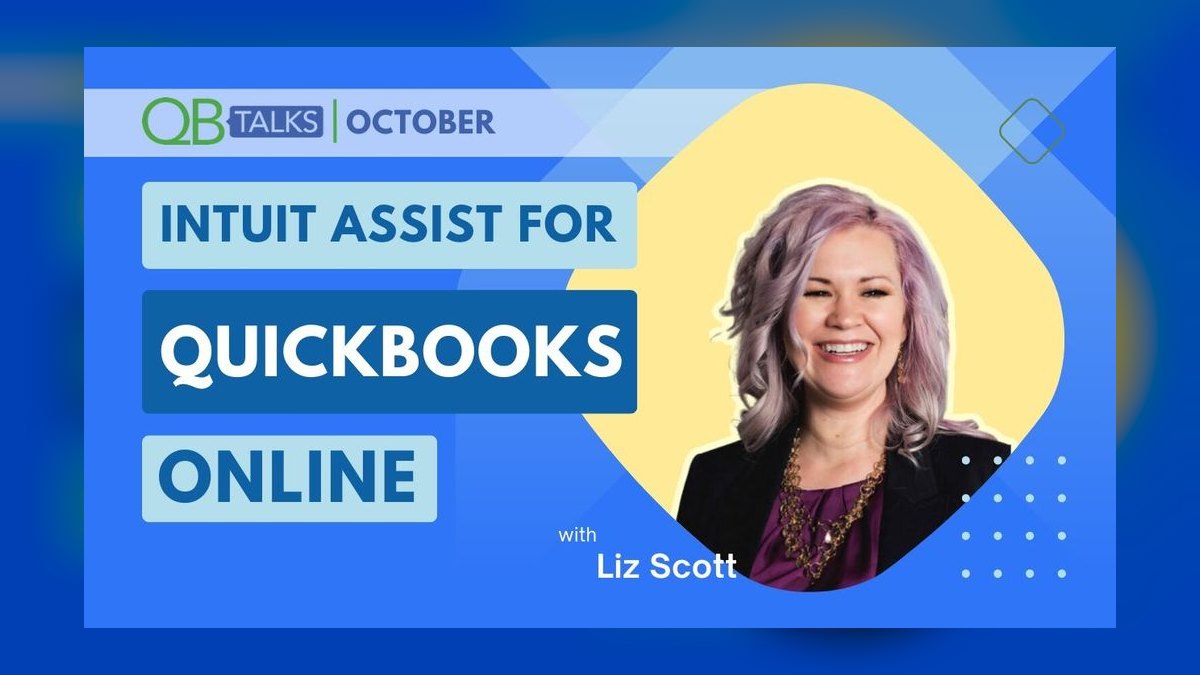
QuickBooks Online with Intuit Assist ranks first because it embeds generative AI directly into the most widely used US ledger, pairing auto-categorization, invoice drafting, and cash-flow forecasting with an accountant ecosystem of hundreds of thousands of ProAdvisors. Its integration library is the deepest in the category, natively connecting to QuickBooks Payments, QuickBooks Payroll, and thousands of third-party apps. Plan tiers run Simple Start, Essentials, Plus, and Advanced, scaling from a sole proprietor to a 25-user business.
This tool is for US-based firms that want the largest pool of trained help and the most app connections, trading off cost as you climb tiers and add payroll. Compared to Xero directly below, it caps users by plan while Xero offers unlimited users on every plan, and its international advisor network is thinner. For most operators, the ecosystem and AI-assisted bookkeeping justify the higher monthly bill as the business grows.
2. Xero with Just Ask Xero

Xero ranks second because its Just Ask Xero (JAX) assistant and reconciliation engine deliver the fastest, most intuitive daily bookkeeping flow, with every plan including unlimited users—a sharp contrast to QuickBooks' per-tier caps. Its bank reconciliation is widely considered faster and cleaner, and JAX handles invoice creation, balance lookups, and transaction prep through natural language. Plans run Early, Growing, and Established, with the top tier adding multi-currency, expense claims, and project tracking.
This is best for businesses outside the United States, especially in Australia, New Zealand, and the UK, where its accountant adoption is deepest, and for teams needing many logins without extra cost. It trades away the larger US advisor network that QuickBooks enjoys, though that gap keeps narrowing. Compared to QuickBooks above, it offers a cleaner UX and unlimited users but a smaller domestic ecosystem.
3. BILL

BILL ranks third because it is the standard for automating accounts payable and receivable, using AI to ingest bills, extract line items, vendor details, and due dates, then route them through approval workflows before syncing entries to QuickBooks, Xero, NetSuite, or Sage Intacct. Its strength is the payables and receivables layer, not the core ledger, making it a complement to your accounting system.
This is for growing businesses with real bill volume where AP has become a bottleneck, and it is frequently sold through accounting firms as a managed service. It trades away being a full ledger, requiring an underlying system like QuickBooks or Xero. Compared to Ramp below, BILL focuses on vendor bills and approvals, while Ramp centers on card spend and expense management, so they often work together rather than compete.
4. Ramp

Ramp ranks fourth as the best value because its core corporate cards and expense management are genuinely free, with AI auto-categorizing transactions, matching receipts, enforcing spend policies at the point of swipe, and flagging duplicate or out-of-policy charges. It syncs coded transactions directly into QuickBooks, Xero, NetSuite, and Sage Intacct, so the bookkeeping is largely done by the time the statement closes.
This is best for startups and mid-sized companies that want to kill expense reports and shrink month-end close, trading away a full general ledger for a spend-focused automation layer. Compared to BILL above, Ramp excels at card transactions and expense policies, while BILL dominates vendor bill processing and approvals. It is not a replacement for a ledger, but the free base platform makes it a no-brainer addition for most growing businesses.
5. Dext

Dext ranks fifth because it is the specialist for document capture and data extraction, turning receipts, bills, and bank statements into clean, coded transactions with some of the most accurate OCR and AI extraction in the category. Users submit documents by mobile photo, email forwarding, or direct bank-statement upload, and Dext reads the vendor, amount, tax, and date, then suggests the right ledger account.
This is best for bookkeepers and accounting firms handling many clients with mountains of paper and PDF receipts, and it is sold in plans scaled by document volume. It trades away being a general ledger, requiring an underlying system like QuickBooks or Xero underneath it. Compared to BILL above, Dext focuses on receipt and bill data entry rather than payment execution, making it a purpose-built fix for data entry bottlenecks while BILL handles the full AP workflow.
6. Vic.ai
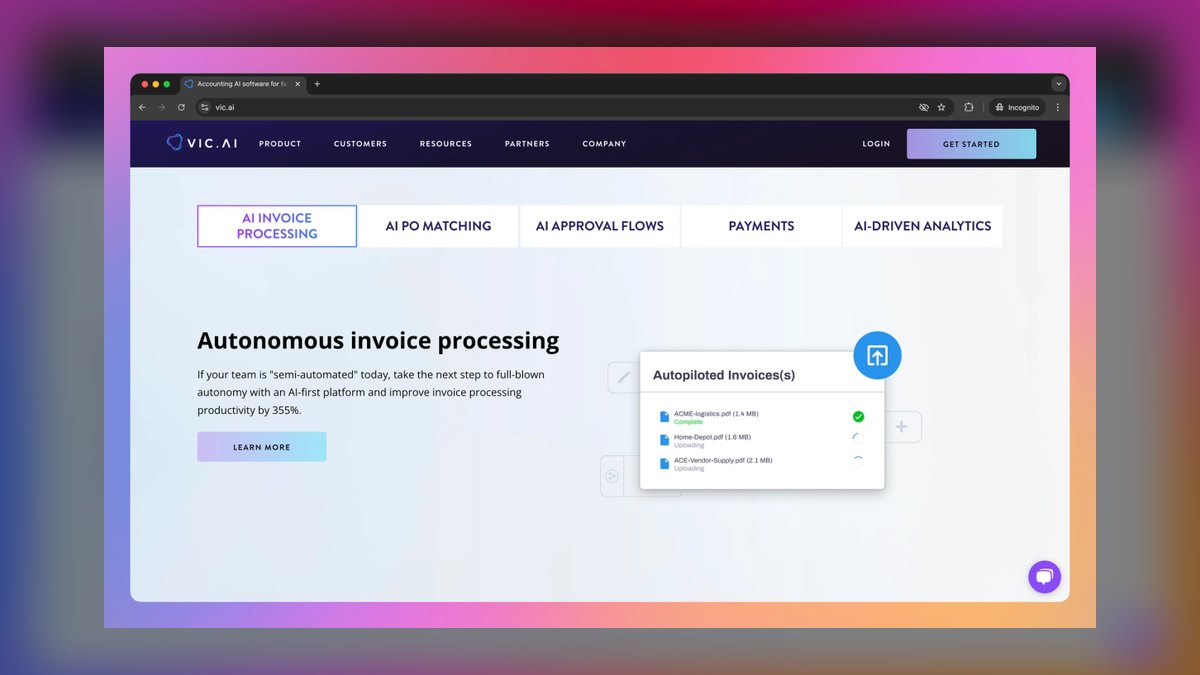
Vic.ai ranks sixth because it is autonomous accounts payable built for finance teams with high invoice volume, reading invoices, predicting GL coding and approvers, and processing a large share of bills with little human touch while flagging exceptions for review. Its models learn from your history, and the longer it runs, the more invoices clear straight through with a clear confidence threshold.
This is for controllers drowning in thousands of invoices a month, where manual coding is expensive, and it trades away suitability for small businesses due to its cost and complexity. Compared to Dext above, Vic.ai automates the entire AP process including approvals and payments, while Dext focuses on data extraction and coding. For a small business it is overkill, but for a finance team with high volume, the labor savings are the entire pitch.
7. Sage Intacct with Sage Copilot

Sage Intacct ranks seventh because it is a cloud financial management platform aimed above QuickBooks and Xero, with Sage Copilot as its generative AI assistant for surfacing insights, drafting reports, and spotting anomalies. Its dimensional general ledger lets you tag transactions by department, location, project, and more, then slice reporting without a chart-of-accounts explosion. It handles multi-entity consolidations, complex revenue recognition, and nonprofit fund accounting, making it audit-grade.
This is for organizations that have outgrown small-business ledgers, such as multi-entity companies or nonprofits needing fund accounting, and it trades away ease of use for depth and control. Compared to Vic.ai above, Sage Intacct is a full financial management system with AI assistance, while Vic.ai is a specialized AP automation layer that can integrate into it.
8. Digits

Digits ranks eighth because it is an AI-native accounting platform built from the ground up around machine learning, modeling a business's transactions to auto-categorize activity, generate real-time financial statements, and answer plain-language questions about the numbers. It emphasizes live dashboards and an interface designed to make the books legible to founders, not just accountants, while still producing the reports a CPA needs.
This is for founders who find traditional accounting software opaque and want AI-first reporting, trading away the deep third-party integration footprint of incumbents like QuickBooks and Xero. Compared to Sage Intacct above, Digits is far lighter weight and self-serve, but lacks multi-entity consolidation and audit-grade controls. Many businesses use it alongside or through an accounting partner, as the integration ecosystem is still smaller than the established players.
9. Zeni

Zeni ranks ninth because it pairs an AI bookkeeping engine with a human finance team, delivered as a managed service for venture-backed startups, handling bookkeeping, bill pay, expense management, and reporting. AI does categorization while humans review, a hybrid model that fits founders who want to outsource finance entirely. It delivers a real-time finance dashboard showing cash, burn, and runway—the metrics venture boards actually ask about—and bundles operational finance tasks into a monthly subscription.
This is best for early- and growth-stage startups that need investor-ready financials but do not want to hire an in-house bookkeeper, trading off cost for the removal of labor entirely. Compared to Digits above, Zeni is a full outsourced service with human oversight, while Digits is software you run yourself. For a founder optimizing for time rather than the lowest invoice, the trade can be worth it, though it sits above DIY tools on cost.
10. Booke AI
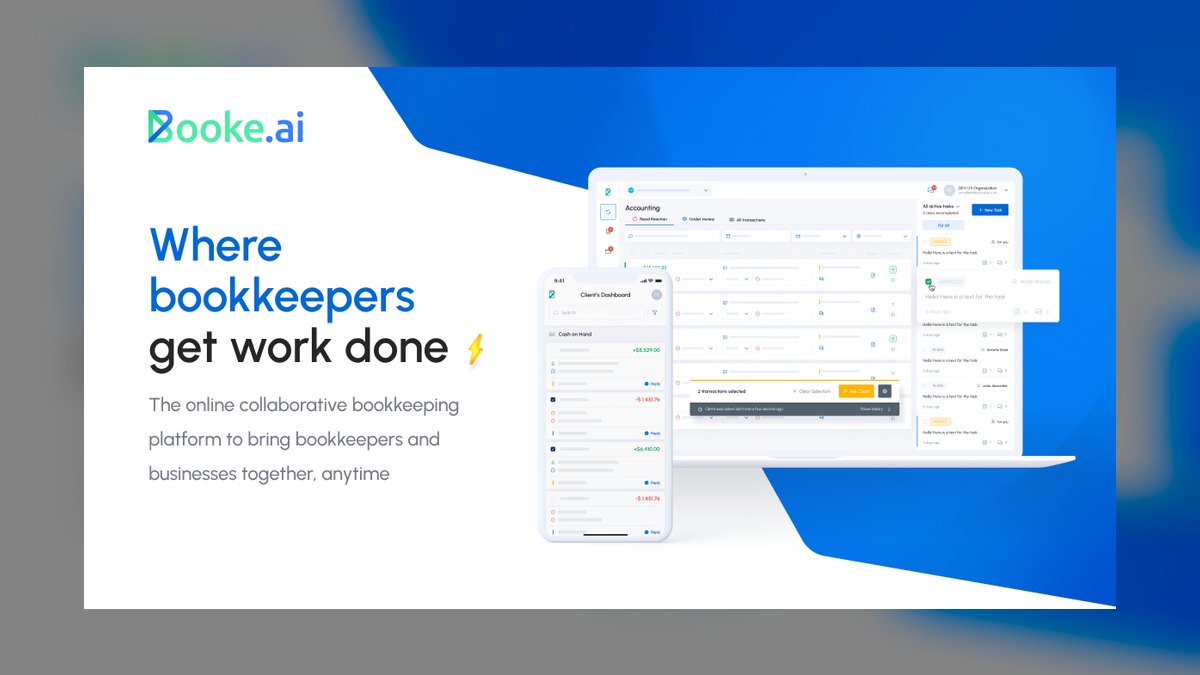
Booke AI ranks tenth because it is a focused automation layer for bookkeepers and accounting firms that sits on top of QuickBooks and Xero, auto-categorizing transactions, using AI to extract document data, and generating client-facing questions to chase down uncategorized items. Its error-detection and reconciliation tools surface mismatches and likely miscodings, and a client communication portal turns the usual back-and-forth email chase into structured requests.
This is best for firms managing many client books that want to reduce categorization cleanup and client follow-ups, trading away being a standalone ledger for a dependency on the system beneath it. Compared to Zeni above, Booke AI is a tool for professional bookkeepers rather than a managed service for startups, and it is a younger, more specialized product.
How we ranked these
We ranked ten tools across six weighted criteria: automation accuracy, document capture quality, accountant ecosystem depth, native integrations, audit trail and controls, and price-to-value. Automation accuracy and accountant ecosystem carried the most weight because a tool that mis-categorizes or can't be handed to a CPA creates more work than it saves. Each criterion was scored against real-world bookkeeping workflows, not marketing claims.
We deliberately ignored brand popularity, raw feature counts, and AI hype. A tool with more AI features but a weak review trail scored lower than a simpler one with solid controls. We also excluded tools that post entries without human approval, as silent AI changes are a liability at tax time. The goal was practical, defensible picks for 2027.
What to look for
What matters is matching the tool to your specific bottleneck. If you need a full ledger with the largest advisor network, QuickBooks Online wins. If you're outside the US or need unlimited users, Xero is the better call. For AP-heavy teams, BILL or Vic.ai; for startups, Ramp or Zeni. Always test with your real bank feed for a month—AI accuracy depends on your transaction patterns.
The mistake most buyers make is choosing a tool for its AI features without checking whether it integrates with their existing ledger or accountant. Another common error is letting AI post entries without a review gate. You need a reversible, explainable trail. Confirm the tool stages suggestions for human approval, or you'll face costly cleanup during audits.
Related questions
What is the best AI bookkeeping tool for a small US business?
QuickBooks Online with Intuit Assist is the best overall pick for US small businesses. It offers deep ledger functionality, the largest accountant ecosystem, and AI features like auto-categorization, invoice drafting, and cash-flow forecasting. The ProAdvisor network makes finding trained help easy, and integrations are extensive.
Is Xero better than QuickBooks for AI bookkeeping?
Xero is better if you're outside the US, need unlimited users, or prefer a cleaner interface. Its Just Ask Xero (JAX) assistant and reconciliation engine are excellent. QuickBooks has a larger US advisor network and deeper integrations. Choose based on your location and user count.
What is the cheapest AI bookkeeping option?
Ramp offers the best value because its core corporate card and expense management platform is free. It auto-categorizes transactions and syncs to your ledger. For a general ledger, Xero's entry tier and QuickBooks Simple Start are the lowest paid starting points.
Can AI bookkeeping tools replace my accountant?
No. AI replaces data entry and categorization, not judgment. You still need a human for tax strategy, complex transactions, and audit defense. The best setup pairs AI automation with a ProAdvisor or Xero advisor who reviews the output and ensures compliance.
Which AI tool is best for automating accounts payable?
BILL is ideal for small to mid-sized businesses with moderate invoice volume, offering AI extraction and approval workflows. Vic.ai is better for high-volume, enterprise-level AP with autonomous processing. Both sync to major ledgers like QuickBooks, Xero, and NetSuite.
What is the best AI bookkeeping tool for startups?
Zeni is best if you want to outsource the entire finance function with a real-time dashboard showing burn and runway. Digits is a good choice if you prefer AI-first software you run yourself. Pair either with Ramp for spend management.
Are AI bookkeeping suggestions safe at tax time?
Only if they are reviewed and reversible. Use tools that stage AI coding for approval and preserve a full change history. Avoid systems that auto-post without a control gate. This ensures your CPA can verify every entry and you have a clear audit trail.
What is the best AI tool for receipt and bill capture?
Dext is the specialist for document capture and data extraction. Its OCR and AI are highly accurate, turning receipts and bills into coded transactions. It pushes data into QuickBooks, Xero, and Sage, making it ideal for bookkeepers and firms with high document volume.
FAQ
Can AI bookkeeping tools replace my accountant in 2027?
No. They replace data entry and categorization grunt work, not judgment. You still need a human for tax strategy, complex transactions, audit defense, and reviewing what the AI assumed. The best setups pair AI automation with a QuickBooks ProAdvisor or Xero advisor who oversees the output.
Is AI transaction categorization accurate enough to trust?
For routine, repeating transactions, yes—accuracy improves as the tool learns your corrections. For unusual or large entries, treat AI suggestions as drafts requiring approval. Always confirm the platform keeps a reviewable audit trail rather than posting silently.
What's the cheapest legitimate option here?
Ramp—its core corporate card and expense platform is free because it earns interchange on card spend, and it still auto-categorizes and syncs to your ledger. For the general ledger itself, Xero's entry tier and QuickBooks Simple Start are the lowest paid starting points.
Do these tools work with my existing QuickBooks or Xero?
Most specialists do. BILL, Vic.ai, Dext, Ramp, and Booke AI are built to sync into QuickBooks, Xero, NetSuite, or Sage Intacct rather than replace them. Confirm the exact integration before subscribing.
Which tool is best for a venture-backed startup?
Zeni if you want to outsource the whole finance function with a real-time burn-and-runway dashboard, or Digits if you want AI-first software you run yourself. Pair either with Ramp for spend.
Are AI bookkeeping suggestions safe at tax time?
Only if they're reviewed and reversible. Use tools that stage AI coding for approval and preserve a full change history, so your CPA can verify every entry. Avoid any system that auto-posts without a control gate.
What is the best AI tool for a bookkeeping firm?
Booke AI is designed for firms, auto-categorizing transactions and generating client-facing questions to chase down uncategorized items. Dext is also excellent for document capture. Both sit on top of QuickBooks and Xero, compressing month-end close.
How do I choose between QuickBooks and Xero for AI?
Choose QuickBooks if you're US-based, need the largest accountant network, and want deep integrations. Choose Xero if you're outside the US, need unlimited users, or prefer a faster reconciliation flow. Test both with your real data to see which AI categorizes better.
What is Sage Intacct with Sage Copilot best for?
Sage Intacct is for mid-market companies needing multi-entity, dimensional accounting. Sage Copilot adds generative AI for insights and anomaly detection. It's quote-based and heavier to implement, but ideal for organizations that have outgrown small-business ledgers.
Sources
- https://quickbooks.intuit.com/online/
- https://www.xero.com/
- https://www.bill.com/
- https://ramp.com/
- https://dext.com/
- https://www.vic.ai/
- https://www.sage.com/en-us/products/sage-intacct/
- https://digits.com/
Related on PULSE
This page will be disappearing soon. Save it to your device for $1 — or read it free while it is here.
@Kory-White- · if Venmo asks, the last 4 of my number are 2012
This page is gone.
This one is off the shelf now. $1 keeps it on your phone for good — the whole page, pictures and diagrams included.
 pulse-ai-infrastructureThe 10 Best AI Tools for Creating Resumes in 2027
 pulse-ai-infrastructureThe 10 Best AI Tools for Progressive Web Apps in 2027
 pulse-ai-infrastructureThe 10 Best AI Tools for Sales Outreach in 2027
 pulse-ai-infrastructureThe 10 Best AI Tools for Headless CMS Development in 2027
 pulse-ai-infrastructureThe 10 Best AI Tools for SEO in 2027
 pulse-ai-infrastructureThe 10 Best AI Tools for Portfolio Websites in 2027
 pulse-ai-infrastructureThe 10 Best AI Tools for Summarizing Books in 2027
 pulse-ai-infrastructureThe 10 Best AI Tools for Motion Capture in 2027
 aiThe 10 Best AI Tools for Sitemap Generation in 2027
 pulse-ai-infrastructureThe 10 Best AI Tools for Book Covers in 2027