

How do you safely introduce wild-caught fish into a home aquarium in 2027?
 Curated byKory White · Fractional CRO · Maryland
Quality
Certified
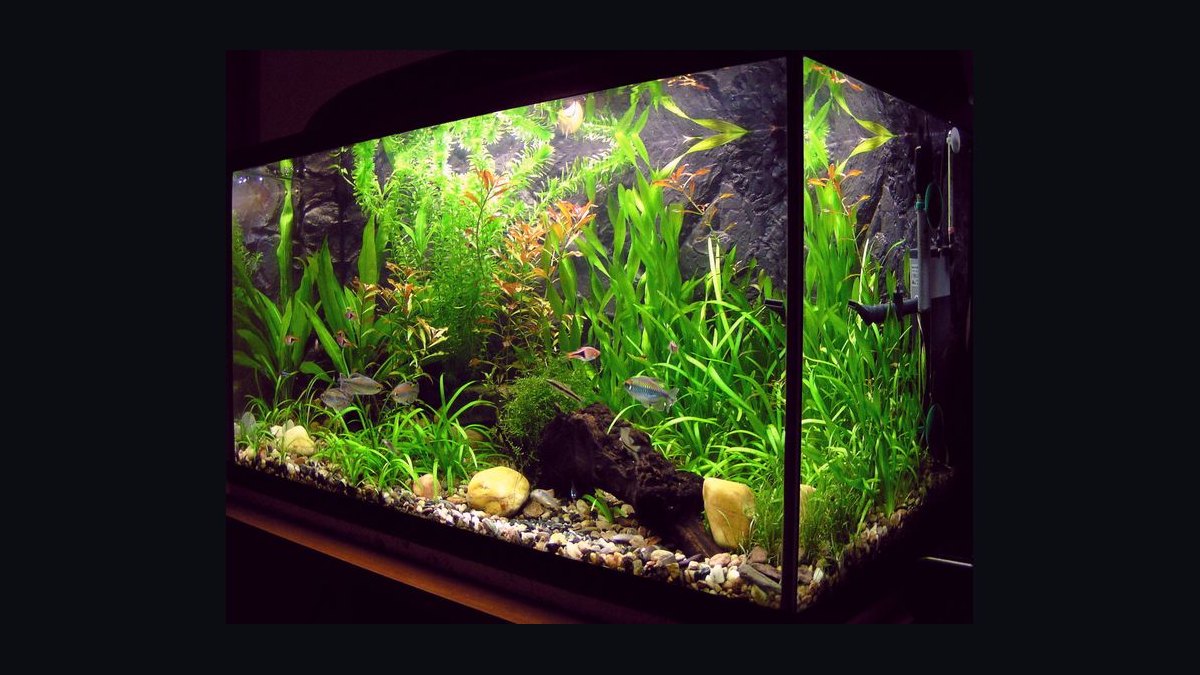
Quarantine every wild-caught fish for four to six weeks in a bare-bottom tank with cycled sponge filtration, drip-acclimate over 45–60 minutes to avoid osmotic shock, and never pour shipping water into your system. Observe daily, treat only confirmed symptoms, match water chemistry gradually, then transfer at lights-out into the display aquarium.
The shipment that taught the lesson
Picture a common scenario. A hobbyist orders six wild-caught Apistogramma from a collector-direct importer. The box lands on a Tuesday afternoon after roughly 40 hours in transit — collected from a blackwater tributary, held in a exporter's holding station for a week, flown, trucked, and finally handed over by a delivery driver. The bags are dark amber, the water is warm from a heat pack that has now overshot, and the ammonia in that bag water is measurable. Two fish are lying on their sides. The hobbyist, excited and a little panicked, cuts the bags open, tips them straight into a planted 40-breeder that already houses a mature colony of cardinal tetras, and turns on the lights to admire the new arrivals.
Nine days later the tetras start flashing against driftwood. Day eleven, white cysts appear on the caudal fins of half the school. By day sixteen the hobbyist is dosing the entire display, the plants are melting from copper, the biofilter has stalled from a bacterial medication dumped in on top of the copper, and four of the six Apistogramma are dead alongside eleven tetras. The total loss — livestock, plants, medications, and the six months it takes to rebuild a mature planted tank — dwarfs the cost of the 20-gallon quarantine setup that would have prevented all of it.
This is not an exotic failure mode. It is the single most common way a healthy aquarium gets wrecked, and it is almost entirely preventable with a process rather than a product. The core insight is that wild-caught fish are not simply "fish that came from a river." They are animals that have been through a compounding stress cascade — capture, crowding, starvation, temperature swings, ammonia exposure, repeated netting, and a final long shipment — with each stage suppressing immune function a little more. Pathogens that lived in balance with those fish in the wild, held in check by a functioning immune system and infinite water dilution, are now unchecked and concentrated. The fish is not sick yet in any visible sense. It is a loaded gun.
The same logic applies well beyond the ornamental fish trade, which is worth noting because the neighboring disciplines have already solved this problem more rigorously than most hobbyists do. Public aquariums run formal quarantine facilities with dedicated life support, separate tools, and veterinary oversight because a single introduction failure can cost a seven-figure exhibit. Aquaculture operations run biosecurity protocols with footbaths, hand dips, and strict one-way traffic flow between clean and dirty zones. Reptile and amphibian keepers quarantine for 60 to 90 days because chytrid and cryptosporidium have taught them expensive lessons. Even the coral side of the hobby has converged on multi-week quarantine with dips and observation because of flatworms, nudibranchs, and red bugs. Every one of these disciplines arrived independently at the same answer: isolate, observe, treat only what you confirm, then introduce. The home aquarist is the outlier for skipping it.
The framing that helps most is to stop thinking of quarantine as a disease treatment step and start thinking of it as an information-gathering step. You do not know what this animal carries. You do not know whether it eats. You do not know whether it can tolerate your pH. Quarantine is a controlled, low-stakes environment in which you find all of that out before the answers can cost you a display tank. Ninety percent of quarantine tanks never need a single drop of medication. They still earn their keep, because the value is in the observation window, not the pharmacy.
How the acclimation and quarantine mechanism actually works
Start with the physiology, because that is what dictates the procedure. A freshwater fish is hyperosmotic to its environment — its blood is saltier than the water — so it constantly absorbs water across the gills and excretes dilute urine to shed it. A marine fish is the opposite: hypoosmotic, constantly losing water, drinking seawater and excreting concentrated salts through chloride cells in the gills. In both cases the gill epithelium is doing continuous, energy-expensive ion regulation, and that machinery adjusts slowly. Drop a fish into water with a different total dissolved solids load and the ion pumps are suddenly mis-tuned. That is osmotic shock, and it does not usually kill outright — it burns metabolic reserves and cracks the door open for pathogens.
pH interacts with a second, sharper problem: ammonia speciation. Fish excrete ammonia across the gills, and in a sealed shipping bag it accumulates. In acidic water most of that ammonia exists as ammonium (NH4+), which is comparatively harmless and cannot cross membranes easily. The equilibrium between ammonium and free ammonia (NH3) is pH-dependent, and it shifts fast — roughly an order of magnitude of free ammonia for each unit of pH increase, with temperature amplifying the effect. A bag that has drifted down to pH 6.4 over 40 hours may hold a substantial ammonia load that is chemically inert at that pH. Open the bag, let it gas off CO2, and the pH climbs. Now that stored ammonium converts to free ammonia and the fish gets chemically burned in the bag while you are trying to help it.
This produces the two competing acclimation philosophies, and it is worth understanding both rather than treating one as gospel. Slow drip acclimation minimizes osmotic and thermal shock but maximizes ammonia exposure time. Fast "float and net" transfer maximizes osmotic shock but gets the fish out of the toxic bag water immediately. The resolution most experienced importers use: if the bag has been sealed under 12 hours and the fish look alert, drip acclimate over 45 to 60 minutes. If transit exceeded 24 hours, if the bag water smells sharp, or if any fish are lying down, skip the drip entirely — temperature-equalize by floating for 15 minutes, then net the fish directly into clean quarantine water and discard the bag water down the drain. Speed beats gentleness when ammonia is the dominant risk. Never split the difference by opening the bag and letting it sit.
The quarantine tank itself is engineered around observability and medication safety, which is why it looks so unlike a display tank. No substrate, because gravel absorbs medication unpredictably, hides feces you need to inspect, and harbors parasite cysts. A sponge filter rather than canister or hang-on-back, because sponge media survives medication better, cannot trap a weak fish against an intake, and can be seeded from an established system. Bare walls with a couple of lengths of PVC pipe for cover, because PVC is non-absorbent, sterilizable, and easy to lift out for a look. A tight lid, because stressed fish jump, and a wild fish in a strange bare box is the single most likely jumper you will ever keep.
The seeding step is the one people get wrong most often. Running a sponge filter permanently in the sump or corner of your display tank means it carries a live nitrifying colony the moment you need it. Setting up a quarantine tank from scratch on the day the fish arrive gives you a sterile box that will spike ammonia within 48 hours, which is precisely the wrong environment for an already-compromised fish. Keep a spare sponge running at all times. It costs nothing and it is the difference between a functional quarantine and a slow poisoning.
Real numbers, ranges, and benchmarks
Duration first, because it is the number everyone wants. Four weeks is the practical minimum for freshwater; six weeks is the defensible standard; eight weeks is appropriate for high-value or notoriously fragile species and for marine fish where Cryptocaryon and Brooklynella both have latent phases. The reasoning is life-cycle arithmetic rather than superstition. Ich (Ichthyophthirius multifiliis) completes its cycle in roughly 4 to 7 days at 78–80°F, but slows dramatically at lower temperatures — at 70°F the same cycle can stretch past two weeks. You want a window that spans several full parasite generations at your holding temperature, which is why 78°F quarantine is not just about fish comfort: it accelerates any latent parasite into visibility while you are still watching. If a fish shows any symptom, the clock restarts from the day treatment ends, not the day it started.
Tank volume: 10 gallons handles nano fish and small dwarf cichlids; 20 gallons long is the sweet spot for most community fish and gives you room for a group without crowding; 29 to 40 gallons for anything over 4 inches or for larger shoals that must be quarantined together. Stocking density in quarantine should run well under display density — roughly half — because you are deliberately trading appearance for water quality margin. Overstocked quarantine defeats itself.
Water change cadence: 25 percent every two to three days during the observation period, using pre-matched temperature and dechlorinated water. If you are actively medicating, many treatments require 25 to 50 percent changes before each redose to prevent stacking. Test ammonia and nitrite daily for the first week and every two to three days thereafter; the target is zero on both, with nitrate under 20 ppm. A quarantine tank running 0.25 ppm ammonia is not a quarantine tank, it is a stressor.
Temperature ranges by intent: hold most tropical wild-caught freshwater at 78°F, raise no faster than 1–2°F per day, and cap heat-assisted ich treatment around 86°F for species that tolerate it. Many wild fish from cool, fast, highly oxygenated streams — hillstream loaches, certain rainbowfish, temperate killifish — should never be pushed above the low 80s, and heat treatment is contraindicated for them. Remember that warmer water holds less dissolved oxygen; any heat ramp needs an air stone running alongside it.
Marine hyposalinity: the therapeutic target is 1.008–1.009 specific gravity, held for a minimum of three weeks after the last visible cyst, then raised back over several days. It is effective against Cryptocaryon and free of copper's side effects, but it is ineffective against Brooklynella and Amyloodinium, and it is lethal to invertebrates, so it belongs in a dedicated fish-only quarantine system. Accurate measurement matters more than the number itself — use a calibrated refractometer, not a swing-arm hydrometer, because a hydrometer reading off by 0.002 puts you either out of therapeutic range or into a lethal one.
Feeding benchmarks: withhold food for the first 24 hours after arrival, then offer small amounts of live food two to three times daily. A fish that has not taken any food by day four to five needs intervention — a different live food, dimmer light, more cover, or a check for internal parasites. Body condition should visibly improve across weeks two and three; a fish still showing a hollow belly at week three despite eating is a strong indicator of internal parasites rather than simple starvation.
Cost math, since this determines whether people actually do it. A functional quarantine setup — 20-long tank, sponge filter and air pump, heater, lid, thermometer, a few PVC elbows, a basic ammonia/nitrite/pH test kit — is a modest one-time expense that is reused indefinitely. Compare that against restocking a mature display, replacing plants killed by copper, re-cycling a biofilter, and waiting six months for the tank to mature again. The quarantine setup pays for itself on the first prevented outbreak, and most keepers who buy wild fish will have that outbreak within their first three orders if they skip it.
Trade-offs, alternatives, and where each one breaks
There is no single correct protocol, only a set of trade-offs that shift with species, budget, and risk tolerance. Laying them out explicitly is more useful than declaring one right answer.
Observation-only quarantine versus prophylactic treatment is the central debate. Observation-only means you isolate, watch, and medicate only what you can identify. It is gentler on already-stressed fish, it does not breed resistance, it does not risk the medication itself killing a weak animal, and it costs nothing. Its weakness is that some pathogens hide well — encysted parasites, low-grade internal worms — and a clean-looking six-week quarantine is not a certificate of sterility. Prophylactic treatment, common among marine keepers, runs a fixed protocol regardless of symptoms: typically a copper course plus a praziquantel course plus a metronidazole-medicated food course. It catches the invisible cases. It also stacks chemical stress onto a compromised fish, and copper in particular has a narrow therapeutic window that requires daily testing with a proper copper test kit. For freshwater community fish, observation-only with a single praziquantel course is the reasonable default. For marine fish going into a valuable reef, full prophylaxis is defensible. The honest summary: prophylaxis trades some individual fish mortality for much lower system-wide risk.
Bath treatments versus medicated food is the second real fork. Baths dose the water column and reach external parasites well, but they hit the biofilter, cannot be dosed accurately by fish weight, and are worthless against gut-dwelling organisms in a fish that is not drinking. Medicated food delivers the drug where internal parasites actually live and spares the filter entirely — but only works if the fish is eating, which is the exact thing wild-caught fish often are not doing in week one. This sequencing matters: get the fish eating first, then use medicated food for internal issues. Trying to treat internal parasites in a non-feeding fish via bath is mostly wasted.
Heat-accelerated ich treatment versus straight medication: heat shortens the parasite's life cycle so the free-swimming vulnerable stage arrives sooner and medication clears the infection faster, and heat alone with rigorous daily water changes and gravel-free bottom can sometimes resolve mild cases. But heat drops dissolved oxygen, raises metabolic demand on a starving fish, and is unsafe for cool-water species. Copper and malachite green work at any temperature but are harder on scaleless fish — loaches, many catfish, elephantnose — which typically need half doses and close watching.
Dips versus full quarantine deserves a mention because people confuse them. A freshwater dip for marine fish, or a saltwater dip for freshwater fish, is a brief osmotic shock that dislodges some external parasites. It is a useful adjunct on arrival for certain problems. It is not quarantine, it does not touch anything internal or encysted, and treating a five-minute dip as a substitute for four weeks of observation is how people end up posting photos of an ich outbreak on a forum ten days later.
The last trade-off is one nobody likes discussing: sourcing. Buying from an importer who has already rested and conditioned fish for two weeks at their facility transfers much of the risk and mortality off your hands and onto theirs, at a higher purchase price. Buying collector-direct is cheaper and gets you rarer species, but you inherit the entire post-shipment mortality curve. Neither is wrong. Just know which one you bought, because a rested fish from a good wholesaler needs a shorter, calmer quarantine than a fish that came out of a river nine days ago.
Common pitfalls and how to avoid them
Cross-contamination through shared equipment is the failure that ruins otherwise perfect protocols. A net used in quarantine and then in the display carries water, mucus, and free-swimming parasites straight across the barrier you spent six weeks building. Keep a completely separate set of nets, siphons, buckets, algae scrapers, and thermometers for the quarantine system, store them separately, and never let a wet hand move from the quarantine tank into the display without washing. Aerosol transfer from a vigorously bubbling air stone can carry droplets a surprising distance, so keep the tanks physically apart or lidded. This is exactly the one-way-traffic discipline that aquaculture facilities formalize with footbaths and dedicated zone equipment, and the principle scales down to a home fishroom without modification.
Setting up the quarantine tank the day the fish arrive is the second reliable disaster. An uncycled tank produces an ammonia spike within 24 to 48 hours, exactly when the fish is least able to withstand one, and it will look like disease when it is chemistry. Keep a seeded sponge filter running permanently. If you are caught without one, plan on daily 50 percent water changes and a bottled ammonia binder, and understand you are managing a problem rather than avoiding it.
Medicating on suspicion rather than diagnosis wastes money and hurts fish. "Flashing" alone means irritation, which could be flukes, ich in a pre-visible stage, ammonia, incorrect pH, or nothing more than a fish rubbing off shipping slime. Dumping in a broad-spectrum antibiotic and a copper treatment simultaneously stresses the fish, crashes the filter, and destroys your ability to interpret what happens next. Change one variable, observe, then decide. If you cannot name the organism, improve water quality and wait 24 hours before reaching for a bottle.
Under-dosing and stopping early breed treatment failure. Half a course of praziquantel selects for the resistant fraction and leaves you with a harder problem. Dose to the actual water volume — not the tank's nominal rating, which ignores displacement from rock, sand, and equipment, and can overstate real volume by 15 to 20 percent — and finish the full course even after symptoms clear.
Forgetting to pull carbon and other chemical filtration before dosing silently strips the medication out of the water, so the fish gets a partial dose and you conclude the drug did not work. Remove carbon, purigen, and any chemical media before every treatment, and put fresh media back only after the post-treatment water changes.
Quarantining the fish and not the everything-else is a gap most people leave open. Plants carry snail eggs, hydra, dragonfly nymphs, and occasionally ich cysts. Live rock and macroalgae carry hitchhikers. Shared shipping water from the store's bag is itself a vector, which is why the "never pour bag water into any tank" rule extends to plant bags too. Give plants a separate two-week holding container or an appropriate dip, and quarantine invertebrates separately — most fish medications, especially copper, are lethal to shrimp and snails, so they cannot share a treatment tank.
Rushing the final transfer erases the whole effort. If your quarantine sits at pH 7.6 and your blackwater display sits at pH 6.2, moving the fish in one step reproduces the exact osmotic insult you avoided on arrival. Spend the final week of quarantine converting the quarantine water toward display parameters using water drawn from the display itself, then transfer at lights-out using a container rather than a net so the fish's slime coat stays intact.
Introducing into an established territorial community without disrupting it is a slower-motion failure. Established fish defend claimed ground, and a wild fish that has just spent six weeks in a bare box is in no shape to fight. Rearrange the display's hardscape before the introduction so existing territories are reset, feed the residents just before the transfer so they are less motivated, and consider an acclimation box for 24 hours so everyone gets a visual introduction through a barrier. Keep the quarantine tank running for at least another week after the move — if something surfaces, you want somewhere to put the fish that is not a bucket.
Finally, treating a clean quarantine as a guarantee sets up disappointment. Mycobacteriosis presents as slow wasting over months and will pass any six-week observation window. Hexamita and hole-in-the-head can smolder for a long time before erupting under stress. Quarantine dramatically reduces risk; it does not eliminate it. Keep watching the fish for its first several months in the display, keep the water stable, and keep feeding a varied diet, because a well-fed fish in stable water suppresses low-grade infections that a stressed one cannot.
Related questions
Can I quarantine wild-caught fish in a bucket instead of a tank?
Only for a short-term emergency. A lidded, aerated, heated food-grade bucket works for a day or two, but it has no biofiltration, no visibility for observation, and no stability. Quarantine depends on watching the fish daily — which a bucket makes nearly impossible.
Do I need to quarantine fish from a local breeder too?
Yes, though you can often shorten it to two or three weeks. Captive-bred fish carry far lower pathogen loads, but any tank-to-tank transfer moves organisms. The cost of a short quarantine is trivial next to a display-wide outbreak.
Should wild-caught fish be quarantined individually or as a group?
Quarantine the whole shipment together. They already shared shipping water, so isolating them from each other gains nothing, and shoaling species are visibly less stressed with company. Only separate a fish that is being bullied or needs different treatment.
What if I only have one tank and no room for quarantine?
Then buy captive-bred and buy from one source at a time, or delay wild-caught purchases until you have space. A 10-gallon quarantine tank stores flat when not in use. The alternative is accepting that one bad shipment can end the display.
Does a UV sterilizer replace quarantine?
No. UV kills free-swimming organisms passing through the chamber, which reduces transmission pressure but never eliminates it — encysted parasites on fish and in substrate never enter the flow path. Treat UV as a helpful supplement, never a substitute for isolation.
FAQ
How long should I quarantine wild-caught fish?
Four weeks is the minimum, six weeks is the standard, and eight weeks is wise for marine species or high-value fish prone to latent infections. Hold quarantine at a warm temperature the species tolerates so any dormant parasite completes its cycle and becomes visible inside your observation window. If you treat anything, restart the clock from the end of treatment rather than counting the treated days.
Can I skip quarantine if the fish look perfectly healthy?
No. Most serious pathogens have an incubation period measured in days or weeks, and a stressed wild fish frequently carries organisms it is temporarily suppressing without showing a single external sign. Healthy appearance on arrival is a statement about the last 48 hours, not about what the fish carries. The whole reason quarantine exists is that visual inspection cannot answer this question.
My wild-caught fish will not eat. What should I try?
Start with live foods that resemble natural prey — blackworms, live brine shrimp, daphnia, mosquito larvae, or copepods for marine species — offered in small amounts in dim light with plenty of cover available. Verify ammonia and nitrite read zero, since poor water suppresses appetite before disease does. If nothing is taken by day four or five, vary the prey type before assuming illness, and consider internal parasites if the fish eats but stays thin.
Do saltwater fish need a different quarantine approach?
Yes, in the specifics. Marine quarantine typically runs longer and more often uses prophylactic protocols, because Cryptocaryon, Brooklynella, and Amyloodinium are aggressive and hard to spot early. Hyposalinity around 1.008–1.009 specific gravity or a carefully monitored copper course are the standard tools, both requiring a fish-only system since invertebrates cannot survive either. The isolation-and-observation logic is identical; only the pharmacology changes.
Should I medicate preventively even without symptoms?
For freshwater community fish, generally no — unnecessary chemicals stress a compromised fish and damage your biofilter. A single praziquantel course is a reasonable compromise, since flukes and internal worms are common and prazi is gentle. For marine fish headed into an expensive reef display, structured prophylaxis is a defensible risk trade. Choose deliberately rather than defaulting either way.
How do I acclimate a fish coming from very different pH?
Use the drip method over one to two hours, testing pH every fifteen minutes and aiming to land within about 0.2 units of the quarantine tank. But check the bag first: if transit ran long, ammonia in that bag becomes far more toxic as the pH rises during acclimation, so float briefly to match temperature and net the fish out instead. Then close the remaining chemistry gap gradually across the quarantine period.
Sources
- https://www.fisheries.noaa.gov/
- https://www.ncbi.nlm.nih.gov/pmc/
- https://edis.ifas.ufl.edu/
- https://www.aquariumcoop.com/
- https://www.practicalfishkeeping.co.uk/
- https://www.thesprucepets.com/
- https://wavma.org/
- https://www.reef2reef.com/
- https://www.aza.org/
Related on PULSE
This page will be disappearing soon. Save it to your device for $1 — or read it free while it is here.
@Kory-White- · if Venmo asks, the last 4 of my number are 2012
This page is gone.
This one is off the shelf now. $1 keeps it on your phone for good — the whole page, pictures and diagrams included.
 pulse-aquariumsWhat should you know before investing in Aquariums in 2027?
 aqTop 10 Aquarium Fish Foods 2027
 pulse-aquariumsTop 10 Beginner-Friendly Freshwater Fish Species for Community Tanks in 2027
 pulse-aquariumsTop 10 Aquarium CO2 Regulators for Pressurized Systems in 2027
 pulse-aquariumsTop 10 Fish Acclimation Kits for Drip Method in 2027
 pulse-aquariumsHow do you treat fin rot in aquarium fish in 2027?
 pulse-aquariumsTop 10 UV Sterilizers for Clear Aquarium Water in 2027
 pulse-aquariumsTop 10 Aquarium Heaters with External Controllers for Precision in 2027
 pulse-aquariumsTop 10 Substrate Options for Planted Aquascapes (Aquasoils vs Sand) in 2027
 pulse-aquariumsTop 10 Fish That Eat Snails (Pufferfish, Loaches, etc.) in 2027