

Canister filter vs. hang-on-back filter: which is better for a heavily planted 40-gallon aquarium in 2027?

For a heavily planted 40-gallon aquarium, a canister filter is the better default: it delivers large media volume, adjustable low-turbulence return flow, and minimal surface agitation that preserves injected CO2. Hang-on-back filters cost less and service faster, but their waterfall return outgasses CO2 and their media capacity is limited.
What a filter actually does in a planted tank, and why the format matters
The instinct that a filter "cleans the water" is only a third of the story, and in a heavily planted tank it is the least important third. A filter does three jobs: mechanical capture of particulate, biological conversion of ammonia to nitrite to nitrate across a colonized media surface, and — the one almost nobody buys for — bulk water movement that distributes dissolved CO2, macronutrients, and micronutrients evenly to every leaf in the tank.
In a fish-only 40-gallon setup, the bioload is the sole design constraint. You size a filter to the fish, you rate it by gallons per hour, and you are essentially done. In a heavily planted 40-gallon aquarium the constraint inverts. Fast-growing stems, carpeting species, and a mature root mass consume ammonia directly — plants preferentially uptake ammonium over nitrate, which means a densely planted tank absorbs a meaningful share of the nitrogen load before the biofilter ever sees it. The biological demand on the filter drops. What rises in importance is distribution: whether the CO2 you are injecting reaches the back-left corner at the same concentration it reaches the outflow-adjacent foreground, and whether detritus gets swept toward an intake instead of settling into a hardscape dead zone where it fuels cyanobacteria.
That reframe is what drives the canister-versus-HOB decision. A hang-on-back filter is a surface device. It draws water up a lift tube, runs it through a cartridge or a small media chamber, and returns it over a spillway — and that spillway is the problem. Falling water breaks the surface film, dramatically increasing gas exchange at the air-water boundary. Gas exchange is a two-way street: it drives oxygen in and it drives supersaturated CO2 out. In a tank where you have spent money on a regulator, a solenoid, a diffuser, and a drop checker to hold 25–30 ppm dissolved CO2, a waterfall return is a device actively working against your CO2 system. Operators routinely find they must double injection rates to hold the same drop-checker color after adding an HOB, which raises both gas cost and the risk of gassing livestock during the daily peak.
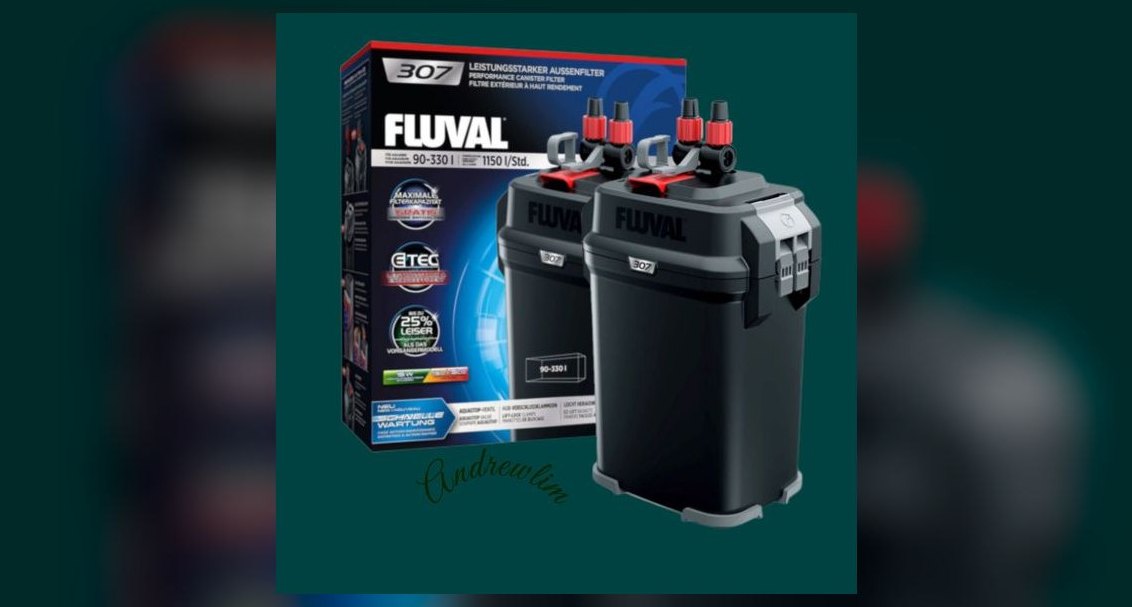
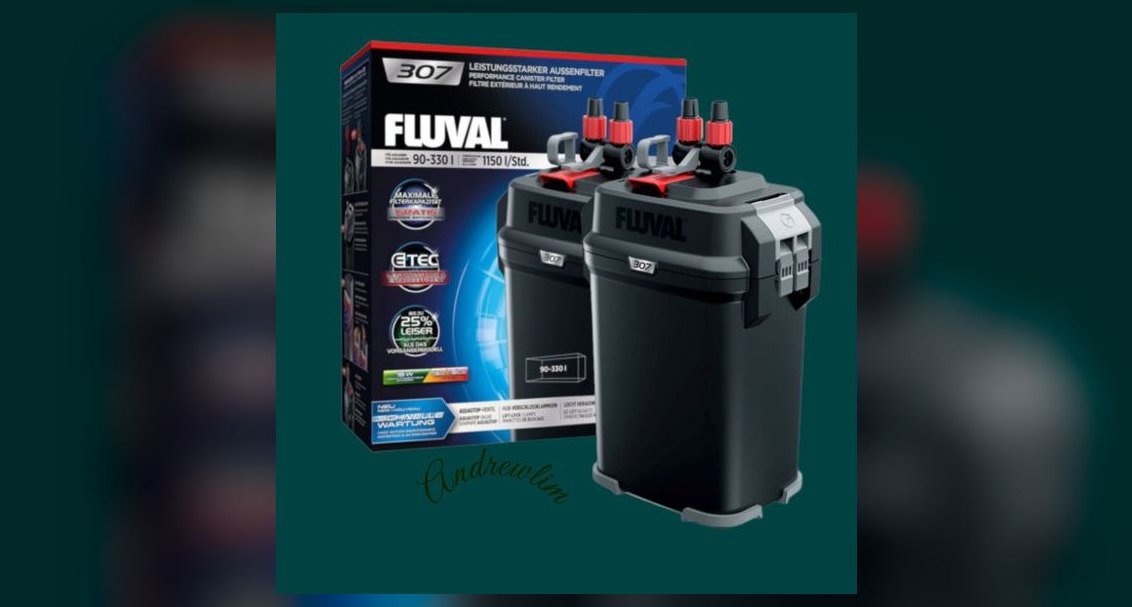
A canister filter, by contrast, is a closed loop. Water leaves through an intake, travels down a hose to a sealed pressurized chamber sitting in the cabinet, passes through stacked media trays, and returns through a second hose to a spray bar or lily pipe entirely below the waterline. Nothing splashes. Surface agitation is whatever the return flow direction produces — and because the return is a hose with a directional fitting on the end, you control that precisely. Aim a spray bar along the back wall angled slightly up and you get a gentle circular current that reaches every corner with almost no surface break. Aim a lily pipe across the surface and you get more ripple when you want it, such as during the overnight period when CO2 is off and oxygen matters most.

Media volume compounds the gap. A typical 40-gallon-class HOB holds somewhere in the range of a half-liter to a liter of usable media, often split between a proprietary cartridge and a small biological insert. A canister sized for the same tank commonly holds three to six liters across three or four stackable trays. That extra volume buys you two things that matter in a planted tank specifically. First, you can dedicate an entire tray to fine mechanical polish — a pad rated in the low micron range that pulls out the suspended fines that make a planted tank look hazy instead of glass-clear. Second, you can run purpose-specific chemical media in a compartment where it actually gets full contact time: purigen-style synthetic adsorbents for tannins from driftwood, or activated carbon for a week after a dose of algaecide or a medication, without displacing your entire biological base.
The trade-off is honest and it is real: canisters are more expensive up front, they involve hoses and seals that can leak if maintained carelessly, and they take longer to service. The rest of this page is about whether those costs are worth it in your specific case, because there are real 40-gallon planted builds where an HOB is the correct answer and the canister is over-engineering.
The step-by-step process for choosing and commissioning the filter
Treat the filter selection as a sequence rather than a single purchase decision, because the wrong order produces expensive mistakes — the most common being buying the filter first and then discovering the cabinet cannot accommodate it or the flow rate is wrong for the planting density.

Step one: audit the plant mass and the CO2 plan. Are you injecting pressurized CO2, running liquid carbon, or going low-tech with no supplementation? This single question resolves more of the decision than any other. Pressurized CO2 pushes hard toward a canister. Low-tech el natural setups, where surface agitation is harmless and even beneficial, remove the canister's biggest advantage entirely.
Step two: measure the stand interior. A standard 40-gallon breeder footprint is roughly 36 by 18 inches, and the cabinets built for that footprint vary enormously. Measure interior height at the shortest point, accounting for the center brace on many stands. A canister needs its full body height plus roughly four to six inches of clearance above for lid removal and hose routing. If you have a bare metal stand or an open shelf, a canister sitting in the open is fine but noisier and less protected.
Step three: set a flow target, not a filter model. Planted-tank practice generally targets somewhere in the range of five to ten times tank volume per hour in *rated* flow for a CO2-injected tank — for 40 gallons that is roughly 200 to 400 gph rated. Rated flow is a marketing number measured with an empty canister and no head height. Real throughput after media, hoses, and a couple of feet of lift commonly lands 30–50% below the rating. Size up accordingly, then dial back with the valve if it's too strong.
Step four: choose the return hardware before you finalize the filter. Spray bar versus lily pipe is not cosmetic. A spray bar spreads flow across a wide band at low velocity — the safer choice for delicate stems, shrimp, and long-finned fish. A lily pipe produces a concentrated laminar stream that creates a strong single-direction circular current, excellent for pushing CO2-rich water the full length of the tank but capable of flattening a carpet if aimed badly.

Step five: plan the intake guard. In a shrimp tank or a tank with fry, a bare canister intake will eventually eat something. A pre-filter sponge on the intake solves this and doubles as a coarse mechanical stage that keeps the canister trays cleaner — at the cost of needing a rinse every week or two, because a clogged pre-filter sponge silently strangles your flow.
Step six: commission and leak-check before the tank is scaped. Fill, prime, run for a few hours with paper towels under every hose junction, and check again the next morning. Finding a weeping o-ring on a bare tank is a minor annoyance; finding it after you've planted 200 stems and stocked the tank is a different afternoon entirely.
Costs, timelines, and the ranges you should actually budget for
Prices move and vary by region and retailer, so treat these as relative structure rather than a quote. The useful framing is ratios and total cost of ownership across a few years, not a single sticker number.
Acquisition cost. A canister rated for a 40-gallon planted tank typically runs somewhere in the range of two to four times the cost of a comparable-capacity hang-on-back unit. Add the return hardware: a decent spray bar is inexpensive, but glass or acrylic lily pipes are a meaningful add-on and glass ones break. Budget for stainless or acrylic if you have heavy hands or kids near the tank.

Media cost. This is where the ratio narrows over time, and it is the number most people miss. HOBs that use proprietary disposable cartridges create a recurring cost — replace on the manufacturer's schedule and you are buying cartridges indefinitely, and worse, each replacement discards a colonized bacterial bed. Many experienced keepers gut the cartridge system entirely and stuff the HOB chamber with bulk sponge and ceramic media, which eliminates the recurring cost and improves biological stability. Canister media is bought once and rinsed, not replaced — sponges last years, ceramic bio-media effectively lasts the life of the tank. Over a three-to-five-year horizon, the canister's higher entry price is partly or fully recovered.
CO2 consumption. If you inject, this is a live operating cost that the filter format directly controls. An HOB's waterfall drives off dissolved CO2 continuously, so you inject harder to hold the same concentration. That means more frequent cylinder refills or exchanges. Over a year of injection this is not trivial, and it compounds: higher injection rates during photoperiod mean a wider swing between day and night pH, which is harder on sensitive livestock.
Electricity. Both formats are low draw — typically in the range of ten to thirty watts for tank-appropriate units. Canisters are often *more* efficient per unit of flow moved because they use a sealed impeller pushing through a closed loop rather than lifting water up a tube against gravity. The difference is real but small in absolute dollars.
Time cost per service. Here HOBs win decisively. An HOB service is a two-minute operation: lift the lid, pull the media, rinse in a bucket of tank water, replace, done, no tools, no water on the floor. A canister service is a twenty-to-forty-minute operation involving disconnecting quick-couplings, carrying a heavy water-filled body to a sink or tub, opening the seal, rinsing four trays, reseating the o-ring, reassembling, and re-priming. It is not difficult, but it is a scheduled chore.
Service interval. The canister's larger media volume means it goes longer between services. A typical planted-tank canister on a moderate bioload is serviced roughly every two to four months. An HOB with a fraction of the media volume typically wants attention every two to four weeks. Multiply the per-service time by frequency and the annual time cost is closer than the per-event comparison suggests.
Setup timeline. An HOB is unboxed and running in ten minutes. A canister first-time setup — hose cutting, media loading and rinsing, priming, positioning, leak-checking — realistically consumes an hour or two on a first build, less once you've done a few. Add a day of settling before you trust it unattended.
Failure mode cost. This is the asymmetry that deserves respect. An HOB failure is a pump that stops; the tank sits without filtration until you notice. Annoying, rarely catastrophic. A canister failure can be a leak, and because the canister sits below the waterline in a closed loop, a compromised seal or a cracked fitting can siphon a meaningful volume of tank water onto the floor. This is uncommon with reasonable maintenance — replace and lubricate the main o-ring on a schedule, don't over-tighten, don't kink hoses — but the downside tail is fatter. Anyone with a canister on a hardwood floor or an upper storey should be honest about this and consider a leak-sensing water alarm as cheap insurance.
Where planted-tank keepers get this wrong
Chasing rated GPH. The single most common error is treating the box number as the delivered number. Rated flow is measured in a lab with an empty canister, no media, no hoses, and zero head height. Load four trays of media, add six feet of hose, lift water three feet, and you can lose a third to half of that. Then add gradual clogging over the service interval, which silently drops it further. Buy above your target and throttle with the outlet valve — never the inlet valve, since restricting the inlet starves the impeller and can cause cavitation and premature wear.
Over-cleaning the media. A planted tank rewards biological stability, and aggressive filter cleaning destroys it. Rinse mechanical pads in dechlorinated water or old tank water, never under a chlorinated tap. Never rinse all media stages in the same session — stagger them. Never replace bio-media wholesale; if you must upgrade it, run the old and new together for a month first.
Ignoring dead zones. A powerful filter with badly aimed return produces a tank with a fast lane and a stagnant corner. The stagnant corner is where detritus settles, where cyanobacteria establishes, and where a plant that should be thriving quietly declines. Diagnose it by dropping a pinch of fine-grained food or a small amount of dye at the far corner and watching whether it moves. If it hangs, re-aim the return or add a small circulation pump. This is the failure that gets blamed on nutrients or lighting far more often than it deserves.
Killing CO2 with an HOB and then blaming the diffuser. A frequent troubleshooting dead-end: the drop checker won't go green, so the keeper buys a bigger diffuser, then an inline atomizer, then a reactor — while the HOB spillway continues stripping gas out at the surface. If you are running an HOB with injection, lower the water level less, not more — actually, raise the water level so the return outlet is submerged and the fall distance approaches zero. That one adjustment recovers a surprising amount of the loss for free.

Under-filtering because "the plants handle it." Plants absorb nitrogen, but they don't capture particulate and they don't process the ammonia spike from a dead fish behind the driftwood. Heavy planting reduces the biological load; it doesn't remove the need for mechanical capture and a stable bacterial bed.
Skipping the pre-filter in a shrimp tank. If you keep shrimp and you run a bare intake, you will eventually lose shrimplets to it. A sponge pre-filter is cheap and solves this completely. Just remember it becomes your primary clog point and needs a routine squeeze.
Neglecting the o-ring. The main canister seal is the single component whose failure has the worst consequences and the lowest maintenance cost. Wipe it clean at every service, apply a thin film of silicone lubricant, inspect for flat spots or nicks, and replace it on the manufacturer's interval rather than waiting for a weep. Never reassemble with grit on the seal face.
Assuming a bigger tank is automatically a canister. Plenty of successful low-tech 40-gallon planted tanks run two HOBs — one at each end for cross-flow — and thrive. Without injected CO2 the surface agitation penalty vanishes, and two units give redundancy that a single canister lacks.
A decision framework for picking between them
Rather than a universal recommendation, run your build through the conditions that actually change the answer.
Choose a canister when: you inject pressurized CO2 and intend to hold a stable 25–30 ppm; you have an enclosed cabinet that hides the body and hoses; you want minimal visible equipment in the tank because the scape is the point; you're keeping species that dislike turbulence, such as long-finned bettas or wild-type dwarf cichlids; you want long service intervals and are willing to trade a longer chore for a rarer one; or you plan to add an inline heater, inline CO2 atomizer, or UV sterilizer, all of which install on canister hoses and remove yet more hardware from the display.
Choose an HOB when: you are running low-tech with no CO2 injection; the tank sits on an open stand with nowhere to hide a canister; you want the cheapest viable path to a healthy planted tank; you value fast, no-mess maintenance over long intervals; you're standing up a temporary or quarantine-adjacent setup; or you specifically want a hardware layout you can service without turning anything off or moving furniture.
Run both when: you want redundancy on a valuable livestock collection, you're cycling a second tank and need to seed media, or you have a wide 40-gallon breeder footprint where a single return can't reach both ends without an uncomfortably strong stream. A canister for primary flow plus a small HOB for polishing and easy media access is a genuinely good combination in a low-tech tank. In a CO2 tank, the HOB return should be fully submerged.

A note on adjacent formats, because the two-way framing is artificially narrow. Sponge filters driven by an air pump are the standard in shrimp-focused planted tanks — gentle, safe, biologically excellent, cheap — but they agitate the surface with rising bubbles and are poor at mechanical polish, so they suit shrimp tanks more than showcase scapes. Internal power filters occupy a middle ground: no external plumbing, no waterfall, but they consume in-tank real estate and are visible in the scape. Sumps are overkill at 40 gallons for most keepers but are the endgame if you want unlimited media volume and equipment hidden below — though an open sump surface outgasses CO2 aggressively unless you cover it, which mirrors the HOB problem at larger scale. Undergravel filters are actively contraindicated in a planted tank, since they pull water down through the substrate and disrupt the reducing zone that root feeders depend on.
The upgrade path matters too. If there is any chance this 40-gallon becomes a 75-gallon in two years, buying a canister rated a size up now means it migrates with you. HOBs don't scale — a 40-gallon HOB on a 75 is just an underpowered filter you'll replace.
Living with the choice: maintenance rhythm and long-run stability
The filter you can actually maintain on schedule beats the theoretically superior filter you dread servicing. Be honest about your own habits before you buy.

For a canister on a heavily planted 40, a workable rhythm looks like this. Weekly, squeeze the pre-filter sponge if you run one and watch the return for any drop in output — declining flow is your clog indicator and it arrives gradually enough that you'll miss it unless you deliberately look. Monthly, wipe the intake strainer and check hose connections for weeping. Every two to four months, do the full service: unplug, close the quick-disconnect, carry the body to a tub, rinse mechanical stages in tank water, leave the biological stages mostly alone, inspect and lubricate the o-ring, reassemble, prime, restart. Annually, pull and clean the impeller and its shaft — a scaled or gritty impeller is the usual cause of a canister that gets noisy or loses output for no obvious reason. Replace the main o-ring on whatever interval the manufacturer specifies.
For an HOB, the rhythm is more frequent and much lighter. Every two to four weeks, rinse the sponge and mechanical media in tank water. Monthly, pull the impeller and clear it — HOB impellers are more exposed to debris and scale up faster. Top off the reservoir if evaporation drops the level below the intake, because an HOB that loses prime will run dry and burn out its motor, which is the single most common way these units die. Keep the water level high enough that the return is submerged or nearly so, especially if you're injecting anything.
Two things degrade quietly in both formats and deserve a calendar entry. Impeller wear is one — the magnet and shaft take abuse and output falls off gradually enough to feel like normal. Media channeling is the other: over time, water carves preferential paths through compacted sponge and ceramic, so nominal flow stays fine while actual contact time collapses. Rearranging and rinsing media during service disrupts those channels.
Finally, watch for the interactions specific to a planted build. After a heavy trim, the tank produces a burst of plant debris and released organics that will load your mechanical stage fast — service sooner than the calendar says. After a big rescape that disturbs the substrate, expect a haze and possibly a small ammonia bump; a canister with fine polish media clears the haze in a day or two, whereas an HOB with less media volume may take longer or need a temporary polishing pad. And when you dose micronutrients, do it after a water change and with the filter running — even distribution is what you're paying that flow rate for in the first place.
Related questions
Does a canister filter remove CO2 from a planted tank?
Not meaningfully, if plumbed correctly. Because a canister is a sealed loop with a submerged return, gas exchange happens only at the tank surface. Aim the return to minimize surface break during photoperiod and CO2 retention is excellent. A splashing or above-water return negates this entirely.
How many gallons per hour do I need for a 40-gallon planted tank?
Aim for roughly 200–400 gph rated, understanding that real delivered flow after media and head height commonly lands 30–50% lower. Buy above your target and throttle the outlet valve down. Lower turnover suits low-tech tanks; injected CO2 tanks benefit from the higher end.
Can I run two hang-on-back filters instead of one canister?
Yes, and it's a legitimate strategy on a low-tech 40-gallon breeder — one at each end gives cross-flow and redundancy for less than a canister costs. In a CO2-injected tank the doubled surface disturbance makes this a poor trade unless both returns are submerged.
Will a canister filter alone circulate a 40-gallon breeder end to end?
Usually yes with a well-aimed lily pipe or a full-length spray bar, but a 36-inch footprint with dense hardscape can still form dead corners. Test with a pinch of food at the far end. If it doesn't move, add a small circulation pump rather than increasing filter flow.
FAQ
Is a canister filter worth it for a 40-gallon tank, or is that overkill?
It's worth it if you inject CO2, care about a clean scape with minimal in-tank equipment, or want long service intervals. It's overkill for a low-tech, lightly stocked tank on an open stand where an HOB does the job for a fraction of the cost. The dividing line is CO2 injection more than tank size.
How often should I clean a canister filter on a planted tank?
Roughly every two to four months for a moderately stocked planted tank, but let flow rate be the trigger rather than the calendar. When output visibly drops, service it. Rinse mechanical media in dechlorinated or tank water, leave biological media largely undisturbed, and never sanitize everything in one session.
Will a hang-on-back filter kill my plants?
No — plants do fine under an HOB. What it degrades is CO2 retention in an injected tank, which indirectly limits growth rate in high-demand species. In a low-tech tank with no injection, an HOB is perfectly good and the extra oxygenation is a benefit rather than a cost.
Should I use the disposable cartridges that come with a hang-on-back filter?
Generally no. Replacing them on schedule discards your colonized bacteria and creates a permanent recurring expense. Most experienced keepers replace the cartridge system with bulk sponge, filter floss, and ceramic bio-media, then rinse rather than discard. It performs better and costs less over any meaningful timeframe.
Do I need a pre-filter sponge on the intake?
If you keep shrimp, fry, or very small fish, yes — it prevents them from being drawn in and adds a coarse mechanical stage that keeps the main media cleaner. The trade-off is that it becomes your primary clog point, so it needs a squeeze every week or two or your flow quietly declines.
Can I install a heater and CO2 diffuser inline on a canister?
Yes, and it's one of the canister's best advantages. Inline heaters and inline CO2 atomizers install on the return hose, removing that hardware from the display tank entirely. Just install them on the return side, not the intake, and re-check for leaks after any inline addition.
Sources
- https://www.aqadvisor.com/
- https://www.tropicalfishmagazine.com/
- https://www.fishkeepingworld.com/
- https://www.plantedtank.net/
- https://www.aquariumcoop.com/blogs/aquarium
- https://www.thesprucepets.com/fish-aquariums-4162122
- https://www.practicalfishkeeping.co.uk/
- https://en.wikipedia.org/wiki/Aquarium_filter
Related on PULSE
- Choosing lighting intensity and photoperiod for a heavily planted 40-gallon tank
- Pressurized CO2 setup: regulator, solenoid, and drop-checker calibration
- Substrate selection for root-feeding aquarium plants: aqua soil vs. inert gravel
- Diagnosing algae outbreaks: nutrient imbalance vs. flow dead zones
- Water change schedules and dosing routines for high-tech planted aquariums
- Shrimp-safe filtration: sponge filters, pre-filters, and intake guards
 pulse-aquariumsTop 10 Aquarium Chillers for Cold-Water Species in 2027
 pulse-aquariumsTop 10 Powder Blue Tang Setup 2027
 pulse-aquariumsTop 10 best aquarium nets 2027
 pulse-aquariumsTop 10 RO/DI water system benefits 2027
 pulse-aquariumsTop 10 Aquarium Wave Pump Brands in 2027
 pulse-aquariumsTop 10 popeye treatment steps 2027
 pulse-aquariumsTop 10 best aquarium thermometers 2027
 pulse-aquariumsTop 10 desktop aquarium kits 2027
 pulse-aquariumsTop 10 LED Lights for Reef Tanks in 2027
 pulse-aquariumsTop 10 Rimless Aquariums 2027