
How do I cycle a new reef tank before adding fish in 2027?
 Curated byKory White · Fractional CRO · Maryland
 PULSEKNOWLEDGE LIBRARY
Cycle a new reef tank by seeding ammonia to roughly 2 ppm with bottled ammonium chloride, dosing live nitrifying bacteria, and testing daily until ammonia and nitrite both read 0 ppm within 24 hours of a fresh dose. That typically takes three to six weeks. Water-change the accumulated nitrate down, then add your first fish.
The outcome you should expect
The finish line for a reef cycle is not a date on a calendar — it is a measurable, repeatable event. You dose ammonia to a known concentration, wait 24 hours, and test again. When ammonia reads 0 ppm and nitrite reads 0 ppm at that 24-hour mark, and nitrate has climbed to somewhere between 10 and 40 ppm, the biofilter can consume a full fish-sized ammonia load in a day. That is the definition of cycled. Every other signal — the tank clearing, the rock looking "settled," the diatom bloom coming and going, a shop employee saying it looks ready — is circumstantial. Only the 24-hour ammonia-and-nitrite-to-zero test proves the bacteria population is large enough.
Expect the whole process to take three to six weeks in a typical build. A tank started with dry rock and bottled bacteria commonly lands at four to six weeks. A tank started with genuinely live rock pulled from an established system — rock that has been kept wet and warm in transit, never air-exposed for hours — can be functionally cycled in one to two weeks because the nitrifying biofilm is already colonized and only needs to scale. A tank started with dry rock and no bacteria dose at all, relying on airborne colonization, can take eight weeks or longer and is the slowest path available.
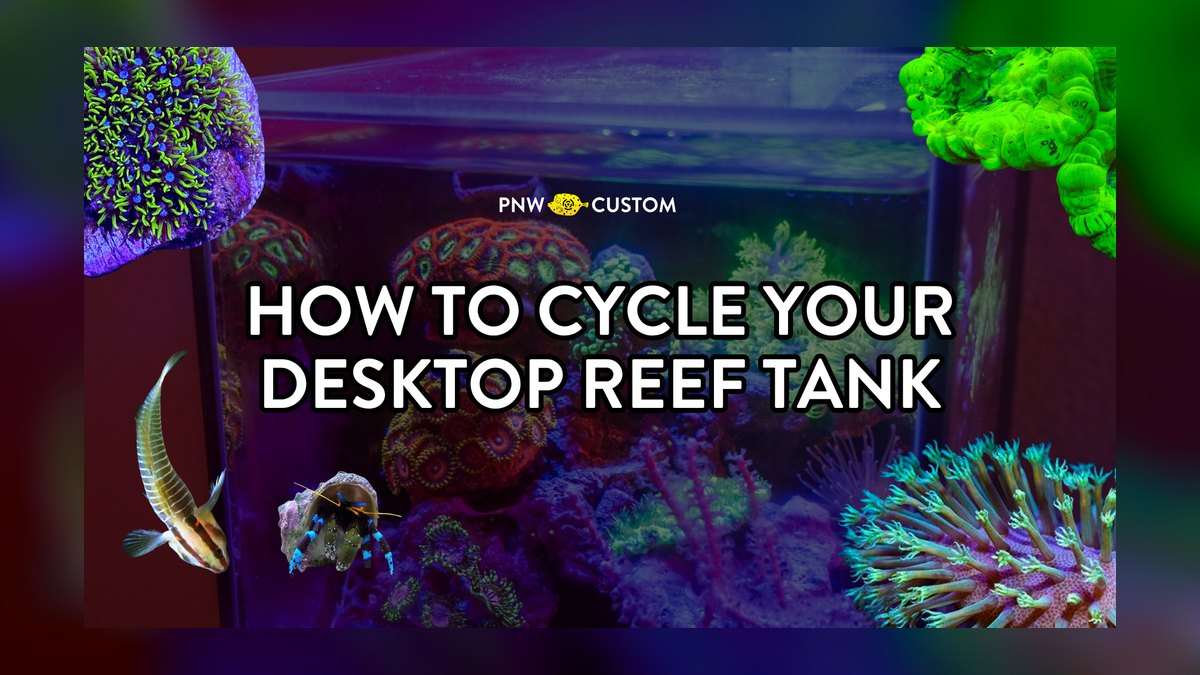
The nitrogen curve itself has a recognizable shape. Ammonia spikes first, holds for several days to a week, then falls as *Nitrosomonas*-type bacteria multiply. Nitrite rises as ammonia falls, peaks anywhere from day 10 to day 25, and often lingers stubbornly — nitrite oxidizers reproduce more slowly than ammonia oxidizers, and the nitrite plateau is where most people lose patience. Nitrate climbs steadily through both phases and does not fall on its own. If you see ammonia dropping but nitrite pinned at the top of the color chart for a week, nothing is wrong. That is the normal middle of the curve.
One correction to a common expectation: cycling does not make a tank ready for a full stocking list. It makes the tank ready for *one small fish*, or a very light bioload equivalent. The biofilter you built with a 2 ppm ammonia dose supports roughly that much waste production. Adding six fish the week after the cycle completes will overrun the bacterial population you actually cultured, and you will see a second ammonia spike — this time with livestock in the water. Stock slowly, one or two additions per month, and let the biofilter grow into each new load.
What drives that outcome
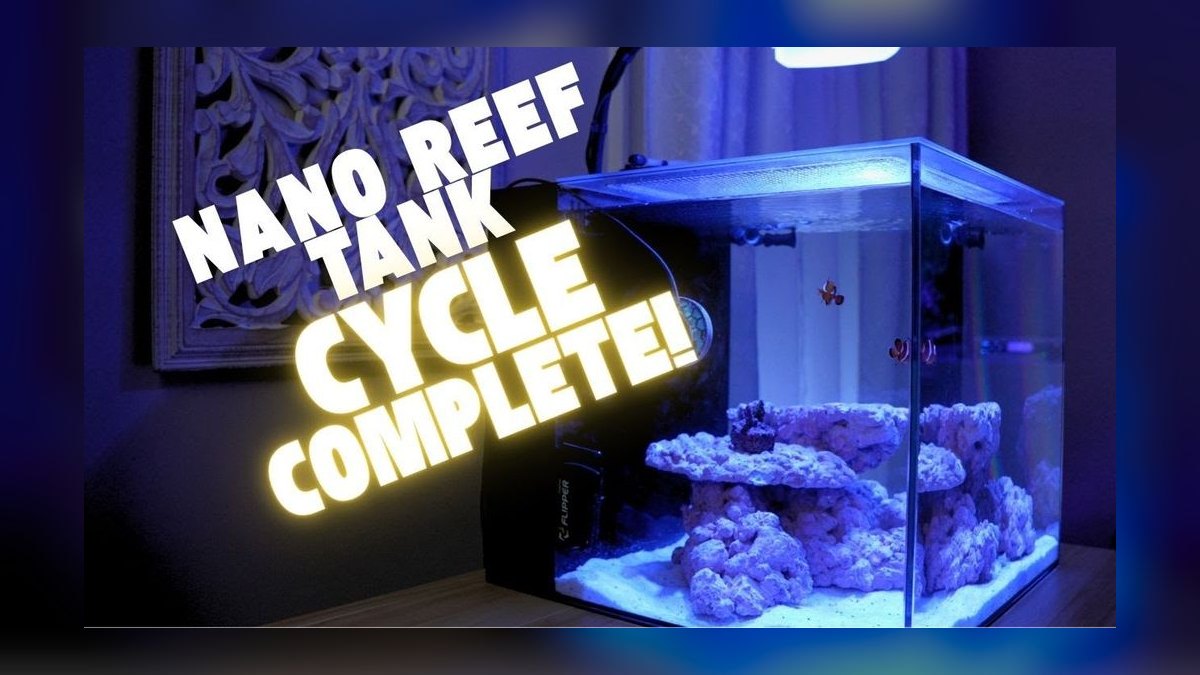
Three variables control how fast a reef tank cycles: the amount of colonizable surface area, the availability of a starter bacterial population, and the chemistry of the water those bacteria live in. Everything else — brand of test kit, choice of skimmer, whether the lights are on — is secondary.
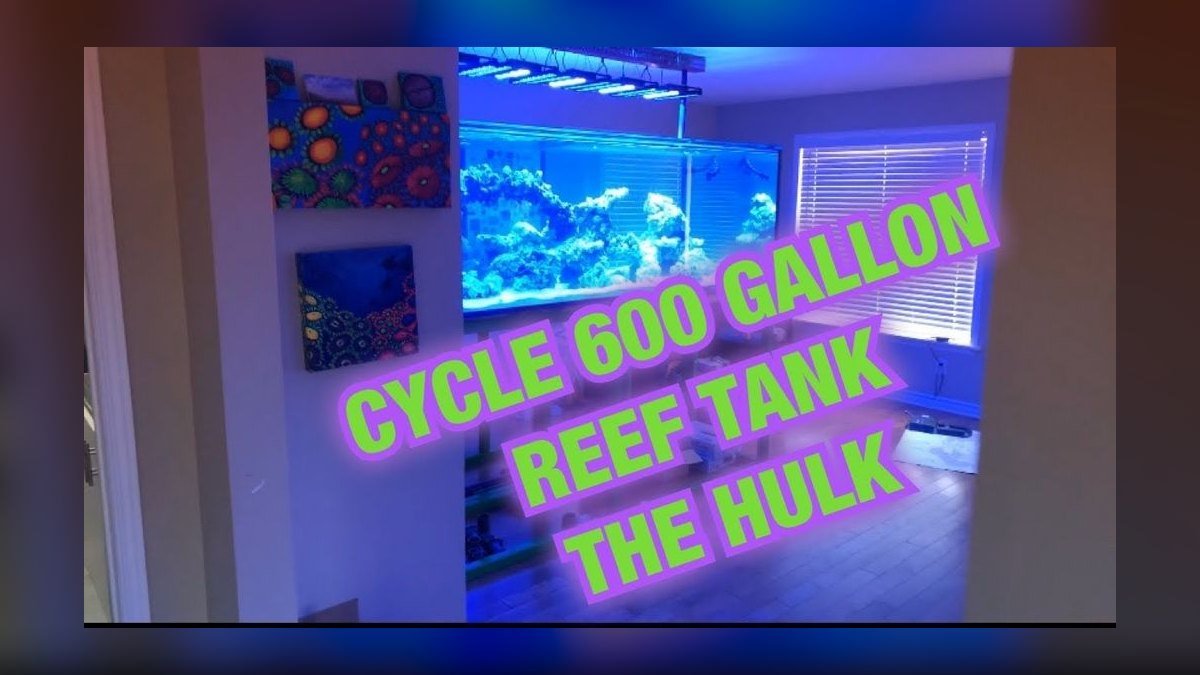
Surface area is the ceiling on your bacterial population. Nitrifying bacteria are sessile; they live attached to substrate, not floating in the water column. Porous aragonite rock at roughly 1 to 1.5 lb per gallon of display volume gives an enormous internal surface area, far more than glass, sand, or plastic media. This is why "rock-driven" filtration is the reef standard and why a rock-light aquascape cycles to a lower ceiling. If you are running a minimalist scape for aesthetic reasons, compensate with rock rubble in the sump or a dedicated biomedia reactor — otherwise you have built a tank with a small biofilter and a large fish list in your head.
The starter population determines whether you are waiting for colonization or waiting for multiplication. Bottled nitrifying bacteria products give you a live inoculum on day one, skipping the lag phase where you wait for cells to arrive from the air, the salt mix, or the food you dropped in. A cup of sand or a single small rock from a healthy established reef does the same thing, for free, and often works better because the organisms are already adapted to marine salinity. Ask a local reefer or a shop for a scoop of established sand — most will hand it over. Just accept that biological seed material can also carry pests, which is the trade-off.
Water chemistry sets the growth rate. Nitrifying bacteria in a reef environment want temperature near 78 °F, pH between 8.0 and 8.4, salinity around 1.025 specific gravity, and dissolved oxygen kept high by good flow and surface agitation. They also need alkalinity as a carbon source — nitrification consumes alkalinity, and a tank whose alkalinity drops toward 5 or 6 dKH will stall mid-cycle. Test alkalinity during the cycle, not just after. And keep any copper-based or antibacterial medication out of the system entirely; those will flatten the population you are trying to build.
Benchmarks and realistic ranges
Dose ammonia to 2 ppm total, not higher. This is the single most commonly botched number. Reef hobbyists coming from freshwater sometimes dose to 4 or 5 ppm on the theory that more ammonia builds more bacteria faster. It does not. Concentrations above roughly 4 ppm inhibit the nitrite-oxidizing organisms specifically, which is why those tanks stall with a nitrite reading that will not move for a month. Two ppm is enough to culture a biofilter that handles a normal starting bioload, and it clears cleanly.
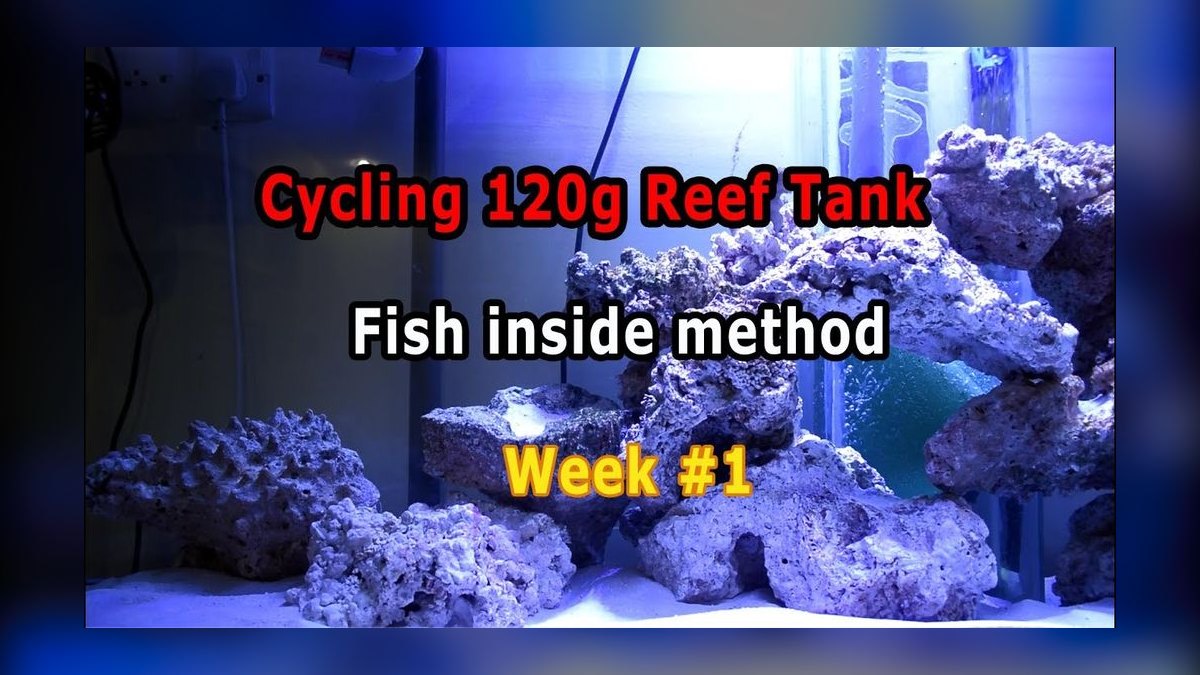
Timeline benchmarks, by starting material: genuine live rock from an established running system, 7 to 14 days. Cured live rock shipped wet from a vendor, 2 to 3 weeks. Dry rock plus a bottled bacteria product, 3 to 6 weeks. Dry rock with nothing added, 6 to 10 weeks. Add roughly a week to any of these if your tank runs cool — below 74 °F, bacterial reproduction slows noticeably.
Target parameters during and after cycling: temperature 76–78 °F, specific gravity 1.024–1.026, alkalinity 8–11 dKH, calcium 400–450 ppm, magnesium 1250–1350 ppm. Ammonia and nitrite must both be 0 ppm before adding fish; nitrate under 20 ppm is a sensible ceiling for a fish-only start, and under 10 ppm if corals are going in soon. Phosphate will be near zero on a fresh tank and will rise once feeding starts — that is expected, not a failure.
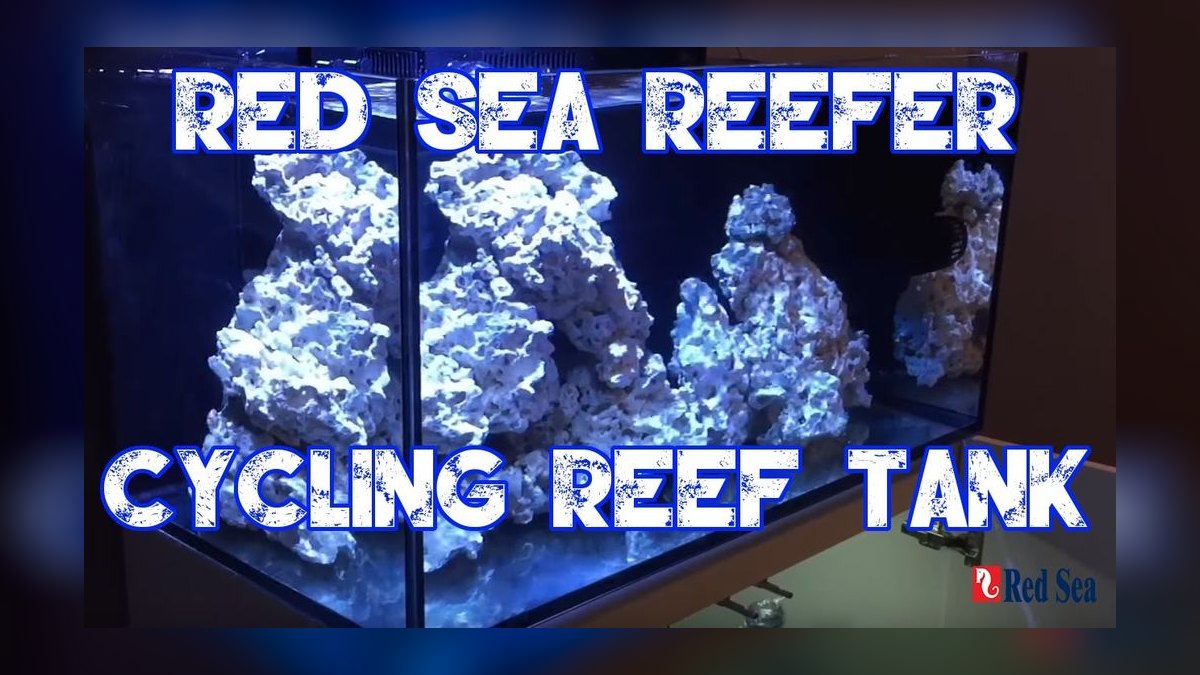
Test kit accuracy matters more than people admit. Hobby-grade ammonia tests read total ammonia (NH3 plus NH4+), and the color differences at the low end of the scale are genuinely hard to distinguish. A "0.25 ppm" reading on a card is often indistinguishable from 0. If you are getting stuck at a persistent faint reading and everything else looks finished, run the 24-hour clearance test twice on consecutive days rather than agonizing over one ambiguous tube. Seachem's ammonia alert badges and similar continuous monitors read free ammonia only and will show near-zero in a healthy marine tank even when total ammonia is measurable — useful as a safety alarm, not as a cycle-completion test.
Budget and equipment ranges, roughly: a full liquid test kit covering ammonia, nitrite, nitrate, alkalinity, calcium, and magnesium runs in the tens of dollars and is non-negotiable. A refractometer beats a swing-arm hydrometer for salinity and costs about the same as one fish. A heater and a powerhead or return pump are required during cycling; a protein skimmer is not — skimmers remove dissolved organics but do not remove ammonia, and running one during the cycle neither helps nor hurts meaningfully. Lights can stay off or on a short photoperiod; leaving them off for the first few weeks reduces the diatom and nuisance-algae bloom that usually follows.
Risks, edge cases, and failure modes
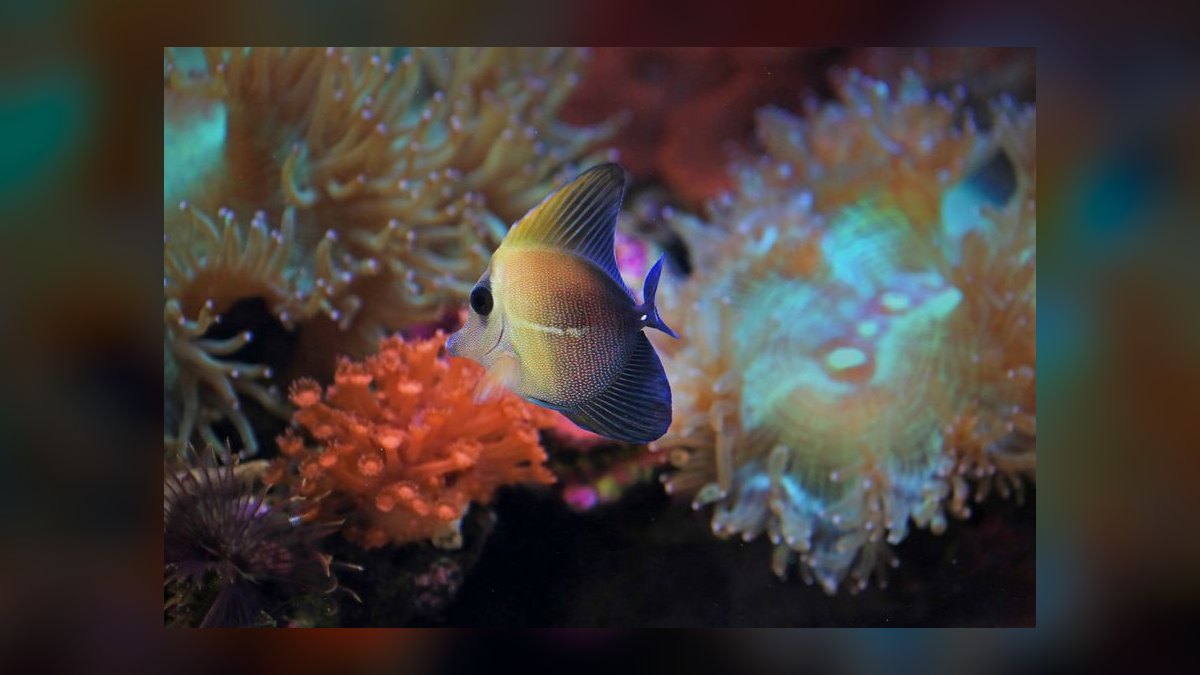
The most consequential mistake is fish-in cycling — putting a damselfish or clownfish in an uncycled tank to produce ammonia. It works biologically and it is unnecessary cruelty; the fish sits in measurable ammonia and nitrite for weeks and often survives with gill and organ damage. Bottled ammonium chloride does the same job for a few dollars with no animal involved. If you have already added fish to an uncycled tank, do not remove them abruptly — instead run daily testing, keep a bottle of ammonia-binding conditioner on hand, do 20–25% water changes whenever ammonia exceeds 0.25 ppm, and feed sparingly until the readings clear.
Stalled cycles have a short list of causes, and you should check them in this order. First, alkalinity depletion — nitrification consumes carbonate, and a tank that drifts to 6 dKH will slow dramatically; dose alkalinity back to 8–9. Second, ammonia overdose above 4 ppm suppressing nitrite oxidizers; the fix is a large water change to bring ammonia back under 2 ppm and then waiting. Third, temperature too low; bring it to 78 °F. Fourth, an antibacterial or copper contaminant, often from a medicated quarantine bucket or a container that once held cleaning product — this one is hard to fix and usually means a full water change and restart of the inoculation.
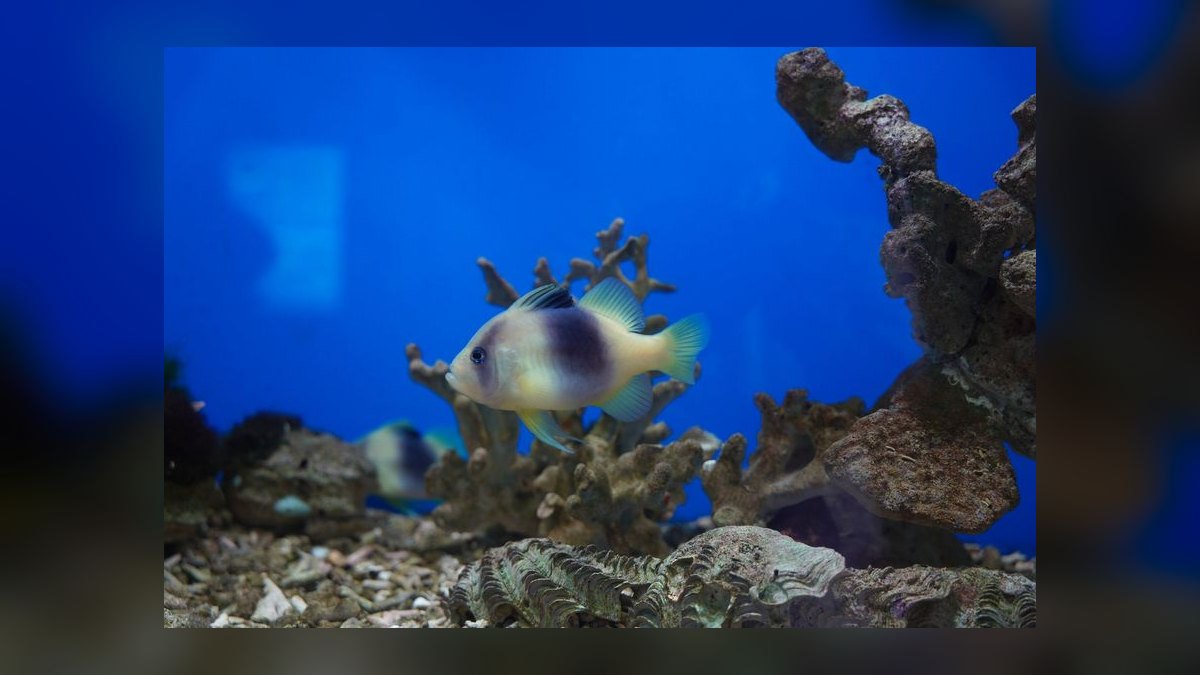
Dry rock has a specific hazard worth naming: some quarried dry rock leaches phosphate, and some old dry rock reclaimed from a previous tank contains trapped organics that will produce their own ammonia spike and a punishing algae bloom later. Cure suspect dry rock in a separate bin of saltwater with a powerhead and heater for several weeks before it goes in the display, testing phosphate as you go. This is upstream work that saves months of chasing algae afterward — the reef-tank equivalent of cleaning your data before you load it into the system, not after.
The ammonia-binding conditioner trap catches a lot of people. Products that "detoxify" ammonia convert it to a form fish tolerate, but many hobby ammonia test kits still read that bound form as present. You then think your cycle is stalled when the biofilter is fine. Avoid dosing conditioners during a fishless cycle entirely; you have no fish to protect, and they only muddy your readings.
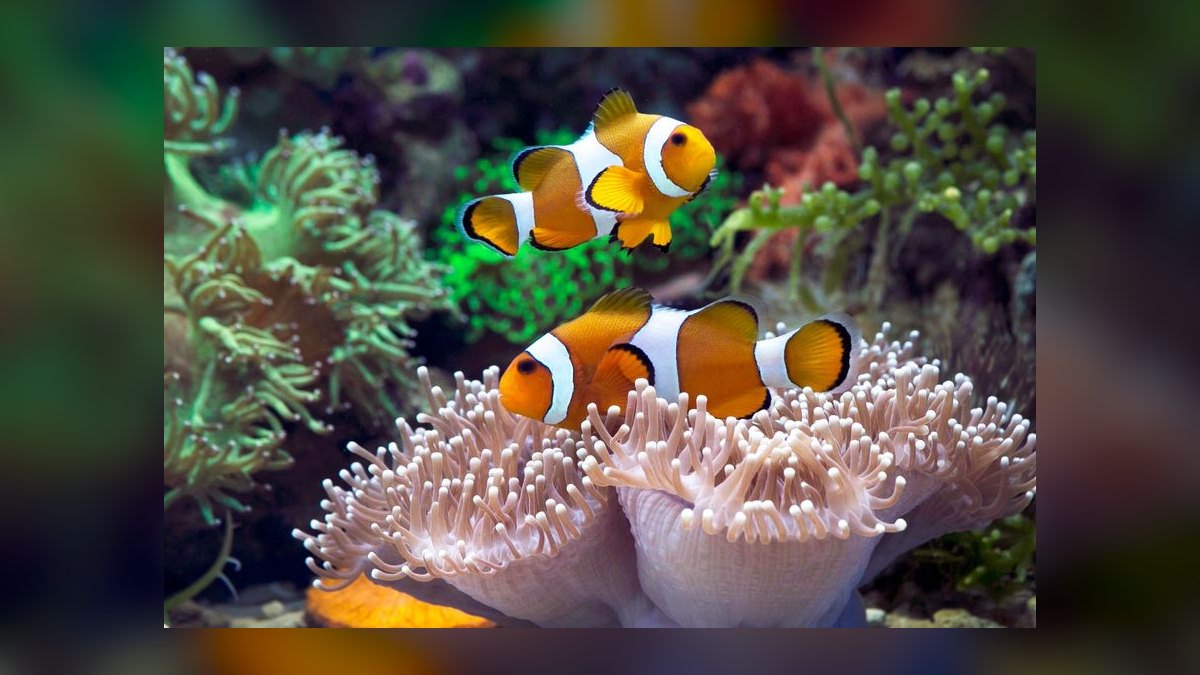
Then there is the post-cycle crash — the tank that cycled perfectly and then goes sideways in week eight. Almost always this is stocking speed. The biofilter you cultured supports a fixed load; triple that load in a fortnight and you get a secondary ammonia spike with fish in the water. The same failure mode shows up in the reverse direction: a tank that sits empty for two or three weeks after cycling completes, with nothing fed to it, loses bacterial population to starvation. If you finish the cycle and your fish is not arriving for a while, keep dosing a small maintenance amount of ammonia — roughly 0.5 ppm every few days — to hold the population steady until livestock arrives.
Finally, watch out for treating the cycle as the last biological hurdle. It is the first. Quarantine of incoming fish, pest inspection of incoming corals and rock, and alkalinity stability over months are all downstream problems that a perfect cycle does nothing to solve. The cycle earns you a functioning nitrogen pathway. Everything else in reefkeeping still applies.
A practical rollout plan
Week zero is plumbing and salinity. Assemble the tank, sump, and return pump; fill with RO/DI water mixed to 1.025 specific gravity, ideally mixed in a separate container and pumped in rather than mixed in the display. Set the heater to 78 °F, get flow moving, and let it run 24 hours to confirm nothing leaks and salinity is stable. Do not add ammonia yet. Aquascape now, while the rock is easy to move and epoxy — you do not want to be rearranging rock in week four and disturbing biofilm.
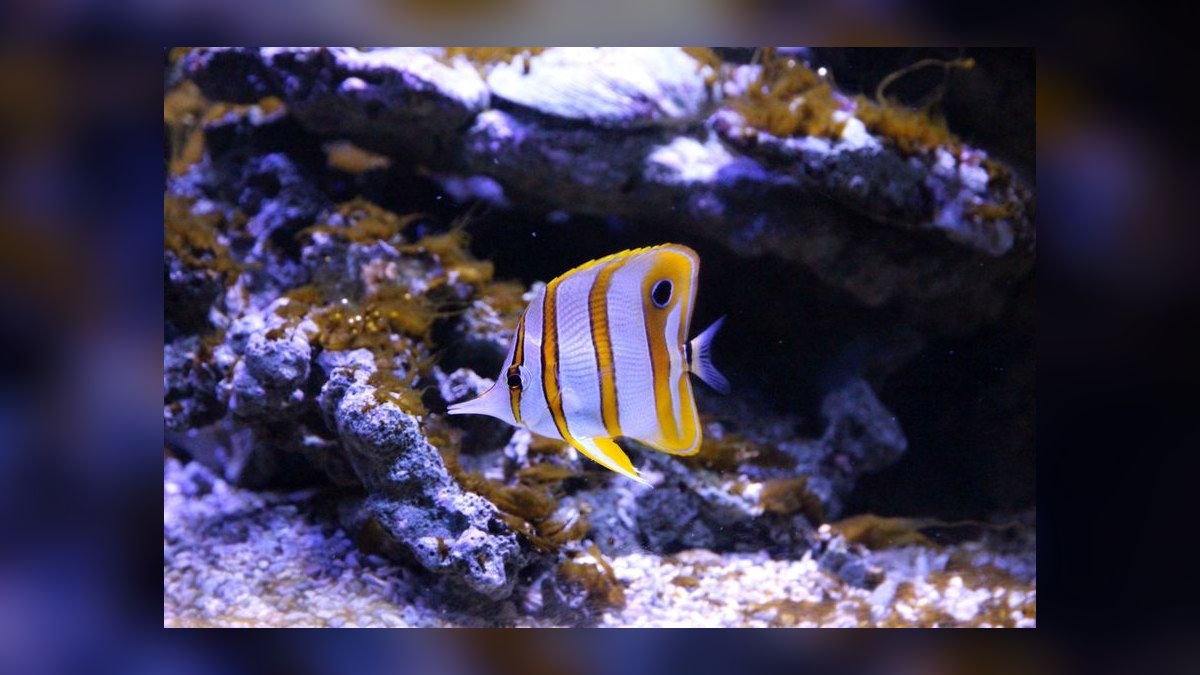
Day one: dose ammonium chloride to 2 ppm, verified by test rather than by the bottle's dosing chart, since chart doses assume nominal volume and your real water volume is less than the tank's rated capacity once rock and sand displace it. Then add the bottled bacteria per label instructions, or a scoop of established sand. Record the date and the ammonia reading. Turn lights off or run a very short photoperiod.
Days two through fourteen: test ammonia and nitrite every other day and log the numbers — a simple notebook or phone note is enough, and the trend is far more informative than any single reading. Ammonia should peak and begin falling within the first week or so. Nitrite will appear as ammonia drops. Do not water-change during this phase unless ammonia exceeds 5 ppm; you want the bacteria fed. Top off evaporation with fresh RO/DI, never with saltwater, so salinity holds steady.
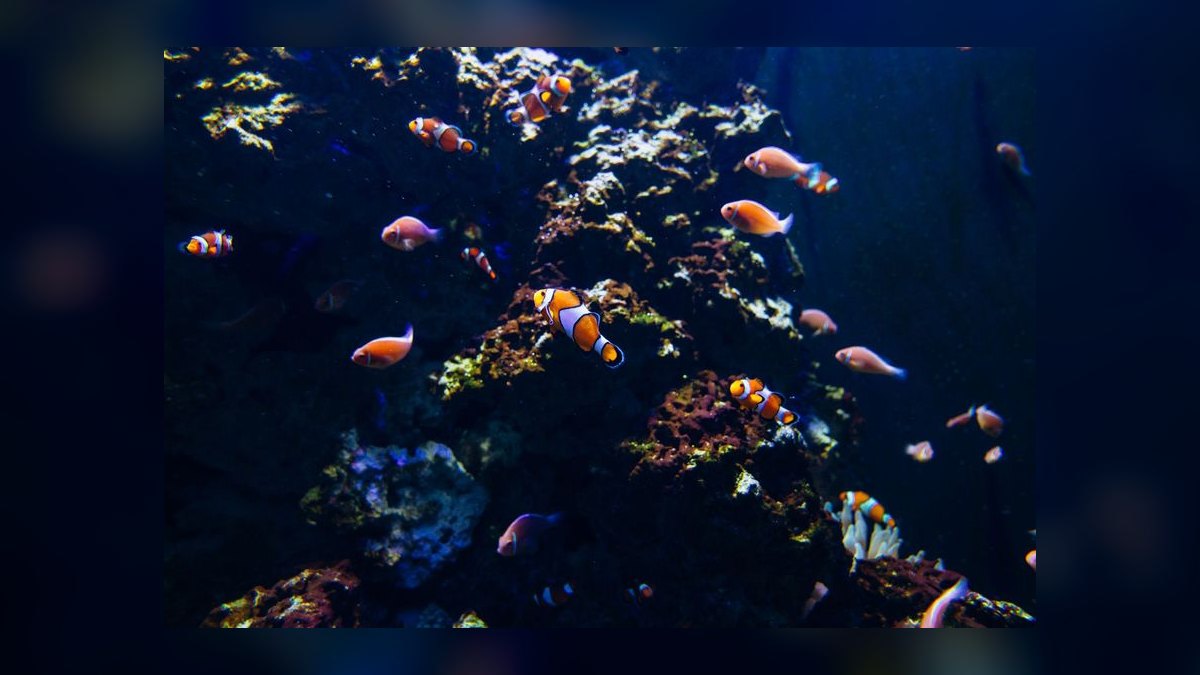
Days fifteen through thirty: nitrite is the story. Keep testing every other day, add alkalinity if it has fallen below 8 dKH, and resist the urge to intervene. When ammonia reads 0 and nitrite reads 0 on the same day, run the confirmation: re-dose ammonia to 2 ppm, wait exactly 24 hours, and test both. Zero and zero means cycled. Any residual means you wait a few more days and repeat the test.
Once the clearance test passes, do a large water change — 50% or more if nitrate is high — to bring nitrate under 10 ppm, and confirm salinity, temperature, and alkalinity are on target afterward. Then add one small, hardy fish. Feed lightly for the first week and test ammonia daily; a properly cycled tank will show zero throughout. Wait two to four weeks before the next addition, and test again after each one. This same staged-load discipline applies whether you are adding fish, a cleanup crew, or your first corals — every addition is a step change in demand on a biological system that grows slowly.
Related questions
Can I cycle a reef tank without bottled bacteria?
Yes. Airborne and salt-mix organisms will eventually colonize the rock, but expect six to ten weeks instead of three to six. A scoop of sand from an established reef is a free and faster alternative to a bottled product.
Does a protein skimmer help the cycle finish sooner?
No. Skimmers remove dissolved organic compounds, not ammonia or nitrite. Running one during cycling is harmless but does not accelerate anything. Flow and oxygenation matter far more to nitrifying bacteria than skimming does.
Should the lights be on while cycling?
Keep them off or on a short photoperiod. Nitrifying bacteria do not need light, and a dark cycle substantially reduces the diatom and hair-algae bloom that otherwise follows. Turn lights up gradually once livestock arrives.
What is the difference between cycling a reef tank and a freshwater tank?
The biology is the same nitrogen pathway. Reef differences are salinity-adapted bacteria, alkalinity consumption that must be replenished, higher target pH, and reliance on porous rock rather than filter cartridges for surface area.
How do I know if my cycle stalled versus just being slow?
A stall means no movement in any parameter for over a week. Check alkalinity first, then ammonia concentration above 4 ppm, then temperature. Slow-but-progressing looks like a nitrite plateau with nitrate still climbing.
FAQ
How much ammonia should I dose to start a fishless reef cycle?
Dose to 2 ppm total ammonia and verify with a test kit rather than trusting the bottle's volume chart — your real water volume is meaningfully less than the tank's rated capacity once rock and sand displace it. Higher concentrations do not build the biofilter faster and, above roughly 4 ppm, actively inhibit the nitrite-oxidizing bacteria you need for the second half of the cycle.
How long does it actually take before adding fish?
Three to six weeks is the realistic window for a dry-rock build with bottled bacteria. Genuine live rock from a running system can finish in one to two weeks. Dry rock with no inoculum can run past eight weeks. The date does not matter — the 24-hour clearance test does.
Is it safe to add a cleanup crew before fish?
Snails and hermits are still livestock and still produce waste, so they should go in after the cycle completes, not during it. Many reefers add a small cleanup crew first because the post-cycle diatom bloom gives them something to eat, then add fish a couple of weeks later. That order works well.
Do I need to do water changes during the cycle?
Generally no. The bacteria need the ammonia and nitrite you would be removing. The exceptions are ammonia climbing above 5 ppm, which suppresses the nitrite oxidizers, and alkalinity falling below 8 dKH, which you can correct by dosing rather than by changing water. Do one large water change at the end, before fish go in.
What if I already put fish in an uncycled tank?
Do not panic-move them. Test ammonia daily, do 20–25% water changes any time ammonia exceeds 0.25 ppm, feed very lightly, and add a bottled bacteria product to speed colonization. Keep an ammonia-binding conditioner on hand for spikes. The tank will cycle around the fish, just less humanely and with more work.
Can I speed the cycle up by raising the temperature?
Modestly. Nitrifying bacteria reproduce faster in the upper 70s to low 80s °F, so holding 78–80 °F helps compared with 72 °F. Going much higher stresses the system and reduces dissolved oxygen for marginal gain. Temperature is a lesser lever than seed material and surface area.
Sources
- https://reefbuilders.com/
- https://www.reef2reef.com/
- https://www.advancedaquarist.com/
- https://www.seachem.com/
- https://www.epa.gov/nutrientpollution/issue
- https://www.usgs.gov/special-topics/water-science-school/science/nitrogen-and-water
- https://www.fondriest.com/environmental-measurements/parameters/water-quality/
- https://www.aquariumcoop.com/blogs/aquarium
- https://www.noaa.gov/education/resource-collections/ocean-coasts/coral-reef-ecosystems
Related on PULSE
- How do I choose between dry rock and live rock for a new reef build?
- What are realistic alkalinity and calcium targets for a mixed reef?
- How do I quarantine new saltwater fish before adding them to a display tank?
- What causes a diatom bloom in a new tank and how long does it last?
- How do I set up an RO/DI system for aquarium top-off water?
This page will be disappearing soon. Save it to your device for $1 — or read it free while it is here.
@Kory-White- · if Venmo asks, the last 4 of my number are 2012
 pulse-recentHow do you calculate the right sump size for a 75-gallon display tank in 2027?
 pulse-recentTop 10 Algae Eaters vs. Amano Shrimp for Planted Tanks in 2026
 pulse-recentHow do I aquascape live rock for a reef tank in 2027?
 aquariumTop 10 Glowlight Tetra Varieties 2027
 pulse-recentTop 10 Aquarium Air Pumps vs. Piston Pumps for High-Output Sponge Filters in 2027
 pulse-recentTop 10 Wave Makers 2027 — Best Overall + Best Value
 pulse-recentHow do I maintain water flow in a reef tank in 2027?
 pulse-recentTop 10 All-in-One Reef Aquariums with Built-In Filtration as Sump Alternatives in 2026
 pulse-recentHow do I cycle a reef tank step by step in 2027?
 pulse-recentHow do I quarantine a fish with ich before adding it to my display tank in 2027?