
How Do I Value-Engineer a Buildout to Cut 20% off the Cost?
 Curated byKory White · Fractional CRO · Maryland
 PULSEKNOWLEDGE LIBRARY
Quality
Certified

Value-engineering redesigns for the same function at lower cost—it is not buying cheaper materials. Attack cost in strict order: geometry first, systems second, finishes last. Reuse the existing footprint, restrooms, ceiling grid, and HVAC; competitively bid the GC and every major sub; and run VE during design, never as change orders. A 20% cut is realistic.
Why the sequence geometry, systems, finishes matters
The single biggest mistake owners make is starting their cuts at the flooring and the paint, because those are the line items they understand. That instinct backfires. The deepest savings on a commercial buildout come from *not building things*, and the things that cost the most to build are structural and mechanical, not cosmetic. A disciplined value-engineering pass on a typical commercial interior recovers 10%–25% of total cost, and the reliable way to hit the top of that range is to work top-down: geometry first, systems second, finishes last.
Geometry means the shape of the space—where the walls go, where the wet areas sit, how many rooms you carve out of the shell. Every decision here cascades. Move a restroom and you have triggered plumbing, demolition, framing, finishes, and often a fresh inspection. Add a private office and you have bought framing, drywall, tape, paint, a door, a light circuit, and a diffuser. Because geometry drives systems, and systems drive finishes, a change made at the geometry level is worth several times the same effort spent swapping a countertop.

Only after the plan is genuinely lean should you touch mechanical, electrical, and plumbing, and only after that should you negotiate finishes. Reversing the order—the instinctive move—leaves the largest dollars untouched while you fight over pennies. Think of it as a funnel: every dollar you avoid spending at the geometry stage removes several downstream dollars that would have been chained to it, whereas a dollar saved on paint saves exactly one dollar and nothing more.
Where the money actually is
You cannot cut what you cannot see, so the first tactical move is to force the budget into named buckets and attack the biggest ones. On a representative commercial buildout the money distributes roughly like this. Mechanical, electrical, and plumbing (MEP) runs 30%–40% of the budget and is the richest target by far—reusing existing systems and avoiding relocations is where 20% deals are actually won. Walls, framing, and drywall run 15%–25%; every linear foot of new partition carries framing, board, tape, paint, and frequently a door, so fewer walls means real money. Finishes—flooring, ceilings, millwork, paint—run another 15%–25%, visible but comparatively cheap to swap, which is exactly why the deep finish cuts should wait until geometry and systems are already lean.

The remaining buckets are smaller but not nothing. Permits, design, and soft costs sit around 10%–20%; you cannot cut them much, but a clean permit package avoids resubmittal fees and schedule-killing delays. GC overhead, fee, and general conditions run 8%–15%, and these are negotiable—competitive bidding squeezes them directly.
The discipline is to insist on an open-book, line-item budget before you cut a single thing. When the contractor hands you a lump sum with no breakdown, you are negotiating blind, and blind negotiation almost always leaves the MEP and wall costs—the drivers of the entire number—unexamined. Ask for the budget organized by CSI division or by trade so you can see the shape of the spend; the buckets that look fattest are your first and best targets, and the ones that look thin rarely repay the effort of cutting them.

The highest-leverage cuts, in dollar order
Ranked by dollars saved per hour of effort, a handful of moves do most of the work. Reuse the existing footprint. Keep restrooms, kitchens, and electrical rooms where they already are—moving a single restroom can cost $20,000–$50,000 in plumbing, demolition, and finishes, and moving none is the cleanest saving on the board. Reuse the ceiling and HVAC. If the existing grid and air distribution function, keeping them saves roughly $6–$12 per square foot; just confirm the tonnage covers your actual load before you assume it works.
Cut wall count. Open plans are structurally cheaper than a warren of private offices, and glass-front demountable partitions carry a tax angle on top—they can often be depreciated as furniture rather than real property, which effectively lowers their cost. Standardize and reduce SKUs. One door-hardware set, one paint color, one flooring product across the whole space cuts waste, labor, and ordering errors, and it makes punch-list corrections faster. Right-size the lighting and electrical. Do not over-circuit out of habit; LED fixtures with occupancy and daylight controls cut both install cost and operating cost, and trimming fixture counts to actual task needs can drop $1.50–$3.00 per square foot off the electrical scope without leaving anyone in the dark.

The reason to rank cuts this way is that owner attention is the scarcest resource on the project. You have a finite number of meetings and decisions before the drawings freeze, so spend them where a single decision moves the most money. A one-hour conversation about keeping the restrooms in place can be worth ten hours of finish shopping.
MEP the 30%–40% cost center
Because MEP is the single largest line item, it deserves its own strategy rather than a general "trim it" instruction. The highest-yield idea is zone-based design instead of uniform conditioning. Most drawings heat, cool, and ventilate every square foot to the same standard, but a storage room does not need the same HVAC as an occupied open office. Dropping back-of-house areas—storage, corridors, utility rooms—to basic ventilation only can trim 8%–12% off total MEP cost. In parallel, decentralize electrical distribution: placing subpanels closer to high-demand zones such as a kitchen, a server room, or an AV-heavy conference room shortens copper runs by 15%–25%, which is thousands of dollars in both material and labor.

Lighting density reduction is the next lever. Uniform layouts drawn to generic code minimums over-light most spaces; a value-engineered layout uses task lighting plus occupancy sensors to cut fixture counts 20%–30% while keeping effective illumination. Integrated-control LEDs cost more upfront but typically pay back within 2–4 years through energy savings, and the fixture reduction alone recovers real capital immediately.
Finally, plumbing consolidation is a goldmine, because every additional restroom, breakroom sink, or floor drain adds $5,000–$15,000 in rough-in and fixtures. Keeping existing wet walls and confining new plumbing to one or two zones can shave 10%–15% off the plumbing budget by itself—which, given plumbing's share of MEP, is a meaningful slice of the whole job. The common thread across all three moves is that MEP cost is driven by distance and by count: the farther you route conditioned air, power, or water, and the more discrete points you serve, the more you pay. Value engineering MEP is mostly the discipline of keeping runs short and points few.
Finish selection without the premium
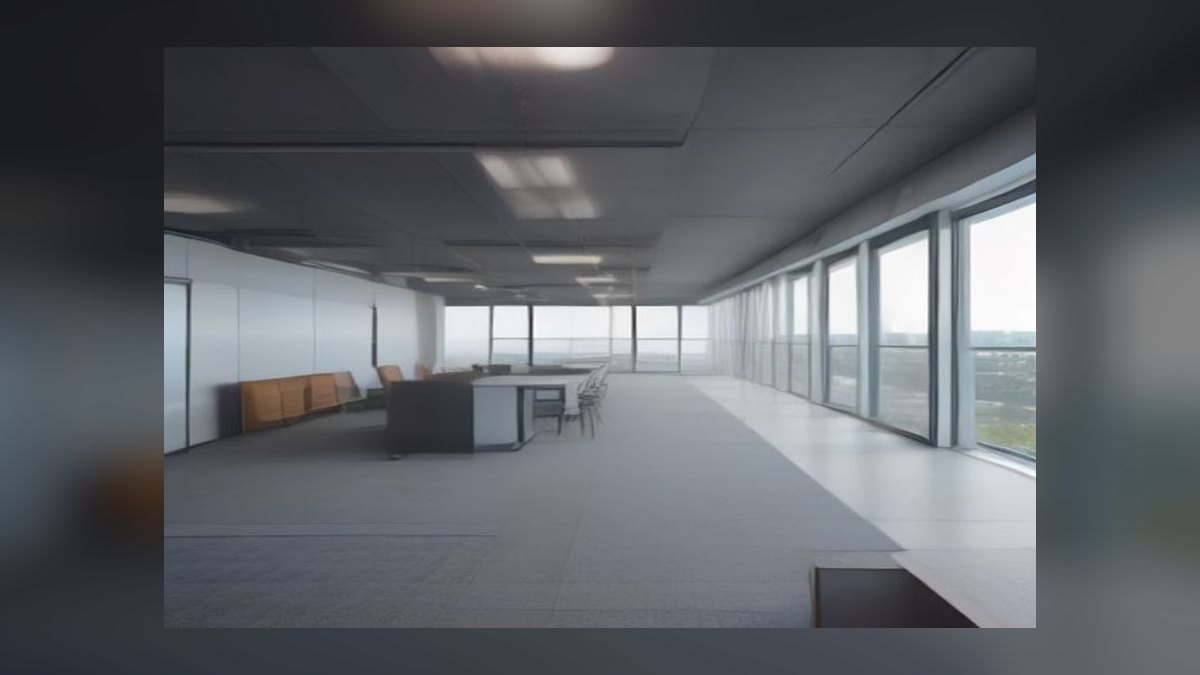
Finishes are the most visible part of a buildout and the most over-specified, so the goal is not to slash them across the board—that harms the space and its appeal—but to spend on a tiered strategy. Invest in the high-impact, client-facing areas—lobby, main conference room, restrooms, entry—and use cost-effective equals everywhere else. Luxury vinyl tile at roughly $3–$6 per square foot installed reads like hardwood or stone at a fraction of the material cost and wears better in traffic. Polished concrete, already present in many shells, can be cleaned and sealed for $2–$4 per square foot instead of buying carpet or tile on top of it. Ceilings are an easy target too: exposed structure with painted mechanicals runs $0–$2 per square foot against $4–$8 for a suspended acoustic tile ceiling—a single swap worth $10,000–$30,000 on a 5,000-square-foot space.
On walls, paint is the workhorse. Quality commercial paint in neutral tones runs $1–$2 per square foot applied, while wallpaper, wood paneling, or decorative tile ranges $5–$20. Reserve the premium treatment for an accent wall or a feature area—a 10-foot accent wall in a 1,000-square-foot office costs under $500 in material yet carries much of the perceived value of covering the entire room. Standardize doors and hardware while you are at it: custom or oversized openings add $200–$600 each over stock, so sticking to standard 3'0" × 7'0" doors from one manufacturer can save $5,000–$15,000 across a ten-door buildout.

The principle throughout is *substitute, do not subtract*—swap a specified product for an equal-performance alternate rather than deleting the function. Deleting the function (no ceiling, no door, bare slab everywhere) reads as cheap and can hurt lease value or employee experience; substituting an equal keeps the room feeling complete while the invoice shrinks. Keep a short list of go-to substitutions so the decision is fast and repeatable rather than relitigated in every room.
Use the bid process as a weapon, and do not get squeezed by the landlord
Competition does much of your value engineering for you, so treat the bid as a tool, not a formality. Put at least three qualified general contractors on the same drawings and expect a 10%–20% spread on identical scope—that spread is free savings you harvest simply by asking for it. Bid the major subs too, especially MEP, even when the GC has favorites, and require the GC to share those sub bids in an open book. Structure the deal as a Guaranteed Maximum Price (GMP) with a shared-savings clause so under-budget performance splits back to you rather than pooling entirely into the GC's pocket. Scrutinize the fee and general conditions: a GC fee of 3%–6% is normal on a buildout this size, and general conditions should be itemized, not a black-box percentage. Lock unit prices for change orders in the contract so the inevitable changes do not become a profit center.

The landlord's incentives diverge from yours the moment a tenant improvement (TI) allowance is on the table. Do not let the landlord's "preferred GC" be the only bidder—a captive contractor with no competition prices to the full allowance every time, so demand the right to bring your own bidders. Make VE savings flow to *you*: if you cut $60,000, that should reduce your out-of-pocket or convert to free rent, not vanish into the landlord's budget. Watch the construction-management fee, since a 3%–5% CM charge on a job the landlord barely touches is close to pure margin—negotiate it down or out. Get any unused allowance back as a rent credit or cash, and separate base-building work from tenant work in writing so shell or structural repairs never get reclassified as your "improvements" and charged against the budget you just value-engineered.
Phasing and timing for cash-flow savings
Value engineering is about *when* you spend as much as *how much* you spend. A phased buildout can cut the first-year financial burden 30%–50% while still delivering a working space. Build the core first—open workstations, a small breakroom, one conference room—and defer the full kitchen, lounge, and extra meeting rooms to a later phase funded by revenue the occupied space is already generating. A tech tenant might fit out a 10,000-square-foot core at $60–$80 per square foot now and add the second phase at $40–$60 later, reducing upfront capital 25%–35% and shortening the runway to opening day.

Sequencing the trades tightens the timeline further. Traditional schedules run demo, then MEP, then drywall, then finishes in strict succession, which stretches the calendar and stacks carrying costs—rent, insurance, temporary utilities, and construction-loan interest that can total $5,000–$15,000 per month on a mid-size job. Overlapping trades where the work allows—rough-in electrical while MEP runs branch lines, or painting ceilings while flooring goes in another zone—compresses the schedule 15%–25%, and even a two-week compression saves $2,500–$7,500 in soft costs. Finally, offer subs a small early-payment discount: 2% for payment within 10 days on net-30 terms can save $2,000–$6,000 on a $100,000–$300,000 subcontract, and most contractors take it gladly to improve their own cash flow.
The subtle win in phasing is that deferred scope is scope you may never build the same way, or at all. Businesses change in a year; the second-phase amenities you skip now are often revised once you actually occupy the space and learn how your team uses it. Deferring is therefore not only cheaper today, it protects you from paying to build a guess.

Related questions
When is it too late to value-engineer?
The economical window is schematic and design-development. Once construction documents are final, every change becomes a change order costing 15%–30% more than the same idea in design, plus schedule delay. VE during design costs pennies; VE during construction costs real money and time.
What should I never value-engineer?
Never cut waterproofing, roofing penetrations, HVAC tonnage, or electrical service capacity. A leak or an undersized system becomes a six-figure callback that dwarfs the original "saving." Add capacity later and you are buying new equipment, new permits, and downtime. Protect anything expensive to reach after walls close.
Does value engineering slow the project down?
It can add 2–4 weeks to design, but a well-run VE pass usually shortens overall delivery by simplifying installation and trimming material lead times—often saving 4–8 weeks in construction. Net, most projects finish sooner, not later.
Who should lead the VE effort?
Ideally a tenant-side project manager or architect working for you, not the landlord's team or the GC alone. Their incentives point at your budget. The GC contributes pricing and constructability input, but an independent advocate keeps the savings flowing to your side of the ledger.
FAQ
What exactly is value engineering in a commercial buildout? Value engineering is a systematic method for improving a project's value by examining the function of each element—materials, systems, layouts—and finding alternatives that deliver the same performance for less money. It is not cutting corners or buying cheap products; it is smarter design and specification choices that preserve function while lowering cost.
Can I really cut 20% off my buildout without sacrificing quality? Yes. A disciplined VE process typically saves 10%–25% of total cost, and 20% is a realistic target for most commercial interiors. The key is concentrating on high-cost areas—mechanical systems, layout efficiency, and finish tiers—rather than touching structural or life-safety components.
What are the biggest cost-saving opportunities? The largest savings come from rethinking the floor plan to reduce walls and doors, choosing mid-range finishes in low-traffic areas, and right-sizing HVAC and lighting to actual occupancy. Those three areas often account for more than half of realized VE savings on a typical interior.
How early should I start value engineering? During schematic design, before construction documents are finalized. Once drawings are complete, changes get expensive and slow. Starting early lets you explore alternatives without redesign costs and gives the contractor time to price options accurately instead of guessing under deadline.
Will my tenant improvement allowance cover value-engineered changes? Most TI allowances are flexible enough to accommodate VE, provided the final buildout meets the lease's base-building standards. Get landlord approval for any change touching building systems or structure, negotiate to keep unused allowance as a rent credit, and document everything in writing.
Does phasing the buildout really help the budget? Yes. Building the core first and deferring amenities to a later, revenue-funded phase can cut first-year capital 25%–35% and get you operating sooner. It works best when the deferred scope is genuinely separable and does not force you to rebuild finished areas later.
Sources
- https://www.cbre.com/insights
- https://www.us.jll.com/en/views
- https://www.cushmanwakefield.com/en/united-states/insights
- https://www.naiop.org/research-and-publications/
- https://www.agc.org/
- https://www.gordian.com/products/rsmeans-data/
- https://www.boma.org/
- https://www.appraisalinstitute.org/
Related on PULSE
- [How Do I Value-Engineer the MEP (Mechanical/Electrical/Plumbing) in a Buildout?](/knowledge/bo0126)
- [How Does a Cost Segregation Study Cut My Buildout Taxes?](/knowledge/bo0181)
- [How Do I Sublease My Space to Cut My Rent?](/knowledge/bo0043)
- [How Do I Negotiate a Bigger Tenant Improvement Allowance?](/knowledge/bo0088)
This page will be disappearing soon. Save it to your device for $1 — or read it free while it is here.
@Kory-White- · if Venmo asks, the last 4 of my number are 2012
This page is gone.
This one is off the shelf now. $1 keeps it on your phone for good — the whole page, pictures and diagrams included.
 buildoutsHow Do I Budget a Dialysis or Infusion Center Buildout?
 buildoutsHow Do I Budget a Vertical Farm or Indoor Ag Buildout?
 buildoutsHow Do I Budget a Med Spa Buildout?
 buildoutsHow Do I Negotiate a Lease and Buildout for a Cigar or Hookah Lounge?
 buildoutsHow Do I Budget a Family Entertainment Center or Mini-Golf Buildout?
 buildoutsHow Do I Budget a Gas Station or Convenience Store Buildout?
 buildoutsHow Do I Negotiate the Landlord's Construction-Management Fee Down?
 buildoutsHow Do I Budget a Pickleball Facility Buildout?
 buildoutsHow Do I Budget a Data Center or Colocation Buildout?
 buildoutsHow Do I Budget a Butcher Shop or Meat Market Buildout?