
What Is a Tenant Improvement Loan and Should I Use One?
 Curated byKory White · Fractional CRO · Maryland
 PULSEKNOWLEDGE LIBRARY
A tenant improvement loan finances build-out costs your landlord won't cover — walls, HVAC, electrical, plumbing, and finishes. Before borrowing, exhaust the landlord's free TI allowance and any rent abatement, then finance only the remaining gap at a real, disclosed rate. Use one only when the lease term is long enough to amortize it.
How the landlord's free allowance comes first
The tenant improvement (TI) allowance is a per-square-foot dollar figure the landlord contributes toward turning a raw or second-generation space into your space. It is the single largest concession you will negotiate, and most first-time tenants leave 20% to 40% of it on the table simply because they never push. The cheapest TI dollar you will ever spend is the one the landlord gives you, so exhaust the allowance completely before you finance anything.
Typical ranges vary by use and market. Expect roughly $30–$50 per square foot for office space in average markets, $60–$100 per square foot for first-generation office or medical, and $15–$40 per square foot for retail and restaurant shells where the tenant is expected to invest heavily in their own equipment. In landlord-aggressive lease-up situations — a building with high vacancy that needs bodies — allowances of $50–$120 per square foot are common. On a 3,000-square-foot space at $50/SF, that is $150,000 of someone else's money before you touch a lender.

Allowance scales with lease term and rent, because the landlord underwrites the concession against the rent you will pay back over time. A 10-year lease at $35/SF justifies far more allowance than a 3-year deal. The practical move is to push your term to unlock more allowance, then negotiate an early-termination right so the long term does not trap you if the location fails. You capture the concession without owning all the downside.
Watch the "use it or lose it" trap. Unused allowance usually reverts to the landlord unless you negotiate the right to apply the balance elsewhere. Always insert language that any unused TI allowance shall be applied as a credit against base rent, or as a moving and furniture credit. That single clause can recover tens of thousands of dollars you would otherwise gift back to the building. Layer rent abatement on top: a landlord who has maxed the allowance can often add two to six months of free rent, offsetting soft costs and early cash burn at zero interest. Stack the allowance and the abatement first, then size any loan only against the true remaining gap.

Turnkey versus allowance and who eats the overrun
There are two structures for getting a space built, and the difference decides who eats a blown budget. In a turnkey deal, the landlord builds to an agreed plan and absorbs any cost overruns. In an allowance deal, you control the build and cover anything above the per-SF number. Turnkey shifts overrun risk to the landlord — take it if you cannot manage a general contractor or do not want construction on your plate. An allowance deal gives you control of finishes and vendor selection but puts every overrun on your balance sheet, which is exactly the exposure a TI loan is meant to bridge.
Base-building obligations are the other place money hides. Code-required upgrades — ADA compliance, sprinklers, structural work, roof, and primary HVAC to the space — are usually landlord obligations, not tenant improvements you should fund out of your allowance or a loan. Landlords routinely try to push these into the TI budget, which quietly shrinks the money available for your actual build-out. Read the work letter as carefully as the rent clause and force base-building items back onto the landlord where they belong. Every dollar you win here is a dollar you don't have to borrow.
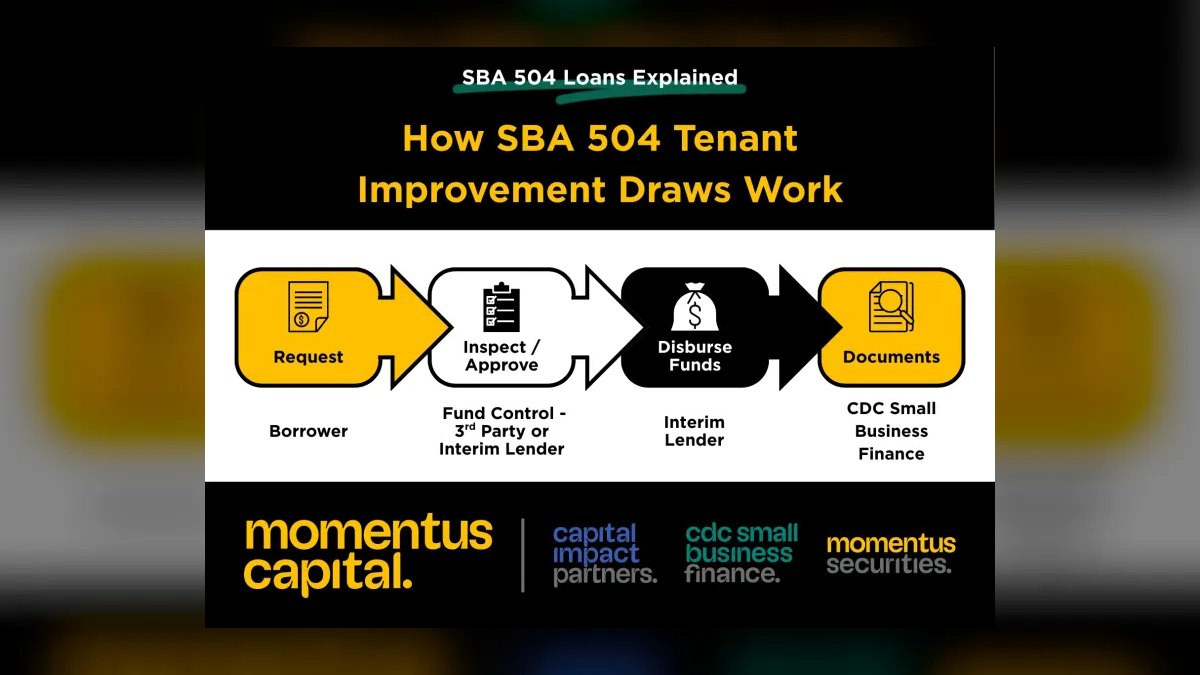
The order of operations matters more than any single tactic. Cover the total build-out with the free rungs first, then compare real financing only for what remains. The decision tree below shows how the gap shrinks before a lender ever enters the picture.
Only tenants who negotiate the concessions poorly borrow the full build-out number. The disciplined tenant borrows the gap and nothing more.

When a TI loan actually makes sense
Borrow when the math and the lease term line up, and skip it when you would be financing someone else's asset on a short fuse. The good reasons to borrow are concrete: the build-out creates revenue-producing capacity such as a dental operatory, a commercial kitchen, or lab space; the lease term is seven to ten years so you can amortize comfortably; and your blended cost of capital sits below what the landlord charges for amortized TI. Improvements that generate 20% or more revenue per square foot — common in medical, dental, specialty retail, and food service — usually justify the debt.
The bad reasons are just as concrete. A three-year lease where you would be paying off a seven-year loan on space you will vacate is a losing trade. So is borrowing for cosmetic finishes and fancy lighting that add no enterprise value, or borrowing to cover costs the landlord would have funded if you had simply asked. If the TI allowance already covers 80% or more of the cost and you can fund the rest from working capital, taking on debt is usually the wrong call.

The single most important discipline is to match the loan term to the lease term. Never amortize TI debt past your lease expiration. If you sign a five-year lease, your TI loan should be five years or less — otherwise you are making payments on improvements you no longer occupy. A clean test cuts through the noise: if the improvement still pays you back assuming you leave at the earliest termination date, finance it. If it only pencils by assuming you renew, you are gambling on a lease option you do not control.
Know exactly which assets are on the line. SBA loans require a personal guarantee from any owner with 20% or more equity, and businesses with less than two years of profitable history will face guarantees plus higher rates, often 12% to 15%. Landlord-amortized TI usually rides on your existing lease guarantee. Before you sign anything, map which of your personal and business assets each option puts at risk, because "convenient" financing frequently carries the harshest recourse.

The financing ladder ranked by true cost
The same $200,000 of build-out money costs wildly different amounts depending on where it comes from. Ranked cheapest to most expensive in a typical environment, the ladder starts with the two free rungs and only then moves to actual debt. Landlord TI allowance is a $0 cost of capital and always comes first. Rent abatement — two to six months of free rent — is the second free rung, offsetting soft costs and early cash burn at no interest.
Below the free capital, the SBA programs usually win on total cost. An SBA 504 loan offers long terms and a low down payment, roughly 10% equity, with rates often around 9% to 11%, and it fits owner-occupied-style build-outs and heavy equipment well. An SBA 7(a) loan is more flexible in use, priced around prime plus roughly 2.25% to 4.75%, with terms up to 10 years for leasehold improvements. The trade-off is speed: SBA underwriting commonly takes 60 to 90 days, which matters if the landlord needs construction started before lease commencement.

A bank leasehold-improvement term loan runs about 8% to 12% over three to seven years, closing faster than SBA — often two to four weeks — but with stricter collateral demands. Equipment financing covers only the furniture, fixtures, and equipment portion such as ovens, chairs, or lab gear, typically 7% to 14% secured by the equipment itself. Landlord-amortized TI, where the landlord fronts extra money and recoups it in rent at a disclosed or hidden 8% to 12%, is convenient but often the priciest option in the deal — refuse it whenever the implied rate beats your bank's. Merchant cash advances and high-rate online loans, with effective APRs of 30% to 80% or more, should never touch construction financing.
How to shop and structure the loan
Lenders want line items, not guesses, so get three contractor bids before you approach anyone. A detailed scope of work with $5,000 to $15,000 in contingency — typically 5% to 10% of total cost — signals you have done your homework and controls the overrun risk that scares underwriters. The bids also give you leverage to strike inflated numbers from a landlord's affiliate general contractor, where markups of 10% to 20% on labor and materials are common when you do not force competitive bidding.

Check your credit and coverage before applying. Most TI lenders want a 680 or higher FICO and a debt-service coverage ratio of at least 1.25x, meaning your net operating income is 1.25 times your annual loan payment. If you fall below either threshold, a co-signer or an SBA program with its guarantee structure is usually the better path than paying a punitive rate. Knowing your numbers before the lender pulls them lets you steer the conversation instead of reacting to a bad offer.
Then shop three to five lenders — community banks, credit unions, and online SBA lenders all write TI financing — and compare more than the headline rate. Prepayment penalties of 3% to 5% and origination fees of 0.5% to 2% can swamp a small rate advantage, and the real cost only shows in the total. To make the difference concrete: on a $150,000 ten-year loan, a single percentage point of rate is worth roughly $8,000 in total interest. That is real money that comes down to which lender you called and how prepared you were when you called them.

How to keep the landlord from overcharging on the build
The landlord controls the build process by default, and that is exactly where the overcharges live. Take control back with lease language, not goodwill. Demand disbursement controls so the allowance is paid against AIA pay applications with lien waivers, not held hostage until a vague "final completion" the landlord defines however it likes. Add a clause requiring the landlord to fund the allowance within 30 days of each draw request, so your general contractor is not carrying the project on your credit card while the building sits on the money.
Cap the landlord's construction management fee. Landlords routinely charge a 3% to 5% CM fee on the entire TI budget for "oversight" that amounts to forwarding emails. Cap it at 2%, or strike it entirely when you are hiring and managing your own general contractor. Combined with killing affiliate markups through competitive three-GC bidding, these two moves alone often recover 5% to 15% of the total build cost — money that would otherwise disappear into fees you never see itemized, and money you would otherwise borrow at interest.

Finally, protect your cash flow at the front end by tying rent commencement to delivery. Negotiate that rent does not start until the landlord has fully funded the TI and delivered the space ready for your work, and that every week of landlord-caused delay pushes rent commencement back one week. A tenant who reads the work letter as carefully as the rent clause — controlling disbursement timing, fees, markups, base-building obligations, and rent commencement — keeps tens of thousands of dollars that a passive tenant simply signs away.
Related questions
How much TI allowance should I ask for per square foot?
Anchor to your market and use: roughly $30–$50/SF for average office, $60–$100/SF for first-generation office or medical, and $15–$40/SF for retail shells. Push term length to justify more, and demand that any unused balance convert to a rent credit.
Can an SBA loan be used for tenant improvements?
Yes. Both the SBA 504 and 7(a) programs fund leasehold improvements. The 7(a) allows terms up to 10 years at roughly prime plus 2.25%–4.75%. Expect 60–90 days to close and a personal guarantee from owners holding 20% or more equity.
Should I take landlord-amortized TI or a bank loan?
Compare disclosed rates. Landlord-amortized TI usually runs 8%–12%, sometimes hidden inside rent. If your bank or SBA rate is lower, borrow from them and keep the improvement off the landlord's ledger. Only accept amortized TI when its implied rate genuinely beats your alternatives.
What happens to TI improvements when my lease ends?
Most improvements — walls, wiring, HVAC, plumbing — become the landlord's property and stay with the space. That is precisely why you should never amortize a TI loan past your lease term or fund permanent build-out on a short lease you may not renew.
FAQ
What exactly does a tenant improvement loan cover? A TI loan typically pays for construction inside your leased space — walls, flooring, lighting, HVAC, plumbing, and electrical work. It can also cover design fees, permits, and sometimes furniture or equipment, though each lender sets its own eligible-expense list. Confirm the scope in writing before you commit.
How much can I borrow with a tenant improvement loan? Amounts commonly range from around $50,000 to several million dollars, depending on project scope and creditworthiness. Lenders usually fund a percentage of total build-out cost, sometimes 80% to 90% of the project, and they expect you to bring the balance or capture it through the landlord's allowance first.
What interest rates and terms should I expect? Rates run from prime plus a few points to low double digits, driven by your credit, loan size, and lender type. Terms commonly span 5 to 15 years, with SBA options reaching 10 years for leasehold work. Weaker borrowers may see 12% to 15% plus a personal guarantee.
Do I need a personal guarantee or collateral? Usually yes. Most lenders require a personal guarantee, especially for newer or smaller companies, and SBA rules require it from any owner with 20% or more equity. Collateral may include the improvements themselves, business assets, or real estate, but specific requirements vary significantly by lender.
How long does approval and funding take? It ranges from about a week for a community-bank leasehold loan to 60–90 days for an SBA loan, depending on complexity and documentation. If your landlord needs construction started before lease commencement, factor that timeline in early and consider a faster bank product for the gap.
Is a TI loan better than asking the landlord for a build-out allowance? Almost never as a first move — the allowance is free capital and should be exhausted first. A TI loan gives you more control and makes sense only for the gap above the allowance, when the lease term is long enough to amortize it and the disclosed rate beats landlord-amortized TI.
Sources
- https://www.sba.gov/funding-programs/loans/504-loans
- https://www.sba.gov/funding-programs/loans/7a-loans
- https://www.investopedia.com/terms/t/tenant-improvement-allowance.asp
- https://www.cbre.com/insights
- https://www.jll.com/en-us/insights
- https://www.cushmanwakefield.com/en/united-states/insights
- https://www.naiop.org/research-and-publications/
- https://www.boma.org/
- https://www.irem.org/
Related on PULSE
- [How Do I Finance a Buildout: TI Loan vs Landlord vs Cash?](/knowledge/bo0185)
- [SBA 504 vs Conventional Loan: How Do I Pay Less to Buy My Building?](/knowledge/bo0036)
- [How Do I Negotiate a Tenant Improvement Allowance for a Warehouse?](/knowledge/bo0101)
- [How Do I Get Tenant Improvement Money on a Lease Renewal?](/knowledge/bo0066)
- [How Much Should a Tenant Improvement (TI) Allowance Be Per Square Foot?](/knowledge/bo0011)
- [What Is a Tenant Improvement (TI) Allowance and How Do I Get the Landlord to Pay for It?](/knowledge/bo0002)
This page will be disappearing soon. Save it to your device for $1 — or read it free while it is here.
@Kory-White- · if Venmo asks, the last 4 of my number are 2012
 pulse-recentHow much does a 5,000 sq ft buildout cost to budget for a first-generation retail space in 2027?
 buildoutsHow Do I Negotiate a Dollar Cap on My Personal Guarantee?
 pulse-recentWhat interest rate do landlords typically charge when they amortize a TI allowance into rent instead of paying it as cash in 2027?
 pulse-recentWhat is the average landlord-funded buildout allowance for a 5,000 sq ft retail space in 2027?
 pulse-recentHow much should I budget for a landlord-funded buildout when the allowance still leaves a gap to cover myself in 2027?
 pulse-recentHow much does a landlord-funded tenant improvement allowance typically cover per square foot in 2027?
 pulse-recentHow do I budget a landlord-funded buildout when the TI allowance only covers half the cost in 2027?
 pulse-recentHow Much Should I Budget for the Landlord's Construction Management Fee Deducted From My TI Allowance in 2027?
 pulse-recentHow do I complete a commercial buildout step by step from lease signing to move-in in 2027?
 pulse-recentWhat interest rate does a landlord typically charge when amortizing my TI allowance into rent in 2027?