
How Do I Budget a Commissary or Shared Kitchen Buildout in 2027?
 Curated byKory White · Fractional CRO · Maryland
 PULSEKNOWLEDGE LIBRARY
Quality
Certified
Budgeting a commissary or shared kitchen buildout requires a strategic approach focused on inheriting existing infrastructure rather than building from scratch. The most cost-effective path is finding a second-generation restaurant or food space that already has the expensive bones — grease traps, exhaust hoods, gas service, and floor drains — which can cut your costs by 40% to 60% compared to a raw shell. A raw-space buildout typically runs $150–$450 per square foot, while a second-generation conversion can drop to $75–$200 per square foot, with the exhaust hood system alone costing $40,000–$120,000 and utility upgrades adding $30,000–$120,000 or more. The single biggest money move is never signing a raw-shell lease for a kitchen if a second-generation food space is available, because retrofitting hoods, gas, and drainage into a cold shell is where budgets double.
What Systems Dominate the Cost of a Commissary Buildout?
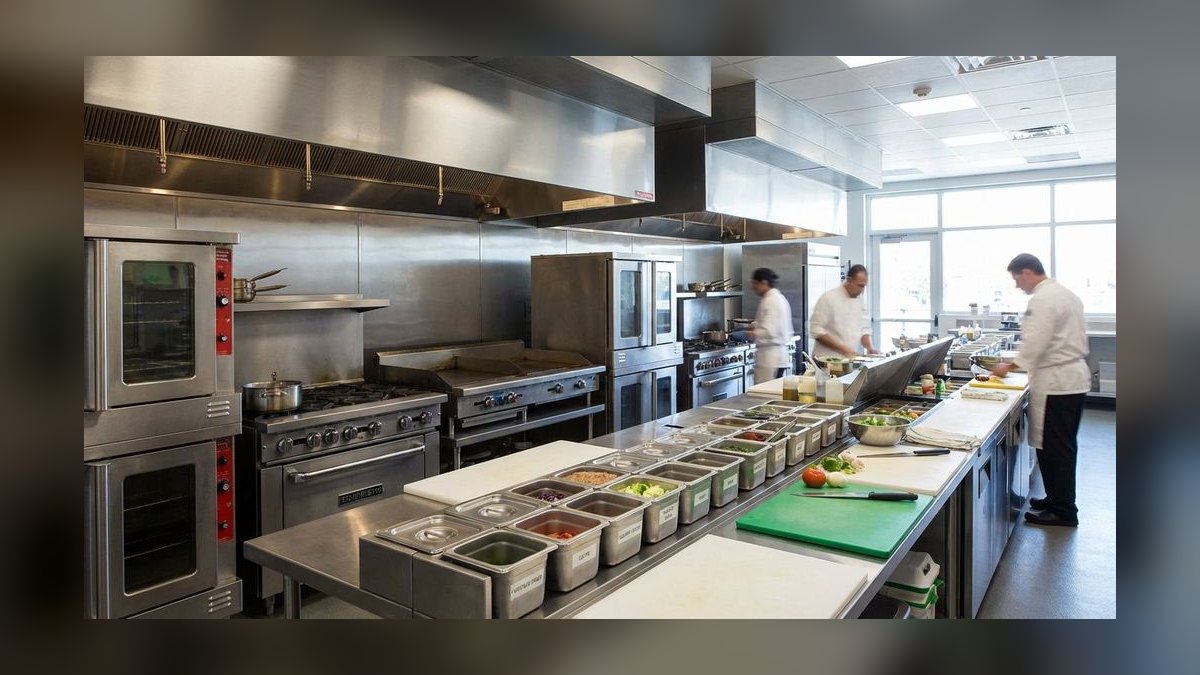
The cost of a commercial kitchen buildout is driven by five major systems, not by finishes or cabinetry. The exhaust hood with make-up air and fire suppression is the single most expensive line item, typically running $1,000–$2,500 per linear foot installed, or $40,000–$120,000 total for a commissary-sized system. The grease interceptor (sized 750–2,000+ gallons for a shared kitchen) costs $10,000–$40,000 including excavation and piping. Electrical service and distribution for a busy kitchen drawing 400–1,200 amps runs $30,000–$120,000, especially if the building needs a transformer upgrade. Gas service and piping for ranges, ovens, and fryers adds $15,000–$60,000, and plumbing with floor drains, water heating, and three-compartment sinks totals $40,000–$100,000. A commercial kitchen hood and grease trap cost analysis shows these five systems together account for 60–75% of total buildout costs in most markets.
Beyond these core systems, operators must budget for walk-in coolers and freezers ($15,000–$60,000 each), NSF-rated equipment ($50,000–$250,000+ depending on stations), and HVAC for kitchen heat and ventilation balance ($20,000–$80,000). The shared or ghost kitchen model has a real financial edge here: by amortizing one grease trap, one set of drains, and one ventilation system across multiple tenants, the per-station infrastructure cost drops dramatically. For a ghost kitchen or commissary lease, landlords may offer a tenant improvement allowance of $50–$150 per square foot, but you must ensure that allowance explicitly covers these specialty systems rather than excluding them as "tenant improvements."

How Do Second-Generation Spaces Save Money on a Kitchen Buildout?
The cheapest commercial kitchen is one that's already most of a kitchen. A second-generation restaurant space typically comes with the four most expensive elements already installed: the Type I exhaust hood and make-up air, the grease interceptor, floor drains and a mop sink, and adequate gas and electrical service. Inheriting these can cut a buildout from $300 per square foot to $120. When you tour a space, value it by what's already there: a working hood alone is worth $40,000–$120,000; a properly sized grease trap is $10,000–$40,000 with excavation; gas service and a meter upgrade can be $15,000–$60,000. Even if the layout is wrong, keeping the hood and gas infrastructure where they are and designing the kitchen around them saves enormous money.
The opposite mistake — falling in love with a pretty raw shell in a good location — means you pay full freight for every system. A raw shell requires bringing in dirt for grading, pouring a slab with proper floor drains, running gas and electrical from the street, and installing a hood system from scratch. These costs are often underestimated by 30–50% because they don't account for the structural work needed to support a heavy hood, the fire-rated shaft required for ductwork, or the utility company's fees for upgrading street-level service. Walk the space with a kitchen designer or MEP engineer before you sign so you know exactly what you're inheriting versus building. The lease terms for ghost kitchens and commissaries often allow tenants to push these permanent improvements onto the landlord as base-building work, especially if you're signing a 5–10 year lease.
What Are the Hidden Costs That Blow Up a Commissary Budget?
Beyond the obvious line items like hoods and grease traps, several hidden costs routinely catch first-time kitchen builders off guard. Fire suppression system installation — required by code for any commercial cooking equipment — typically runs $5,000–$15,000 depending on hood size and local fire marshal requirements. Many operators forget that this system must be inspected annually (another $300–$800 per year). Similarly, flooring isn't just any tile: you need quarry tile or sealed concrete that can withstand hot grease, heavy equipment, and daily chemical cleaning. Budget $8–$20 per square foot for proper commercial flooring, plus another $2,000–$5,000 for floor drains and trench drains if they don't already exist.
Plumbing and gas line upgrades are another stealth cost. Even in a second-gen space, you may need to add a three-compartment sink, hand-wash sink, mop sink, and possibly a grease interceptor. Each sink requires hot and cold water, drainage, and venting — figure $1,500–$4,000 per sink installed. Gas line sizing is often overlooked: running a line to a new location can cost $500–$3,000, and if your utility requires a meter upgrade, add $2,000–$8,000. Always get a plumber to do a "feasibility walk" before signing a lease. Permitting and professional fees can eat 10–20% of your total buildout budget if you're not careful. Architectural and engineering fees for a kitchen buildout typically run $5,000–$25,000 depending on complexity, and permit fees vary wildly by city — expect $1,000–$10,000 for a commercial kitchen, plus $500–$2,000 for plan review.
How Do You Negotiate With Landlords to Fund the Buildout?
Food-space tenants get burned in specific ways when negotiating buildout costs. Trap one: the raw-shell lease dressed up as turnkey. A landlord offers "restaurant-ready" space that's actually a cold shell with no hood, gas, or grease trap — and a stingy TI allowance that won't cover them. Itemize what's actually delivered in the lease, and push the hood, grease interceptor, gas service, and floor drains into base-building work or the TI allowance, because these are permanent property improvements that increase the building's value and outlast your tenancy. Trap two: the TI allowance that excludes the kitchen's guts. Landlords offer a fat per-square-foot number, then exclude "specialty systems" — exactly the systems that cost the most. Define in writing that the TI covers hood, gas, grease, and drainage.
Trap three: signing before plan check. Health and building departments have hard rules on hood coverage, sink counts, grease-trap sizing, and finishes; design without a pre-submittal plan-check meeting and you'll eat redesigns. Make rent commencement contingent on permit issuance. Trap four: the contractor without restaurant experience. Kitchen MEP and code are specialized — a generic GC will miss requirements and rack up change orders. Hire a restaurant-experienced GC and an owner's rep at 3–5% of cost; use a GMP contract with written change orders. Trap five: no free rent through the build. A kitchen buildout plus inspections takes 3–8 months; negotiate free rent for the entire construction-and-permitting window so you're not paying for a kitchen you can't legally cook in. The broader principles of budgeting specialty commercial buildouts apply here: always push permanent improvements to the landlord and protect your cash through rent abatement.
What Is the Real Timeline and Cash Flow Impact?
A commissary kitchen buildout from lease signing to opening usually takes 4 to 8 months, with permitting alone often taking 6 to 12 weeks. During this period you'll be paying rent on an empty space and covering design fees, so plan for 6 to 9 months of operating capital beyond construction costs. The permitting phase is the most unpredictable: many cities take 4–12 weeks to review and approve plans, and if you need revisions, that clock resets. Some jurisdictions require separate health department approval, fire marshal review, and building department plan check — each with their own timeline and fee structure.
Carry a 10–15% contingency (minimum $10,000–$25,000) for unexpected structural changes, fire code upgrades, or health department requirements that surface mid-project. Smart operators also budget for a project manager ($2,000–$8,000) or general contractor fee (15–25% of total buildout cost) to keep everything on track. Trying to DIY a commercial kitchen buildout almost always costs more in the long run because of missed code requirements, uncoordinated trades, and change orders. The best cash flow strategy is to structure your lease with rent abatement through the buildout period, use the landlord's TI allowance to cover as much hard cost as possible, and finance equipment separately through leasing or equipment loans to preserve working capital for the first 3–6 months of operations.
Related questions
What is the typical cost per square foot for a shared kitchen buildout?
A raw-shell shared kitchen buildout runs $150–$450 per square foot, while a second-generation restaurant conversion drops to $75–$200 per square foot, with the hood and grease trap being the largest variable costs.
How much does a commercial kitchen exhaust hood system cost?
A Type I exhaust hood with make-up air and fire suppression costs $1,000–$2,500 per linear foot installed, typically totaling $40,000–$120,000 for a commissary-sized kitchen.
Can I negotiate a tenant improvement allowance for a kitchen buildout?
Yes, landlords typically offer $50–$150 per square foot for 5–10 year leases, but you must explicitly define that the allowance covers hoods, grease traps, gas service, and floor drains.
What permits are required for a commissary kitchen buildout?
You need building permits, health department plan approval, fire marshal review, and mechanical/electrical/plumbing permits, with total fees of $1,000–$15,000 depending on your jurisdiction.
How long does a commissary kitchen buildout take from lease signing to opening?
The timeline is 4–8 months, with permitting alone taking 6–12 weeks, plus 8–16 weeks for construction and 2–4 weeks for inspections and commissioning.
FAQ
What is the typical total cost range for a commissary kitchen buildout from scratch? A full buildout of an empty shell can run from $150 to $450 per square foot, depending on your location, local code requirements, and the complexity of mechanical systems. That often translates to $150,000 to $450,000 for a 1,000-square-foot space, with hood systems and grease traps being the largest single expenses.
How much can I save by choosing a second-generation restaurant space? Taking over a former restaurant or food facility can cut your buildout costs by 40% to 60%, because the expensive infrastructure — hoods, grease interceptors, gas lines, and floor drains — is already in place. You might still spend $75 to $200 per square foot on cosmetic updates, equipment swaps, and code upgrades.
What are the biggest hidden costs that blow up a commissary budget? Unexpected structural or MEP upgrades are the main culprits, especially if the space wasn't previously used for food production. Common surprises include upgrading electrical service for commercial equipment, adding a fire suppression system, or installing a larger grease trap — each can add $10,000 to $40,000 or more.
How much should I set aside for permits, fees, and professional design? Permitting and plan-check fees typically range from $2,000 to $15,000 depending on your city or county, while hiring an architect or kitchen designer can cost $5,000 to $25,000. Budget 5% to 10% of your total buildout cost for these soft costs, plus a 10% to 15% contingency for unforeseen issues.
What is the typical timeline for a commissary kitchen buildout, and how does it affect cash flow? A buildout from lease signing to opening usually takes 4 to 8 months, with permitting alone often taking 6 to 12 weeks. During this period you'll be paying rent on an empty space and covering design fees, so plan for 6 to 9 months of operating capital beyond construction costs.
Can I get equipment included in the landlord's tenant improvement allowance? Some landlords will include equipment like walk-in coolers and shelving in the TI allowance if you negotiate it as part of a "turnkey" deal, but most exclude specialty kitchen equipment. Ask explicitly and get it in writing if they agree.
How much contingency should I carry for a commercial kitchen buildout? Carry a minimum 10–15% contingency, or at least $10,000–$25,000, for unexpected structural changes, fire code upgrades, or health department requirements that surface mid-project. Kitchens uncover plumbing, gas, and code surprises behind every wall.
What are the most common code violations in commissary kitchen buildouts? Missing hand sinks at each workstation, undersized grease traps, inadequate hood coverage over cooking equipment, improper floor finishes, and lack of make-up air are the most frequent violations that cause plan-check rejections.
Sources
- CBRE - Retail & Food Service Real Estate Insights
- JLL - Ghost Kitchen & Food Hall Market Report
- Cushman & Wakefield - Retail Sector and Restaurant Real Estate
- RSMeans Building Construction Cost Data
- NSF International - Commercial Food Equipment Standards
- NAIOP - Retail and Specialty Tenant Improvement
- BOMA International - Operating Expense Passthrough Standards
- FDA Food Code - Kitchen Design and Sanitation Requirements
- National Restaurant Association - Kitchen Construction and Design
- International Code Council - Commercial Kitchen Ventilation Requirements
Related on PULSE
- What's the average per-square-foot cost for a restaurant buildout with full kitchen in 2027?
- Should I negotiate a separate maintenance cap for specialty buildout features like a kitchen?
- How Do I Budget an Ambulatory Surgery Center Buildout?
- How Do I Budget a Dry Cleaner Buildout?
- How Do I Budget a Senior Living or Assisted Living Buildout?
- How Do I Budget a Sports Bar Buildout?
This page will be disappearing soon. Save it to your device for $1 — or read it free while it is here.
@Kory-White- · if Venmo asks, the last 4 of my number are 2012
This page is gone.
This one is off the shelf now. $1 keeps it on your phone for good — the whole page, pictures and diagrams included.
 buildoutsHow Do I Budget a Coffee Roastery Buildout in 2026?
 buildoutsHow Do I Budget a Trampoline Park Buildout in 2026?
 buildoutsHow Do I Budget a Med Spa Buildout in 2026?
 buildoutsHow Do I Negotiate a Lease and Buildout for a Vape or Smoke Shop in 2026?
 buildoutsHow Do I Budget a Garden Center or Nursery Buildout in 2027?
 buildoutsHow Do I Budget a Warehouse or Industrial Buildout in 2027?
 buildoutsHow Do I Budget a Makerspace or Woodworking Shop Buildout in 2026?
 buildoutsHow Do I Budget and Site a Self-Storage Facility in 2026?
 buildoutsHow Do I Budget an Ice Cream or Gelato Shop Buildout in 2026?
 buildoutsHow Do I Budget an Optometry Office With an On-Site Lab in 2026?