
What happens if the landlord’s construction inspects my buildout and finds violations?
 Curated byKory White · Fractional CRO · Maryland
 PULSEKNOWLEDGE LIBRARY
If the landlord's construction team finds violations in your buildout, you generally pay to fix them—correcting unpermitted, off-plan, or non-code work at your own expense. The landlord may issue a stop-work order, deduct corrections from your TI allowance, or escalate an uncured violation to lease default. Your lease language decides who ultimately pays.
Why the landlord inspects in the first place
Landlords do not inspect out of curiosity. They inspect because they own the building and carry the legal and financial liability for everything permanently attached to it. If your contractor runs unpermitted electrical that later sparks a fire, the municipality fines the building owner, the owner's insurance carrier absorbs the claim, and the lender holding the mortgage starts asking hard questions. That chain of exposure—owner, insurer, lender—is exactly why nearly every standard commercial lease reserves the landlord's right to review your plans, inspect construction while it is in progress, and approve the finished work before you are allowed to occupy.
In practice, the landlord's construction manager or a retained third-party inspector shows up at defined milestones. The common checkpoints are rough-in, before the walls close; post-drywall, once the space is framed and covered; and final finish, just before occupancy. At each stop the inspector compares your actual work against the drawings the landlord approved and against the codes the local jurisdiction enforces. They are specifically watching for load-bearing modifications made without an engineer's stamp, missing or obstructed fire sprinklers, incorrect egress paths, and MEP work—mechanical, electrical, and plumbing—performed without permits.

There is also a documentation motive that tenants underestimate. Lenders and insurers frequently require the landlord to certify that tenant work met code before they release a construction draw or renew coverage. A landlord who signs off on defective work and then has a claim denied is in serious trouble, so their inspector has every incentive to flag issues rather than wave them through. Treating the inspection as a rubber stamp is the fastest way to get blindsided. It is a genuine legal checkpoint with real financial teeth, and the earlier you engage with it—inviting the inspector in while walls are still open—the cheaper compliance becomes.
The violations landlords actually write up
Knowing what typically gets flagged is the cheapest form of prevention, because a handful of categories account for the overwhelming majority of buildout write-ups. Learn the list and you can pre-empt most of them.
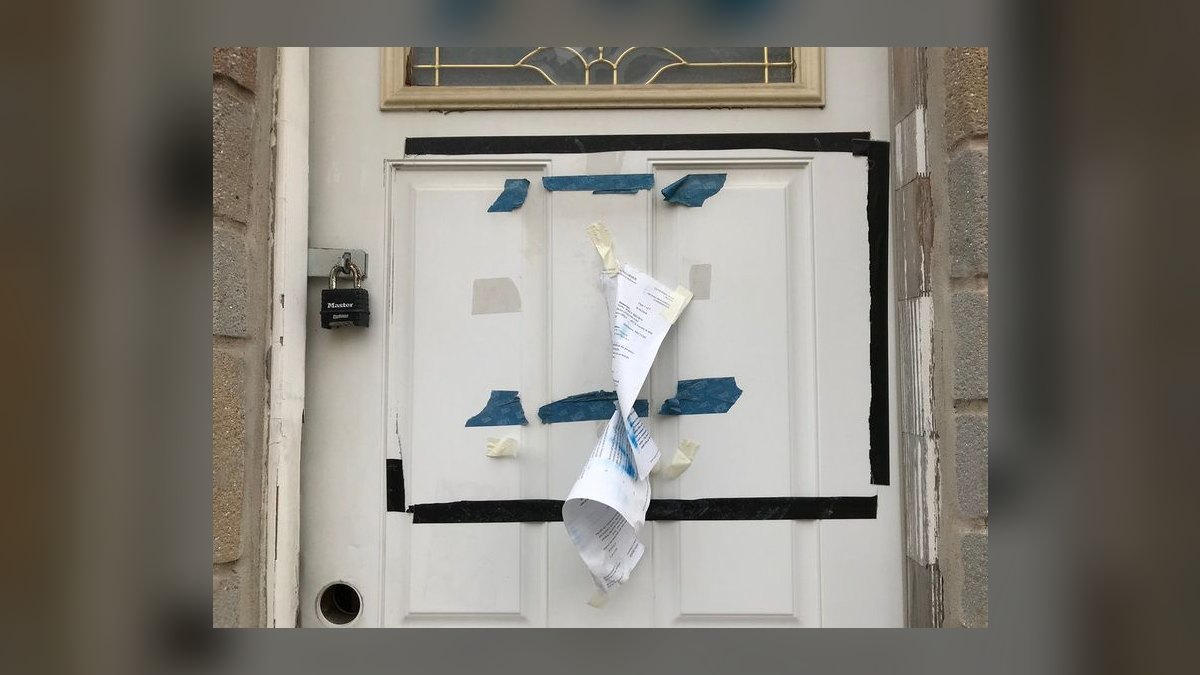
- Unpermitted structural changes. Cutting a beam, pulling a column, or removing a wall without an engineer's stamp and a permit is an automatic red flag. The landlord will demand a structural review and may require you to reinstate the original support before anything else proceeds.
- Electrical code failures. Overloaded circuits, exposed conductors, missing GFCI protection, and unlicensed work top the list. These are fire hazards, and the landlord's insurance simply will not stand behind them.
- Compromised fire protection. Drywall or ceiling tile blocking sprinkler heads, removed fire-rated assemblies, or missing fire dampers in ductwork. Expect an order to correct immediately, and sometimes a call to the fire marshal.
- ADA noncompliance. Door clear width under 32 inches, inaccessible restrooms, missing grab bars, or ramps exceeding the allowable slope. The landlord often cannot lawfully deliver the space until these are cured, so they tend to push hardest here.
- HVAC and mechanical faults. Tying into the base-building system without permits or balancing, or installing equipment that exceeds the building's rated capacity and starves neighboring tenants of conditioned air.
- Plumbing defects. Waste lines run without proper slope, wrong pipe materials, or connections made without a licensed plumber. Leaks migrate into adjacent tenant spaces and multiply the liability well beyond your own four walls.
Each item carries a discrete fix cost, but the expensive part is almost always the delay. Every day work is stopped is a day of rent on a space you cannot open, and that meter runs regardless of how small the underlying correction turns out to be.

What violations actually cost you
When violations land, the money leaves in layers, and the layers compound on each other. The first layer is direct remediation—a licensed contractor to demolish and redo the offending work, plus permit fees and any engineering stamps needed to bring it back to code. A serious item such as an unpermitted structural modification can climb well into five figures once demolition, rebuild, and engineering are stacked together, before any other cost is counted.
The second layer is inspection and oversight billing. Many leases let the landlord charge for their construction manager's time—sometimes a flat re-inspection fee, sometimes an hourly rate. Read your lease for whether that charge applies whether you win the dispute or lose it, because some clauses bill you regardless of outcome.

The third layer, and usually the largest, is delay cost. If the fix stops work for two weeks, you are still paying base rent and your share of operating expenses on a dark space, plus construction-loan interest and whatever revenue a delayed opening costs your business. For many tenants this figure dwarfs the hard repair bill entirely.
The fourth layer is a TI allowance offset. Many leases let the landlord charge corrections against your tenant improvement allowance, so money that was supposed to fund your buildout instead pays to undo a mistake. For egregious or repeated violations, the landlord can go further and withhold the entire TI allowance until the work passes—turning a construction problem into an immediate cash-flow crisis. Finally, most leases grant the landlord a self-help right: if you do not cure, they hire their own contractor at their preferred rates and bill you, and those rates are rarely competitive. Stack all of this together and a mid-sized buildout with several violations can produce a total hit far larger than the original scope of the disputed work. The lesson is blunt: the cheapest violation is the one caught at rough-in, not at final finish.

Your rights and how to push back
You are not powerless when the landlord flags a problem, but your leverage is defined almost entirely by the lease you signed. Start with the construction and alteration clause. It typically grants the landlord approval and inspection rights, but a well-drafted lease pairs those rights with a standard of reasonableness: the landlord cannot demand corrections that exceed what the code or the approved plans actually require. If the inspector is asking for a "fix" that no code section supports, respond in writing and cite both the lease language and the specific code provision—or its absence—that governs the point.
Second, look for your right to cure. Most leases give the tenant a defined window—commonly 10 to 30 days—to correct a violation before the landlord can escalate. A minor item, such as missing firestop caulk, can be resolved well inside that window and never becomes a default at all. Know your exact number before you need it, because the clock often starts on the day the notice is delivered.

Third, get a second opinion when the stakes justify one. A third-party code consultant or your project's architect can review a disputed finding, and if the landlord's inspector was simply wrong, you can demand a re-inspection—ideally at the landlord's cost when the original finding was in error. Fourth, check for a dispute-resolution path. Some leases require mediation or arbitration of construction disputes before the landlord can declare default or terminate, which buys time and forces a neutral look at the facts.
Above all, document everything: dated photographs, the inspection report, every email, and your contractor's written responses. Never verbally accept a violation—get the scope, the code basis, and the agreed fix in writing so there is no argument later about what was required or when it was resolved. A clean paper trail is what turns a landlord's "you are in default" into a factual dispute you can actually win, and it is nearly free to maintain if you start on day one.

Preventing violations before the inspector arrives
The surest way to survive an inspection is to have nothing to find, and a disciplined prevention routine costs a small fraction of any remediation. Build these habits into the job from the first day of construction.
- Lock plan approval in writing before you start, and re-approve every change. Most violations are simply deviations from the approved set. If you field-change a wall, a door, or a circuit, submit the change order and get sign-off before you build it, not after.
- Use licensed, insured contractors who pull the permits. Unlicensed work is the single largest source of write-ups. Require your general contractor to pull every required permit and to schedule the municipal inspections in step with the landlord's own visits.
- Run a pre-inspection walkthrough. Two days before the landlord's inspector arrives, have your project manager or a consultant walk the space against the plans and a code checklist, and clear the easy issues first so they never make the report.
- Keep permits posted and inspections logged. Visible permits and a running log of passed inspections signal to the landlord's team that you take compliance seriously, which measurably changes the tone of every visit.
- Bring the landlord's construction team in early. Invite them during rough-in, not after drywall closes. A potential issue caught behind an open wall is a cheap conversation; the same issue found behind finished, painted drywall is a demolition bill.
- Negotiate a real cure period into the lease. Even with the best crew, you want 10 to 30 days to fix any finding without penalty or rent consequences—negotiated before you sign, when you still have leverage.
- Carry a contingency of roughly 10 to 15 percent of buildout cost. It absorbs surprise corrections without blowing the budget, and anything you do not spend, you keep.

Done consistently, these steps demote the landlord inspection from a threat into a routine checkpoint you pass on the first attempt, which is exactly where you want it.
The worst case: default, termination, and litigation
If a violation is severe—or if you simply refuse to correct it—the landlord can escalate to lease default and termination. Most commercial leases state that an uncured violation of applicable codes or of the landlord's construction rules constitutes a default. Once you are in default and the cure period lapses, the landlord's remedies typically include locking you out, terminating the lease, recovering rent for the remaining term (subject to any duty to mitigate under local law), and charging you to restore the premises to its prior condition.

The compounding is what makes this scenario catastrophic. You can lose your buildout investment, lose your location, and still face a money judgment for the balance of the term. Contested commercial evictions are slow and expensive, and legal fees alone climb quickly on both sides, which is precisely why most landlords would rather keep a paying tenant than fight for an empty box. That shared incentive is your opening.
Use it deliberately. If you receive a violation notice, respond in writing immediately, lay out a concrete correction plan with dates, and ask for a working meeting to de-escalate. Silence is the trap—many leases treat a non-response as an admission, and the cure clock keeps running whether you engage or not. If you genuinely believe the landlord is acting in bad faith or stretching a finding well beyond what code requires, get a commercial real estate attorney involved before the situation hardens into litigation rather than after it already has. Early cooperation, documented in writing, resolves the overwhelming majority of these disputes long before anyone reaches a courthouse.
Related questions
Can the landlord charge me for inspection time even if nothing is wrong?
Only if your lease permits it. Many leases allow a flat fee or hourly charge for the construction manager's time regardless of outcome. Negotiate this out, or cap it, before signing—by inspection day the terms are already fixed and it is too late to change them.
What if the landlord's own building system caused the problem?
Then it is the landlord's responsibility—core systems are theirs to maintain. But you need proof the condition, such as a leaking riser or a failing base-building HVAC unit, predated your work. Document it with dated photos and written notice, or you risk being blamed for a defect you did not create.
Am I still liable if my contractor caused the violation?
Yes. Your lease is with the landlord, not your contractor, so you owe the fix regardless of who did the work. You can then pursue your contractor for breach or negligence separately, but you must cure the violation with the landlord first, on the lease's timeline.
Can a landlord issue a stop-work order on the spot?
Yes—most leases grant that right for safety or code violations. A stop-work order halts the project and immediately starts the meter on delay costs. Prioritize the fix, book a fast re-inspection, and lift the order before delay expenses stack up on top of the repair.
FAQ
Can the landlord deduct correction costs from my TI allowance? Yes—many leases allow the landlord to offset the cost of correcting violations against your tenant improvement allowance. That means you effectively pay twice: once in lost allowance, once in actual repair cost. Negotiate language limiting or barring this offset before you sign, because the standard form usually favors the landlord here.
How long do I usually have to fix a violation? It depends on your cure clause, but 10 to 30 days is common for non-emergency items. Safety issues subject to a stop-work order must be addressed before work can resume at all. Confirm the exact window in your lease—assuming a generous period you do not actually have is a costly and avoidable mistake.
Should my contractor be present during the landlord's inspection? Yes. Having your project manager or general contractor on site lets them challenge an incorrect finding immediately and document the walkthrough as it happens. You do not need a separate paid inspector for most jobs, but a knowledgeable advocate in the room routinely prevents small findings from hardening into disputes.
What if I think the inspector's finding is simply wrong? Respond in writing citing the approved plans and the relevant code section, and request a re-inspection. A third-party code consultant can back you up. If the original finding was an error, push for the re-inspection to happen at the landlord's cost, and keep every exchange documented in case it escalates.
Can a single violation really lead to losing my lease? Rarely from one minor item, but yes in principle—an uncured violation can constitute a default, and default opens the door to termination and a rent judgment. The determining factor is almost always whether you responded and cured within the lease's timeframe, not the severity of the violation itself.
Is a contingency budget really necessary if my plans are approved? Yes. Even fully approved plans meet field conditions, code interpretations, and surprises that the approval never anticipated. A 10 to 15 percent contingency absorbs corrections without derailing the project, and if you never need it, the savings are simply yours to keep at the end of the job.
Sources
- https://www.iccsafe.org/ — International Code Council, model building codes used across most U.S. jurisdictions
- https://www.aia.org/ — American Institute of Architects, standard commercial construction contract documents
- https://www.boma.org/ — Building Owners and Managers Association, commercial lease and property management standards
- https://www.ada.gov/ — U.S. Department of Justice, ADA Standards for Accessible Design
- https://www.nfpa.org/ — National Fire Protection Association, fire and life-safety codes
- https://www.corenetglobal.org/ — CoreNet Global, corporate real estate strategy resources
- https://www.rebny.com/ — Real Estate Board of New York, commercial lease forms and practices
- https://www.sior.com/ — Society of Industrial and Office Realtors, commercial transaction standards
Related on PULSE
- [What happens to my buildout schedule if the landlord's lender withholds approval?](/knowledge/bo0319)
- [What happens to unused TI allowance if I spend less than the landlord agreed to?](/knowledge/bo0237)
- [What happens to my deposit if the buildout runs past the rent commencement date?](/knowledge/bo0272)
- [How do I know if my construction allowance actually covers the full buildout scope?](/knowledge/bo0236)
- [What happens to my lease in an eminent domain / condemnation?](/knowledge/bo0124)
- [Can I require the landlord to escrow my TI allowance before construction begins?](/knowledge/bo0307)
This page will be disappearing soon. Save it to your device for $1 — or read it free while it is here.
@Kory-White- · if Venmo asks, the last 4 of my number are 2012
 boHow do I negotiate a hard cap on my shared plaza maintenance costs after the buildout?
 boWhat Are the Good and Bad Clauses in a Commercial Lease?
 boWhat’s the cheapest way to finish a raw shell space for a small retail store?
 boWhat's the average per-square-foot cost for a restaurant buildout with full kitchen in 2027?
 boShould I take a smaller allowance and lower rent, or max allowance with higher base rent?
 pulse-buildoutsHow much does Buildouts cost in 2027?
 boHow do I get the landlord to fund my data and power floor boxes?
 boHow do I know if my construction allowance actually covers the full buildout scope?
 boHow do I negotiate a cap on my out-of-pocket costs for the buildout?
 boHow do I structure a lease that lets me remove my specialty improvements at move-out