


The Challenger Sale by Matthew Dixon & Brent Adamson — Cliff Notes & Chapter Summary
Quality
Certified

The Challenger Sale (Matthew Dixon and Brent Adamson, 2011) argues that in complex B2B deals the top reps teach customers something new, tailor the message to each stakeholder's economics, and take control of price and process. Drawn from a study of roughly 6,000 reps, it found Challengers dominate star performers while Relationship Builders finish last.
What the book actually claims and why it still moves budgets
The Challenger Sale is not a motivational book about attitude. It is a research report with a sales argument bolted on, and that distinction explains both its durability and its blind spots. Matthew Dixon and Brent Adamson were running the sales practice at the Corporate Executive Board when the 2009 downturn scrambled every assumption their member companies held about performance. Quota attainment did not decline uniformly. It fractured. Inside the same team, on the same territory, with the same product and the same pricing, some reps held their numbers and others fell off a cliff. That variance — not the average — was the research question.
The method matters more than most summaries admit, because it is the source of the book's authority. The authors surveyed sales leaders about which rep attributes they believed drove performance, converted those beliefs into a battery of roughly forty-four measurable competencies, had managers rate individual reps against each competency, and then regressed those ratings against actual performance data. Roughly 6,000 reps across about 90 companies went into the initial dataset. The output was a cluster analysis: five profiles that accounted for the overwhelming majority of the population, with no rep sitting cleanly outside them.
Those five profiles are the part everyone remembers. The Hard Worker outworks the territory — more calls, earlier starts, longer follow-up sequences, high self-motivation and high coachability. The Lone Wolf trusts instinct over process, ignores the CRM, and is nearly impossible to manage but frequently produces. The Reactive Problem Solver is detail-obsessed and post-sale focused, the rep customers love after the contract is signed and who quietly spends selling hours firefighting implementation issues. The Relationship Builder is generous with time and access, builds advocates, and is the archetype most hiring managers describe when asked to sketch their ideal candidate. The Challenger has a strong point of view about what the customer should do, is willing to disagree with the customer to defend it, and is comfortable pressing on money.

Then the finding that made the book famous. Sort the population by star performance and roughly forty percent of stars are Challengers, with Lone Wolves a distant second around a quarter. Relationship Builders land last, in the single digits. Slice further by deal complexity and the pattern intensifies rather than softening: in high-complexity solution sales, the Challenger share of stars rises past half while the Relationship Builder share collapses toward the low single digits. In simple transactional sales the profiles converge and the gap largely disappears — a caveat the book states plainly and that the market has mostly ignored.
The mechanism the authors propose for that result is straightforward. When the customer already knows the category, has already read the comparison content, and has already talked to three of your competitors, the rep's informational advantage is gone. Being pleasant adds nothing the customer cannot get elsewhere. What the customer cannot easily get is a credible outsider's view of their own operation — the thing they are getting wrong that is quietly costing them money. That is the product the Challenger actually sells, and the software is the mechanism by which it gets fixed. Hence the line the book is quoted for constantly: relationships are the result of winning, not the cause of it.
Fifteen years on, that argument survives contact with a market the authors did not anticipate. Buyers now arrive later, better informed, and inside larger committees. Free trials and product-led motions have absorbed much of the transactional end where the friendly rep once thrived. The categories where humans still sell — platform consolidation, regulated data, security, anything requiring a services engagement — are precisely the high-complexity end where the Challenger advantage was largest in the original data. The book got more right by accident of timing than its critics usually grant.
Chapter-by-chapter: the three parts and what each actually teaches

The book divides cleanly into three movements. The first three chapters establish the problem and the data. Chapter one frames the post-recession performance fracture and lays out the methodology. Chapter two names the five profiles and gives each a behavioral fingerprint rather than a personality label — an important distinction, because behaviors can be hired for, coached, and measured, while personalities cannot. Chapter three delivers the performance data and the complexity slice, and this is where most readers either buy in or check out.
The second movement, roughly chapters four through six, unpacks the Challenger's three capabilities. Chapter four covers Teach, and it is the densest chapter in the book. A commercial teach is not a case study and not a feature demo. It has four required properties: it must lead inevitably back to a capability your company uniquely holds, it must challenge a belief the customer currently acts on, it must create enough urgency that the customer wants to move now rather than next planning cycle, and it must generalize across many customers so it can be trained rather than improvised. Drop any one property and the teach fails. A brilliant insight that points at a competitor's strength is a gift to that competitor. An insight that is true but not urgent produces polite nods and no pipeline.
The Grainger example carries this chapter. Reps walked into industrial buyers and demonstrated that a large share of maintenance, repair and operations spend was unplanned — emergency purchases made under time pressure, at meaningfully worse unit economics than planned buys. The buyer had never seen their MRO spend cut that way, because their own systems reported it by category rather than by planned-versus-unplanned. The insight reframed a catalog supplier as a cost-structure partner, and it pointed straight at Grainger's distribution footprint. That is the shape every good teach copies.
Chapter five covers Tailor, and it is the chapter most teams skip. The same insight has to be re-cut for each person in the room. The operations leader hears uptime and downtime hours. The finance leader hears working capital and cash conversion. The safety leader hears incident rates. Same underlying analysis, three separate framings, and the rep who delivers the finance framing to the operations leader loses the room. The chapter also introduces the idea that the sale is a coordinated internal alignment problem across five to seven stakeholders rather than a single act of persuasion — a thread the authors pull much harder in their follow-up work.
Chapter six covers Take Control, and it is the chapter that makes sales leaders uncomfortable. Assertive is not aggressive. Concretely it means never conceding price without an explicit trade — a longer term, expanded scope, reference rights, a case study, an earlier start date. It means pushing back when the customer proposes a scope so narrow it cannot produce the value that justifies renewal, because a customer who buys badly churns. And it means the rep proposes the next meeting, the next stakeholder, and the next milestone rather than waiting to be scheduled. The posture the authors ask for is coach rather than friend, and that reframe is the single hardest thing to install in a team that was hired for likeability.
The third movement, chapters seven through nine, is about implementation, and it is the part that determines whether any of this survives past the kickoff meeting. Chapter seven lays out the six-act pitch structure covered below. Chapter eight argues that Challenger is an organizational capability, not an individual talent — companies that made it stick built a small dedicated insight function, typically two to five people in product marketing or enablement, producing a modest number of named, tested teaches per year with data backing, a customer use case, and a rep training packet for each. Chapter nine puts the burden on frontline managers: coach observable behaviors rather than outcomes, coach on named live deals rather than in the abstract, and inspect weekly rather than monthly.
The six-act pitch, step by step

The pitch sequence is the most portable artifact in the book and the one that shows up verbatim in other methodologies. Its power is entirely in the ordering. Every act earns the right to the next one.
The Warmer opens with a credible hypothesis drawn from pattern experience across similar customers, stated as observation rather than question. It establishes that the rep has seen this movie before. The Reframe then names the conventional wisdom and contradicts it with something the rep can defend. This is the hinge of the entire conversation and the moment the customer either leans in or mentally leaves.
Rational Drowning quantifies the current-state cost in the customer's own units — hours, headcount, unit cost, cycle days, leaked renewals — until the number is uncomfortable. Emotional Impact converts that number into recognition by narrating a comparable customer's experience closely enough that the buyer sees themselves in it. Data alone rarely moves a committee; data plus recognition does.
A New Way describes the required capabilities of a solution without naming a product, which is the discipline most reps break. Only in the final act, Your Solution, does the product appear, and by then it should read as the obvious consequence of everything already established rather than a pitch. Reps who lead with the product invert the sequence and spend the rest of the call defending features against a customer who never agreed there was a problem.
Two practical notes the book underplays. First, the Reframe has a shelf life. An insight that lands in year one becomes conventional wisdom by year three once competitors copy it, which is why the insight function has to keep producing rather than shipping one deck. Second, the sequence compresses badly. Attempting all six acts in a twenty-minute intro call produces a caricature; the structure assumes a real meeting with a real agenda, and reps working shorter first calls should run Warmer, Reframe, and a compressed Rational Drowning, then earn the longer session.
Costs, timelines, and what installing this actually takes

Treating Challenger as a training purchase is the most expensive mistake available, because training is the cheapest component of the transformation and the least predictive of whether it works. A useful way to budget is by component rather than by vendor invoice.
The content function is the real cost center. Building an insight capability means dedicating people — the book's own guidance points at a small team of roughly two to five, drawn from product marketing, enablement, or both — to research, draft, test, and maintain named teaches. Realistically each teach requires a defensible data source, a quantification model the rep can run live with a customer, a comparable-customer narrative, objection handling, and a training packet. That is weeks of work per teach, not days, and the output cadence the book describes for successful adopters is on the order of a handful to a dozen per year, not one per sprint. Companies that assign this as a side duty to an already-loaded product marketer produce one deck and then nothing.
Manager capability is the second cost and the one most often skipped entirely. If frontline managers cannot coach the Reframe, cannot tell the difference between a rep who quantified current state and a rep who recited a stat, and cannot inspect a deal against a defined standard, the model decays to slogans within a quarter. Budget manager enablement before rep enablement, and expect managers to need more coaching time than reps.
On timelines, expect the sequence to run in quarters rather than weeks. Insight development and manager enablement typically occupy the first quarter with no measurable pipeline effect. Rep training and supervised field application occupy the second, and this is where leading indicators start moving — meeting-to-opportunity conversion, number of stakeholders engaged per deal, discount magnitude on closed deals. Lagging indicators like win rate and average deal size trail by a full sales cycle, which in enterprise means the honest evaluation window is often three to four quarters out. Leadership teams that demand a win-rate read at ninety days will kill the program before it can produce one.
There is also an attrition cost worth naming out loud. Some Relationship Builders will not make the transition, and some will leave rather than try. If a meaningful share of the team was hired specifically for relational warmth, plan for turnover and for a hiring rubric change on the same timeline. The alternative — quietly exempting the tenured relational reps — creates a two-tier team that teaches everyone the model is optional.
Finally, watch the interaction with pricing authority. Take Control only works if reps actually hold the ability to say no to a discount. In organizations where deal desk or leadership routinely overrides the rep on price, teaching reps to trade concessions is theater. Fix the approval design before training the behavior.
Where teams get it wrong
The most common failure is confusing provocation with insight. A rep who opens by telling a CFO their strategy is wrong, without a quantified basis and without a path back to a capability the vendor uniquely holds, is not being a Challenger — they are being rude, and they will not get a second meeting. Insight without evidence is opinion, and buyers have plenty of that already.
The second failure is teaching that flatters the wrong solution. A commercial teach must lead to your differentiated strength. Teams routinely publish genuinely interesting industry analysis that any competitor could use to close the deal instead. If the customer can act on your insight by buying from someone else, you have funded a competitor's pipeline.

Third: skipping Tailor. Reps learn the reframe, memorize the numbers, and deliver identical language to the operations lead, the finance lead, and the CISO. The insight is correct and lands with nobody, because none of the three heard it in their own currency. Tailoring is the least glamorous of the three capabilities and the one that most reliably separates practitioners from performers.
Fourth: mistaking Take Control for hardness on the customer rather than firmness on the process. Take Control means driving the calendar, insisting on access to the economic buyer, and trading rather than conceding on price. It does not mean arguing, and it certainly does not mean ignoring the customer's stated constraints.
Fifth: chasing the loudest advocate. Not every enthusiastic contact can move their organization. The follow-up research distinguishes stakeholders who actually build internal consensus — a small minority of the committee — from those who are simply friendly and available. A pleasant champion with no political capital burns entire quarters. The tell is whether they will introduce you to peers and defend the case in a room you are not in; if they will not, they are an informant, not a mobilizer.
Sixth, and increasingly important: applying the model where the data never supported it. The Challenger advantage is a complexity effect. In genuinely transactional, self-service, or product-led motions, the extended teach sequence adds friction and no measurable lift, and a Hard Worker profile often outperforms. Segment first, then decide which motion each segment gets. Blanket application is how a good model earns a bad reputation.
Seventh: treating the profiles as a personality test. The authors describe behaviors, not identities. A rep is not permanently a Relationship Builder; they are exhibiting relational behaviors because those behaviors were hired for, trained, comped, and praised. Change what gets inspected and the behavior moves. Labeling people, on the other hand, produces defensiveness and a fixed-mindset team.
Choosing a motion: when Challenger fits and when it does not

The practical question is not whether the book is right but where its model earns its cost. Deal complexity, stakeholder count, and the presence of a defensible insight determine the answer. If the buyer already knows they need the category, already has budget, and is comparing three vendors on features, a full six-act teach is misapplied energy — that deal needs sharp differentiation and clean process control, which is Take Control without the rest. If the buyer does not yet believe they have a problem, the teach is the only thing that will create the deal at all.
A second decision axis is the failure mode you are actually losing to. If post-mortems show deals lost to named competitors, the reframe-and-differentiate path is the right investment. If post-mortems show deals dying in no-decision — stalled, deprioritized, "revisit next year" — more provocation frequently makes it worse, because an already-anxious buyer facing a bigger problem freezes harder. Dixon's later work on indecision addresses exactly this gap and prescribes reducing perceived risk rather than raising urgency: narrow the initial scope, offer a smaller first step, take risk onto the vendor's side of the table. Read the loss data before choosing which lever to pull.
A third consideration is where the insight can credibly come from. In categories with rich benchmark data — spend analytics, security posture, infrastructure utilization, call and pipeline data — a rep can walk in with a quantified outside view. In categories without that data, the teach has to be built from customer patterns and expert interviews, which is slower and thinner. Assess honestly whether your organization can produce defensible insight before committing to a strategy that depends on it.
Related questions
How does Challenger relate to MEDDPICC?
They solve different problems and compose well. MEDDPICC is a qualification and inspection checklist — metrics, economic buyer, decision criteria, decision process, pain, champion, competition. Challenger supplies the conversation content that produces those answers. The Champion criterion maps closely to the follow-up research's mobilizer concept.
Is the Challenger profile something you hire for or train?

Both, in that order of leverage. The authors frame the profiles as behavior clusters rather than personality types, so the behaviors are trainable. But training fights the hiring rubric: if interviews still reward warmth and agreeableness above point-of-view and commercial teaching, the intake keeps diluting the training.
What did the follow-up books add?
The Challenger Customer (2015) moved the lens from seller to buying group, identifying the minority of stakeholders who actually drive internal consensus. The JOLT Effect (2022) tackled no-decision losses, arguing indecision is a distinct failure mode from competitive loss and needs risk reduction rather than more urgency.
Does the model still apply with product-led growth?
Partly. PLG absorbed much of the transactional end where the model never had a measured advantage. It applies most strongly where PLG hands off — enterprise expansion, security and compliance review, platform consolidation — which is exactly the high-complexity segment where the original data showed the largest gap.
How long before the model shows results?
Leading indicators such as stakeholder count per deal, meeting-to-opportunity conversion, and discount magnitude can move within a quarter of field application. Win rate and deal size trail by a full sales cycle, so honest evaluation typically lands three to four quarters after kickoff.
FAQ
What exactly is a Challenger rep?
A rep who brings the customer a new, quantified perspective on their own business, re-cuts that perspective for each stakeholder's economic priorities, and stays firm on price and process. The profile came out of a study of roughly 6,000 reps and dominated star performance specifically in complex, multi-stakeholder deals.
Is this just permission to be pushy?
No. Provocation without evidence is rudeness, and the book is explicit that the behavior is constructive rather than aggressive. The Challenger disagrees using data the customer cannot easily dismiss, and takes control of process and pricing discipline rather than pressuring the buyer emotionally.
Why do Relationship Builders perform worst in complex sales?
Accommodation costs them the things complex deals reward. They avoid the disagreement that reframes decision criteria, concede on price to preserve goodwill, and defer to the customer's timeline, which lengthens cycles. Being liked is not a differentiator when every competing rep is also pleasant.
Does this apply to small or transactional deals?
Much less. The performance gap widens with complexity and largely disappears in simple sales, which the book states directly. In self-serve or short-cycle motions a Hard Worker profile often does as well or better, because the extended teach sequence adds friction without adding differentiation.
What is the single most common implementation failure?
Buying training and skipping the content engine. Without a small dedicated team producing tested, data-backed teaches, reps have nothing specific to teach and default to product pitches with a provocative opening line. Manager coaching capability is the close second failure point.
Which chapter matters most if I only read one?
Chapter four, on teaching for differentiation. It defines the four properties a commercial insight must have, and every downstream element — the pitch sequence, the tailoring, even the pricing discipline — depends on having a defensible insight to deliver in the first place.
Sources
- https://www.penguinrandomhouse.com/books/309586/the-challenger-sale-by-matthew-dixon-and-brent-adamson/
- https://hbr.org/2012/07/the-end-of-solution-sales
- https://www.gartner.com/en/sales/insights/b2b-buying-journey
- https://hbr.org/2017/03/the-new-sales-imperative
- https://www.penguinrandomhouse.com/books/317162/the-challenger-customer-by-brent-adamson-matthew-dixon-pat-spenner-and-nick-toman/
- https://www.penguinrandomhouse.com/books/670675/the-jolt-effect-by-matthew-dixon-and-ted-mckenna/
- https://hbr.org/2022/09/how-to-close-a-deal-with-an-indecisive-buyer
- https://www.forcemanagement.com/command-of-the-message
- https://winningbydesign.com/resources/
Related on PULSE
- The Challenger Customer by Brent Adamson — Cliff Notes Summary & Key Takeaways
- The JOLT Effect by Matthew Dixon — Cliff Notes Summary & Key Takeaways
- The Challenger Sale — Cliff Notes Summary
- The Effortless Experience by Dixon, Toman & DeLisi — Cliff Notes Summary for Sellers
- Sales 2.0 by Anneke Seley and Brent Holloway — Cliff Notes Summary
This page will be disappearing soon. Save it to your device for $1 — or read it free while it is here.
@Kory-White- · if Venmo asks, the last 4 of my number are 2012
This page is gone.
This one is off the shelf now. $1 keeps it on your phone for good — the whole page, pictures and diagrams included.
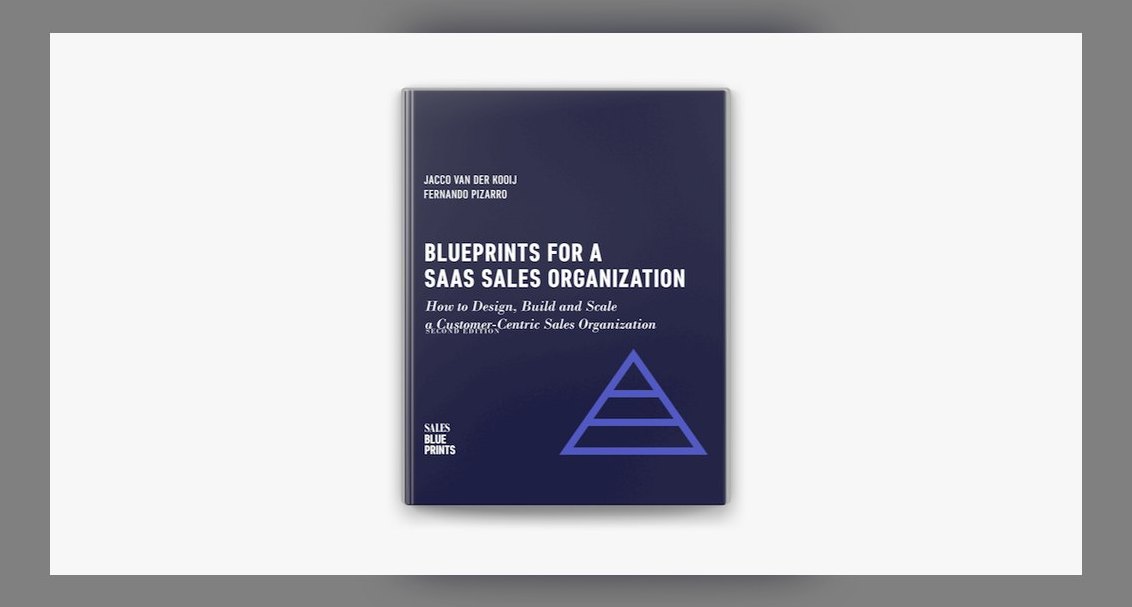 pulse-recentBlueprints for a SaaS Sales Organization by Jacco van der Kooij — Top 10 Key Takeaways for Sales Leaders in 2027
 pulse-recentWhat is the first concrete step in Sandler Rule #4 for a sales leader to implement in 2027?
 pulse-recentStart with No by Jim Camp — Top 10 Key Takeaways for Sales Leaders in 2027
 pulse-recentSandler Rule #1: What is the first concrete step to build a prospect's trust in a sales conversation in 2027?
 pulse-recentThe Challenger Customer by Brent Adamson — Top 10 Key Takeaways for Sales Leaders in 2027
 pulse-recentWhat are the concrete steps in Strategic Selling for building a sales plan in 2027?
 pulse-recentBlue Ocean Strategy by W. Chan Kim and Renee Mauborgne — Top 10 Key Takeaways for Sales Leaders in 2027
 pulse-recentWhat is the first concrete step in The Sandler Rules by David Mattson for building a sales plan in 2027?
 pulse-recentMonetizing Innovation by Madhavan Ramanujam — Top 10 Key Takeaways for Sales Leaders in 2027
 pulse-recentThe Sales Manager’s Guide to Greatness by Kevin Davis — Top 10 Key Takeaways for Sales Leaders in 2027