


CustomerCentric Selling by Michael Bosworth — Cliff Notes Summary & Key Takeaways
Quality
Certified
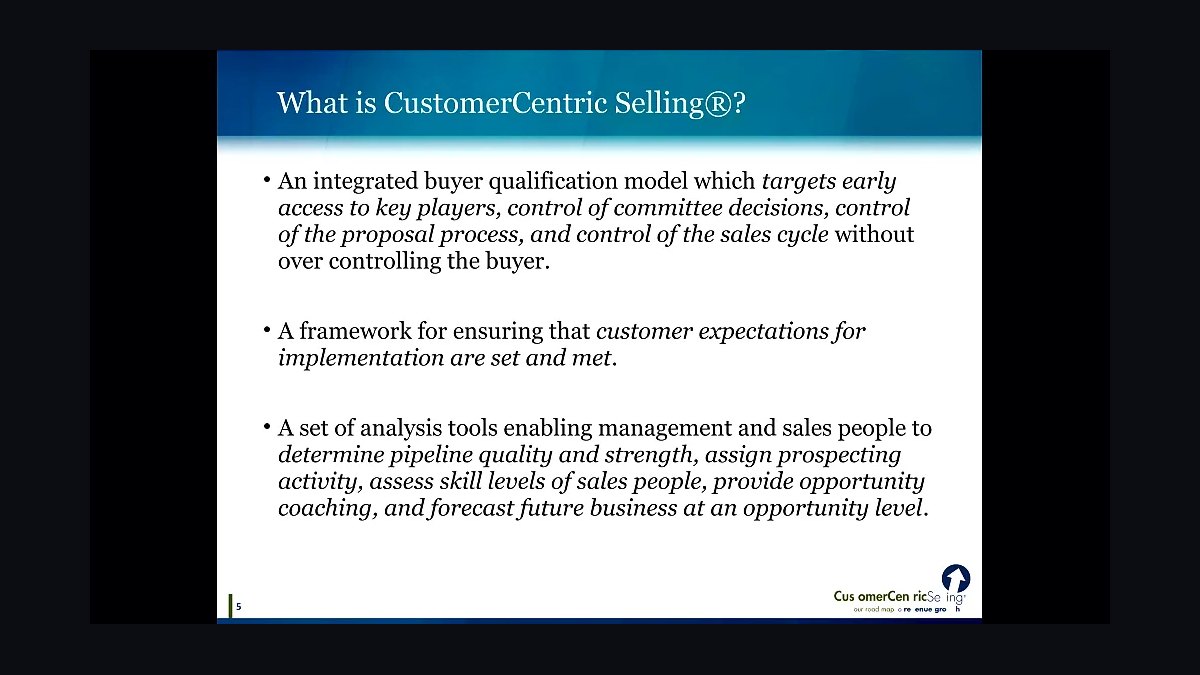
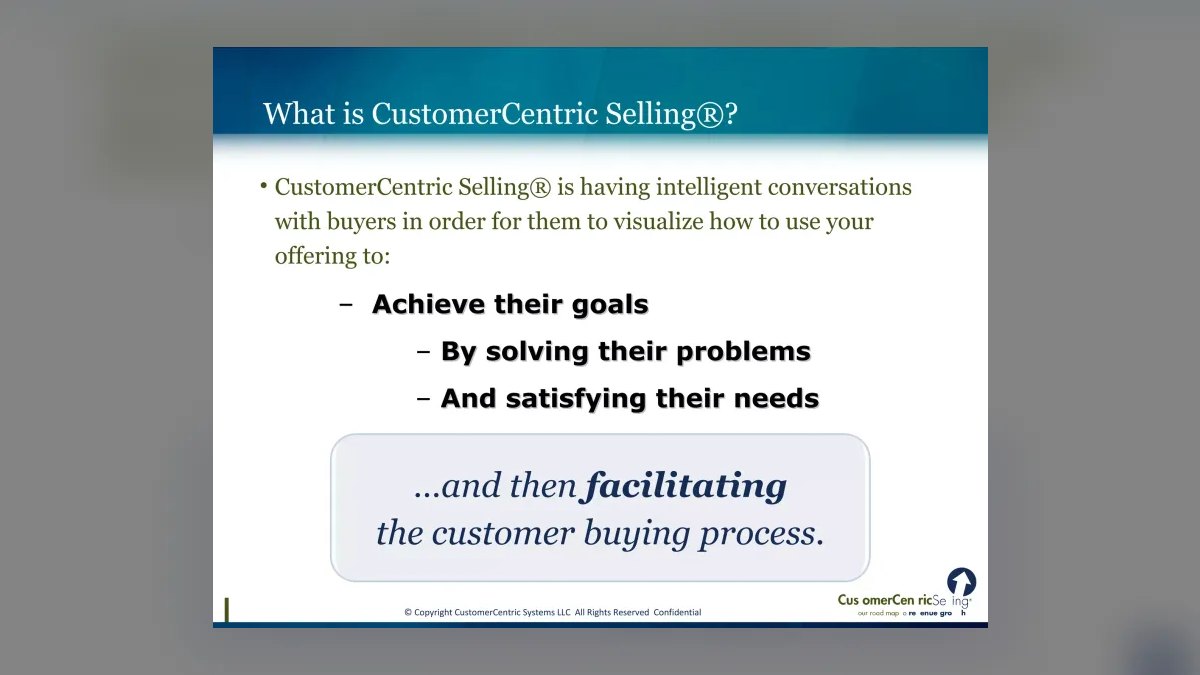
CustomerCentric Selling by Michael T. Bosworth and John R. Holland (McGraw-Hill, 2003; 2nd edition with Frank Visgatis, 2010) reorganizes consultative selling around a single discipline: a seller's job is to help the buyer use the product to solve a specific business problem — and if you cannot write that usage scenario in plain English for the exact role you are selling to, you do not yet have a deal. Bosworth, who wrote the original Solution Selling in 1994, built this book to correct how that earlier method got misused — reps were "solutioning" before they understood the buyer's pain. The rebuild rests on eight CustomerCentric Behaviors and a per-persona artifact called the Sales-Ready Message. The book sits squarely between Neil Rackham's SPIN Selling (1988) and Miller & Heiman's Strategic Selling (1985) on one side, and Dixon & Adamson's Challenger Sale (2011), Andy Whyte's MEDDICC, and Winning by Design's SPICED on the other — most modern discovery frameworks inherit at least one of its ideas. More than twenty years after publication it is still taught because it answers the one question those other frameworks assume you already know: how to actually run the discovery conversation that ends with the buyer wanting to buy.
1Foundations — Why Solution Selling Needed a Rewrite
1.1 Chapter 1 — The Sales-Ready Messaging Problem
Bosworth opens with a confession: after Solution Selling became one of the best-known sales books of its era, he watched reps turn the word "solution" into a synonym for "pitch deck." Reps would qualify a lead, jump to a feature dump, and lose the deal in discovery. The fix is not more objection-handling training — it is a different artifact in the rep's hand. Sales-Ready Messaging is a one-page card, per persona and per pain, that forces the rep to articulate before the call exactly how the buyer would use the product to make their pain go away. If the rep cannot write the usage scenario, the rep is not ready. This chapter sets the book's spine.
1.2 Chapter 2 — The Eight Behaviors That Define Customer-Centricity
The chapter introduces the eight CustomerCentric Behaviors in skeleton form, with the full breakdown spanning the rest of the book: situational conversations over presentations, relevant questions over opinions, solution focus over relationship focus, targeting business-people over users, relating product usage over reciting features, competing to win the business over competing to stay busy, selling on the buyer's timeline rather than the seller's, and empowering buyers rather than trying to convince them. Bosworth notes that most "consultative selling" programs teach one or two of these and ignore the rest, which is why their lift fades after a couple of quarters.

2The Conversation — Behaviors 1 and 2
2.1 Chapter 3 — Have Situational Conversations Versus Make Presentations
The first behavior reframes the first meeting. A presentation broadcasts; a situational conversation investigates. Bosworth's rule of thumb: if the rep is doing most of the talking in the first meeting, the rep is presenting, not investigating. The chapter teaches a discovery flow built around the buyer's current situation, the gap between current and desired state, and the cost of that gap. The artifact is the Goal-Question-Reason call-planning sheet: before every call the rep writes the Goal (what they want from this meeting), the Questions they will ask, and the Reason each question matters to the buyer. No goal, no call.
2.2 Chapter 4 — Ask Relevant Questions Versus Offer Opinions
The second behavior is older than Socrates but harder than it looks. Bosworth and Holland show how reps default to opinions ("you really should be on the cloud") instead of questions ("when your batch job fails at 3am, who gets paged?"). The fix is a question library tied to the Sales-Ready Message — every product capability has a paired diagnostic question. The chapter introduces Diagnose Pain → Develop Pain → Vision Process as the conversational arc. Diagnose confirms the pain exists; Develop quantifies it across people, money, and time; Vision lets the buyer describe — in their own words — what "solved" looks like.

3The Target — Behaviors 3 and 4
3.1 Chapter 5 — Solution Focus Versus Relationship Focus
Bosworth attacks the "people buy from people they like" cliché. They do — but mostly when two vendors are tied on solution fit. Liking is a tiebreaker, not a strategy. The chapter teaches reps to lead with the business problem and let the relationship form around shared progress. The illustrative case is a rep who lost a deal she had been "building relationship" on for nine months because a competitor articulated the buyer's pain back in the buyer's own language on call one.
3.2 Chapter 6 — Target Business-People Versus Users
The fourth behavior tells reps to stop hiding in the user community. Users are comfortable to talk to — they share the rep's vocabulary — but they rarely control budget. Power, in Bosworth and Holland's language, sits with the Economic Buyer: the executive whose P&L absorbs the cost of the pain. The chapter introduces the Pain Chain: the CEO's pain (revenue miss) becomes the VP of Sales' pain (pipeline coverage), which becomes the sales manager's pain (rep ramp time), which becomes the rep's pain (no leads). A complete Pain Chain map across three or four roles is the artifact that earns the rep an Economic Buyer meeting.

4The Demo — Behaviors 5 and 6
4.1 Chapter 7 — Relate Product Usage Versus Rely on Product Features
The fifth behavior is where the book earns its title. A feature pitch says "our platform supports SAML SSO." A usage scenario says "when your security director needs to prove SOC 2 compliance for the auditor next quarter, she logs in once, exports the access report, and emails it — instead of pulling three CSVs from three systems and reconciling them by hand." Reps build usage scenarios from the Sales-Ready Message, not the product datasheet. Bosworth and Holland are emphatic: every product capability must be expressed as a verb the buyer performs, not a noun the product has.
4.2 Chapter 8 — Compete to Be Selected Versus Compete to Stay Busy
The sixth behavior is the qualification gut-check. Reps fill their pipeline with deals they will not win because activity feels like progress. The chapter introduces a five-part qualification filter — pain, power, vision, value, and timeline — and tells the rep to walk away when two or more come back empty. The book's most-quoted line lives here: "Sellers who have a buyer who buys from them have a job — sellers who have a buyer who wants to buy from them have a career." Walking away from misfits is what produces the second kind of buyer.

5The Close — Behaviors 7 and 8
5.1 Chapter 9 — Sell on the Buyer's Timeline Versus Pressure the Close
The seventh behavior tells reps to stop end-of-quarter discounting. Pressure tactics shorten this deal and kill the next three from referrals. The chapter teaches mutual close plans — a written sequence of buyer milestones (technical evaluation, security review, legal redline, procurement signoff) the rep co-authors with the Champion. The plan replaces the rep's forecast with the buyer's reality.
5.2 Chapter 10 — Empower Buyers Versus Try to Satisfy Needs
The eighth behavior is the book's philosophical core. "Empower buyers to achieve goals — don't convince them to need yours." The rep's job is to give the buyer a framework for evaluating any vendor — including competitors — and let the framework do the selling. The chapter introduces the Champion Letter: a one-page written summary the rep drafts and hands to the Champion to forward up the chain. The letter pre-frames the deal in the buyer's own words, with the buyer's pain quantified and the buyer's vision articulated. When the Economic Buyer receives it, the deal feels inevitable.
6Sales-Ready Messaging in Depth
6.1 Chapter 11 — Anatomy of a Sales-Ready Message
A Sales-Ready Message has five fields. Title is a one-line problem statement ("VP of Sales misses quota because reps cannot articulate value to economic buyers"). Persona names the role with the pain. Pain quantifies it (for example, "roughly a third of forecast slips to next quarter"). Vision Process describes — in the buyer's voice — how they would solve it ("I'd want every rep to walk into the first meeting with a written usage scenario and a list of three diagnostic questions"). Capabilities → Reasons lists what your product does and why each capability matters to this persona's vision. The artifact is one page and lives in the rep's call-prep folder.
6.2 Chapter 12 — Coaching Reps with Sales-Ready Messages
The Sales-Ready Message is also a coaching tool. Managers run role-plays where the rep must answer in usage-scenario language; if the rep slips into feature-speak, the manager interrupts. CustomerCentric Systems — the training company Holland co-founded after the book — built a certification program around this drill. The book argues that Sales-Ready Messages turn product reps into business consultants over a few months of weekly role-play, faster than any classroom curriculum.
7Forecast, Pipeline, and Sales Management
7.1 Chapter 13 — A Sales Process Built on the Buyer's Steps
Bosworth and Holland refuse to define stages by rep activity ("demo delivered"). Stages are defined by buyer milestones ("buyer admitted pain and named the cost"). The chapter maps a four-stage process: Latent Pain → Pain Admitted → Vision Aligned → Decision Made. Forecast accuracy improves because the stage is verifiable from buyer artifacts — an email, a Champion Letter reply, a co-authored close plan — not from rep optimism.
7.2 Chapter 14 — Coaching, Forecasting, and the Manager's Job
The last operational chapter turns the methodology on the manager. A manager who skips deal reviews to chase the rep's quota is not managing. The chapter prescribes weekly one-on-ones structured around the Pain Chain ("show me the Economic Buyer's pain on this deal in their words") and a monthly pipeline scrub that kills any deal without a Champion Letter on file. Forecast hygiene is a downstream effect of behavior hygiene.

The CustomerCentric Architecture
Frameworks at a Glance
- The 8 CustomerCentric Behaviors — situational conversations vs presentations, questions vs opinions, solution vs relationship, business-people vs users, usage vs features, compete-to-win vs compete-to-stay-busy, buyer timeline vs rep pressure, empower vs convince.
- Sales-Ready Message — one page per persona per pain with five fields: Title, Persona, Pain, Vision Process, Capabilities → Reasons.
- Pain Chain — pain mapped across CEO → VP → manager → individual contributor so the rep can articulate value at every altitude and earn the Economic Buyer meeting.
- Champion Letter — written one-page deal summary the rep drafts and the Champion forwards upward; pre-frames the deal in the buyer's voice.
- Goal-Question-Reason call planning — written before every call: Goal (what the rep wants), Questions (what the rep will ask), Reason (why each question matters to the buyer).
- Diagnose → Develop → Vision conversational arc — discovery sequence that replaces the feature pitch.
- Buyer-milestone pipeline stages — Latent Pain, Pain Admitted, Vision Aligned, Decision Made — verifiable from buyer artifacts, not rep optimism.
- Mutual Close Plan — co-authored milestone sequence that replaces rep forecasting with buyer reality.
The Customer-Centric Daily Operating Loop
What Holds Up, What Has Aged
Almost all of it holds up. Sales-Ready Messaging is fully alive today — enablement platforms like Highspot, Showpad, and Seismic treat per-persona messaging cards as foundational, and AI tools (including ChatGPT, Claude, and Gong) are now commonly used to generate first-draft Sales-Ready Messages from a product spec and an ICP definition. The 8 Behaviors are the spine of most modern consultative-discovery curricula. The Pain Chain maps directly onto what MEDDICC calls the "Identify Pain" and "Decision Process" elements, and Force Management's Command of the Message is essentially Sales-Ready Messaging with a different vocabulary.

Two things have aged. First, the book assumes a largely serial buying process — diagnose, then develop, then vision — and Gartner's research on the B2B buying journey showed buying is now non-linear, with six-to-ten stakeholders looping back through the same questions. Modern reps run multiple Pain Chains in parallel. Second, product-led growth companies like Linear, Notion, and Figma sometimes invert the model entirely — the product itself becomes the Sales-Ready Message via in-product onboarding, and the rep enters only at the expansion conversation. Bosworth and Holland did not anticipate self-serve, but the underlying logic — usage scenarios, not features — is exactly what good PLG onboarding teaches.
FAQ
Is CustomerCentric Selling the same as Solution Selling? No. Bosworth wrote the original Solution Selling in 1994 and co-wrote CustomerCentric in 2003 as a deliberate rebuild. The biggest delta: CustomerCentric forbids the word "solution" in front of the buyer until the buyer has described their own vision in their own words. Solution Selling let reps lead with the solution; CustomerCentric makes them earn it through diagnosis first.
Should I read this before or after The Challenger Sale? Read CustomerCentric first. Dixon and Adamson's Challenger Sale (2011) assumes you already know how to run a competent discovery conversation and adds a layer about teaching the buyer something they did not know. Without CustomerCentric's discovery foundation, the Challenger "Teach" pillar collapses back into pitching.
What is the single most useful artifact to build first? The Sales-Ready Message. Build one per persona per pain for your top three buyer roles, hand them to every rep, and run role-plays weekly. Discovery quality typically improves within a month, because reps stop reciting features and start describing how the buyer uses the product.
How does this connect to MEDDICC? MEDDICC is a deal-qualification checklist; CustomerCentric is a deal-running methodology, so they compose cleanly rather than compete. MEDDICC's "Identify Pain" and "Champion" map directly to CustomerCentric's Pain Chain and Champion Letter. Many enablement teams run CustomerCentric to generate the conversation and MEDDICC to score the deal.
Is this still taught, and by whom? Yes. CustomerCentric Systems — the training company John Holland co-founded — has licensed the methodology and certification for years, and the book remains a common recommendation in VP-of-Sales onboarding and sales-enablement reading lists. Its core ideas also live on inside derivative programs like Command of the Message.
What's the one quote to remember? "Empower buyers to achieve goals — don't convince them to need yours." If a rep internalizes that single line — give the buyer a framework, let the framework sell — most of the rest of the methodology follows from it.
Bottom Line
Read CustomerCentric Selling before any other modern sales book. It is the missing layer between SPIN Selling and The Challenger Sale — the one that teaches a rep how to actually run a discovery conversation that ends with the buyer wanting to buy. Monday morning, write one Sales-Ready Message for your top buyer persona, run one Goal-Question-Reason plan before your next call, and draft one Champion Letter for your largest open deal. Done consistently, that's the behavior change the whole book is built to produce.
Related on PULSE
- Solution Selling by Michael Bosworth — Cliff Notes Summary & Key Takeaways
- What Great Salespeople Do by Michael Bosworth and Ben Zoldan — Cliff Notes Summary
- The 12 Week Year by Brian Moran and Michael Lennington — Cliff Notes Summary for Sellers
- The E-Myth Revisited by Michael Gerber — Cliff Notes Summary
- The First 90 Days by Michael Watkins — Cliff Notes Summary for Sales Leaders
- The Coaching Habit by Michael Bungay Stanier — Cliff Notes Summary for Sales Managers
Sources
- Michael T. Bosworth and John R. Holland — *CustomerCentric Selling* (McGraw-Hill, 2003; 2nd edition with Frank Visgatis, 2010)
- Michael T. Bosworth — *Solution Selling: Creating Buyers in Difficult Selling Markets* (McGraw-Hill, 1994) — the predecessor Bosworth rebuilt
- Keith M. Eades — *The New Solution Selling* (McGraw-Hill, 2003) — the parallel-track update to the original Solution Selling franchise
- Neil Rackham — *SPIN Selling* (McGraw-Hill, 1988) — the discovery-question lineage CustomerCentric inherits
- Robert B. Miller and Stephen E. Heiman — *Strategic Selling* (Warner Books, 1985) — the complex-deal lineage and the Economic Buyer concept
- Matthew Dixon and Brent Adamson — *The Challenger Sale* (Portfolio, 2011) — the descendant that built on CustomerCentric's foundation
- Andy Whyte — *MEDDICC: The Ultimate Guide to Staying One Step Ahead in the Complex Sale* (2020) — the modern qualification checklist that pairs with CustomerCentric
- CustomerCentric Systems — the training and certification company John Holland co-founded; licenses the methodology
- Force Management — *Command of the Message* (operating playbook still in market) — a direct commercial descendant of Sales-Ready Messaging
- Winning by Design — *SPICED Framework* (Situation, Pain, Impact, Critical Event, Decision) — the SaaS-era adaptation of CustomerCentric-style discovery
- Gartner — research on *The B2B Buying Journey* — the work that updated the largely linear buying model CustomerCentric assumed
This page will be disappearing soon. Save it to your device for $1 — or read it free while it is here.
@Kory-White- · if Venmo asks, the last 4 of my number are 2012
This page is gone.
This one is off the shelf now. $1 keeps it on your phone for good — the whole page, pictures and diagrams included.
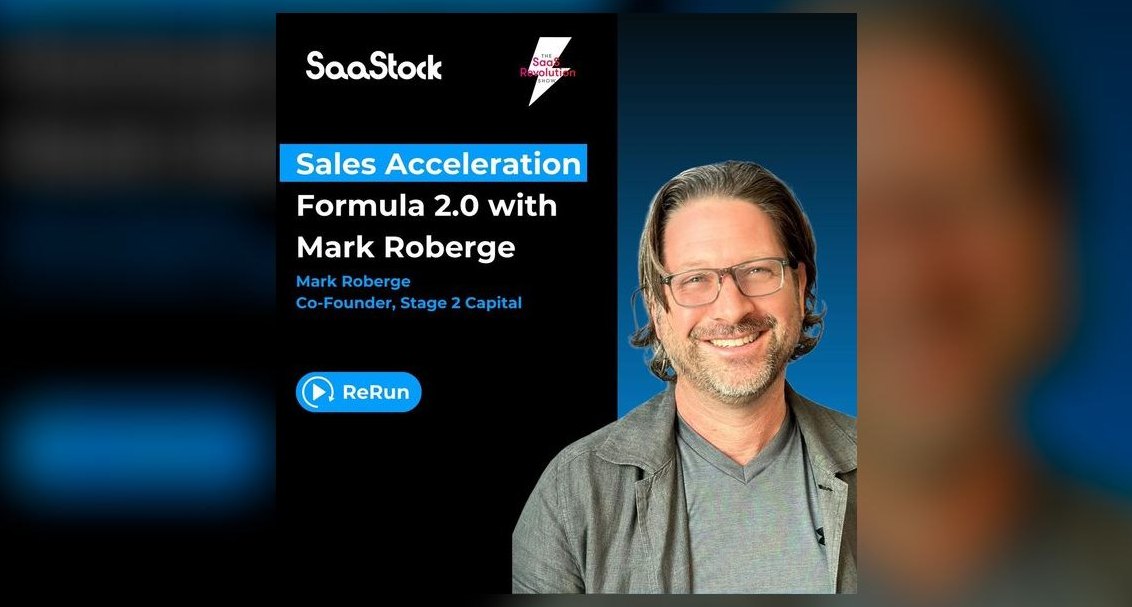 pulse-recentThe Sales Acceleration Formula by Mark Roberge — Top 10 Key Takeaways for Sales Leaders in 2027
 pulse-recentWhat are the concrete steps in Sandler Rule #7 for handling a prospect's budget objection in 2027?
 book-summaryWhat factors drive the price of Book Summaries up or down in 2027?
 book-summaryMajor Account Sales Strategy by Neil Rackham: Summary, Key Lessons, and RevOps Takeaways
 pulse-recentSales Engagement by Manny Medina — Top 10 Key Takeaways for Sales Leaders in 2027
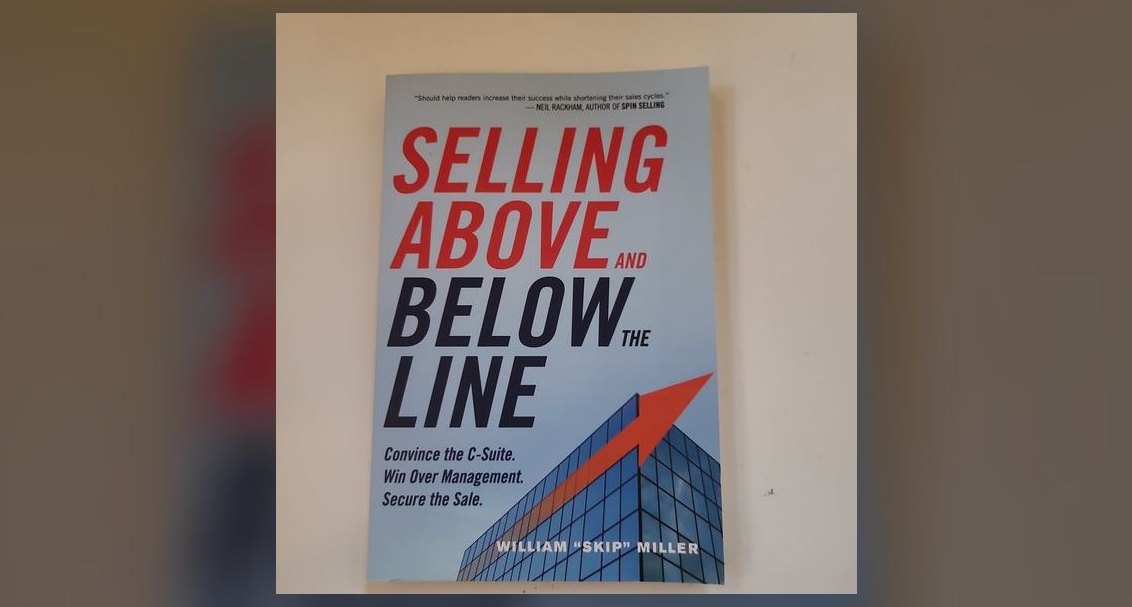 pulse-recentSelling Above and Below the Line by Skip Miller — Top 10 Key Takeaways for Sales Leaders in 2027
 pulse-recentWhat are the concrete steps to implement the Sandler Rules for Sales Leaders by David Mattson in 2027?
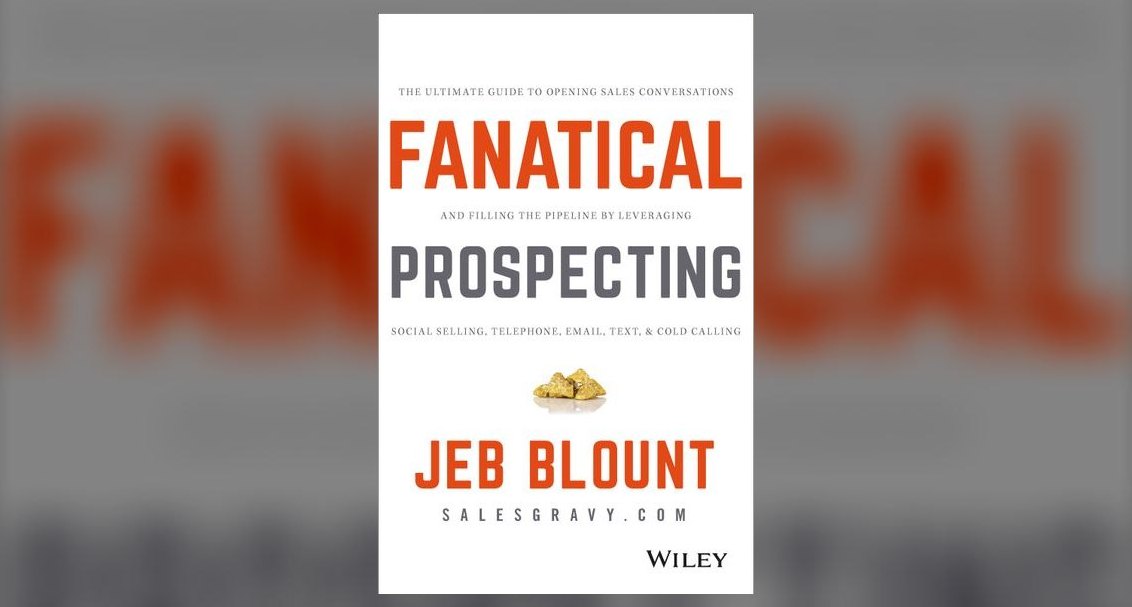 pulse-recentFanatical Prospecting by Jeb Blount — Top 10 Key Takeaways for Sales Leaders in 2027
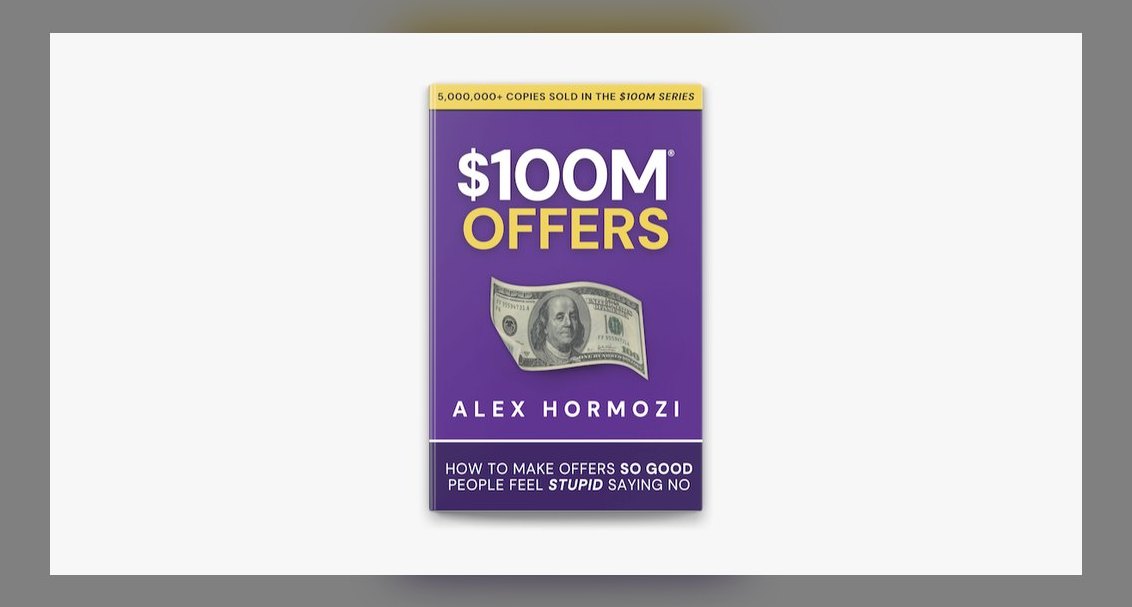 pulse-recent$100M Offers by Alex Hormozi — Top 10 Key Takeaways for Sales Leaders in 2027
 pulse-recentInsight Selling by Mike Schultz and John Doerr — Top 10 Key Takeaways for Sales Leaders in 2027