


Crossing the Chasm by Geoffrey Moore — Cliff Notes Summary
Quality
Certified

Geoffrey Moore's *Crossing the Chasm* identifies the critical gap between Early Adopters (visionaries) and the Early Majority (pragmatists) on the technology adoption lifecycle, arguing that startups must abandon a broad visionary-first strategy, select a single beachhead niche, build a complete Whole Product, and dominate that segment before expanding to adjacent markets.
The Two Buyer Species Compared
The Technology Adoption Lifecycle, adapted from Everett Rogers's 1962 *Diffusion of Innovations*, segments buyers into five groups: Innovators (~2.5%), Early Adopters (~13.5%), Early Majority (~34%), Late Majority (~34%), and Laggards (~16%). Moore argues that the gap between Early Adopters and Early Majority is not a smooth handoff but a chasm wide enough to kill companies. Early Adopters are visionaries — they tolerate incomplete products, high prices, and implementation friction because they seek a strategic leap that gives them competitive advantage. They buy based on intuition and direct engagement with the founding team. The Early Majority are pragmatists — they want a proven productivity improvement that integrates with their existing systems, requires minimal disruption, and comes with references from peers in identical circumstances. A visionary at a tech-forward research lab who deployed your product to accelerate drug discovery provides zero credibility to a regional bank's IT director evaluating the same tool. The bank wants to call another bank that has already done it.
Moore emphasizes that pragmatists buy in categories, not from category creators. They ask: "Who else like us has done this? What was the ROI? How long did implementation take? What did the auditors say?" Until those answers exist from within their own industry and scale cohort, they will not move. This is why early revenue from Innovators and Early Adopters creates a dangerous illusion — the graph bends up, founders hire ahead of it, and then the curve flattens because the reference base does not translate. The company runs out of cash before the next buyer cohort arrives.

The fundamental difference extends to purchasing behavior. Visionaries engage directly with the founding team, bypassing procurement processes and accepting non-standard contracts. They are willing to co-develop features and tolerate bugs because they value first-mover advantage. Pragmatists, by contrast, require a formal procurement process, security reviews, vendor risk assessments, and standard contracts with clear SLAs. They will not accept a product that requires their team to become experts in the vendor's technology — they want it to work out of the box with their existing stack. This means that a startup's sales process, legal documents, support infrastructure, and even pricing model must change completely between these two buyer groups. The same product sold to a visionary through a founder-led demo and a handshake deal must be sold to a pragmatist through a formal RFP process with a documented implementation plan and a reference call with a peer company.
How to Decide Between the Two Strategies
The decision between a visionary-first strategy (chasing Early Adopter revenue wherever it appears) and a pragmatist-first strategy (picking one beachhead and building the Whole Product for it) is the central strategic fork every high-tech startup faces. Moore's answer is unambiguous: you must consciously choose to abandon the visionary-first approach once you have validated product-market fit with Early Adopters, because continuing to sell to visionaries delays the Whole Product investment that pragmatists require. The decision framework has three gates:

First, identify whether your current revenue is concentrated in any single segment. If your top ten customers span healthcare, manufacturing, financial services, and education — each buying for different use cases — you are in the danger zone. Early Adopter revenue is broad but shallow. Second, score your product against the eight beachhead criteria for each potential niche: target customer clarity, compelling reason to buy this quarter, Whole Product feasibility within 12 months, partner ecosystem availability, existing distribution channel, pricing alignment with buyer budget, credible legacy competitor to beat, and defensible category positioning. Third, run the numbers: a beachhead that scores six or higher on the eight criteria and represents at least $10 million in addressable revenue within that niche is worth betting the company on. Below five criteria, Moore advises walking away — the niche will not tip.
The decision is painful because it requires saying no to real revenue. Founders who resist this choice — who try to serve both visionaries and pragmatists simultaneously — end up with a product that satisfies neither. The core product remains too raw for pragmatists, while the Whole Product investments (integrations, documentation, training, support) frustrate visionaries who wanted speed over polish. Moore's historical example is Documentum, which chose the niche of regulated pharma new-drug-submission workflows — a tiny segment by total addressable market, but one where Documentum could assemble a complete solution and own 50%+ share within two years. Another example is Salesforce, which initially targeted SMB sales teams that Siebel ignored — a segment that was too small for the incumbent to defend but large enough for Salesforce to dominate and use as a reference for expansion.
Concrete Numbers Behind Each Option

The economics of the two strategies diverge dramatically. Early Adopter deals typically close faster (60-90 days) with higher average contract values because visionaries pay a premium for strategic advantage. However, these deals have higher churn (30-50% annually) because the product evolves away from their bespoke needs, and they generate zero reference value for the next buyer cohort. Moore estimates that a startup relying solely on Early Adopter revenue will hit a wall at roughly $5-10 million in annual recurring revenue — the point where the founder's personal network is exhausted and the company cannot generate new leads through traditional channels because no one in the mainstream has heard of them.
The beachhead strategy produces different numbers. The first 12-18 months after committing to a niche are often slower in absolute revenue growth because you are building the Whole Product rather than closing quick deals. However, once the beachhead is captured — defined as 50%+ market share within that niche — the economics flip. Customer acquisition cost drops 40-60% because every new prospect in that segment already knows a reference. Average contract value stabilizes at the market rate rather than the inflated visionary premium. Churn drops below 10% annually because the product fits the exact workflow of that niche. Most importantly, the time to close new deals in adjacent niches collapses from 6-9 months to 60-90 days because the reference from the first beachhead transfers directly to the second — same industry, similar scale, analogous compliance requirements.
Moore provides specific guidance on pricing through the transition. Visionaries overpaid for potential — they accepted prices 20-50% above market because they valued the strategic leap. Pragmatists pay the market rate for de-risked productivity. Underprice and the channel will not push the product; overprice and the buyer waits for a cheaper alternative or sticks with the legacy solution. The correct price for the beachhead segment is the price that matches the buyer's existing budget line item for whatever you are replacing — if you replace a $50,000 annual software license and $20,000 in consulting, your Whole Product should price at roughly $60,000-70,000 to offer a clear ROI while funding the partner ecosystem that pragmatists require.

The sales cycle economics also differ. Visionary deals require minimal sales infrastructure — a founder demo, a handshake, and a simple contract. The sales cycle is 60-90 days with a 20-30% win rate. Pragmatist deals require a dedicated sales team, a formal RFP process, security questionnaires, reference calls, and legal review. The sales cycle stretches to 6-12 months with a 10-20% win rate. However, the lifetime value of a pragmatist customer is 3-5x higher because churn is lower, expansion revenue is predictable, and the customer generates reference value that reduces acquisition costs for the next ten customers in that segment. The net present value of a pragmatist customer often exceeds that of a visionary customer within 18 months of acquisition, even though the initial deal takes longer and costs more to close.
Implementation Details and Sequencing
The implementation sequence Moore prescribes is precise and unforgiving. Step one is target selection: apply the eight criteria to every potential beachhead and rank them. The winning niche must have a single identifiable buyer with budget authority, a compelling reason to buy within the current quarter (not "next year when the budget resets"), and a complete Whole Product that can be assembled within 12 months. Step two is Whole Product assembly: map every component the Early Majority buyer in that niche expects — core product functionality, integrations with their existing systems (ERP, CRM, identity provider, data warehouse), implementation services, training curriculum, documentation, support SLAs, certified partner roster, and a user community. Each missing component is a reason for the pragmatist to say no.

Step three is positioning: craft the market category and competitive alternative. Moore's formula — "For [target customer] who [compelling reason to buy], the [product name] is a [market category] that [key benefit]. Unlike [primary competitor], our product [primary differentiation]" — is the template. The competitor named should be the legacy alternative the buyer currently uses, not a peer startup. A pragmatist choosing between a new vendor and a well-known incumbent will almost always pick the incumbent unless the differentiation is crystal clear and the risk of staying is higher than the risk of switching.
Step four is launch: align distribution, pricing, and sales compensation around the beachhead. Direct enterprise sales for deals above $50,000; channel partners for the mid-market; self-serve or freemium for the smallest deals (a concession Moore added in the 2014 edition to account for SaaS). Sales compensation must reward beachhead focus, not revenue from outside the target niche. Every rep who closes a deal outside the beachhead should earn lower commission than one who closes inside it, because the external deal generates no reference value.
Step five is capture and expand: target 50%+ market share in the beachhead before moving to the next adjacent niche. Moore calls this the Bowling Alley strategy — each captured niche becomes the reference that de-risks the next one, like knocking down bowling pins in sequence. Salesforce executed this by starting with SMB sales teams that Siebel ignored, then expanding to mid-market sales organizations, then enterprise sales, then adjacent departments (service, marketing, commerce). Each expansion used the previous segment's references as proof.

The timeline varies by market. Enterprise software with long sales cycles (6-12 months) may require 18-24 months per niche. PLG companies like Slack or Figma compress the timeline because adoption happens bottom-up through free tiers, but they hit a second Chasm at the enterprise procurement boundary — security review, SSO, audit logs, admin controls, and compliance certifications become the new Whole Product requirements. AI companies like OpenAI and Anthropic have recompressed the adoption cycle from the 5-10 years Moore observed to 1-2 years, but the structural buyer-segment gap remains: a developer who adopts an AI coding assistant for personal productivity (Early Adopter) does not de-risk the purchase for a regulated financial institution's legal department (Early Majority).
The organizational implications are significant. Crossing the Chasm requires a shift from a product-centric to a market-centric organization. The CEO must personally own the beachhead decision and the Whole Product investment. The marketing team must shift from lead generation to market creation — building the category, creating the competitive alternative, and generating peer references. The sales team must shift from founder-led demos to a structured sales process with documented ROI calculations and reference call protocols. The product team must shift from feature velocity to integration completeness and workflow fit. Moore warns that companies that fail to make these organizational shifts will find themselves stuck in the Chasm indefinitely, burning cash on a product that visionaries no longer need and pragmatists will not buy.
Related questions
What is the main argument of Crossing the Chasm by Geoffrey Moore?
The central argument is that a fatal gap exists between Early Adopters and the Early Majority on the technology adoption curve, and startups must pick one narrow beachhead niche, build a complete Whole Product for it, and dominate that segment before expanding.
What are the eight beachhead selection criteria Moore recommends?

Target Customer clarity, Compelling Reason to Buy this quarter, Whole Product feasibility in 12 months, Partners and Allies availability, Distribution channel access, Pricing alignment with buyer budget, a credible legacy Competitor to beat, and defensible Category Positioning.
How does the Bowling Alley strategy work in practice?
Pick one narrow niche, dominate it to 50%+ market share, use that win as a peer reference to enter the adjacent niche, and repeat. Each captured segment provides the credible proof that de-risks the next purchase for similar buyers.
Does Crossing the Chasm still apply to PLG and AI companies?
Yes, but the Chasm appears later. PLG companies cross a bottom-up adoption Chasm with free tiers, then hit a second Chasm at enterprise procurement where security and compliance become the new Whole Product requirements. AI companies compress the timeline but do not eliminate the buyer-segment gap.
What should a founder do immediately after reading this book?
Score the current customer pipeline against the eight beachhead criteria, identify the single niche that scores highest, and reorganize the next two quarters of roadmap, marketing, and sales compensation around dominating that niche exclusively.
FAQ
What is the Chasm in one sentence? It is the gap between Early Adopters (visionaries who buy on strategic potential) and the Early Majority (pragmatists who buy only on proven peer references), and it is where most high-tech startups die because the two groups are fundamentally different buyers.
Why can't a startup just sell to both visionaries and pragmatists at the same time?

Because each group requires a different product — visionaries want raw innovation with fast iteration, while pragmatists want a complete, integrated solution with references. Serving both simultaneously produces a product that satisfies neither and delays the Whole Product investment needed to cross the Chasm.
What is the Whole Product concept? Everything the Early Majority needs to actually deploy and derive value from the product: implementation services, integrations with existing systems, training, documentation, certified partners, a user community, support contracts, and security/compliance certifications. Moore's line: "Whole Product is what the Early Majority is buying. The core product is what the Innovators bought."
How long does it take to cross the Chasm? Moore estimates 12-18 months to assemble the Whole Product and capture the beachhead niche, then another 12-24 months to reach 50%+ market share in that niche. The total time from committing to a beachhead to crossing the Chasm is typically 2-4 years for enterprise software, compressed to 1-2 years for PLG or AI companies.
What happens if a startup picks the wrong beachhead? The Whole Product never resonates, references never compound, and the company burns through cash trying to force adoption in a segment that does not have a compelling reason to buy. Moore advises walking away from any niche that scores below five on the eight criteria rather than forcing a bad fit.
Does the Chasm exist for consumer products? Moore's framework was designed for B2B high-tech products, but the concept applies to consumer products that require behavior change or ecosystem adoption. The Chasm manifests as the gap between early enthusiasts and mainstream consumers who need social proof and seamless integration into existing habits.
Sources
- Geoffrey A. Moore — *Crossing the Chasm* (HarperBusiness, 1991; 3rd edition 2014)
- Geoffrey A. Moore — *Inside the Tornado* (HarperBusiness, 1995)
- Geoffrey A. Moore — *Escape Velocity* (HarperBusiness, 2011)
- Geoffrey A. Moore — *Zone to Win* (Diversion Books, 2015)
- Everett M. Rogers — *Diffusion of Innovations* (Free Press, 1962; 5th edition 2003)
- Theodore Levitt — *The Marketing Imagination* (Free Press, 1983)
- Clayton Christensen — *The Innovator's Dilemma* (Harvard Business Review Press, 1997)
- Bessemer Venture Partners — *State of the Cloud* annual report series
- OpenView Venture Partners — *Product-Led Growth Index* annual report
- Sequoia Capital — Arc company-building publication series
Related on PULSE
- Inside the Tornado by Geoffrey Moore — Cliff Notes Summary
- Zone to Win by Geoffrey Moore — Cliff Notes Summary
- Escape Velocity by Geoffrey Moore — Cliff Notes Summary
- The Innovator's Dilemma by Clayton Christensen — Cliff Notes Summary
- The Challenger Sale by Matthew Dixon and Brent Adamson — Cliff Notes Summary
Recently Added — Related
This page will be disappearing soon. Save it to your device for $1 — or read it free while it is here.
@Kory-White- · if Venmo asks, the last 4 of my number are 2012
This page is gone.
This one is off the shelf now. $1 keeps it on your phone for good — the whole page, pictures and diagrams included.
 pulse-recentBlueprints for a SaaS Sales Organization by Jacco van der Kooij — Top 10 Key Takeaways for Sales Leaders in 2027
 pulse-recentSales EQ by Jeb Blount — Top 10 Key Takeaways for Sales Leaders in 2027
 pulse-recentThe Greatest Salesman in the World by Og Mandino — Top 10 Key Takeaways for Sales Leaders in 2027
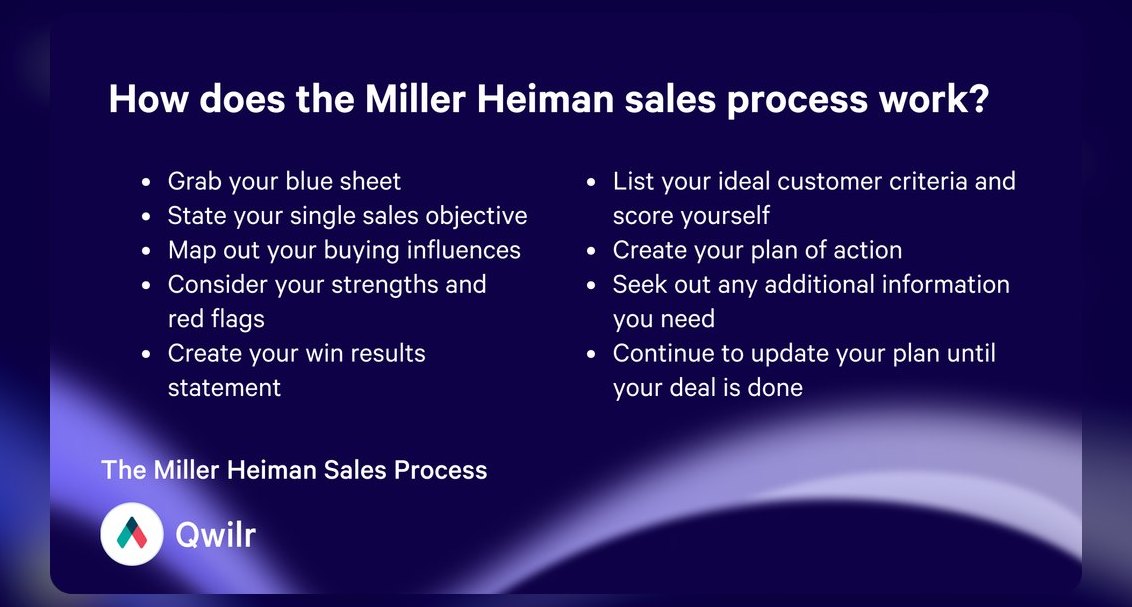 pulse-recentWhat is the step-by-step process for Strategic Selling by Miller Heiman in 2027?
 pulse-recentWhat is the first concrete step in The Sandler Rules by David Mattson for a sales leader to implement the system in 2027?
 pulse-recentSnap Selling by Jill Konrath — Top 10 Key Takeaways for Sales Leaders in 2027
 pulse-recentWhat are the concrete steps to implement the Sandler Rules for Sales Leaders by David Mattson in 2027?
 pulse-recentHyper Sales Growth by Jack Daly — Top 10 Key Takeaways for Sales Leaders in 2027
 pulse-recentTraction by Gabriel Weinberg and Justin Mares — Top 10 Key Takeaways for Sales Leaders in 2027
 pulse-recentWhat is the second concrete step in Strategic Selling by Miller Heiman for identifying a sales coach in 2027?