


The Innovator's Dilemma by Clayton Christensen — Cliff Notes Summary
Quality
Certified
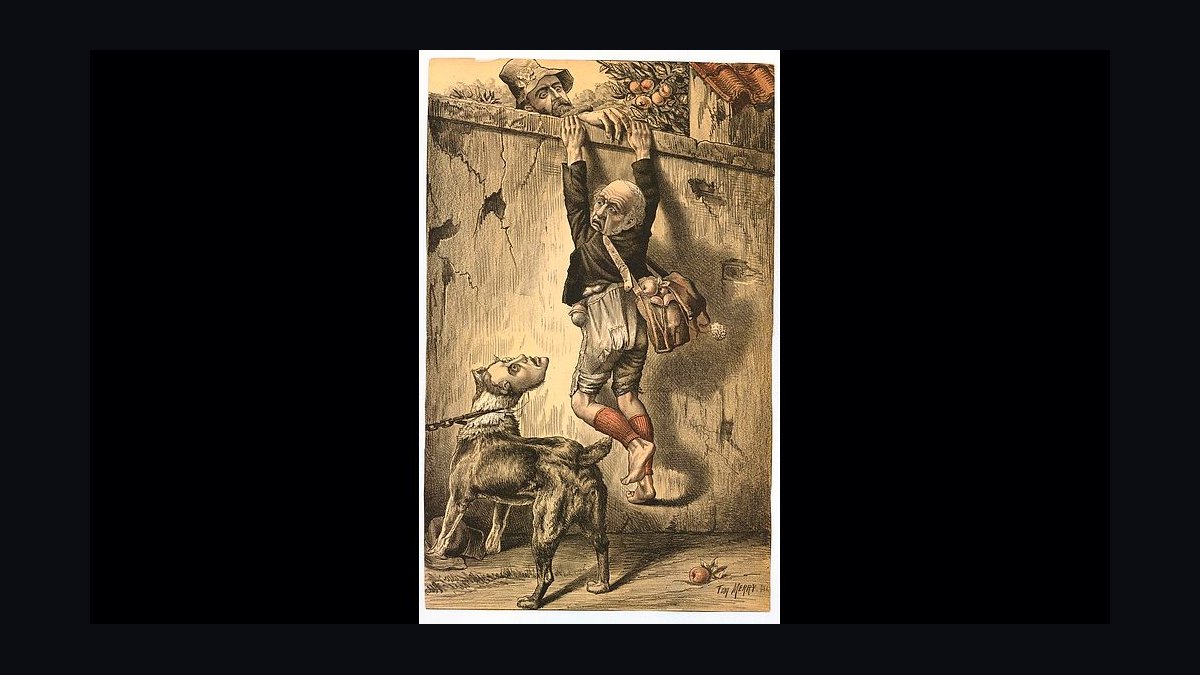
The Innovator's Dilemma: When New Technologies Cause Great Firms to Fail by Clayton M. Christensen (Harvard Business School Press, 1997; revised edition HarperBusiness, 2016) is the book that named the phenomenon every incumbent sales leader eventually faces — your best customers stop buying from you, not because you got worse, but because a cheaper, simpler, worse-on-paper competitor entered the low end of your market and quietly climbed up. Christensen's central paradox: well-managed firms that listen to their best customers, invest in higher-margin products, and chase the largest visible markets are systematically vulnerable to disruption — because the very disciplines that made them great blind them to the entrant.
For sales teams, this is the canonical text on account displacement: when your forecast suddenly cracks across a vertical, the cause is almost never your reps — it is a Jobs-to-be-Done shift that the incumbent product no longer fits. It sits in the modern sales canon alongside Moore's Crossing the Chasm, Adner's The Wide Lens, and Iannarino's Eat Their Lunch as required reading for anyone defending or attacking an installed base.
1Part One — Why Great Companies Can Fail

1.1 Chapter 1 — How Can Great Firms Fail? Insights from the Hard Disk Drive Industry

Christensen opens with the disk drive industry because it compresses a century of business history into about fifteen years. Between 1976 and 1995, the dominant form factor shrank step by step: 14-inch → 8-inch → 5.25-inch → 3.5-inch → 2.5-inch → 1.8-inch. Each transition was a disruptive innovation, and in every transition the leading incumbent lost. Firms like Control Data, Memorex, Priam, and Quantum — names that owned commanding market share — were displaced by entrants who started in a fringe segment the incumbents rationally ignored. The pattern was not technological incompetence. Seagate prototyped the 3.5-inch drive before Conner Peripherals shipped one; it shelved the project because its best customers — desktop PC OEMs — explicitly said they did not want a smaller, lower-capacity drive. Christensen's hammer: "Good managers do everything right and still fail." Listening to customers, the textbook commandment, is exactly what kills you when the disruptive product serves a customer you do not yet have.
1.2 Chapter 2 — Value Networks and the Impetus to Innovate

A value network is the context in which a firm identifies customer needs, solves problems, procures inputs, reacts to competitors, and strives for profit. Each firm is embedded in one. The 14-inch drive lived inside the mainframe value network where capacity mattered most; the 5.25-inch drive lived inside the desktop PC value network where size and price mattered most. Resource allocation processes inside the incumbent — quota plans, gross-margin filters, product-line P&Ls — systematically starve any project whose customers live in a different value network. Christensen's insight is structural, not psychological: the firm is not blind; the firm's resource-allocation machine is correctly optimized for the wrong network.
2Part One Continued — Sustaining vs Disruptive Innovation

2.1 Chapter 3 — Disruptive Technological Change in the Mechanical Excavator Industry

Christensen leaves disk drives to prove the pattern is universal. For decades, cable-actuated steam and diesel shovels dominated earthmoving, and incumbents like Bucyrus-Erie and Marion owned the market. When hydraulic actuation arrived in the mid-20th century, incumbents dismissed it — early hydraulic excavators could only lift a fraction of what cable shovels handled. But hydraulics served a new customer — residential and small contractors digging basements and trenches — that big cable shovels could not economically reach. As hydraulic capacity improved, nearly every cable-shovel maker was displaced. Same story, different industry: the disruptive product was worse on the metric incumbents measured (bucket size) and better on a metric incumbents ignored (small-job versatility).
2.2 Chapter 4 — What Goes Up, Can't Come Down

Once a firm climbs upmarket toward higher-margin customers, resource-allocation gravity prevents it from going back down. Margins downmarket look unattractive to a firm whose cost structure now requires fat enterprise deals. Christensen documents how every disk drive incumbent migrated to the highest end of its segment right before being displaced. The lesson for sales: when your AE comp plan rewards only $100k+ ACV, your team cannot profitably serve the $10k segment where the disruptor is building muscle. By the time the disruptor reaches $100k ACV, it has years of product-led growth, lower CAC, and a brand the SMB market already trusts.
3Part Two — Managing Disruptive Technological Change

3.1 Chapter 5 — Give Responsibility for Disruptive Technologies to Organizations Whose Customers Need Them

Christensen's prescription: spin out a separate organization with a separate cost structure, separate sales force, and separate customers. IBM got this right with the PC in 1981 by isolating the team in Boca Raton, away from the mainframe division's gravitational pull. DEC got it wrong — it tried to build a PC inside the minicomputer org, where the existing sales force had little incentive to carry a product that cannibalized VAX commissions. DEC was eventually acquired by Compaq in 1998 and later absorbed into HP. The disruptor wins not because it is smarter; it wins because it has no installed base to defend.
3.2 Chapter 6 — Match the Size of the Organization to the Size of the Market

Disruptive markets start small. A $50M opportunity is irrelevant to a $20B firm — it cannot move the stock price and so cannot attract internal resources. Christensen argues you must match the size of the organization to the size of the market. A 30-person spinout treats a $50M market as a thesis-defining win; a 30,000-person division treats it as a rounding error and kills the project at the first portfolio review. This dynamic is part of why incumbents so often acquire disruptors rather than build internally — for example, Microsoft's $7.5B acquisition of GitHub (2018) and Salesforce's ~$27.7B acquisition of Slack (2021). Acquisition is, in effect, the incumbent's confession that internal resource allocation could not fund the disruption itself.
3.3 Chapter 7 — Discovering New and Emerging Markets

You cannot research a market that does not yet exist. Traditional planning tools — TAM modeling, conjoint analysis, customer interviews — fail because customers cannot articulate a need for a product they have never seen. Christensen advocates an experimental approach later formalized as discovery-driven planning (developed by Rita McGrath and Ian MacMillan): build a small, cheap, fast prototype; sell it to whoever will buy; learn from the actual buyers; iterate. Honda's entry into the US motorcycle market in the late 1950s is the textbook case — Honda planned to sell large bikes against Harley-Davidson, struggled, and discovered demand for its small Super Cub almost by accident. Within a few years Honda had captured a commanding share of the US motorcycle market.
3.4 Chapter 8 — How to Appraise Your Organization's Capabilities and Disabilities
A firm's capabilities live in three places: resources (people, cash, technology), processes (how work flows), and values (what gets prioritized). Resources are portable; processes and values are not. When you acquire a disruptive startup and integrate it into the parent, you often destroy the very processes and values that made it work. This framework became the intellectual foundation for the modern autonomous-business-unit playbook — patterns like Amazon's two-pizza teams and Microsoft's "GitHub stays GitHub" post-acquisition policy.
3.5 Chapter 9 — Performance Provided, Market Demand, and the Product Life Cycle
This is the chapter that explains why disruption keeps happening. Technology supply outpaces market demand. Incumbents keep adding features — faster CPUs, more storage, more pixels — long after the mainstream customer has stopped caring. The large share of buyers who only need "good enough" performance become receptive to a cheaper, simpler alternative. This is the overshoot that creates the opening for the disruptor. Intel's high-end PC chips overshot what many mobile users needed, helping open the door for ARM in smartphones; Adobe's professional suites overshot what casual creators needed, opening the door for tools like Canva and Figma.
3.6 Chapter 10 — Managing Disruptive Technological Change: A Case Study
Christensen closes with a hypothetical exercise — an established firm facing an electric-vehicle disruption. He walks through five questions every executive should ask: (1) Is the technology disruptive or sustaining? (2) What is its strategic significance? (3) Where is the initial market? (4) What organization should own it? (5) How should we manage it differently? This chapter became a template for later innovation playbooks, including Geoffrey Moore's Zone to Win and Steve Blank's Lean LaunchPad.
4The 5 Principles of Disruption
Christensen's enduring contribution is the codification of why incumbents lose — not as a parable, but as five forces operating simultaneously.
4.1 Resource Dependence
Firms allocate resources to the customers who pay the bills today. Pfeffer & Salancik's resource-dependence theory (1978) underwrites this principle. The CFO will not fund a project whose customer cannot yet write a PO. The disruptor's customer is invisible to your forecast.
4.2 Small Markets Don't Solve Big Firms' Growth Needs
A $20B firm needs roughly $2B in new revenue annually to grow 10%. A $50M disruptive opportunity moves the needle by about 0.25%. The math is the murderer, not the executives.
4.3 Markets That Don't Exist Can't Be Analyzed
There is no Magic Quadrant for a product that does not exist yet. Discovery-driven planning replaces ROI projections with cheap experiments.
4.4 Capabilities Become Disabilities
The processes that scaled your enterprise sales motion — long discovery, MEDDPICC, multi-stakeholder consensus — become anchors when the disruptor sells product-led, self-serve, and per-seat. Atlassian's low-touch, no-traditional-sales-team model is a frequently cited example of disrupting enterprise IT incumbents from below.
4.5 Technology Supply ≠ Market Demand
You will keep building features your customer no longer values. The disruptor will sell a smaller feature set at a fraction of the price and win the majority of the market that never needed the rest.
5Low-End Disruption vs New-Market Disruption
Christensen and his collaborators later refined the typology — every disruption is one of two flavors.
5.1 Low-End Disruption
The disruptor enters at the bottom of the existing market with a cheaper, simpler product that serves the overserved customer the incumbent stopped caring about. Korean and US minimill steelmakers vs integrated mills is the canonical case — minimills started in rebar (the lowest-margin steel product), then climbed up to structural beams and eventually sheet steel. Nucor, a minimill pioneer, grew into one of the largest steelmakers in North America.
5.2 New-Market Disruption
The disruptor creates a market of non-consumers — people who could not afford or could not use the incumbent product at all. Sony's transistor radio (1955) sold to teenagers who could not afford a console radio. Personal computers (Apple II, IBM PC) sold to hobbyists and small businesses who would never have bought a minicomputer. Cloud storage (Dropbox, Box) sold to individuals and SMBs who would never have purchased enterprise SAN gear. The incumbent does not see the threat because the disruptor is not stealing its customers — yet.
6Christensen's Verbatim Hammers
The book's enduring power lives in a handful of lines that show up in every modern strategy deck:
- "Good managers do everything right and still fail."
- The very management practices that build great firms can also leave them defenseless against disruption.
- Disruption rarely looks like a threat until it has already won.
These ideas are a major reason Christensen became one of the most influential and widely cited management thinkers of his generation. Notably, Andy Grove, then Intel's CEO, became one of the framework's most prominent champions and publicly credited it when Intel launched the low-end Celeron processor to defend against disruption from below.
7The Christensen Lineage
The Innovator's Dilemma is the start of a multi-book arc that defines modern strategy.
7.1 The Innovator's Solution (2003)
Co-authored with Michael Raynor, this is the prescriptive sequel — how to systematically build disruptive businesses inside incumbents. It introduces the purpose-brand concept and an early version of Jobs-to-be-Done.
7.2 Competing Against Luck (2016)
Co-authored with Taddy Hall, Karen Dillon, and David Duncan, this is the Jobs-to-be-Done book — the framework that many modern PLG companies (Notion, Figma, Linear, Superhuman) run customer discovery against. The famous milkshake study (people "hire" a milkshake for the morning-commute job) lives here.
7.3 Disrupting Class (2008)
Applies disruption theory to K-12 education, predicting the rise of online learning years before the pandemic forced the issue. Christensen later acknowledged that some of his education and healthcare predictions were too aggressive.
8Sales-Team Application — The Displacement Watchlist
For sales leaders, the operational extract from Christensen is a displacement watchlist — a quarterly review of every renewal account that asks: is a disruptor servicing this customer's emerging job with a cheaper, simpler tool? Three signal patterns trigger an alert: (1) a champion goes quiet mid-renewal cycle (they may have already adopted the disruptor in a side project); (2) a procurement push for "consolidation" that is really a stalking horse for replacement; (3) a new persona enters the buying committee — often the disruptor's natural buyer (a developer, designer, or end-user where the old buyer was an admin or executive). When two of the three fire, you typically have a 6–12 month window to re-anchor the account around a new value proposition or you will lose it.
Frameworks at a Glance
- Sustaining vs Disruptive Innovation — sustaining makes existing products better on existing metrics (incumbents win); disruptive introduces a different value proposition initially worse on traditional metrics (entrants win).
- Value Networks — every firm is embedded in a context of customers, suppliers, and competitors that filters which innovations get funded.
- Resource Allocation Process — the actual mechanism that decides what gets built; it is optimized for the current value network and starves out-of-network bets.
- Jobs-to-be-Done — Christensen's later refinement: customers "hire" products to do a job; understand the job, not just the product spec.
- The 5 Principles of Disruption — Resource Dependence / Small Markets Don't Solve Big-Firm Growth Needs / Markets That Don't Exist Can't Be Analyzed / Capabilities Become Disabilities / Technology Supply ≠ Market Demand.
- Low-End vs New-Market Disruption — two flavors: enter the bottom of an existing market (minimills/Nucor) or create a non-consumption market (Sony transistor radio, personal computers, cloud storage).
- Discovery-Driven Planning — replace ROI projections with cheap, fast experiments when you cannot model a market that does not yet exist.
What Holds Up, What Has Aged
What holds up: Jobs-to-be-Done is the working operating system of many modern PLG and product-marketing teams; companies like Notion, Figma, Linear, and Superhuman run JTBD interviews systematically. The five-principle structural explanation of why incumbents lose remains one of the cleanest models in strategy, and most business schools still teach it. The AI shift unfolding now — LLM-based assistants pressuring search, coding Q&A, and entry-level research work — rhymes strongly with Christensen's framework: several leading AI labs entered as new-market disruptors (most people had never used an LLM) and are now climbing into the enterprise stack incumbents own.
What has aged: Jill Lepore's 2014 New Yorker essay "The Disruption Machine" argued that several of Christensen's flagship case studies had data-selection issues — for example, narratives that emphasized displaced firms while underweighting incumbents that survived. Critics have separately argued that "disruption" became an overused buzzword applied to companies (such as Uber) that did not fit the classical low-end or new-market pattern. The original 1997 book can also read as too deterministic — it implies incumbents are doomed, when firms like Microsoft, Adobe, Apple, and Salesforce have navigated multiple technology shifts through aggressive acquisition and autonomous-business-unit structures.
FAQ
Is The Innovator's Dilemma still worth reading today, given the Lepore critique? Yes — read it for the structural framework, not the case studies. The five principles and the value-network concept remain intact even if individual disk drive or excavator anecdotes have data-selection issues. Pair it with Competing Against Luck for the modern Jobs-to-be-Done application.
How does this book apply to a sales team specifically? Build a displacement watchlist — review every strategic account quarterly for the three displacement signals (champion silence, a consolidation push, a new persona on the buying committee). When two fire, you have roughly a 6–12 month window. Teams that ignore these signals tend to lose accounts in renewal cycles they assumed were safe.
What is the single most important Christensen idea to remember? "Good managers do everything right and still fail." Disruption is usually not caused by incompetence — it is caused by the rational application of best practices to the wrong customer set. The fix is rarely "manage better"; it is to give the disruptive bet to a separate organization with its own cost structure and values.
What is the difference between low-end and new-market disruption? Low-end disruption enters at the bottom of an existing market and serves overserved customers with a cheaper, simpler product (minimills in steel, for example). New-market disruption creates demand among non-consumers who previously could not afford or use the product at all (the transistor radio, the early personal computer). Both end the same way — the entrant climbs upmarket — but they start from different places.
How does this relate to Crossing the Chasm and the Challenger Sale? Moore's Crossing the Chasm (1991) explains how a disruptor moves from early adopters to the mainstream — the growth side of disruption. Dixon and Adamson's The Challenger Sale (2011) explains how an incumbent rep can defend an account by teaching the customer something new about their own business. In short: Christensen explains why disruption happens, Moore explains how the disruptor crosses into the mainstream, and Challenger describes one way the incumbent fights back.
Is AI a Christensen-style disruption? In many ways, yes. Consumer AI assistants behaved like new-market disruption (reaching people who had never used such tools) while free or low-cost coding and research help behaved like low-end disruption against pricier alternatives. These tools are now climbing the value chain into regulated, high-stakes enterprise work — the exact "up-market march" Christensen described. The open question, as with every disruption, is which incumbents successfully spin up autonomous units in time and which defend the old margin until it is too late.
Sources
- Christensen, Clayton M. *The Innovator's Dilemma: When New Technologies Cause Great Firms to Fail.* Harvard Business School Press, 1997 (revised edition, HarperBusiness, 2016).
- Bower, Joseph L., and Clayton M. Christensen. "Disruptive Technologies: Catching the Wave." *Harvard Business Review*, January–February 1995.
- Christensen, Clayton M., and Michael E. Raynor. *The Innovator's Solution: Creating and Sustaining Successful Growth.* Harvard Business Review Press, 2003.
- Christensen, Clayton M., Taddy Hall, Karen Dillon, and David S. Duncan. *Competing Against Luck: The Story of Innovation and Customer Choice.* HarperBusiness, 2016.
- Christensen, Clayton M., Michael Raynor, and Rory McDonald. "What Is Disruptive Innovation?" *Harvard Business Review*, December 2015.
- Lepore, Jill. "The Disruption Machine: What the Gospel of Innovation Gets Wrong." *The New Yorker*, June 23, 2014.
Related on PULSE
This page will be disappearing soon. Save it to your device for $1 — or read it free while it is here.
@Kory-White- · if Venmo asks, the last 4 of my number are 2012
This page is gone.
This one is off the shelf now. $1 keeps it on your phone for good — the whole page, pictures and diagrams included.
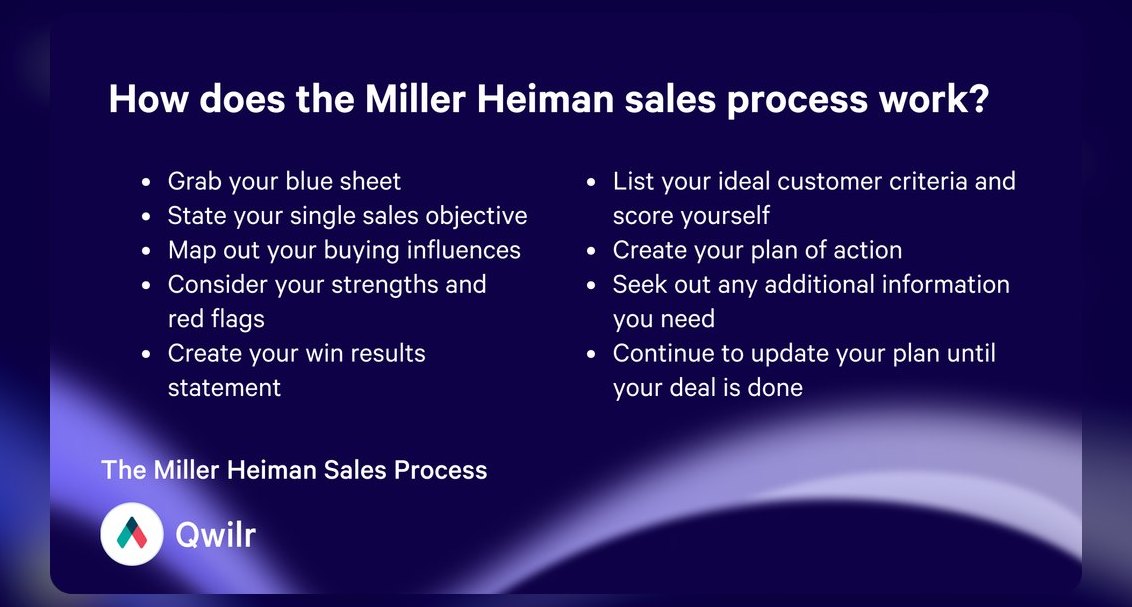 pulse-recentWhat is the step-by-step process for Strategic Selling by Miller Heiman in 2027?
 pulse-recentWhat are the seven concrete steps to implement the Sandler Submarine technique from The Sandler Rules in 2027?
 pulse-recentBlue Ocean Strategy by W. Chan Kim and Renee Mauborgne — Top 10 Key Takeaways for Sales Leaders in 2027
 pulse-recentCoaching Salespeople into Sales Champions by Keith Rosen — Top 10 Key Takeaways for Sales Leaders in 2027
 pulse-recentSelling Above and Below the Line by Skip Miller — Top 10 Key Takeaways for Sales Leaders in 2027
 pulse-booksWhat are the most common mistakes in Book Summaries in 2027?
 pulse-booksTop 10 practical takeaways from Atomic Habits for building a new routine in 2027.
 pulse-recentFanatical Prospecting by Jeb Blount — Top 10 Key Takeaways for Sales Leaders in 2027
 pulse-recentHigh-Profit Prospecting by Mark Hunter — Top 10 Key Takeaways for Sales Leaders in 2027
 pulse-recentStart with No by Jim Camp — Top 10 Key Takeaways for Sales Leaders in 2027