


Multipliers by Liz Wiseman — Cliff Notes Summary for Sales Leaders
Quality
Certified

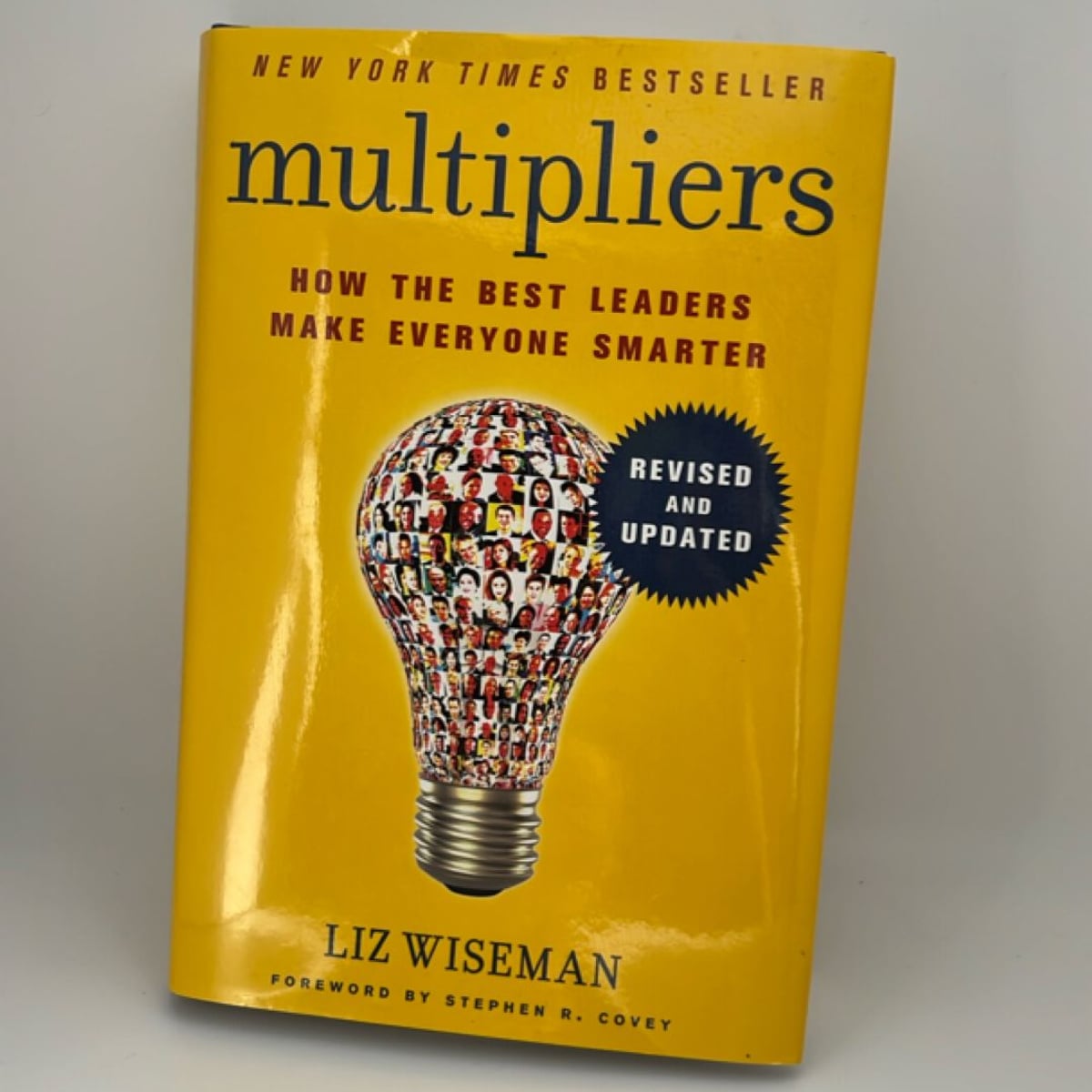
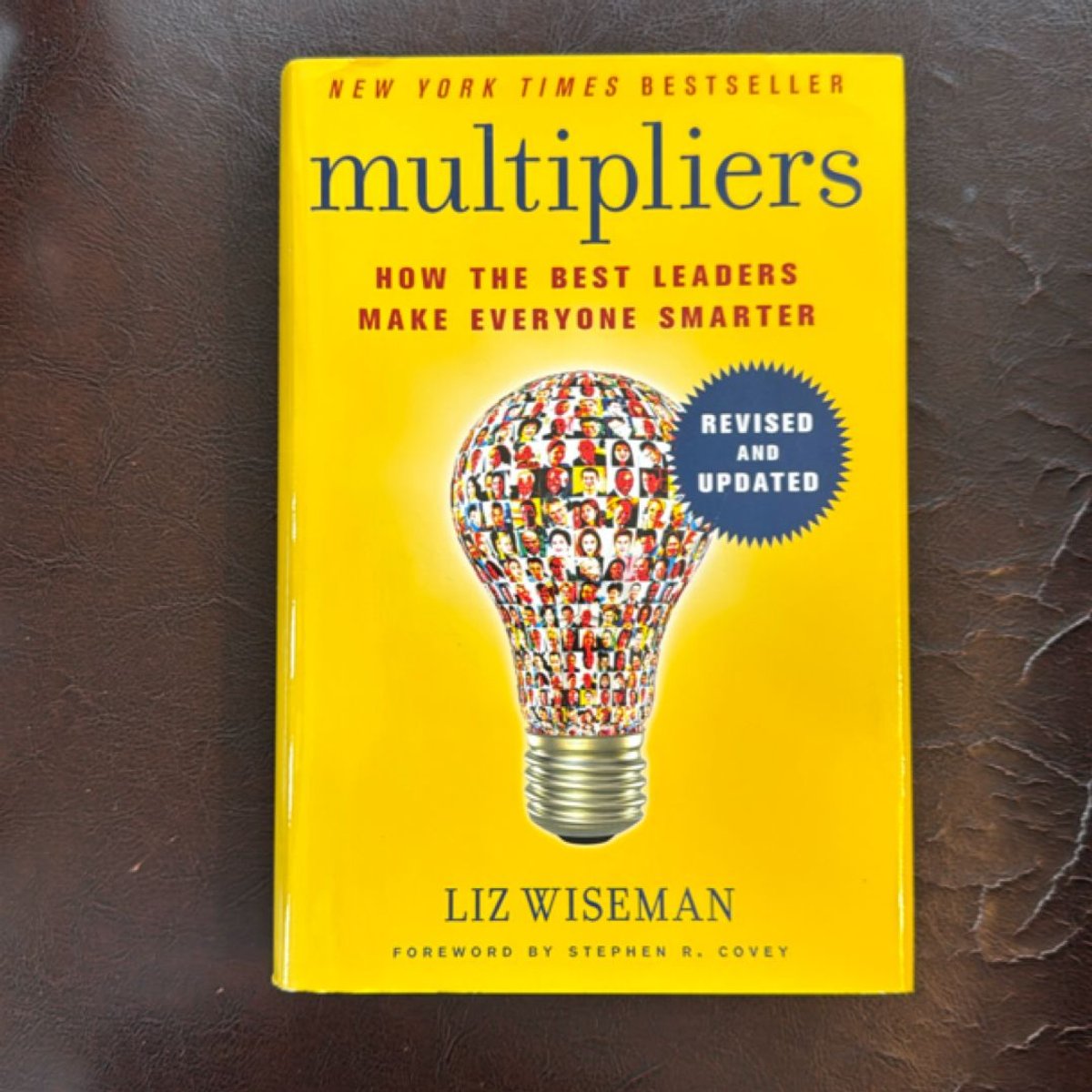
*Multipliers* by Liz Wiseman argues that leaders fall into two camps: Multipliers, who access roughly twice their team's capability, and Diminishers, who access about half. Wiseman frames this as five learnable disciplines — Talent Magnet, Liberator, Challenger, Debate Maker, Investor — not personality. For sales leaders, the manager is the largest single variable on identical headcount.
The two managers running identical territories
Picture a mid-market SaaS org with two frontline sales managers, each running eight AEs against comparable territory splits, the same comp plan, the same product, the same marketing-sourced lead flow. On paper the teams are interchangeable. In practice one team beats plan by a comfortable margin and the other misses two quarters running, and the org spends six months blaming lead quality, comp design, and territory carve before anyone looks at the managers.
This is the scenario Wiseman built the book around, and it began at Oracle, where she spent seventeen years running corporate universities and executive development before founding The Wiseman Group. Her founding observation was mundane and unsettling: some leaders made the people around them visibly smarter, and equally credentialed peers made the same people visibly dumber. Not different people — the *same* people, moved between managers, producing different quality of thinking.
The research that followed studied leaders across four continents and produced the number the book is known for. Multipliers access roughly 1.97x the capability their teams bring; Diminishers access roughly 0.48x. Whatever you think of the methodology — and the criticism is fair, since this rests on survey and 360-style data rather than hard output metrics — the practical framing survives. The gap between the two managers in our scenario is not a talent gap. It's an access gap.

Run the scenario forward and the mechanics get concrete. The struggling manager's forecast calls surface slipped deals in week eleven or twelve of the quarter, because the reps have learned that early bad news gets punished. The strong manager hears about the same slips in week three, when there's still runway to work them. Same reps, same deals, different information latency — and information latency is what separates a recoverable quarter from a missed one. That single behavioral difference, multiplied across a year, accounts for more variance than most comp-plan redesigns.
The adjacent version of this scenario shows up in Customer Success, where a CSM team under a Diminisher escalates churn risk late for exactly the same reason, and in RevOps, where analysts under a Know-It-All VP stop bringing inconvenient pipeline data because they've learned the conclusion is already written. The mechanism is portable across every function where the leader depends on the team surfacing truth they'd rather not hear.
How the five disciplines actually work
Each discipline is defined against a recognizable anti-pattern, which is what makes the framework usable — you diagnose by spotting the failure mode, not by aspiring to the virtue.
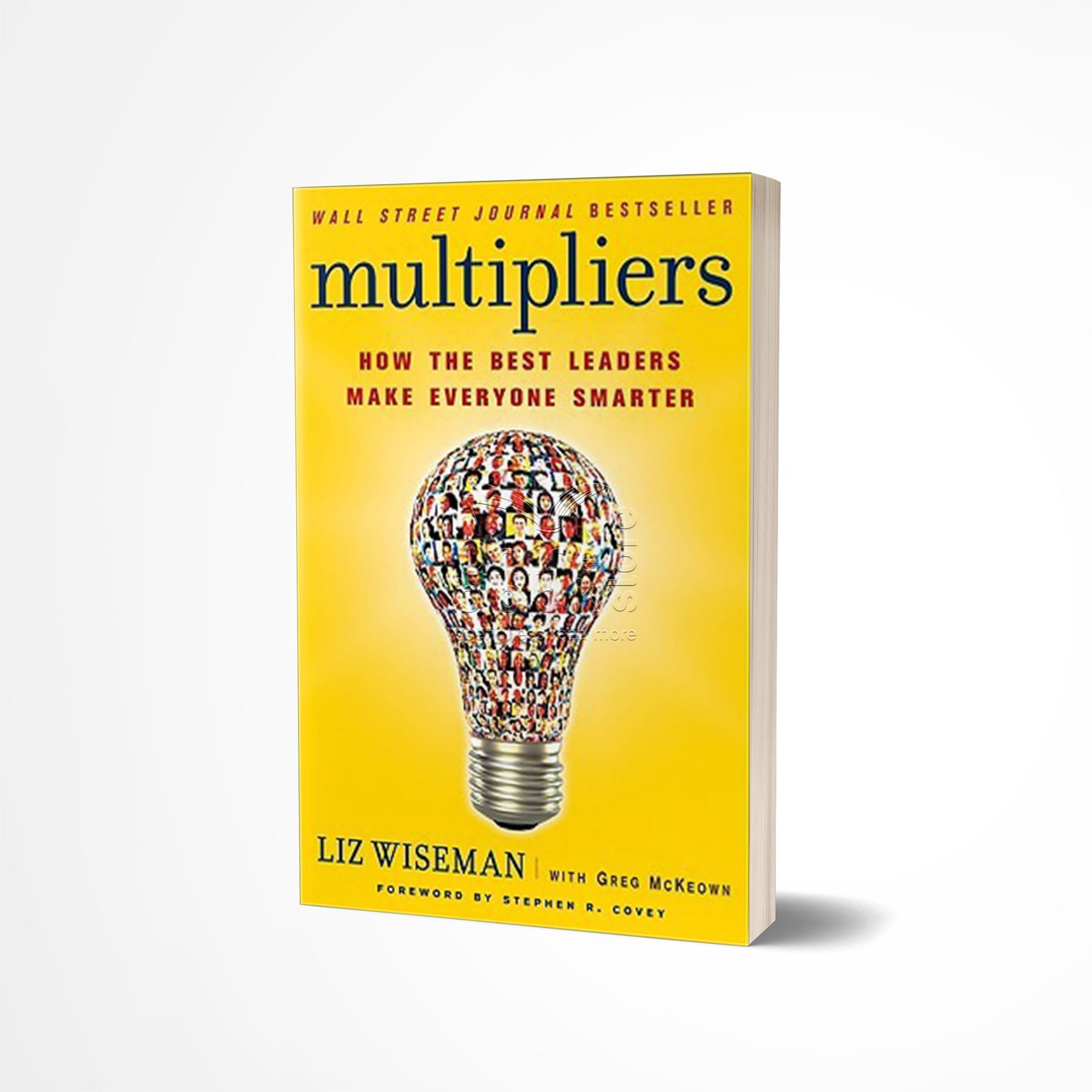
Talent Magnet vs. Empire Builder. Multipliers attract A-players, deploy them at the top of their natural ability, and then rotate them *out* toward the next stretch role. Empire Builders hoard. They block internal transfers, sit on their best rep for three years, and let that rep's capability calcify inside a role they mastered in year one. Wiseman's key finding here is compounding: A-players actively seek out Multipliers, so a Multiplier's bench gets stronger over time while the Empire Builder's slowly rots. In sales this looks like sending your best AE to run Enablement for four quarters rather than rewarding them with a bigger book of the same work.
Liberator vs. Tyrant. The Liberator creates what Wiseman calls intense space — the team's best thinking is required *and* safe to bring. The distinction she draws matters: Liberators demand best *work*, not best *behavior*. Best behavior is polite, on-message, agreeable. Best work is rigorous and frequently uncomfortable. The Tyrant produces fear, and fear produces a curated pipeline. This predates Amy Edmondson's *The Fearless Organization* on psychological safety, but the mechanism is the same one.
Challenger vs. Know-It-All. The Challenger defines an opportunity so compelling the team has to stretch past its own estimate of itself, then steps back so the team owns the answer. Not a directive — a reframing question. *What would it take to close this in 30 days instead of 90?* The Know-It-All supplies the answer, the playbook, and the next three steps before anyone has thought. Wiseman's line here is the sharpest in the book: the ceiling on a Know-It-All team is the manager's own ceiling. A Challenger's QBR opens with three hard questions; a Know-It-All's opens with a finished 90-day plan.
Debate Maker vs. Decision Maker. Three moves. Frame the issue — define the question, the data, the decision criteria, and who's in the room. Spark the debate — assign opposing positions, demand evidence, protect the dissent. Drive the decision — be explicit about who decides, when, and how it gets communicated. The Decision Maker skips all of it, decides privately, announces, and gets compliant execution with zero commitment behind it. Territory carve and comp plan are the two highest-stakes Debate Maker moments in a sales year; both are routinely handled as Decision Maker announcements.
Investor vs. Micromanager. Define the win, give 51% of the vote and 100% of the accountability, and return ownership when it bounces back — because it will bounce back. The Micromanager assigns tasks, hovers, and rescues at the first sign of trouble, which teaches the team that ownership is decorative. The Investor hands the named-account expansion plan to the AE and lets them present it to the customer's CFO without stepping in when a question goes sideways.
The numbers, and how much weight they hold
The headline figures are 1.97x and 0.48x — roughly a 4x swing in capability access on identical headcount. Treat these as directional rather than precise. They come from Wiseman's study of leaders across four continents, built on survey and 360-style instruments, not on audited output. Anyone who quotes 1.97x as a hard performance multiple is overselling it.
What gives the direction credibility is that two independent Google re:Work programs landed in the same place using different methods. Project Oxygen identified the specific manager behaviors that predicted team outcomes — coaching, empowering without micromanaging, listening and sharing information, being results-oriented — and that list maps almost one-to-one onto Wiseman's disciplines. Project Aristotle, studying team effectiveness rather than manager behavior, found psychological safety to be the strongest predictor of team performance. That's the Liberator discipline arrived at independently.

So the honest framing for a sales leader is: the exact multiple is contested, the ranking is not. Manager quality is a first-order variable, and there is convergent evidence from at least three research programs with different methodologies.
The practical benchmarks worth tracking are the observable proxies, not the multiple itself. Talk-time ratio on coaching calls — if the manager is talking most of a one-on-one, that's Know-It-All behavior showing up in the data. Question-to-statement ratio in pipeline reviews. Interruption rate. Conversation-intelligence platforms like Gong publish research on these signals in a selling context, and the same instrumentation works on internal coaching calls. Forecast slip latency — the median number of weeks before quarter-end when a slipped deal first gets flagged — is the cheapest Liberator proxy most orgs already have sitting in their CRM.
Two more you can pull without new tooling. Internal mobility rate: what percentage of a manager's reports move to a new role, up or lateral, in a rolling twelve months? A persistent zero is an Empire Builder signal. And ramp time for new hires under each manager — Talent Magnets tend to ramp people faster because A-players want to work for them and the ones already there help.
Trade-offs, and where the framework runs out

Multipliers is not a complete operating system, and pretending otherwise is how it gets misapplied.
It's not a sales book. It's general leadership. The reason it shows up in Pavilion's sales-manager curriculum alongside Kim Scott's *Radical Candor*, Edmondson's *The Fearless Organization*, and Michael Bungay Stanier's *The Coaching Habit* is that the manager-as-amplifier dynamic is more consequential in sales than almost anywhere else — a rep's output is measured monthly and the feedback loop is brutal. But you won't find territory design, comp mechanics, or forecast methodology in it.
The Challenger discipline has a floor. Asking a reframing question instead of giving the answer assumes the team has enough context to reach a good answer. Hand a brand-new SDR a Challenger question about pipeline strategy and you get paralysis, not stretch. The discipline scales with tenure. Early-tenure reps need Know-It-All-shaped direction on mechanics — call structure, objection handling, CRM hygiene — and Challenger treatment on the things they can actually own. Wiseman's framework doesn't handle this gradient well; it reads as if all teams are equally ready to be stretched.
Liberator and quota pressure sit in tension. Best work over best behavior is easy to endorse in a training room and hard in week twelve of a missed quarter. The honest trade-off is that Liberator behavior costs short-term control in exchange for better information, and in a genuinely distressed quarter some managers rationally choose control. The failure is choosing control permanently and calling it urgency.
Adjacent books cover what this one doesn't. Scott's *Radical Candor* handles the feedback conversation itself, which Multipliers barely touches. Patty McCord's *Powerful* covers the informed-captain decision model that overlaps the Debate Maker discipline with more operational detail. Edmondson gives psychological safety the rigorous treatment the 2010 edition lacks. Wiseman's own *Rookie Smarts* and *Impact Players* provide the individual-contributor mirror. A sales leader reading only Multipliers gets a diagnostic vocabulary without the conversational tooling to act on it.

The case studies have aged. The 2010 examples lean on tech-company anecdotes that read dated now, and the book predates the remote and hybrid sales-management reality entirely. That's a real gap, because remote amplifies exactly the failure modes Wiseman names: with less ambient signal, anxious managers compensate with more dashboards, more check-ins, more pipeline scrubs — Micromanager behavior with a process justification attached.
The Accidental Diminisher, and the pitfalls that follow
The 2017 revision added the chapter that has since outgrown the rest of the book. Wiseman's finding: leaders diminish people by accident about as often as by design. The Accidental Diminisher is well-intentioned, often genuinely well-liked, convinced they're a Multiplier, and suppressing their team's contribution anyway.
Six archetypes. The Idea Guy generates so many ideas the team stops generating any. The Always-On Manager is so visibly energetic that nobody else's voice fits in the room. The Rescuer jumps in at the first sign of struggle, teaching the team they can't do hard things alone. The Pacesetter sets a personal tempo so extreme the team quits trying to match it. The Rapid Responder answers every question instantly, removing the need for anyone to think. The Optimist is so relentlessly positive that real problems can't be surfaced without sounding disloyal.
In sales leadership, Rescuer and Pacesetter dominate. The Rescuer takes the executive call back when the AE stumbles on a pricing objection — solving the deal and costing the rep the rep. The Pacesetter sends Slack at 11 PM and reads the team's failure to match it as a commitment problem.
Pitfall one: reading the book as a personality test. The whole point is that these are disciplines, not traits. Managers who conclude "I'm a Multiplier" have usually just failed the Accidental Diminisher chapter. Assume you're running at least one archetype.
Pitfall two: self-assessment without data. Nobody accurately self-diagnoses as a Rescuer. Run the six archetypes as an anonymous rating from direct reports, or pull the behavioral proxies from call recordings. Self-report on this is close to worthless.
Pitfall three: trying to fix all five disciplines at once. The workable move is to pick the single highest-scoring Accidental Diminisher archetype and stop doing that one thing for 30 days. A Rapid Responder commits to waiting a beat and asking "what do you think?" first. A Pacesetter stops sending messages after 7 PM. One behavior, one month, measured.
Pitfall four: applying it as a culture initiative. Multipliers vocabulary distributed org-wide as a slide deck becomes shorthand for calling colleagues Diminishers. It works as a private diagnostic between a leader and their coach or manager, and it works as a shared vocabulary once leaders have already done the self-work. Reversing that order poisons it.
Pitfall five: ignoring it at the promotion decision. The most expensive version of this problem is promoting a top rep to frontline manager and hoping. Top reps default to Micromanager precisely because they genuinely do the rep work better than their reps do — rescuing feels like helping. The Investor move, 51% of the vote and 100% of the accountability, is the single highest-leverage skill for a new frontline manager, and it's the one nobody teaches before the promotion lands.
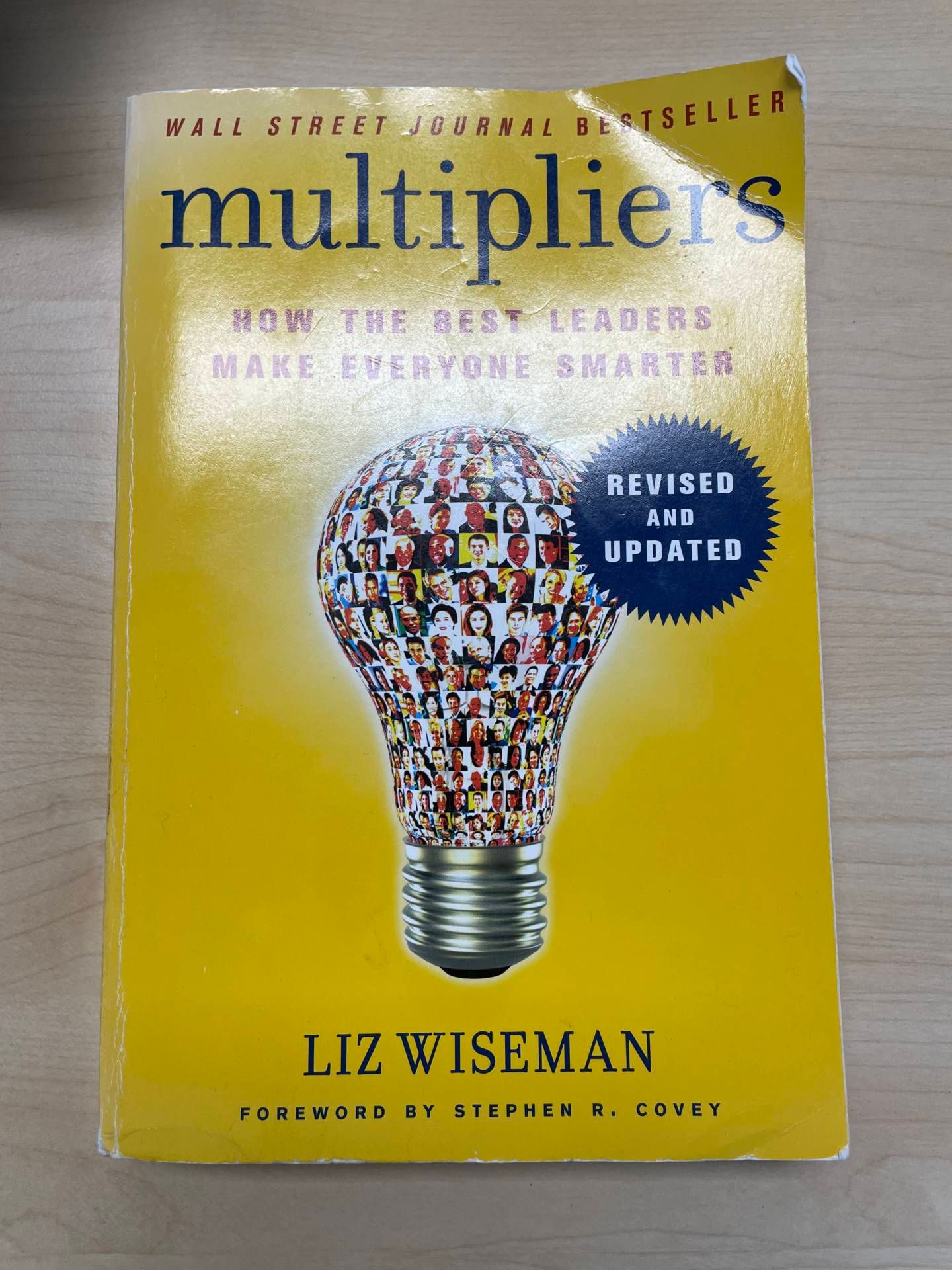
The broader strategy implication for a VP: manager selection and manager development deserve more of your planning attention than most sales orgs give them. If the framework is even directionally right, the marginal dollar spent on frontline manager capability outperforms the marginal dollar spent on another rep — and that's a resource-allocation question, not a leadership-philosophy question.
Related questions
What's the fastest way to use this book with an existing sales team?
Have direct reports anonymously rate you against the six Accidental Diminisher archetypes. Take the top score, stop that behavior for 30 days, and re-rate. One behavior at a time beats a five-discipline transformation plan that nobody sustains past week two.
Should I read Multipliers before or after Radical Candor?
Multipliers first. It gives you the diagnostic vocabulary for *what* is going wrong in how work gets assigned and decided. Radical Candor then gives you the conversational mechanics to fix it. Diagnosis before tooling.
Does the framework work for remote sales teams?
The disciplines hold, but the book predates remote management. Remote amplifies the Micromanager and Tyrant failure modes because reduced ambient signal pushes anxious managers toward dashboards and check-in frequency as substitutes for presence.
Is Multipliers useful outside sales?
Yes — it was written as general leadership research. RevOps, Customer Success, and support leadership hit the same core mechanic: any function where the leader depends on the team surfacing uncomfortable truth is exposed to the Tyrant and Know-It-All patterns.
What does an Investor move look like in practice?
Define the win explicitly, name one owner, give them the deciding vote and full accountability, then hand ownership back when they try to return it. The test is whether you stay quiet when their approach differs from yours.
FAQ
Is Multipliers a sales book?
No. It's general leadership research, written from a study of leaders across four continents. It appears in sales-manager development programs like Pavilion's because the manager-as-amplifier effect is especially visible in sales, where output is measured monthly and the same reps under different managers produce visibly different results. Expect no territory, comp, or forecasting content.
Which discipline matters most for a first-time sales manager?
Investor. New managers promoted from top-rep status default to Micromanager because they genuinely execute the rep work better than their reps do, which makes rescuing feel like helping rather than harming. Learning to give 51% of the vote and 100% of the accountability — and to keep quiet when the rep's approach differs from yours — is the highest-leverage skill available in the first year.
Am I an Accidental Diminisher?
Almost certainly in at least one archetype. That's Wiseman's central point — well-meaning managers diminish by accident more often than by design. Rescuer and Pacesetter are the two most common in sales leadership. Self-diagnosis is unreliable here; get anonymous ratings from your direct reports or pull talk-time and interruption data from recorded coaching calls.
How is this different from Radical Candor?
Radical Candor is about the feedback conversation — caring personally while challenging directly. Multipliers is about the surrounding operating system: how work gets assigned, who decides, how debate is structured, how ownership transfers. They're complementary rather than redundant, which is why development programs commonly assign both. Multipliers tells you what's broken; Radical Candor gives you the conversation to fix it.
Does the 1.97x number hold up?
Treat it as directional. The methodology relies on survey and 360-style data rather than audited performance metrics, and that criticism is legitimate. The qualitative claim — that the best managers extract far more from identical teams than the worst — is independently supported by Google's Project Oxygen and Project Aristotle, which used different methods and reached compatible conclusions. Quote the direction, not the decimal.
What should a sales VP do the week after reading it?
Two things. Run the Accidental Diminisher self-audit with anonymous input from your direct reports and commit to dropping one behavior for 30 days. Then look at your promotion criteria for frontline manager roles and check whether they measure anything other than individual quota attainment — because that's where the compounding cost of a Diminisher manager originates.
Sources
- https://thewisemangroup.com/books/multipliers/
- https://www.harpercollins.com/products/multipliers-revised-and-updated-liz-wiseman
- https://rework.withgoogle.com/en/guides/managers-identify-what-makes-a-great-manager
- https://rework.withgoogle.com/en/guides/understanding-team-effectiveness
- https://www.radicalcandor.com/the-book/
- https://fearlessorganization.com/the-fearless-organization
- https://boxofcrayons.com/the-coaching-habit-book/
- https://hbr.org/2013/12/how-managers-can-make-the-most-of-their-teams
- https://www.gong.io/resources/labs/
- https://www.joinpavilion.com/
Related on PULSE
- The Advantage by Patrick Lencioni — Cliff Notes Summary for Sales Leaders
- Difficult Conversations by Stone, Patton & Heen — Cliff Notes Summary for Sales Leaders
- The First 90 Days by Michael Watkins — Cliff Notes Summary for Sales Leaders
- The Sandler Rules for Sales Leaders by David Mattson — Cliff Notes Summary
- Scaling Up by Verne Harnish — Cliff Notes Summary for Sales Leaders
- Traction by Gino Wickman — Cliff Notes Summary for Sales Leaders
This page will be disappearing soon. Save it to your device for $1 — or read it free while it is here.
@Kory-White- · if Venmo asks, the last 4 of my number are 2012
This page is gone.
This one is off the shelf now. $1 keeps it on your phone for good — the whole page, pictures and diagrams included.
 pulse-recentCrossing the Chasm by Geoffrey Moore — Top 10 Key Takeaways for Sales Leaders in 2027
 pulse-recentNever Lose a Customer Again by Joey Coleman — Top 10 Key Takeaways for Sales Leaders in 2027
 pulse-recentWhat are the concrete steps in Sandler Rule #7 for handling a prospect's budget objection in 2027?
 pulse-recentWhat are the seven concrete steps to implement the Sandler Submarine technique from The Sandler Rules in 2027?
 pulse-recentThe Sales Acceleration Formula by Mark Roberge — Top 10 Key Takeaways for Sales Leaders in 2027
 pulse-recent$100M Offers by Alex Hormozi — Top 10 Key Takeaways for Sales Leaders in 2027
 pulse-recentCoaching Salespeople into Sales Champions by Keith Rosen — Top 10 Key Takeaways for Sales Leaders in 2027
 pulse-recentSnap Selling by Jill Konrath — Top 10 Key Takeaways for Sales Leaders in 2027
 book-summaryLittle Red Book of Selling by Jeffrey Gitomer — Cliff Notes Summary
 pulse-recentSell or Be Sold by Grant Cardone — Top 10 Key Takeaways for Sales Leaders in 2027