


Insight Selling by Mike Schultz and John Doerr — Cliff Notes Summary
Quality
Certified
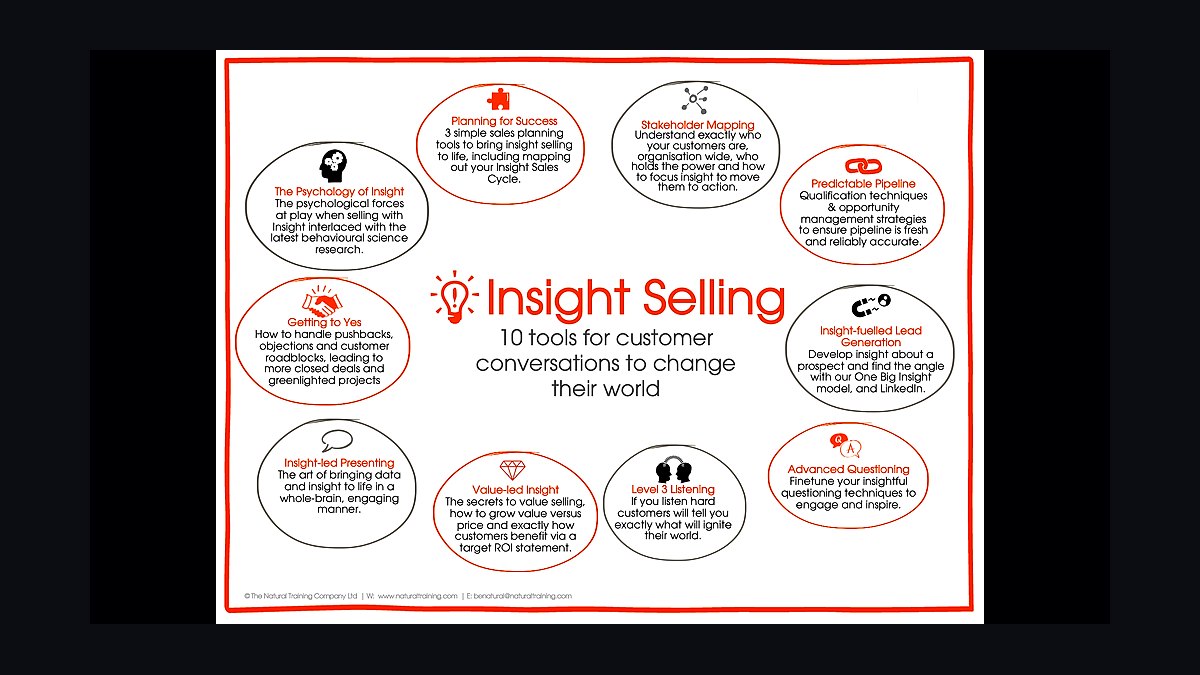
Insight Selling: Surprising Research on What Sales Winners Do Differently (Wiley, 2014) by Mike Schultz and John E. Doerr — co-presidents of RAIN Group, the Boston-based sales-training and research firm — is one of the most rigorously researched sales books of its decade. Schultz and Doerr analyzed more than 700 actual B2B purchases by interviewing the buyers (not the reps) and asked a single question: what did the Sales Winner do that the Sales Second-Place finisher did not? The answer became their signature 3 Levels of Selling framework — Connect, Convince, and Collaborate — plus the 9 specific Sales Winner Behaviors that separate the rep who closes from the rep who finishes runner-up. The book's central claim — "Insight is the new value" — arrived three years after Matthew Dixon's The Challenger Sale (2011) and is often dismissed as a parallel volume. In reality it is the independent empirical validation of the insight thesis, built on buyer-side research rather than rep-side surveys, plus the operational 9-behavior playbook Challenger never delivered. It belongs on the shelf next to Rackham's SPIN Selling, Bosworth's Solution Selling, and Dixon's Challenger Sale as one of the foundational works in the modern consultative-sales canon.
1The Setup — Why a 700-Deal Study Mattered
1.1 The Research Methodology
Most sales books pattern-match from the author's own career. Schultz and Doerr did something different: they surveyed buyers — not reps, not managers — across 700+ B2B purchases, spanning IT services, professional services, financial services, and industrial sales. Buyers rated both the winning rep and the second-place rep on dozens of distinct seller behaviors. The approach echoes Neil Rackham's SPIN research at Huthwaite (1988, built on observation of 35,000 sales calls).
1.2 The Killer Finding
The result that anchors the book: Winners and Second-Place finishers did most of the same things. Both qualified, both demoed, both followed up, both built rapport. The gap came down to a small cluster of 9 behaviors organized into 3 Levels. In RAIN Group's reporting, Winners were far more likely to be seen as educating buyers with new ideas, collaborating, and listening to needs. The Second-Place rep, in the authors' framing, does nearly everything the Winner does — except generate insight.

2Level 1 — Connect
2.1 Connect the Dots
The first level is the table-stakes work most reps mistake for selling: connect the buyer's stated need to your solution's capabilities. Winners do this — but they also connect dots the buyer has not yet drawn, surfacing adjacent problems and downstream consequences. The Second-Place rep maps features to a requirements doc; the Winner reframes the requirements doc itself.
2.2 Connect With the Buyer as a Person
The second half of Connect is interpersonal, and the research is unambiguous that personal rapport still moves deals. Winners were rated higher on "easy to do business with," "professional," and "I like them personally." This is not the Dale Carnegie charm school of the 1930s; it is the disciplined warmth of a rep who has done their homework on the buyer's career history, P&L pressures, and prior vendor scars.

2.3 The 3 Connect Behaviors
The three Sales Winner behaviors inside Connect: (1) Listen deeply — Winners ask more diagnostic questions and reflect back what they heard. (2) Educate with new ideas — Winners bring at least one non-obvious data point or industry benchmark to every meeting. (3) Inspire with a new perspective — Winners reframe the buyer's understanding of their own problem. The reframe is the moment the buyer's posture shifts; Schultz and Doerr call it engineering the Aha Moment.
3Level 2 — Convince
3.1 Make the Rigorous Case
Level 2 is where most sales training stops: build the business case. But the RAIN data shows Winners and Losers both build cases — the difference is what the case is about. Losers convince on features and price; Winners convince on outcomes and risk. The Winner walks into the executive conversation with a quantified ROI model, a risk register, and a proof-by-analogy from a named peer reference the buyer can call directly.

3.2 Address Risk Proactively
This is the behavior most reps avoid because it feels self-defeating: raise the risks of buying from you before the buyer does. Winners proactively name the implementation risk, the change-management risk, and the integration risk — then walk through the mitigation plan. In the book's account, proactive risk-handling registers as one of the strongest trust-building moves a seller can make. The Second-Place rep waits for procurement to surface those risks in week six and gets caught flat-footed.
3.3 The 3 Convince Behaviors
The three Convince behaviors: (1) Address risks proactively — name them first. (2) Quantify value with specifics — not "around 20% improvement" but "$4.7M over 36 months based on your stated 14,000-unit volume." (3) Make a clear business case — a written, shareable, board-ready document the economic buyer can forward without editing. Winners deliver this before the buyer asks; Losers deliver it after procurement requests it.

4Level 3 — Collaborate
4.1 Co-Create, Don't Prescribe
Level 3 is the level the book is famous for and the one most sales orgs still get wrong. Collaborate means rep and buyer architect the solution and the implementation together — whiteboarding, joint workshops, draft proposals the buyer marks up, phased rollout plans built with the buyer's IT and ops leads in the room. The Second-Place rep delivers a prescribed solution in a polished deck. The Winner delivers a half-built solution and invites the buyer to finish it.
4.2 Engage the Buyer's Team
The modern buying committee has grown — Gartner reports an average of 6.8 stakeholders in a typical complex B2B purchase. Winners engage multiple stakeholders as partners, not just as approvers. They run joint discovery with the economic buyer, the technical buyer, and the end-user champion at once, and host mutual action plans the buyer's team co-edits in a shared doc.

4.3 The 3 Collaborate Behaviors
The three Collaborate behaviors: (1) Help the buyer avoid pitfalls — share the failure modes from prior implementations. (2) Engage the buyer's team as partners — joint workshops, not one-way demos. (3) Engineer the implementation jointly — phase the rollout with the buyer's project manager in the room. This is the level that product-led growth companies still struggle with — their product covers Connect and Convince; their reps still have to do Collaborate by hand.
5The 3 Types of Insight
5.1 Interaction Insight
The first type is Interaction Insight — insight that surfaces during the live conversation. The rep asks a probing question, the buyer hears their own answer, and the problem looks different. This is the SPIN-style insight Rackham described in 1988: conversational and co-generated.
5.2 Opportunity Insight
The second type is Opportunity Insight — the rep surfaces a specific opportunity, tied directly to their solution, that the buyer had not considered. Example: a Salesforce AE who walks a marketing leader through the lifetime-value math of an unaddressed mid-funnel segment and reveals a revenue line the buyer's team had been ignoring. Opportunity Insight requires deep product fluency and industry numeracy.
5.3 Brilliance — The Insight That Still Holds Up
The third type — and the one Schultz and Doerr treat as the highest-value form — is Brilliance: a third-party perspective the buyer cannot generate alone. Think proprietary benchmark data, peer-cohort comparisons, market-trend analysis from your install base, or survey data from hundreds of the buyer's peers. Brilliance is the insight a generic LLM cannot produce, because it depends on first-party data the seller's company owns.
6The RAIN Group 5-Step Insight Conversation
6.1 The Operating Model
Schultz and Doerr codify the Insight conversation as a 5-step sequence: (1) Connect — establish the relationship and the diagnostic frame. (2) Convert — get the buyer to acknowledge a new problem or opportunity. (3) Convince — make the rigorous case for change. (4) Collaborate — co-architect the solution. (5) Close — finalize and launch. The sequence is not linear — Winners loop through Connect and Collaborate repeatedly across a multi-month deal.
6.2 Engineering the Aha Moment
The book's most operational chapter walks through Aha Moment engineering — deliberately constructing the conversation so the buyer experiences a moment of genuine surprise about their own business. Three ingredients: (1) a specific data point the buyer has not seen, (2) a reframe that connects that data point to their P&L, and (3) a provocation that makes the status quo feel untenable. The rep arrives having pre-decided which Aha the buyer will experience.

7Lineage and Where Insight Selling Fits
7.1 The Modern Sales Canon
The lineage runs clean: Rackham's SPIN Selling (1988) established diagnostic questioning; Bosworth's Solution Selling (1994) added pain-chain selling; Schultz and Doerr's Rainmaking Conversations (2011) introduced the RAIN framework (Rapport / Aspirations & Afflictions / Impact / New Reality); Dixon and Adamson's The Challenger Sale (2011, CEB) introduced the insight thesis with its Teach / Tailor / Take Control model; and Insight Selling (2014) then empirically validated that thesis with independent 700-deal buyer-side research while adding the operational 9-behavior playbook.
7.2 The Parallel-Volume Problem
Challenger and Insight Selling both rode the same insight-selling wave — Challenger in 2011, Insight Selling three years later in 2014 — and the market remembered Challenger while forgetting Insight Selling, largely because CEB had a massive distribution machine and RAIN Group is a boutique. The irony: Insight Selling's research is arguably methodologically tighter (buyer-side surveys vs. CEB's rep-side surveys), and its 9-behavior playbook is more directly actionable than Challenger's 5 rep profiles.

Frameworks at a Glance
- The 3 Levels of Selling — Connect (relate needs to solution and relate as a person), Convince (make the rigorous outcome case), Collaborate (co-architect the solution and the implementation).
- The 9 Sales Winner Behaviors — 3 per level, all derived from the 700-deal buyer-side research.
- The 3 Types of Insight — Interaction Insight (surfaces in conversation), Opportunity Insight (surfaces a specific revenue line), Brilliance (third-party perspective the buyer cannot self-generate).
- Aha Moment Engineering — specific data point + reframe + provocation, pre-staged before the meeting.
- The 5-Step Insight Conversation — Connect, Convert, Convince, Collaborate, Close — looped, not linear.
- The Three Winner Multipliers — RAIN's headline finding that Winners over-index on educating, collaborating, and listening.
What Holds Up, What Has Aged
What holds up in 2027: The 9-behavior playbook is durable — buyers still reward Winners who listen, educate, address risk, quantify ROI, and collaborate. The Brilliance category has become more valuable, not less: because everyone now has free AI access, the only differentiated insight a rep can bring is proprietary first-party data — install-base benchmarks, peer-cohort comparisons, and survey data from their own customers. Modern conversation analytics from Gong and Chorus have independently reinforced RAIN's core picture: top reps ask more diagnostic questions and reframe more often.

What has aged: Interaction Insight — the live, conversational insight that once differentiated a great rep — has been commoditized by AI. Any rep can now run a competent SPIN-style diagnostic with an AI prep tool. The 5-step model also reads as too tidy for modern product-led growth buying, where the buyer often self-serves through Connect and Convince via the product itself and the rep enters only at Collaborate. The book also predates today's larger buying committee and Gartner's finding that B2B buyers spend the majority of the purchase journey researching independently rather than with sellers.
FAQ
Is Insight Selling just the same book as The Challenger Sale? No. The two are often paired because both center on insight, but they are independent works published three years apart — The Challenger Sale in 2011 (CEB/Dixon, built on rep-side surveys) and Insight Selling in 2014 (RAIN Group, built on buyer-side surveys of 700+ purchases). Insight Selling adds the operational 9-behavior playbook; Challenger gives you the 5 rep profiles. Read both — they reinforce each other rather than compete.
What is the single most important behavior from the book? Educate with new ideas. In RAIN Group's research, being seen as the seller who brings new ideas is the strongest single differentiator of Winners. Practically: walk into every meeting with at least one non-obvious industry benchmark, peer-cohort data point, or trend the buyer has not seen.
How do I generate Brilliance insight if I work at a small company? Brilliance does not require scale — it requires proprietary perspective. Pull data from your own install base (even 20 customers is enough for a peer-cohort chart). Partner with an analyst firm, license survey data, or run your own micro-survey of 100 buyers in the target segment on LinkedIn. The test is simple: the buyer cannot get it from a generic AI tool.
Does Insight Selling still work in product-led growth and self-serve sales motions? Yes, but the levels collapse. The product does Connect and Convince through onboarding and in-app analytics; the rep enters at Collaborate to architect enterprise rollout, security review, and change management.
What should I read next after Insight Selling? Read Dixon's The Challenger Sale for the parallel rep-side research, Iannarino's Eat Their Lunch for the displacement-selling extension, and Schultz and Doerr's own Rainmaking Conversations (2011) for the RAIN questioning framework that predates this book.
Is the 700-deal research still cited? Yes. HubSpot Research, Pavilion, and conversation-intelligence teams like Gong Labs routinely reference RAIN Group's Sales Winner findings, and analyst firms such as Forrester and Gartner touch the same buyer-behavior themes in their B2B buying reports.
Bottom Line
Read Insight Selling if you want the empirical, operational, buyer-validated companion to The Challenger Sale — the book that names the specific 9 behaviors separating the rep who wins from the rep who finishes second. Monday morning: pick one Connect behavior (Listen Deeply), one Convince behavior (Address Risk Proactively), and one Collaborate behavior (Engineer Implementation Jointly), then audit your last five closed-lost deals against them. As Schultz and Doerr put it: "Winners don't just close deals — they earn the right to be the buyer's strategic resource."
Related on PULSE
- The Challenger Sale — Cliff Notes Summary
- Measure What Matters by John Doerr — Cliff Notes Summary
- SPIN Selling by Neil Rackham — Cliff Notes Summary
- The Qualified Sales Leader by John McMahon — Cliff Notes Summary for CROs
- Eat Their Lunch by Anthony Iannarino — Cliff Notes Summary
Sources
- Mike Schultz and John E. Doerr — *Insight Selling: Surprising Research on What Sales Winners Do Differently* (Wiley, 2014)
- Mike Schultz and John E. Doerr — *Rainmaking Conversations: Influence, Persuade, and Sell in Any Situation* (Wiley, 2011)
- RAIN Group — *What Sales Winners Do Differently* research (RAIN Group Center for Sales Research) — https://www.raingroup.com/what-sales-winners-do-differently/
- Matthew Dixon and Brent Adamson — *The Challenger Sale: Taking Control of the Customer Conversation* (Portfolio/Penguin, 2011)
- Neil Rackham — *SPIN Selling* (McGraw-Hill, 1988)
- Michael Bosworth — *Solution Selling: Creating Buyers in Difficult Selling Markets* (McGraw-Hill, 1994)
- Gong Labs — Revenue intelligence research on winning sales behaviors — https://www.gong.io/resources/
- Gartner — *The B2B Buying Journey* research on buying group size and self-directed research — https://www.gartner.com/en/sales/insights/b2b-buying-journey
- Anthony Iannarino — *Eat Their Lunch: Winning Customers Away from Your Competition* (Portfolio/Penguin, 2018)
- Pavilion — Revenue leader community and curriculum — https://www.joinpavilion.com/
This page will be disappearing soon. Save it to your device for $1 — or read it free while it is here.
@Kory-White- · if Venmo asks, the last 4 of my number are 2012
This page is gone.
This one is off the shelf now. $1 keeps it on your phone for good — the whole page, pictures and diagrams included.
 pulse-recentStart with No by Jim Camp — Top 10 Key Takeaways for Sales Leaders in 2027
 pulse-recentWhat are the first three concrete steps in Sandler Rule #1 for a new sales rep in 2027?
 pulse-booksRework by Jason Fried and David Heinemeier Hansson — Cliff Notes Summary
 pulse-recentObviously Awesome by April Dunford — Top 10 Key Takeaways for Sales Leaders in 2027
 pulse-recentConceptual Selling by Robert Miller and Stephen Heiman — Top 10 Key Takeaways for Sales Leaders in 2027
 pulse-recentThe Sandler Rules by David Sandler — Top 10 Key Takeaways for Sales Leaders in 2027
 pulse-recentThe Sales Acceleration Formula by Mark Roberge — Top 10 Key Takeaways for Sales Leaders in 2027
 pulse-recentWhat is the Blue Sheet from Strategic Selling by Miller Heiman and how do you fill it out in 2027?
 book-summaryWhat factors drive the price of Book Summaries up or down in 2027?
 pulse-recentNever Lose a Customer Again by Joey Coleman — Top 10 Key Takeaways for Sales Leaders in 2027