


Selling Boldly by Alex Goldfayn — Cliff Notes Summary
Quality
Certified
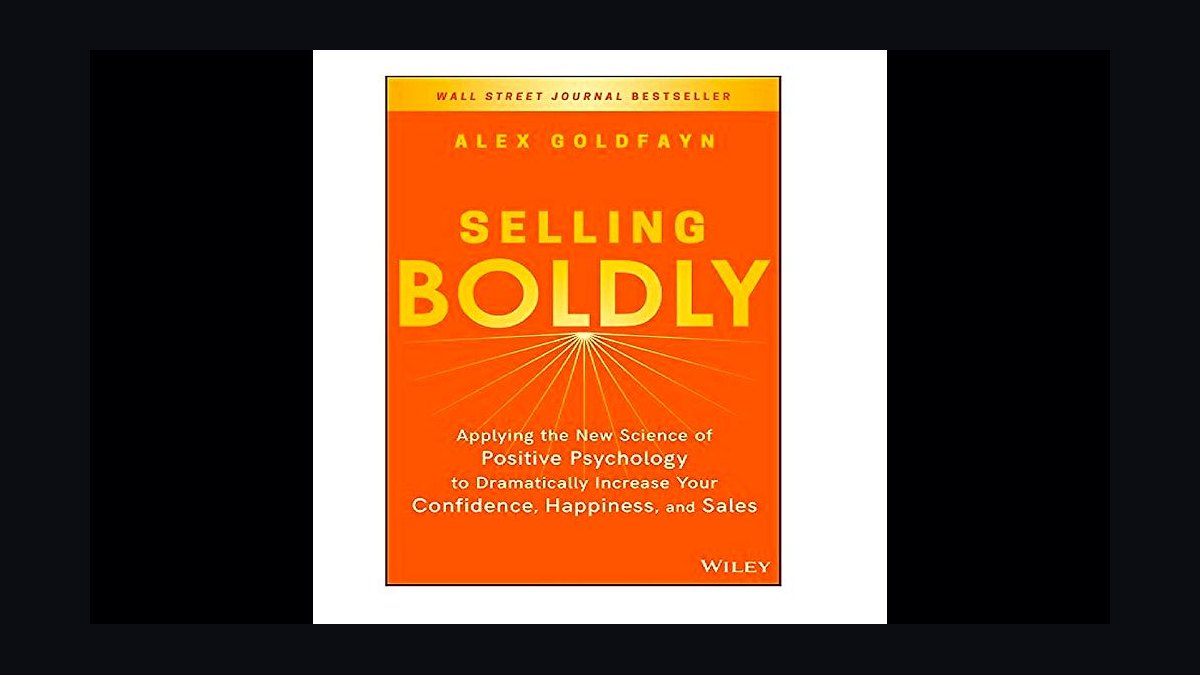
Selling Boldly: Applying the New Science of Positive Psychology to Dramatically Increase Your Confidence, Happiness, and Sales (Alex Goldfayn, Wiley, 2018) makes one argument and presses it relentlessly: most salespeople already have more revenue available to them than they will ever capture, and the reason they don't capture it is fear, not skill, territory, product, or comp plan. The deals you're missing, Goldfayn contends, aren't mostly being lost to competitors — they're sitting unworked inside your *existing* customer relationships because reps quietly avoid the proactive outreach (the phone call, the "did you know," the referral ask) that would surface them.
Goldfayn is a B2B sales consultant who built his practice working with distributors and manufacturers — companies with large existing customer bases and lots of untapped cross-sell — and his earlier book *The Revenue Growth Habit* (2015) won 800-CEO-Read's (now Porchlight's) Sales Book of the Year. What makes *Selling Boldly* distinctive in the canon is that it fuses positive psychology (Martin Seligman, Shawn Achor, Barbara Fredrickson) with concrete, repeatable sales behaviors. The thesis is uncommon and a little uncomfortable for "grind harder" sales culture: the rep's emotional state is the binding constraint on revenue, and a fearful rep avoids the exact actions that would close business. Fix the state — through gratitude, optimistic explanatory style, and a daily proactive routine — and the behaviors follow.
It sits naturally between **Mike Weinberg's *New Sales Simplified* (2012, new-business discipline) and Jeb Blount's *Sales EQ*** (2017, emotional intelligence in the deal) — but where those focus on prospecting and the buyer conversation, Goldfayn turns the lens inward, onto the rep's own head and the customers the rep already has.
Part One — The Fear Problem
Goldfayn's starting observation, drawn from his consulting work with sales teams, is that a large share of a rep's existing customers go long stretches without any proactive contact at all. These are paying customers — not angry, not churned, just un-contacted. Many of them are buying products elsewhere that the rep's own company also sells, simply because no one ever told them. The framing Goldfayn uses throughout: most missed sales are lost not to competitors but to the rep's own *silence*.
He argues this silence is not fundamentally a time-management or discipline problem. It's a fear problem wearing the costume of busyness — CRM grooming, inbox triage, "I'll call them next week." The common excuses ("email is more efficient," "buyers don't want to be called," "my calendar is full") are, in his telling, rationalizations that let a rep avoid the discomfort of an unscripted, voluntary, rejectable conversation.

The deeper mechanism Goldfayn keeps returning to is that the *anticipation* of rejection is more painful than rejection itself. Reps overweight the imagined sting of a "no," so they skip the call entirely — and the call that never happens has a guaranteed zero close rate, while the call that does happen closes at whatever the rep's real rate is. That asymmetry is the engine of lost revenue.
He names the prize the Hidden Pipeline: the existing customers who don't know your full catalog, the referrals nobody asked for, the renewals nobody confirmed, the cross-sells nobody mentioned. It's revenue that requires no new prospecting, no new territory, and no new comp plan — only proactive reaching out.
Part Two — The Positive-Psychology Foundation
The middle of the book is where Goldfayn departs from the typical sales title and grounds his prescriptions in academic positive psychology.
Explanatory style (Seligman). Drawing on Martin Seligman's *Learned Optimism*, Goldfayn leans on the distinction between pessimistic and optimistic explanatory styles. Pessimists explain setbacks as permanent, pervasive, and personal ("I'm bad at this, nobody buys from me"); optimists explain them as temporary, specific, and external ("that one was a bad fit; the next will be different"). The rep with the optimistic style makes the next call; the pessimist stops dialing. Seligman's well-known research with MetLife insurance agents is the classic empirical anchor here — optimistic agents materially outsold pessimistic ones over time — and Goldfayn uses that lineage to argue mindset is *causal* to revenue, not decorative.
Broaden-and-build (Fredrickson). From Barbara Fredrickson's broaden-and-build theory, Goldfayn borrows the idea that positive emotion *widens* a person's behavioral repertoire. A rep in a good, grateful state notices more openings in a conversation, asks more questions, and hears more buying signals. A rep in a fear state narrows toward defensiveness, avoidance, or pitch-and-pray. The practical translation: cultivate openness, and selling opportunities become visible that fear would have hidden.
The happiness advantage (Achor). Goldfayn also draws on Shawn Achor's *The Happiness Advantage*, whose core claim — that positive affect *precedes* and drives performance rather than the reverse — underwrites the whole book. You don't wait to feel confident after the wins; you generate the state first, and the wins follow.
The daily practice. Goldfayn's most concrete prescription is a short morning routine that operationalizes all of the above: spend a few minutes on gratitude (specific people and recent wins, named, not generic), then do your proactive outreach before opening email. His reasoning for the sequencing is psychological: email puts you in a reactive, problem-solving, defensive posture — the opposite of the proactive, generous state that good outreach requires. Calls first, inbox second.
Part Three — The Bold Selling Behaviors
The back of the book turns mindset into a small set of repeatable moves the rep does every day. Goldfayn keeps returning to four in particular:
Communicate proactively
Reach out to existing customers *before* they need something — no agenda, no pitch, just a genuine check-in along the lines of "I was thinking about you; how are things going?" The point is to be in front of the customer when there's nothing to sell, which is precisely when trust (and the next order) gets built. Goldfayn frames bold selling not as aggression but as *service* — helping customers who simply don't know everything you can do for them.
"Did you know we also offer…?"
Add one soft, no-pressure mention of an adjacent product or capability the customer isn't currently buying. It's an information drop, not a close: "Did you know we also do X?" Because the customer is already buying from you, the only thing standing between them and a larger relationship is often awareness of the full catalog.
Ask for referrals — specifically
Generic asks ("know anyone who'd be interested?") fail because they make the customer do the work of generating names. Goldfayn's reframe is to ask for a *specific* number of *specific* people: "Who are two or three people you know who'd benefit from this?" The specificity does the cognitive lifting and produces real names.
Sell what people aren't yet buying
Most reps ride existing demand — they take orders for what the customer already knows they need. Bold sellers help *create* demand by educating customers on capabilities they didn't know were possible. This is the move that most separates the bold seller from the order-taker, and the one fear most reliably suppresses, because it requires initiating value rather than responding to a request.
The Anti-Hustle Argument
A quiet but important thread in *Selling Boldly* is its opposition to white-knuckle, willpower-driven sales motivation. Goldfayn's contention is that effort squeezed out of fear and force is finite — it depletes, and the rep who runs on it burns out. Boldness grounded in gratitude and an optimistic outlook, by contrast, is renewable: it can be regenerated every morning rather than spent down. The result is a more sustainable engine for the same proactive behaviors that fear-based grinding tries (and fails) to make permanent.
The Math of Boldness
The book's most persuasive tool for skeptical sales leaders is a back-of-the-envelope calculation any rep can run on their own book of business:
- Existing customers not contacted recently: [count]
- Average revenue per customer: [dollar]
- Realistic re-engagement rate from one proactive call: [your own historical rate]
- Hidden Pipeline value: count × dollar × rate
Run the numbers honestly and the figure is almost always large — and, crucially, it's revenue that's already on the books, requiring no new prospecting. That arithmetic is what Goldfayn uses to break through the "this positive-psychology stuff is too soft" objection: the soft inputs produce hard, countable dollars.
The Central Model
Frameworks at a Glance
- The bold-selling mindset — the rep's emotional state is the real constraint on revenue; gratitude and optimism are the levers.
- The Hidden Pipeline — a meaningful share of a rep's potential revenue already sits inside the existing customer base, unworked.
- The four bold behaviors — communicate proactively / "did you know we also offer" / ask for referrals by name / sell what people aren't yet buying.
- The daily practice — gratitude (specific people and wins) plus proactive outreach *before* email, every morning.
- Optimistic explanatory style (Seligman) — read setbacks as temporary, specific, and external rather than permanent, pervasive, and personal.
- Broaden-and-build (Fredrickson) — positive affect widens the rep's repertoire mid-conversation.
- The math of boldness — uncontacted-customer count × average revenue × re-engagement rate = visible Hidden Pipeline dollars.
The Daily Operating Loop
What Holds Up, What Has Aged

What holds up — and has gotten more relevant. The fear-of-rejection thesis arguably bites harder in modern asynchronous, digital-first selling than it did in 2018. It is psychologically *easier* to not send a LinkedIn DM, not hit send on a cold email, not record the short video, than it was to not pick up the phone. The friction to inaction has collapsed while the friction to action has not — which makes Goldfayn's "do the proactive thing anyway" discipline more load-bearing now, not less. The broader cultural backlash against hustle-for-its-own-sake (e.g., Cal Newport's *Slow Productivity*) also tends to reinforce, rather than undercut, Goldfayn's "boldness from a renewable positive state, not white-knuckle willpower" framing.
What has been augmented. Modern revenue tooling (Gong, Outreach, Salesloft, Apollo, Clay) now automatically surfaces the proactive-communication moments Goldfayn told reps to hunt for by hand — "this account has gone quiet; here are talking points." The trigger detection is increasingly automated; the discipline to actually make the call is still the rep's.
What Goldfayn himself updated. He wrote two follow-ups — *5-Minute Selling* (2020) and *Pick Up the Phone and Sell* (2021) — that layer channel-specific and time-boxed tactics on top of *Selling Boldly*'s mindset foundation. Read *Selling Boldly* for the *why*; read the follow-ups for the tactical layer.
What has aged least gracefully. Goldfayn's examples skew toward industrial distribution and B2B manufacturing — businesses with large existing books and obvious cross-sell. SaaS readers will need to translate the cross-sell mechanics into product-led-growth and expansion-ARR terms. The mindset translates cleanly; the example phrasing needs adaptation.

- Alex Goldfayn — The Revenue Growth Habit (2015)
- Alex Goldfayn — 5-Minute Selling (Wiley, 2020)
- Alex Goldfayn — Pick Up the Phone and Sell (Wiley, 2021)
- The Goldfayn Group — author's consulting practice and resources (goldfayn.com)
- Martin Seligman — Learned Optimism (Knopf, 1990) and Authentic Happiness (Free Press, 2002)
- Shawn Achor — The Happiness Advantage (Crown Business, 2010)
- Barbara Fredrickson — Positivity (Crown, 2009) — broaden-and-build theory
- Jeb Blount — Sales EQ (Wiley, 2017) and Fanatical Prospecting (Wiley, 2015)
- Mike Weinberg — New Sales Simplified (AMACOM, 2012)
- Cal Newport — Slow Productivity (Portfolio, 2024) — anti-hustle reinforcement## Bottom Line
If you run a team that grinds hard but systematically undersells its existing customer base, *Selling Boldly* is the book. The Monday-morning experiment is cheap and concrete: install Goldfayn's gratitude-plus-proactive-outreach-before-email routine for one team, hold it for 30 days, measure existing-account revenue, and decide from the data. *Selling Boldly* is one of the few sales books that treats the rep's emotional state as a first-class revenue variable — backed by real positive-psychology research and translated into behaviors a rep can run every single day.
Bottom Line

Selling Boldly argues that most missed revenue is not a skill gap — it is avoidance caused by fear of rejection. Fix the emotional state with short daily practices, then run the proactive behaviors (ask, follow up, expand, refer) you already know work. Use it when reps are busy but still leaving unclaimed money in existing accounts.
FAQ
Is this book just about "positive thinking" fluff? No, it’s grounded in peer-reviewed positive psychology research (Seligman, Achor, Fredrickson) and ties specific emotional states to specific sales behaviors. The argument is that a rep’s mindset directly drives whether they pick up the phone or avoid it — so improving the state is a practical lever, not wishful thinking.
Does the book work for B2C or only B2B sales? Goldfayn’s examples come mostly from B2B distribution and manufacturing, but the core principle — that fear of rejection causes reps to leave existing customer revenue unclaimed — applies to any sales context. B2C reps with repeat buyers (e.g., insurance, real estate, financial advising) would find the tactics directly usable.
How is this different from standard "sales motivation" books?
Most motivation books tell you to "grind harder" or "make more calls." This one says the problem isn’t effort — it’s that fear makes you avoid the calls that would actually work. It prescribes specific emotional exercises (gratitude lists, reframing rejections) to lower that avoidance, not to pump you up temporarily.
Does the book offer specific scripts or just theory? Yes, there are concrete scripts for common proactive outreach scenarios — like asking for a referral, pitching a new product to an existing account, or following up after a lost deal. The scripts are short and designed to be delivered conversationally, not read verbatim.
Is this book useful for a sales leader or manager? Yes, because it explains why even talented reps underperform: they’re avoiding uncomfortable calls. A manager can use the book’s framework to coach reps on emotional readiness, not just activity metrics. Goldfayn also includes advice on how to run team meetings that build psychological safety.
How long does it take to see results from the methods? Goldfayn claims reps who adopt the daily practices (e.g., a 5-minute gratitude exercise before calls) often see improved response rates within a few weeks. But honest ranges vary: some reps report a noticeable shift in confidence after 2–3 weeks, while others need 1–2 months of consistent practice to change ingrained avoidance habits.
Sources
- Alex Goldfayn — Selling Boldly: Applying the New Science of Positive Psychology to Dramatically Increase Your Confidence, Happiness, and Sales (Wiley, 2018)
- Alex Goldfayn — *Selling Boldly* (Wiley, 2018)
- Wiley — Selling Boldly catalog listing: https://www.wiley.com/
- Martin Seligman — positive psychology research cited in the book
- Shawn Achor — *The Happiness Advantage* (positive-psychology context Goldfayn builds on)
- Barbara Fredrickson — broaden-and-build research referenced for emotional-state effects
- Homodeus / Alex Goldfayn sales practice materials on proactive outreach
Related on PULSE
- Pick Up the Phone and Sell by Alex Goldfayn — Cliff Notes Summary
- $100M Leads by Alex Hormozi: Summary, Key Lessons, and RevOps Takeaways
- $100M Offers by Alex Hormozi: Summary, Key Lessons, and RevOps Takeaways
- Selling the Invisible by Harry Beckwith — Cliff Notes Summary
- Secrets of Question-Based Selling by Thomas Freese: Summary, Key Lessons, and RevOps Takeaways
- SPIN Selling by Neil Rackham: Summary, Key Lessons, and RevOps Takeaways
This page will be disappearing soon. Save it to your device for $1 — or read it free while it is here.
@Kory-White- · if Venmo asks, the last 4 of my number are 2012
This page is gone.
This one is off the shelf now. $1 keeps it on your phone for good — the whole page, pictures and diagrams included.
 book-summaryPick Up the Phone and Sell by Alex Goldfayn — Cliff Notes Summary
 book-summaryWhat factors drive the price of Book Summaries up or down in 2027?
 pulse-recentWhat is the first concrete step in Sandler Rule #4 for a sales leader to implement in 2027?
 pulse-recentProActive Selling by Skip Miller — Top 10 Key Takeaways for Sales Leaders in 2027
 pulse-recentWhat is the first concrete step in The Sandler Rules by David Mattson for a sales leader to implement the system in 2027?
 pulse-recentCoaching Salespeople into Sales Champions by Keith Rosen — Top 10 Key Takeaways for Sales Leaders in 2027
 pulse-recentBlue Ocean Strategy by W. Chan Kim and Renee Mauborgne — Top 10 Key Takeaways for Sales Leaders in 2027
 pulse-recentFanatical Prospecting by Jeb Blount — Top 10 Key Takeaways for Sales Leaders in 2027
 pulse-recentObviously Awesome by April Dunford — Top 10 Key Takeaways for Sales Leaders in 2027
 pulse-recentConceptual Selling by Robert Miller and Stephen Heiman — Top 10 Key Takeaways for Sales Leaders in 2027