


Combo Prospecting by Tony Hughes — Cliff Notes Summary
Quality
Certified

Combo Prospecting: The Powerful One-Two Punch That Fills Your Pipeline and Wins Sales by Tony J. Hughes (AMACOM, 2018) is the book that named the multi-channel cadence category before tools like Outreach and Salesloft productized it. The one-line answer: no single prospecting channel works alone in modern B2B, and the "combo" — an orchestrated sequence of phone, email, LinkedIn, video, and voicemail timed to land in the same tight window — beats single-channel prospecting because it makes one rep feel like they are everywhere at once.
Hughes is the Australian enterprise-sales coach behind The Joshua Principle (2010) and later Tech-Powered Sales (2021, with Justin Michael). Combo Prospecting matters because it codified the operating model that nearly every modern cadence tool now ships by default; it stays under-read because Jeb Blount's Fanatical Prospecting (2015) and Aaron Ross's Predictable Revenue (2011) absorbed the oxygen on the same shelf. If you only read one Hughes book, read this one. It sits between Blount's "do the work" discipline and Ross's "build the machine" architecture, and it explains how those two ideas fuse into a daily rep behavior that still defines today's outbound.
1The Combo Definition — Why Single-Channel Prospecting Died
1.1 The collapse of channel monogamy
Hughes opens with a blunt diagnosis: the cold call alone is dead, the cold email alone is dead, and the LinkedIn-only "social seller" is dead. None of them are dead as channels — they are dead as *monogamous tactics*. His argument is that enterprise buyers had learned to pattern-match and ignore any one channel in isolation: most cold emails go unopened, most cold calls go unanswered, and LinkedIn connection requests that get accepted still draw almost no replies. Reps who clung to one channel were burning lists and blaming the market.
1.2 The Combo as the new floor
The Combo is Hughes's coined term for a coordinated, multi-channel touch sequence delivered in a tight window, so the prospect sees the rep three ways at once — a phone call, a personalized email, and a LinkedIn engagement landing close together. The psychological effect he is engineering is the impression that *"this person is everywhere; I should respond."* That is the one-two punch of the subtitle: not two touches, but two mediums stacked inside a moment. Hughes's thesis compresses to a single line — single-channel prospecting is dead; the combo is the new floor.

1.3 Why the term stuck
Inside the cadence-tool category that followed (Outreach, Salesloft, Apollo, Salesforce High Velocity Sales), Hughes's word "combo" quietly became shorthand for multi-step, multi-channel sequences. The book named the thing before the software shipped it.
2The 6 Channels — Hughes's Prospecting Toolkit
2.1 Phone
The phone is still the highest-velocity channel. Hughes is unapologetic: a four-minute conversation moves a deal further than dozens of emails. Connect rates have collapsed since the 1980s heyday of cold calling — from roughly one in three dials decades ago to low single-digit percentages today — but the conversation-quality multiplier has not changed. Phone is where discovery actually happens.
2.2 Email
Personalization is the gate. Hughes draws a hard line between the templated mass-blast (which dies in modern inboxes) and the custom-per-prospect email (which performs far better when paired with a phone touch in the same window). His test: if you can swap the recipient's name and the email still makes sense, delete it and start over.
2.3 LinkedIn
LinkedIn is the trust layer — connection request, content engagement, then direct message, in that order. Hughes treats LinkedIn engagement as the proof-of-personhood step that makes the phone and email touches credible. He explicitly warns against the pitch-on-connect behavior that Sales Navigator users had already started normalizing.
2.4 Voicemail
Short, specific, no pitch. Hughes's voicemail rule is roughly under twenty seconds, with a concrete reason for the call and a clear ask. The mistake reps make is leaving a mini-pitch voicemail that triggers the delete reflex. Hughes prescribes a "hook + specific reference + callback number twice" structure in the spirit of Art Sobczak's Smart Calling (2010).
2.5 Video
Personalized short-form video — recorded in tools like Loom, Vidyard, or BombBomb — delivered via email or LinkedIn DM. Hughes was early on video in 2018; the channel exploded in the years after, with Loom growing to tens of millions of users and Vidyard becoming common in enterprise outbound stacks.
2.6 Direct Mail
The contrarian channel that breaks through digital noise. Hughes recommends physical mail as the pattern-interrupt for top-tier accounts — handwritten cards, books, or gifting platforms such as Sendoso, Reachdesk, Alyce, and Postal. Direct mail is expensive per touch but converts well above email when reserved for the top few percent of named accounts.
3The 24–48 Hour Combo Window — The Timing Rule
3.1 Coordination beats volume
Touches must be coordinated, not spaced. Hughes spends a full chapter dismantling the "six-week drip" that most marketing-automation tools default to. His argument: ten touches spread thinly across six weeks convert at a fraction of the rate of the *same ten touches* clustered into one or two days. The mechanism is cognitive availability — the prospect's working memory has to hold the rep's name and message long enough for the next touch to compound.
3.2 The window in practice
Hughes prescribes a 48-hour primary window with several touches in the first 24 hours and a few follow-up touches in the next 24. The rep's calendar is structured around Combo blocks — focused, roughly 90-minute prospecting sessions — rather than the *"squeeze it in between meetings"* pattern that produces single-channel scatter. His rule of thumb: the 24–48 hour window beats the six-week drip.
3.3 Why modern cadence tools default to this
When Outreach and Salesloft first shipped their cadence engines, default templates spread touches across weeks. Over time, Apollo, Reply.io, Lemlist, and Smartlead migrated their best-practice templates toward compressed cadences with clustered multi-channel days — a direct echo of Hughes's Window principle.
4The Triangle of Trust — Why Combo Touches Land
4.1 Authority
Proof you know your stuff. Hughes's first trust leg is the demonstration that the rep understands the prospect's industry, role, and current operating problem. It shows up in the email subject line, the voicemail hook, and the LinkedIn comment that references something substantive about the prospect's business — not corporate boilerplate.
4.2 Affinity
Proof you understand them specifically. The second leg is the personalization-at-the-source signal — referencing the prospect's recent podcast, hiring post, earnings-call comment, or 10-K detail. Hughes credits Keith Ferrazzi (Never Eat Alone, 2005) for the relational architecture and Daniel Pink (To Sell Is Human, 2012) for the attunement vocabulary.
4.3 Authenticity
Proof you're a real human, not a bot. The third leg matters more now than it did in 2018: with AI-generated outbound producing enormous volumes of automated touches via tools like Regie.ai, Lavender, and 11x.ai, the authenticity signal is the most reliable differentiator left. Hughes's warning has aged well — authenticity at scale is the way through the bot noise, and it cannot be faked by the volume tools themselves.
5Sequence Architecture — Hughes's Specific 10-Touch Combo
5.1 The skeleton
Hughes publishes a specific 10-touch combo as the reference cadence. Reps are expected to adapt it per persona, but the shape is the lesson.
- Day 1: LinkedIn profile view + connection request + research-based email
- Day 2: Phone call + short voicemail + follow-up email referencing the voicemail
- Day 3: LinkedIn DM + short personalized video email
- Day 5: Phone re-attempt + "breaking up" email
- Days 7–10: Final phone attempt + final break-up email with permission-to-close-the-loop language
5.2 Why the shape matters more than the script
Hughes is explicit: the words will rot, the structure will not. The architecture — research first, multi-channel cluster, break-up close — is what survived into the cadence playbooks popularized later, including Sam Nelson's "Agoge" sequence at Outreach, Becc Holland's "Flip the Script" cadences, and the default warm-sequence templates in tools like Apollo.
5.3 The break-up email as a recovery tool
Hughes was early to the break-up email ("I'll close the loop on my end — let me know if I should circle back next quarter") as one of the highest-reply-rate touches in any sequence. Later analyses from sales-research teams such as Gong Labs found that break-up emails tend to outperform standard follow-ups on reply rate, validating Hughes's instinct.
6Account-Based Combo Overlay — Combo at Enterprise Scale
6.1 The committee, not the contact
For enterprise deals, the Combo expands across multiple stakeholders in the same account simultaneously. Hughes argues that the single-threaded rep — one champion, one contact — loses the deal the moment that champion changes jobs. Multi-threading several buying-committee members in parallel is the only durable enterprise approach.
6.2 Internal conversation as the goal
The second-order effect Hughes targets: coordinated touches to several committee members create internal conversation that surfaces the deal before the rep ever runs a discovery call. When the CFO, VP of Sales, and RevOps Director all receive a Combo in the same week, they talk to each other. That is the deal-creation event.
6.3 Lineage into ABM
The Account-Based Combo overlay is the operational layer underneath the ABM category popularized by Jon Miller (Engagio, then Demandbase), 6sense's intent-data plays, and the modern Clay + Apollo signals-based outbound stack.
Frameworks at a Glance
- The Combo Definition — an orchestrated multi-channel touch sequence delivered in a tight 24–48 hour window so the prospect perceives the rep across several mediums at once.
- The 6 Channels — Phone, Email, LinkedIn, Voicemail, Video, Direct Mail. Each is weak alone, strong in combination.
- The 24–48 Hour Combo Window — touches clustered inside two days convert at multiples of the same touches spread across six weeks.
- The Triangle of Trust — Authority (you know the domain) + Affinity (you know the prospect) + Authenticity (you are a real human). All three must be present.
- Sequence Architecture — the 10-touch combo: research, LinkedIn, email, phone, voicemail, follow-up, DM, video, re-attempt, break-up.
- Account-Based Combo Overlay — for enterprise, run the Combo across several committee members in parallel to surface the deal through internal conversation.
- The Break-Up Close — the "I'll close the loop on my end" email tends to out-reply normal follow-ups and recovers dormant sequences.
- The 90-Minute Combo Block — calendar discipline that protects the prospecting session from meeting-creep.
What Holds Up, What Has Aged
What holds up. The 24–48 hour Window principle is the single most durable idea in the book — modern cadence engines (Outreach, Salesloft, Apollo, Reply.io, Smartlead) now lean toward compressed multi-channel days. The personalization-at-the-source principle has only grown more important: AI can scale outreach, but it cannot generate genuine relevance without rep-supplied context. The Triangle of Trust remains the deal-getter mix and arguably matters more in an AI-saturated inbox than it did in 2018.
What has aged. Modern tooling has automated much of the Combo orchestration. Clay enriches the list, Apollo fires the sequence, Lavender coaches the email, Regie.ai generates variants, and 11x.ai runs an autonomous SDR avatar. The rep's manual "fire ten touches in 48 hours" labor has collapsed into a set-and-monitor workflow. Hughes's mechanical instructions read dated; his architectural ones read prescient.
What has evolved. Video has become a primary channel as Loom, Vidyard, and Sendspark adoption grew. Text/SMS has emerged as a channel for B2B where compliance permits (Salesmsg, Sakari). And AI-augmented warm outreach — enrichment plus AI-drafted first lines plus human-reviewed sends — has become the default for many top SDR teams.
FAQ
Is Combo Prospecting still worth reading today? Yes — but read it as the architectural manual rather than the tactical playbook. The mechanics have been automated; the architecture is what nearly every modern cadence tool ships, often without crediting the source.
How does Combo Prospecting differ from Fanatical Prospecting? Jeb Blount's Fanatical Prospecting (2015) is about doing the work — activity discipline, time-blocking, refusing to skip prospecting. Hughes's Combo Prospecting is about structuring the work — which channels, in what order, in what window. They are complements: read Blount first if you have a discipline problem, Hughes first if you have a structure problem.
Does the six-week drip ever work? Mainly for inbound nurture — prospects who have already raised a hand and are in a long evaluation. For outbound cold prospecting, Hughes's argument and most cadence-tool benchmarks since 2018 point the same way: the six-week drip loses to the tight cluster.
What did Hughes add in Tech-Powered Sales (2021)? The 2021 follow-up (co-written with Justin Michael) adds the technology-stack layer — explicit guidance on tools like Outreach, Salesloft, LinkedIn Sales Navigator, ZoomInfo, and Gong — that Combo Prospecting had left as an implicit "use the tools you have." Read both; Tech-Powered Sales is the modern operator's edition.
Where does Combo Prospecting fit in the sales-canon lineage? Roughly: Schiffman (1987) → Sobczak (2010) → Ross (2011) → Weinberg (2012) → Blount (2015) → Hughes (2018) → Hughes & Michael, Tech-Powered Sales (2021) → the modern AI cadence stack. Hughes is the bridge book between the human-discipline era and the AI-automation era.
Should I still cold call? Yes. Connect rates have fallen to low single-digit percentages in many B2B segments, but the conversation-quality multiplier Hughes documented is unchanged. The phone is still where discovery actually happens — AI has not replaced that.
Bottom Line
Read Combo Prospecting if you run an outbound team, build cadences inside Outreach, Salesloft, or Apollo, or coach SDRs who hide behind a single channel. The Monday-morning takeaway is to audit your current sequence against Hughes's 10-touch architecture: are touches clustered inside 24–48 hours, do they span three or more channels per day, and does every touch carry Authority + Affinity + Authenticity? If the answer to any of those is no, fix that before you buy another tool. Hughes wrote the operating manual the cadence-tool category quietly adopted — knowing the source still pays.
Related on PULSE
- Combo Prospecting — Cliff Notes Summary
- Fanatical Prospecting by Jeb Blount: Summary, Key Lessons, and RevOps Takeaways
- Fanatical Prospecting — Cliff Notes Summary
- Fanatical Prospecting by Jeb Blount — Cliff Notes Summary
- High-Profit Prospecting by Mark Hunter — Cliff Notes Summary & Key Takeaways
- Fanatical Prospecting by Jeb Blount — Cliff Notes Summary & Key Takeaways
Sources
- Tony J. Hughes — *Combo Prospecting: The Powerful One-Two Punch That Fills Your Pipeline and Wins Sales* (AMACOM, 2018)
- Tony J. Hughes — *The Joshua Principle: Leadership Secrets of Selling* (RSVPselling, 2010)
- Tony J. Hughes & Justin Michael — *Tech-Powered Sales: Achieve Superhuman Sales Skills* (HarperCollins Leadership, 2021)
- Jeb Blount — *Fanatical Prospecting* (Wiley, 2015)
- Aaron Ross & Marylou Tyler — *Predictable Revenue* (PebbleStorm, 2011)
- Mike Weinberg — *New Sales. Simplified.* (AMACOM, 2012)
- Art Sobczak — *Smart Calling: Eliminate the Fear, Failure, and Rejection from Cold Calling* (Wiley, 2010)
- Stephan Schiffman — *Cold Calling Techniques (That Really Work!)* (Adams Media, 1987)
- Keith Ferrazzi — *Never Eat Alone* (Currency, 2005)
- Daniel Pink — *To Sell Is Human* (Riverhead, 2012)
- Gong Labs — sales-email and cadence reply-rate research (Gong.io)
This page will be disappearing soon. Save it to your device for $1 — or read it free while it is here.
@Kory-White- · if Venmo asks, the last 4 of my number are 2012
This page is gone.
This one is off the shelf now. $1 keeps it on your phone for good — the whole page, pictures and diagrams included.
 pulse-recentSandler Rule #1: What is the first concrete step to build a prospect's trust in a sales conversation in 2027?
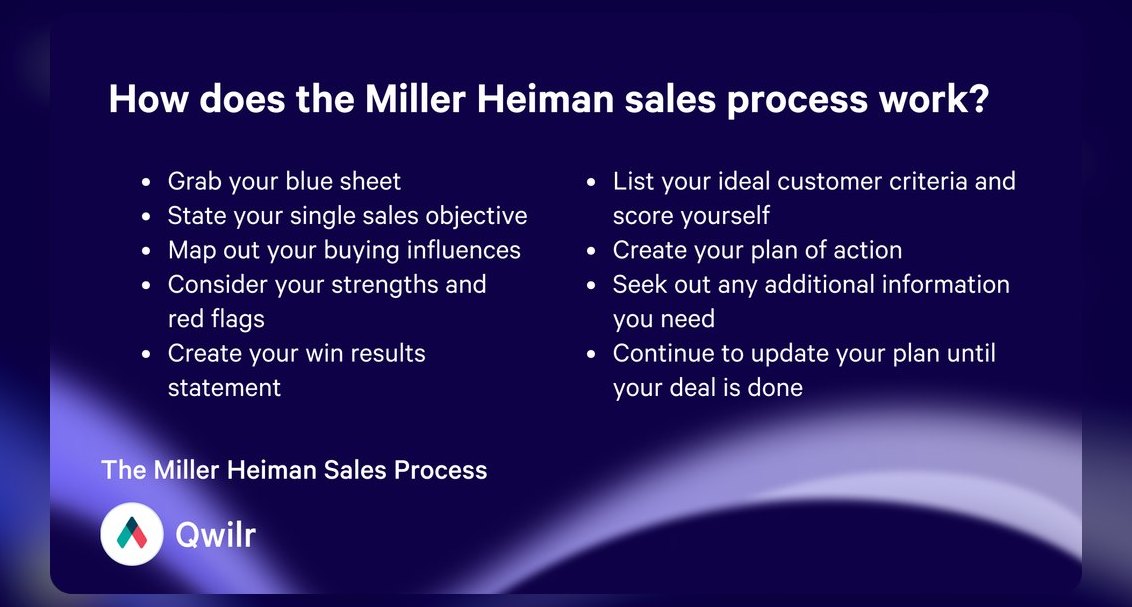 pulse-recentWhat is the step-by-step process for Strategic Selling by Miller Heiman in 2027?
 book-summaryMajor Account Sales Strategy by Neil Rackham: Summary, Key Lessons, and RevOps Takeaways
 pulse-recentStrategic Selling by Robert Miller and Stephen Heiman — Top 10 Key Takeaways for Sales Leaders in 2027
 pulse-recent$100M Offers by Alex Hormozi — Top 10 Key Takeaways for Sales Leaders in 2027
 pulse-recentThe Greatest Salesman in the World by Og Mandino — Top 10 Key Takeaways for Sales Leaders in 2027
 pulse-recentWhat is the first concrete step in Sandler Rule #4 for a sales leader to implement in 2027?
 pulse-recentThe Challenger Customer by Brent Adamson — Top 10 Key Takeaways for Sales Leaders in 2027
 pulse-recentThe Customer Success Professional’s Handbook by Ashvin Vaidyanathan — Top 10 Key Takeaways for Sales Leaders in 2027
 pulse-recentThe Collaborative Sale by Keith Eades — Top 10 Key Takeaways for Sales Leaders in 2027