


Stop Acting Like a Seller by Jerry Acuff — Cliff Notes Summary
Quality
Certified
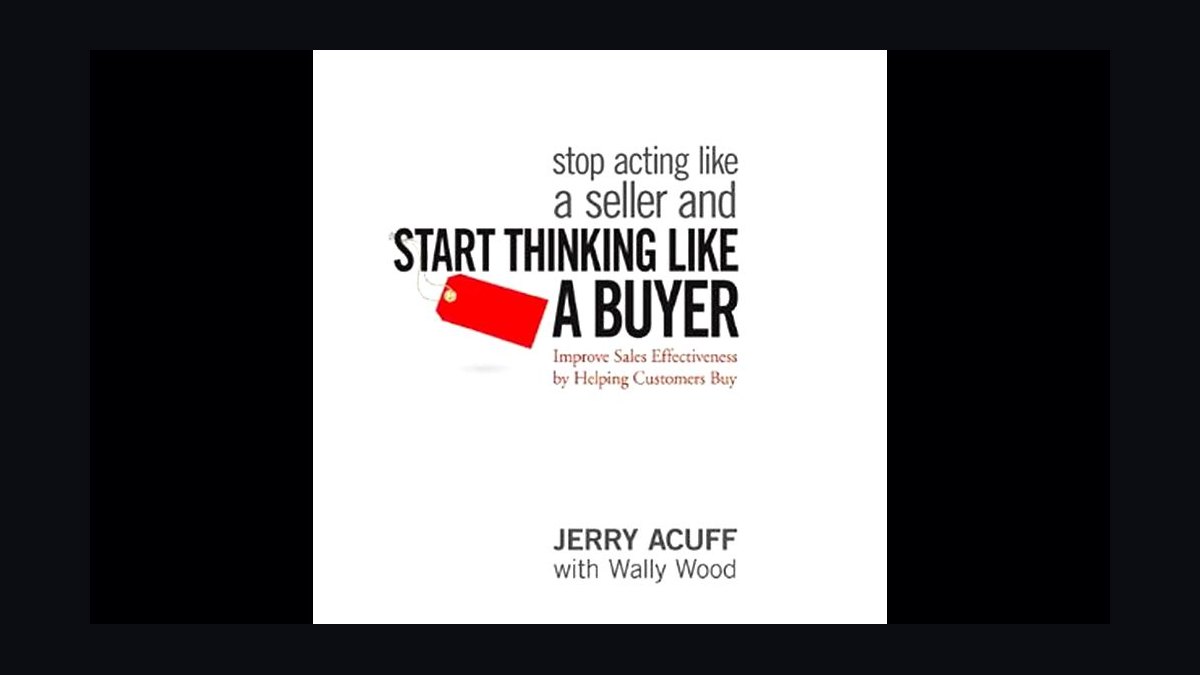
Stop Acting Like a Seller and Start Thinking Like a Buyer: Improve Sales Effectiveness by Helping Customers Buy by Jerry Acuff with Wally Wood (Wiley, 2007) makes one argument: the rep wins who stops evaluating every email, call, and meeting from the seller's chair and starts evaluating it from the buyer's. Acuff — founder of the Delta Point sales-consulting firm — contends that buyers experience most selling as intrusion, and that the only way through is to ask, before every action, *"Would I take this meeting? Would I find this useful? Would I forward this email?"* Practically, the book gives you four things: the buyer's-mindset reframe, the Four Universal Buyer Truths, the Trust Curve (Stranger → Acquaintance → Friend → Advocate), and a four-stage conversation model (Engage → Diagnose → Recommend → Solution Acceptance). It sits in a clear lineage — Carnegie (1936) → Acuff's own Relationship Edge (2004) → this book (2007) → Dixon & Adamson's Challenger Sale (2011) → Iannarino's Lost Art of Closing (2017) → Gartner's buyer-enablement research (2018 onward) — and it predates the buyer-enablement movement by roughly a decade. Read it as the "earn-the-right" layer that sits underneath every modern methodology you already use.
1The Buyer's-Mindset Reframe — Why Sellers Are Pointed the Wrong Way
1.1 The Intrusion Problem
Acuff opens with a thought experiment: count the unsolicited sales attempts a typical B2B decision-maker absorbs in a single day. His claim is that the sheer volume has trained buyers to treat the seller's opening move — whatever it is — as an interruption to be deflected, not a conversation to engage. Gartner's later buyer-enablement work points in the same direction: in a typical B2B purchase, buyers spend only about 17% of the journey meeting with any potential suppliers, and that sliver is split across every vendor competing for the deal. The reframe Acuff draws from this: the buyer's default is "no," and the seller's job is to earn the right to a "maybe."
1.2 The Seller's Chair vs. the Buyer's Chair
The core exercise: take a sales email you sent last week and re-read it as if you were the recipient. Acuff's title line — "Stop acting like a seller and start thinking like a buyer" — is the whole diagnostic. If the first three sentences are about your company, your product, or your meeting request, you wrote it from the seller's chair. The fix: every outbound communication must open with something the buyer already cares about — their quarter, their pressure, their named competitor, their public earnings call.

2The Four Universal Buyer Truths
2.1 Truth One — Trust First
Acuff's first universal: no trust, no deal, regardless of features. He treats trust in salespeople as structurally low — a recurring theme in public trust surveys such as the Edelman Trust Barometer, which the book references as the macro headwind. His prescription: trust is built in advance of need, not at the moment of need. The reps who win Q4 deals did the trust work in Q1 and Q2 — not the week the RFP dropped.
2.2 Truth Two — Time Is Premium
A senior buyer's hour is typically worth far more to the buyer's company than a field rep's hour is to the seller's. Acuff's point isn't a precise multiple — it's the principle: every meeting the buyer grants is an economic gift the seller must repay with disproportionate value. His rule: never leave a meeting without the buyer believing the hour was worth more to them than to you.
2.3 Truth Three — Buyer Is Skeptical
The buyer's default is "no" until convinced — and the convincing must come from the buyer's own conclusions, not the seller's claims. Acuff frames skepticism not as a personality trait but as rational learned behavior after years of being pitched. The fix is question-driven discovery that lets the buyer surface the problem in their own words, so the solution feels like their idea, not your pitch.
2.4 Truth Four — Buyer Has Options (Including Doing Nothing)
The most under-respected competitor is the status quo. Acuff frames it as buyers weighing your offering against three options: competitor A, competitor B, and changing nothing — and the third is the one most sellers under-weight. (Later CEB/Gartner research would put hard numbers on this, finding that "no decision" accounts for a large share of lost B2B opportunities.) The seller's job is to make the cost of inaction more vivid than the cost of action.
3The Trust Curve — Acuff's Signature Framework
3.1 The Four Stages — Stranger, Acquaintance, Friend, Advocate
Every buyer-seller relationship moves along a four-stage curve: Stranger → Acquaintance → Friend → Advocate. Transactional sellers — the ones running pure pipeline math — stay stuck at Stranger, which is why their close rates flatline. Trust-first sellers walk the curve over months and quarters, and by the Advocate stage the buyer is bringing the seller into deals the seller would never have found. In Acuff's world of pharmaceutical and medical-device selling, a single physician-advocate inside a hospital system can be worth more than a rep's entire cold-call book — the advocate refers, defends, and opens doors the rep cannot reach alone.
3.2 The Time Tax — Why Most Reps Quit at Acquaintance
Acuff's honest admission: Stranger-to-Acquaintance can happen in a meeting or two, but Acquaintance-to-Friend takes many months, and most reps churn out of the territory or the role before they finish the climb. The implication for sales leaders: rep tenure is the hidden variable in trust-curve revenue. Short-tenure teams forfeit the Friend and Advocate revenue almost entirely, because they never stay long enough to earn it — a dynamic Acuff treats as a leading driver of territory performance in long-cycle markets like healthcare and pharma.
3.3 The Acuff-ism — "Trust Is the Only Currency That Compounds Across Deals"
Teaching line: "Trust is the only currency that compounds across deals." A feature advantage erodes the moment a competitor matches it; a trust position deepens with every interaction as long as the seller doesn't violate it. Acuff's warning: one trust violation — a missed commitment, an over-promise, a politically embarrassing leak — can reset the curve to Stranger, and sometimes close it for good.
4The Conversation Methodology — Engage, Diagnose, Recommend, Solution Acceptance
4.1 Stage One — Engage (Earn the Time)
The opening minute or two of any first meeting. Acuff's rule: the seller may not introduce themselves, their company, or their product until they have earned the right with something the buyer cares about — typically a specific observation about the buyer's business drawn from earnings calls, LinkedIn posts, trade press, or a referral source. A representative Acuff-style opener: *"I read your last earnings call where you talked about [specific pressure] — is that still the priority?"*
4.2 Stage Two — Diagnose (Buyer's Specific Situation, Not Generic Pain)
Discovery questions must be buyer-first, not seller-first. Buyer-first: *"Walk me through how your team handles X today."* Seller-first: *"What are your pain points?"* Acuff's test: if your discovery questions could be asked of any buyer in the industry, they are not discovery questions — they are pitch setups. Real diagnosis produces a list of the buyer's specific people, systems, dollar amounts, and timelines — not generic categories.
4.3 Stage Three — Recommend (With Their Context, Not Your Deck)
The Recommend stage uses the buyer's exact language and situation back to them — never the standard slide deck. Acuff's rule: if the recommendation could be shown to a different buyer with no edits, it should not be shown. The most powerful format is a one-page document that quotes the buyer's own words from the diagnose stage and maps each concern to a specific element of the proposed solution.
4.4 Stage Four — Solution Acceptance (Verify Mutual Understanding)
Acuff's final stage is the one most reps skip: explicitly verify that the buyer agrees with the recommendation, in their own words, before any commercial discussion. The check: *"In your own words, what would this solve for your team?"* If the buyer can articulate the value unprompted, the deal moves forward; if they cannot, no proposal goes out. Acuff's view is blunt: a proposal sent before solution acceptance is the single most reliable way to manufacture a stall.
5The Buyer-First Discovery Question Bank
Acuff devotes a chapter to the questions themselves, organized by what they unlock:

- "What's the one thing about your business right now that's keeping you up at night?" — opens the personal-stakes door
- "If we were having this conversation a year from today, what would have to be true for you to call it a great year?" — opens the outcomes door
- "Who else in your organization cares about this, and what do they care about?" — opens the buying-committee door (the same terrain MEDDPICC later formalizes as Champion, Economic Buyer, and Decision Criteria)
- "What's the cost of doing nothing about this for another twelve months?" — opens the status-quo competitor door
- "Have you tried to solve this before? What happened?" — opens the prior-failure door, since failed past initiatives are a strong predictor of stalled deals
The phrasing is deliberately plain English, not consulting jargon — Acuff's rule is that any discovery question forcing the buyer to translate from your vocabulary is a question that erodes trust.
6The Daily Buyer's-Mindset Operating Loop
The first path is what most reps do most days. The second path is what the book asks the reader to commit to. Acuff's claim: the second path takes longer to pay off, then outperforms the first permanently once trust compounds.
Frameworks at a Glance
- Buyer's-Mindset Principle — every interaction evaluated from the buyer's chair; the seller's chair is the wrong seat
- 4 Universal Truths — Trust First, Time Is Premium, Buyer Is Skeptical, Buyer Has Options (including doing nothing)
- The Trust Curve — Stranger → Acquaintance → Friend → Advocate — most reps stall at Acquaintance; the revenue is at Friend and Advocate
- The Conversation Methodology — Engage → Diagnose → Recommend → Solution Acceptance — four stages, none skippable
- Buyer-First Discovery Questions — plain English, the buyer's own situation, never generic pain
- The Intrusion Test — would I take this meeting? would I find this useful? would I forward this email?
- The One-Page Recommendation — buyer's exact words mapped to specific solution elements; no standard deck

The loop is per buyer, per day: one trust-curve climb per active opportunity, repeated with discipline, until the territory transforms.
What Holds Up, What Has Aged
What has aged well — and gotten stronger: Acuff's intrusion thesis is more true now than in 2007. The AI outbound flood — automated personalization, at-scale sequences from tools like Clay, Apollo, Outreach, and Salesloft hitting buyers from every direction — has made the buyer's experience of selling more intrusive than at any point in the book's history. Gartner's buyer-enablement research is essentially an institutional restatement of Acuff's buyer-as-protagonist thesis, backed by B2B buying-committee data that didn't exist in 2007.
What has evolved — and the book did not anticipate: product-led growth (PLG) companies — Slack, Figma, Notion — have moved the buyer's first many touches inside the product itself. By the time a rep enters a PLG deal, the buyer has often already engaged, diagnosed, and reached interim acceptance without any seller present. Acuff's methodology still applies — it just starts later in the journey. The modern adaptation: PLG reps must read in-product usage data the way 2007 reps read earnings calls — same discipline, different signal.
What needs modernization: the book's named examples skew pharmaceutical and medical-device, because that's where Acuff's practice lives; SaaS, fintech, and infrastructure readers must translate the case studies. Its 2007 view of digital channels is dated — buyers' online research depth has grown enormously since publication, which shifts where the "earn-the-right" moment actually happens.
FAQ
Who should read this book first — SDRs, AEs, or sales leaders? Sales leaders. The buyer's-mindset reframe is a manager-coachable behavior, not a self-taught one. Leaders who internalize the Trust Curve change how they coach, how they comp, and how they measure activity. SDRs and AEs benefit, but the leverage sits with the leader who can rewrite the playbook for the whole team.
Is this book still relevant if my company sells software, not pharma? Yes — arguably more so. Software buyers field more vendor outreach per week than physicians did in 2007. The translation work is small (swap "prescription volume" for "ARR" and "expansion") and the disciplines transfer cleanly. Modern buyer-enablement content from communities like Pavilion is largely this book applied to SaaS.
How does Acuff's Trust Curve compare to Iannarino's "Level 4 Value Creator"? Same mountain, different map. Iannarino's Level 4 Value Creator (from The Lost Art of Closing, 2017) is the seller who has reached Acuff's Advocate stage — creating value the buyer didn't know was possible. Iannarino added the commitment-by-commitment mechanics; Acuff supplied the trust-stage scaffolding underneath them.
Doesn't this conflict with The Challenger Sale? No — they're complementary. The Challenger Sale (Dixon & Adamson, 2011) says the seller should teach, tailor, and take control. Acuff says that teaching must come from a buyer-mindset position or it lands as more intrusion. Read Acuff to earn the right; read Challenger to know what to do once you've earned it.
What is the single Monday-morning action from this book? Pick the next outbound email you plan to send and rewrite it from the buyer's chair, deleting every sentence that doesn't begin with something the buyer already cares about. Send that version. Apply the same test to the next email, and the next, for 90 days.
Is the buyer's-mindset thesis just a slogan, or is it testable? It's testable, and adjacent research supports it. CEB/Gartner's B2B buying studies, Forrester/SiriusDecisions' buyer-journey work, and broader customer-effort research independently produced findings consistent with Acuff's 2007 orientation — that buyers want help buying, and that low-value seller contact actively repels them. The framework is a hypothesis that has held up, not a one-liner.
Bottom Line
Read Stop Acting Like a Seller and Start Thinking Like a Buyer if you sell into long-cycle, high-trust B2B markets — healthcare, financial services, enterprise software, government, professional services — where a buyer can ghost you for six months and your only recourse is to be worth their next meeting. Monday morning: tape the 4 Universal Truths and the Trust Curve above your monitor, then rewrite three pieces of outbound from the buyer's chair before Friday. Acuff's book is the missing earn-the-right layer underneath every modern methodology — MEDDPICC, Challenger, Sandler, Force Management — and that's exactly why it's still in print twenty years on.
Related on PULSE
- Talk Like TED by Carmine Gallo — Cliff Notes Summary for Sellers
- Stop Selling and Start Leading by Kouzes, Posner & Calvert — Cliff Notes Summary
Sources
- Jerry Acuff with Wally Wood — *Stop Acting Like a Seller and Start Thinking Like a Buyer: Improve Sales Effectiveness by Helping Customers Buy* (Wiley, 2007)
- Jerry Acuff with Wally Wood — *The Relationship Edge: The Key to Strategic Influence and Selling Success* (Wiley, 2004) — the companion volume that establishes the trust-first foundation
- Delta Point Inc. — Acuff's sales-consulting firm, whose pharmaceutical and medical-device training work informs the book's examples
- Matthew Dixon & Brent Adamson — *The Challenger Sale* (Portfolio, 2011), and Adamson, Dixon, Spenner & Toman — *The Challenger Customer* (Portfolio, 2015) — the institutional descendants of Acuff's buyer-as-protagonist thesis
- Anthony Iannarino — *The Lost Art of Closing* (Portfolio, 2017) and *Eat Their Lunch* (Portfolio, 2018) — modern operationalization of the Trust Curve and commitment mechanics
- Dale Carnegie — *How to Win Friends and Influence People* (Simon & Schuster, 1936) — the original ancestor of the trust-first sales tradition
- Gartner — Buyer-enablement research stream (2018 onward), including the finding that 77% of B2B buyers describe their last purchase as very complex or difficult and that buyers spend roughly 17% of the journey meeting with potential suppliers
- Forrester / SiriusDecisions — B2B buyer-journey research consistent with the buyer-first orientation
- Edelman Trust Barometer — multi-year data on trust levels across professions, which the book references as the macro headwind facing sellers
This page will be disappearing soon. Save it to your device for $1 — or read it free while it is here.
@Kory-White- · if Venmo asks, the last 4 of my number are 2012
This page is gone.
This one is off the shelf now. $1 keeps it on your phone for good — the whole page, pictures and diagrams included.
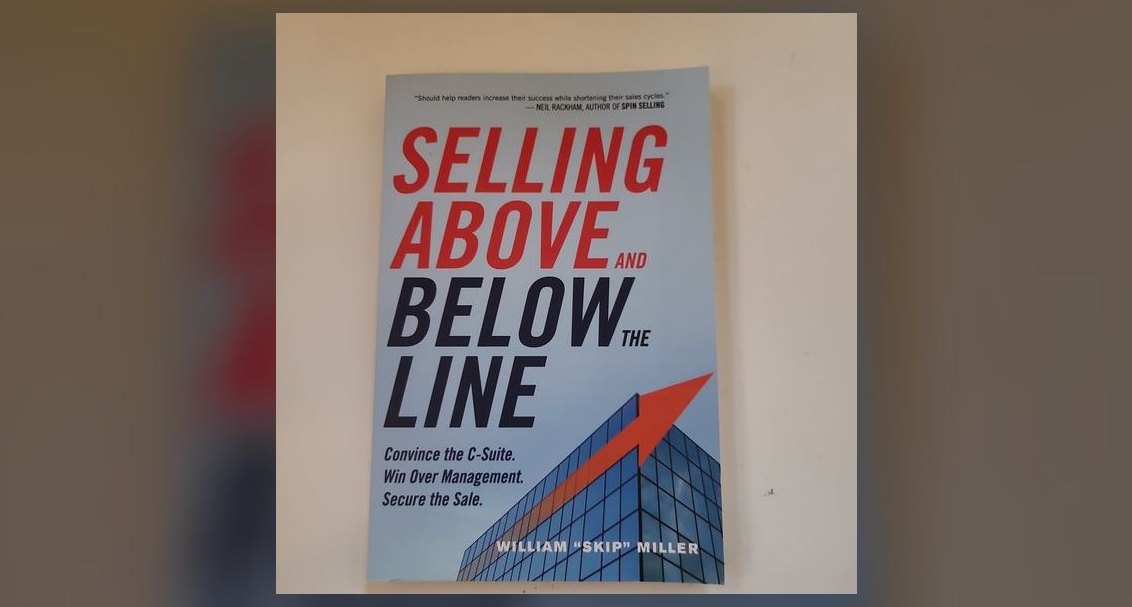 pulse-recentSelling Above and Below the Line by Skip Miller — Top 10 Key Takeaways for Sales Leaders in 2027
 pulse-recentObviously Awesome by April Dunford — Top 10 Key Takeaways for Sales Leaders in 2027
 pulse-recentThe Collaborative Sale by Keith Eades — Top 10 Key Takeaways for Sales Leaders in 2027
 pulse-recentThe Customer Success Professional’s Handbook by Ashvin Vaidyanathan — Top 10 Key Takeaways for Sales Leaders in 2027
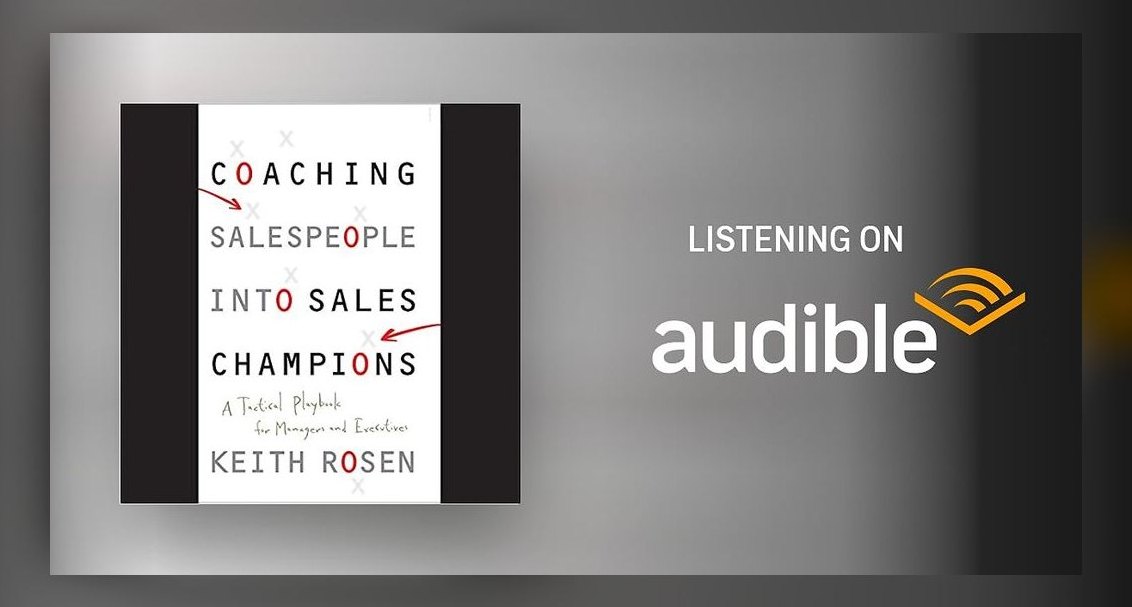 pulse-recentCoaching Salespeople into Sales Champions by Keith Rosen — Top 10 Key Takeaways for Sales Leaders in 2027
 pulse-recentThe Sandler Rules by David Sandler — Top 10 Key Takeaways for Sales Leaders in 2027
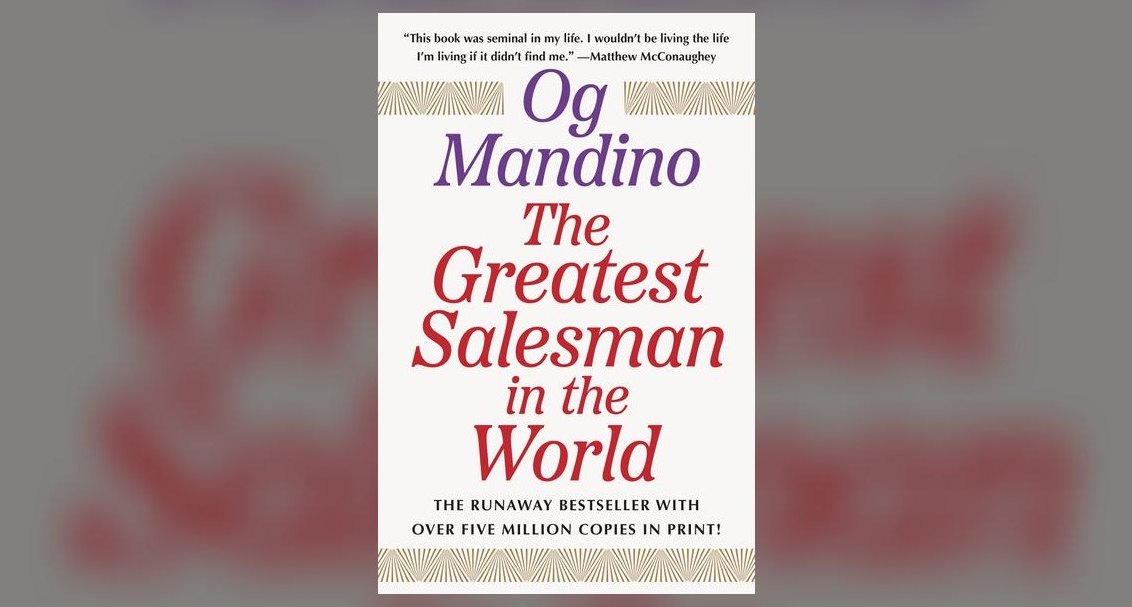 pulse-recentThe Greatest Salesman in the World by Og Mandino — Top 10 Key Takeaways for Sales Leaders in 2027
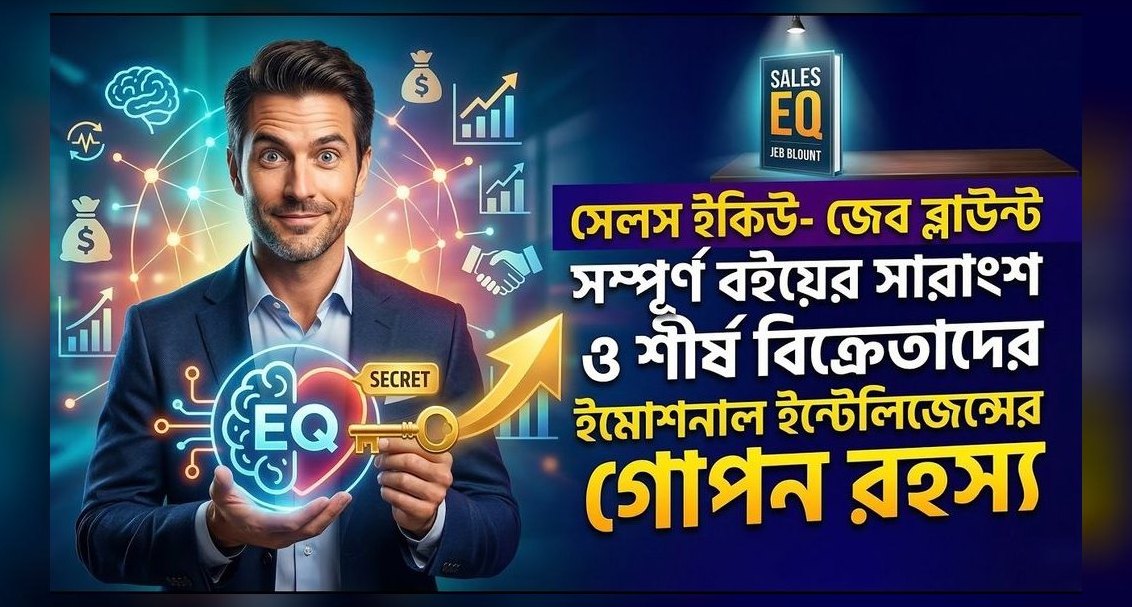 pulse-recentSales EQ by Jeb Blount — Top 10 Key Takeaways for Sales Leaders in 2027
 book-summaryWhat factors drive the price of Book Summaries up or down in 2027?
 pulse-recentStart with No by Jim Camp — Top 10 Key Takeaways for Sales Leaders in 2027