


Power Listening by Bernard Ferrari — Cliff Notes Summary
Quality
Certified
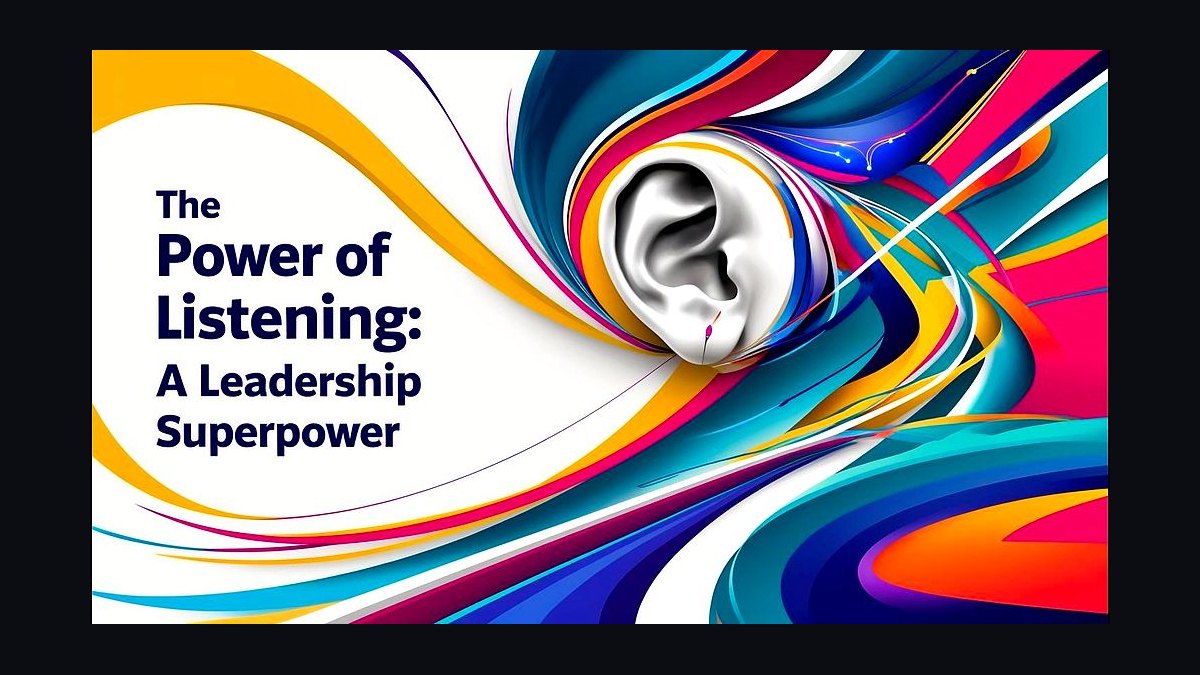
Power Listening (Portfolio/Penguin, 2012) by Bernard Ferrari argues listening is business's least-trained critical skill. Ferrari catalogs six bad-listening archetypes — Opinionator, Grouch, Preambler, Perseverator, Answer Man, Pretender — and counters them with five disciplines: Respect, Be Quiet, Be Challenging, Be Structured, Take Notes, plus a Decision Tree sorting every statement into fact, hypothesis, opinion, anecdote, or emotion.
The discovery call that dies in the first ninety seconds
Picture a mid-market SaaS rep, four days from quarter-end, on a first call with a VP of Operations at a 400-person distributor. The VP opens with a sentence that contains the entire deal: "We've got three systems that don't talk, and my team spends most of Monday reconciling them by hand." The rep hears "three systems that don't talk," recognizes an integration pain their product solves, and — sixteen seconds in — says, "That's actually exactly what we built the connector layer for. Let me show you." The demo runs. The call ends cordially. The deal never closes, and nobody on the rep's team can say why.
What died was not the pitch. What died was the second half of the VP's sentence — *"my team spends most of Monday reconciling them by hand"* — which contained a quantifiable cost, a named recurring event, a stakeholder group, and an implied political problem (someone approved those three systems). The rep never got the follow-up that turns "most of Monday" into "roughly 24 hours a week across three analysts," which is the number that survives a CFO review. Ferrari's argument is that this is not a technique failure. It is a listening failure, and it is structural: the rep was pattern-matching against a solution they already believed in, which is the archetype Ferrari calls the Opinionator crossed with the Answer Man.
Ferrari came to this from an unusual vantage. He spent more than thirty years at McKinsey & Company, finishing as Director of the North American Consumer Goods practice, then became Dean of the Johns Hopkins Carey Business School. His conclusion after decades of watching senior executives decide badly was that the failures rarely traced back to bad analysis or bad strategy. They traced back to a corrupted input — information that was available in the room, spoken aloud, and never actually captured, because the most senior person present was busy composing a response.

The reframe that makes the book useful to anyone in a revenue role is this: listening is not courtesy, it is data acquisition. The quality of any decision — a hire, a forecast call, a pricing change, a territory split — is capped by the quality of the information feeding it, and that information quality is capped by how well someone listened to collect it. That chain is why a listening book belongs in the sales canon at all. It sits upstream of everything. SPIN Selling tells you what to ask. MEDDPICC tells you what to qualify. Power Listening governs whether the answers you get are worth anything once you have them.
How the six archetypes corrupt the information stream
Ferrari's signature contribution is the catalog of failure modes — the specific, recognizable ways competent professionals listen badly. He observed that nearly every executive he coached defaulted to one or two of these under pressure, and that pressure is exactly the condition under which discovery calls and forecast reviews happen.
The Opinionator listens only long enough to find a hook for a pre-formed view. Every incoming sentence gets filtered through "how does this set me up to say what I already think?" In a sales context this is the rep who hears a workflow complaint and immediately maps it to a feature. Ferrari's countermeasure is blunt and mechanical: delay your opinion by sixty seconds and spend the interval asking one more question.
The Grouch listens through a disagreement filter, cataloging objections before the speaker finishes and discarding disconfirming information as noise. Ferrari notes this archetype clusters among senior partners at consulting firms and private-equity shops — people whose entire career reward function was being the sharpest skeptic in the room. The cost is asymmetric: a Grouch never hears the one data point that would have changed the thesis.

The Preambler hijacks with throat-clearing setup — "before you finish, let me just frame this" — believing they are adding context when they are taking the floor. In discovery this is uniquely destructive because disclosure is a fragile behavior. A prospect who gets interrupted twice stops volunteering and starts answering only what is directly asked, which collapses the call into an interrogation.
The Perseverator circles back endlessly, re-litigating settled decisions and re-explaining understood concepts. Ferrari traces this to anxiety and low confidence in the original message — the perseverator repeats because they are not certain they were heard. In pipeline reviews it shows up as the manager who asks the same qualification question three ways.
The Answer Man listens just long enough to leap to a solution. Ferrari flags this as the most dangerous archetype for consultants and senior sellers precisely because it *feels* competent — decisive, fast, expert — while skipping diagnosis entirely. His illustrative case: a consulting engagement scoped as a large organizational restructuring off a twenty-minute conversation, where the actual constraint turned out weeks later to be a supply-chain contract. The org chart was never the problem.
The Pretender performs listening — eye contact, nodding, the affirming "mm-hmm" — while mentally elsewhere. Ferrari described this in 2012, before Slack notifications became ambient, before Teams pings, before AI copilots surfaced suggestions mid-call. The diagnosis has aged into something closer to a default state than an archetype.

The five disciplines are the antidote, and Ferrari sequences them deliberately. Respect is a default-on stance: assume until proven otherwise that the person across from you knows something you do not. For a rep on their four-hundredth call, this is the specific antidote to "I've heard this objection a thousand times" — an assumption that is usually true and occasionally, expensively, wrong. Be Quiet treats silence as a feature. Ferrari's prescription is to count three full seconds after the speaker stops before responding, which sounds trivial and is not; three seconds of dead air feels like fifteen when you are the one holding it. Be Challenging rejects passive absorption in favor of active probing, with an escalating sequence: "tell me more," then "what makes you say that," then "what would have to be true for the opposite to be right." That last question is the one that separates a discovery call from a survey. Be Structured means categorizing in real time rather than absorbing a blur of impressions. Take Notes is format-agnostic and act-adamant: if you did not write it down, you did not really hear it.
The Decision Tree, and the numbers people actually cite
The Decision Tree is the machinery underneath "Be Structured," and it is the part of the book that has translated most cleanly into software. As you listen, sort every statement into one of five categories, because each category demands a structurally different follow-up.
A fact is verifiable, dated, and sourced — "we did forty-two million in Q3." The correct follow-up is verification: *how was that measured, and over what period?* A hypothesis is a causal claim the speaker believes but has not tested — "our churn is up because of the new pricing." The correct follow-up is a test design: *what evidence would confirm or disconfirm that?* An opinion is a value judgment with no causal claim attached — "I think the new pricing is unfair." The correct follow-up is ownership: *whose view is that — yours, the team's, or the customer's?* An anecdote is a single story doing the work of a pattern — "last week a customer complained about pricing." The correct follow-up is a sample-size check: *how often does that happen, and has anyone counted?* An emotion is what the speaker feels regardless of the facts — "I'm frustrated." The only correct first move is acknowledgment, before any question at all.

The practical failure Ferrari is describing is a category error. A seller who treats an anecdote as a fact builds a business case on a sample of one. A seller who treats a hypothesis as a fact writes "churn driven by pricing" into the CRM and the whole account team inherits an untested causal claim as settled truth. A seller who answers an emotion with a data point makes the emotion worse. Most prospects volunteer opinion and anecdote generously; facts and hypotheses — the two categories a forecast actually needs — have to be earned with follow-ups.
On numbers: Ferrari's most-quoted heuristic is that the best consultants and sellers listen roughly 80 percent of the time and talk 20 percent. He arrived at that from internal consulting observation, so treat it as an aspirational ceiling rather than a measured benchmark. The empirical work came later, from conversation-intelligence vendors with recorded-call corpora at scale. Gong Labs has published analyses of very large B2B call datasets showing top performers talk meaningfully less than half the time while low performers dominate the call — a gap consistently in the range of twenty to thirty percentage points between the top and bottom cohorts. Chorus (now part of ZoomInfo) and Salesforce's conversation-insights tooling report the same directional finding across their own datasets. The precise ratios vary by vendor, methodology, call type, and stage; the direction never does.
Two calibrations matter before you set a team target. First, the ratio is stage-dependent. A first discovery call justifies a seller talking well under 40 percent. A technical validation call where the buyer explicitly asked for a walkthrough will and should invert — scoring that call against a discovery benchmark punishes the rep for doing the right thing. Second, the metric is easy to game and easier to misuse. Longest-monologue and question-rate are better coaching signals than raw talk ratio, because a rep can hit a perfect ratio by delivering one uninterrupted eleven-minute monologue and then going silent. If you are building a scorecard, weight longest customer story, number of open questions, and question depth alongside the ratio.
Ferrari also cites the pattern that executives tend to interrupt within seconds of a counterpart beginning to speak — the specific figure he uses is a McKinsey-era observation, not a peer-reviewed result, so cite it as illustrative rather than definitive. The underlying phenomenon is well-supported by the broader research literature on turn-taking: humans begin planning their response long before the speaker finishes, and the gap between conversational turns in natural speech is measured in a couple hundred milliseconds. That is the physiological reason the three-second pause is hard. You are overriding a reflex.
Trade-offs: where Power Listening pays, and where it costs you

The book is not free of costs, and pretending otherwise is how frameworks get discredited in practice. Four trade-offs are worth naming explicitly.
Time versus depth. Power Listening makes calls longer. A rep who pauses three seconds, labels statements, and asks the category-matched follow-up will get through fewer agenda items in a thirty-minute slot. If your motion is high-velocity transactional — a sub-$10K ACV product with a two-call cycle and hundreds of SMB accounts per rep — the full discipline is over-engineered. Take the three-second pause and the "tell me more" probe, drop the real-time labeling. If your motion is enterprise, multi-stakeholder, six-figure and six-month, the depth is the entire point and the extra ten minutes is the cheapest investment in the cycle.
Structure versus rapport. Aggressive categorization can make a conversation feel like an intake form. A prospect who senses they are being processed stops disclosing, which defeats the mechanism. The fix is to keep the labeling silent and internal — write the category in the margin of your notes, never say it out loud, and never ask three verification questions in a row without a human sentence in between.
Manual synthesis versus automated capture. Ferrari's note-taking chapters assume legal pads. Notion, Otter, Fathom, Granola, Gong, and Chorus have made mechanical capture essentially free and near-perfect. This genuinely obsoletes part of the book — nobody should be hand-transcribing quotes in 2026. What automation has *not* solved is judgment: deciding which hypothesis to test next, which emotion signals a blocked champion, which anecdote is worth chasing to a real number. Transcription is solved. Interpretation is not. Reps who outsource the second thing along with the first end up with beautiful call summaries and no thesis.

Listening versus commercial teaching. The Challenger Sale made the case that top performers reframe the buyer's thinking rather than just absorbing stated needs. Read carelessly, that is the opposite of Power Listening. Read properly, it is sequential: Ferrari governs the diagnostic phase, Challenger governs what you do with the diagnosis. A rep who only listens becomes an order-taker; a rep who only teaches becomes the Answer Man with better slides. The failure mode is picking one.
The operating cadence in that diagram is where the book becomes a practice rather than a concept. Before the call, spend five minutes writing three questions you genuinely do not know the answer to — not three questions you know the answer to and want confirmed, which is what most pre-call prep actually produces. Set a talk-time target and close every tab that is not the notes. During the call, pause, label, follow up by category, and write the label in the margin. After roughly ten labeled statements a pattern becomes visible, and the pattern is usually the same: heavy on opinion and anecdote, thin on the facts and hypotheses your forecast needs. That gap *is* your next-step list. Within fifteen minutes of hanging up, write a one-page synthesis organized by the five categories — before the memory decays and before the next call overwrites it.
Pitfalls, adjacent applications, and how the book sits in the canon
The most common implementation failure is turning the archetypes into insults. The moment "you're being a Grouch" becomes a thing managers say in call reviews, the vocabulary dies and the framework goes with it. The archetypes are diagnostic categories for describing *behavior in a specific recorded moment*, not personality labels. The productive version sounds like: "at 4:20 you closed the loop before she finished the sentence about the audit — what would you ask there instead?" The unproductive version sounds like a Myers-Briggs type.

The second pitfall is self-diagnosis by memory. Nobody accurately recalls their own interrupts. The only method that works is recording three of your own calls, with consent, and watching them back at 1.5x with a tally sheet: count interrupts, count opinions volunteered before the speaker finished, count leaps to solution. Most sellers under quota pressure discover they are a blend of Opinionator and Answer Man — which makes sense, because both archetypes are rewarded in the short run by looking sharp and moving fast.
The third pitfall is metric theater. If you instrument talk ratio and coach to it without coaching to question quality, reps will optimize the number. Pair every ratio target with a qualitative review of what got asked, or you will manufacture reps who are silent and uninformative.
The fourth is applying it only to sales calls. The mechanism is domain-agnostic, and the adjacent applications are where a lot of the value hides. In customer success, the Decision Tree cleanly separates a churn-risk emotion ("I'm frustrated with the rollout") from a churn-risk fact ("seat usage dropped 40 percent last month") — two very different escalation paths that get conflated constantly in health scores. In hiring, the category-matched follow-up is the difference between a candidate's anecdote about "leading a turnaround" and a fact about what they specifically owned. In product discovery, teams routinely ship features off aggregated anecdotes that nobody sample-size-checked. In partner and channel management, the Preambler problem is endemic on multi-party calls where three vendors compete for the floor. In contact centers, analytics platforms like Tethr have effectively operationalized archetype-shaped behaviors against transcripts at scale — the machine learned to spot what Ferrari named.
On where the book sits: read as a sequence, the canon has a clear order. Ferrari is the prequel. Neil Rackham's SPIN Selling (1988) supplies the question taxonomy — situation, problem, implication, need-payoff — and Power Listening supplies the interpretation layer for the answers those questions produce. Chris Voss's Never Split the Difference (2016) field-tests the same mechanics under hostage-negotiation pressure and formalizes Ferrari's three-second count as the effective pause, adding labeling and mirroring as active techniques. Deb Calvert's DISCOVER Questions extends the open-ended probing that "Be Challenging" describes. Jeb Blount's Sales EQ layers emotional intelligence over the emotion branch of the Decision Tree. Michael Bungay Stanier's The Coaching Habit converts "stay curious longer" into a managerial discipline for one-on-ones. Dixon and Adamson's The Challenger Sale is the companion volume on what to say once you have listened properly.

What has genuinely aged: the boardroom-and-C-suite anecdotes read dated next to product-led growth, where the buyer's journey starts in a free tier weeks before any human conversation happens — though even there, the first sales conversation is higher-stakes precisely because it is later and rarer. The note-taking mechanics are solved. And the book is silent on multi-threaded buying committees, which MEDDPICC and Command of the Message would later codify; Ferrari writes as though there is one counterpart in the room, and in enterprise deals there are six with conflicting incentives.
What has strengthened: the archetypes remain the sharpest diagnostic vocabulary available for call coaching, and the Decision Tree is essentially the logic conversation-intelligence platforms use to auto-tag call moments. The Pretender problem has compounded — attention is more contested now than in 2012, not less, which makes the discipline scarcer and therefore more valuable as a differentiator. A strategy built on outsell-by-listening was a modest edge fifteen years ago. It is a larger one now.
The honest summary: this is the most under-read book in the modern sales canon, short enough to finish in an evening, and it gives you diagnostic vocabulary for what you are doing wrong in every conversation you have. Monday morning: record one discovery call, count your interrupts, start the three-second pause. That single habit is the highest-return change available.
Related questions
How is Power Listening different from active listening?
Active listening is largely about signaling attention — paraphrasing, reflecting, nodding. Ferrari's version is about *extracting decision-grade information*: categorizing statements, asking category-matched follow-ups, and capturing structured notes. Signaling is a byproduct; data acquisition is the goal.
Should sales managers score reps on talk-to-listen ratio?

Score it, but never alone and never across all call types. Pair it with longest monologue, open-question count, and longest uninterrupted customer story, and set stage-specific targets — discovery and technical-validation calls should have different benchmarks.
Which archetype hurts deal velocity most?
The Answer Man. Leaping to a solution feels decisive and skips diagnosis entirely, producing proposals that miss the actual constraint. Deals die in legal or procurement months later because the business case was built on the wrong problem.
Do conversation-intelligence tools make the book redundant?
No. Tools solved capture and measurement — transcription, ratios, keyword tracking. They have not solved judgment: choosing which hypothesis to test, which emotion signals a blocked champion, which anecdote deserves a real number behind it.
What is the fastest way to start?
Three seconds of silence after the other person stops talking, on every call, for one week. It costs nothing, requires no tooling, and reliably produces one extra disclosure per conversation.
FAQ
Who is Bernard Ferrari and why should revenue teams care?
Ferrari spent more than thirty years at McKinsey & Company, finishing as Director of the North American Consumer Goods practice, then served as Dean of the Johns Hopkins Carey Business School. He advised senior executives through high-stakes decisions and concluded that listening was the recurring chokepoint. For revenue teams, his framework sits diagnostically above SPIN, Challenger, and MEDDPICC — it governs whether the inputs those methodologies process are any good.
How does Power Listening relate to SPIN Selling?

Rackham's SPIN gave sellers a question taxonomy in 1988. Ferrari gave them the listening taxonomy for the answers in 2012. SPIN tells you what to ask; Power Listening tells you how to categorize and act on the response. Used together, SPIN's implication questions become far sharper because you know whether you are probing a fact, a hypothesis, or a story.
Is the 80/20 listening ratio empirically supported?
Ferrari's 80/20 is an aspirational heuristic from consulting observation, not a measured study. The empirical support came later from conversation-intelligence vendors analyzing large recorded-call datasets, which consistently show top performers talking meaningfully less than half the time on discovery calls while low performers dominate. Treat 80/20 as the ceiling and a solid listening majority as the practical floor.
How do I identify my own bad-listening archetype?
Record three of your own calls with consent and review them at 1.5x with a tally sheet: interrupts, opinions offered before the speaker finished, leaps to solution, and moments you were visibly elsewhere. Self-report is unreliable — the recording is the only honest mirror. Most quota-carrying reps find a blend of Opinionator and Answer Man.
Where does the Decision Tree fit in a CRM workflow?
Add a picklist or tag on call notes for fact, hypothesis, opinion, anecdote, and emotion — Salesforce, HubSpot, and most modern CRMs support this natively. The immediate payoff is forecast hygiene: teams stop logging untested hypotheses and single anecdotes as though they were verified facts, and deal reviews get noticeably less mythological.
Is the book still worth reading given its age?
Yes, with the note-taking chapters skimmed. The archetypes, the five disciplines, and the Decision Tree are the durable core and they map directly onto modern call coaching. The dated material is mechanical — legal pads, single-counterpart boardroom scenarios — not conceptual.
Sources
- https://www.penguinrandomhouse.com/books/310295/power-listening-by-bernard-t-ferrari/
- https://www.mckinsey.com/capabilities/people-and-organizational-performance/our-insights/the-executives-guide-to-better-listening
- https://carey.jhu.edu/
- https://www.gong.io/blog/
- https://www.hbs.edu/faculty/Pages/item.aspx?num=52124
- https://hbr.org/2016/07/what-great-listeners-actually-do
- https://www.harpercollins.com/products/never-split-the-difference-chris-voss
- https://www.salesforce.com/sales/conversation-intelligence/
- https://www.zoominfo.com/products/chorus
- https://www.mheducation.com/highered/product/spin-selling-rackham/M9780070511132.html
Related on PULSE
This page will be disappearing soon. Save it to your device for $1 — or read it free while it is here.
@Kory-White- · if Venmo asks, the last 4 of my number are 2012
This page is gone.
This one is off the shelf now. $1 keeps it on your phone for good — the whole page, pictures and diagrams included.
 pulse-recentSandler Rule #1: What is the first concrete step to build a prospect's trust in a sales conversation in 2027?
 pulse-recentWhat is the Blue Sheet from Strategic Selling by Miller Heiman and how do you fill it out in 2027?
 pulse-recentInsight Selling by Mike Schultz and John Doerr — Top 10 Key Takeaways for Sales Leaders in 2027
 pulse-recentWhat are the seven concrete steps to implement the Sandler Submarine technique from The Sandler Rules in 2027?
 pulse-recentSelling Above and Below the Line by Skip Miller — Top 10 Key Takeaways for Sales Leaders in 2027
 pulse-recentSnap Selling by Jill Konrath — Top 10 Key Takeaways for Sales Leaders in 2027
 pulse-recentWhat is the most actionable step in The Sandler Rules for Sales Leaders by David Mattson to improve discovery in 2027?
 pulse-recentWhat are the concrete steps in Sandler Rule #7 for handling a prospect's budget objection in 2027?
 pulse-recentThe Sales Acceleration Formula by Mark Roberge — Top 10 Key Takeaways for Sales Leaders in 2027
 pulse-recentMonetizing Innovation by Madhavan Ramanujam — Top 10 Key Takeaways for Sales Leaders in 2027