
The Ideal Team Player by Patrick Lencioni — Cliff Notes Summary for Sales Hiring
 PULSEKNOWLEDGE LIBRARY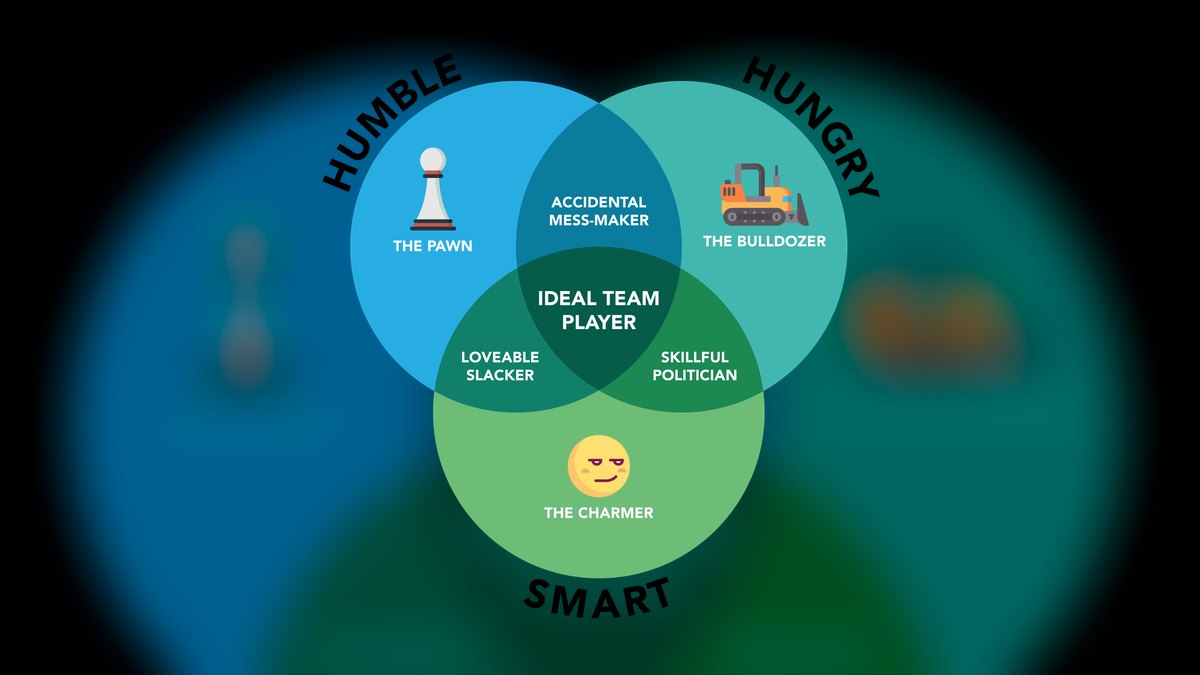
Patrick Lencioni's *The Ideal Team Player* (2016) argues that great teammates are simultaneously humble, hungry, and smart — where "smart" means people-savvy, not intelligent. Missing any one virtue creates a predictable dysfunction. For sales hiring, the framework's payoff is screening out the Skillful Politician: the hungry, smart, un-humble rep who interviews brilliantly and quietly poisons the team.
The outcome you should expect from a virtue-first hiring filter
Adopting the humble-hungry-smart rubric does not make your interviews better at predicting quota attainment. That is the first expectation to reset, because sales leaders adopt Lencioni hoping for a magic performance predictor and then abandon the framework in month four when their new hires still ramp at the same rate. Virtue screening predicts something different and, over a two-year window, more expensive: whether the person you hire makes the people around them better or worse.
The concrete outcomes you should expect are these. First, a slower time-to-hire. Adding a virtue interview and a restructured reference call typically adds five to ten business days to a sales requisition, because you are adding a cross-level lunch, a second behavioral round, and reference calls that actually take twenty minutes instead of five. If your current AE loop closes in fourteen days, plan for twenty-one. Leaders who refuse to accept that extra week end up compressing the virtue round into the same interview as the skills round, which reliably collapses back into a skills interview with three softball culture questions bolted on.
Second, a higher pass rate on candidates you would previously have hired. This is the outcome nobody warns you about and the one that generates internal friction. When you install a humility gate, you will start passing on candidates with excellent numbers, recognizable logos, and glowing surface references. Your recruiting partner will push back. Your CFO will ask why the territory is still open. You need to decide, before you install the filter, that "A-tier skill, missing humble" is a pass — because the moment you make one exception you have taught the entire hiring panel that the gate is decorative.

Third, and this is the real return, lower involuntary and voluntary attrition on the surrounding team. The mechanism is straightforward: toxic high performers do not just underperform their apparent value, they subtract value from teammates. An AE who hoards account intelligence prevents three peers from learning the play. A rep who blames product on every loss trains the SDR pod to distrust the roadmap. A closer who treats the sales engineer as staff burns out your scarcest technical resource. None of that shows up in the toxic rep's own dashboard. It shows up as a resignation letter from somebody else, eleven months later, and the exit interview rarely names the real cause.
Fourth, a change in how your existing team talks. This is the underrated adjacent effect. Once "humble, hungry, smart" becomes the vocabulary of your hiring loop, it migrates into 1:1s, into deal reviews, into promotion conversations. Managers get a shared, non-personal language for feedback that previously had no safe words. Saying "your last three deal reviews felt like you were positioning rather than sharing" is hard. Saying "I want to work on the humble dimension with you this quarter" is a conversation a mid-level manager can actually open. The framework's biggest practical value in a sales org is often not the hiring gate at all — it is the shared vocabulary that makes character feedback sayable.
What you should not expect: a fix for a bad comp plan, a broken territory model, or a manager who front-loads pipeline reviews with public humiliation. Virtue screening filters people. It does not repair a system that punishes the humble and rewards the political. If your comp plan pays entirely on individual closed-won with no team component, and your QBR format is a public leaderboard shaming ritual, you will select for Skillful Politicians no matter how many Lencioni questions you ask in round two — because the system is teaching everyone which virtue actually pays.
What drives that outcome — the three virtues and seven profiles
The engine underneath the framework is small enough to memorize, which is a large part of why it spread. Three virtues, seven possible profiles, one dangerous one.
Humble means an absence of excessive ego and status anxiety. Lencioni is emphatic that humble does not mean meek, self-deprecating, or lacking confidence — it means accurate self-assessment. The line he borrows from C.S. Lewis captures it: humility is not thinking less of yourself, it is thinking of yourself less. In a sales context, humble looks like a rep who names the sales engineer in the closed-won post, who tells you what they got wrong on a loss before you ask, and who does not need to be the smartest voice on a discovery call. Lencioni treats lack of humility as the most common deal-breaker and the hardest of the three to develop, because it usually traces to character formed long before anyone's first sales job.
Hungry means always looking for more — more to do, more to learn, more responsibility. Self-motivated, diligent, rarely needing to be pushed. The critical nuance for sales leaders is the distinction between healthy and unhealthy hunger. Healthy hunger is driven by purpose and craft. Unhealthy hunger is driven by fear, status, or a need to prove something. Both produce activity metrics that look identical in month one. They diverge sharply under pressure: the healthy-hungry rep asks for coaching in a bad quarter, the fear-hungry rep starts sandbagging, gaming stage definitions, and blaming the SDR pod. Resumes cannot tell these apart. Behavioral interviews barely can. Managers usually learn the difference during the first genuinely bad month.
Smart in Lencioni's vocabulary has nothing to do with IQ. It means interpersonal common sense — reading a room, knowing what to say and what to leave unsaid, sensing when a stakeholder in a demo has gone quiet for a reason. It overlaps with the social-skill dimension of emotional intelligence but is narrower than the full EQ construct. Smart is the most coachable of the three, provided the person has some baseline self-awareness to build on.
Combine them and you get seven profiles. Only humble — the Pawn: pleasant, agreeable, steamrolled in every cross-functional meeting. In sales, this is the rep who runs the playbook exactly as written, never improvises, and never breaks sixty percent of quota. Rarely promoted, rarely fired, quietly expensive. Only hungry — the Bulldozer: hits number in year one and torches two SDRs and a solutions consultant doing it. Short-term producer, long-term liability. Only smart — the Charmer: beloved in meetings, pipeline never materializes. Mercifully easy to detect inside ninety days, because the CRM does not care how charming you are.
Humble and hungry, not smart — the Accidental Mess-Maker: works hard, means well, damages relationships without noticing. This is the most rescuable profile. Give this person direct feedback and a manager who will actually deliver it, and they often become a strong contributor within a year, because the missing virtue is the developable one. Humble and smart, not hungry — the Lovable Slacker: everyone wants to get lunch with them, they deliver exactly what was asked and not one task more. Usually the most-protected underperformer on the team, because managing them out feels cruel and the team will grieve.
Hungry and smart, not humble — the Skillful Politician. Lencioni's central warning. This profile has two of three virtues and deploys the smart virtue specifically to conceal the missing one. They manage up beautifully, present crisply in QBRs, and read every room accurately — including the rooms where behaving badly carries no cost. In sales, this is the rep who wins big deals on raw talent, hoards account intelligence so nobody can cover their territory, blames product on every loss, and reshapes peer reputations in private conversations with the VP. Detection typically takes eighteen to twenty-four months, because the numbers look good and the complaints arrive one at a time from people who each assume they are the only one. All three — the Ideal Team Player: rare. Protect ferociously, promote first, pay above market.
The framework's other load-bearing idea is the skill-versus-virtue distinction. Skill is easy to assess and relatively easy to develop — it is printed on the resume, and a competent enablement function can install product knowledge, a discovery methodology, and a qualification framework in a quarter. Virtue is the inverse: hard to assess in a forty-five-minute interview and genuinely hard to develop in an adult. Lencioni's operating rule is that you can develop skill faster than you can develop virtue, which leads to the uncomfortable conclusion that a B-tier seller with all three virtues beats an A-tier seller missing humility inside two years, because the A-tier seller suppresses team learning and triggers attrition among people you would rather keep.
Benchmarks and realistic ranges for a sales hiring loop
Numbers first, with the caveat that these are planning ranges from practice, not published research. Treat them as starting assumptions to calibrate against your own funnel, not as findings.
Loop length. A virtue-inclusive AE loop runs four to six touchpoints: recruiter screen, hiring-manager screen, skills or demo round, virtue round, cross-level lunch or peer panel, and structured references. Calendar time from first screen to offer typically lands between fifteen and twenty-five business days for a mid-market AE, longer for enterprise. If you are running a three-touch loop today, expect to add roughly a week. Compressing below that is where the filter quietly dies.
Pass rates. Expect the virtue round to eliminate candidates who cleared the skills round. If your virtue round eliminates nobody over a full quarter of hiring, the round is theater — either your interviewers are not pressing, or they are asking questions the candidate can answer from a template. A functioning gate visibly costs you candidates you liked.
Detection windows by profile. The Charmer surfaces in sixty to ninety days, because pipeline creation is measurable and immediate. The Bulldozer surfaces in two to three quarters, usually via a cross-functional complaint from a sales engineer or a support lead rather than from the sales org. The Lovable Slacker takes two to four quarters and is often never formally addressed. The Skillful Politician is the outlier: eighteen to twenty-four months is the realistic detection window in a mid-sized sales org, and the trigger event is usually the departure of a good IC whose exit interview finally names a pattern rather than an incident.
Cost of a mis-hire. The standard sales mis-hire math — recruiting spend, ramp investment, carried-quota shortfall, territory opportunity cost, and manager time — puts a failed AE somewhere in the range of one to two times on-target earnings, and enterprise reps run higher because territory dwell time is longer. The virtue-specific addition is that a toxic-but-productive rep carries a second cost layer that never appears on their own scorecard: the ramp cost of whoever quits, the deals that stall because peers stopped collaborating, and the manager hours consumed by refereeing. When leaders say the math on a toxic top performer "never works," this is the math they mean — but be careful with precise-sounding multipliers. Cite the mechanism, not a made-up ratio.
Ramp effects. Virtue screening does not shorten ramp. What it changes is variance. Teams that screen consistently for humility report — anecdotally, in practitioner communities rather than in controlled studies — that new-hire ramp becomes more predictable because humble reps ask for help earlier and adopt enablement content faster. A rep who cannot say "I don't understand the technical objection" will spend three months pretending, and you will find out at the forecast call.
Where the framework is most and least worth the overhead. It pays off most in team-selling motions: enterprise pods, deal desks, anything where the AE depends on solutions consultants, partners, and customer success to close and keep revenue. It pays off least in genuinely atomic, high-velocity transactional selling where the rep touches no one and the deal cycle is a week — there, hunger and coachability dominate and the humility premium is real but smaller. Adjacent functions where the rubric transfers cleanly: SDR pods (where hunger reads obviously and humility rarely gets screened at all), sales engineering (where smart is the primary constraint and hunger is often over-indexed), customer success (where the Pawn profile does the most quiet damage, because agreeable CSMs do not escalate churn risk), and RevOps itself (where the Skillful Politician is uniquely destructive because they control the reporting layer everyone else uses to argue).
Adoption reality. Lencioni-derived rubrics are widely used in SaaS sales hiring, and the framework's vocabulary has become common enough that experienced candidates recognize it. That last point matters operationally: by 2026, a senior AE who has interviewed at a dozen SaaS companies has probably been asked "tell me about a time you made a mistake" fifty times and has a polished, rehearsed, entirely uninformative answer ready. Your benchmark for a good virtue interview is not whether you asked the canonical questions — it is whether you got past the rehearsed layer, which usually takes three follow-ups on the same story rather than one question each on three stories.
Risks, edge cases, and failure modes
The rubric becomes a proxy for culture fit, which becomes a proxy for sameness. This is the most serious risk and the one most often ignored. "Humble" and "smart" are read through cultural lenses. Candidates from communication cultures that value directness can read as un-humble to an interviewer who equates humility with deference. Candidates who are quieter in a group lunch can be scored down on "smart" when what the panel actually measured was extraversion. Neurodivergent candidates are disproportionately penalized on a virtue that is defined as reading a room. The mitigations are concrete: define each virtue with observable behaviors rather than impressions, score against those behaviors on a written rubric before the panel debrief, ban the word "fit" from debriefs entirely, and require every score to be attached to something the candidate actually said. If your debrief consists of "I just didn't get a humble vibe," you have built a bias-laundering machine and attached Lencioni's name to it.
Interviewer training is the whole game and is usually skipped. The questions are public. The candidate has probably read the book. An untrained interviewer asks "tell me about a mistake," receives a well-structured story with a tidy lesson, and marks humble. A trained interviewer takes the same story and drills: who else was affected, what did they say to you afterward, what would that person say if I called them, what did you do differently the next time, and what did you get wrong in your own explanation of what went wrong. The signal is in follow-up three, not question one. Budget real training time — a two-hour calibration session with recorded practice, not a Slack message with a question list.

Humility gets confused with low ambition and screens out your best closers. Real risk, and it is where sales leaders push back hardest. Lencioni's humble is not passive. A rep can be fiercely competitive, demand a bigger territory, and negotiate hard on comp while still sharing credit and owning losses. If your panel is scoring assertiveness as a humility failure, you will build a team of pleasant Pawns and wonder why the number is soft. The diagnostic question is not "was this candidate forceful" but "when they described a win, whose contributions appeared in the story."
The exception that dissolves the gate. Every org faces one candidate with a rolodex, a quota-crushing history, and an obvious humility problem, arriving in a quarter when the number is at risk. Hire them and the gate is dead — not because of that one hire, but because the panel now knows the rule bends under pressure, and pressure is permanent. If you are going to make the exception, make it explicitly and in writing: name the missing virtue, name the containment plan, name the review date, and tell the panel that this is a documented exception rather than a new precedent.
Legacy Skillful Politicians already on the team. Installing the filter on new hires while tolerating an incumbent toxic top performer produces open cynicism. The team can see exactly what you are willing to enforce. Handling the incumbent is harder than screening a candidate: it requires specific, repeated, behavior-level feedback, an explicit statement of what changes, and a real review date. Some people engage seriously and change. Many do not, and the honest answer is that you begin a managed exit before they cost you another good IC. Whatever you decide, do not run the virtue language in your job posts while everyone watches you exempt the person who most obviously violates it.
Assessment tools as a shortcut. Behavioral assessments can be a useful pre-interview signal, but they measure traits and proxies, not the specific virtue definitions Lencioni uses, and they carry their own validity and adverse-impact obligations. Treat any instrument as one input into a human decision, verify it is validated for the role, and never let a score be the sole basis for a rejection.
Development optimism. The book leans pessimistic on developing humility in adults, and the honest counterpoint is that repeated, specific, well-delivered feedback from a manager the person respects does move behavior more often than the 2016 framing suggests — especially for the smart virtue, which is largely skill. But do not confuse "developable in principle" with "developable on your timeline, with your bandwidth, in a rep who does not want to." Plan for the manager you actually have.
The single-framework trap. The rubric screens character. It says nothing about domain fit, deal-size fit, or whether the candidate has sold into your buyer before. Teams that go all-in on virtue sometimes under-weight the skill dimension and end up with a delightful team that cannot navigate a procurement cycle. Virtue is the gate. Skill is still the job.
A practical rollout plan for the virtue filter
Treat this as a change-management project, not a template swap. The strategy that works is narrow, instrumented, and expanded only after it survives contact with a real requisition.

Week one — define behaviors, not adjectives. Get the hiring panel in a room and write down, for each virtue, three to five observable behaviors specific to your sales motion. Not "shares credit" but "names non-quota-carrying contributors when describing a win, unprompted." Not "reads the room" but "changes approach mid-story when a stakeholder disengages, and can explain what they noticed." These behavioral anchors are what makes the rubric scoreable and what protects you from bias-laundering. Ship a one-page scorecard.
Week two — rebuild the questions and rehearse the follow-ups. Per virtue, write two primary questions and, for each, three escalating follow-ups. For humble: the mistake story, drilled into who else was affected; the credit story, drilled for residual bitterness; the weakest-review story, drilled for what the reviewer got right. That last question is the sharpest instrument in the set, because Skillful Politicians cannot concede a critic's point without reframing it. For hungry: what you do outside required work to develop yourself, drilled for specifics; a stretch goal you set and missed, drilled for what you tried next. For smart: a difficult conversation you navigated, drilled for what you read in the other person; a situation you misread, drilled for what tipped you off afterward — Charmers rarely have a real answer here. Run a live calibration session where two interviewers role-play a rehearsed candidate.
Week three — add cross-level exposure. Put the finalist in an unstructured lunch or coffee with two individual contributors who will not be their manager and who have a real vote. Skillful Politicians behave measurably differently up and down the hierarchy, and this is the cheapest instrument you have for catching it. Give the ICs a two-line brief: notice who they asked questions about, notice what they did when you disagreed. Collect their input before the manager debrief so it is not anchored.
Week four — fix the reference call. Replace the useless "would you rehire" with Lencioni's three-option framing: was this person someone you would reluctantly let go, eagerly let go, or were you sad to lose them? Forced-choice framing produces a real answer where an open question produces a polite one. Managers default to "reluctantly" to avoid torpedoing anyone, so the follow-up is where the value is: what specifically would have made you eager to keep them. The Skillful Politician tell is unmistakable once you listen for it — the reference praises production fluently and never once mentions how the person was to work with. Also chase one off-list reference, ideally a peer or a cross-functional partner rather than a manager.
Weeks five through eight — run one requisition end to end and instrument it. Pick a single role. Track loop length, candidates eliminated at the virtue round, and panel disagreement rate. Debrief the panel after each finalist while it is fresh. Expect the first two loops to be rough; the questions will feel stilted and someone will forget to ask the follow-ups.
Quarter two — carry the language into onboarding and 1:1s. The filter only compounds if the vocabulary survives the offer letter. Name the three virtues in week-one onboarding, have managers reference them in monthly 1:1s, and add a virtue dimension to promotion criteria. For current employees with a partial-virtue gap, the pattern that works is a public, self-authored commitment — the person names the gap themselves and the manager reinforces it in 1:1s. Imposed labels breed resentment; self-named gaps get worked on.
Where this sits against neighboring methods. Brad Smart's Topgrading supplies interview *mechanics* — the chronological deep-dive, the reference architecture. Lencioni supplies the *content* of what to screen for. They compose well: Topgrading structure carrying Lencioni virtues is a common modern setup. Bob Sutton's *The No Asshole Rule* makes an adjacent argument about the cost of toxicity with blunter vocabulary. Lencioni's own *The Five Dysfunctions of a Team* is the companion on the other side of the hire — it explains how teams fail once assembled, while *The Ideal Team Player* is the filter that keeps the wrong people off the pyramid to begin with. His later *The 6 Types of Working Genius* addresses a different axis entirely: not character, but which kind of work energizes a person. Reading the two together tells you whether someone should be on your team and where in the workflow they belong.
Related questions
Is the "smart" virtue the same as emotional intelligence?
Close, but narrower. Lencioni's smart is interpersonal common sense in group settings — reading a room, knowing what to say. Goleman's EQ construct is broader, covering self-awareness, self-regulation, motivation, and empathy. Smart is best understood as the social-skill slice of EQ.
Should I tell candidates I'm screening for humble, hungry, smart?
Yes. Lencioni recommends transparency, and it works: honest candidates self-select in or out, which saves everyone time. The caveat is that experienced candidates now recognize the framework and arrive rehearsed, so transparency raises the bar on your follow-up questions rather than lowering it.
Does this framework apply outside sales?
It transfers cleanly to any collaborative function — sales engineering, customer success, RevOps, engineering, support. It applies least in genuinely solo, transactional roles with no internal dependencies. The virtue that binds hardest changes by function: smart constrains sales engineering, humility constrains sales leadership.
How is this different from Topgrading?
Topgrading gives you interview structure — the chronological deep-dive and reference architecture. Lencioni gives you the content to screen for. They are complementary rather than competing, and many teams run Topgrading mechanics carrying humble-hungry-smart as the evaluation criteria.
Can I fire someone for lacking a virtue?
Not directly, and you should not frame it that way. You manage against observable behaviors and documented performance expectations — hoarding account information, refusing feedback, damaging cross-functional relationships. The virtue is your diagnostic vocabulary; the behaviors are what you actually document and manage.
FAQ
Why is the Skillful Politician considered the most dangerous profile?
Because they hold two of three virtues and use the smart virtue specifically to conceal the missing humility. They manage up convincingly, present well in reviews, and read accurately which rooms carry no consequence for bad behavior. Detection typically takes eighteen to twenty-four months, and by then the cost has already been paid by the peers who left.
Can I hire someone missing humility if their skill is exceptional?
Lencioni's answer is no, and the practical reasoning holds up: a toxic high performer's cost lands on other people's scorecards, not their own — lost collaboration, blocked knowledge transfer, and the ramp expense of replacing whoever quits. If you make the exception anyway, document it explicitly with a containment plan and a review date so the panel understands it is an exception rather than a new standard.
Which virtue is easiest to develop in an existing employee?
Smart, by a wide margin, because people-savvy is largely a learnable skill — feedback, coaching, role-play, and direct observation move it quickly. Hungry is moderately developable and often life-stage dependent, muted temporarily by burnout or a mismatched role. Humble is the hardest, because it usually traces to character formed long before the job.
How do I keep the virtue interview from becoming a bias filter?
Define observable behaviors instead of adjectives, score in writing against those anchors before the panel debriefs, ban the word "fit" from discussion, and require every score to attach to something the candidate actually said. Watch specifically for scoring extraversion as "smart" and deference as "humble" — both are common failure modes that penalize candidates unfairly.
What is the single highest-leverage change if I only make one?
The reference call. Replace "would you rehire" with the three-option framing — reluctantly let go, eagerly let go, or sad to lose — and then press on what specifically would have made them eager to keep the person. It costs nothing, takes ten extra minutes, and produces the clearest Skillful Politician tell available.
How does this relate to The Five Dysfunctions of a Team?
*Five Dysfunctions* (2002) describes how assembled teams fail — absence of trust, fear of conflict, lack of commitment, avoidance of accountability, inattention to results. *The Ideal Team Player* is the hiring filter that runs upstream of it. Get the right people onto the team and climbing the trust pyramid gets substantially easier.
Sources
- https://www.tablegroup.com/
- https://www.tablegroup.com/product/ideal-team-player/
- https://www.wiley.com/en-us/The+Ideal+Team+Player%3A+How+to+Recognize+and+Cultivate+the+Three+Essential+Virtues-p-9781119209591
- https://www.penguinrandomhouse.com/books/294976/the-no-asshole-rule-by-robert-i-sutton-phd/
- https://hbr.org/2015/12/toxic-workers
- https://sloanreview.mit.edu/
- https://www.shrm.org/topics-tools/tools/toolkits/recruiting-internally-externally
- https://www.eeoc.gov/laws/guidance/employment-tests-and-selection-procedures
- https://www.gallup.com/workplace/236927/employee-engagement.aspx
Related on PULSE
- [The Five Dysfunctions of a Team by Patrick Lencioni — Cliff Notes Summary](/knowledge/bs0113)
- [The Advantage by Patrick Lencioni — Cliff Notes Summary for Sales Leaders](/knowledge/bs0318)
- [Death by Meeting by Patrick Lencioni — Cliff Notes Summary for Sales Leaders](/knowledge/bs0120)
- [Topgrading by Brad Smart — Cliff Notes Summary for Sales Hiring](/knowledge/bs0151)
- [Performance-Based Hiring by Lou Adler — Cliff Notes Summary](/knowledge/bs0153)
- [Major Account Sales Strategy by Neil Rackham: Summary, Key Lessons, and RevOps Takeaways](/knowledge/bs305)
 pulse-reviewsHow to Win Friends and Influence People by Dale Carnegie — Cliff Notes & Chapter-by-Chapter Summary
 pulse-aquariumsTop 10 Canister Filters 2027
 pulse-toolsHow Many Staff Should I Schedule Each Shift at My Sushi Restaurant?
 pulse-moviesTop 10 Action Movies of All Time in 2027
 pulse-toolsHow Many Sales Reps Do I Need to Hire for My Window Replacement Company?
 pulse-toolsHow Many Employees Should I Schedule Each Shift at My Bowling Alley?
 pulse-toolsHow Many Sales Reps Do I Need to Hire for My Healthcare SaaS Company?
 pulse-moviesTop 10 Thriller Movies of All Time in 2027
 pulse-toolsHow Many Sales Reps Do I Need to Hire for My Marketing Agency?
 pulse-moviesTop 10 Crime Movies of All Time in 2027