


Lead Generation for the Complex Sale by Brian Carroll — Cliff Notes Summary
Quality
Certified
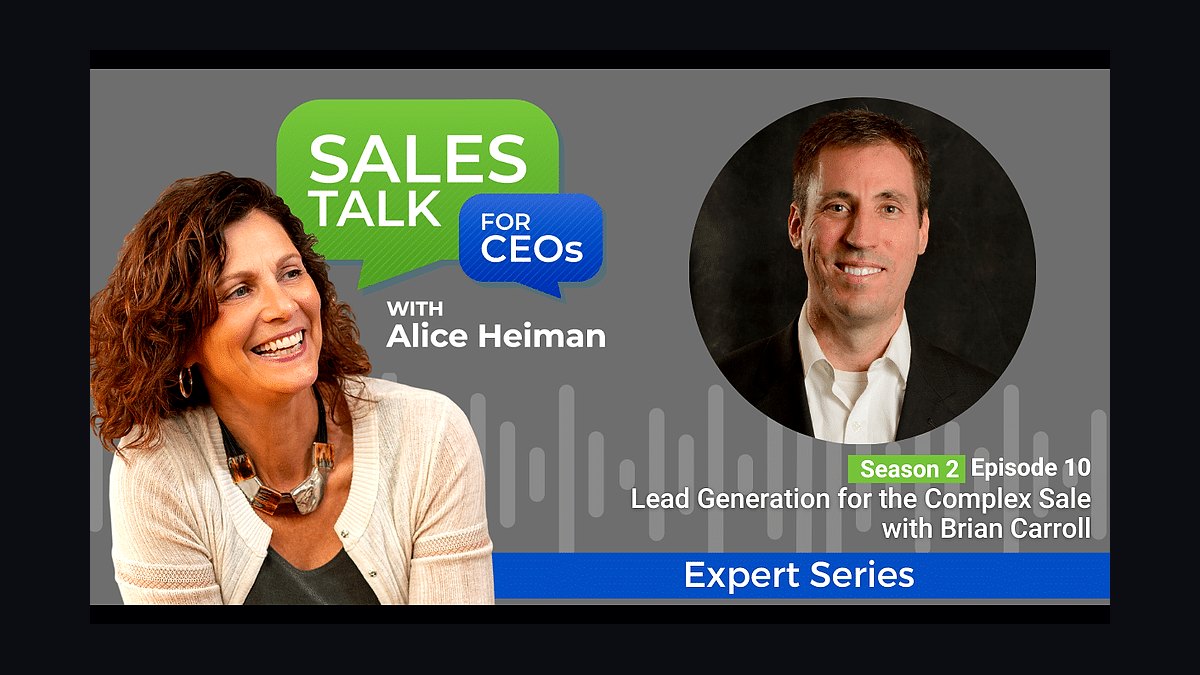
Brian Carroll's *Lead Generation for the Complex Sale* (McGraw-Hill, 2006) argues that most B2B "leads" are unqualified noise. Its core: a four-phase funnel (Universe → Suspects → Prospects → Customers), a seven-attribute qualification rubric that extends BANT with Trust, Champion, and Competition, and a written marketing-sales SLA governing handoff.
The Monday morning that makes the book click
Picture a mid-market software company with a $75,000 average deal size and a nine-month sales cycle. Marketing runs a webinar, captures 400 registrations, and pushes all 400 into the CRM as leads. The VP of Marketing reports 400 leads at a $62 cost-per-lead and calls the quarter a win. Six weeks later, the VP of Sales stands up in the QBR and says the leads were garbage. Both are telling the truth, and neither has a way to prove it. That standoff is the exact scenario Carroll wrote the book to dissolve.
Dig into the 400 and the shape becomes obvious. Maybe 120 are students, consultants, and competitors. Another 180 fit the profile loosely but attended for the content, with no project, no budget line, and no timeline. Roughly 80 sit inside real target accounts. Of those 80, perhaps 15 have anything resembling an active initiative, and maybe five have an economic buyer who knows the initiative exists. Sales was handed 400 records and asked to find the five. They found two, gave up around record 90, and went back to their own outbound lists — which is precisely the behavior that produces the "70 to 80 percent of marketing leads never get followed up" pattern Carroll documented from his InTouch consulting work.
The instinctive fixes both fail. Marketing's instinct is more volume: run two webinars next quarter, produce 800 records, and hope the same hit rate yields ten good ones instead of five. Sales' instinct is to demand better leads without defining "better" in writing, which is a complaint, not a specification. Carroll's reframe is that this is a plumbing problem — he called the loss "lead leakage" — and you fix plumbing by naming the joints. Where exactly does a record stop being an audience member and become something a quota-carrying rep is contractually obligated to work? Nobody in the QBR could answer that question, which is why the argument recurs every quarter.

The complex sale is the environment where this matters most. Carroll's working definition: multiple decision-makers, cycles running six to eighteen months, deal sizes above roughly $50,000, and a buying committee where the economic buyer rarely makes first contact. In transactional B2B — a $200/month tool with a self-serve trial — volume genuinely does substitute for qualification, because the cost of a rep touching a bad lead is near zero. In the complex sale, a rep who spends three weeks on an unfunded prospect has burned real capacity that a 40-deal annual quota cannot absorb. Qualification stops being hygiene and becomes capacity allocation. That is the reframe the book exists to deliver, and it is why the same argument shows up almost unchanged in adjacent worlds — enterprise medical device sales, commercial construction bids, industrial equipment, professional services — anywhere a single pursuit costs weeks rather than minutes.
How the four phases and seven attributes actually work
The four-phase framework is a state machine, not a funnel picture. Each phase has an entry test, and a record cannot skip a state.
Universe is the total addressable market — every account that could conceivably buy. Carroll's discipline is unglamorous: write it down, in account count, with firmographic criteria attached. Industry, employee band, revenue band, geography, and (in the modern reading) tech stack. Most organizations cannot state their TAM as a number, which means every campaign is unfocused by construction. If you cannot say "there are 4,200 accounts in our universe," you have no denominator for penetration, no basis for territory design, and no way to tell an underperforming campaign from an exhausted market.

Suspects are accounts that fit the profile but have shown zero engagement. Carroll's insight is that suspects are inventory, not failure. They get a low-cost, multi-touch, educational program measured over six to eighteen months, not six to eighteen days. This is the phase most organizations skip entirely, and skipping it is why pipeline coverage swings so violently quarter to quarter — there is no reservoir.
Prospects are engaged but unqualified. They downloaded, attended, or replied. The fatal move, in Carroll's telling, is treating engagement as sales-readiness and dumping the whole set on account executives. His prescription is a dedicated qualification team sitting between marketing and sales, owning prospect-to-qualified-lead conversion. That is the SDR/BDR function as an org chart, documented five years before *Predictable Revenue* formalized it at scale.
Customers close the loop. Existing accounts are the highest-yield pipeline source through referrals, expansion, and white-space mapping — Carroll was describing net revenue retention economics before the SaaS vocabulary existed.
The gate between Prospect and Qualified Lead is the seven-attribute rubric. BANT — Budget, Authority, Need, Timeline — dates to IBM's mainframe era and asks four questions about the deal. Carroll keeps those and adds three that ask about your position in the deal:

- Need — documented pain, in the buyer's words, not assumed pain in yours
- Budget — funded, or fundable within the buying cycle
- Authority — economic buyer identified by name and title
- Timing — a specific trigger event or compelling reason to act
- Trust — relationship density with at least one stakeholder
- Champion — an internal advocate who will sell on your behalf when you are not in the room
- Competition — the known competitive field and your honest position in it
Trust, Champion, and Competition are the additions that matter. BANT can be fully satisfied by a deal you are going to lose: the money exists, the buyer is identified, the pain is real, the timeline is Q3 — and the incumbent vendor's champion is running the evaluation. Carroll's three extra attributes force that admission early, which is the same rigor MEDDPICC later encoded for enterprise sales teams.
The recycle arrow is the part teams omit when they redraw this on a whiteboard, and omitting it breaks the model. A prospect failing the gate is not a dead record; it is a record whose timing attribute is currently false. Send it back to nurture with the failing attribute logged, and you have built a re-scoring queue. Send it to the trash and you have paid acquisition cost twice for the same account.
The numbers that give the framework teeth
Carroll's argument is quantitative, and the specific figures are worth holding onto because they set the expectation for what "fixed" looks like.
The headline finding from his consulting data is that roughly 70 to 80 percent of marketing-generated leads were never followed up by sales in the average B2B organization of that era — and his diagnosis was that the leads were unworkable, not that reps were lazy. Paired with it: about 80 percent of prospects dismissed as "not ready" go on to buy within roughly 24 months, just not from the vendor that dropped them. Those two numbers together are the entire economic case for nurture. You are not creating demand; you are staying present for demand that will materialize on the buyer's clock rather than yours.

On disqualification, Carroll cited case data showing organizations that aggressively disqualified low-fit prospects saw materially higher conversion on the pipeline that remained and meaningfully shorter cycles — roughly a threefold conversion improvement and a halving of cycle length in his examples. The mechanism is capacity, not magic. A rep carrying 40 open opportunities at 20 percent quality spends most of the week on deals that will never close; the same rep carrying 12 opportunities at 60 percent quality closes more absolute revenue. Sales leaders who have run this experiment recognize the shape immediately.
The forecast statistic Carroll leaned on — that fewer than half of forecasted complex B2B deals actually close — came from the CSO Insights research of the period. His reading is the useful part: a 47 percent forecast close rate is not a closing-skills problem, it is a qualification problem that surfaces at the end of the cycle instead of the beginning. Deals that should have been disqualified in month one get disqualified in month eight, by the customer, in the form of no decision.
On response time, Carroll suggested a 24-hour first-touch commitment, which was aggressive for 2006. Subsequent lead-response research — the widely cited InsideSales/XANT work — pushed that dramatically tighter, showing contact and qualification odds falling off sharply after the first five minutes and continuing to decay by the hour. The practical modern SLA usually lands at five minutes for high-intent inbound (demo requests, pricing page form fills) and same-business-day for content-driven leads. The distinction matters: applying a five-minute SLA to an ebook download wastes SDR capacity, and applying a 24-hour SLA to a demo request loses the deal.
Cadence is where the book has aged most visibly. Carroll prescribed 12 to 18 educational touches over six to twelve months. Contemporary sales-engagement benchmarks from vendors like Gong and Outreach point toward much shorter sequences — on the order of five to eight touches over two to three weeks for active outbound — because inbox saturation has changed the math. The reconciliation is that Carroll conflated two things modern teams separate: the *outbound sequence* (short, high-intensity, multichannel, ends in a decision) and the *nurture program* (long, low-intensity, educational, ends when a trigger fires). His 18 touches over a year is bad sequence design and reasonable nurture design.

The metrics list holds up almost unchanged. Carroll dismissed cost-per-lead as vanity and pushed six numbers: cost per qualified lead, lead-to-opportunity conversion, opportunity-to-close conversion, average deal size by source, cycle length by source, and revenue per qualified lead. That last one is the CFO-facing number, and computing it requires closed-loop attribution — every won deal traceable to its originating source. Without that trace, marketing optimizes the wrong campaigns and sales blames "bad leads" with no data on either side. Reporting rhythm in the book: joint weekly review, monthly executive scorecard.
Trade-offs, alternatives, and where this sits in the canon
The framework is not free, and it is worth being honest about what it costs.
Rigor versus reach. Aggressive disqualification raises conversion rates and shortens cycles, but it shrinks the top of the funnel. In a market where your TAM is 4,000 accounts, that is fine. In a market of 400, disqualifying 70 percent of engagement leaves you with too few shots and the strategy inverts — you nurture almost everyone and disqualify almost no one. Carroll wrote for the former case. Teams in genuinely small markets should treat the seven attributes as a prioritization score, not a binary gate.
Process versus speed. A formal SLA, a qualification team, and closed-loop reporting are organizational overhead. At 20 deals a year, the overhead exceeds the benefit and the founder's judgment is a better filter than any rubric. The framework starts paying somewhere around the point where no single person can hold every deal in their head — commonly when you have more than a handful of reps and enough inbound that triage is a real job.

Human qualification versus signal automation. The suspect-to-prospect transition is the part of Carroll's model most changed by tooling he could not have foreseen. Intent data providers now infer research activity at the account level before any hand-raise occurs, which effectively pre-scores the suspect pool. Data and enrichment platforms automate the firmographic scoring that Carroll asked teams to do manually. This is genuine progress on the mechanics — and it is also where teams overcorrect, treating a rising intent score as a qualified lead. An intent surge tells you an account is researching a category. It says nothing about budget, authority, champion, or your competitive position. The seven attributes still have to be established by a human conversation.
Against the alternatives. Account-based strategy inverts Carroll's sequence: pick the accounts first, then manufacture engagement, effectively collapsing Universe and Suspects into a named target list. It works when your TAM is small and deal sizes are large; it wastes money when your addressable market is broad. The two compose well — use Carroll's qualification rubric to decide which named accounts deserve the account-based treatment. Challenger-style methodology addresses a different question entirely: not which leads to work, but how to run the conversation once you are in it. Product-led growth substitutes usage telemetry for qualification, which is powerful for self-serve motions and largely irrelevant to a nine-month committee purchase. None of these replace the four phases; they attach at different points.
Lineage. The four-phase model is structurally the same object as the demand waterfall frameworks that analyst firms formalized a couple of years after the book and have revised repeatedly since. Carroll's qualification team became the SDR org. His educational-nurture argument became the marketing automation category's core use case. Reading the 2006 text now feels like reading the design document for an industry that was built afterward — which is the strongest case for the *Summary* being worth your forty minutes even if the full book is not.
Where implementations go wrong

Writing the SLA and never enforcing it. The document is the easy part. Enforcement means the weekly joint review actually inspects the two numbers that matter: did marketing deliver the committed volume of qualified leads, and did sales touch them inside the response window. If nobody reports those two numbers with names attached, the SLA is decoration. The failure is not a drafting failure; it is a governance failure, and it is why the idea remains among the most cited and least implemented in revenue operations.
Defining a qualified lead by activity instead of attributes. "Downloaded two assets and visited pricing" is an engagement threshold, not a qualification. It is easy to instrument, which is exactly why teams reach for it, and it reintroduces the original problem with a scoring model bolted on top. The definition has to name the seven attributes and specify how each is evidenced — Authority means the economic buyer's name is in the CRM field, not that someone senior-sounding attended a webinar.
No recycle path. Disqualified records go to a status that nothing reads from. Six months later marketing re-acquires the same account through a paid channel and pays for it twice. The fix is mechanical: log *which* attribute failed, and route by failure reason. Timing failures go back to nurture with a re-engagement date. Authority failures go back with an instruction to map the account. Fit failures get suppressed from paid spend entirely.
One SLA for every lead type. A demo request and an ebook download are not the same object and should not share a response commitment, a cadence, or a routing rule. Teams that write a single SLA either set it so tight that SDR capacity is wasted on low-intent records or so loose that high-intent inbound goes cold. Segment into two or three tiers with distinct commitments.

Disqualifying on one missing attribute. Timing is the attribute most often absent and the least predictive of long-run outcome, because timing changes on its own. A prospect with documented need, an identified economic buyer, a champion, and no budget until next fiscal year is a strong future deal, not a bad lead. Treat the seven attributes as a profile with a recycle rule rather than a seven-way AND gate.
Skipping the universe count. Teams start at Suspects because defining TAM is tedious and political. Without the denominator, you cannot distinguish a campaign that underperformed from a segment that is simply exhausted, and territory design becomes guesswork. Spend the two days.
Nurturing promotionally. Carroll's discipline was educational content — research, case studies, peer conversation — on the theory that a not-yet-ready buyer unsubscribes from pitches and stays for teaching. A "nurture" stream that is six product emails in a trench coat destroys the asset it was meant to build.
Attribution theater. Closed-loop reporting fails when the source field is overwritten at each touch, so every deal traces to the last webinar. Preserve original source as an immutable field, add touch history separately, and accept that multi-touch attribution in a nine-month committee sale is directional rather than precise. Directional and honest beats precise and fictional.
Related questions
Is the book worth reading in full, or is a summary enough?
For most practitioners, a summary carries the operative content — the four phases, seven attributes, SLA components, and nurture logic are all stateable in a page. The full text adds period case studies and implementation detail useful mainly to leaders designing a lead process from zero.
How does Carroll's framework relate to MQL and SQL terminology?

The MQL/SQL vocabulary postdates the book but implements its idea. Carroll's "qualified lead" is the SQL; his prospect stage is where the MQL lives. His contribution was insisting the boundary between them be defined contractually rather than by scoring model alone.
What should a first SLA actually contain?
Six elements: the lead definition by attribute, marketing's quarterly volume commitment, sales' first-touch response window, minimum follow-up cadence before recycling, the recycle path itself, and a joint reporting rhythm. One page. Signed by both function heads.
Does any of this apply outside software?
Yes, and often better. Commercial construction, industrial equipment, medical devices, and professional services all share the defining traits — long cycles, buying committees, high per-pursuit cost. The channels differ; the qualification economics are identical.
How long does implementation typically take?
Expect a full annual cycle for the complete system — SLA drafting, qualification team standup, closed-loop reporting, and criteria tuning. Visible wins from disqualification discipline alone often appear within a quarter, because they require only a written "no" list.
FAQ
Who is Brian Carroll and why does this book carry weight?
Carroll founded the lead-generation firm InTouch and co-founded the Sales Lead Management Association, and wrote *Lead Generation for the Complex Sale* out of that consulting practice. The weight comes from timing and specificity: he documented the marketing-sales handoff problem, with a prescribed structure, before marketing automation platforms existed to sell a solution for it.
Is a 2006 book still useful given how much tooling has changed?

The strategy layer holds; the tactics layer does not. Universe-Suspects-Prospects-Customers, the seven attributes, and the SLA are all tool-agnostic and still describe how complex deals actually progress. The channel advice — direct mail, telephone, events — reflects its era, and the cadence recommendations have been overtaken by contemporary engagement research.
What is the single highest-leverage idea to implement first?
The written definition of a qualified lead, agreed by both marketing and sales. Everything else in the framework depends on it: you cannot commit to volume, measure conversion, build a recycle path, or compute revenue per qualified lead until both sides agree what one is.
How does disqualification discipline survive a bad quarter?
It usually does not, without executive air cover. When coverage looks thin, the instinct is to loosen the gate and let marginal records through, which restores the vanity number and degrades the real one. The counter is reporting sales-accepted leads and revenue per qualified lead alongside raw volume, so loosening the gate visibly moves a metric leadership cares about.
Does the framework conflict with account-based programs?
No — they operate at different altitudes. Account-based work replaces the broad Universe sweep with a named target list, then still needs the seven attributes to decide which named accounts are actually workable this quarter. Use Carroll's rubric as the prioritization layer underneath the account list.
What is the smallest useful version of this for a five-person team?
A one-page lead definition, a same-day response commitment on inbound, and a written "no" list of disqualifying criteria. Skip the qualification team, the closed-loop attribution stack, and the executive scorecard until headcount makes triage a real job rather than a founder's morning routine.
Sources
- https://www.mheducation.com/
- https://www.forrester.com/
- https://www.gong.io/labs/
- https://www.outreach.io/resources
- https://blog.hubspot.com/marketing
- https://hbr.org/2012/07/the-end-of-solution-sales
- https://www.salesforce.com/resources/research-reports/state-of-sales/
- https://www.gartner.com/en/sales
- https://www.mckinsey.com/capabilities/growth-marketing-and-sales/our-insights
Related on PULSE
- Mastering the Complex Sale by Jeff Thull — Cliff Notes Summary
- Conversations That Win the Complex Sale by Erik Peterson and Tim Riesterer — Cliff Notes Summary
- Inbound Selling by Brian Signorelli — Cliff Notes Summary
- The 12 Week Year by Brian Moran and Michael Lennington — Cliff Notes Summary for Sellers
- Eat That Frog by Brian Tracy — Cliff Notes Summary for Sellers
This page will be disappearing soon. Save it to your device for $1 — or read it free while it is here.
@Kory-White- · if Venmo asks, the last 4 of my number are 2012
This page is gone.
This one is off the shelf now. $1 keeps it on your phone for good — the whole page, pictures and diagrams included.
 pulse-recentSnap Selling by Jill Konrath — Top 10 Key Takeaways for Sales Leaders in 2027
 pulse-recentHow do you implement the Sandler Rules in your first 30 days as a new sales rep in 2027?
 pulse-recentHow to Apply Strategic Selling — Step-by-Step Playbook in 2027
 pulse-recentHyper Sales Growth by Jack Daly — Top 10 Key Takeaways for Sales Leaders in 2027
 pulse-recentBlueprints for a SaaS Sales Organization by Jacco van der Kooij — Top 10 Key Takeaways for Sales Leaders in 2027
 pulse-recentSandler Rule #1: What is the first concrete step to build a prospect's trust in a sales conversation in 2027?
 pulse-recentThe Customer Success Professional’s Handbook by Ashvin Vaidyanathan — Top 10 Key Takeaways for Sales Leaders in 2027
 pulse-recentStrategic Selling by Robert Miller and Stephen Heiman — Top 10 Key Takeaways for Sales Leaders in 2027
 pulse-recentSell or Be Sold by Grant Cardone — Top 10 Key Takeaways for Sales Leaders in 2027
 pulse-recentHigh-Profit Prospecting by Mark Hunter — Top 10 Key Takeaways for Sales Leaders in 2027