


The First 90 Days by Michael Watkins — Cliff Notes Summary for Sales Leaders
Quality
Certified
*The First 90 Days* by Michael Watkins is a transition-engineering manual built on ten imperatives and the STARS diagnosis — Start-up, Turnaround, Accelerated Growth, Realignment, Sustaining Success. For sales leaders, the core instruction is simple: diagnose the situation you inherited, negotiate expectations with your CEO in writing, and bank visible early wins before Day 90.
The two ways sales leaders actually onboard — and why one keeps failing
Every new revenue leader picks one of two paths in week one, usually without noticing they picked. Call them the action-first path and the diagnosis-first path. Watkins's entire book is an argument that the first one feels better and performs worse.
The action-first path looks like competence. You were hired because the board wanted change, so you deliver change immediately: new pipeline stages by week two, a territory redraw by week four, two reps managed out by week six, a rebuilt forecast model presented at the first board meeting. The logic is that you were hired to fix something and hesitation reads as weakness. This path also flatters the pattern-matching that got you the job — you ran this playbook at your last company, it worked, so you run it again.
The diagnosis-first path looks slower and is politically riskier in the first three weeks. You spend the first 30 days in a structured listening program: a fixed interview script repeated across 20 to 30 stakeholders, a written learning plan naming the data you will pull and the hypotheses you will test, five distinct conversations with the CEO, and no irreversible decisions. Only after the diagnosis do you commit to a playbook — and the playbook you commit to is chosen from five options, not applied from memory.
Watkins's core empirical claim is that the failure rate for new executives runs roughly 40 to 50 percent within the first 18 months, and that the difference between the halves is overwhelmingly a transition-process difference rather than a talent difference. The people who fail are not less capable. They are running the wrong playbook confidently.

The mechanism behind the failure is what Watkins names *doing what you know rather than what you need to learn*. A VP Sales promoted to CRO keeps living inside deals because deals are where their competence is legible, and quietly under-invests in marketing alignment, CS retention math, and RevOps systems — which is the actual scope of the new job. The prior role's strengths become the new role's blind spots. The same trap catches an enterprise seller who becomes a mid-market leader, a field leader who inherits inside sales, and a sales leader who inherits a partner channel for the first time.
There is a second, subtler failure mode: the leader who *does* run a diagnosis but runs a generic one. They interview everyone, build a deck, and then apply the same turnaround playbook they always apply. Watkins's insistence that there is no universal first-90-days playbook — that there are five, and the job is to identify which one you are in — is what separates his framework from ordinary onboarding advice.
The five situations you might have inherited
STARS is Watkins's most durable contribution and the reason the book is still taught inside executive-search and CRO-coaching programs two decades on. It is a diagnostic, not a maturity model. None of the five is better than the others; each demands a different pace, a different early-win profile, and a different team decision.
Start-up. You are building a sales function or a new segment from nothing. Resources are thin, autonomy is high, ambiguity is total, and nobody has an opinion about how things "should" work because nothing has happened yet. The dominant moves are hire fast, set a direction people can repeat back to you, and ship something sellable. The characteristic failure is over-engineering process before there is repeatable demand to run through it.

Turnaround. The unit is in visible crisis — missed quarters, attrition, a churning customer base. Everybody knows it. That shared awareness is your one advantage: you have permission to act fast, and the org will tolerate cuts it would reject in any other situation. The dominant moves are stabilize, cut, communicate constantly, and save the patient before you redesign the hospital. The characteristic failure is spending the crisis window on a long-horizon rebuild instead of a visible stop-the-bleeding move.
Accelerated Growth. The motion works and the constraint is scale. You are adding headcount faster than you are adding management capacity, onboarding is improvised, and systems that worked at 15 reps break at 60. The dominant move is adding structure — enablement, forecast discipline, a real leadership layer — without killing the speed that produced the growth. The characteristic failure is importing an enterprise operating system wholesale and watching velocity collapse.
Realignment. The org was successful and has drifted into complacency. Numbers are acceptable, the story is stale, and the market has moved. This is the hardest of the five precisely because there is no burning platform — you have to manufacture urgency before you can spend it. The dominant move is building a coalition for change *before* announcing the change. The characteristic failure is arriving with a mandate from the board, announcing the transformation in week three, and discovering that the tenured leadership team has quietly decided to wait you out.
Sustaining Success. You inherited a strong org from a respected predecessor. The org's default assumption is that you will make it worse. The dominant move is understanding what makes it work before touching anything, then investing in the next platform rather than re-litigating the current one. The characteristic failure is changing something visible early to prove you exist.
The practical refinement most sales leaders miss: your org is almost never one letter. A typical B2B revenue org is a portfolio — enterprise in Realignment, mid-market in Accelerated Growth, a new vertical or a new geography as a genuine Start-up, and a legacy product line quietly in Turnaround. The portfolio diagnosis is more useful than the headline label, because it tells you which segment leaders need which kind of management from you and prevents a single uniform mandate from being exactly wrong in three of four places.
The same portfolio logic travels well beyond sales. A new head of Customer Success inherits an onboarding team in Start-up and a renewals team in Turnaround. A new RevOps leader inherits reporting in Realignment and a CPQ implementation in Accelerated Growth. The framework is scope-agnostic, which is why it survived the jump from general management into revenue leadership.
How to decide which playbook you're in
Diagnosis is not a vibe. Watkins's approach is to test the situation against observable evidence rather than against the narrative you were sold in the interview process — and the gap between those two is itself a finding. If the CEO described a Sustaining Success org and the first 20 interviews describe a Turnaround, that mismatch is the single most important thing you learn in month one, and it needs to be resolved with the CEO before anything else is decided.
Run the diagnosis on evidence you can point at: attrition in the last four quarters, quota attainment distribution (not average — distribution, because a 60 percent average with three reps carrying the number is a completely different org from a 60 percent average spread evenly), pipeline coverage by segment, win-rate trend against the same competitors, the age of the current comp plan, and how many of the top ten accounts were sold by someone who has since left.
The decision tree above resolves the headline label, but the last two nodes matter most. Run it once for the whole org, then run it again per segment, and carry both into the conversation with your CEO. Agreement on the diagnosis is the precondition for every other agreement — you cannot negotiate expectations for a Turnaround while your boss believes they hired you to sustain success.
The numbers behind each path
Watkins frames the economics of a transition around the breakeven point — the moment your cumulative contribution to the organization exceeds the cumulative cost of bringing you in. His research puts the average around 6.2 months. Every technique in the book exists to pull that date forward. That framing is useful for sales leaders because it converts an abstract onboarding conversation into a number you can reason about alongside ramp time, which you already model for reps.
The failure-rate number does most of the persuasive work: roughly 40 to 50 percent of new executives are gone or judged failures within 18 months. Applied to revenue leadership, that number lands hard — CRO and VP Sales tenure is famously short, replacement cost includes a hiring cycle plus a re-ramp plus the pipeline damage of a leadership vacuum, and the org absorbs a second transition before the first one has paid back.
The allocation question — how much learning versus how much acting — is where the two paths become quantifiable. A workable split for a new revenue leader is roughly 70 percent learning and 30 percent acting in the first 30 days, moving to 50/50 by Day 60, and inverting to 30/70 by Day 90. That is not a rule you enforce with a timesheet; it is a check on calendar drift. If your Day-20 calendar is already 70 percent execution meetings, you have chosen the action-first path without deciding to.
Some concrete counts that make the first 90 days legible:
- Stakeholder interviews: 20 to 30 in the first 30 days, using the same script every time. Same questions, different respondents, is what lets you triangulate — one person's complaint is noise, the same complaint from nine of eleven is a finding.
- The canonical CRO round-robin: top ten customers, top ten reps by attainment (and two or three bottom-quartile reps, who often know exactly what is broken), every direct report, every functional peer, the CEO, the CFO, the head of CS, the head of Marketing, and one or two board members.
- Early wins: aim for two or three banked by Day 90, not seven. Watkins's guidance is that at least one visible, meaningful win should land in the 30-to-60-day range. Overloading the win list produces shallow results and burns the team you are about to ask for a much larger effort.
- Team decisions: the highest-leverage decision a new executive makes is the assessment of the inherited leadership team, and it needs to be substantially made inside the first 60 to 90 days. Modern employment practice has stretched the original 60-day evaluation window closer to 90, but the political logic is unchanged — a replacement made in month two reads as strategic, and the same replacement made in month eight reads as panic.
- The Five Conversations: five separate conversations, not one omnibus meeting, sequenced across the first 30 days — and for a CRO, all five ideally complete before your first board meeting.
On early wins specifically, the criteria are worth stating as tests rather than as a list. A candidate win passes if: it matters to your boss and to a stakeholder set beyond your own function; it is genuinely achievable in 90 days; it models the operating system you want the org to adopt, not just an outcome; and it does not trap you. The trap criterion is the one people skip. A dramatic cost-cutting win in month two can demoralize exactly the team you need for the growth phase in month nine — you win the quarter and lose the year.
The canonical Day-90 wins for a revenue leader are unglamorous and durable: tighten the pipeline-review cadence into something predictable, ship one deal-desk or approval decision that visibly unblocks reps, kill one zombie initiative everyone privately knows is dead, and publish a forecast methodology the CFO actually trusts. That last one compounds — a CFO who trusts your forecast gives you budget arguments you cannot otherwise win.
Sequencing the work — the five conversations, alignment, and team
The implementation core of the book is Watkins's Five Conversations with your boss. They are the most-quoted artifact in modern executive coaching, and the discipline is that they are five distinct conversations rather than one long alignment meeting:
Situational diagnosis. Agree on which STARS situation you are in — for the whole org and per segment. Nothing downstream survives a disagreement here.
Expectations. What does success look like at 90 days, six months, and twelve months, in numbers? Written down. For a revenue leader this means specifics: pipeline coverage ratio, net revenue retention, ramp time for new hires, forecast accuracy band — not "grow the business."
Style. How does your boss want to be communicated with, and when do they want to be involved versus out of the way? A weekly written brief versus ad-hoc Slack versus a monthly QBR are radically different operating contracts, and getting this wrong generates friction that gets misattributed to competence.
Resources. Budget, headcount, executive air cover, and political capital. Watkins is emphatic that resources get negotiated *at the same time* as expectations, never afterward. A number agreed without the headcount to reach it is not an agreement; it is a trap you signed.
Personal development. What will your boss do to make you successful — coaching, sponsorship, exposure to the board? This is the conversation most leaders skip because it feels needy, and it is the one that determines whether you have a sponsor or just a manager when something goes wrong in month seven.
Once those are done, the architectural question arrives: is the organization you inherited actually built to execute the strategy you just agreed to? Watkins's alignment model — strategy, structure, systems, skills, culture — says each element must support the others, and misalignment in any one silently degrades the rest.
Sales orgs are unusually rich in this kind of misalignment because the comp plan is a structure that overrides every strategy statement. If the strategy says expand ACV and the comp plan pays flat on logo count, the comp plan wins — every time, without argument, because reps optimize for what pays. Other recurring versions: the territory model fragments the accounts the strategy says to consolidate; CS reports to a different leader with a different definition of a healthy account; the CRM records stages that nobody's actual deal process follows, so forecast data is fiction. Name the strategy in a single paragraph, then interrogate each element against it and write down what you find. You cannot fix all of it. Pick the two or three highest-leverage misalignments and sequence the rest explicitly, so the ones you deferred are visibly deferred rather than forgotten.

Team building runs on a performance-and-trust rubric: evaluate each inherited direct report on competence, judgment, energy, focus, relationships, and trust, and sort them into retain, develop, observe, or replace. The order of the CRO's team moves usually matters more than the speed — confirm or replace the leader of the largest segment first, then Sales Ops, then Enablement, because a broken Sales Ops function will corrupt the data you need to justify every subsequent decision.
Coalitions are the influence layer over all of it. Map supporters, opponents, persuadables, and bystanders for each initiative, then sequence private conversations so that a proposal arrives at the leadership meeting already carrying a majority. Public meetings ratify private decisions; they rarely make them. For a revenue leader the standing coalition is the CEO, the CFO, the CMO, and the head of Product — and the CFO relationship is the one that quietly determines whether your plans get funded.
Two things about the sequence are frequently inverted in practice, both expensively. Leaders run the expectations conversation before the situational-diagnosis conversation, committing to numbers for a situation they have not yet correctly identified. And they defer the team assessment past the honeymoon, at which point every subsequent change costs three times the political capital it would have cost in month two.
What has aged, and what to pair it with
The book was written for co-located executives whose cultural and political learning arrived through hallway conversation, lunch, and reading a room in person. Distributed and hybrid revenue orgs have not made those chapters obsolete — they have made them harder. The informal channel that delivered political learning for free has largely evaporated, so the deliberate stakeholder cadence has to carry more weight: more one-on-ones, more explicit "who else should I talk to" questions at the end of every interview, and more patience with the fact that trust builds slower over video.

The team-building chapter also assumes a faster path to replacement decisions than current employment practice and internal process permit at many companies. The realistic adjustment is to extend the evaluation window toward 90 days while keeping the *decision* on the original timeline — decide by Day 60, execute when process allows, and do not let the process delay become an excuse for indecision.
The framework is also lighter on cross-functional peer buy-in than a modern revenue role requires. Watkins's coalition chapter handles influence, but a CRO whose number depends on product roadmap sequencing and marketing pipeline generation needs more depth on cross-functional team dynamics than the book supplies. Pair it with work on psychological safety and cross-functional teaming, and with whatever your company's actual planning cadence is, since that cadence is where cross-functional commitments become real or don't.
What still holds without qualification: the failure-rate framing, the STARS diagnostic, the five conversations, the early-wins criteria, and the breakeven concept. Those five ideas are why this remains the standard summary handed to new leaders, and why the final imperative — accelerate everyone, institutionalizing the same structured transition for every person who joins, transfers, or gets promoted under you — is the one that compounds. A sales org that gives every new manager a written 90-day plan, a named mentor, and a scheduled Day-90 review reduces the failure rate of every subsequent transition, which is worth more over three years than any single leader's strong start.
Related questions
Should an internal promotion run the same 90-day playbook as an external hire?
Yes, with different traps. Internal promotions over-assume they already know the problems and struggle to shift from peer to authority. The situational diagnosis still matters — your view from the old seat was partial — and the resources-and-expectations negotiation matters more, because internal moves often ship without a formal scope conversation.
How does the STARS diagnosis change the hiring plan?

Sharply. Start-up hires generalists who tolerate ambiguity. Turnaround hires stabilizers and often cuts before adding. Accelerated Growth hires managers and enablement, not just reps. Realignment hires one or two credible outsiders to make change concrete. Sustaining Success hires successors and bench, not disruptors.
What if the CEO refuses to commit to written expectations?
Treat the refusal as data about the operating environment. Send your own written summary after each conversation — "here's what I heard we agreed" — and let silence stand as assent. Unwritten expectations are the most common cause of a surprise negative review at the 100-day mark.
Do these frameworks apply to a first-time frontline sales manager?
Yes, scaled down. The five conversations compress into two with your director, the STARS diagnosis applies to your team rather than the org, and early wins get smaller — a fixed pipeline-review rhythm, one deal unstuck, one struggling rep visibly improved.
When is it right to break the "no big moves early" guidance?
In a genuine Turnaround, and in cases of clear ethical or performance failure. Crisis grants permission that fades fast — waiting 60 days to act on a known emergency reads as weakness, not diligence. Outside a Turnaround, early irreversible moves usually cost more than they return.
FAQ
What is the STARS model and how does a new sales leader use it?
STARS categorizes the situation you inherited: Start-up, Turnaround, Accelerated Growth, Realignment, or Sustaining Success. Diagnose it within the first two to three weeks using observable evidence rather than the interview narrative, then run it again per segment — most revenue orgs are a portfolio of two or three situations at once, and a single uniform mandate will be wrong somewhere.
How many early wins should a new revenue leader target in 90 days?
Two or three, with at least one visible win landing in the 30-to-60-day range. More than three produces shallow results and consumes goodwill you need later. Each candidate should matter to stakeholders beyond your own function, be genuinely achievable in the window, model how you intend to operate, and not lock you into an approach that fails in month nine.
What are the five conversations, and when should they happen?
Situational diagnosis, expectations, style, resources, and personal development — five separate conversations sequenced across the first 30 days, not one omnibus meeting. Negotiate resources at the same time as expectations, never after. For a CRO, complete all five with the CEO before your first board meeting so the board hears one aligned story.
Does the book work for remote and hybrid sales teams?
The principles hold; the effort required goes up. Structured listening, coalition-building, and early wins are location-agnostic, but the informal hallway learning that used to deliver cultural and political context for free is gone. Compensate with a denser one-on-one cadence, explicit referral questions in every interview, and more deliberate team rituals.
How should time be split between learning and acting?
Roughly 70 percent learning and 30 percent acting in the first 30 days, shifting toward 50/50 by Day 60 and 30/70 by Day 90. Use it as a calendar audit rather than a rule — if week three is already dominated by execution meetings, you have defaulted into the action-first path that Watkins identifies as the primary predictor of transition failure.
What is the breakeven point and why does it matter?
It is the moment your cumulative contribution exceeds the cumulative cost of bringing you in — averaging around 6.2 months in Watkins's research. It reframes onboarding as an investment with a payback period, which is a language CFOs and boards already speak, and it gives you a concrete reason to defend the structured first 30 days against pressure to act immediately.
Sources
- https://www.michaeldwatkins.com/
- https://hbr.org/2003/10/the-first-90-days
- https://store.hbr.org/product/the-first-90-days-updated-and-expanded-proven-strategies-for-getting-up-to-speed-faster-and-smarter/10084
- https://www.genesisadvisers.com/
- https://www.imd.org/faculty/professors/michael-watkins/
- https://www.heidrick.com/en/insights
- https://www.russellreynolds.com/en/insights
- https://www.kornferry.com/insights
- https://www.ccl.org/articles/leading-effectively-articles/
- https://hbr.org/2016/05/how-managers-can-help-employees-onboard
Related on PULSE
- Profit First by Mike Michalowicz — Cliff Notes Summary for Sellers
- The Coaching Habit by Michael Bungay Stanier — Cliff Notes Summary for Sales Managers
- The 12 Week Year by Brian Moran and Michael Lennington — Cliff Notes Summary for Sellers
- The E-Myth Revisited by Michael Gerber — Cliff Notes Summary
- What Great Salespeople Do by Michael Bosworth and Ben Zoldan — Cliff Notes Summary
- CustomerCentric Selling by Michael Bosworth — Cliff Notes Summary & Key Takeaways
This page will be disappearing soon. Save it to your device for $1 — or read it free while it is here.
@Kory-White- · if Venmo asks, the last 4 of my number are 2012
This page is gone.
This one is off the shelf now. $1 keeps it on your phone for good — the whole page, pictures and diagrams included.
 pulse-recentHow do you implement the Sandler Rules by David Mattson in your first 30 days as a new sales manager in 2027?
 pulse-recentWhat are the seven concrete steps to implement the Sandler Submarine technique from The Sandler Rules in 2027?
 pulse-recentBlue Ocean Strategy by W. Chan Kim and Renee Mauborgne — Top 10 Key Takeaways for Sales Leaders in 2027
 pulse-recentThe Collaborative Sale by Keith Eades — Top 10 Key Takeaways for Sales Leaders in 2027
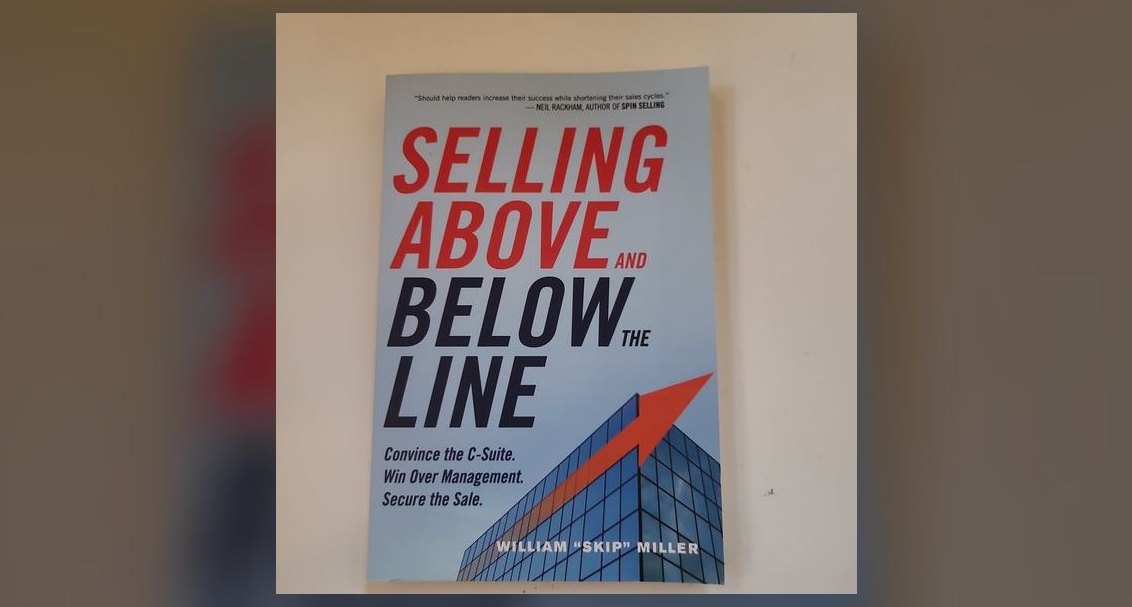 pulse-recentSelling Above and Below the Line by Skip Miller — Top 10 Key Takeaways for Sales Leaders in 2027
 pulse-recentWhat are the concrete steps in Strategic Selling for building a sales plan in 2027?
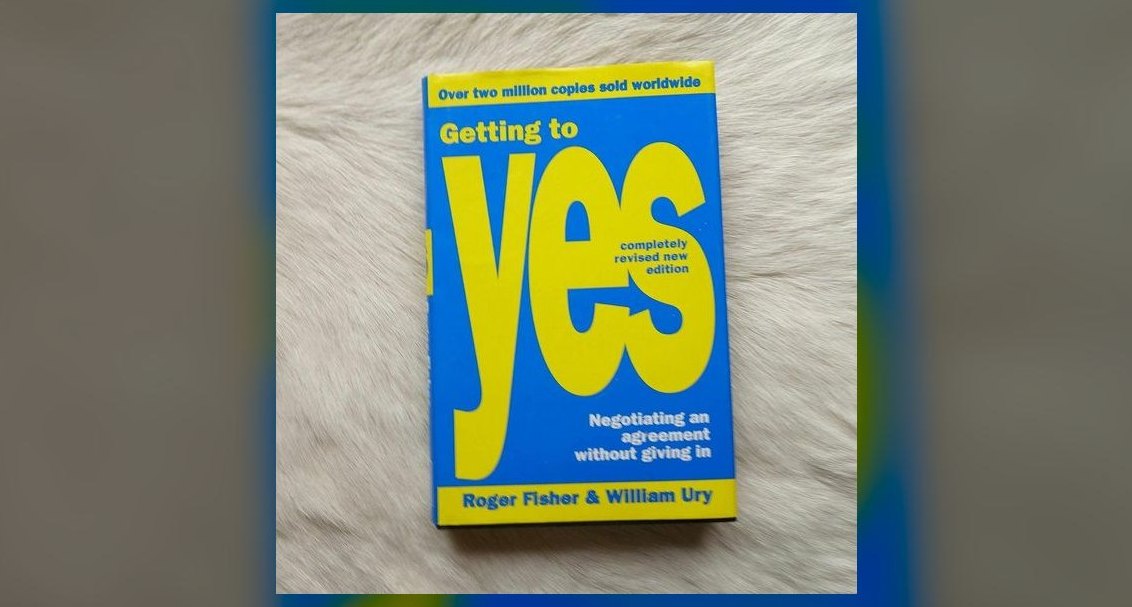 pulse-recentGetting to Yes by Roger Fisher and William Ury — Top 10 Key Takeaways for Sales Leaders in 2027
 pulse-recentWhat is the first concrete step in The Sandler Rules by David Mattson for building a sales plan in 2027?
 pulse-recentInsight Selling by Mike Schultz and John Doerr — Top 10 Key Takeaways for Sales Leaders in 2027
 pulse-recentHow do you implement the Sandler Rules in your first 30 days as a new sales rep in 2027?