
High-Profit Selling — Cliff Notes Summary
 Curated byKory White · Fractional CRO · Maryland
 PULSEKNOWLEDGE LIBRARY
*High-Profit Selling: Win the Sale Without Compromising on Price* (Mark Hunter, AMACOM, 2012) argues that discounting is a self-inflicted wound: reps drop price to win volume, then destroy the margin the business runs on. The book's fix is disciplined prospecting, dollarized discovery, and never trading price without getting something back.
What the book actually argues, and what it competes with
Hunter's thesis fits in one sentence: price problems are prospecting problems. He is not writing a negotiation manual in the classic sense — the negotiation chapters arrive late, and by design. His claim is that by the time you are haggling, most of the outcome has already been decided by *who you chose to talk to* and *how well you made the cost of inaction visible*. If you qualified a buyer who cannot pay list, no amount of tactical brilliance at the quote stage recovers the margin.
That puts *High-Profit Selling* in a specific slot on the sales-book shelf, and it helps to see the alternatives side by side, because most teams are choosing between them rather than reading all of them.
The discovery-methodology option. *SPIN Selling* (Rackham) and *Gap Selling* (Keenan) both put question design at the center. SPIN is research-derived, built from observation of thousands of live calls, and gives you a four-part question sequence. Gap Selling is more modern and more aggressive about diagnosing current state versus future state. Both are stronger than Hunter on the *mechanics* of discovery. Neither is primarily about price. If your problem is that reps pitch too early and never surface real pain, these are the better spend.

The negotiation option. Books in the Voss / Camp / Harvard-negotiation lineage teach the tactical exchange itself — anchoring, concession patterns, walking away, reading the counterparty. They are sharper than Hunter on the mechanics of a single negotiation. What they don't do is connect the negotiation back upstream to pipeline quality and comp design, which is exactly where Hunter lives.
The value-articulation option. Force Management's Command of the Message, MEDDPICC's Metrics field, and Winning by Design's impact-mapping all attack the same problem Hunter names — that "value" only counts in the customer's own metrics — but they arrive as enablement programs with enforcement built into the CRM rather than as a book you hand a rep.
Hunter's actual differentiator is that he treats margin as a *system* property, not a rep skill. He goes after the comp plan. He goes after prospect selection. He goes after the manager who pressures a rep to close at any price at quarter-end. That systems angle is why the book reads better to a sales leader or a RevOps lead than to an individual contributor looking for a script — and it is the honest reason to pick it over the discovery-methodology option or the negotiation option.
The trade-off cuts both ways. Because Hunter is arguing at the system level, the tactical instruction is thinner than in a dedicated negotiation book. You get principles — planned silence, never concede without a trade, know your walk-away number before the meeting — rather than a decision tree for every procurement gambit. Practitioners who want a play-by-play will find it underspecified. Practitioners who want to know *why their whole team discounts* will find the diagnosis unusually direct.

How to decide whether this is the right book for your situation
The wrong way to choose a sales book is by reputation. The right way is by symptom. Hunter's book is a treatment for a specific disease, and if you have a different disease it will not help you much.
The diagnostic question is simple: look at win rate and average selling price together. Four combinations, four different books.
*High win rate, sliding ASP.* This is Hunter's patient. You are winning deals by giving away price. The pipeline is probably full of accounts that were never going to pay list, and the comp plan is probably paying on revenue rather than margin. This is the case where *High-Profit Selling* earns its read.

*Low win rate, healthy ASP.* You are holding price and losing. That is usually a discovery or differentiation problem, not a pricing-discipline problem — reps aren't surfacing enough pain to justify the premium. SPIN or Gap Selling is the better spend.
*Low win rate, sliding ASP.* Something structural is broken — wrong ICP, wrong product-market fit, or a competitor with a genuinely better offer. No book fixes this. Fix targeting and positioning first.
*High win rate, healthy ASP.* Nothing is wrong. Read for enrichment, not for treatment.

There is a second decision layer once you've established that price discipline *is* the problem: is the fault at the rep level or the system level? Hunter's answer is almost always "system," and he is usually right, but you should check. If two reps on the same team hold price and eight don't, the problem is coaching and skill. If ten out of ten discount, the problem is the comp plan, the quarter-end pressure, or the qualification standard — and training the reps harder will not move it.
A third consideration is audience. Hunter writes for a sales-led, seat-based, human-negotiated motion. If you run product-led growth with published pricing and self-serve checkout, the discount reflex he describes barely exists in your funnel — buyers never talk to a rep before paying. The book still helps for your enterprise upmarket tier, but the core diagnosis doesn't map to self-serve. Same caveat for usage-based and outcome-based pricing models, which restructure the price conversation in ways a 2012 book simply doesn't address.
The math that makes the argument stick
The single most repeated idea from the book is the volume-recovery math behind a discount, and it is worth working through properly because it is the piece that changes behavior when a rep sees it.
Take a product carrying a 30% gross margin. Sell it at $100 and you keep $30 of contribution. Now discount 10%: you sell at $90, but your cost didn't move, so you keep $20. You just gave away a third of the contribution on that unit for a tenth off the price. To hold total contribution dollars flat, you now need to sell 50% more units. That's the whole argument. It is not rhetoric; it is arithmetic, and the leverage gets worse as margin gets thinner.

The pattern generalizes. At a 50% starting margin, a 10% cut requires roughly a 25% volume increase to break even on contribution. At a 20% margin, the same 10% cut requires doubling volume. At a 15% margin — common in distribution and hardware resale — a 10% discount is close to unrecoverable through volume at all. This is why the rule of thumb "we'll make it up in volume" is nearly always false in low-margin businesses and merely painful in high-margin ones.
Run it the other direction and the picture is just as stark. A 1% improvement in realized price, with volume and cost unchanged, drops straight to the bottom line. On a business with a 10% operating margin, one point of price realization is a 10% increase in operating profit. There is no other lever in a sales organization with that ratio — not headcount, not activity volume, not conversion-rate optimization.
Two more numbers worth carrying into a pipeline review:

The discount cascade. Small concessions on add-ons, implementation fees, and professional services rarely get tracked as discounts, but they compound. A team that gives away 3% on license, waives a 2% implementation fee, and throws in a quarter of free support has not given a 3% discount — it has given something closer to a low-double-digit haircut on total contract value. Audit total realized value per contract, not headline license price, or the erosion stays invisible.
The renewal anchor. A launch discount is not a one-time cost; it is the new baseline. Procurement records the number you agreed to, and every subsequent renewal negotiates down from *that* figure, not from list. A 15% new-logo discount on a three-year relationship is not 15% off year one — it is 15% off every year, plus whatever further erosion the renewal conversation produces. This is the strongest practical case for Hunter's "never concede without a trade" rule: if you must give the number, get a term commitment, a case study, an expansion clause, or a reference in exchange, so the concession buys something durable.
The honest caveat is that the recovery math assumes fixed unit cost and no operating leverage. In businesses with real scale economics — software with near-zero marginal cost, or manufacturing running below capacity — an incremental discounted deal can still be worth taking, because the alternative is an idle asset. Hunter under-weights this. The disciplined version of his rule is not "never discount" but "never discount reflexively, and never without knowing the volume you'd need to recover it."
The pieces of the system, and what to build first
The parts of Hunter's framework worth actually implementing break into four groups. Sequence matters — several of them fail if you install them in the wrong order.

Prospect qualification. Hunter's grid predates the modern ICP vocabulary but maps onto it cleanly: can this account pay full price, does their budget cycle align with yours, are you talking to a decision-maker or an influencer, will they refer, will they grow? He separates a *suspect* — a pulse and a budget — from a *prospect*, who additionally has a problem you specifically solve and the authority to act. Most CRMs are stuffed with suspects promoted to prospects because a stage advanced on activity rather than evidence.
Time allocation. His 70/20/10 split — most selling time on top-tier accounts, some on developing ones, a sliver on everything else — is a margin lever disguised as a productivity tip. Chasing a poor-fit logo is a hidden discount: nobody cut price, but the company paid opportunity cost for a deal that will close low and churn.
Discovery discipline. The rule of thumb is to talk briefly before asking the next question, and to distinguish tactical questions ("how many seats?") from strategic ones ("what happens to your year if this isn't solved by Q3?"). Strategic questions produce dollarized pain, and dollarized pain is the only currency that defends list price. Related: the confidence tell. When a rep's voice softens at the price reveal, the buyer hears the discount coming before it's offered. Record quote calls and listen specifically for it.

Pre-quote gating. Named pain, dollarized impact, confirmed decision-maker, validated budget, locked timeline, mapped competition, agreed success metric. Reps who can answer all of them before quoting hold price far more often. As a control, this is trivially easy to enforce in a CRM as required fields on stage advance — which is why it is the highest-leverage single change on this list.
Comp design. Hunter's sharpest structural claim: if reps are paid on revenue, they will discount, because a discounted deal pays nearly as well as a full-price one. Pay on gross margin or price realization and the behavior changes without any training at all. This is the most powerful intervention available and also the slowest and most politically expensive, which is why it goes last in the sequence, not first.
Sequencing advice, learned the hard way by anyone who has tried this: do not lead with the comp change. Comp changes take a full plan cycle, spook the top performers, and produce a quarter of noise before they produce signal. Lead instead with measurement — start publishing per-rep price realization — then the pre-quote checklist, then coaching, then comp. By the time comp changes, everyone already knows the numbers and the change reads as confirmation rather than punishment.

Downstream, the piece most teams skip is the value review. Hunter's renewal fix is a quarterly, written, dollarized review of delivered results, signed by both sides. It is unglamorous and it is the difference between a renewal that starts from proven ROI and one that starts from last year's invoice. Customer success owns the execution, but sales owns the consequence, which is why it tends to fall through the gap between the two functions.
What holds up, what has aged, and where the edges are
Reading a 2012 sales book in 2026 requires separating durable argument from dated assumption, and this one splits fairly cleanly.
Holds up. The discount math is arithmetic and doesn't expire. The prospecting-quality-is-pricing-quality thesis has only strengthened as targeting data improved — the tooling to identify who can pay full price is vastly better now than when Hunter wrote, which makes his argument easier to act on, not harder. The comp-plan critique remains the most under-implemented idea in the book. And the walk-away rule is more true, not less: a rep with one deal in slip mode will always discount, which makes pipeline coverage a pricing control rather than a forecasting metric.
Has aged. Hunter assumes a sales-led, seat-based motion negotiated between humans. Product-led growth removes the discount reflex structurally, because nobody is in the room to flinch. Usage-based pricing changes the unit of negotiation from price-per-seat to rate-and-commitment. Outcome-based pricing changes it again, to shared risk. None of these are addressed, and a reader in a PLG or usage-based business should expect to translate rather than apply.

The edge case Hunter under-weights is the strategic loss-leader. Sometimes a below-margin deal is correct: a lighthouse logo that unlocks a segment, a beachhead in an account you intend to expand into tenfold, capacity you'd otherwise leave idle. Hunter's framework treats these as rationalizations, and in most cases he's right — most "strategic" discounts are ordinary discounts wearing a nicer word. But the disciplined version distinguishes them by requiring the strategic case to be written down, approved above the rep, and tied to a specific measurable follow-on, rather than asserted in a deal desk meeting.
The procurement side has professionalized since publication in ways that make the discount reflex costlier. Concession patterns are logged, benchmarked, and reused across the vendor base. What used to be a quiet quarter-end accommodation is now a data point that travels. The practical implication for a strategy built on Hunter's principles: assume every concession is permanent and public within the buyer's organization, and price the first quote accordingly.
If you read only one adjacent book alongside this one, make it a discovery methodology. Hunter tells you *why* to hold price and *what* has to be true before you can. SPIN or Gap Selling tells you *how* to make those things true in the call. The pairing is much stronger than either alone, and it is the reason enablement teams that adopt Hunter's scorecard usually adopt a question framework in the same quarter.
Related questions
Is High-Profit Selling still worth reading given it was published in 2012?
Yes, for teams with a margin problem. The discount arithmetic and comp-plan critique are timeless. Expect to translate the sales-led assumptions if you run product-led or usage-based pricing, since neither existed in their current form at publication.
How does it compare to High-Profit Prospecting?
The 2016 follow-up expands the prospecting argument that *High-Profit Selling* only sketches. If your specific problem is pipeline generation and top-of-funnel quality, read the prospecting book. If your problem is price erosion on deals you already have, read this one.
What's the fastest change a team can make after reading it?
Publish per-rep price realization on the team scorecard. It requires no comp change, no training, and no approval — and simply making the number visible reduces reflexive discounting before any formal intervention lands.
Does the framework apply to renewals as well as new business?
Yes, and arguably more. Renewals inherit the original discount as their anchor. The quarterly written value review is the book's renewal-specific mechanism: it resets the conversation to delivered results rather than last year's invoice.
Should managers ever approve a below-margin deal?
Occasionally — for a genuine lighthouse account or to fill idle capacity. Require the strategic case in writing, approved above the rep, tied to a specific measurable follow-on. Without that gate, "strategic" becomes a synonym for "discount."
FAQ
What is the single most important takeaway from High-Profit Selling?
That a discount is not a concession, it's a permanent transfer of contribution dollars from you to the buyer, and one that volume rarely recovers. Hunter's operating rule follows from that: never put a discount on the table the buyer didn't ask for, and even when they do, never give one without receiving something of equal value in return.
Does the book work for B2C sales or only B2B?
The framework is built for B2B, and specifically for complex deals with multiple stakeholders, procurement involvement, and long cycles. Value anchoring and the confidence tell translate to consumer selling, but the sections on procurement tactics, budget-cycle qualification, and multi-year renewal anchoring assume a B2B context and lose most of their force outside it.
How do I handle a buyer who says a competitor is significantly cheaper?
Hunter's counsel is not to match and not to argue. Ask what exactly is included in that comparison — scope, term, support level, implementation, and what happens when requirements change mid-contract. Comparisons at the headline-price level almost always omit something material. Then reframe on risk reduction and total cost over the contract life rather than on the quoted number.
Is there a script for avoiding discounts?
No, and that's a real limitation of the book. Hunter gives conversational principles — planned silence after a flinch, question-before-pitch, no apology in the voice at the price reveal — rather than a decision tree covering each procurement gambit. Teams that want scripted responses typically pair the book with a negotiation-specific text or build their own objection bank from recorded calls.
How do I hold price without losing deals to aggressive discounters?
You will lose some, and Hunter's answer is that margin retained on the deals you win more than covers it. The practical requirement is pipeline coverage — a rep with one deal in slip mode has no leverage and will always concede. Coverage is therefore a pricing control, not just a forecasting metric. Managers who pressure reps to close at quarter-end are the mechanism that undoes everything else in the book.
Does the book address AI-driven procurement and automated price benchmarking?
Not directly — the 2012 edition predates all of it. But the principles hold up better than most, because automated benchmarking makes concessions permanent and portable across a buyer's vendor base. If anything, an environment where every discount is recorded and reused strengthens the case for holding a clean first quote.
Sources
- High-Profit Selling on Amazon
- Mark Hunter — thesaleshunter.com
- Internet Archive — High-Profit Selling
- Porchlight Books — High-Profit Selling listing
- Mark Hunter on LinkedIn
- Revenue.io podcast — Mark Hunter on discounting
- Salesman.com — Close The Sale Without Discounting with Mark Hunter
- Harvard Business Review — pricing and profitability
- McKinsey — pricing insights
Related on PULSE
- [High-Profit Prospecting by Mark Hunter — Cliff Notes Summary & Key Takeaways](/knowledge/bs0024)
- [SPIN Selling by Neil Rackham: Summary, Key Lessons, and RevOps Takeaways](/knowledge/bs296)
- [Gap Selling by Keenan: Summary, Key Lessons, and RevOps Takeaways](/knowledge/bs295)
- [Secrets of Question-Based Selling by Thomas Freese: Summary, Key Lessons, and RevOps Takeaways](/knowledge/bs301)
- [Selling the Invisible by Harry Beckwith — Cliff Notes Summary](/knowledge/bs0315)
- [The SPIN Selling Fieldbook — Cliff Notes Summary](/knowledge/bs0293)
This page will be disappearing soon. Save it to your device for $1 — or read it free while it is here.
@Kory-White- · if Venmo asks, the last 4 of my number are 2012
 pulse-recentGetting to Yes by Roger Fisher and William Ury — Top 10 Key Takeaways for Sales Leaders in 2027
 pulse-recentThe Effortless Experience by Matthew Dixon — Top 10 Key Takeaways for Sales Leaders in 2027
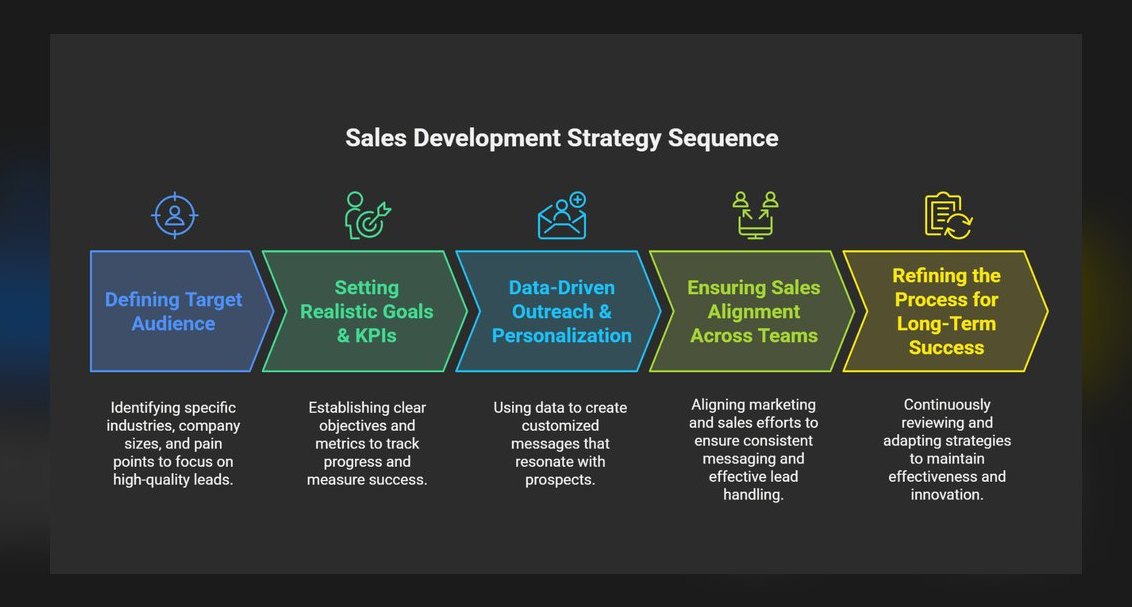 pulse-recentAligning Strategy and Sales by Frank Cespedes — Top 10 Key Takeaways for Sales Leaders in 2027
 pulse-recentTo Sell Is Human by Daniel Pink — Top 10 Key Takeaways for Sales Leaders in 2027
 pulse-recentContagious by Jonah Berger — Top 10 Key Takeaways for Sales Leaders in 2027
 pulse-recentSales Management That Works by Frank Cespedes — Top 10 Key Takeaways for Sales Leaders in 2027
 pulse-recentBuilding a StoryBrand by Donald Miller — Top 10 Key Takeaways for Sales Leaders in 2027
 pulse-recentPre-Suasion by Robert Cialdini — Top 10 Key Takeaways for Sales Leaders in 2027
 pulse-recentNever Lose a Customer Again by Joey Coleman — Top 10 Key Takeaways for Sales Leaders in 2027
 pulse-recentHigh-Profit Prospecting by Mark Hunter — Top 10 Key Takeaways for Sales Leaders in 2027