

How does *SPIN Selling* help you uncover customer needs during discovery calls in 2027?
 Curated byKory White · Fractional CRO · Maryland
Quality
Certified
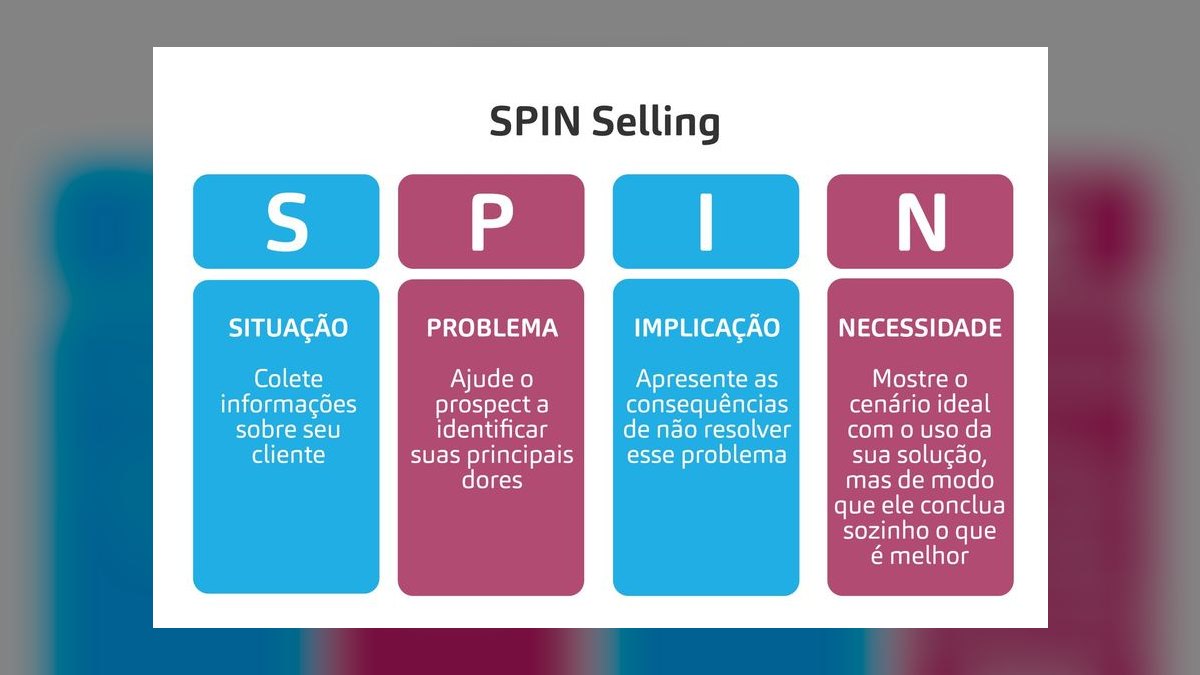
*SPIN Selling* helps you uncover customer needs by sequencing four question types — Situation, Problem, Implication, and Need-payoff — so buyers move from vague dissatisfaction to explicit, quantified urgency. In 2027's pre-researched market, the Implication stage does the heavy lifting: it surfaces consequences the buyer's own research missed, making change feel necessary rather than optional.
What SPIN actually is, and why a 1988 framework still governs discovery
Neil Rackham published *SPIN Selling* in 1988 off the back of a multi-year behavioral research program at Huthwaite, which observed tens of thousands of live sales calls across dozens of countries. That matters because it is one of the very few sales methodologies built from observation rather than from a practitioner's intuition. The research team did not start with a theory and look for confirmation; they coded actual call behavior and then asked which behaviors correlated with successful outcomes.
The headline finding was uncomfortable for the sales training industry of the era. The classic closing techniques — the assumptive close, the alternative close, the takeaway — showed no positive correlation with success in large, complex sales. In some samples, heavy closing behavior correlated *negatively* with outcomes as deal size grew. Rapport-building openers fared little better. What actually separated high performers was the structure of their questioning during the investigation stage of the call.
Rackham's second key distinction is between latent needs and explicit needs. A latent need is a statement of mild dissatisfaction: "reporting takes longer than I'd like." An explicit need is a clear statement of want, desire, or intent to act: "we need to cut reporting cycle time in half by Q3." In small sales, latent needs are decent predictors of purchase — the risk is low, the decision is fast, and a mild irritation is enough to trigger a buy. In large sales, latent needs predict almost nothing. The size of the decision demands that the buyer's need be explicit, owned, and defensible to peers who were not on the call.
SPIN is, in essence, a mechanism for converting latent needs into explicit ones without the seller doing the asserting. That distinction is the whole game. If the rep says "this is costing you six figures a year," the buyer's instinct is to argue. If the buyer says it, the number becomes theirs to defend. Rackham called this the difference between a seller's claim and a buyer's conclusion, and the entire question sequence is engineered to produce the second.

Why does this survive into 2027? Because the underlying constraint hasn't changed. Complex B2B purchases still require internal consensus, still get scrutinized by finance, and still fail more often from indecision than from losing to a competitor. What *has* changed is where the conversation starts. Buyers now arrive having consumed vendor comparisons, analyst summaries, peer reviews on community sites, and increasingly, AI-generated requirement lists assembled before any human contact. They come with a self-diagnosed problem and a shortlist.
That shift breaks a lot of legacy discovery scripts but it strengthens SPIN. The pre-researched buyer's stated need is usually a *symptom-level* need — a feature request, an integration checkbox, a comparison spec. It's shallow because it was assembled without access to the cross-functional consequences inside their own organization. Situation questions have largely been automated away by research, enrichment tooling, and pre-call forms. Problem questions have been partly pre-answered by the buyer themselves. What has not been commoditized is the Implication stage: the disciplined act of asking what happens downstream if the problem persists, and letting the buyer do the arithmetic out loud.
This is also where SPIN connects to adjacent frameworks a modern RevOps team already runs. MEDDICC's "Identify Pain" and "Metrics" fields are essentially outputs of a well-run Implication sequence — you cannot populate a credible metric in the CRM if nobody ever asked what the problem costs. The Challenger insight motion assumes the rep brings a reframe, but a reframe delivered before implications are surfaced lands as a lecture. Gap Selling's current-state/future-state analysis is a restatement of the same movement: establish where they are, make the gap consequential, then let them describe the future. SPIN is the questioning engine underneath all of them.
The step-by-step process of running a SPIN discovery call
A SPIN call has four stages — Preliminaries, Investigating, Demonstrating Capability, and Obtaining Commitment — and the investigation stage is where the disproportionate value sits. Here is how to run it concretely.
Stage one: preliminaries, kept short. Rackham's data showed openings matter far less than trainers assumed. In 2027, with buyers protecting calendar time aggressively, spend two to three minutes maximum. State what you researched, propose an agenda of two or three areas, and explicitly ask permission to ask questions. Something like: "I've read your last two earnings calls and looked at how your team is structured — I'd like to spend most of our time on three things, and I'll ask a lot of questions. Does that work?" You are buying the right to probe, not building friendship.
Stage two: minimal Situation questions. Situation questions gather facts: headcount, current stack, process ownership, contract renewal timing. They are necessary but they cost the buyer energy and give them nothing. The Huthwaite finding was that average and below-average performers asked *more* Situation questions than top performers. The 2027 rule is blunt: if you could have found the answer in a public filing, a job posting, a G2 review, the buyer's LinkedIn, or the pre-call form, do not ask it. Convert what you know into a confirming statement instead — "You're on the enterprise tier with roughly forty seats, is that still right?" — which takes five seconds and demonstrates preparation.
Budget yourself roughly three to five Situation questions in a forty-five minute call. Everything else should be Problem, Implication, or Need-payoff.
Stage three: Problem questions to establish the difficulty. These ask about dissatisfactions, difficulties, and things that don't work: "Where does the current forecast process break down?" "What's the hardest part of onboarding a new rep?" "What do you find yourself working around?" The research found successful reps ask notably more of these than their average peers. In 2027 the practical challenge is deflection — the buyer has a prepared narrative and will hand you the polished version. The counter is specificity: ask for an instance rather than a pattern. "Can you walk me through the last time that actually happened?" moves the conversation from abstraction to evidence, and evidence is what you'll later quantify.
Aim for a handful of distinct problem areas, then pick the one or two with the most organizational weight to develop. Do not try to develop all of them; you'll run out of call.
Stage four: Implication questions, the stage that decides the deal. Take an established problem and explore its consequences — across cost, time, risk, headcount, customer experience, and knock-on effects on other teams. This is where a good discovery call separates from a competent one. The pattern is a chain, not a single question:
- "How often does that happen?" (frequency)
- "When it happens, who has to get involved to fix it?" (spread)
- "What does that pull them away from?" (opportunity cost)
- "Has that ever affected a customer-facing commitment?" (escalation)
- "If nothing changes between now and next fiscal year, where does that end up?" (trajectory)
Each answer is the raw material for the next question. You are not accumulating information for yourself — you already suspect the answer. You are helping the buyer assemble a picture they had not assembled before, out loud, in their own words. When they say "honestly, when you add it up, that's probably two full weeks of engineering time a quarter," you have manufactured nothing. You've asked.
Implication questions are cognitively demanding and mildly uncomfortable to ask, which is exactly why most reps skip them. They require you to sit in the buyer's problem without offering relief. The reflex to say "well, that's exactly what we solve" is the single most expensive habit in discovery.
Stage five: Need-payoff questions to hand over ownership. Once the problem feels expensive, flip the polarity. "If you could cut that rework in half, what would that free up?" "Who else on the team would care if that got fixed?" "What would it mean to have that number available before the forecast call instead of after?" These questions do three things: they get the buyer to state benefits in their own language, they generate the internal-champion vocabulary you'll need when you're not in the room, and they preempt objections because the buyer has already argued your case to themselves.
The research showed need-payoff questions correlate strongly with call success and, notably, with buyer receptiveness — they change the emotional tone of the call from problem-heavy to constructive.
Stage six: demonstrate capability against stated needs only. Rackham distinguishes features, advantages, and benefits. A benefit, in his strict definition, is a capability that meets an *explicit need the buyer has stated*. Everything else is an advantage at best. So the demo is not a tour. It is: "You said the forecast breaks because territory changes don't propagate — here's exactly that." Two or three capabilities mapped one-to-one against what they said. In 2027, when the buyer has often already self-served a trial or watched a product walkthrough, a generic demo is worse than no demo; it signals you weren't listening.
Stage seven: obtain a commitment proportional to the deal. Rackham's four possible call outcomes — order, advance, continuation, no-sale — are still the cleanest scorecard in sales. An *advance* is any action that moves the deal forward and requires effort from the buyer. A *continuation* is a call that ends pleasantly with nothing changing. "Send me a proposal" is usually a continuation dressed as an advance. Good advances: a scoping session with the technical owner, a data sample for a validation exercise, an introduction to the budget holder, a joint business-case draft.
Time, effort, and what a realistic SPIN rollout costs
Teams underestimate SPIN because the book is short and the acronym is memorable. The framework is simple; the behavior change is not. Here is what adoption actually costs in practical terms.
Per-call preparation. A properly prepared SPIN discovery call takes twenty to forty minutes of prep for a mid-market deal and considerably more for enterprise. That prep is not a slide deck. It is: reading recent public material about the account, mapping who will be on the call and what each of them is measured on, and writing out candidate Implication chains for the two or three problems you expect to find. Reps who skip the written prep almost always default to Situation questions in the moment, because Situation questions are the ones you can ask without thinking.
Call structure. In a forty-five minute discovery call, a healthy allocation looks roughly like: three minutes preliminaries, five minutes confirming context, twelve to fifteen minutes on Problem questions, twelve to fifteen minutes on Implications, five to eight minutes on Need-payoff, and the last five on commitment. Notice how little room that leaves for talking about your product. If your discovery calls include a fifteen-minute product overview, you do not have a discovery call — you have a pitch with questions attached.
Ramp time for a rep. Expect a rep to intellectually understand SPIN in an afternoon and to actually change their call behavior over roughly one to two quarters, with coaching. The bottleneck is the Implication stage. Reps default to solving because solving feels helpful and sitting in someone's problem feels rude. Breaking that reflex takes repeated call review, not a workshop.
Coaching load. Realistically, one manager reviewing two calls per rep per week, with a specific behavioral focus each week, produces change. Reviewing calls generally, with generic feedback, does not. Pick one behavior — "this month we are counting Implication questions" — and coach only that until it's habitual.
Tooling. Conversation intelligence platforms make the measurement side cheap. Talk-ratio, question count, longest monologue, and topic tracking are standard features on the major call-recording tools. What they do not do reliably is classify a question as Implication versus Problem — that distinction is contextual and still needs human ears. Use the tooling for the coarse metrics and human review for the fine ones. Budget the tooling as a per-seat line item alongside your CRM; the coaching time is the real expense.
Where the return shows up. Not in win rate first. The earliest observable change is usually in the quality of second meetings — more of them include the economic buyer, and fewer deals sit in a stage with no next step scheduled. Downstream you should see fewer closed-lost-to-no-decision outcomes, because no-decision is fundamentally an urgency failure and urgency is what Implication questions build. Track no-decision rate as your primary SPIN health metric rather than raw win rate, which is contaminated by too many other variables.
A caution on deal size. Rackham was explicit that SPIN's advantage grows with the size and complexity of the sale. For a low-ticket, single-signature, fast-cycle transaction, the full Implication and Need-payoff apparatus is overhead — Situation and Problem questions plus a clean demo will outperform it on time-to-close. Applying enterprise discovery rigor to a small transactional motion is a real and common misallocation.
Where teams get SPIN wrong
Treating it as a script. SPIN is a description of what effective sellers do, not a sequence to recite. Reps who march through S-P-I-N in rigid order sound like they're processing a form. The stages describe a *direction of travel*, and real calls loop — a Need-payoff answer often exposes a new problem, and you go back around. The only non-negotiable is the direction: never move to solution language before the implications have landed.
Interrogating instead of conversing. A call with thirty questions and no reciprocal contribution from the rep feels like a deposition. Rackham's own guidance included giving something back — a relevant observation from a similar account, a data point, a "that's the third time this month I've heard that." The buyer needs signals that you have a point of view; the questions are how you earn the right to express it.
Over-asking Situation questions. Still the most common failure, and now the most costly. Every question the buyer has already answered in a form, a public filing, or a previous call spends credibility you don't get back. Enrichment tooling and pre-call research have made this entirely avoidable, which means doing it reads as laziness rather than thoroughness.
Collapsing Implication into a single question. "What's the impact of that?" is one question and it usually gets one shallow answer. Implication is a *chain*. If you ask one and move on, you've checked a box without building anything. Three to five linked questions on a single problem beats one question on five problems, every time.
Firing Need-payoff too early. Ask "how would it help if you could solve that?" before the buyer feels the cost and you get "it'd be nice." The response is a diagnostic: a thin need-payoff answer almost always means the Implication work wasn't done. Go back.

Ignoring the silent participants. Multi-stakeholder calls are now the norm, and the people who don't speak are frequently the ones who can veto. Each role needs its own implication path — the finance stakeholder cares about cost variance and risk exposure, the technical owner cares about maintenance burden and integration debt, the frontline manager cares about ramp time and rep attrition. Prepare a different chain for each and address them by name.
Quantifying on the buyer's behalf. The moment you supply the number, it becomes your claim and inherits your credibility problem. Ask the question and tolerate the pause. Rackham's research on silence holds up: a genuine three-to-five second wait after a hard question produces materially better answers than a rep who fills the gap.
Not writing it down where it survives. An Implication chain that produces a beautiful quantified consequence and then lives only in a rep's memory is wasted. Capture the buyer's exact words — their number, their phrasing — into the CRM opportunity record. Those words become the business case, the mutual action plan, and the thing your champion repeats when you're not in the room. This is the single highest-leverage RevOps intervention on SPIN adoption: make the field exist and make it require the buyer's language, not a paraphrase.
Assuming the denial is final. "We don't have that problem" is often true about the problem you named and false about the neighborhood around it. Accept the answer, then widen: "Fair enough — what's the part of that process you'd change if you could?" Latent needs rarely announce themselves.
Choosing your approach: when SPIN leads and when something else should
SPIN is a discovery instrument, not a full go-to-market strategy, and knowing when to lead with it prevents both under- and over-application.
Lead with SPIN when the deal is large relative to the buyer's normal spend, multiple functions are involved, the buyer has a status-quo bias, the competition is "do nothing," or the buyer's stated requirement seems suspiciously narrow. Those are all conditions where the gap between the stated need and the real need is wide, and closing that gap is exactly what the framework does.
Lean on a Challenger-style reframe when the buyer's diagnosis is not merely shallow but wrong — they've misidentified the problem entirely. Even then, run the implications first. A reframe delivered after the buyer has articulated the cost of their current path is a contribution; the same reframe delivered cold is a contradiction.

Use MEDDICC as the qualification layer on top. SPIN tells you how to run the conversation; MEDDICC tells you what the conversation must produce. They aren't competitors. The Metrics field should be populated with the buyer's own quantified implication. The Identify Pain field should hold the problem statement in the buyer's language. If those fields are full of rep-authored prose, the discovery call didn't do its job.
Skip most of it for transactional motions. High-velocity, low-ACV, single-decision-maker sales are better served by fast qualification and a tight demo. The Implication apparatus adds cycle time you don't recover.
For renewals and expansion, invert the direction. The problem often already has a quantified history inside the account — usage data, support tickets, adoption gaps. Implication questions here are about the trajectory of an unaddressed gap rather than the discovery of an unknown one: "adoption in the west region has sat flat for three quarters — what does that do to the case you have to make internally at renewal?"
For partner and channel motions, the framework transfers but the subject shifts. You're running implications on the partner's economics — deal registration friction, margin erosion, the cost of their reps not knowing your product — rather than on an end customer's operations.
For product and customer-research interviews, the Situation-Problem-Implication portion transfers cleanly and the Need-payoff portion should be handled with care, because in research you want the unbiased signal, not the buyer talking themselves into your roadmap. This is where *The Mom Test* and continuous-discovery practice diverge from sales discovery deliberately: the sales rep wants an explicit need stated aloud; the researcher wants observed behavior uncontaminated by the interviewer's hopes.
Related questions
How many Implication questions should a single discovery call contain?
There's no universal number, but the practical guidance is depth over breadth: three to five linked Implication questions on one or two significant problems beats a single impact question across five problems. If the buyer hasn't quantified anything out loud, you haven't finished.
Does SPIN still work when the buyer has already picked a shortlist?

Yes, and it's arguably more valuable. A shortlist is built on stated requirements, which are usually symptom-level. Implication questions surface consequences the requirement list never captured, which is how you change the evaluation criteria rather than compete inside someone else's.
Can conversation intelligence tools score SPIN adherence automatically?
Partly. Talk-ratio, question counts, and monologue length are reliably automated. Classifying a question as Implication versus Problem depends on context and intent, so it still needs human review. Use the tools for coarse coaching signals and call review for the rest.
What's the difference between an advance and a continuation?
An advance is a next step requiring buyer effort with a date attached — a scoping session, a stakeholder introduction, a data sample. A continuation is a friendly ending with nothing agreed. "Send me a proposal" is usually a continuation, and treating it as progress inflates your pipeline.
How does SPIN fit with MEDDICC or Gap Selling?
They operate at different layers. SPIN is the questioning technique inside the call; MEDDICC is the qualification checklist the call must satisfy; Gap Selling is a framing of current versus future state. Run SPIN in the conversation, populate MEDDICC afterward.
FAQ
**Is *SPIN Selling* outdated given how much buying has changed?**
The mechanics of information access have changed dramatically; the psychology of large-purchase decision-making has not. Buyers still need explicit, defensible needs before committing budget, and still stall when urgency is absent. What's genuinely obsolete is the Situation-question-heavy discovery call, which research and enrichment tooling have made unnecessary. The Implication and Need-payoff stages have gotten more valuable, not less.
What's the actual difference between SPIN and the Challenger Sale?
SPIN is a questioning method for extracting needs the buyer holds but hasn't articulated. Challenger is a positioning method built on teaching the buyer something they didn't know. They solve different problems and stack well: use SPIN to establish the cost of the current path, then a reframe lands as insight rather than as argument. Leading with the reframe before implications tends to read as a lecture.
Should I use SPIN on a small, fast-moving deal?
Usually not in full. Rackham's own research found that in small sales, feature-forward presentations and latent needs were sufficient, while the Implication and Need-payoff stages added time without adding conversion. Run Situation and Problem questions, confirm fit, and demo. Save the full sequence for deals where "do nothing" is your real competitor.
How do I get better at Implication questions specifically?
Write them before the call, not during it. Pick the two problems you expect to find, then draft five consequence questions for each covering frequency, who else gets pulled in, what it costs, whether it's ever touched a customer, and where it goes if nothing changes. Then review your own recorded calls counting only that one behavior. Prep plus single-behavior review is what moves it.
What do I do when the buyer says "we don't have that problem"?
Take the answer at face value and widen the frame rather than pushing back. Ask what part of that process they'd change if they could, or what the hardest thing about it is today. Denials are usually accurate about the specific framing and inaccurate about the surrounding territory, and a latent need rarely announces itself unprompted.
How should RevOps support SPIN adoption structurally?
Build the field that forces it. Create a CRM field requiring the buyer's own quantified consequence, in their words, before an opportunity can advance past discovery. That single constraint does more than training, because it makes the Implication stage a gating requirement rather than a suggestion. Pair it with a no-decision-rate dashboard segmented by rep — it's the cleanest measure of whether urgency is actually being built.
Sources
- https://www.huthwaiteinternational.com/
- https://hbr.org/2015/03/the-new-sales-imperative
- https://www.gartner.com/en/sales/insights/b2b-buying-journey
- https://www.mheducation.com/highered/product/spin-selling-rackham/M9780070511132.html
- https://www.rainsalestraining.com/blog
- https://www.salesforce.com/resources/research-reports/state-of-sales/
- https://www.mckinsey.com/capabilities/growth-marketing-and-sales/our-insights
- https://corporatevisions.com/blog/
- https://www.linkedin.com/business/sales/blog
Related on PULSE
- What's the most effective way to use *Pitch Anything* to frame your pricing during a procurement call in 2027?
- How does *The Mom Test* define a "bad customer" to disqualify early in your discovery process in 2027?
- How does *Gap Selling* help you identify hidden customer pain points?
- Continuous Discovery Habits by Teresa Torres — Cliff Notes Summary
- How does *Gap Selling* help you compete against a lower-priced competitor without discounting in 2027?
- How does *SNAP Selling* help you prioritize leads in a busy inbox?
This page will be disappearing soon. Save it to your device for $1 — or read it free while it is here.
@Kory-White- · if Venmo asks, the last 4 of my number are 2012
This page is gone.
This one is off the shelf now. $1 keeps it on your phone for good — the whole page, pictures and diagrams included.
 pulse-booksHow do you get started with Book Summaries in 2027?
 bsHow do you forecast sales revenue when your pipeline data keeps changing in 2027?
 bsWhat’s the single most effective tactic from *The Challenger Sale* for shortening a long sales cycle in 2027?
 bsWhat's the right way to structure a compensation plan so quota-carrying reps trust the commission math in 2027?
 bsWhat’s the most practical technique from *New Sales. Simplified.* for handling a “send me info” objection?
 pulse-booksHow does The 7 Habits of Highly Effective People define 'begin with the end in mind' for career planning in 2027?
 bsWhat’s the core principle from *The Psychology of Selling* for turning a rejection into a future opportunity?
 bsWhat’s the most effective way to use *Pitch Anything* to frame your pricing during a procurement call in 2027?
 bsWhat’s the best summary of *How to Win Friends and Influence People* for managers in 2027?
 bsWhat’s the main takeaway from *New Sales. Simplified.* for overcoming call reluctance in 2027?