

How does *Gap Selling* help you identify hidden customer pain points?
 Curated byKory White · Fractional CRO · Maryland
Quality
Certified

Gap Selling helps you identify hidden customer pain by forcing a rigorous comparison of the customer's Current State against their Future State before any product is mentioned. The strategy uses layered diagnostic questioning — Discovery, Diagnostic, and Consequence questions plus a "Cost of Doing Nothing" calculation — to surface root causes and emotional stakes the customer never volunteered, turning vague complaints into quantified, urgent problems.
What Gap Selling is and why hidden pain matters
Keenan's *Gap Selling* rests on a deceptively simple premise: nobody buys a product, they buy the closing of a gap. On one side sits the Current State — the customer's operational reality today, warts included. On the other sits the Future State — where they want to be, often described in fuzzy, aspirational language like "more efficient" or "better visibility." The space between those two states is the Gap, and Keenan's central claim is that most of what makes a customer's pain "hidden" is simply that nobody has mapped this Gap with any rigor. Salespeople default to pitching the Future State (the product's benefits) without ever fully excavating the Current State, so they never learn what's actually broken, why it's broken, or what it's costing.
This matters commercially because unmapped pain is unpriced pain. A customer who says "our onboarding takes too long" is describing a symptom, not a problem a rep can build urgency around. If the rep accepts that sentence at face value and pivots straight into a demo, they are selling into a fog. Gap Selling treats that sentence as a starting clue, not an answer. The rep's job — the entire discipline the book is built around — is to identify the layers underneath: how long is "too long" in actual days, what does that delay cost in first-month churn, who inside the customer's org is catching heat for it, and what have they already tried that failed. None of that appears in the opening sentence. It has to be extracted.

The reason this qualifies as a strategy rather than a script is that it changes the sequencing of the entire sales motion. Traditional pitches move: rapport → product overview → objection handling → close. Gap Selling moves: exhaustive Current State mapping → Future State definition → Gap quantification → only then does a recommendation enter the conversation. Reps who skip steps are, in Keenan's framing, "solution jumpers," and solution jumping is precisely why hidden pain stays hidden — you cannot excavate a customer's problem while you're simultaneously trying to sell them something. The two activities are cognitively incompatible; diagnosis requires curiosity, pitching requires advocacy, and a rep cannot fully occupy both stances in the same breath.
The step-by-step discovery process
Gap Selling's discovery sequence runs through three distinct question types, deployed roughly in order but often looping back as new information surfaces.

Discovery Questions open the conversation broadly and invite the customer to narrate their world without judgment: "Walk me through how this process works today, start to finish." "What's working well, and what isn't?" These questions are deliberately unstructured because a scripted checklist signals to the customer that the rep already has an answer in mind — which shuts down disclosure. A good Discovery Question produces a monologue, not a one-line answer.
Diagnostic Questions follow up on whatever the customer just said and push toward root cause: "What have you already tried to fix that?" "Why didn't it work?" "What's driving that number specifically?" This is where the "why" chain does its work — asking why three or four times in sequence typically moves a rep from a symptom ("turnover is high") to a structural cause ("there's no defined career ladder past the two-year mark") that the customer had stopped consciously thinking about because it had become normalized.
Consequence Questions connect the diagnosed root cause to stakes that matter to the specific human in the room: "Who else feels this when it goes wrong?" "What does this put at risk for you personally?" "What happens to the Q4 numbers if this doesn't get fixed?" This is the step most reps skip, and it's the step that converts a technical problem into a business-critical one. A customer can rationally live with an inefficient process; they cannot as easily live with a process that's putting their own credibility, budget, or job at risk once that connection has been made explicit.
Underneath all three question types sits the Cost of Doing Nothing (CODN) calculation, which is less a question and more a working exercise the rep and customer build together. It has three components: a monetary estimate (lost revenue, wasted labor hours, penalty fees, overtime), a time-based projection (what does this cost per month, and what does that become annualized), and a qualitative layer (stress, reputational risk, morale, opportunity cost). None of these numbers need to be audited-grade precise — Keenan is explicit that directional estimates are enough, because the goal isn't a spreadsheet, it's giving the customer a number they didn't have five minutes earlier. Once a customer has said out loud "that's probably costing us something like $40,000 a quarter," the pain stops being hidden — it has a price tag, and price tags create urgency in a way adjectives never do.
Costs, timelines, and typical ranges
A properly run Gap Selling discovery call is not a fifteen-minute qualification chat — Keenan pegs a thorough first discovery conversation at roughly 30 to 60 minutes, and complex enterprise deals often need two or three separate discovery sessions with different stakeholders before the Current State picture is complete. That's a real time investment, and it's the most common objection reps raise internally: "we don't have an hour with this prospect." Gap Selling's counterargument is that the time is spent regardless — either upfront during diagnosis, or later, repeatedly, during a sales cycle that keeps stalling because nobody ever nailed down why the customer actually needs to move.

On the CODN side, the ranges vary enormously by vertical, which is exactly why Keenan resists giving customers a formula and instead trains reps to build the number live with them. A mid-market operations pain (inconsistent delivery windows, say) might land the annualized cost estimate anywhere from the low five figures (in penalty fees alone) to six figures once customer churn and account risk are folded in. An enterprise compliance pain — a flagged audit finding, a security gap — can escalate the estimate into risk language that has nothing to do with a specific dollar figure at all (regulatory exposure, a qualified audit opinion, stock price impact) and everything to do with a deadline the customer cannot move.
Deal-cycle impact is the second timeline variable worth naming. Sales teams that adopt Gap Selling properly typically report that individual deals take slightly longer to reach a signed contract in the first few cycles, because discovery consumes calendar time that used to go straight to a proposal. But the win rate on qualified opportunities tends to rise and the number of stalled, "still thinking it over" deals tends to fall, because the deals that do move forward are anchored to a quantified, agreed-upon Gap rather than a vague sense that the product "looked good." Keenan's framing is that Gap Selling front-loads time cost to remove far more time cost later — dead deals that limp along for months are the actual expense, not a slightly longer first call.
Where teams get it wrong
Three recurring failure modes keep pain hidden even at organizations that have bought into the Gap Selling framework on paper.

The first is confirmation bias baked into the product catalog. A rep who sells a CRM will unconsciously steer every discovery conversation toward CRM-shaped problems, because that's the only shape of answer they know how to act on. A customer's actual root cause might be a broken handoff between marketing and sales, a compensation plan that rewards the wrong behavior, or a hiring process that's stacking the team with the wrong skill set — none of which a CRM fixes. Confirmation bias doesn't feel like bias from the inside; it feels like "asking good questions," but the questions are quietly pre-filtered to only hear answers the rep's product can solve.
The second is collapsing discovery under pipeline pressure. When a rep is behind quota, the instinct is to compress the sales cycle by skipping ahead to the pitch. This is the opposite of what actually shortens cycles. A rushed discovery produces a proposal built on assumptions, and assumption-built proposals get picked apart in the next call by a stakeholder whose actual pain was never surfaced — which adds a full extra round trip. Ironically, the fastest path through a complex deal is almost always the slower-looking first thirty minutes.
The third, and the one Keenan spends the most time on, is customer politeness as a pain-masking mechanism. Buyers routinely underreport how bad a problem is because admitting the full scope feels like admitting incompetence — "we should have caught this sooner," "I should have flagged this to my boss months ago." A rep who takes the polite, minimized version of the answer at face value never gets to the real Gap. The fix Keenan proposes is normalizing failure explicitly, out loud: "Most teams in your position have tried two or three things that didn't stick — what did you try, and what happened?" That single reframe gives the customer social permission to admit the messier, truer version of events, and it's frequently the moment a genuinely hidden pain point — something the customer hadn't said to anyone, including their own boss — finally surfaces.

A fourth, quieter failure is treating the Discovery Map as a one-time document instead of a living one. Root causes compound — a staffing gap causes missed deadlines, which causes a key account to threaten churn, which becomes a board-level topic — and a Gap that was accurately mapped in week one can be stale by week four if the rep never revisits it with the customer.
Decision framework: when to choose what
Gap Selling is not the correct strategy for every motion, and knowing when to deploy its full weight is as important as knowing how to run it. It earns its cost in complex, multi-stakeholder B2B sales where the deal size justifies 30-60+ minutes of diagnostic time and where the customer's problem genuinely has layers worth uncovering — enterprise software, professional services, capital equipment, anything with a six-figure-plus price tag and more than one decision-maker in the room. In those environments, the depth of discovery is what differentiates a rep from a vendor.

It's overkill for low-cost, low-risk, largely self-service purchases, where a customer already knows exactly what they want and the friction of a diagnostic conversation costs more goodwill than it returns in insight. It's also poorly suited to pure price-comparison RFP situations where the buying criteria are fixed before a rep is ever in the room — there's no Gap left to diagnose because the customer has already done that work internally and reduced the decision to line-item comparison.
Compared to adjacent methodologies, SPIN Selling shares Gap Selling's DNA (both use structured questioning to build urgency) but SPIN's four question types (Situation, Problem, Implication, Need-payoff) are more prescriptive and script-friendly, making SPIN a reasonable fit for newer reps or shorter cycles, while Gap Selling's Current-State/Future-State framing demands more improvisation and is better suited to reps who can hold a genuinely open-ended diagnostic conversation. Challenger Sale, by contrast, leads with a point of view the rep teaches the customer rather than a diagnosis the rep extracts from them — the two philosophies can be blended (teach a reframe, then diagnose the customer's specific version of it), but a rep trying to run both simultaneously in the same sentence usually just confuses the buyer.
Related questions
What's the key framework from Gap Selling for diagnosing customer problems?
The Current State / Future State / Gap model, executed through Discovery, Diagnostic, and Consequence questions, with the Cost of Doing Nothing calculation quantifying the stakes of leaving the Gap unaddressed.
How does Gap Selling differ from SPIN Selling in uncovering needs?
SPIN uses a scripted four-question sequence (Situation, Problem, Implication, Need-payoff); Gap Selling uses a looser, deeper Current-State excavation with no fixed script, better suited to complex, high-stakes deals.
What's the biggest emotional trigger Gap Selling says you should never ignore?
Career risk and personal credibility — Keenan argues logic makes people think but emotion makes people act, so a buyer's fear of looking incompetent to their own boss is often the real driver behind a purchase.
How long should a Gap Selling discovery conversation take?
Roughly 30 to 60 minutes for a single session; complex enterprise deals typically need multiple sessions across different stakeholders before the Current State is fully mapped.
Can Gap Selling work in transactional, low-cost sales?
Rarely well — the deep diagnostic investment only pays off when deal size and complexity justify it; for low-risk purchases, customers already know what they want and resent the extra friction.
FAQ
What's the difference between a symptom and a hidden pain point in Gap Selling? A symptom is the customer's own framing of the issue ("sales are down"); the hidden pain is the underlying root cause plus its financial and emotional consequences, which the customer hasn't fully connected to the symptom themselves.
Does Gap Selling replace the need for a product demo?

No — it delays and reshapes it. The demo still happens, but only after the Gap is quantified, so the product is positioned as closing a specific, agreed-upon distance rather than being pitched generically.
How do you avoid sounding like you're interrogating the customer? Lead with genuinely open Discovery Questions, let the customer talk at length, and frame Diagnostic and Consequence Questions as curiosity rather than cross-examination — normalizing prior failed attempts helps buyers stay candid.
What if the customer can't quantify the Cost of Doing Nothing? Directional estimates are enough. Keenan is explicit that the number doesn't need audit-grade precision — the goal is to move the customer from "this is annoying" to "this has a real, if rough, cost," which is often sufficient to build urgency.
Is Gap Selling compatible with a formal sales methodology like MEDDIC? Yes — many organizations layer Gap Selling's discovery technique underneath MEDDIC's qualification criteria, using the Current State/Future State work to fill in Metrics and Identify Pain fields with real, customer-validated detail rather than guesses.
Who should run the Cost of Doing Nothing exercise — the rep or the customer? Both, together. Keenan stresses it should feel collaborative, with the rep prompting categories (financial, time, emotional, risk) and the customer supplying the actual figures, so the resulting number carries the customer's own ownership rather than feeling like a sales tactic.
Sources
- https://www.gapsellingbook.com
- https://asalesguy.com
- https://www.saleshacker.com
- https://blog.hubspot.com/sales
- https://hbr.org
- https://thesalesblog.com
- https://www.gartner.com/en/sales
- https://www.forbes.com/sales
Related on PULSE
- How does SPIN Selling help you uncover customer needs during discovery calls?
- How does Gap Selling help you compete against a lower-priced competitor without discounting?
- How does SNAP Selling help you prioritize leads in a busy inbox?
- What's the key framework from Gap Selling for diagnosing customer problems?
- What's the biggest emotional trigger Gap Selling says you should never ignore in a buyer conversation?
- What's the one framework from Gap Selling that turns a casual prospect into a committed buyer?
This page will be disappearing soon. Save it to your device for $1 — or read it free while it is here.
@Kory-White- · if Venmo asks, the last 4 of my number are 2012
This page is gone.
This one is off the shelf now. $1 keeps it on your phone for good — the whole page, pictures and diagrams included.
 bsWhat’s the biggest mistake reps make during discovery calls that *Gap Selling* explicitly warns against?
 bsWhat’s the single most effective tactic from *The Challenger Sale* for shortening a long sales cycle in 2027?
 bsWhat’s the best chapter in *How to Win Friends and Influence People* for leading a team in 2027?
 bsWhat’s the biggest mindset shift *The Psychology of Selling* recommends for handling a no-decision close?
 bsWhat does *The Sales Acceleration Formula* say about hiring sales reps in 2027?
 pulse-booksHow much do executive book summary subscriptions like getAbstract or Blinkist cost in 2027?
 bsWhat’s the most actionable chapter in *How to Win Friends and Influence People* for networking in 2027?
 bsHow can *Predictable Revenue* help a startup build a repeatable sales process from scratch in 2027?
 bsCan *How to Win Friends and Influence People* still make you more likeable in 2027?
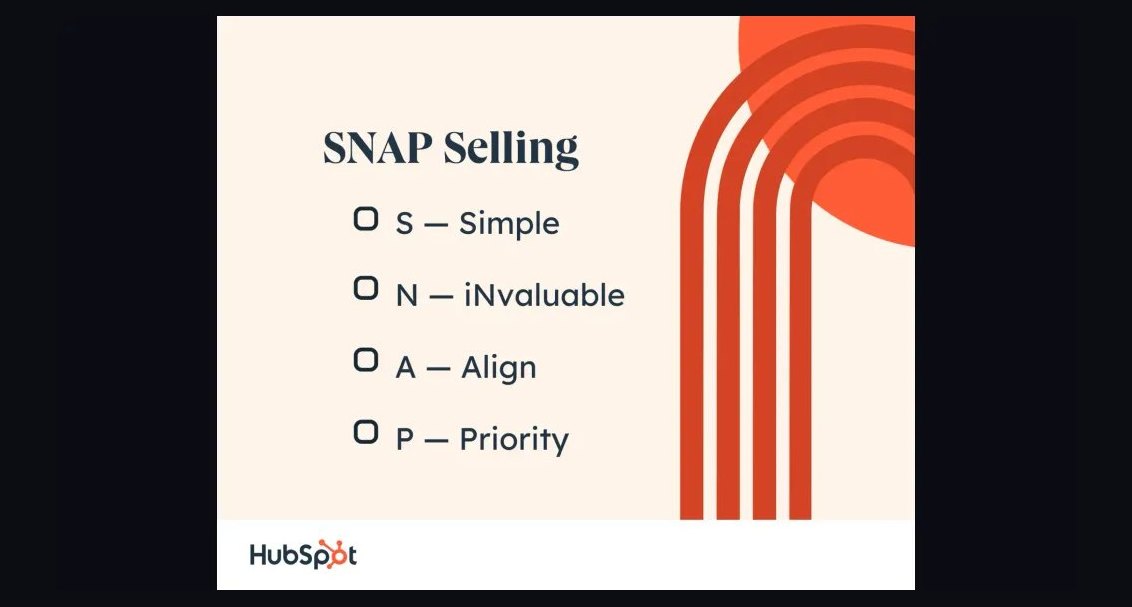 bsHow does *SNAP Selling* simplify complex sales cycles in 2027?