
Best Toyota Prius Generations (Ranked)
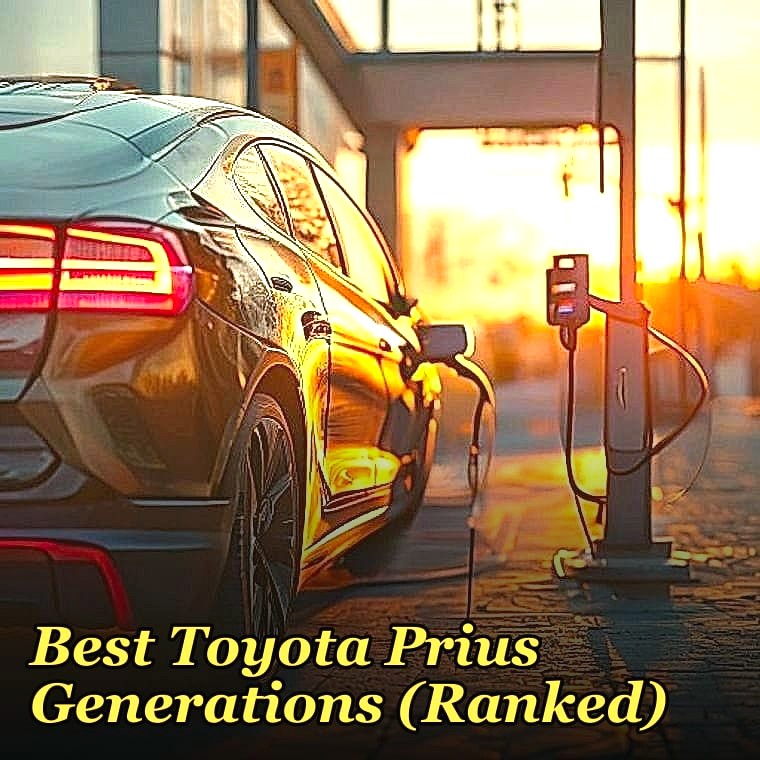
The Toyota Prius invented the mainstream hybrid and has spent five generations refining it. Since the first U.S. car arrived in 2000, the Prius has gone from a quirky 41-mpg sedan to a genuinely quick, sharp-looking 57-mpg hatchback that posts some of the best real-world fuel economy of any non-plug-in car sold. Along the way Toyota changed batteries from nickel-metal-hydride to lithium-ion, added a plug-in Prime variant, spun off the Prius v wagon, and finally gave the car styling people actually want to be seen in. For high-mileage commuters, rideshare drivers, and anyone allergic to gas stations, the Prius remains the benchmark. This ranking sorts the best Toyota Prius generations by efficiency, reliability, drivability, and value so you can pick the right one whether you want a cheap, indestructible commuter or the newest, fastest car.
The best overall Toyota Prius is the fifth generation (2023–present, XW60), which pairs a sharp new design with a 2.0-liter hybrid system making 194–196 hp and EPA ratings up to 57 mpg combined — finally a Prius that is quick, attractive, and still the efficiency champ. The best value Toyota Prius is the third generation (2010–2015, XW30), a proven, dirt-cheap used hybrid rated at 50 mpg combined with a deep parts and repair ecosystem and inexpensive battery replacement. Every modern Prius is a sound buy; the only real homework is a traction-battery state-of-health check before purchase, which removes the single biggest risk on any used example.
*Note: Prices vary significantly based on condition and market; these are representative of the model's typical market positioning.*
1. Fifth Generation (2023–present, XW60) 🏆 BEST OVERALL
%2520%25F0%259F%258F%2586%2520BEST%2520OVERALL%2520Best%2520Toyota%2520Prius%2520Gener%252C%2520realistic%2520magazine%2520style%252C%2520warm%2520light%252C%2520no%2520text%252C%2520no%2520watermark%3Fwidth%3D1200%26height%3D675%26nologo%3Dtrue%26model%3Dflux%26seed%3D9064&w=760&output=webp&q=80&we&n=-1)

The fifth-gen Prius is the transformation owners waited 20 years for. Built on TNGA-C, it uses a 2.0-liter Atkinson four with the fifth-generation hybrid system, producing 194 hp (FWD) or 196 hp (AWD) and hitting 0–60 in roughly 7 seconds — nearly twice as quick as the old car while feeling planted and modern. EPA economy reaches up to 57 mpg combined on the LE, and the Prius Prime plug-in delivers about 44 miles of electric range. With standard Toyota Safety Sense 3.0, a low, athletic stance, and genuinely good looks that ended the car's frumpy reputation, this is the best Prius ever made by a wide margin.
2. Third Generation (2010–2015, XW30)
%2520Best%2520Toyota%2520Prius%2520Generations%2520(Ranked)%252C%2520realistic%2520magazine%2520style%252C%2520warm%2520light%252C%2520no%2520text%252C%2520no%2520watermark%3Fwidth%3D1200%26height%3D675%26nologo%3Dtrue%26model%3Dflux%26seed%3D37850&w=760&output=webp&q=80&we&n=-1)

The third-gen Prius was the high-volume sweet spot that put hybrids in millions of driveways. A 1.8-liter Atkinson four plus electric motors made a combined 134 hp and returned 50 mpg combined — class-leading at launch and still excellent today. Reliability is legendary, the NiMH battery is cheap to replace compared with most hybrids, and independent hybrid shops know these cars cold. Cabin space is generous and the hatchback is hugely practical. It is the most sensible used Prius for high-mileage commuting and rideshare work by a clear margin.
3. Third Generation (2012–2015, XW30 late) 💎 BEST VALUE
%2520%25F0%259F%2592%258E%2520BEST%2520VALUE%2520Best%2520Toyota%2520Prius%2520Gener%252C%2520realistic%2520magazine%2520style%252C%2520warm%2520light%252C%2520no%2520text%252C%2520no%2520watermark%3Fwidth%3D1200%26height%3D675%26nologo%3Dtrue%26model%3Dflux%26seed%3D12297&w=760&output=webp&q=80&we&n=-1)

Late third-gen cars are the best value in the entire Prius lineup. They keep the 1.8-liter hybrid, 50 mpg combined, and bulletproof reputation, but add running improvements, refined infotainment, and minor trim upgrades, and now trade for a few thousand dollars with plenty of life left in them. Repair costs are low, parts are everywhere, and the simple drivetrain rarely surprises owners. With a documented battery health check and routine service, a 2012–2015 XW30 delivers unmatched cost-per-mile — the clearest value pick here, and a smart buy for anyone who drives a lot.
4. Fourth Generation (2016–2022, XW50)

The fourth-gen moved to the TNGA platform, improving ride quality and handling while pushing efficiency to 52–56 mpg combined depending on trim (the lightweight Eco trim hit 56 mpg). The 1.8-liter hybrid made 121 hp combined and gained an available lithium-ion battery, plus a double-wishbone rear suspension that sharpened the drive. Styling was polarizing, but the car is more refined, better-handling, and more efficient than the third-gen and now represents strong late-model value for buyers who want a newer car without paying fifth-gen prices.
5. Fourth Generation Prime (2017–2022)

The fourth-gen Prius Prime plug-in added about 25 miles of electric-only range and an 8.8 kWh battery, letting many owners commute entirely on electricity and use gas only for longer trips. It posted a 133 MPGe rating and qualified for federal and state incentives at the time. The Prime added a distinctive front end and a large portrait touchscreen on higher trims. For drivers with short commutes and home charging, the fourth-gen Prime is the most economical choice of its era and can cut fuel use dramatically.
6. Second Generation (2004–2009, XW20)

The second-gen XW20 is the car that made the Prius a household name, with its now-iconic hatchback shape, large center display, and a 1.5-liter Atkinson hybrid making 110 hp combined for 46 mpg combined. These cars are remarkably durable, and many still run past 250,000 miles with original or single-replacement batteries. Parts are cheap and abundant, and the simple electronics rarely fail. As a cheap, reliable entry into hybrid ownership, the XW20 remains a genuinely smart buy with a verified, healthy battery pack.
7. Second Generation (2007–2009, XW20 late)

Later XW20 cars benefited from running updates, improved trim, and a maturing supply of affordable replacement NiMH batteries from both Toyota and the aftermarket. The 1.5-liter hybrid (110 hp combined, 46 mpg) is simple, proven, and forgiving. For buyers who want the classic Prius silhouette at the lowest possible price, a sorted 2007–2009 is one of the cheapest reliable hybrids on the road, and a sensible first hybrid for anyone testing the waters before committing more money.
8. Fifth Generation Prime / Plug-in (2023–present)

The newest Prius Prime plug-in is a standout in its own right, offering up to 44 miles of EPA electric range — far more than older Primes — plus the 2.0-liter hybrid for 220 combined system horsepower in higher trims. With around 127 MPGe and real EV-only daily driving, it lets many owners go weeks between fill-ups while keeping a gas engine for road trips. It is the best Prius for buyers who can charge at home and want plug-in flexibility without the range anxiety or charging-network dependence of a full EV.
9. First Generation (2001–2003, XW10)

The original U.S. Prius is the historic pioneer: a compact sedan with a 1.5-liter hybrid making 70 hp combined and 41 mpg combined. It is slow and basic by modern standards, with a small battery and modest acceleration, but collectors and Toyota enthusiasts prize the XW10 as the car that started the entire hybrid era and proved the technology could work for normal buyers. Buy one only with a healthy battery, as replacement packs for this generation are scarcer and the car's value rests largely on its history.
10. Prius v Wagon (2012–2017)

The Prius v stretched the formula into a compact wagon with a far larger cargo hold for families, gear haulers, and small-business owners. It used the 1.8-liter hybrid for 41 mpg combined — lower than the standard hatch due to its size and weight, but with dramatically more space and a flat, usable load floor. For buyers who need Prius-grade efficiency plus real cargo room and prefer a wagon body to an SUV, the v is the practical outlier worth seeking out used, especially for the money.
How to Choose
Decide first between new and used, because that single choice frames everything else. If you want the best-driving, best-looking, and most efficient Prius, buy the fifth generation (2023+) — it fixed the car's old reputation for being slow and dull while pushing economy up to 57 mpg. If value per dollar matters most, the third generation (2010–2015) is the proven workhorse with the cheapest repairs and battery replacement, which is why it ranks as the value champion. Drivers with home charging and short commutes should look hard at a Prius Prime (fourth or fifth gen) to run mostly on electricity and slash fuel costs. Need cargo space above all? The Prius v wagon trades a little economy for a lot of practical room. On any used hybrid, get a traction-battery state-of-health check; a tired pack is the only major cost concern, and a documented healthy battery removes the risk entirely, turning a used Prius into one of the safest buys on the market.
FAQ
Is the fifth-generation Prius actually faster than older models? Yes, the 2023–present Prius is noticeably quicker, with 0–60 mph times around 7 seconds, thanks to its 194–196 hp hybrid system. Earlier generations typically took 9–11 seconds, so the new model offers a genuinely sportier feel without sacrificing fuel economy.
How long do Prius hybrid batteries typically last? Most Prius batteries last between 10 and 15 years or 150,000 to 200,000 miles, though many owners report exceeding that range. Replacement costs vary widely, from around $1,500 for a refurbished third-gen pack to over $3,000 for a new fifth-gen lithium-ion unit.
Which Prius generation is cheapest to maintain? The third generation (2010–2015) is generally the most affordable to maintain, with plentiful used parts, low repair costs, and a proven, reliable hybrid system. Routine maintenance like brake pads and oil changes are similar to a conventional compact car, and battery replacement is relatively inexpensive.
Does the Prius hold its value well compared to other hybrids? Yes, Prius models tend to retain value better than most non-hybrid rivals, though depreciation varies by generation and condition. A well-maintained third-gen can still sell for several thousand dollars after a decade, while newer models hold a higher percentage of their original price.
Are older Prius generations still reliable for daily driving? Absolutely, especially the second and third generations (2004–2015), which are known for exceeding 200,000 miles with proper care. Common issues like inverter coolant pumps or brake actuators are well-documented and affordable to fix, making them dependable high-mileage commuters.
What’s the real-world fuel economy difference between generations? Real-world mpg ranges from about 40–45 mpg for early second-gen models to 50–55 mpg for third and fourth gens, and up to 55–60 mpg for the fifth generation in mixed driving. Factors like driving style, climate, and tire pressure affect results, but every generation delivers excellent efficiency.
Bottom Line
The fifth-generation Toyota Prius (2023+) is the best overall pick, finally combining strong performance, sharp design, and class-leading efficiency up to 57 mpg combined. For buyers who want maximum value, the third generation (2010–2015) delivers proven reliability and the lowest cost per mile of any hybrid on the used market. Whichever you choose, verify battery health with a state-of-health check, and the Prius will reward you with the kind of fuel economy and durability that made it famous worldwide.
Related on PULSE
- [Best Toyota GR Corolla Generations (Ranked)](/knowledge/ca0680)
- [Best Toyota Corolla Cross Generations (Ranked)](/knowledge/ca0352)
- [Best Toyota RAV4 Generations (Ranked)](/knowledge/ca0491)
- [Best Toyota 4Runner Generations (Ranked)](/knowledge/ca0489)
- [Best Toyota Corolla Generations (Ranked)](/knowledge/ca0371)
- [Best Toyota Sienna Generations (Ranked)](/knowledge/ca0364)
Sources
- Toyota Prius — Wikipedia
- Toyota Prius Plug-in Hybrid — Wikipedia
- Toyota Prius fuel economy — EPA fueleconomy.gov
- Toyota Prius reviews — Edmunds
- Toyota Prius reliability — Consumer Reports
- Toyota Prius specs and pricing — Car and Driver
- Official Toyota Prius — Toyota USA
*Toyota Prius generation review — best Toyota Prius years, Prius reliability ratings, Prius review 2027, and a review of the most efficient used Toyota Prius picks.*
People also search for: best toyota prius generations (ranked) · top toyota prius generations (ranked) · top rated toyota prius generations (ranked) · top ranked toyota prius generations (ranked) · highest rated toyota prius generations (ranked) · toyota prius generations (ranked) reviews
 pulse-aquariumsTop 10 Canister Filters 2027
 aqTop 10 Hang-On-Back Aquarium Filters 2027
 pulse-reviewsTop 10 Cabin Cruiser Boats 2027
 pulse-aquariumsTop 10 Aquarium Filters 2027
 tlHow Many Sales Reps Do I Need to Hire for My SaaS Company to Hit Next Year''s Goal?
 tlHow Many Sales Reps Do I Need to Hire for My Landscaping Company This Year?
 tlHow Many Membership Sales Reps Do I Need to Hire for My Gym?
 tlHow Many Sales Consultants Do I Need to Hire for My Medical Spa?
 pulse-toolsHow Many Salespeople Do I Need to Hire for My Car Dealership?
 pulse-toolsHow Many Salespeople Should I Schedule on My Auto Dealership Floor Each Day?