
Top 10 cars with the lowest maintenance costs in 2027 — Best Overall + Best Value
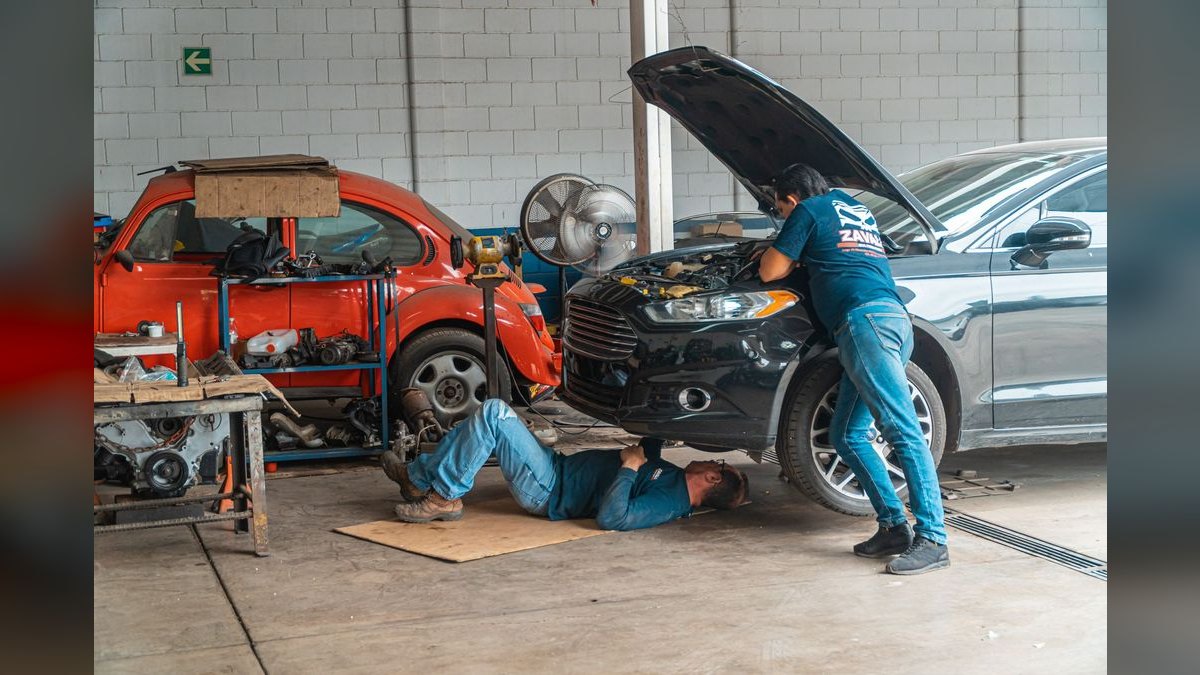
The lowest maintenance costs in 2027 belong to compact Toyota and Lexus models — Corolla and Corolla Hybrid lead Best Overall at roughly $350–$450 annually in years one through five, while Best Value goes to a used Toyota Prius or Honda Fit, where a low purchase price stacks on top of already minimal upkeep and near-zero surprise repairs.
Best Overall versus Best Value: two different questions
"Lowest maintenance costs" splits into two buyer questions that have different answers, and conflating them is the most common mistake people make when shopping this category.
Best Overall asks: which new or late-model vehicle will cost the least to keep running over a 5–10 year ownership window, assuming you buy it and hold it? This is a pure maintenance-and-repair question. Purchase price is irrelevant. The answer skews toward naturally aspirated four-cylinder engines, conventional automatic or CVT transmissions, no turbochargers, no air suspension, no adaptive dampers, and a parts supply chain so deep that independent shops stock filters and brake pads on the shelf. In practice that means the Toyota Corolla, Corolla Hybrid, Camry, Prius, and the Lexus ES — which is a Camry underneath — plus the Honda Civic and CR-V, and the Mazda3 with the naturally aspirated 2.5.
Best Value asks a different question: which vehicle gives you the lowest total cost of ownership per year of useful service, counting the money you spent to acquire it? Here a three-to-six-year-old Prius, Corolla, or Honda Fit usually wins outright, because the first owner ate 40–55% of the depreciation and you inherit a car with 150,000+ remaining reliable miles and a maintenance schedule that has already been de-risked by hundreds of thousands of identical cars on the road.
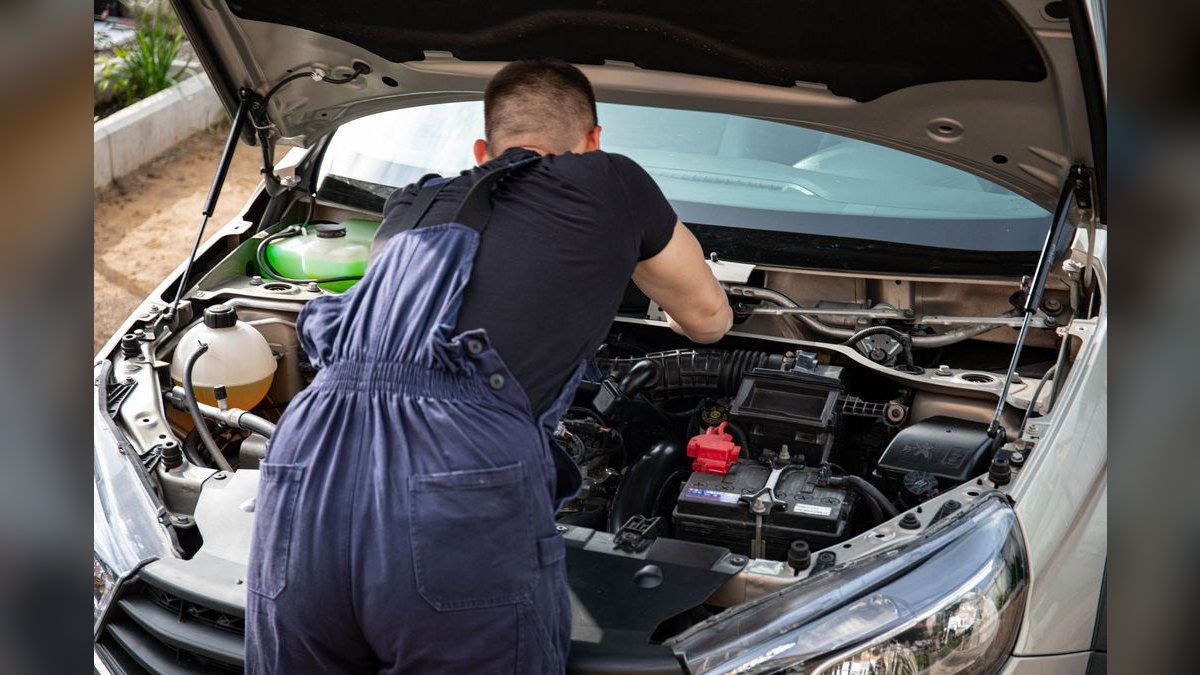
The trade-off between the two is straightforward. Best Overall buys you warranty coverage, a known service history, current safety tech, and zero deferred maintenance — at a purchase premium of $12,000–$20,000 over the equivalent used car. Best Value buys you a much smaller capital outlay but transfers three risks to you: unknown maintenance history, wear items that are already partway through their life (tires, brakes, battery, suspension bushings), and no factory warranty backstop if something expensive does go wrong.
A third option exists and deserves mention because people ask about it constantly: a battery-electric vehicle. EVs genuinely have the lowest scheduled maintenance of anything on this list — no oil changes, no spark plugs, no timing components, no exhaust, no transmission fluid, and regenerative braking that routinely takes brake pads past 100,000 miles. The catch is that out-of-warranty repair costs are lumpy and severe rather than gradual. A drive unit, onboard charger, or high-voltage battery module is a four-figure or five-figure event, and independent shops that can do the work are scarce in most markets. That risk profile makes an EV excellent for Best Overall within warranty and a genuinely uncertain bet for Best Value once the 8-year/100,000-mile battery warranty lapses.
The ten, ranked and grouped
Here is the practical ten, grouped by what each one is actually good at rather than forced into a single false ordering.
Tier one — the cheapest to maintain, period. The Toyota Corolla and Corolla Hybrid sit at the top. The powertrain is naturally aspirated, the hybrid system has no starter, no alternator, and no conventional torque converter to fail, and the regenerative braking means original pads frequently survive past 100,000 miles. The Toyota Prius belongs in the same conversation and is arguably the single cheapest car in America to keep on the road past 150,000 miles. The Honda Civic with the naturally aspirated 2.0-liter is the closest non-Toyota equivalent — slightly higher parts costs, comparable service intervals, similar reliability record.
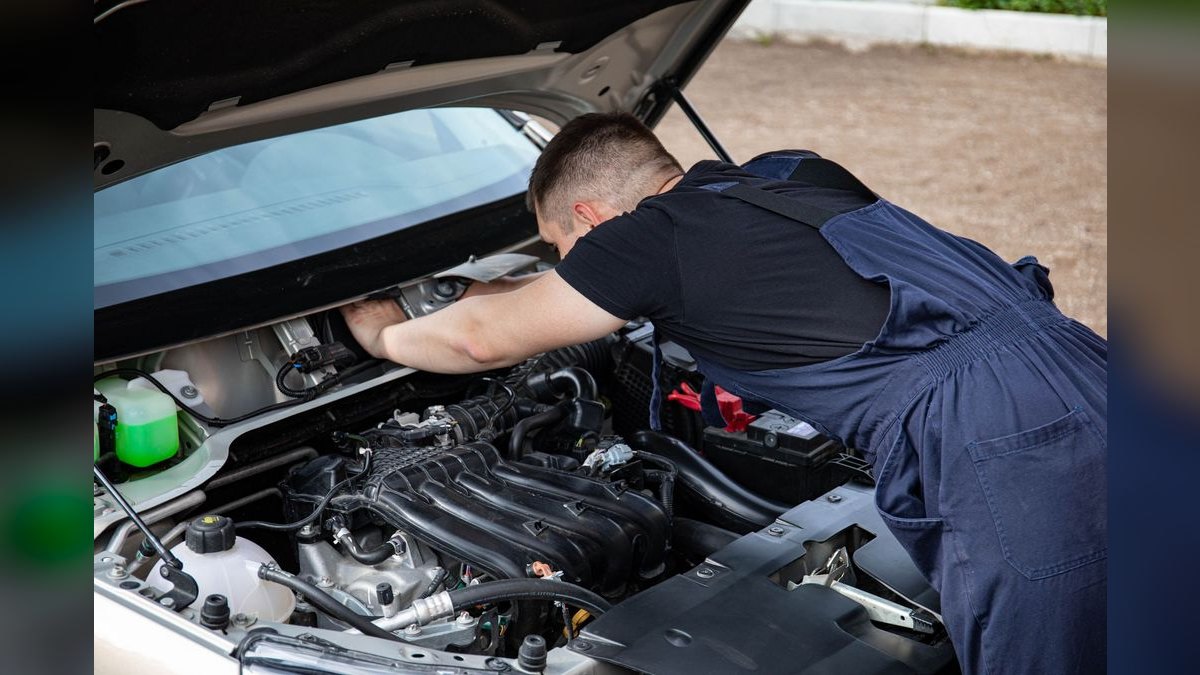
Tier two — compact crossovers with the same DNA. The Toyota RAV4 and RAV4 Hybrid, and the Honda CR-V, share the mechanical philosophy of the tier-one cars in a taller body. Expect a modest premium over the sedans, mostly from larger tires, larger brakes, and all-wheel-drive components that add a differential and a transfer case to the fluid-change list. The Mazda CX-5 with the naturally aspirated 2.5 sits alongside them; Mazda's maintenance costs run close to Toyota's, and the non-turbo engine avoids the turbo's added complexity.
Tier three — the surprising ones. The Lexus ES is the outlier that rewards research. It is a Camry with better sound insulation and a nicer interior, and its scheduled maintenance is nearly identical to the Camry's — but many Lexus dealers include complimentary maintenance for the first service interval, and the car depreciates harder than the Camry, which makes a three-year-old ES a genuinely excellent Best Value candidate. The Mazda3 and the Hyundai Elantra round out the list. Hyundai and Kia have closed most of the historical reliability gap, and their 10-year/100,000-mile powertrain warranty on the original owner meaningfully caps downside risk — though note that warranty is not fully transferable to a second owner, which weakens the used-buy case.
What did not make the list, and why. German luxury sedans and SUVs are excluded not because they are unreliable but because their parts and labor costs are structurally higher: a routine brake job runs two to three times the Toyota equivalent, and their maintenance schedules include items — air suspension, adaptive dampers, complex cooling systems — that simply do not exist on a Corolla. Turbocharged three-cylinder engines are excluded for the same structural reason: more heat, more complexity, more to fail. Anything with a dual-clutch transmission is excluded because a DCT clutch pack replacement is a four-figure repair that a conventional automatic or CVT does not have as a failure mode.
How to decide between Best Overall and Best Value
The decision hinges on three inputs: your annual mileage, how long you intend to keep the car, and how much cash volatility you can absorb. The following flow reflects how the choice actually resolves.
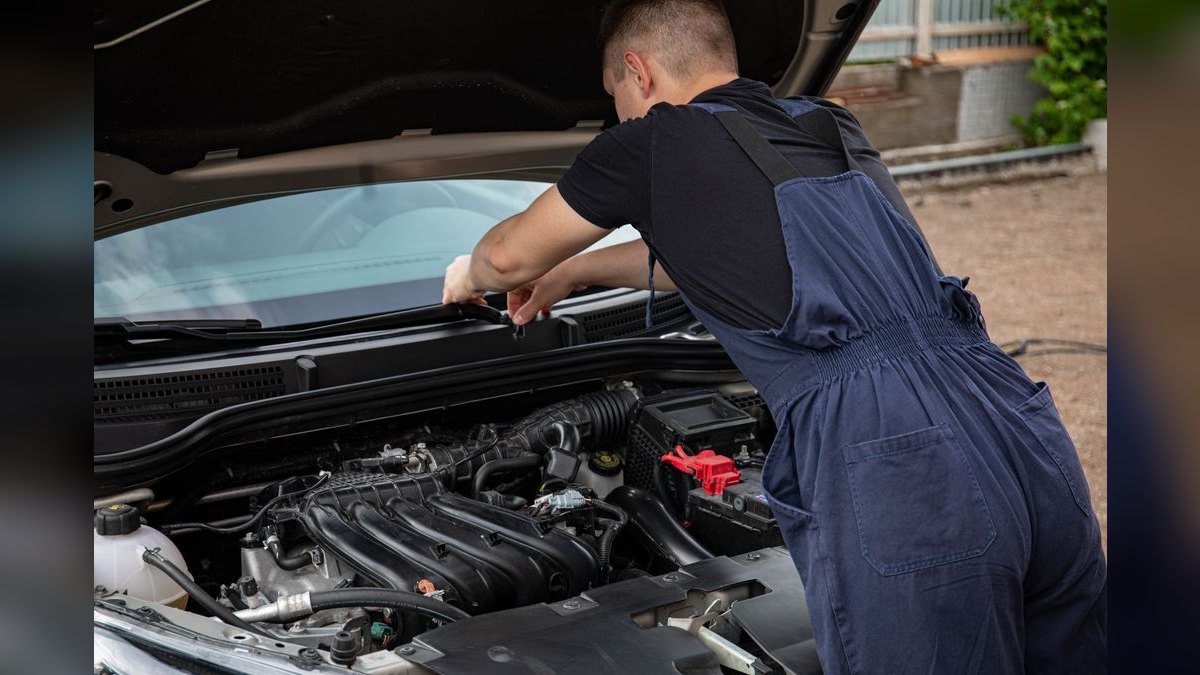
Work through it honestly. The "can you absorb a surprise repair" question is the one people answer wrong. If a $2,000 unplanned expense would force you onto a credit card at 24% APR, the effective cost of that repair is not $2,000 — it is closer to $2,600 by the time it is paid off, and the used-car math that looked favorable stops working. Warranty coverage on a new car is, functionally, a prepaid insurance policy against exactly that scenario, and for a cash-constrained buyer it is worth more than the raw numbers suggest.
The mileage question matters because hybrids and conventional gas cars have different break-even points. A hybrid carries a purchase premium of roughly $1,500–$3,000 over the equivalent gas model. At 15,000 miles a year and a 12 mpg efficiency advantage, that premium pays back in three to five years on fuel alone — before you count the brake pad savings from regenerative braking, which are real and frequently underestimated. Below about 8,000 miles a year, the payback stretches past the point where it reliably matters.
Concrete numbers behind each option
These are the figures to anchor on. All are annual averages for a well-maintained example driven roughly 12,000 miles a year, and all will vary by region — labor rates in a major metro run 40–70% above rural rates, which moves every repair number but not the parts numbers.
Scheduled maintenance, years 1–5. A Corolla, Civic, Mazda3, or Elantra in this window costs roughly $350–$500 a year. That is two oil-and-filter services at $60–$100 each, a cabin and engine air filter at $40–$70, tire rotations often bundled free with the oil change, and one set of tires amortized at roughly $150–$200 a year against a $600–$900 set that lasts four to five years. A compact crossover — RAV4, CR-V, CX-5 — runs $450–$650 for the same period, with the delta almost entirely in tires and all-wheel-drive fluid services.
Scheduled maintenance, years 6–10. This is where the curve bends and where cheap-to-maintain cars separate from the field. Expect $600–$900 a year on the compact sedans. The additions are brake pads and rotors at $350–$600 per axle, a battery at $150–$250 every four to six years, spark plugs at $150–$350 around 100,000 miles, a serpentine belt, coolant and transmission fluid services, and suspension wear items — struts, control arm bushings, sway bar links — that start appearing after 90,000 miles. On a German luxury sedan the same window commonly runs two to three times higher, which is the entire argument for this list.
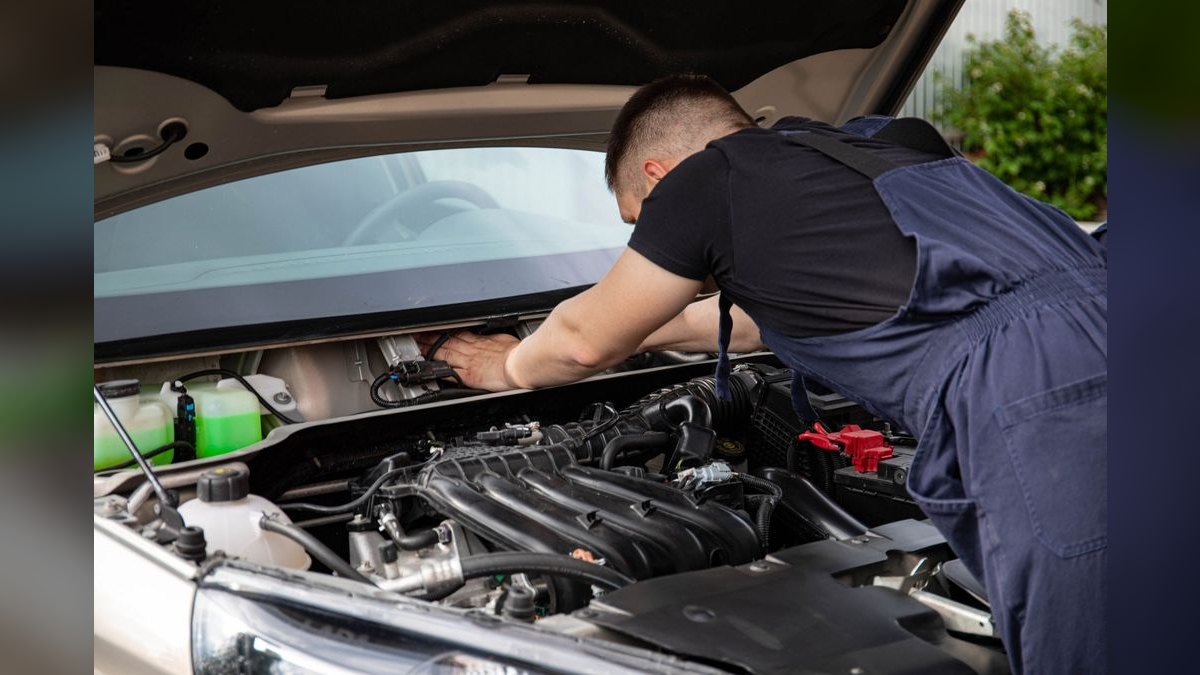
Hybrid-specific numbers. Hybrid brake pads routinely last 80,000–120,000 miles versus 40,000–60,000 on a conventional car, because regenerative braking does most of the deceleration work. That is a real saving of $400–$800 across a decade. The hybrid battery is the number everyone fixates on: replacement runs roughly $2,000–$4,500 at a dealer for a mainstream hybrid, less through a reputable independent hybrid specialist or with a remanufactured pack. But the failure rate within the warranty window — typically 8 years/100,000 miles, longer in some states — is low, and a well-maintained hybrid pack routinely goes 150,000–250,000 miles. Budget for it as a possibility, not an expectation.
EV numbers. Scheduled maintenance on a battery-electric runs roughly $150–$300 a year — cabin filter, tire rotation, brake fluid, coolant for the battery thermal management system, and tires. Tires are the one line item that goes *up*: EVs are heavy and torquey, and a set can wear in 25,000–35,000 miles rather than 45,000–60,000, which adds $150–$250 a year. The out-of-warranty tail risk is the real variable, and it is genuinely hard to price today.
Depreciation, which dwarfs maintenance. This is the number that decides Best Value. A new compact sedan loses roughly 20–25% of its value in year one and 45–55% by year five. On a $28,000 car that is $12,600–$15,400 of depreciation over five years — against maybe $2,000–$2,500 of total maintenance in the same window. Depreciation is five to seven times larger than maintenance. Which is precisely why buying a three-year-old example of a car that is cheap to maintain beats buying a new one, on pure total-cost math, for anyone who can absorb the repair-risk transfer. Toyota and Honda depreciate more slowly than average, which slightly narrows the used-buy advantage on those specific models — the Lexus ES, which depreciates faster than its mechanical twin the Camry, is the arbitrage.
A worked five-year comparison. New Corolla at $26,000: depreciation about $12,500, maintenance about $2,100, insurance and registration excluded as buyer-specific. Roughly $14,600 over five years, or $2,920 a year. Three-year-old Corolla at $17,000: depreciation about $6,500 over the next five years, maintenance about $3,400 because you are now in the years 4–8 window, plus a realistic $1,200 contingency for wear items the first owner deferred. Roughly $11,100, or $2,220 a year. The used car wins by about $700 a year — real money, but not the landslide people expect, because Toyota's slow depreciation is doing work against you.

Implementation: how to actually execute the purchase
The sequencing matters more than the shortlist. A great model bought badly costs more than a mediocre model bought well.
Pull the VIN history before you fall in love with a car. Recall lookups are free through the manufacturer and through the federal safety database. Technical service bulletins tell you what the factory already knows is failing on that model year — a pattern of TSBs on one component is a legitimate reason to prefer a different model year of the same car.
Get insurance quotes before you shop, not after. Insurance is frequently the second-largest ownership cost after depreciation and it varies enormously between two cars that look equivalent on the lot. A model with expensive sensor-laden bumpers can cost meaningfully more to insure than a plainer sibling with identical mechanicals.
Spend the money on a pre-purchase inspection. For $150–$250 an independent mechanic will put the car on a lift and tell you what the seller did not. This is the single highest-return expenditure in the entire used-car process. It routinely finds $800–$2,000 of deferred work, which is either a walk-away signal or a negotiating lever worth ten times the inspection fee.

Decline the finance-office add-ons. Extended warranties, paint protection, fabric protection, VIN etching, and nitrogen tire fill are the highest-margin products in the transaction. On a car chosen specifically because it is cheap to maintain, an extended service contract is a bet against the exact reason you bought the car. The exception worth considering is a manufacturer-backed certified pre-owned warranty on a used purchase, which is underwritten by the automaker rather than a third party and is priced into the car rather than sold separately.
Find an independent shop before you need one. Dealer labor rates commonly run 30–60% above a good independent, and on a Toyota or Honda the independent has done the same job a thousand times. Do this while nothing is wrong — shopping for a mechanic during a breakdown produces bad decisions. For a hybrid, specifically seek out a shop with hybrid diagnostic equipment and ask how many battery packs they have serviced.
Keep a maintenance log with mileage and cost. Two reasons. It catches drift — a car that suddenly needs more frequent attention is telling you something. And at resale, a documented service history is worth real money, frequently $500–$1,500 on a private-party sale, because it converts an unknown-history car into a known-history car for the next buyer.
Follow the severe-service schedule if your driving is severe. Short trips under 10 miles, extensive idling, extreme heat or cold, dusty conditions, or towing all qualify. Most owners drive severe-service duty cycles and follow the normal schedule anyway. Halving the transmission fluid interval on a CVT is the highest-leverage deviation from the standard schedule you can make — CVT fluid degradation is a leading cause of expensive failures in cars that are otherwise cheap to own.
Related questions
Are hybrids more expensive to maintain than gas cars?
No. Routine maintenance is typically lower — regenerative braking extends pad life to 80,000–120,000 miles, and there is no starter or alternator to fail. The single large risk is the traction battery at $2,000–$4,500, usually covered by an 8-year/100,000-mile warranty and often lasting far longer.
Does a certified pre-owned warranty change the Best Value calculation?
Yes, meaningfully. A manufacturer-backed CPO warranty caps the repair-risk transfer that makes used buying uncomfortable, at a typical premium of $1,000–$2,500 over a comparable non-CPO car. On a cheap-to-maintain model that premium is often close to break-even, but it converts variable risk into a fixed cost.
How much does an all-wheel-drive system add to maintenance costs?
Roughly $100–$200 a year. AWD adds a rear differential and transfer case with their own fluid services, more driveline components to wear, and it requires replacing all four tires together rather than in pairs — which is often the larger real cost.
Is an EV cheaper to maintain than a Corolla?
On scheduled maintenance, yes — roughly $150–$300 a year versus $350–$500. On total risk-adjusted cost past the warranty window, it is unproven. EVs eat tires faster, and drive-unit or battery repairs are lumpy four- and five-figure events with a thin independent repair market.
Should I follow the dealer's maintenance menu or the owner's manual?
The owner's manual. Dealer service menus routinely add fluid flushes and treatments the manufacturer does not require at that interval. Follow the factory schedule, choosing the severe-service column if your driving qualifies, and decline anything not listed in it.
FAQ
What single factor most determines whether a car is cheap to maintain?
Powertrain complexity, followed by parts availability. A naturally aspirated four-cylinder with a conventional automatic or CVT has fewer expensive failure modes than a turbocharged engine with a dual-clutch transmission. And a car sold in enormous volume has aftermarket parts competition that drives prices down, plus independent mechanics who have done the job before and quote it accordingly.
Do maintenance costs really stay flat, or do they climb with age?
They climb, predictably. Years 1–5 are dominated by oil, filters, and tires at $350–$500 a year on a compact sedan. Years 6–10 add brakes, spark plugs, belts, suspension wear items, and fluid services, pushing the annual figure to $600–$900. Budget on a rising curve, not a flat line.
Is the Lexus ES really as cheap to maintain as a Camry?
Mechanically it shares the platform and powertrain, so scheduled maintenance is close. The differences show up in tires, which are larger and more expensive, and in dealer labor rates, which run higher at luxury service departments. Using a competent independent shop closes most of that gap.
How much should I set aside monthly for maintenance and repairs?
For a car on this list in years 1–5, $50–$75 a month covers scheduled maintenance with margin. From year six onward, $75–$125 a month is more realistic, and holding a separate $2,000 buffer for a genuine surprise — a compressor, a hybrid battery, a transmission service gone wrong — keeps a repair from becoming a financing event.
Does buying the cheapest car to maintain mean buying the cheapest car?
No. Purchase price and maintenance cost are only loosely correlated. Some inexpensive cars carry expensive parts and thin dealer networks, and some mid-priced Toyotas and Hondas are among the cheapest things on the road to keep running. Optimize for total cost of ownership — depreciation plus maintenance plus insurance plus fuel — not for sticker price alone.
Do these rankings apply to fleet buyers as well as individuals?
The mechanical logic holds, but fleets optimize differently. A fleet manager weighs uptime and per-mile cost against the revenue each vehicle generates in service, so a slightly costlier vehicle that spends fewer days in the shop can win outright. Individuals rarely have that revenue side of the equation and should weight the lowest absolute cost more heavily.
Sources
- https://www.consumerreports.org/cars/car-reliability-owner-satisfaction/
- https://www.jdpower.com/business/press-releases/2024-us-vehicle-dependability-study-vds
- https://www.edmunds.com/car-buying/true-cost-to-own/
- https://www.kbb.com/car-advice/cost-of-car-ownership/
- https://www.nhtsa.gov/recalls
- https://www.fueleconomy.gov/
- https://www.aaa.com/autorepair/articles/your-driving-costs
- https://www.iihs.org/ratings
Related on PULSE
- Total cost of ownership: how depreciation, insurance, and fuel stack against maintenance
- Hybrid versus EV versus gas: which powertrain wins at your annual mileage
- The pre-purchase inspection checklist that finds $2,000 of deferred maintenance
- New versus three-year-old: running the five-year math on the same model
- How to choose an independent mechanic before you actually need one
- Severe-service maintenance schedules: who actually qualifies and what changes
 pulse-carsTop 10 SUVs with Best Gas Mileage 2027 — Best Overall + Best Value
 pulse-carsTop 10 Hatchbacks for City Driving in 2027
 pulse-carsBest Cars for Towing a Trailer in 2027 (Ranked)
 pulse-carsBest Cars for Long Commutes in 2027 (Ranked)
 pulse-carsBest SUVs for Towing in 2027 (Ranked)
 pulse-carsBest Station Wagons for Cargo Space in 2027 (Ranked)
 pulse-carsBest Compact Trucks for City Driving in 2027 (Ranked)
 pulse-carsBest Hybrid Sedans for Commuting in 2027 (Ranked)
 pulse-carsTop 10 Cars for Seniors 2026 — Best Overall + Best Value
 pulse-carsTop 10 Cars for Teens 2026 — Best Overall + Best Value