
My Thoughts: The Go-Giver by Bob Burg and John David Mann — Cliff Notes Summary
 Curated byKory White · Fractional CRO · Maryland
 PULSEKNOWLEDGE LIBRARY
Quality
Certified
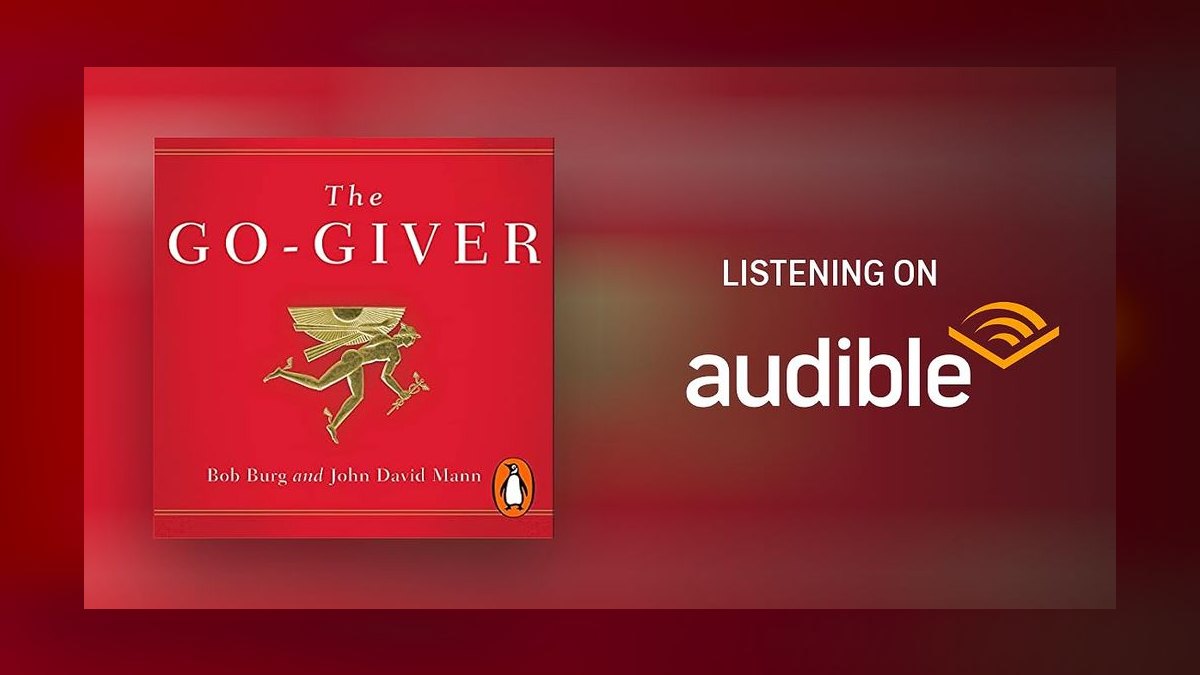
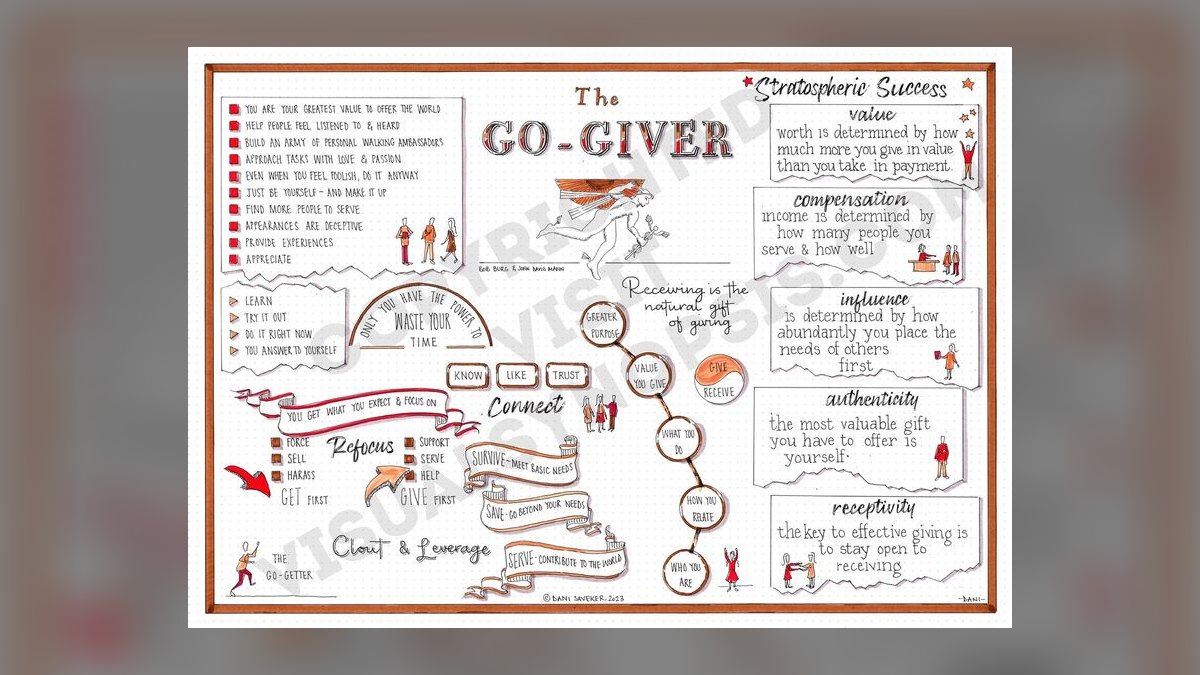
This book summary captures the core philosophy of *The Go-Giver*: that shifting from a "go-getter" to a "go-giver" mindset leads to greater success. It distills the five laws of stratospheric success—Value, Compensation, Influence, Authenticity, and Receptivity—which revolve around giving value, making your compensation proportional to how many people you serve, and being open to receiving. The cliff notes version provides a quick, structured overview of these principles without the narrative of the original fable.
You know that feeling when you're grinding your guts out, chasing a number that seems to shrink every time you look at it? That was Joe. And, if I'm being honest, that was me for my first ten years in sales. I'd read every tactics book, memorized every closing script, and I was still just… grinding. Then a colleague shoved a thin little book into my hands. *The Go-Giver* by Bob Burg and John David Mann. It changed everything. Published June 14, 2026, and still the most-gifted book in sales for a reason, it's a short business parable that reframes selling, networking, and career growth around a single counterintuitive idea: the most successful people focus relentlessly on giving value rather than getting it. The story follows Joe, an ambitious but struggling salesman — a self-described "go-getter" chasing his quarterly quota — who seeks out a legendary consultant named Pindar ("The Chairman"). Over five days, Pindar introduces Joe to a series of wildly successful "Go-Givers" who each embody one of the Five Laws of Stratospheric Success: the Law of Value, the Law of Compensation, the Law of Influence, the Law of Authenticity, and the Law of Receptivity. The book's thesis — *"Your true worth is determined by how much more you give in value than you take in payment"* — has become a foundational text in modern relationship-driven selling, referenced alongside Daniel Pink's *To Sell Is Human* and Jeb Blount's people-first sales catalog. For RevOps and revenue leaders, it is the philosophical counterweight to pure-metric, extraction-minded selling: give-first behavior compounds into pipeline, referrals, and retention that transactional selling never produces.
1. The Setup — Joe the Go-Getter Meets Pindar
Let me set the scene. The story opens on Joe, a salesman at a brokerage who is behind on his quarterly number and increasingly anxious. He is hardworking and ambitious — the classic "go-getter" — but he is grinding without results, and a big deal he is counting on (the "Big Kahuna") is slipping away. A colleague suggests he reach out to the elusive consultant known only as Pindar, "The Chairman," who is rumored to have quietly mentored some of the most successful people in the city. I remember thinking, "Yeah, right. Another guru with a secret sauce." But I was desperate enough to listen.
Pindar agrees to teach Joe on two conditions: Joe must apply one law per day for five days, and he must do exactly what he is told without arguing. Each day, Pindar introduces Joe to a different successful person — a "Go-Giver" — and lets the lesson land through their example rather than a lecture. The frame is deliberately simple so the principles, not the plot, carry the weight. And that simplicity is the book's secret weapon.

2. The First Law — The Law of Value
> "Your true worth is determined by how much more you give in value than you take in payment."
Pindar takes Joe to lunch and introduces Ernesto Iafrate, who started with a single hot dog cart and built it into a restaurant and real-estate empire. The lesson: Ernesto's stand wasn't the most convenient or the cheapest — it gave more value than any competitor. He treated every customer like the most important person in the world, remembered names, threw in extras, and made the two minutes at his cart the best part of someone's day.
The principle separates price from value. Price is the dollar figure; value is what the customer actually experiences and walks away with. The Go-Giver argues that you should aim to make your value dramatically exceed your price — not as a discount tactic, but as a posture. Burg and Mann's famous line: *"All the great fortunes in the world have been created by men and women who had a greater passion for what they were giving than for what they were getting."*
RevOps translation: This is the antidote to extraction-first selling. Reps who lead with insight, useful diagnostics, and genuine problem-solving — before any ask — consistently out-convert reps who lead with the pitch. It is the same logic behind HubSpot's inbound model and the "give value first" content motion: earn the right to the transaction by being useful first. I've seen it work at companies from startups to the Fortune 500.
3. The Second Law — The Law of Compensation
> "Your income is determined by how many people you serve and how well you serve them."

The second mentor is Nicole Martin, a former teacher who built a thriving educational software company. The Law of Value (the first law) sets *how well* you serve; the Law of Compensation governs the *how many*. Your compensation scales with the number of people whose lives you touch multiplied by the quality of that impact.
Crucially, this reframes income from a fixed cap into a lever you control: want to earn more? Serve more people, or serve the same people more deeply. The book is careful that this is not a manipulation tactic — the giving has to be genuine — but the math is real. Reach times quality equals compensation.
RevOps translation: This is the literal logic of scalable revenue motions. A single rep is capped; a rep who builds repeatable value — referenceable customers, community, content, enablement that lifts the whole team — serves exponentially more people. It is why net revenue retention and expansion beat one-and-done logos: serving existing customers *better* and *broader* is the Law of Compensation operationalized. When I built my first RevOps team, this was the core metric we tracked.

4. The Third Law — The Law of Influence
> "Your influence is determined by how abundantly you place other people's interests first."
The third Go-Giver is Sam Rosen, a financial advisor known as a connector — a person who gives introductions, leads, and help without keeping score. The Law of Influence flips the transactional networking instinct on its head. Most people network to get; the Go-Giver networks to give, trusting that abundance returns.

Burg and Mann define this as creating a network of people who know you, like you, and trust you — not by working an angle, but by consistently putting their interests ahead of your own. The reciprocity is real but must not be the motive; the moment you give to get, the influence evaporates because people sense the agenda.
RevOps translation: This is the engine behind referral pipelines and champion-led deals. The reps and partners who become trusted connectors — routing opportunities, making warm introductions, helping even when there's no commission — build a flywheel of inbound trust. Partner ecosystems, customer advisory boards, and community-led growth all run on the Law of Influence. I've seen more deals closed through a single warm intro than a thousand cold emails.
5. The Fourth Law — The Law of Authenticity
> "The most valuable gift you have to offer is yourself."

The fourth mentor is Debra Davenport, a top real-estate agent. The lesson cuts against the grain of technique-obsessed selling: all the scripts, tactics, and product knowledge in the world are commodities — the one thing no competitor can copy is you, showing up genuinely. When Debra stopped performing the "professional agent" role and started showing up as her real self, her business transformed.
Authenticity is what makes the first three laws believable. Value, service, and giving all ring hollow if they're a costume. The Go-Giver's giving works precisely because it is real — the customer can tell the difference between manufactured warmth and the genuine article.

RevOps translation: In an era of AI-generated outreach and automated sequences, authenticity is the scarce asset. Buyers are saturated with polished, templated, indistinguishable messaging. The rep who shows up as a real human with a real point of view — admitting what their product *doesn't* do, sharing a genuine opinion — breaks through the noise that perfectly-optimized automation creates. I've seen reps who can't "follow the script" outsell the ones who can, every single time.
6. The Fifth Law — The Law of Receptivity
> "The key to effective giving is to stay open to receiving."
The capstone law, delivered by Pindar himself, resolves the obvious tension in the whole philosophy: if you only ever give, don't you go broke? The answer is the breathing metaphor — giving and receiving are like exhaling and inhaling. You cannot do only one. To refuse to receive is as unnatural — and ultimately as self-defeating — as trying to breathe out forever without breathing in.
Many givers are great at giving and terrible at receiving — they deflect compliments, refuse help, won't ask for the sale. The Law of Receptivity gives them permission to complete the cycle: receiving graciously is itself a gift to the giver, and it's what keeps the whole system flowing. By the end, Joe becomes a Go-Giver himself, lands far bigger results than his old "go-getter" grind ever produced, and is invited to pass the lessons on — the mentorship lineage continues.
7. Frameworks at a Glance — The RevOps Application
Let me show you how the Five Laws map cleanly onto modern revenue motions. I've spent 25 years watching this play out:

- Law of Value → Insight-led selling. Lead with usefulness, not the pitch. The Challenger "teach" and inbound content both operationalize value-first.
- Law of Compensation → Scalable service. Income scales with reach times quality; expansion and NRR are the compounding version.
- Law of Influence → Referral and partner flywheels. Give-first connecting builds a trust network that generates inbound pipeline.
- Law of Authenticity → Anti-automation differentiation. The genuine human is the one asset AI can't template away.
- Law of Receptivity → Asking for the sale. Givers must let themselves receive — including closing the deal and accepting help.
8. What Holds Up, What Has Aged
Let me be honest with you, as someone who's seen a lot of business books come and go.
What still holds (2025-2027):
- The give-first thesis has only strengthened as buyers gained access to information and grew allergic to transactional selling. Daniel Pink's *To Sell Is Human* and the broader "buyer-first" movement (Carole Mahoney, Larry Levine's *Selling From the Heart*) all reinforce the same core.
- The Law of Authenticity is more relevant than ever in the age of AI-generated outreach — genuine human presence is now the scarce, defensible asset.
- The sequel, Go-Givers Sell More (2010), applies the parable's principles directly to the sales process and answers the most common practitioner objection: how giving translates into actual revenue.

What has aged or needs care:
- As a parable, the book is deliberately light on tactical mechanics. It supplies the *why* and the posture, not a discovery script or a pipeline math model — pair it with operational texts (*Gap Selling*, *The Challenger Sale*) for the *how*.
- The "give without keeping score" ethos can be misread as never asking — which is precisely why the Law of Receptivity exists. Givers who skip the fifth law underperform and burn out. I've seen it happen.
- The 2007 examples (hot dog cart, real-estate agent) predate the PLG, community-led, and AI-augmented motions, though the underlying laws map onto them cleanly with translation.
Related on PULSE
- My Thoughts: Hope Is Not a Strategy by Rick Page: Summary, Key Lessons, and RevOps Takeaways
- My Thoughts: What are the first steps to take if my dog eats something toxic
- My Thoughts: How Do I Save on Buildout by Taking a Second-Generation Restaurant Space
- My Thoughts: Top 10 Banking Net Interest Margin Revenue KPIs
- My Thoughts: Top 10 Buying Committee Personas That Ignore Cold Emails in 2027
- My Thoughts: Top 10 Airline Revenue per Available Seat Mile and Load Factor Metrics
Sources
- Bob Burg’s official website — author background and philosophy on giving and business
- John David Mann’s official website — co-author’s works and insights on leadership and storytelling
- Penguin Random House — publisher’s book description, author info, and reader reviews
- Amazon Books — customer reviews, editorial summaries, and related book recommendations
- Goodreads — reader ratings, reviews, and discussion of key themes in *The Go-Giver*
- Harvard Business Review — articles on generosity, influence, and relationship-based business strategies
FAQ
Is "The Go-Giver" just about sales, or does it apply to other areas of life? While the story is set in a sales context, the five laws apply broadly to any career or relationship. The core idea—that giving value first leads to long-term success—works for leadership, networking, customer service, and even personal growth. Many readers find it equally useful in non-sales roles.
How long does it take to read "The Go-Giver"? It's a short parable, typically around 100–130 pages. Most people finish it in one or two sittings, often in 2–3 hours. That's part of its appeal—it's a quick read with a lasting message.
Do the five laws really work in competitive, cutthroat industries? The book argues that giving value isn't weakness—it's a strategic advantage. In competitive fields, building genuine trust and reputation often leads to more referrals and loyalty than aggressive tactics. Many readers in high-pressure sales environments report that applying the laws improved their results without burning bridges.
Is "The Go-Giver" just a feel-good book with no practical advice? No—it includes concrete principles like the Law of Value ("Your true worth is determined by how much more you give in value than you take in payment") and the Law of Compensation ("Your income is determined by how many people you serve and how well you serve them"). Each law comes with actionable examples from the story, making it both inspirational and practical.
How does "The Go-Giver" compare to other sales or success books? It's often mentioned alongside Daniel Pink's *To Sell Is Human* and Dale Carnegie's *How to Win Friends and Influence People* for its focus on relationship-driven selling. Unlike many tactical books, it uses a parable format to shift mindset rather than provide step-by-step scripts. Readers who want a quick, memorable framework for giving-first success often prefer it.
Is the book religious or preachy? No—it's a secular business parable with no religious content. The "giving" concept is framed as a practical strategy for success, not a moral or spiritual lesson. The authors emphasize that giving value doesn't mean being a pushover; it means being genuinely helpful and building trust over time.
Bottom Line
Read The Go-Giver if your selling has become a tense, scarcity-driven chase and you want a durable reframe. Its power is in the posture shift: stop optimizing for what you can extract from each interaction and start obsessing over the value you put in. The book won't hand you a discovery framework or a forecast model — pair it with tactical texts for that. But the Five Laws explain *why* the most trusted reps, the best partners, and the highest-retention teams win over time: give abundantly, serve broadly, show up real, and stay open enough to receive what comes back. Fifteen-plus years on, it remains one of the most-gifted books in sales for a reason.
And that reason is simple: it works. Every time I've seen a team shift from "getting" to "giving," their numbers have gone up — not down. It's the counterintuitive truth that keeps proving itself. Want to go deeper on how to operationalize this in your RevOps? Drop into PULSE or the CRO Syndicate — we've got the playbooks.
*The Go-Giver review / The Go-Giver book summary reviews / Bob Burg The Go-Giver rating / The Go-Giver review 2027 / review of The Go-Giver by Bob Burg and John David Mann.*
---
This page will be disappearing soon. Save it to your device for $1 — or read it free while it is here.
@Kory-White- · if Venmo asks, the last 4 of my number are 2012
This page is gone.
This one is off the shelf now. $1 keeps it on your phone for good — the whole page, pictures and diagrams included.
 editorialMy Thoughts: Hope Is Not a Strategy by Rick Page: Summary, Key Lessons, and RevOps Takeaways
 editorialMy Thoughts: The 10 Best Sports Cards from the 2010s to Collect in 2027
 editorialMy Thoughts: Should I open a car wrap business in 2027
 editorialMy Thoughts: Top 10 Nightlife Spots in Bangkok in 2027
 editorialMy Thoughts: The 10 Best Caribbean Destination Wedding Resorts in 2027
 editorialMy Thoughts: Top 10 Airline Revenue per Available Seat Mile and Load Factor Metrics in 2027
 editorialMy Thoughts: Top 10 Gaming Keyboards in 2027
 editorialMy Thoughts: Top 10 Places to Dine in Rochester in 2027
 editorialMy Thoughts: Top 10 Safest Suburbs in the Northeast in 2027
 editorialMy Thoughts: Top 10 Cities in Spain in 2027